REVIEW · BUDAPEST
Communist Budapest Private Walking Tour
Book on Viator →Operated by Insight Cities · Bookable on Viator
Communism in Budapest leaves visible scars. This private walking tour uses the city’s buildings, statues, and streets to explain how rule worked in Hungary from 1949 to 1989, and what daily life cost people. I especially liked the way the guide connects big events to real places, instead of treating history like a slide show.
Two things I really loved: the historian-led storytelling (you get context, not just dates), and the mix of dramatic sites with smaller details that make it feel lived-in. One possible drawback: if you’re hoping for lots of museum time, the famous House of Terror stop is mostly an outside focus, since the museum exhibits are not included.
In This Review
- Key Highlights You’ll Care About
- A 3-Hour Private Walk Through Budapest’s Communist Years
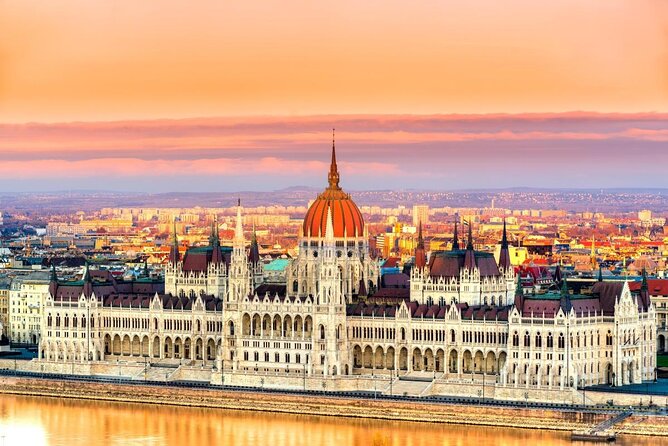
- Kossuth Square and Liberty Square: Parliament to Cold War Symbols
- House of Terror Outside: The Former Secret Service Building
- Puskas Stadium and Socialist Realism in Public Space
- The Reagan Statue: Why a US President Became Part of Hungarian Memory
- Bem József Square: 1956’s Spark and a 1960s Coffeehouse Time Capsule
- Price and What It Really Buys You
- Who This Tour Fits Best
- Should You Book This Communist Budapest Walking Tour?
- FAQ
- How long is the communist Budapest walking tour?
- Is the tour private, and how big is the group?
- What language is the tour offered in?
- Does the tour include hotel pickup?
- What if I don’t want pickup?
- Are public transportation tickets included?
- Do I need to pay museum or site admission during the tour?
- Where does the tour end?
- Can I cancel for a refund?
Key Highlights You’ll Care About
- Historian guide who explains the why behind the monuments and street scenes
- Small private format with a cap on group size for better back-and-forth
- Cold War landmarks in one loop, including US and Soviet references around Liberty Square
- 1956 Revolution focus at Bem József Square, with nearby mid-century atmosphere
- Socialist-era propaganda seen in context, including classic realist statuary at Puskas Stadium
A 3-Hour Private Walk Through Budapest’s Communist Years
This is a private walking tour built around one clear idea: you can read Hungary’s communist era right in the city. The route is planned as an efficient loop using subway or tram when needed, with walking where the sites are close. It runs about 3 hours, and you can choose a morning or afternoon start.
The “private historian” part matters more than you might think. When your guide is a local historian, you tend to get clearer explanations of terms like goulash communism and how state control shaped daily routines. You also get human-scale storytelling, including what people endured during the era rather than just the political headline version.
Group size is kept small. Pricing is listed per group (up to 10), but the tour also states a maximum number of travelers for the experience. Either way, expect a more conversation-friendly pace than a big bus tour where everyone just listens.
You can also read our reviews of more walking tours in Budapest

Kossuth Square and Liberty Square: Parliament to Cold War Symbols
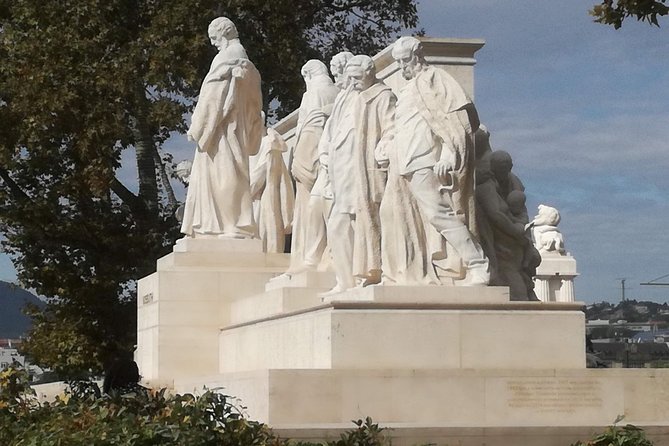
The walk starts near the Hungarian Parliament area and builds outward from there. Your guide takes you by subway to Kossuth Square in front of Parliament, then you move through monuments tied to the 1956 Hungarian Revolution. This is the kind of start that helps you calibrate quickly: the buildings are impressive, but the guide keeps the focus on what the symbols meant to people at the time.
From there, you continue toward Liberty Square, where Cold War politics comes into view in a very physical way. You’ll see the US Embassy area and a monument to the Soviet Army, and the guide connects these to how the era played out beyond Hungary’s borders. One standout detail is the Ronald Reagan statue reference later on, because your guide sets up the story first—how Hungary framed Western pressure and Soviet power in public memory.
Another memorable stop at this stage is the presence of an atomic shelter. Even if you never go inside, just seeing how the city marked fear and survival tells you a lot about what life under superpower tension felt like. If you like when history turns into street-level observation, this first segment is a strong payoff. If you’re mainly here for aesthetics, you may need the guide’s explanations to make the symbolism click.
House of Terror Outside: The Former Secret Service Building
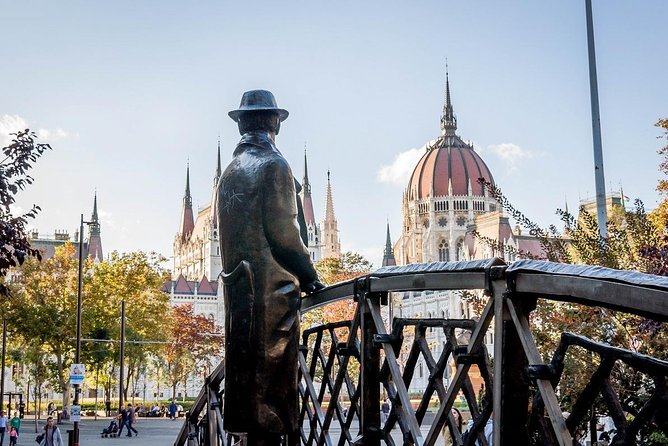
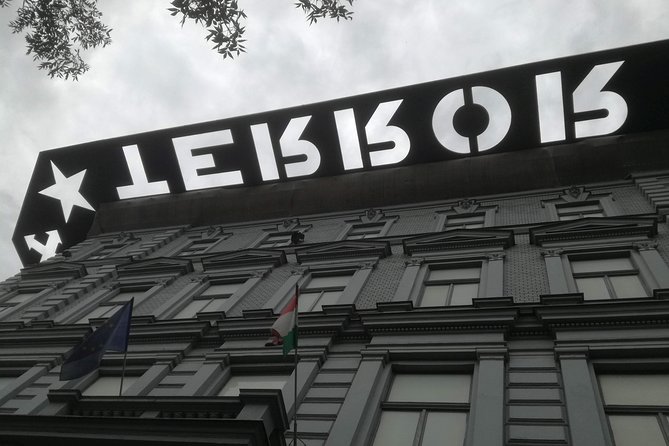
After the Parliament-area loop, you head to the imposing House of Terror setting. The tour wraps up outside this building, which served as headquarters connected to Hungary’s communist secret services. In front of it, there’s a slab of the Berlin Wall, and even from outside you get a clear message: this site is about fear, control, and the Cold War machinery that came with it.
Important practical point: the tour does not include the museum exhibits inside. The outside look is powerful on its own, but if you want to spend time reading panels and seeing artifacts, you’ll need to plan that separately. The good news is that ending here can work well. You can choose to keep the momentum going right after the walk with more museum time, or you can simply use it as a dramatic drop-off point that feels relevant to the story.
Timing is also realistic. This segment is short, so it doesn’t feel like you’re rushed. It feels more like a closing chapter that gives you the coordinates you might want later if you decide to go deeper on your own.
Puskas Stadium and Socialist Realism in Public Space
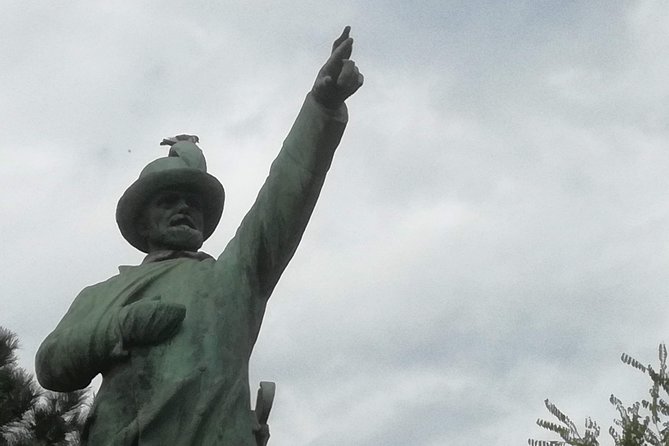
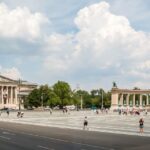
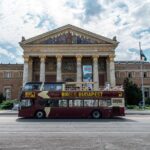
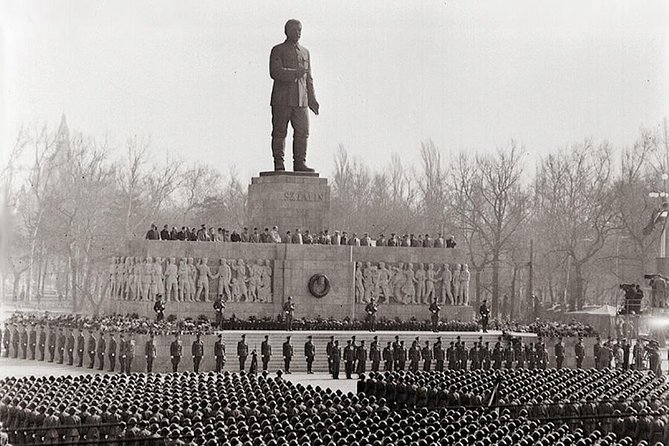
Next up is a stop at the former People’s Stadium, now Puskas Soccer Stadium. This is where socialist realist propaganda shows up in the open—heavy-handed statuary and public messaging built to shape what people felt they should admire and believe. The tour pauses long enough for you to look around and understand why art and monuments were part of political control.
This stop can be especially satisfying if you like history you can see from a distance. Instead of asking you to imagine what life was like, the guide points to how regimes used public space and heroic imagery. You also get a chance to connect the stadium setting to broader themes, like how state power tried to manage collective emotion—celebrations, parades, and the idea of unity under one system.
Another bonus from this part of the route: the tour is designed to incorporate socialist-era streets used for May Day parades and a 1970s housing estate concept. Those details matter because they show the era wasn’t only made of grand ceremonies. It was also made of daily routines—how cities were organized, how people lived in large-scale housing projects, and how public events were staged to demonstrate political legitimacy.
The Reagan Statue: Why a US President Became Part of Hungarian Memory
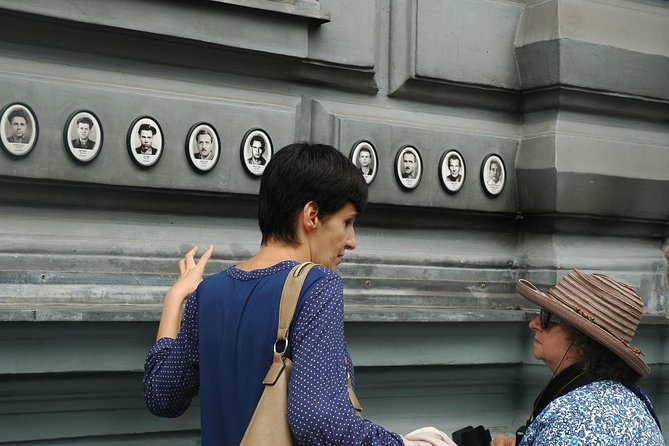
You’ll also spend time at the Ronald Reagan statue. Even if you’re not a politics person, this is a neat reminder that Cold War symbols were not only about the Eastern Bloc. Hungary’s public memory also included an obligation to Reagan for his role in helping push back the Iron Curtain.
The value here is the guide’s framing. It’s easy to treat statues as decoration, but on this tour, the guide explains why this one was placed, and how it fits into the larger story you’ve been building from Parliament, to Liberty Square, to the secret service era at House of Terror. It’s the kind of stop that makes the city feel like a set of arguments you can walk through.
This also helps you avoid a common history-tour trap: thinking communism was one straight line from 1949 to 1989. In reality, the story changed as pressure shifted and public narratives adjusted. The Reagan stop gives you a sense of that shifting messaging.
You can also read our reviews of more private tours in Budapest




Bem József Square: 1956’s Spark and a 1960s Coffeehouse Time Capsule
The tour then focuses on Bem József Square, a key place connected to the start of big demonstrations during the 1956 uprising. This is where the emotional weight of the tour peaks without needing theatrics. You’re not just looking at a marker—you’re standing in a square tied to collective action and the start of a fight people fought to be heard.
One practical pleasure is what’s around the square. The tour includes a look at a coffeehouse that has retained its original interior from the 1960s. That small detail can make the story feel real. It helps you imagine everyday moments—conversations, routines, and the kind of normal life that still existed even under political pressure.
Bem József Square is also a good location for photos and for pausing. The tour gives you time to absorb the space and keep questions coming. If you care about how history lives in architecture and local habits, this stop is one of the most rewarding.
Price and What It Really Buys You
Let’s talk value, because private tours live or die on fairness. The price is listed as $393.17 per group (up to 10), for about 3 hours with a private historian guide. That sounds high if you compare it to a walking tour with 30 people, but the comparison is the wrong one.
You’re paying for two things you can’t easily buy in a group tour:
1) A guide who can tailor the pace and focus. One named example from a previous tour experience is Andras, who adjusted the tour to match the group’s interests and kept the tone kind and engaging.
2) Context tied to specific locations. Places like Liberty Square, the secret service headquarters setting, and propaganda statuary all need explanation to land. Having a historian in your ear makes the city “talk back” to you.
If you’re traveling solo, this might feel expensive. If you’re traveling as a small group, it often becomes more reasonable fast—especially when you consider the cost of transit and the fact that key museum time isn’t included. Think of it as buying time with a serious local guide who can help you understand what you’re seeing in real-world terms.
Who This Tour Fits Best
This is a great match if you want politics made practical—street corners, monuments, and the lived effects of policy. It’s also ideal if you like tours led by local historians who can explain with clarity and good humor.
If your travel style is mostly “look, take photos, move on,” you might find yourself wishing for more museum time inside the House of Terror. The tour is set up to provide context, then point you to the best next step if you want deeper reading.
If you want to understand how Hungary’s communist era shaped everything from public celebrations to housing and fear-based institutions, you’ll likely enjoy the way the tour connects major moments like 1956 to the everyday architecture and street planning that came along with the system.
Should You Book This Communist Budapest Walking Tour?
Book it if you want a private historian-led walk that makes Budapest’s communist-era landmarks intelligible, not just impressive. It’s especially worth it when you care about the human side of history: privations, public messaging, and how power worked through both monuments and institutions.
Skip it (or plan extra time) if your top priority is museum exhibits. The House of Terror stop is outside-focused, and the exhibits are not part of what you pay for. If you’re the type who wants to read every panel and spend hours inside, add that separately after your walk ends.
FAQ
How long is the communist Budapest walking tour?
The tour is listed as about 3 hours (approx.).
Is the tour private, and how big is the group?
It’s a private walking tour. The information provided lists pricing per group up to 10, and it also states a maximum number of travelers for the experience (up to 8).
What language is the tour offered in?
The tour is offered in English.
Does the tour include hotel pickup?
Pickup is offered from your central hotel or flat, and the guide will meet you there and lead you toward the sites by metro, tram, or foot when close.
What if I don’t want pickup?
If you don’t want pickup or don’t respond with an address, you meet the guide 15 minutes before the start time at the default meeting point.
Are public transportation tickets included?
Tram and metro tickets are not included, but the guide will help you purchase the required tickets if you don’t already have a transport pass.
Do I need to pay museum or site admission during the tour?
Most stops listed are free of charge, but the House of Terror Museum exhibit is not included.
Where does the tour end?
The tour ends outside the House of Terror Museum at Andrássy út 60, 1062 Budapest.
Can I cancel for a refund?
Yes. You can cancel up to 24 hours in advance for a full refund.