REVIEW · BUDAPEST
Budapest City Landmarks Walking Tour in 2 Hours
Book on Viator →Operated by Triptobudapest.hu - Free Budapest Walking Tours · Bookable on Viator
A short walk, big Budapest payoff. This 2-hour guided circuit threads through major sights and smart side streets, using history, architecture, public art, food talk, and basic language to help you read the city fast. You start near the Ferris wheel at Erzsébet tér and finish at the Parliament area, with a map-backed route so you can come back later.
I especially like the mix of iconic stops and practical guidance. You get tips on what to eat in Budapest and how to avoid the tourist traps, plus a quick sense of what day-to-day life feels like in Hungary.
One thing to plan for: the ticket price is low, and the guides rely on your end-of-tour donations. If you come prepared with cash or a plan for tipping/donating, it feels like a great deal; if not, it can feel awkward.
In This Review
- Key things that make this tour worth your time
- Value and pace: why 2 hours works better than a full-day tour
- From Budapest Eye to the blue-flag meeting point: what actually makes it easy to find
- Erzsébet tér, St. Stephen’s Basilica, and the first square stories
- József Nádor tér: porcelain, Habsburg connections, and a craft-history detour
- Vorosmarty Square and Váci útca: people-watching plus the underground history
- Danube Embankment and the Chain Bridge: big UNESCO views without the heavy planning
- The Little Princess wish and Vigadó Square’s music legends
- Art Nouveau time: Gresham Palace and Hungarian science pride
- Shoes on the Danube and Parliament: what to expect at the emotional end
- How to use the free rest of your day after the tour
- Who should book this walking tour, and who might skip it
- Should you book this Budapest City Landmarks Walking Tour?
- FAQ
- How long is the Budapest City Landmarks Walking Tour?
- Where do I meet the guide?
- What is the end point of the tour?
- Is the tour offered in English?
- Does the tour enter Szent István Basilica?
- How many people are in the group?
- Is there a mobile ticket?
- Do I need to buy entrance tickets for the stops?
- What if the weather is bad?
Key things that make this tour worth your time

- A tight 2-hour overview that sets you up for the rest of your Budapest day
- No hard ticket detours: key stops are outside-view or public spaces, including Szent István Basilica
- Real city details like Hungarian food talk and basic phrases meant for normal conversations
- Danube moments with meaning: the Shoes on the Danube Bank stop is not a quick photo-and-go
- Small, manageable groups (up to 30) and guides who are easy to follow
- Language + culture in short doses, including quick Hungarian word/phrase practice
Value and pace: why 2 hours works better than a full-day tour
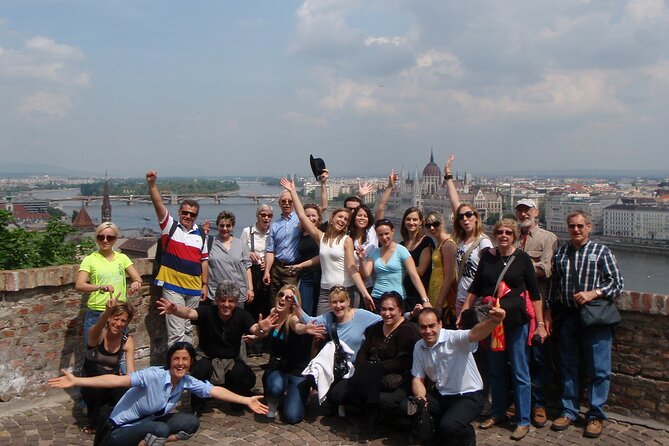
Budapest can overwhelm you early on. This walk is designed to solve that problem with a simple promise: you get the big picture, then you’re released back into the city while you still have energy.
The route is built around short stops—think 2 to 15 minutes each—so you don’t lose the day in long transitions. That matters because Budapest is best when you can hop between neighborhoods at your own pace. After this, you’re positioned to return to the spots that felt most interesting, whether that’s the Danube views, the Parliament area, or one of the church-and-square stops.
Price is the headline too, but the real value is how that low cost turns into planning help. The booking fee goes to administration, and the guides depend on donations at the end. Translation: you’re paying a small amount for coordination, then rewarding storytelling and on-the-ground guidance. If you treat it like a guided introduction you want to support, it’s one of the smartest first-day spends in the city.
You can also read our reviews of more walking tours in Budapest



From Budapest Eye to the blue-flag meeting point: what actually makes it easy to find
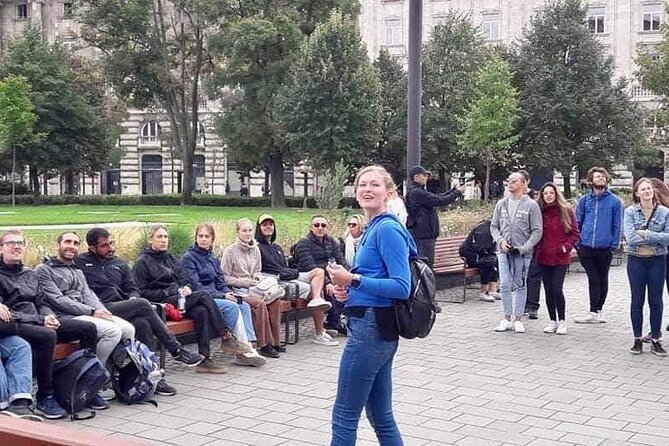
You meet at Erzsébet tér at the Ferris Wheel of Budapest, and the guide is easy to spot: they hold a small blue flag. The plan is simple—meet close to Budapest Eye, then the guide brings the route to life with a map showing the landmarks and the side streets on the schedule.
A lot of tours fail at the first step: confusing meeting points. Here, the meeting is specifically described and intentionally close to a major landmark, which helps you reduce stress right away. Also, the tour uses a mobile ticket, so you’re not juggling paper confirmations.
On the storytelling side, the emphasis is practical. The guide doesn’t just recite dates. They connect buildings to periods of splendor, explain why public art exists where it does, and fold in quick lessons about Hungarian culture—plus basic Hungarian language you can actually try out later.
That’s what you want in a first tour: not everything at once, but enough to make your independent exploring feel smarter.
Erzsébet tér, St. Stephen’s Basilica, and the first square stories
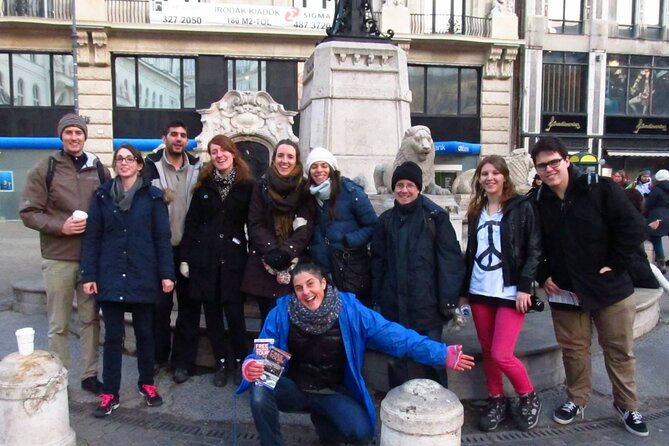
The tour begins at Erzsébet tér, a launchpad for understanding Budapest’s layout and layers. From here, the guide sets the tone: history, architecture, and public art, with side streets that help you see beyond postcards. You’ll also hear food-related context and basic Hungarian language—small pieces that make the city feel less foreign.
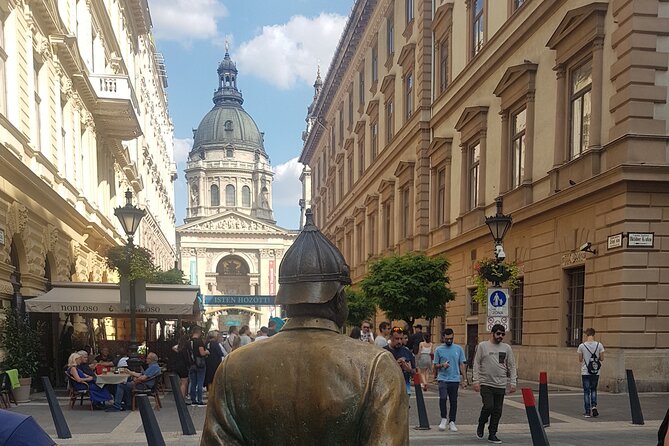
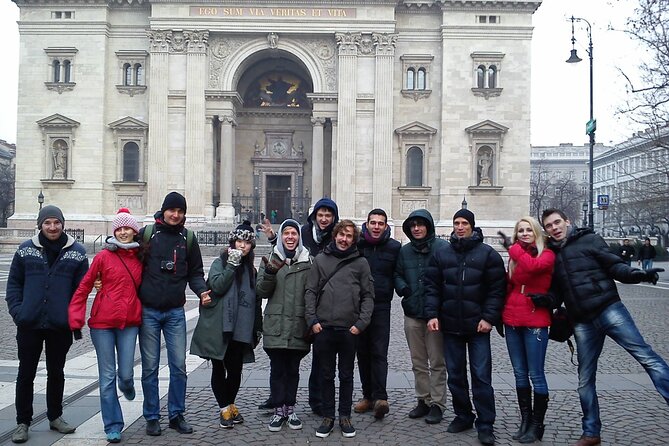
First big architectural stop is Szent István Bazilika. Key detail: you learn about the basilica’s scale and design, including its ability to seat around 8,500 people, but the tour does not enter the basilica. That’s a tradeoff, but a good one for a short walk. You get the main ideas and exterior impression without losing time to ticket lines or extra wandering.
Then you move to St. Stephen’s Square, where public art takes center stage—yes, the stop includes the famous theme of fat policemen with shiny bellies. This is the kind of moment you remember later because it tells you something about local humor and symbolism, not just architecture. The guide uses the stop to shift toward Hungarian food—how cooking history shaped what’s on menus now, what to eat in Budapest, and how to sidestep tourist traps.
If you’re a first-timer, this sequence does exactly what it should. You get an overview anchor (basilica, square), then you get cultural “how-to” info before the walk gets more scenic.
József Nádor tér: porcelain, Habsburg connections, and a craft-history detour
Next comes József Nádor tér, a short stop that punches above its time slot. You’ll hear about “the most Hungarian Habsburg,” then get two brand-name craft references that are easy to recognize once you know them: Herendi hand-painted porcelain and Zsolnay glazed colorful ceramics.
This is a smart part of the tour because it teaches you how to see quality when you encounter it later. After this stop, shopping for ceramics or noticing museum-like craftsmanship outside shops feels less random. You’ll know what kind of products were associated with prestige and period taste.
It’s also a reminder that Budapest isn’t just grand buildings. It’s a city of makers and materials. Even if you don’t buy anything, the stop gives you a lens.
A minor consideration: because the stop is brief, you’ll want to keep your phone ready only for context shots. Use your eyes for details, not just screens.
Vorosmarty Square and Váci útca: people-watching plus the underground history
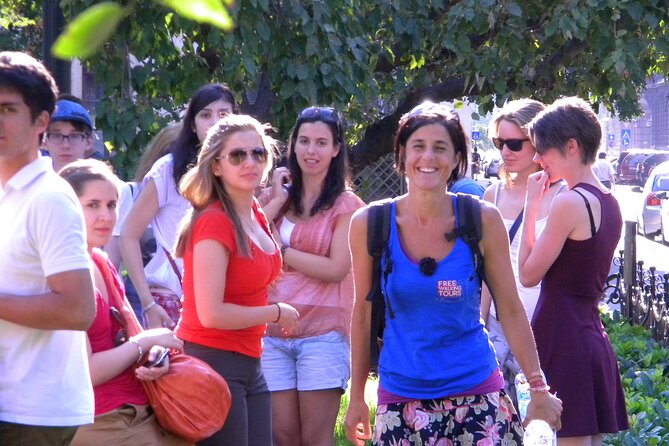
At Vorosmarty tér, the tour shifts into “street energy” mode. The square is positioned at the end of Váci utca, a famous pedestrian stretch, so you’re stepping into a classic Budapest postcard corridor—while still getting a guided explanation.
One standout detail: the guide connects the area to Christmas traditions and markets in Budapest. Even if you’re visiting outside the season, this helps you understand why certain streets and plazas feel like they get special attention at specific times of year.
Another specific hook is about transit history: the tour points out that one of the earliest underground terminals in the world is connected to the area. That’s a great “mind moment.” It turns what looks like a modern city convenience into something historically important.
The stop also references the posh Gerbaud café, which is more than a name-drop. It’s a way of talking about café culture and how Budapest’s social life has long centered on public spaces where people linger.
The practical payoff: after this stop, you’ll be better at spotting which cafés and streets are part of everyday culture—and which ones are basically built to siphon tourist time.
You can also read our reviews of more city tours in Budapest





Danube Embankment and the Chain Bridge: big UNESCO views without the heavy planning
Now you hit the Danube side, starting at Korzo – Danube Embankment (Dunakorzo). This is where the tour earns its “landmarks” promise.
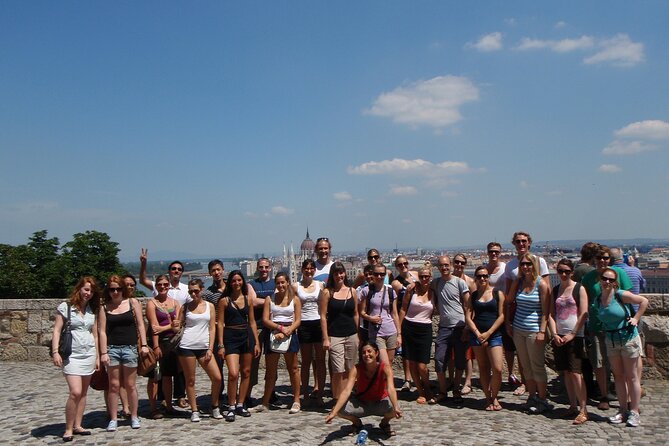
The guide points out the first non-Communist statue in Budapest, talks about the tram line that runs along this stretch, and then zooms your focus toward the view of Castle Hill—including Matthias Church, Fisherman’s Bastion, Buda Castle, and Gellért Hill with the Citadel. The tour also notes that many of these are on the UNESCO World Heritage list of sights, which gives you a clear reason to prioritize them later.
One of the best parts of the embankment stop is that you’re not just seeing scenery—you’re learning what to associate with what. Afterward, if you look back from other viewpoints, you’ll recognize names and stories instead of seeing a blur of famous buildings.
Then you move toward Széchenyi Lánchíd (the Chain Bridge). You’ll get a quick history lesson about the chain bridge as the first permanent bridge built in the city. This is short, but it matters, because the bridge isn’t just a photo spot. It’s part of the city’s physical and economic connection between sides.
If you only do one “Danube lesson” early in the trip, this is the best time to take it.
The Little Princess wish and Vigadó Square’s music legends
Between big bridges and wide views, the tour includes two very Budapest-in-the-small moments.
First is the Little Princess Statue. You’ll stop to make a secret wish by touching the shiny knees of the statue. It’s playful, but it also teaches you how locals use public sculpture to mark everyday rituals—little traditions that give the city character.
Next is Vigadó Square (Vigadó tér). Here the guide ties the area to major imperial ceremony, including a coronation banquette connected to Franz Joseph and Sissy in the 19th century. Then comes the music angle: the area is described as a place where famous Central European musicians like Franz Liszt, Debussy, and Brahms were playing.
I like this stop because it broadens the way you think about Budapest. It’s easy to treat the city as architecture only. Vigadó reminds you the culture also lives in sound and performance—and that some of the best-known names in European music have local ties.
This is also where the walking tour rhythm becomes important. You’re getting variety, not repetition.
Art Nouveau time: Gresham Palace and Hungarian science pride
After the Danube section, you pivot from public squares to built style.
At Gresham Palace, the guide explains its Seccesionist character and connects it to the golden age of Budapest around the turn of the century. You’ll learn about Art Nouveau ornamentation and why the building looks the way it does. This stop is great if you’re the type who likes to notice details later—because it trains your eye to look beyond the front door.
Then you move to the Hungarian Academy of Sciences. This stop has three layers: quick Hungarian words and phrases to impress friends, a point about Hungary’s Nobel Prize awards per capita, and a focus on notable Hungarian-origin people plus Hungarian inventions you might miss in everyday life.
Even if you’re not a “science person,” this kind of stop is useful. Budapest’s story is political, cultural, and artistic, yes—but it’s also intellectual. The guide helps you see that Hungary’s pride isn’t only in monuments.
The practical side: these are short explanations meant to stick. If you go on to museums or lectures later, you’ll have a few starting points already in your head.
Shoes on the Danube and Parliament: what to expect at the emotional end
The tour’s emotional center is Shoes on the Danube Bank. The stop includes the 60 pairs of shoes laid out as a commemoration tied to the Holocaust and the 60th anniversary marker. You’ll hear about WWII history, deportations, and recent history for the Hungarian Jewish community.
Then the guide brings it to a human level with an exercise: you’re asked to close your eyes and imagine the individuals who died here. It spans people from synagogue goers to assimilated Jewish residents, and from factory workers to factory owners, including the feel of grandchildren and grandparents in the same family story.
This is not the stop for daydreaming. It’s a respectful moment that sticks with you. If you’re sensitive to heavy topics, I’d mentally flag this stop ahead of time so you can meet it calmly.
The final stop is the Hungarian Parliament Building. The guide covers recent history and elections, then brings you back to the building itself through the neo-Gothic architecture and how the structure creates harmony. You also get useful recommendations for restaurants, nightlife, or what to do next—basically the “what now?” part right where you’ll naturally continue your day.
You finish with orientation. That’s important because Parliament is a good anchor point for planning your next steps.
How to use the free rest of your day after the tour
Since this tour is only about 2 hours, the best move is to treat it like a scouting trip.
Make a short list right after the walk: one place you want to see close-up (maybe Szent István Basilica from inside another day), one place you want to photograph from different angles (Danube embankment views), and one place you want to explore slowly (Parliament area and nearby streets).
Also, the tour gives you food direction. When you’re walking later, you’ll be less likely to freeze and default to the easiest menu with the loudest English signage. The idea is that you’ll use the guide’s advice to choose where to eat based on what the city actually values.
Finally, don’t underestimate the power of “come back.” You’re walking distances now while your legs still know what the city feels like. Later, when you return, you’ll have context, and the second visit feels richer.
Who should book this walking tour, and who might skip it
This tour is a great fit if:
- You want a first-day overview that covers major landmarks without turning into a long slog.
- You like a guide who teaches basic Hungarian phrases and shares practical food ideas.
- You enjoy mixing big monuments with public art and short cultural stories.
You might skip it if:
- You’re looking for a tour that includes lots of paid interior visits (this one doesn’t enter the basilica).
- You want a longer, sit-down style guided museum day instead of a street walk.
- You’re visiting when weather is questionable, since it’s described as requiring good weather.
Should you book this Budapest City Landmarks Walking Tour?
If you’re doing Budapest for the first time, I think this is an easy yes. The low price plus the tight schedule means you buy orientation, not just sightseeing. You also get the best kind of early-trip help: how to interpret the city, what to prioritize next, and how to avoid the easiest tourist traps.
My only caution is the donation-based guide setup. Before you go, decide what amount you feel good donating. When you do, the tour feels fair, personal, and worth repeating later through your own independent walks.
Book it if you want to hit the ground running from Erzsébet tér to Parliament with a guide holding that small blue flag and turning the city into a story you can actually follow.
FAQ
How long is the Budapest City Landmarks Walking Tour?
The tour lasts about 2 hours.
Where do I meet the guide?
You meet at the Ferris Wheel of Budapest on Erzsébet tér, 1051 Hungary.
What is the end point of the tour?
The tour ends at the Hungarian Parliament Building area on Kossuth Lajos tér 1-3, 1055 Hungary.
Is the tour offered in English?
Yes, it’s offered in English.
Does the tour enter Szent István Basilica?
No. You learn about the basilica, but the tour does not enter it.
How many people are in the group?
The tour has a maximum of 30 travelers.
Is there a mobile ticket?
Yes, the tour uses a mobile ticket.
Do I need to buy entrance tickets for the stops?
Admission tickets are listed as free for the stops included on the route.
What if the weather is bad?
This experience requires good weather. If it’s canceled due to poor weather, you’ll be offered a different date or a full refund.