REVIEW · BUDAPEST
Budapest: Buda Castle District Vampires and Myths Night Tour
Book on GetYourGuide →Operated by Mysterium Tours · Bookable on GetYourGuide
Vampire legends hit different after dark. This night walking tour takes you into Budapest’s Buda Castle District, where myths and real landmarks share the same steep cobbled streets. You’ll follow a period-costumed actor guide through famous viewpoints, while stories about Vlad Dracula, Elizabeth Báthory, and local folklore turn the hill into a living stage.
I especially love the timing: Budapest looks quieter and more dramatic at night, and you get that feel at the castle walls and at the big viewpoints without the daytime rush. I also like the way guides like Bernadette and Petar (among others) layer humor on top of the creepy facts, so it never turns into a stiff history lecture.
One consideration is simple: the route has an uphill walk plus two flights of stairs, and the stones can be slick in rain or snow. If you’re not comfortable with steep paths, plan for the funicular option ahead of time—just know it shortens the stories you’ll hear.
In This Review
- Key highlights worth planning for
- Entering Buda Castle District at night, with myths instead of crowds
- Meeting at Kilometre Zero and handling the uphill start
- Buda Castle photo stop: seeing royal walls without the daytime glare
- Prince Eugene statue, King Matthias fountain, and the fun stop for the Houdini house
- Matthias Church and Fisherman’s Bastion viewpoints: the payoff at the top
- The actor-guide storytelling: what makes this tour feel different
- Price and value for $23: what you’re paying for
- What to bring (and what can ruin your night)
- Should you book this vampire-and-myths walk?
- FAQ
- How long is the Budapest Buda Castle vampires and myths night tour?
- Where do I meet the guide?
- Is there an option to avoid the hill walk?
- What languages are offered?
- Will the tour run in bad weather?
- What should I bring?
- Is entry to attractions included?
- Are jump scares part of the tour?
- Can I record video or audio during the tour?
- What if I need to cancel?
Key highlights worth planning for
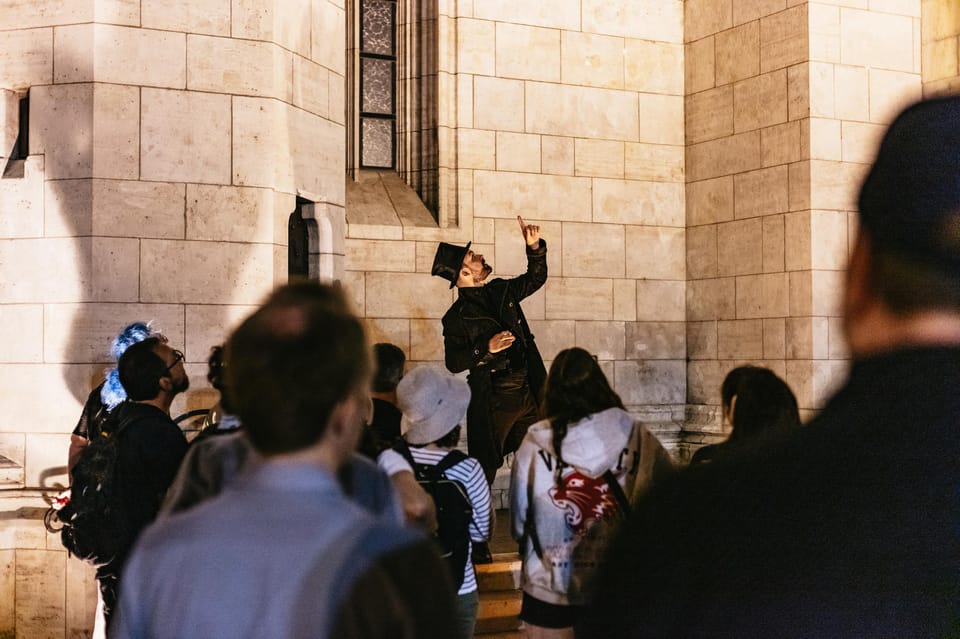
- Actor guide in period costume with a story-first approach, not museum stops
- Vampires and Hungarian myths tied to the streets you’re standing on
- Photo stops at iconic exteriors like Buda Castle and Fisherman’s Bastion
- Steep hill, stairs, uneven cobbles—wear grippy shoes and bring an umbrella
- Small moments of interaction as guides keep the group engaged
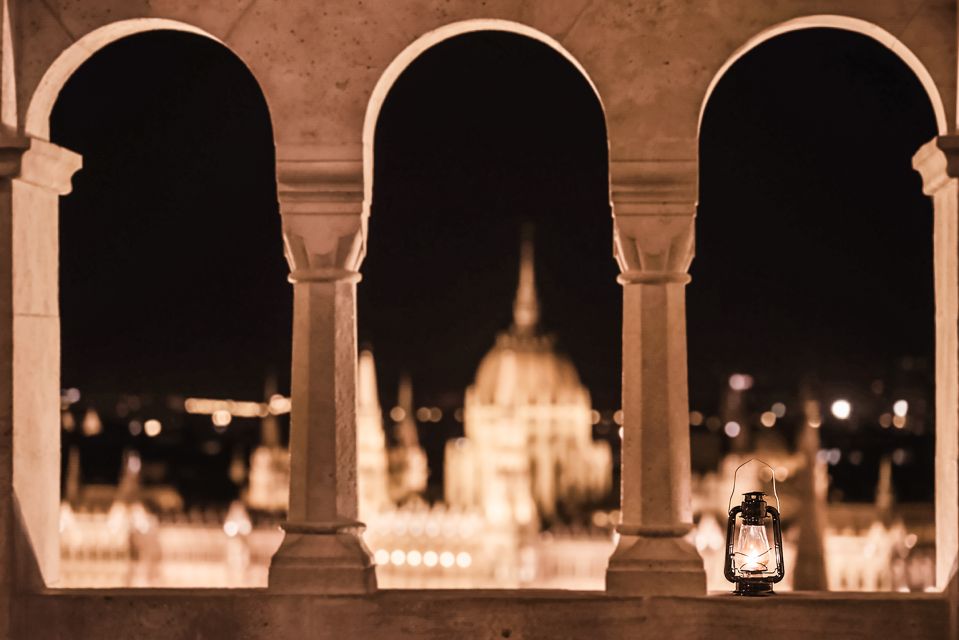
- Night views of Budapest across to the Parliament area and river-side lights
Entering Buda Castle District at night, with myths instead of crowds
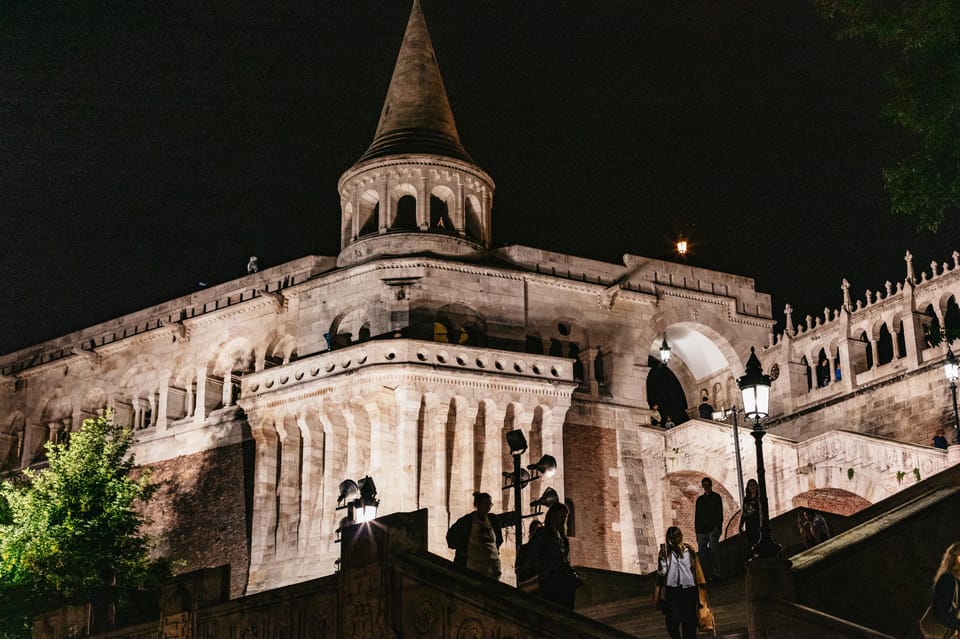
Budapest’s Buda Castle District is beautiful in daylight. At night, it changes. The streets feel narrower, the shadows stretch, and the stonework carries sound differently when there are fewer people around. That’s exactly what makes a vampire-and-myths walk work so well: the setting does half the mood-building for you.
This tour is built around story, not entry tickets. You’ll be outside for the whole experience, moving from stop to stop on the hill while the guide talks through legends and darker chapters of Hungarian history. Expect the vibe to stay playful-creepy rather than jump-scare scary. And yes, it’s still history-adjacent: you’re hearing how Vlad Dracula and Elizabeth Báthory get woven into the place people walk every day.
For me, the best part is that the guide doesn’t just name-drop famous sites. They connect those names to specific corners and buildings you can actually see. That turns a nighttime walk into something you can replay later when you’re back in your hotel room looking at photos.
You can also read our reviews of more evening experiences in Budapest

Meeting at Kilometre Zero and handling the uphill start
The meeting point is practical and easy to find: Kilometre Zero Stone, by the funicular entrance near Clark Adam Square on the Buda side, just a few meters from the Chain Bridge.
You’ll start from the bottom of the hill. The tour includes uphill walking right away, plus additional steps later. Many guides pace the group steadily, but it’s still not flat ground. If you’re traveling with someone who gets tired on hills, you’ll want to set expectations early.
There is an option to take the funicular, and you can meet the group once they’re up top. Here’s the trade-off: you’ll lose about 20–30 minutes of the tour’s walking time and the stories told on the way up. It’s not wrong to use the funicular—just do it intentionally so you don’t feel like you missed the main “story route.”
Buda Castle photo stop: seeing royal walls without the daytime glare
Early on, you’ll reach the Buda Castle for a photo stop and sightseeing. This is one of those moments where being there at night matters. Daytime crowds flatten the view; at night, the castle mass and lighting look more cinematic, and the angles feel less cluttered.
You’re not going inside. Instead, you’re looking up and taking in the mass of the complex while the guide frames who lived here and what kind of power sat behind these walls. That outside-only format is part of why the tour moves quickly enough to fit in 110 minutes.
Practical tip: treat this as your first “stop for photos” moment. If you wait too long, later viewpoints can be crowded or windier. (And at night, wind can show up fast on the hill.)
Prince Eugene statue, King Matthias fountain, and the fun stop for the Houdini house
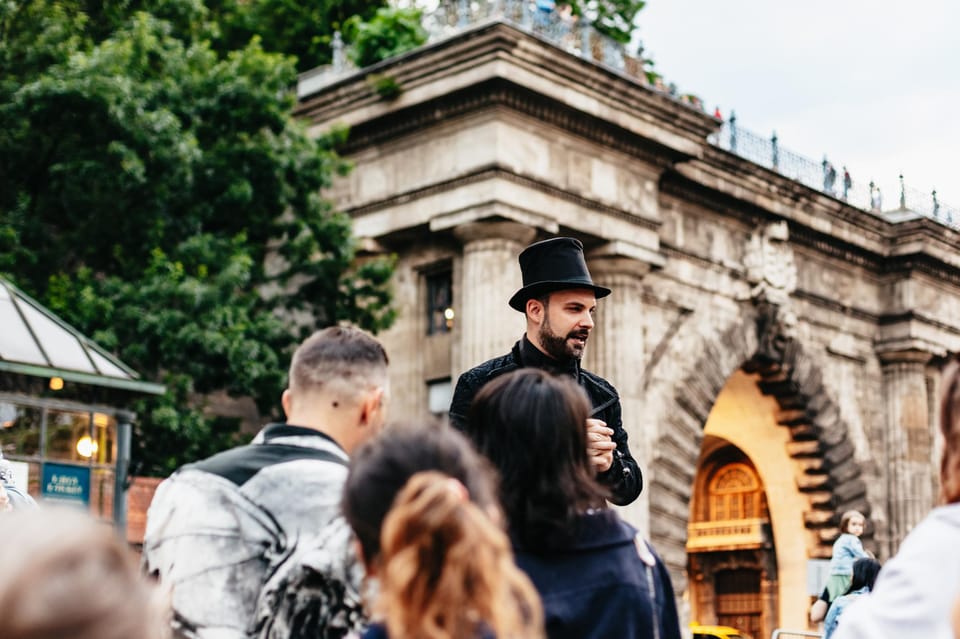
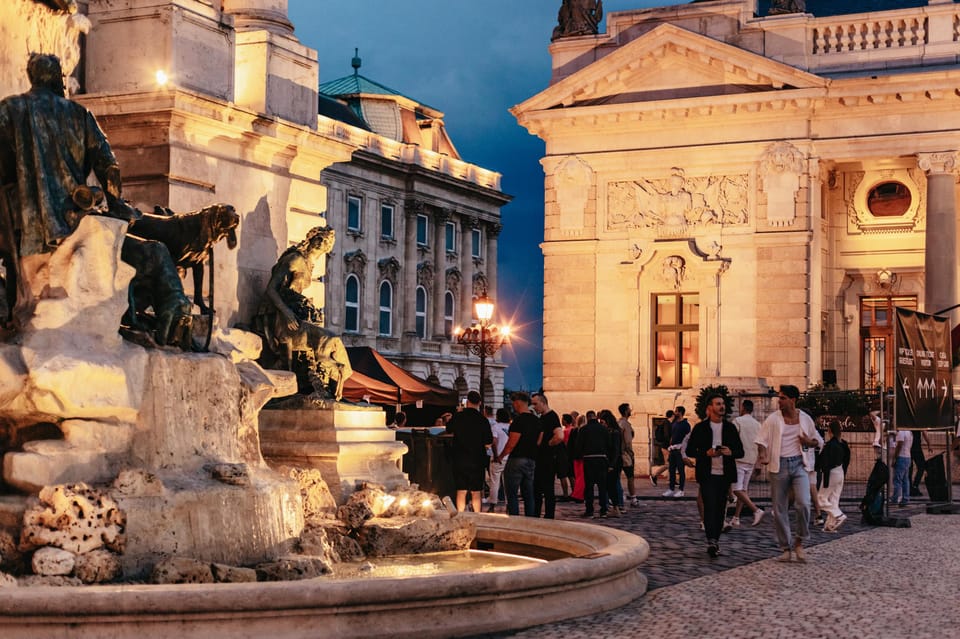
After Buda Castle, you’ll keep moving and stop at several recognizable points. You’ll get another short photo stop for the Statue of Prince Eugene of Savoy, a quick break for photos and context. These pauses are brief, but they help you learn the layout of the district—where your next turn will lead and why that corner matters in the story.
Then come the Fountain of King Matthias visit and sightseeing time. This is a nice anchor because Matthias isn’t only a historical name; he’s part of the visual language of the hill. The guide uses the stop to connect myth, power, and local memory—so the fountain isn’t just a pretty photo background.
One of the more unexpected stops is The House of Houdini. If you like oddball, you’ll probably enjoy this segment. It breaks the horror mood with something more playful, while still staying on theme: legends, performance, and the stories people tell about famous figures.
These middle stops are also where the tour’s pacing shows itself. The walking segments are short, so you’re not trudging for long stretches without speaking. It keeps the night feeling active rather than tiring.
Matthias Church and Fisherman’s Bastion viewpoints: the payoff at the top
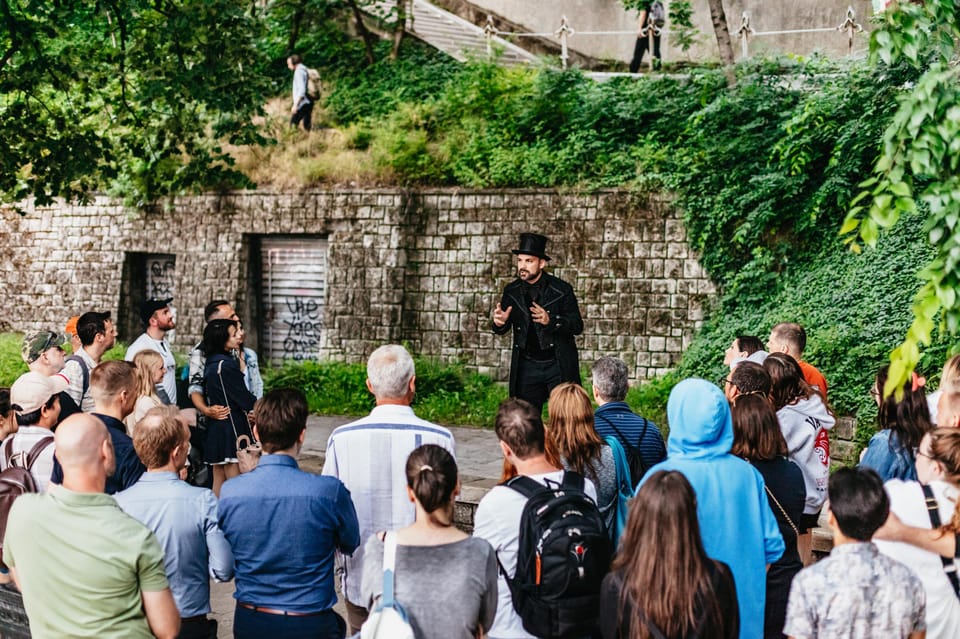
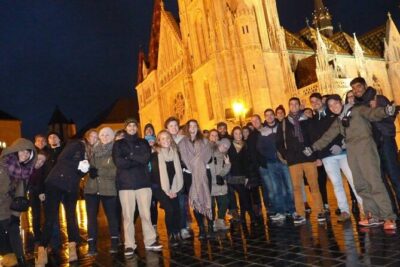
As you near the church area, you’ll hit Matthias Church for sightseeing. The time here is longer than the earlier photo stops, which makes sense—this is a natural moment to slow down, look at details, and let the guide connect the place to the larger legends being told.
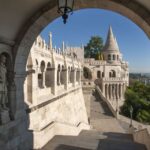
From there, the tour continues to the Fisherman’s Bastion for another sightseeing stop and, in many seasons, some of the best views of the city. You’ll be looking across the river direction with Budapest’s lights spread out behind the stories. It’s the kind of viewpoint that makes you understand why people photograph this district constantly.
A small planning note: this part of the walk can feel colder and windier, especially if you’re visiting in winter. If you’re dressed for daytime sightseeing, you’ll likely wish you’d layered up sooner. And since the tour is outdoors and doesn’t include a built-in break for drinks or restrooms, dressing for comfort is really practical.




The actor-guide storytelling: what makes this tour feel different
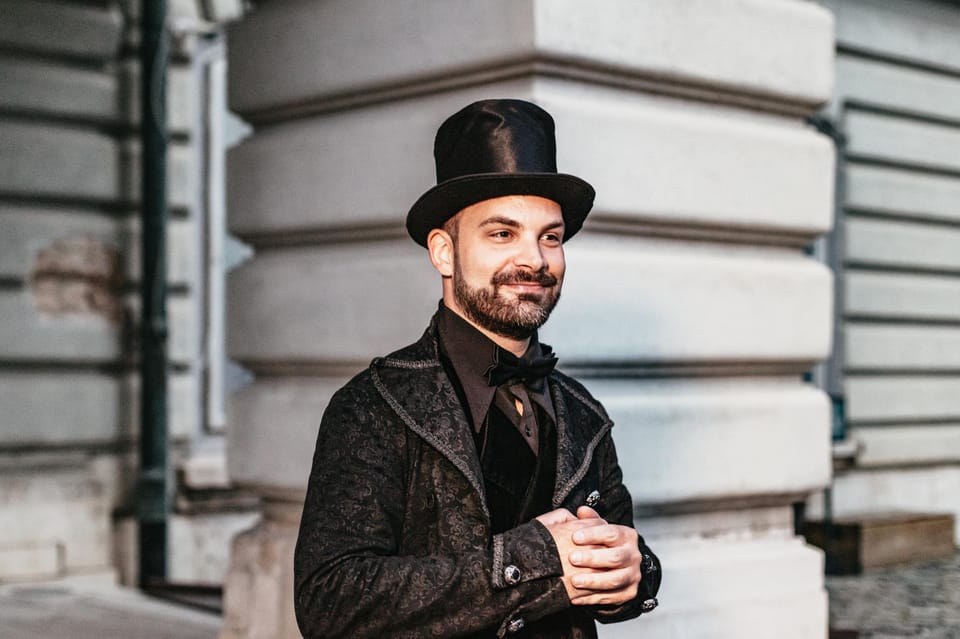
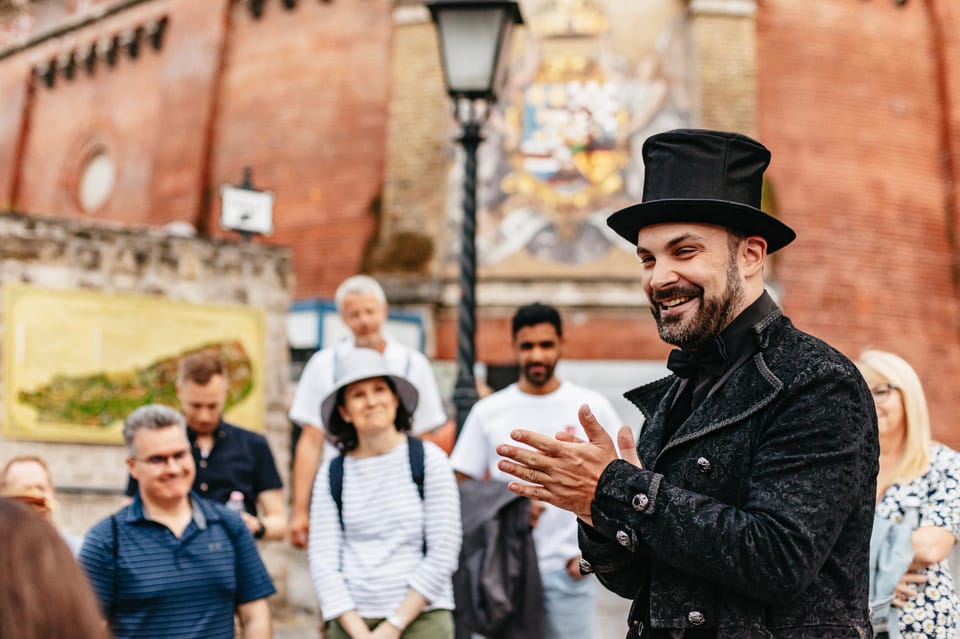
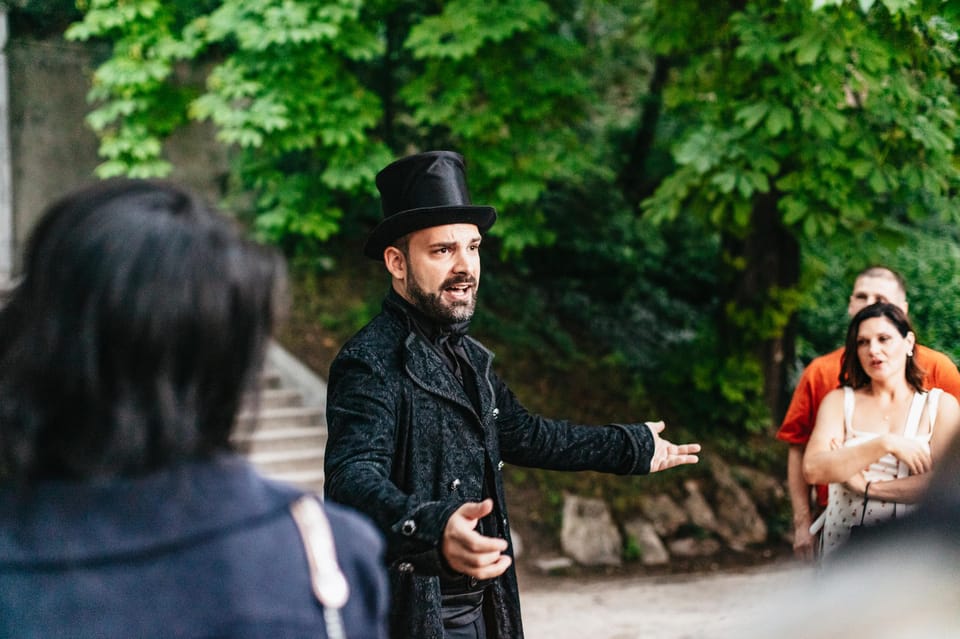
What separates this from a standard walking tour is the guide’s performance. You’re not just getting “facts on a route.” You’re getting a Gothic-themed narrator style that leans into vampires, cruelty, and folklore.
People talk about it for a reason: the best guides use voice and timing, and they sprinkle humor into the darker material. Some names you may recognize from guide rosters include Bernadette, Petar, Fabian, Virag, Flower, Zoltan, and Zigmond. The consistent pattern is that the guide treats the story like a live scene—sometimes with interaction from the group, sometimes with quick humor that keeps attention from drifting.
It’s also worth noting what’s not part of the experience. There are no jump scares built in. So if you want a spooky theme without being startled, this is the right kind of “night horror” to choose.
One more detail: the tour allows photos, but short videos only. Long video and audio recordings are prohibited during the walking tour. So plan to shoot still photos at each stop rather than trying to record continuously while walking.
Price and value for $23: what you’re paying for
At $23 per person for about 110 minutes, you’re paying for a guided, themed night walk with an actor-guide performance and multiple landmark stops—without buying museum tickets or paying for a lot of transit.
The value is strongest if you like:
- history mixed with folklore
- night views and photo opportunities
- storytelling that’s more theatrical than lecture-like
The value is weaker if you’re expecting indoor access or formal museum entry. This is an outside walking tour with sightseeing and photo stops. If you want to go inside Matthias Church or Buda Castle complex areas, you’ll need other plans for that.
Also, because it’s only about two hours, it’s a smart “one evening” add-on even if you already have daytime sightseeing scheduled. You’re not losing a whole afternoon to cover this hill.
What to bring (and what can ruin your night)
This is an outdoors tour in rain or shine. That means your comfort depends on what you bring.
Bring:
- Comfortable shoes with good grip
- An umbrella (especially in wet conditions)
Wear for the weather, not the forecast you hope for. If you’re visiting in winter, expect cold winds on the hill. Reviews mention everything from snow to very low temperatures, and the guides still keep the tour moving.
Avoid bringing:
- luggage or large bags
- alcohol and drugs
- baby carriages
- party groups
Also remember the walking reality: there are two flights of stairs and an uphill route. If you have trouble with steps or uneven cobblestones, the funicular option might be the smarter choice.
One more practical note that matters: there don’t seem to be official toilet or drink stops built into the route. Plan ahead at the start, because once you’re climbing, you’ll be with the group until the end.
Should you book this vampire-and-myths walk?

If you enjoy themed tours with a real sense of place, I’d book it. The big reason is the pairing: story + night viewpoints in a district that looks far better after dark. The actor-guide approach is usually the difference between a “nice walk” and an evening you actually remember.
Book it if:
- you want something different from the standard day tours
- you like vampires and folk legends but still want local context
- you’re comfortable with a steep hill, stairs, and a lot of walking
Skip it or choose the funicular version if:
- steep paths and stairs are a problem for your mobility
- you can’t handle cold/wet weather walking
- you’re hoping for indoor attraction entry, because this is mostly exteriors and photo stops
If you’re the kind of traveler who loves Budapest’s quieter side and wants your night to feel a little strange—in the best way—this is a great use of two hours.
FAQ
How long is the Budapest Buda Castle vampires and myths night tour?
It lasts about 110 minutes, or roughly two hours.
Where do I meet the guide?
Meet at the Kilometre Zero Stone by the funicular entrance (Clark Adam Square), a few meters from the Chain Bridge on the Buda side.
Is there an option to avoid the hill walk?
Yes. You can take the funicular and meet the group on top, but you will lose part of the tour (about 20–30 minutes) where stories are told on the way up.
What languages are offered?
The live guide offers Spanish and English.
Will the tour run in bad weather?
Yes. It operates outside in rain or shine.
What should I bring?
Wear comfortable shoes and bring an umbrella.
Is entry to attractions included?
No. Entry to attractions seen during the tour is not included.
Are jump scares part of the tour?
No jump scares are included.
Can I record video or audio during the tour?
You can take photos. Short videos are permitted, but long video and audio recordings are prohibited during the walking tour.
What if I need to cancel?
You can cancel up to 24 hours in advance for a full refund, and you can reserve now and pay later.