
REVIEW · BUDAPEST
Budapest: Buda Castle Walk with Saint Stephen’s Hall
Book on GetYourGuide →Operated by Buda Castle Walks · Bookable on GetYourGuide
Budapest’s royal past is right under your feet. This English walking tour guides you through the Buda Castle District courtyards and viewpoints, then brings you into St. Stephen’s Hall, restored to its former royal splendor. It’s a compact way to understand how the castle shaped Hungary for centuries.
What I like most is how the tour uses the setting to tell real stories, not just dates. My other favorite part: the guide-led visit to St. Stephen’s Hall (about 30 minutes) with headsets, so you can hear clearly even when the square is busy or work crews are nearby. The only drawback to plan for is that the palace district has construction and you may hear noise and heavy vehicle traffic; the walk is also rain or shine.
In This Review
- Key things I’d plan around
- Savoyai Terrace to Buda Castle District: get your bearings fast
- Cobblestones, courtyards, and city views from the Várhegy Hill area
- Hunyadi Court and Lion Courtyard: where the stories get personal
- The full timeline: Golden Age to siege, then communism and restoration
- St. Stephen’s Hall: restored royal splendor you can actually see
- Price check: is $29 worth it for 1.5 hours?
- What to expect on the ground: timing, weather, and work-site noise
- Who this tour is best for (and who should skip)
- Should you book Buda Castle Walk with St. Stephen’s Hall?
- FAQ
- How long is the tour?
- Where do I meet the guide?
- Is the tour in English?
- Does the price include St. Stephen’s Hall entry?
- Does the tour have headsets?
- Does the tour run in bad weather?
- What should I bring?
- Is it suitable for wheelchair users or visitors with mobility impairments?
Key things I’d plan around
- Savoyai Terrace is your easy starting point (in front of the Hungarian National Gallery), marked by a turquoise umbrella
- Panoramic views from Várhegy Hill territory give you instant orientation for the rest of the day
- Outdoor courtyards + indoor St. Stephen’s Hall means you get both atmosphere and close-up details
- A clear timeline from royal eras to the WWII siege, then the communist period and restoration work
- St. Stephen’s Hall is the fully and faithfully restored interior after WWII looting and destruction
- Most of the value is in the guide—people consistently praise guides like Rita, Kopp, Ester, Josie, Rosie, and Eszter for sharp English and good pacing
Savoyai Terrace to Buda Castle District: get your bearings fast

This tour starts at Savoyai Terrace (Szent György tér 2), right in front of the Hungarian National Gallery. That matters more than it sounds. You’re dropped at a major landmark with easy wayfinding, and from there you begin climbing into the Castle District with a guide who understands where the viewpoints, courtyards, and key buildings fit into the story.
Before you move, you’ll be pointed to the exact meeting spot by a guide holding a turquoise umbrella with the Buda Castle Walks logo. It’s a small detail, but in this area—where levels change and construction can block routes—it keeps your morning from turning into a scavenger hunt.
One practical note: they ask you to arrive about 15 minutes early because the palace district can have closures, reconstruction, and uneven walking. Latecomers can’t be accommodated, so treat that early arrival like part of the experience, not a hassle.
If you’re the type who likes to stack sights, this start is also handy. One traveler specifically recommended doing this in the morning so you can visit the Hungarian National Gallery next door afterward. Even if you don’t plan that museum time, the morning start usually feels calmer on your feet and in the streets.
You can also read our reviews of more walking tours in Budapest



Cobblestones, courtyards, and city views from the Várhegy Hill area

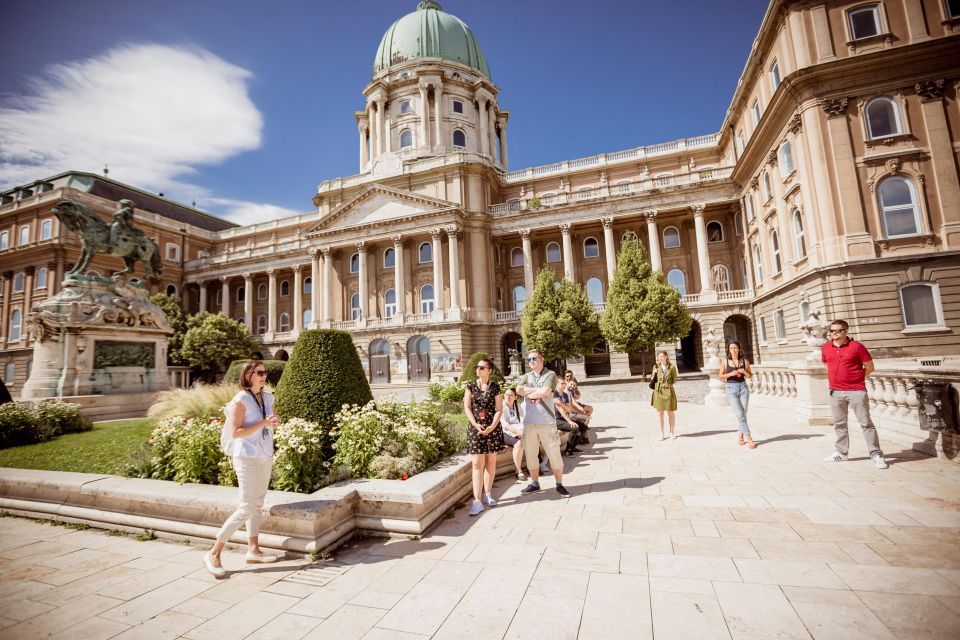
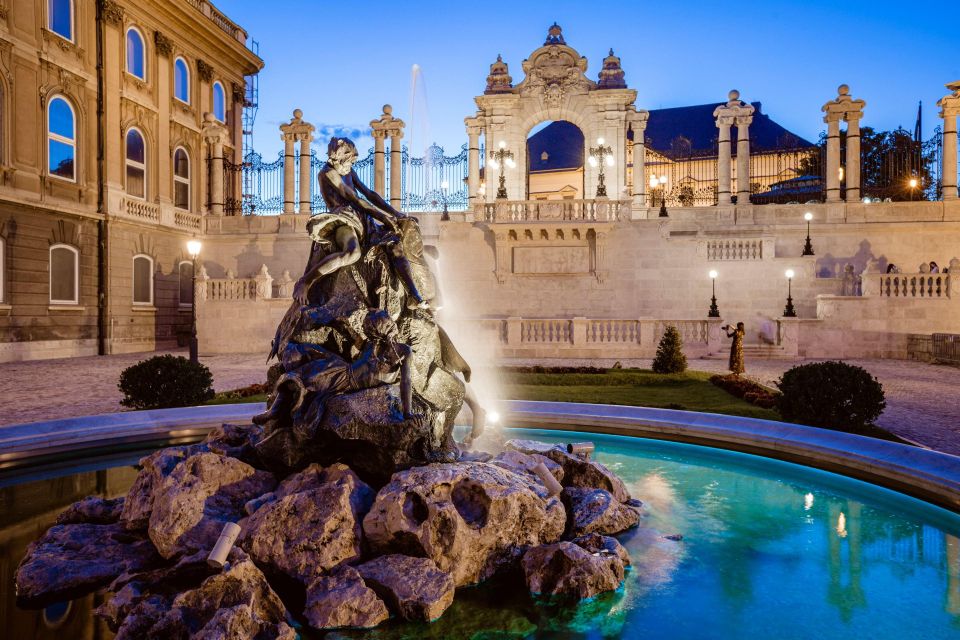
Once you’re walking, the tour does a smart thing: it connects the ground under your shoes to the view in front of you. You’ll wander through outdoor courts and cobbled areas where statues and fountains appear along the way. You’re not just passing by scenery—you’re learning what the place was built to communicate: power, defense, and national identity.
The guide also steers you toward panoramic city views from the Várhegy Hill area. This is where the tour earns its keep. When you can see the layout below, you understand why the castle sits where it does and how it controlled river traffic, routes, and access. It’s a quick way to make Budapest feel less like postcard images and more like geography you actually understand.
And because the tour uses headsets, you can focus on both the guide and the environment. That might sound like a comfort feature, but it’s also a learning feature. With clear audio, you don’t miss the smaller story turns—like how the same courtyard could have looked completely different in another era.
Hunyadi Court and Lion Courtyard: where the stories get personal
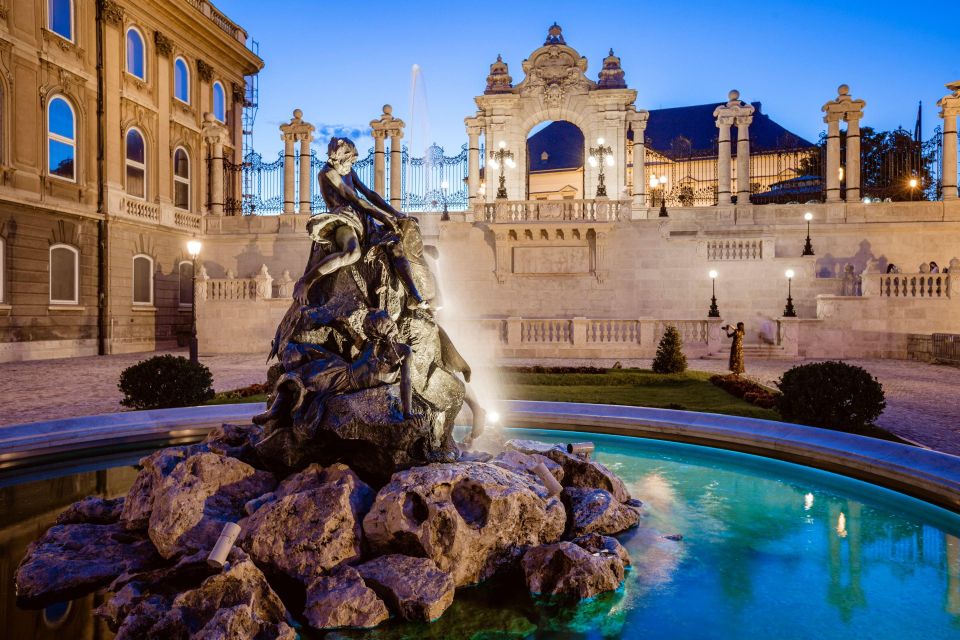
The walking route includes stops at Hunyadi Court and the Lion Courtyard. These courtyards help break the experience into pieces, so you don’t feel like you’re stuck in a long line of walls and stairs.
In these spots, the tour shifts from “what you’re seeing” to “what it meant.” You’ll hear tales tied to kings and queens, and the emotional themes keep moving—love, war, and other human stuff that history books tend to flatten. That’s also where the guide’s personality matters, and the feedback here is consistent.
People who booked this tour often praise their guides for being animated and easy to follow, including Kopp, Ester, and Josie. You’re hearing history translated into plain English you can keep in your head while you’re walking. One guide even gave a Netflix recommendation for a Hungarian series afterward, which is exactly the kind of “continue the trip at home” tip I like.
There’s also a comfort reality here: courtyards mean you’re outdoors for about an hour. That’s why the tour stresses comfortable shoes and outdoor clothing. Even if you’re dressed for city walking, add a layer for colder weather or wind—because the castle district can feel harsher than the river areas.
The full timeline: Golden Age to siege, then communism and restoration
This tour doesn’t treat Buda Castle like a single museum object. It’s presented like a timeline you can walk through.
Expect the guide to connect the castle’s big eras, including:
- the Golden Age
- the siege of Budapest during World War II
- the communist era that followed
- how the Palace has been restored since the damage
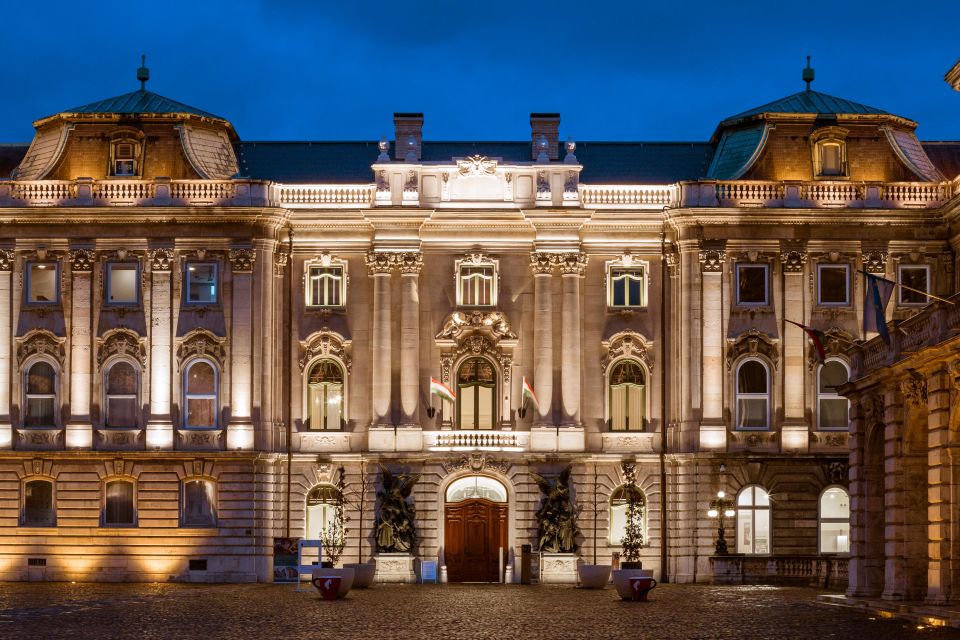
This matters because Buda Castle isn’t one continuous “perfect past.” It’s a place that was repeatedly reshaped—by ambition, conflict, and rebuilding. Standing in courtyards and seeing the mix of architectural styles becomes more understandable when your guide points out how each era left a mark.
And you get the added context that the Buda Castle District is a UNESCO World Heritage Site. The guide doesn’t just name-drop UNESCO; the point is to help you see the castle as a system—buildings, public spaces, and history stitched together into something worth protecting.
On a practical level, the tour length helps here. At 1.5 hours, the guide can give you a coherent arc without exhausting you. You leave with enough framework to explore more on your own afterward without feeling totally lost.
St. Stephen’s Hall: restored royal splendor you can actually see
The highlight—at least if you care about interiors—is St. Stephen’s Hall. This is the part that runs about 30 minutes, and it’s where the tour earns its name.
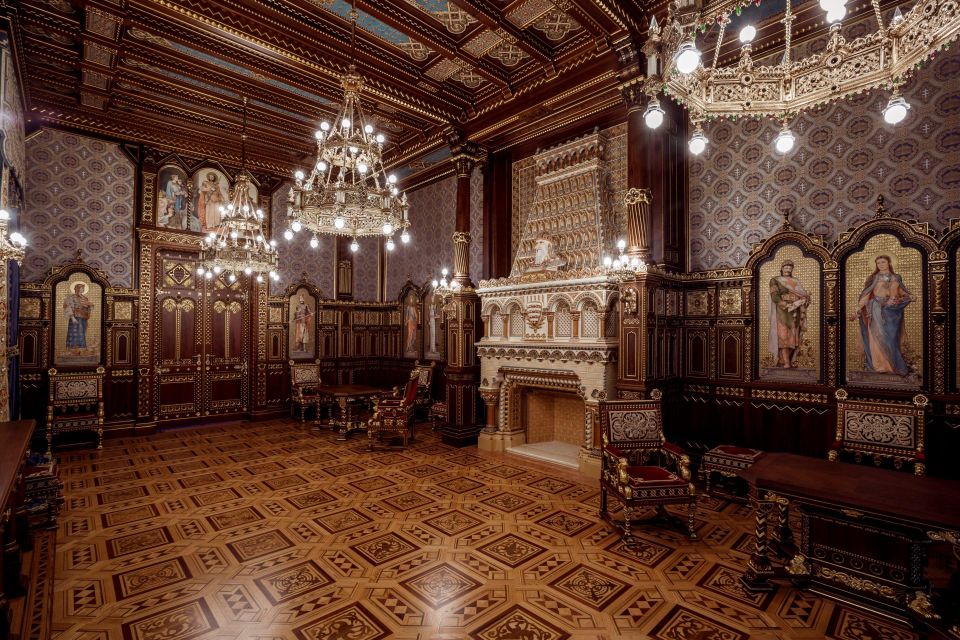
Here’s what makes it special: it’s the only part of the Palace interior that has been fully and faithfully restored to its former royal splendor after WWII. The hall was looted and destroyed during the war, and this restoration brings back craftsmanship and design choices in a way you can sense immediately once you’re inside.
People in the reviews repeatedly call out St. Stephen’s Hall as the most beautiful or meaningful part of the experience. One traveler even said it’s the nicest thing to see in the museum space, which matches the feeling you get when you walk from outdoor courtyards into a room that looks built for ceremonial life.
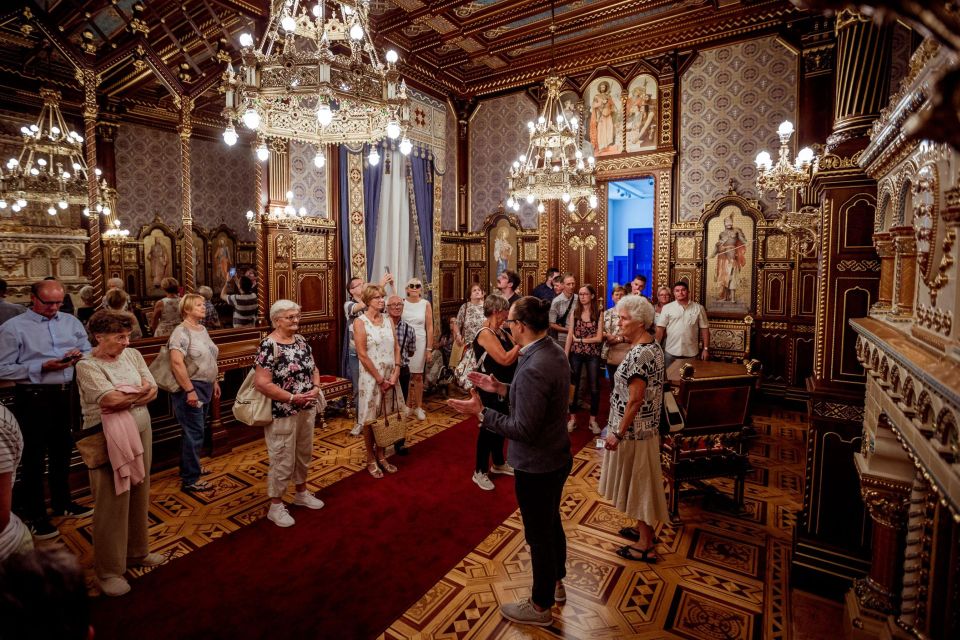
If you like details, this is also where the tour transitions from “storytelling” to “looking.” You’ll get time in a guided interior space, plus your guide can point out Hungarian craftsmanship and why the hall is such a key symbol.
One more useful tip: because the tour includes both outdoor and indoor portions, plan your patience with the weather. The tour runs rain or shine, so indoor time is a welcome reset if it’s cold or wet outside.






Price check: is $29 worth it for 1.5 hours?
At $29 per person, this tour is in the category where you ask one question: what exactly do I get that I can’t easily do alone?
You’re paying for a guided walk that includes:
- a structured route through the Castle District
- an English guide
- headsets for clear audio
- the entry ticket to St. Stephen’s Hall
- and a focused interior visit (about 30 minutes)
If you tried to do this on your own, you’d still get the views and the buildings. But you’d miss how the guide ties courtyards to specific historical themes—Golden Age, WWII siege, communist period, and restoration—while you’re moving through the very spaces that shaped those events.
Also, the guide impact is real. Many reviews mention excellent English and strong engagement, with multiple guides being singled out by name—Rita, Kopp, Ester, Josie, Rosie, and Eszter. That’s not a guarantee for every departure, but it is a strong sign that you’re likely to get a guide who can keep the pace comfortable and the story clear.
So yes, it’s worth it if you want a guided “get the meaning first” experience. If you prefer pure wandering with zero schedule, you might find it a bit structured for your style.
What to expect on the ground: timing, weather, and work-site noise
This tour is designed as a straightforward plan: about 1 hour outdoors and 30 minutes indoors, with the whole thing running 1.5 hours.
Here’s what you should plan around:
- It starts on time, and latecomers can’t join mid-tour.
- It runs rain or shine.
- Reconstruction work is ongoing in the palace district, so you might hear occasional noise and see heavy vehicle traffic.
- The area has construction, closures, and level differences, which is why arriving early helps.
If you want to make the day smoother, use the tour’s suggested online planning map that shows real-time closures and traffic inside the palace district. It’s accessible without registration and can help you understand detours before you get stuck on the wrong stairway.
And on comfort: this is not a stroller-friendly route. It’s also not suitable for children under 12, people with mobility impairments, or wheelchair users, based on the activity guidance provided.
Who this tour is best for (and who should skip)

This is a great fit if:
- You like history that has a human voice—kings, queens, love, war—while you walk.
- You want panoramic orientation quickly, especially before exploring deeper on your own.
- You value clear listening, which is why the headsets matter.
- You want a high-value interior highlight in a short time window: St. Stephen’s Hall.
Skip it if:
- You need step-free, wheelchair-friendly access.
- You’re traveling with a child under 12.
- You hate work-site noise and heavy traffic and would rather choose a day with less construction activity.
Should you book Buda Castle Walk with St. Stephen’s Hall?

I’d book it if you want a guided path that turns Buda Castle from impressive scenery into a clear story you can remember. The structure is tight, the audio is supported with headsets, and the St. Stephen’s Hall visit is a real interior payoff—especially because it’s presented as the restored core of the former palace experience.
I’d think twice if your priority is quiet self-paced wandering or if you strongly dislike construction-adjacent walking. In that case, you might still see the sights, but you may not get the same benefit from the guide’s interpretation.
If you do book, arrive early, wear shoes you can trust on uneven surfaces, and plan to spend that 30 minutes inside St. Stephen’s Hall paying attention. That’s where the whole tour starts to click.
FAQ
How long is the tour?
The tour lasts about 1.5 hours total, with around 1 hour outdoors and about 30 minutes inside St. Stephen’s Hall.
Where do I meet the guide?
Meet at Savoyai Terrace, in front of the Hungarian National Gallery, at Szent György tér 2 (1014 Budapest). The guide will be marked with a turquoise umbrella.
Is the tour in English?
Yes, the tour guide speaks English, and English audio support is included.
Does the price include St. Stephen’s Hall entry?
Yes. The tour includes the St. Stephen’s Hall entry ticket.
Does the tour have headsets?
Yes. Headsets are provided so you can hear the guide clearly.
Does the tour run in bad weather?
Yes. The tour takes place rain or shine.
What should I bring?
Bring comfortable shoes and outdoor clothing.
Is it suitable for wheelchair users or visitors with mobility impairments?
No. It is listed as not suitable for people with mobility impairments or wheelchair users. It’s also not suitable for children under 12.