Budapest in 3 hours sounds intense. This private tour is built for getting your bearings fast, with St. Stephen’s Basilica skip-the-line entry and a homemade snack at the Strudel House. You’ll also move through major Danube-and-Pest sights efficiently, guided by people who know how to tell the stories behind the stone.
One thing to keep in mind: you cover a lot of ground and some segments are more about quick stops than lingering, so if you want nonstop conversation at every step, you may have to ask for extra context along the way.
What I like is the format: a private group, on foot, with a licensed guide. It’s also structured to help you avoid common first-timer headaches, like lining up for the biggest sights and trying to connect scattered landmarks on your own. If you want a quick, meaningful overview without feeling rushed into ticket lines, it fits well.
In This Review
- Key highlights and what makes this tour work
- A 3-hour private route that gets you oriented fast
- Danube highlights: Széchenyi Lánchíd and Shoes on the Danube Bank
- Parliament exterior and Liberty Square: read the symbols instead of just taking photos
- St. Stephen’s Basilica with skip-the-line entry and the best Pest view
- Gresham Palace interior peek and the Jewish Quarter triangle
- Strudel House, Szimpla Kert, and a map for what comes next
- Should you book this Budapest Essentials private tour?
- FAQ
- FAQ
- How long is the Budapest Essentials private tour?
- Is this tour private or shared with other groups?
- Is the tour offered in English?
- What’s included for St. Stephen’s Basilica?
- Where does the tour start and end?
- What food and drinks are included?
- Are any tickets or admissions not included?
- What is the cancellation policy?
Key highlights and what makes this tour work
- Skip-the-line visit to St. Stephen’s Basilica, plus time for one of the best Pest-side viewpoints
- Two Danube hits in a row: Széchenyi Lánchíd and the Shoes on the Danube Bank memorial
- Exterior sights done right, including the Hungarian Parliament Building and Independence Square area
- Jewish Quarter focus around the Jewish triangle, including the Tree of Life memorial behind the Great Synagogue
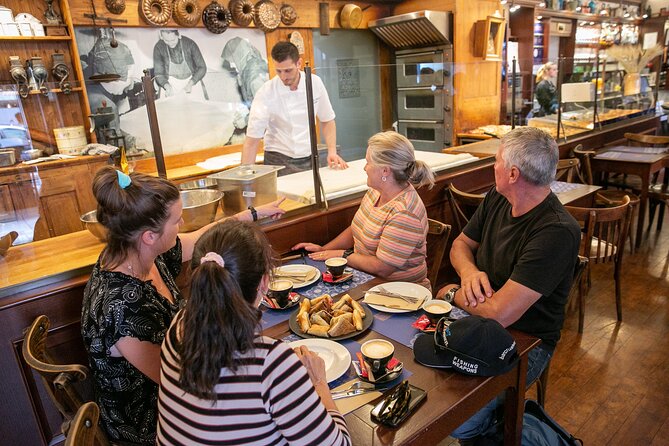
- Strudel House stop with homemade strudel, coffee/tea (or a soft drink) to keep your energy up
- Szimpla Kert quick peek, plus a locals map so you can keep exploring after the tour
A 3-hour private route that gets you oriented fast
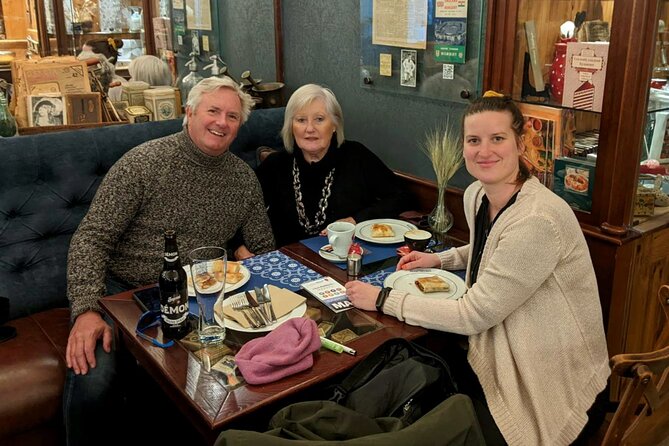
This tour is short on purpose. At about three hours, you get a guided walk that connects the dots between the Danube, Parliament-area architecture, and the Pest-side viewpoint at St. Stephen’s Basilica. That matters because Budapest can feel like two cities stuck together: Buda hills on one side, Pest bustle on the other. This route gives you a usable mental map.
It’s also private, meaning only your group goes with the guide. No crowd wrangling. No audio headsets. And you’re not stuck following a line of strangers. Guides you may meet on this route include names like Petra, Anita Barta, Bridget, and Barbara, and the common theme in their approach is pacing that keeps moving, with stories timed to the places you’re actually standing.
Logistically, it starts at the InterContinental Budapest (address on Apaczai Csere J. u. 12-14) and ends at Deák Ferenc tér. That finish is a big deal: Deák Ferenc tér is a major transit hub, so you can roll into dinner, a museum, or a second activity without a long ride back across town.
You can also read our reviews of more private tours in Budapest

Danube highlights: Széchenyi Lánchíd and Shoes on the Danube Bank
Your walk begins at Széchenyi Lánchíd, the famous Chain Bridge. You’re not just seeing the postcard version. You’re hearing the story of Budapest’s very first permanent link. It’s a good opener because it frames the city as a place shaped by crossings—trade, movement, and later, conflict.
Then you move right to the Shoes on the Danube Bank memorial. This is one of Budapest’s most powerful Holocaust-era memorials, and the guide explains the Jewish history and the World War II context behind it. The emotional impact is the point here. You’ll learn why the memorial focuses on shoes along the riverbank instead of something abstract.
Two practical notes. First, expect this area to be busy depending on the time of day, especially near the river. Second, shoes memorials and Holocaust history hit differently depending on your mood, so if you prefer a lighter start, know this section is serious right away. The flip side is that it sets the tone for the rest of the tour—this isn’t just sightseeing.
Parliament exterior and Liberty Square: read the symbols instead of just taking photos
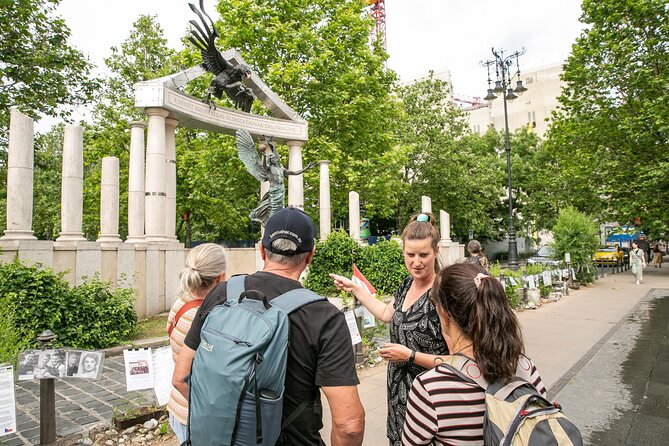
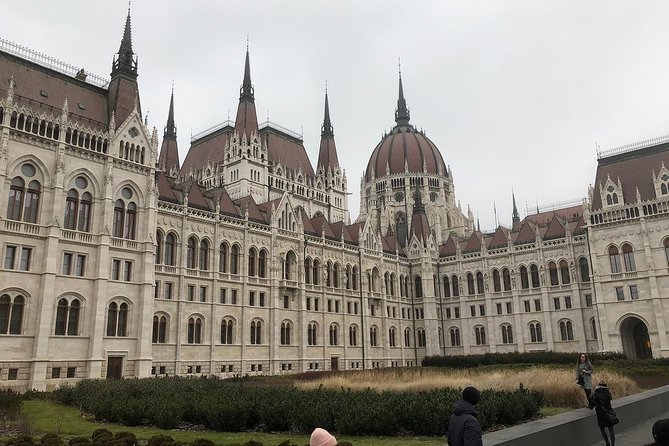
Next comes the Hungarian Parliament Building exterior. You’ll walk around a building often described as one of the largest in the world, and you’ll get context for why it became such a national stage. One detail worth filing away: admission to the Parliament Building isn’t included, so you’re viewing from outside, not doing a full interior visit. That’s not a drawback if you’re using this tour for orientation, but it does mean your time inside would require a separate ticket later.
From there, you head toward Liberty Square (the area around Independence Square / Szabadság tér). The tour focuses on what’s easy to miss when you’re rushing through: the meanings behind monuments and the way political eras leave physical traces. One guide story that stands out in this area is the Ronald Reagan statue connection that shows up around the same square zone—another reminder that modern Hungary is layered with symbolism from the collapse of Soviet influence to today.
Here’s the practical value for you: if you plan a second day in Budapest, this square stop helps you understand what you’re looking at. Instead of just naming statues, you can place them in time. That makes the next walk around Parliament area much more satisfying.
St. Stephen’s Basilica with skip-the-line entry and the best Pest view
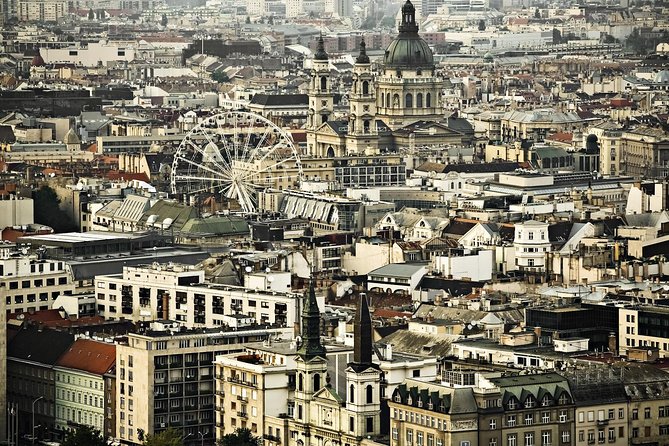
This is the stop that most people thank themselves for later. You get skip-the-line entry and a guided visit to St. Stephen’s Basilica, and the admission ticket for the Basilica is included. In practical terms, it saves time and reduces stress. In human terms, it gives you a calmer entry than showing up with a big crowd and hoping for the best.
The guide also shows you the best viewpoint on the Pest side. That’s important because Budapest’s views are not one-size-fits-all. From different angles, the same city looks different: the Danube bends, the Buda hills show their elevation, and the architecture feels more three-dimensional. The viewpoint here helps you connect what you saw earlier by the river to what you’ll see later across the water.
If you’re visiting near the Christmas season, the area around St. Stephen’s can have a festive feel. Even when it’s not peak season, the basilica area tends to feel like a natural hub for your photos and your next meal plan.
One small consideration: because this is a guided visit, it’s not the time for wandering alone. If you want lots of solo time inside, plan to come back after the tour for extra browsing. But as a first-time anchor stop, St. Stephen’s Basilica is a strong payoff.
Gresham Palace interior peek and the Jewish Quarter triangle
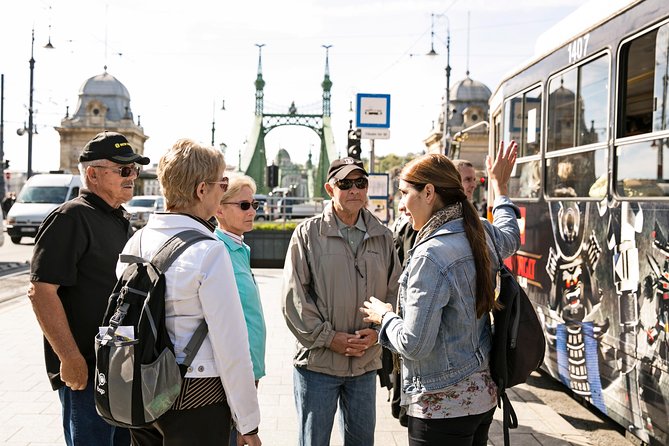
After the basilica, the tour shifts into architecture and memory. There’s a quick look at Gresham Palace, an Art Nouveau building. The emphasis is on taking you inside or showing you the interior feel of the building, but admission isn’t included for that specific segment. So think of it as a “see why this matters” moment rather than a fully ticketed deep dive.
Then you enter Budapest’s Jewish Quarter and focus on the main sights of the Jewish triangle in the 7th District. The tour also includes a short stop for the Tree of Life memorial behind the Great Synagogue. This part is emotionally grounded and interpretive—the guide explains the meaning of the memorial so you don’t just read names and dates without understanding the why.
A lot of first-timers treat the Jewish Quarter like a single zone of streets and buildings. This tour helps you see it like a mapped story—where grief, survival, community identity, and later remembrance are all placed in specific physical locations. That makes it easier to explore on your own afterward because you’ll know what you’re looking for.
If you’re sensitive to memorials and Holocaust-related topics, it helps to know this part is not just light walking. The tone is respectful and focused. It’s also one of the best reasons to do this tour early in your visit: you’ll carry the context into any later reading, museum visits, or even simple street-level wandering.




Strudel House, Szimpla Kert, and a map for what comes next
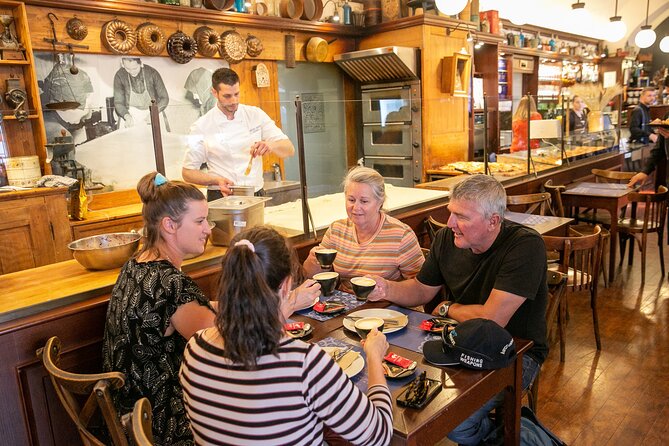
You’ll get a homemade strudel stop at the Strudel House, plus coffee and/or tea (or a soft drink). This isn’t just a sugary break. Food stops in walking tours matter because they turn a schedule into a real experience. If you’re going to walk in Budapest, you need an energy reset, and strudel is a practical crowd-pleaser.
Then you end with a peek into Szimpla Kert, often described as one of the oldest ruin bar spots in the city. Here, the tour keeps it quick, just enough to give you the vibe and explain the story of the building. Admission isn’t included for this stop, so if you want more time inside, you’ll likely want to visit again on your own.
The guide also gives you a free map and recommendations for your stay. This is one of those “small thing, big payoff” extras. After a short tour like this, you’re left with two big questions: where to go next and what should you skip. A good locals map helps you pick day-two priorities without turning your trip into a spreadsheet.
Also, because the tour ends at Deák Ferenc tér, you’re positioned to act on those recommendations fast. You don’t have to plan a long commute just to reach your next stop.
Should you book this Budapest Essentials private tour?
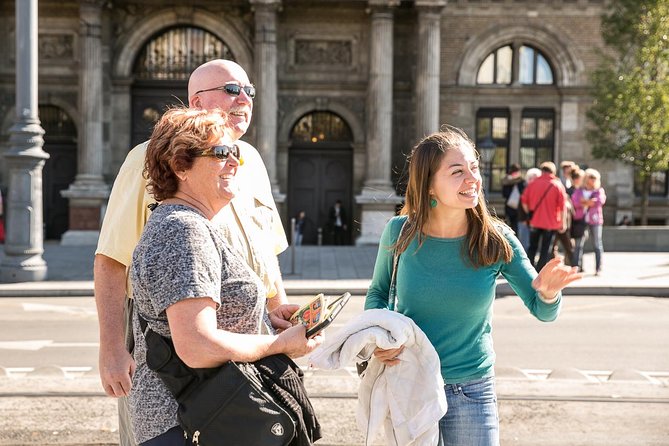
Book it if you want a first visit that gets results without ticket-line stress. This is a strong choice when you have limited time and want a private guide connecting the big icons: Chain Bridge, Shoes on the Danube, Parliament area exterior, St. Stephen’s Basilica, and Jewish Quarter memorial stops, all in about three hours.
Skip it (or adjust expectations) if you hate short stops and prefer slow museum-style pacing. This route moves. Some quiet walking stretches can happen between locations, and it helps to be proactive—ask questions during the walk, not only at the monuments.
If you’re deciding for value: you’re paying for time-saving skip-the-line access to St. Stephen’s Basilica, plus guided context across multiple major areas, plus the food and drink stop. For $116.36 per person, it’s less about buying entrance tickets everywhere and more about buying efficient, guided time.
FAQ
FAQ
How long is the Budapest Essentials private tour?
It runs for about 3 hours.
Is this tour private or shared with other groups?
It’s private. Only your group participates.
Is the tour offered in English?
Yes, it’s offered in English.
What’s included for St. Stephen’s Basilica?
You get skip-the-line entry and a guided visit, and the admission ticket for the Basilica is included.
Where does the tour start and end?
It starts at InterContinental Budapest and ends at Deák Ferenc tér.
What food and drinks are included?
You’ll have homemade strudel at the Strudel House, plus coffee and/or tea (or a soft drink).
Are any tickets or admissions not included?
Yes. Admission is not included for the Hungarian Parliament Building, Gresham Palace, the Jewish Quarter stop, the Tree of Life stop, and Szimpla Kert.
What is the cancellation policy?
You can cancel for free up to 24 hours in advance for a full refund.