REVIEW · BUDAPEST
Budapest Private Tuk Tuk Half-Day Tour
Book on Viator →Operated by Budapest TukTuk · Bookable on Viator
Budapest by tuk-tuk feels like speed-dating the city. You’ll zip between major sights on both sides of the Danube with a private English-speaking guide, and you get a fun, efficient overview that’s ideal when time is tight. I especially love how this tour mixes big-name landmarks with real neighborhoods, and how guides can tailor the pace to you. The one thing to watch: depending on your guide’s style, some stops can feel brief.
This is a strong value for what you’re buying: private time, a small vehicle that can reach spots big buses can’t, plus free pickup and drop-off in the wider downtown area. Guides like Zoltar, Norbert, Greg, Paul, and Martin show up in reviews for being warm, fast-thinking, and good at turning landmarks into stories you can remember. Still, this isn’t a ticket-holding tour: entry into churches, baths, and interiors isn’t included, and the ride does have some vibration.
In This Review
- Key things to know before you go
- Why a private tuk-tuk is so handy for first-timers
- Pest highlights: basilica views, Andrássy Avenue, and Jewish Quarter stops
- Buda viewpoints: Gellért Hill, Citadella, and the castle ridge
- Danube moments: bridges, Shoes on the Danube, and Parliament views
- How long stops can feel in a 4-hour private schedule
- Price and value: is $178.98 per person worth it?
- Best time to ride and what to bring
- Should you book this Budapest Private Tuk Tuk Half-Day Tour?
Key things to know before you go
- Private tuk-tuk, not a bus: You’re only with your group, and the guide can adjust stops and pacing.
- Both sides of the river: Expect Buda views (Castle Hill, Gellért Hill) and Pest landmarks (Andrássy Avenue, synagogues, markets).
- No major entry tickets included: You’ll see a lot from outside; inside visits may cost extra.
- Time can shift: The advertised duration can change, with a maximum change of 1.5 hours.
- Ride comfort matters: If you’re sensitive to bumps or sound, plan accordingly.
- Great when it’s your first day: You’ll finish with a mental map of where things are and what you want to repeat.
Why a private tuk-tuk is so handy for first-timers
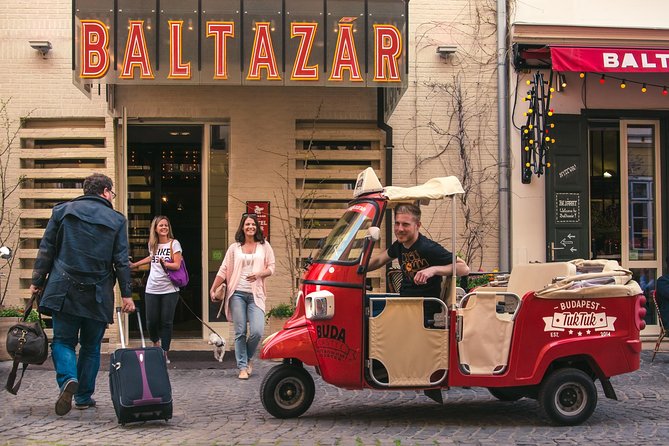
If you’re new to Budapest, the city can feel like two worlds stacked on a river. Pest runs wide with boulevards, squares, and grand civic buildings. Buda climbs—literally—into Castle Hill and lookout spots where the city opens up like a panorama.
That’s the big advantage here: you’re not stuck choosing between “walking too much” and “seeing nothing up close.” A tuk-tuk is small enough to move through tight areas and near high-demand sights, which means you get clearer sightlines and more time actually looking rather than waiting.
And because it’s private, you’re not arguing with a group schedule. If you want a slower look at a viewpoint, or you’d rather skip one stop, your guide can work with you. In reviews, guides such as Greg and Martin are called out for customizing routes and keeping the whole day from turning into a checklist.
You can also read our reviews of more private tours in Budapest



Pest highlights: basilica views, Andrássy Avenue, and Jewish Quarter stops
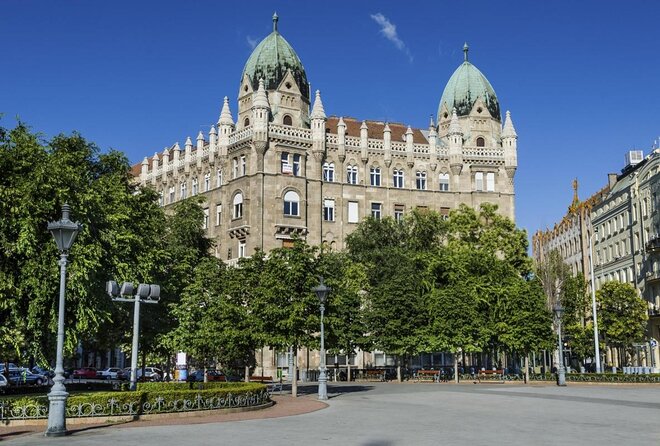
The tour often starts you in central Pest with St. Stephen’s Basilica. Even when you’re just viewing it from the outside, it’s a landmark that helps you orient fast. It’s named for Stephen, Hungary’s first king, and the church’s fame ties to religious tradition—an easy first stop because it sets the tone for Budapest’s mix of faith, power, and art.
Then comes Andrássy Avenue, a boulevard dating to 1872 and recognized as a World Heritage Site in 2002. This stretch is one of the city’s great “showpiece streets.” You’ll get the look of Neo-Renaissance mansions and grand townhouses without needing to read a guidebook on the move.
Right along that avenue sits the Hungarian State Opera House. It’s neo-Renaissance, designed by Miklós Ybl, and originally known as the Hungarian Royal Opera House. From a vehicle like this, you’re positioned to appreciate the scale and street-front presence, even if you don’t go inside (entry isn’t included).
From there, the tour hits Heroes’ Square. It’s famous for the statue complex and the Memorial Stone of Heroes. One useful note: it’s sometimes confused with the Tomb of the Unknown Soldier, but the main point is that it’s a strong “national identity” stop—perfect for your first day because it gives context for what you’ll see later around the river.
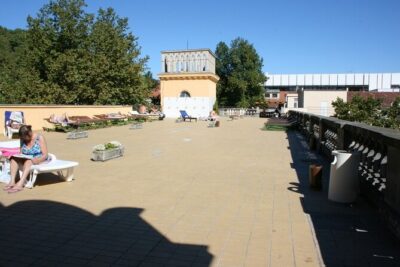
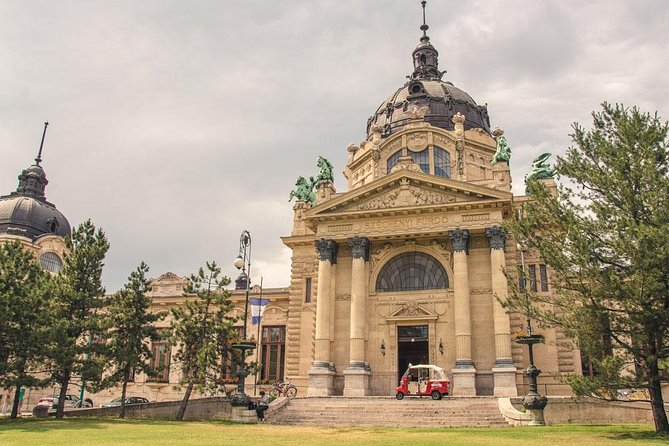
Next you’ll cut across to the Széchenyi Medicinal Bath area. The bath itself is the largest medicinal bath in Europe, fed by thermal springs around 74–77°C (165–171°F). This is a great stop for atmosphere and exterior views, but don’t plan on soaking during the tour—entry tickets aren’t included.
Then you move into the Jewish Quarter area, including the “party quarter” edge—low traffic, but lots of pedestrians. Here, the tour works well because it gives you both history and a sense of how the district feels today. The Dohány Street Synagogue (also called the Great Synagogue) is a key moment: it’s the largest synagogue in Europe and a major center of Neolog Judaism, and it’s hard to miss once you’re near it.
You’ll also pass by Károlyi Garden in District V—an older remaining palace garden style—plus University Church near Egyetem tér. If you like the human scale of parks, courtyards, and busy squares, these stops give you a break from “monument mode.” Kálvin tér and its Reformed Church are another way to see how Budapest’s religious life shaped the city’s geography.
Finally, you’ll reach the Great Market Hall area. This is Budapest’s largest and oldest indoor market—exactly the kind of place that’s worth a return visit when you have time to snack and browse. Even if your stop is short, it’s a helpful pointer for where to find food and local goods later.
Buda viewpoints: Gellért Hill, Citadella, and the castle ridge
On the Buda side, the tour turns scenic fast. One of the first “wow” clusters is around Gellért Hill. You may see the Gellért Thermal Baths and Swimming Pool from the outside, a well-known bath complex tied to the same hillside energy as the viewpoints above.
Then you’ll climb into the Citadella area. Citadella is a fortification on Gellért Hill, and it matters because this hill has strategic importance in Budapest’s military history. It’s a stop that’s less about a single building and more about understanding why this spot was fought for—and why it’s so rewarding to look out from.
Not far away sits the Liberty Statue on Gellért Hill. It commemorates those who sacrificed their lives for Hungary’s independence, freedom, and prosperity. Like Heroes’ Square, this is a “meaning” stop. From the tuk-tuk, you get the visual context without needing to walk uphill for a long time.
A quieter break comes at the Garden of Philosophy. You get fewer tourists and a view that’s often calmer. The statues matter too: the idea of a philosopher group and the symbolism of figures like Jesus Christ and Buddha meeting is part of why people slow down here. It’s brief, but it’s a nice counterpoint to the big memorials.
You’ll also be in or near Vermező, a public garden area in District I. Stops like this are helpful because you’re not stuck only at monuments—you’re catching how the city breathes between major sights.
Then it’s on to Castle Hill, a UNESCO World Heritage Site with a 1-kilometer limestone plateau above the Danube. This is where Budapest’s medieval layer becomes visible, and where the river becomes your background. The Castle Garden area helps set the stage—an architectural setting where you can feel the blend of art and nature, even before you reach the terrace views.
The tour then brings you to Fisherman’s Bastion (Halászbástya). It’s a terrace built in neo-Gothic and neo-Romanesque style around Matthias Church, designed and built between 1895 and 1902. Admission isn’t included, so treat it as a short photo and viewpoint moment rather than a long “museum” stop.
That leads you to Matthias Church. It’s a Roman Catholic church in the heart of the Castle District, and it sits right near the bastion terrace. Tradition says it was originally built in Romanesque style in 1015, though no archaeological remains exist—so again, you’re here for the visual and the storytelling, not a long interior visit on this half-day format.
Danube moments: bridges, Shoes on the Danube, and Parliament views
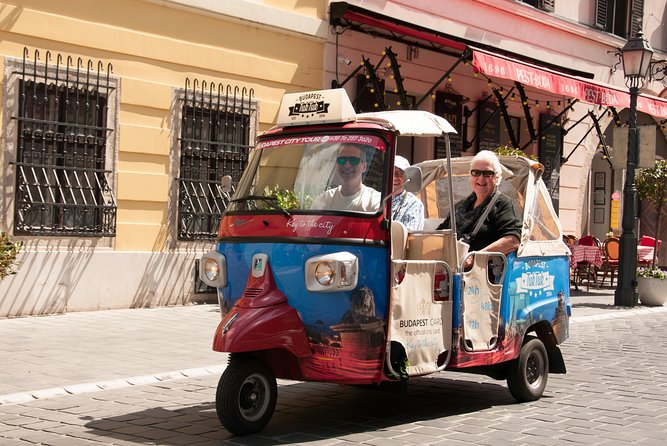
Budapest is famous for river drama. The tour uses that. After the Castle District, you head back toward river landmarks like Margaret Bridge, which connects Buda and Pest and links Margaret Island. Even if you don’t get a long stop, these bridges help you connect the neighborhoods you saw earlier.
One of the most memorable moments is the Shoes on the Danube Bank memorial. It honors Jews killed by Arrow Cross militiamen during World War II. It’s heavy subject matter, and it’s short—so I recommend you pause for a proper look rather than rushing past for the next photo.
Then you reach the Hungarian Parliament Building area. This is one of Budapest’s biggest visual “final exam” monuments. The building is the seat of Hungary’s National Assembly, and it’s a major tourist draw. For this tour, internal visit isn’t included, but the roadside view helps you understand why everyone puts it on their first-day map.
If you’re planning next steps, this part is useful: once you’ve stood near Parliament and seen the river axis, you’ll better understand how your later self-guided walking route should flow.
How long stops can feel in a 4-hour private schedule
A half-day tour sounds simple until you’re actually doing it in a city with huge sites. In a 4-hour window, you’re balancing “see a lot” with “really feel each place.”
From the way the stops are structured, you should expect short photo-and-orientation breaks, especially at major landmarks. Some portions include listed time on-site (like 10–15 minutes at several key points), and other stops feel more flexible. That’s normal for a tuk-tuk tour, but it’s also why communication matters.
Here’s my practical take: tell your guide your top 2 priorities at the start. If Parliament and the Castle Hill views matter most to you, say so early. If you’d rather linger at Heroes’ Square or spend more time on a synagogue-area street, ask for that too.
Quality also depends on how your guide runs the pace. Reviews include examples of guides who were friendly and engaging throughout (including Zoltar and Norbert), and one account where the experience felt rushed and stops were missed. If you want a strong outcome, don’t be shy about resetting expectations if the day starts moving too fast—private tours are built for that.
You can also read our reviews of more tours and experiences in Budapest




Price and value: is $178.98 per person worth it?
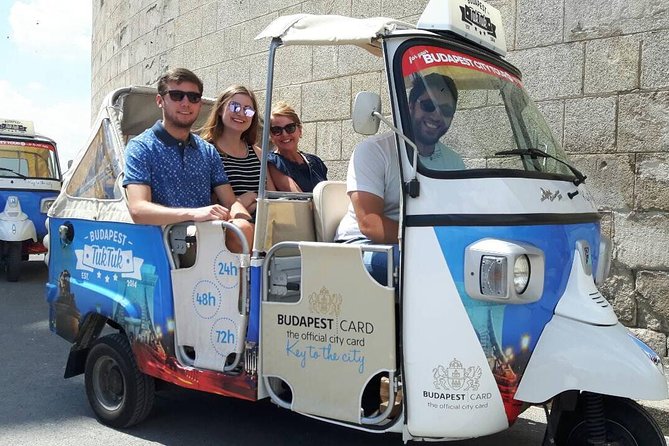
$178.98 per person is not cheap, so you’re really paying for three things:
1) A private vehicle and guide for about four hours
2) Free pickup and drop-off in the wider downtown area
3) A route that covers both banks with minimal walking
If you’d otherwise spend a chunk of your day taking multiple trams, taxis, and short walking loops, this price can start to make sense fast—especially for families or small groups who want a single plan.
Also, the tour can be a “time-saver purchase.” When it works well, it gives you an overview you can build on. Several guides in reviews (like Paul, Martin, and Greg) are credited with helping people decide what to do next, and with taking good photos during the ride.
The tradeoff is simple: many stops are exterior views and quick looks. Entry tickets for things like Parliament interiors, Matthias Church, or the Fisherman’s Bastion aren’t included. If you’re the type who wants to go inside many major sites, you’ll likely pair this with separate ticketed experiences on another day.
If the optional Danube sightseeing cruise is added, that can be a great follow-up. Budapest looks dramatic from the water, and the cruise pairs naturally with a tour that already gives you the river geography.
Best time to ride and what to bring
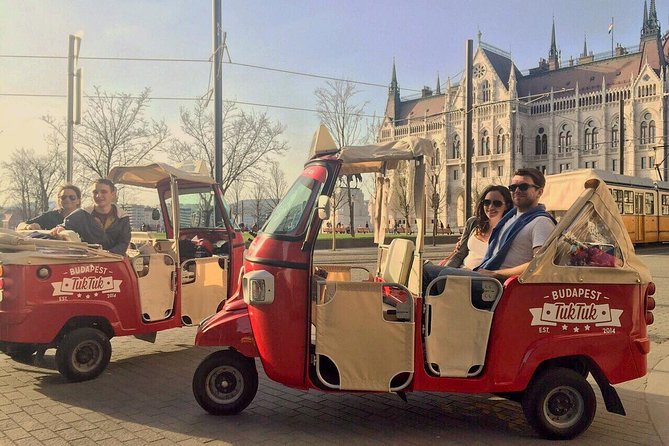
Budapest weather can shift fast, and this tour is outdoors with vehicle movement. The provider notes that the tour depends on favorable weather, and if canceled for poor weather you’ll be offered an alternative date or a refund. So plan your trip with a little flexibility.
Dress accordingly to the weather. On colder rides, guides may provide extra warmth; one winter review specifically mentions wool blankets. Even if you don’t expect that, bring layers. Your “comfort buffer” matters more in a tuk-tuk than on a flat city bus because you feel the wind and road texture.
Also think about motion and sound. One review mentioned difficulty hearing the driver, and another noted the ride jarred a bad back. If you’re sensitive to bumps, consider bringing something that helps with comfort, and ask your guide to keep directions and stories clear.
Should you book this Budapest Private Tuk Tuk Half-Day Tour?
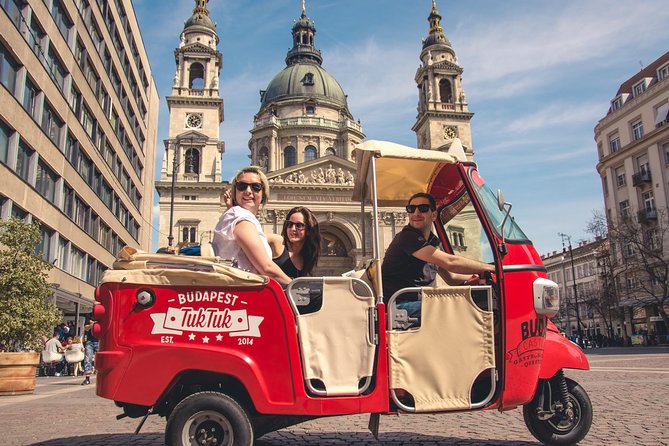
I’d book it if you want a fast, fun first-day framework: Buda and Pest highlights, a guide who can explain what matters, and a route that keeps you from wasting hours figuring out where everything is.
Skip it or reconsider if you’re expecting a “go inside everything” tour. This isn’t that. It’s more about seeing the main sights close up, getting context, and leaving with a map in your head.
If you do book, I’d do this: pick your must-see list before pickup (for example: Castle Hill + Parliament, or Basilica + Heroes’ Square), then tell your guide at the start. That simple step turns a good tour into a great one.