REVIEW · BUDAPEST
Budapest: City Sightseeing Hop-On Hop-Off Bus Tour & Extras
Book on GetYourGuide →Operated by City Sightseeing Europe · Bookable on GetYourGuide
Budapest is made for short hops and big views. This City Sightseeing hop-on hop-off bus gives you an easy circuit across Buda and Pest, and the included walking tour helps you fill in the tight spots the bus can’t reach. I especially like the combo of flexible bus time with the hands-on context of a real guide. One thing to plan around: the guided walking tour runs at 11am and is English only, so it can affect your day if you prefer to start later.
What makes this tour feel practical is how well it matches the city’s layout. You can ride past the Hungarian Parliament and St Stephen’s Basilica, get off near the Jewish quarter on Dohány Street, and still have time to wander without committing to one giant group outing. Also, the audio guide covers multiple languages, so you’re not stuck waiting for the guide to catch up.
My one caution is that some stops are marked temporarily closed (Astoria), so you may need to adjust where you get off. The good news: the rest of the route still hits the big landmarks people come for, and the buses run often enough that you’re not stuck.
In This Review
- Key Highlights You’ll Actually Use
- How the Hop-On Hop-Off Loop Fits Budapest
- Red Route Basics: Timing, Frequency, and What 90 Minutes Really Means
- Pest Highlights: Basilica, Chain Bridge, Opera, Heroes’ Square
- Parliament and the Danube Edge: The Gothic Revival Moment
- Dohány Street Jewish Quarter: Synagogue, Museum, and Memorial Access
- Buda Side Hill Game Plan: Gellért, Castle Garden, and the Funicular Area
- Walking Tour at 11am: The Pieces the Bus Can’t Cover
- Stop-by-Stop Strategy: How to Avoid Wasting Time
- Boat Cruise and the Discount Booklet: Extra Value With One Date Twist
- Is $41 Good Value for Budapest Sightseeing?
- Should You Book This Budapest Bus and Walking Tour?
- FAQ
- How long is the hop-on hop-off bus tour?
- What time does the Red Line start and end?
- How often do the buses run?
- Where does the guided walking tour start, and when does it run?
- What does the walking tour cover?
- Are attraction tickets included?
- What languages are available for the bus audio guide?
- Is the walking tour narrated in English only?
- Is the Danube boat cruise included?
- Are pets allowed on the bus?
Key Highlights You’ll Actually Use

- 20 smart stops across Buda and Pest so you can bounce between viewpoints instead of doing a single long walk
- 15-language audio guide that turns bus time into guided sightseeing
- An included 1-hour walking tour at 11am through key areas the bus won’t cover
- Parliament + Basilica coverage for the two most iconic “Budapest photos” you’ll want
- Dohány Street Synagogue and Jewish Museum area access right on your route
- Danube cruise bonus depends on the date you travel, with a documented ticket discount option
How the Hop-On Hop-Off Loop Fits Budapest
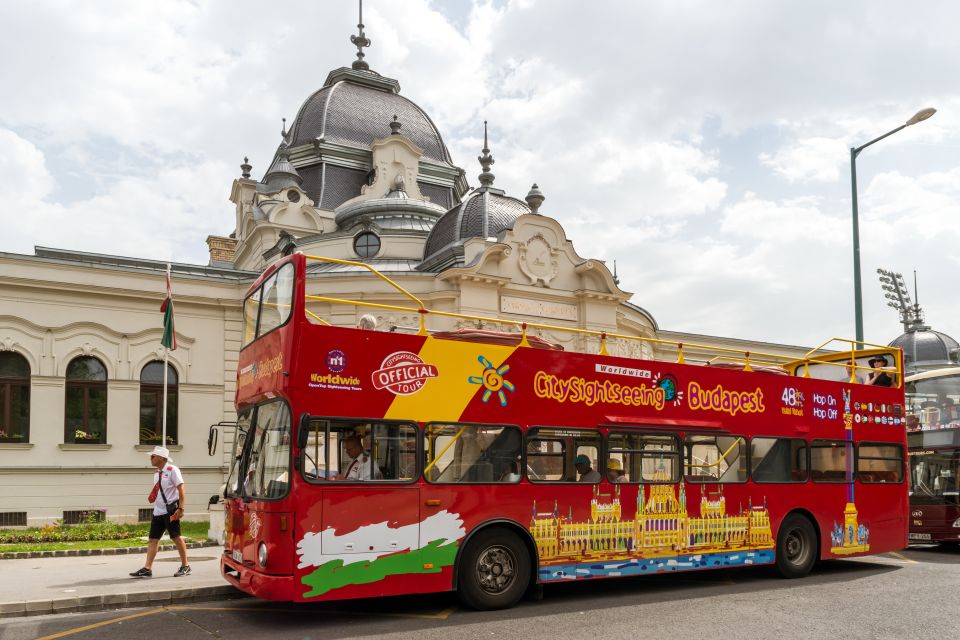
Budapest is gorgeous, but it’s not flat. Between the riverbanks and the hilltop views on the Buda side, you’ll burn energy fast if you try to do it all on foot. That’s where this bus-style format helps: you can keep moving while your legs recover.
I also like that you’re not forced into one fixed route. If Parliament looks better than you expected, you can linger. If the Jewish quarter sparks your interest, you can stay there longer and come back by bus.
The tour’s biggest strength is the mix: the bus handles the easy-to-reach overview, and the walking tour tackles the “you’ll want to be on foot here” streets and waterfront moments.
You can also read our reviews of more city tours in Budapest



Red Route Basics: Timing, Frequency, and What 90 Minutes Really Means
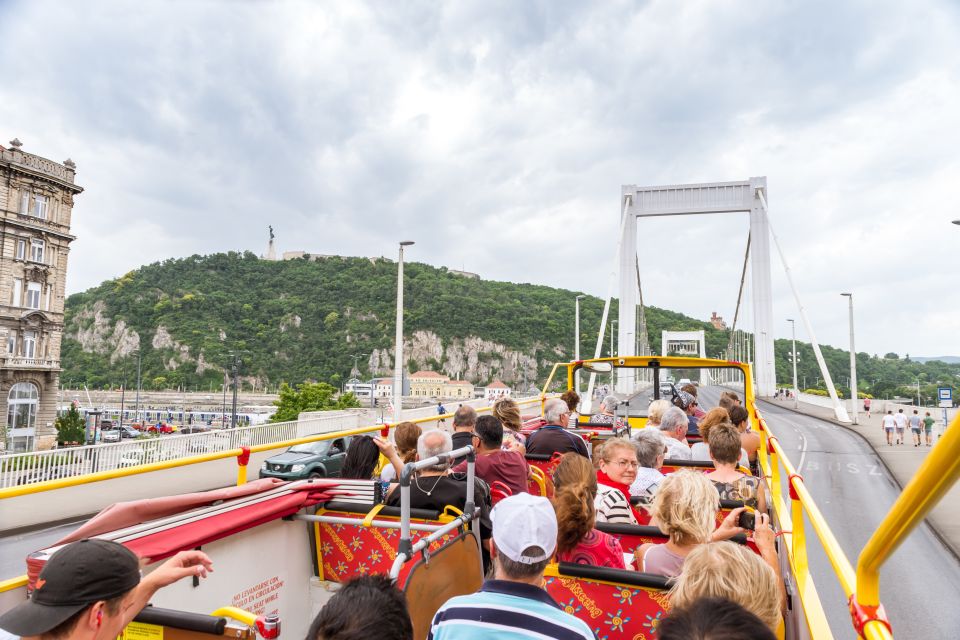
The bus service you’ll use is the Red Line, with the first departure from Stop 1 (St Stephen’s Basilica) at 9:00am and the last at 5:00pm. Buses come every 10–20 minutes, and the full loop is about 90 minutes.
Here’s the practical way to use that. In most of your first day, ride the loop once so you can spot what you want to revisit. Then spend your second round hopping off with a plan: museum time, photo time, and food-and-stroll time.
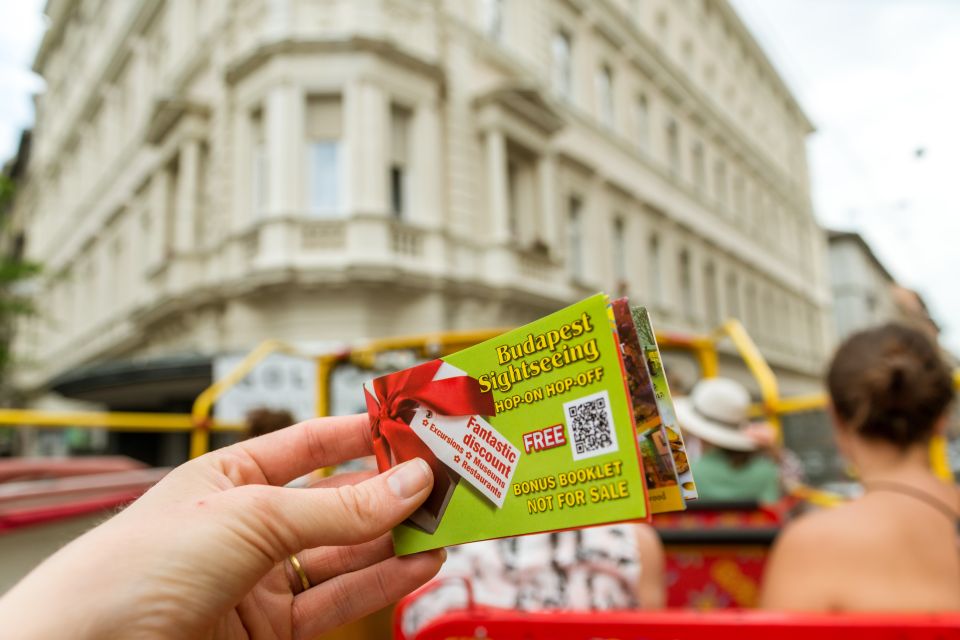
Your pass works in 24, 48, or 72-hour blocks, and you can hop on and off at any of the 20 stops along the route. Your ticket also includes a discount booklet, which can help offset the cost of a few paid attractions—just remember that attraction entry tickets and food/drink are not included.
Pest Highlights: Basilica, Chain Bridge, Opera, Heroes’ Square

Starting at Stop 1: St Stephen’s Basilica, you’re launched at one of Budapest’s best-known landmarks. Even if you don’t go inside, it’s a perfect way to anchor your day visually, because you’ll see it again later in your memories and your photos.
From there, the route reaches Stop 2: Chain Bridge (Pest). This is where you get that classic “Budapest from the river crossing” perspective. If you want shots that don’t feel like you’re fighting your way through a crowd, try getting off when you first arrive on the bridge area and walk a short stretch.
Next is Stop 3: Jozsef Attila Street, a smaller stop that’s useful mainly as a neighborhood access point—think of it as a convenient way to adjust your day without backtracking.
You then move toward some of the city’s grand boulevards and landmark interiors. Stop 6: Andrassy Avenue is a key stretch for architecture lovers. Stop 7: Hungarian State Opera House is the stop you use when you want to be close to the Opera’s impressive façade. Nearby, Stop 8: Liszt Ferenc Square gives you a nice staging spot for a short wander before deciding where to go next.
Then you hit the big set-piece square: Stop 9: Heroes’ Square. If you’re the type who likes to see a city’s “monument language,” this is your stop. It also works as a strategic “meet-up point” if your day starts turning into a scatter plan.
Around Stop 10: Keleti Railway Station, you’re in one of Budapest’s major transit zones. Even if you’re not taking a train, it’s a handy connection point for continuing your day by other transport.
Stop 11: New York Palace and Stop 13: Parisi Passage Cafe are the more “style points” stops. They’re useful if you want a café break, a quick look at historic-style interiors, or just an excuse to slow down and take in the details.
One practical note: Astoria (Stop 5 and Stop 12) is listed as temporarily closed, so don’t build your day around those exact boarding points. Use nearby alternatives if you need that part of the route.
Parliament and the Danube Edge: The Gothic Revival Moment
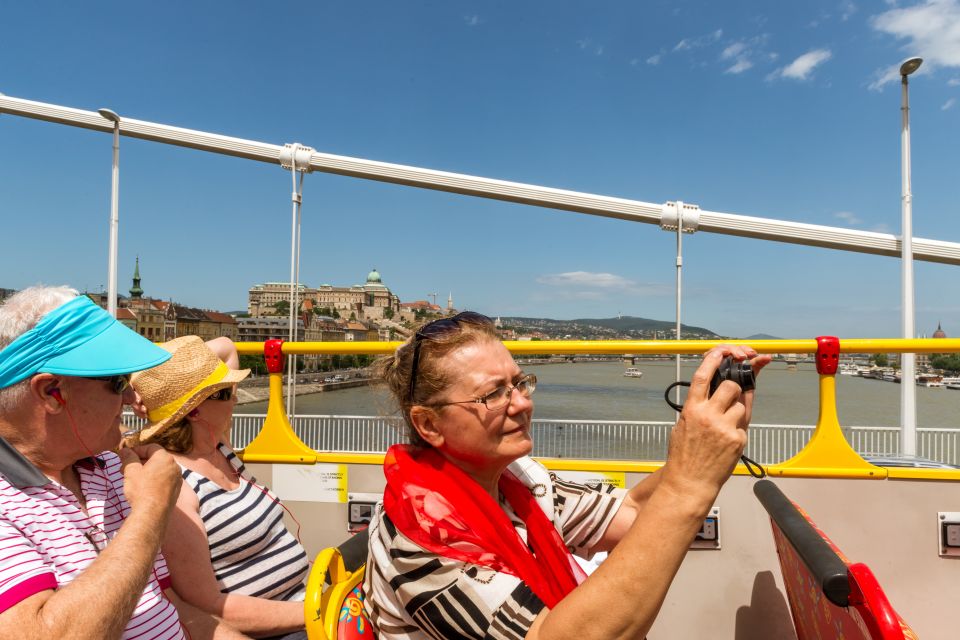
By the time you roll toward the end of the circuit, you’ll reach Stop 20: Parliament. This is the moment many people come for, and it’s easy to see why. The building’s presence dominates the river view, and being dropped near it makes the site feel approachable even if you’re squeezing it between other stops.
What I like most is that you don’t need perfect timing to enjoy it. You can get off, circle the immediate area for views, then continue by bus when you’re ready for the next part of town.
Also, there’s a relationship between the bus loop and the walking tour here. The walking tour includes Parliament and the Shoes on the Danube Bank area, which means you have two ways to experience this riverfront zone—one from the bus for orientation, and one on foot for tighter viewing and context.
Dohány Street Jewish Quarter: Synagogue, Museum, and Memorial Access
Budapest’s Jewish quarter is one of the city’s most meaningful areas, and this route gives you direct access. The key stop is Stop 4: Dohany Street Synagogue.
From there, you’re in the right zone for the Jewish Museum and Synagogue area, plus the memorial spaces on Dohány Street that help you understand the neighborhood beyond just architecture. Even if you only spend a short time here, you’ll likely feel that this isn’t a “quick photo stop.” It rewards time.
A useful planning idea: if you’re doing the walking tour later in your trip, you can use the bus to arrive early and then decide how much you want to add on foot. If you skip the museum interiors, you can still focus on the streetscape and the monument points nearby.





Buda Side Hill Game Plan: Gellért, Castle Garden, and the Funicular Area
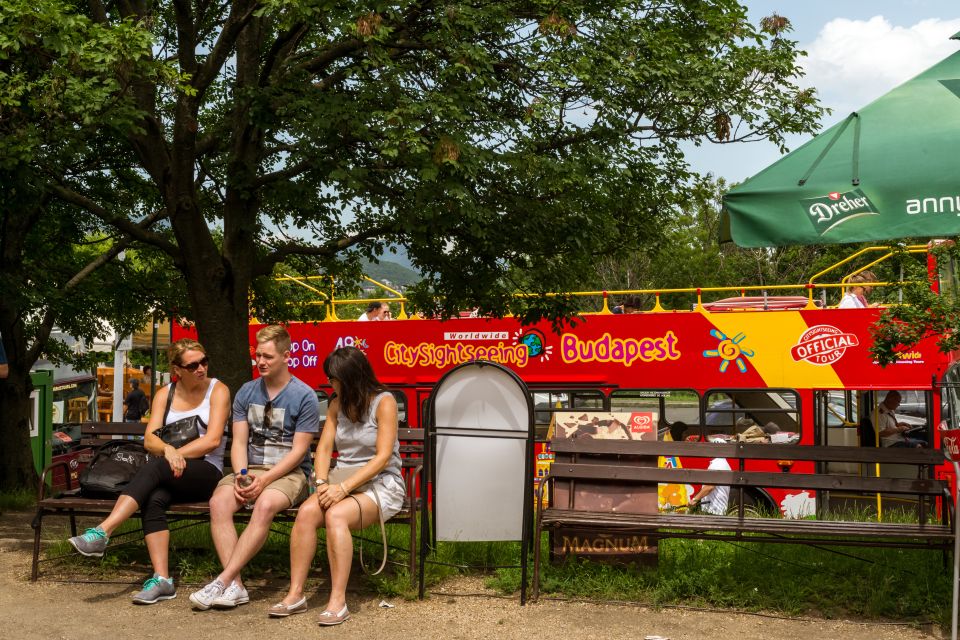
When the route turns toward Buda, you’ll notice how quickly the city shifts in feel. The riverfront drops away behind you, and suddenly the viewpoints feel more “upper-world.” That’s exactly why the bus matters here: you can access the hill areas without turning your trip into a nonstop climb.
The Buda ramp-up begins with Stop 14: Gellert Square. This is a great staging point for views over the river area and for connecting to the broader Citadel-type overlook zone. If you want the “Budapest from the height” feeling, this is where you aim your next decisions.
Then you reach Stop 15: Castle Garden. This is your entry point for the castle-hill atmosphere—walkable, scenic, and made for lingering. From there, Stop 16: Funicular is the obvious move if you want to handle the steep differences in elevation without brute-force climbing.
Next is Stop 17: Batthyany Square, which helps you pivot your day again—whether you want to head back toward the river promenade, keep moving inland, or simply find a convenient pickup point.
Stop 18: Margaret Bridge (Buda) is another strategic stop for river crossing energy. It’s useful if you want to connect viewpoints across the city without losing an hour to complicated routing.
By the time you reach Stop 19: WestEnd Shopping Centre, you’re in a more modern, practical part of the route. It’s not the “old-world postcard” stop, but it can be a lifesaver when you want a break, a meal, or indoor time.
Walking Tour at 11am: The Pieces the Bus Can’t Cover
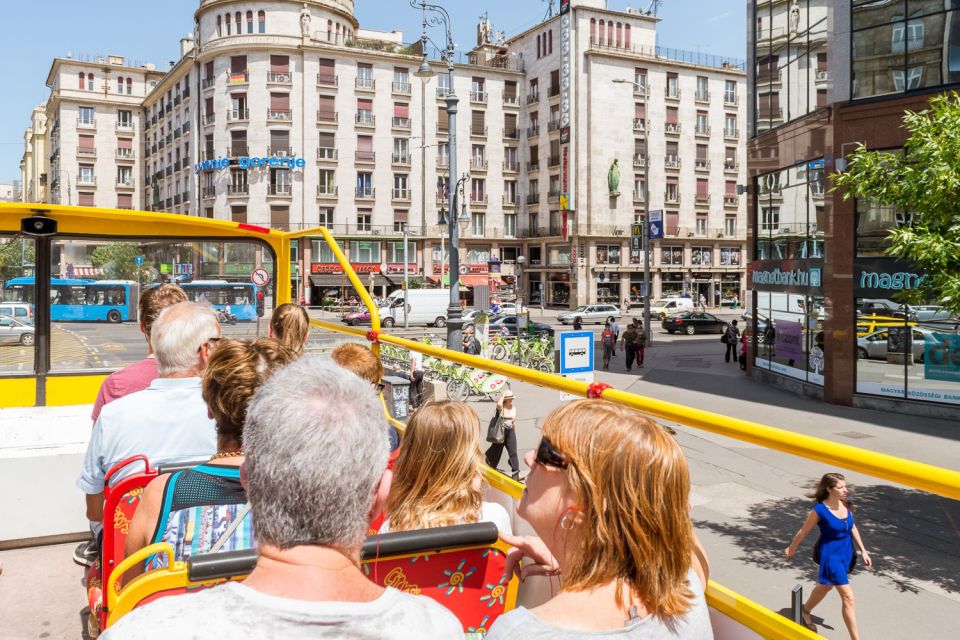
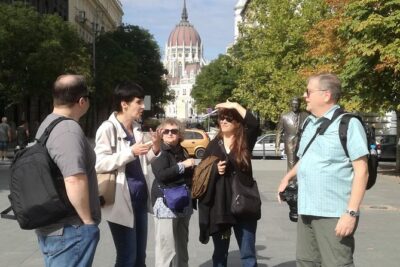
The tour includes a guided walking tour that starts every day at 11:00am at Szent Istvan ter 1, 1051, Hungary. It lasts about 1 hour and focuses on areas the bus cannot cover well.
The walking tour route includes the St Stephen Basilica, Parliament, the Shoes on the Danube Bank, Vaci Fashion Street, and the Danube Promenade. This is the part you’ll want when you want the story behind what you’re seeing—not just the skyline view.
One big detail: the walking tour narration is English only. So if you’re relying on another language for comfort, plan to use the bus audio for language flexibility.
I’ve also found the walking tour leadership can make or break the experience. In past sessions, the guides have included people like Claudia, Joan, Rebecca, and Souvar, and the common thread is a high-energy style with strong historical context. If you get one of those guides, you’ll likely leave with clearer mental maps of how the city grew and why these places matter.
Stop-by-Stop Strategy: How to Avoid Wasting Time
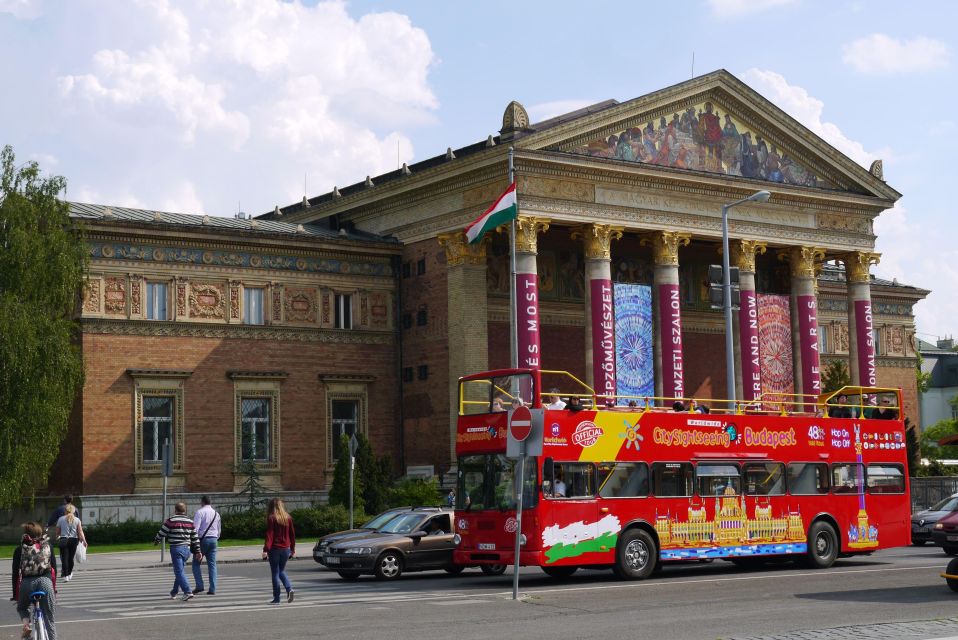
With 20 stops, the danger isn’t missing sights—it’s overloading your day and ending up too tired to enjoy any of them. My approach is simple.
First, do a full loop once to build your bearings. Then, on your second pass, pick 3–5 stops to actually explore with your feet. Everything else becomes photo time and quick orientation.
Here’s how to think about it by type:
- Big monument stops like Stop 20: Parliament and Stop 1: St Stephen’s Basilica are best when you arrive with room to walk a short loop around the area.
- Museum-and-memorial stops like Stop 4: Dohány Street Synagogue are best when you don’t rush—if you’re going in, give yourself more than you think you need.
- View and hill stops like Stop 15: Castle Garden and Stop 14: Gellert Square often work best earlier in the day, when your energy is higher and the light feels kinder.
- Transit-and-crossover stops like Keleti Railway Station (Stop 10) are useful for logistics and repositioning, not for “the main event.”
Also, keep an eye out for the listed temporary closure at Astoria. If you’re hopping off near there, it’s smart to know a couple of nearby pickup options so you don’t get stuck waiting.
Boat Cruise and the Discount Booklet: Extra Value With One Date Twist
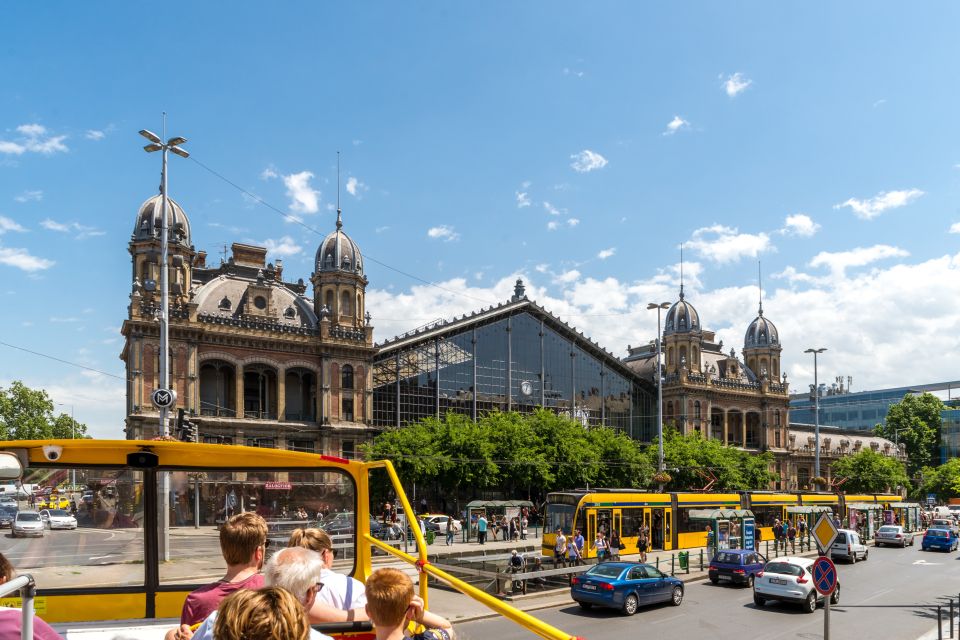
This ticket’s added value often centers on the Danube river cruise and a discount booklet.
Here’s the date-based change you should know. From Wednesday, 10th December, the boat tour is no longer included in this ticket. You can buy a boat ticket for HUF 3,500 instead of HUF 5,000 if you show your bus ticket at the boat departure point. Bookings made before that date are honored and still receive the boat tour.
If you do have the boat cruise included (or you decide to pay the discount rate), it’s a smart way to see how the city stacks up across the water. You get a moving perspective on the riverbanks that you simply can’t replicate from land.
If you’re choosing a time slot, I’d lean toward later evening trips—one of the best tips I’ve seen is to aim around 9pm for illuminated-building views.
And don’t forget the discount booklet. It’s not a magic wand, but it can shave costs if you plan to visit a few paid attractions anyway. Use it like a checklist: only redeem discounts you actually would’ve paid full price for.
Is $41 Good Value for Budapest Sightseeing?
At about $41 per person, this is the kind of ticket that makes sense when you want structure without locking yourself into a strict itinerary.
It’s good value if:
- You’re trying to see the city efficiently in 1–3 days
- You like flexibility (ride, hop off, then re-board when you’re ready)
- You want built-in learning through the audio guide in 15 languages
- You’ll actually use the walking tour at 11am to cover waterfront and city-center streets on foot
It may feel less worth it if you already have a tight plan with minimal sightseeing gaps. If you know exactly which neighborhoods you’ll walk and which you’ll skip, you might prefer buying attraction tickets directly and using public transit.
One more value angle: the bus isn’t just “a ride.” Because it stops near major sights, it reduces decision fatigue. You spend less time figuring out logistics and more time deciding what you want to do next.
Should You Book This Budapest Bus and Walking Tour?
If you want a low-stress way to cover Budapest’s biggest hits while staying flexible, I think this is a strong booking. The 20-stop design across Buda and Pest is exactly what you need in a city with hills and big sightseeing clusters, and the included walking tour at 11am adds the street-level context the bus can’t deliver.
I’d book it if you’re likely to want both viewpoints and meaning: Parliament and Basilica on the bus, then the Shoes on the Danube Bank and Danube Promenade on foot. I’d reconsider only if you strongly dislike rigid departure times (the walking tour), or if you’re traveling with needs that don’t fit the English-only narration for that walking component.
Bottom line: if you’re building your first Budapest trip, this ticket helps you get your bearings fast and keeps your day flexible without turning sightseeing into a full-time job.
FAQ
How long is the hop-on hop-off bus tour?
The red route takes about 90 minutes per circuit. Your overall experience runs on a 24, 48, or 72-hour pass.
What time does the Red Line start and end?
From Stop 1 at St Stephen’s Basilica, the first departure is at 9:00am and the last departure is at 5:00pm.
How often do the buses run?
Buses run every 10 to 20 minutes.
Where does the guided walking tour start, and when does it run?
The walking tour starts daily at 11:00am at Szent Istvan ter 1, 1051, Hungary.
What does the walking tour cover?
It includes St Stephen Basilica, Parliament, Shoes on the Danube Bank, Vaci Fashion Street, and the Danube Promenade.
Are attraction tickets included?
No. Tickets to attractions are not included, and you’ll also pay for food and drink separately.
What languages are available for the bus audio guide?
The bus audio guide is available in 15 languages, including Spanish, Turkish, Chinese, English, Finnish, French, German, Greek, Hebrew, Hungarian, Italian, Japanese, Arabic, Polish, and Portuguese.
Is the walking tour narrated in English only?
Yes. The walking tour narration is English only.
Is the Danube boat cruise included?
Not always. From Wednesday 10th December, the boat tour is no longer included in this ticket, but you can buy a discounted ticket by showing your bus ticket at the boat departure point. Bookings made before that date are honored.
Are pets allowed on the bus?
No. Pets are not allowed, and smoking is also not allowed. Service dogs are permitted.