REVIEW · BUDAPEST
Budapest Jewish Heritage Memorial Walking Tour & Synagogue Entry
Book on Viator →Operated by Hungária Koncert Kft · Bookable on Viator
Jewish Budapest lands with impact. This small-group walk strings together the Dohány Street Synagogue interior, the Jewish Museum, and key memorials so the story feels chronological, not like a scattered list of sites. I especially like that the important entrances are handled for you with included admission, and I like the guide-led narration that turns architecture and streets into lived history.
One thing to consider: there’s some seated indoor time inside the synagogue before you move on. If you prefer nonstop walking, mentally budget for a slower moment and keep your questions ready.
In This Review
- Key highlights worth your attention
- Entering Dohány Street Synagogue: more than a photo stop
- Essential vs Grand: pick the route that fits your day
- Jewish Museum and Archives: art, everyday life, and a sobering room
- The memorial walk: Wallenberg, the ghetto quarter, and Heroes’ Temple
- Grand tour extras: Gozsdu Udvar and Carl Lutz
- Kazinczy Street Synagogue: art nouveau style and a living site
- Kosher sweets at Frohlich and the Carmel discount
- Price and value: why $83.44 can make sense
- Group size, timing, and how to prepare for a smooth start
- Who should book this tour
- Should you book Budapest Jewish Heritage Memorial Walking Tour & Synagogue Entry?
- FAQ
- How long is the Budapest Jewish Heritage Memorial Walking Tour?
- Where does the tour start and where does it end?
- Is the tour offered in English?
- What does the tour cost?
- How big is the group?
- What’s included in the Essential and Grand options?
- Do I get tickets to the sights, or is it just sightseeing?
- Is there a food stop during the tour?
- Is the tour near public transportation?
- What if I need to cancel?
Key highlights worth your attention
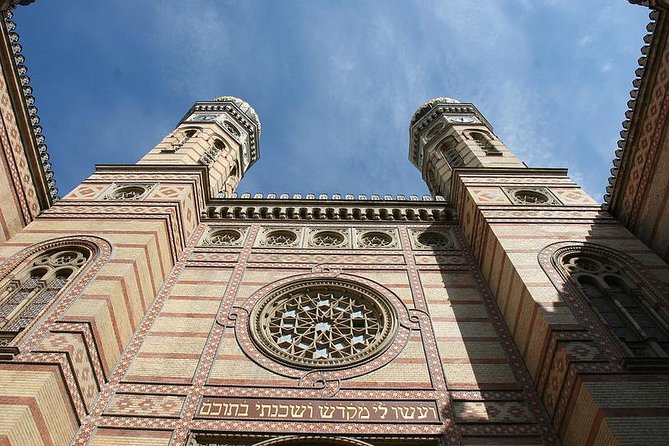
- Dohány Street Synagogue interior visit at Europe’s largest synagogue
- Jewish Museum and Archives guided time focused on art, daily life, and a Holocaust remembrance room
- Raoul Wallenberg Holocaust Memorial Park and the story behind his wartime role
- Options: Essential vs Grand route so you can match your energy and time
- Kazinczy Street Synagogue (Grand option) in art nouveau style, still operating
- Kosher stop with choices: cake at Frohlich or a 10% discount later at Carmel
Entering Dohány Street Synagogue: more than a photo stop
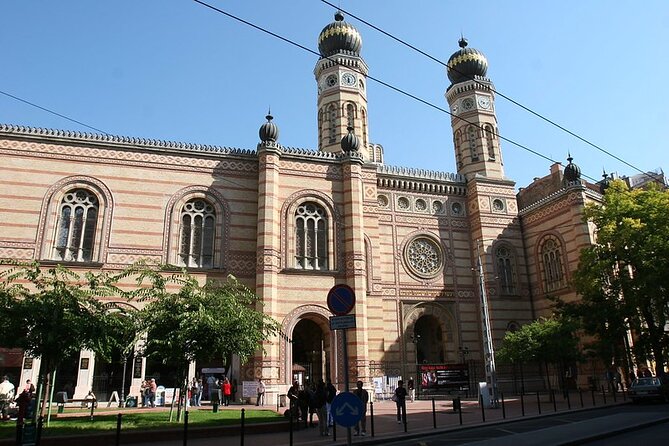
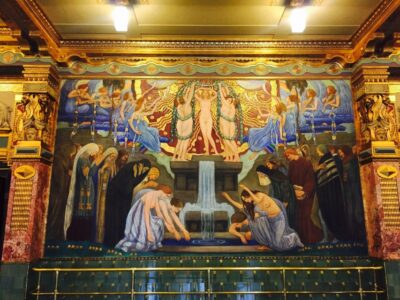
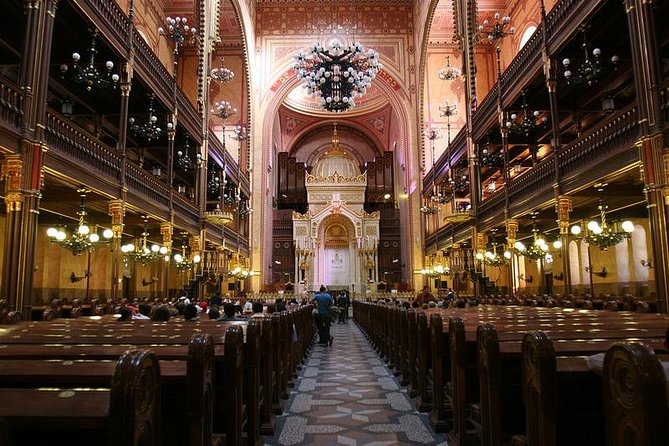
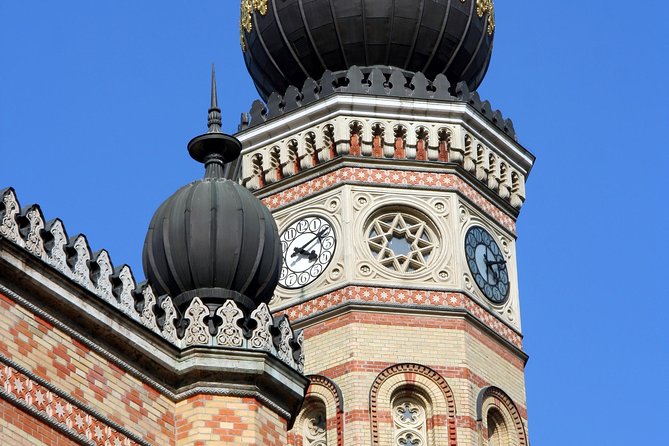
Most Budapest sightseeing makes you hop from viewpoint to viewpoint. This tour starts with a place you can’t really speed through: the Dohány Street Synagogue, also known as the Great/Central Synagogue. It’s described as the largest synagogue in Europe (and the second largest in the world), and that scale matters once you’re inside. You feel how this building served a community—not just as a landmark.
The interior time is part of what you’re paying for. You’re not wandering around a “pretty building” with no context. The guide’s storytelling helps you read the space: why it was built, what it meant to the people who used it, and how the 20th century reshaped the Jewish community in Hungary. Even if you’re not religious, you’ll likely find the architecture and layout make more sense after the explanation.
Practical tip: dress for indoor time and also for moving between stops. Budapest can shift from sunny to chilly fast, and you’ll want to stay comfortable for a few stretches that aren’t rush-and-go.
You can also read our reviews of more walking tours in Budapest



Essential vs Grand: pick the route that fits your day
This experience comes in two main flavors, and your choice changes how “complete” the walk feels.
The Essential tour is the more time-saver option. It keeps a tighter route and focuses on the big anchors: synagogue first, then the Jewish Museum and Archives, followed by several major memorial stops tied to 20th-century events. This is the right pick if you’re also doing other neighborhoods the same day and you want your Jewish heritage highlights without a long slog.
The Grand tour continues where Essential leaves off. You add more synagogues and memorials, plus an extra stop along the way that shows modern Budapest life. You also get the Kazinczy Street Synagogue visit, which is a big deal for anyone who likes architecture and wants to see an art nouveau style synagogue that’s still in use.
If you’re trying to decide, here’s the simple way I’d think about it:
- Choose Essential if you want the core message with less walking and fewer stops.
- Choose Grand if you want more names, more sites, and a fuller sense of how the past sits beside the present.
Jewish Museum and Archives: art, everyday life, and a sobering room
After the synagogue, you move into the Jewish Museum and Archives. What I like about this stop is that it doesn’t treat Jewish life as only crisis and tragedy. The museum’s guided time focuses on Hungarian and Eastern European artists and also on how Judaism shows up in holidays and everyday life.
That matters because it helps you avoid one of the most common mistakes people make when visiting memorial-focused places: reducing a culture to its worst chapter. Here, you get objects and themes that point to routine, creativity, and community rhythm.
There’s also a separate room commemorating the Holocaust. The tour doesn’t pretend this is easy subject matter. You’ll get the context the guide provides, and you’ll likely find that the museum’s structure makes the emotional shift feel more honest than a quick stop-and-snap.
Time feel note: the museum portion is longer than many walking tours offer. That extra minutes-and-momentum is what turns “we saw a museum” into “we understood a museum.”
The memorial walk: Wallenberg, the ghetto quarter, and Heroes’ Temple
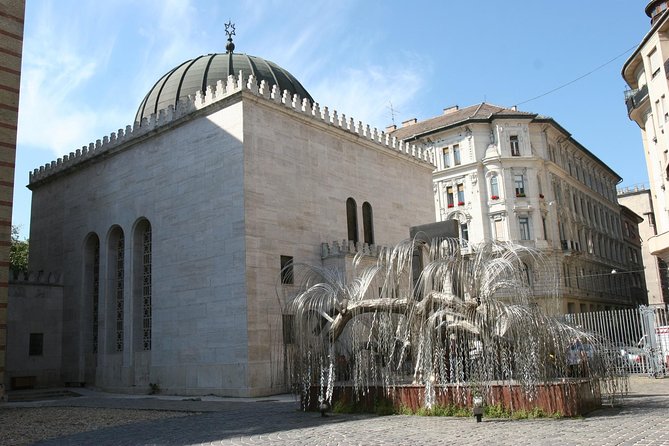
One of the strongest parts of this tour is how it layers people and places. You’re not just looking at plaques; you’re walking through a geography tied to survival and loss.
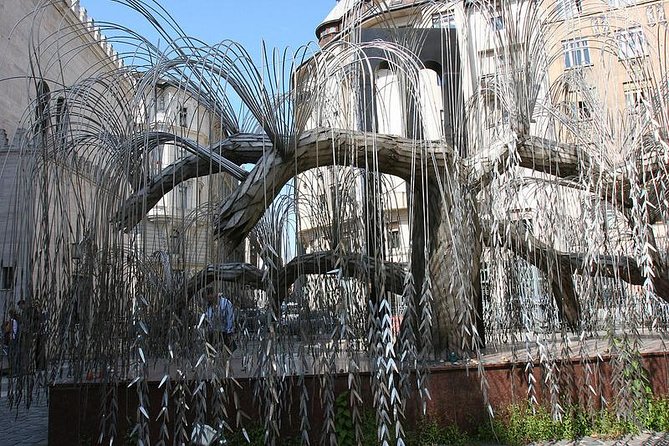
Raoul Wallenberg Holocaust Memorial Park is one of the key memorial stops. Wallenberg is credited with saving thousands in the Jewish community, and the guide’s narration helps you understand why his name belongs in this city’s story. This isn’t a generic stop. It’s framed as a real response during a real emergency, which helps the memorial feel human rather than purely symbolic.
As the route continues, you pass through the old Jewish Quarter area—historically tied to the ghetto during World War II. Then you get another memorial stop: Heroes’ Temple, which pays homage to lives lost during World War I. That combination is important. It reminds you that the Jewish experience in Hungary wasn’t only defined by one event. It was shaped by multiple wars and repeated cycles of threat.
A small practical consideration: memorial parks can be emotionally heavy. If you’re sensitive to this kind of history, pace yourself. The guide’s explanations can help, but your body still feels the reality of the topic.
Grand tour extras: Gozsdu Udvar and Carl Lutz
If you choose the Grand route, you’ll add a short pass by Gozsdu Udvar. It’s quick, but it gives you something valuable: proof that the neighborhood isn’t only remembered, it’s lived in. That helps the memorial stops land with more clarity. You can see how the city continues, even when the past is never fully out of view.
Then comes Carl Lutz Memorial Park, named for another key figure from World War II. Like the Wallenberg stop, this isn’t just a name dropped for trivia. It’s placed in your walking path so you connect the people credited with saving lives to the specific streets and communities they affected.
The Grand tour uses more time for these added points, and that’s why it works best if you want a “more names, more places” feeling. If you’re short on time, you’ll likely feel the Essential route gives you enough depth to understand the main arc.
You can also read our reviews of more historical tours in Budapest





Kazinczy Street Synagogue: art nouveau style and a living site
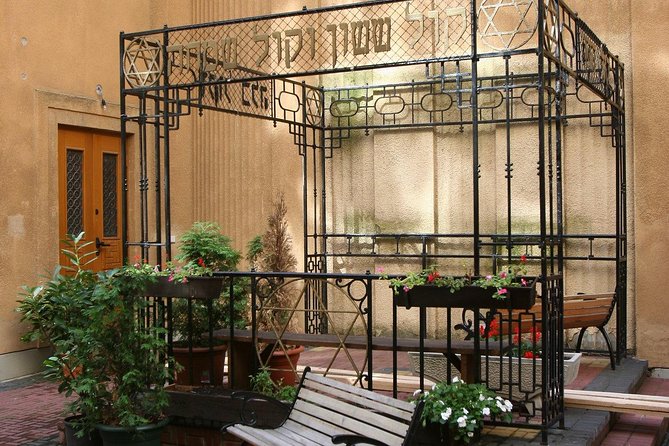
For the Grand tour option, the Kazinczy Street Synagogue is a standout. It’s described as the main synagogue of the Hungarian Orthodox Jewry and one of the largest operating Orthodox synagogues in Europe. It’s also built in art nouveau style, which gives the area a different visual flavor than what you might expect from a strict “historic synagogue” mindset.
This stop is included with entry, and you get time to explore and absorb what makes it different from the Dohány Street Synagogue you started at. The guide’s narration helps you see how style, community, and religious practice connect. Because it’s still operating, you may also feel a subtle shift from “museum-like” history to a living tradition.
Practical note: synagogues tend to have dress and behavior expectations. If you want this to be a smooth visit, come ready to show respect: quiet voices, no rushing, and comfortable layers for any indoor/outdoor transitions.
Kosher sweets at Frohlich and the Carmel discount
The tour ends with a food choice that’s simple and genuinely useful. If you do the Grand tour, you’re invited to pause for cake or dessert at the glatt kosher Frohlich confectionery. Even if you don’t go all-in on sweets, it’s a nice reset after memorial-heavy stops.
You also receive a 10% discount to the glatt kosher Carmel restaurant to use later in the evening on your own if you want. I like this setup because it doesn’t force you to buy dinner with the tour. You can plan your own evening, while still getting a nudge toward a kosher meal that fits the tour’s theme.
If you have food allergies or strict dietary rules, treat the cake stop as something to check carefully, not assume everything is safe. The tour provides the kosher connection, but it won’t replace reading ingredients if that matters to you.
Price and value: why $83.44 can make sense
At $83.44 per person for about three hours, this tour sounds like a “sightseeing upgrade,” and that’s basically what it is. The value comes from the fact that key entrances are included—especially the synagogue visit(s) and the Jewish Museum time.
Here’s how I’d judge the value for your trip:
- If you plan to visit the Dohány Street Synagogue and the Jewish Museum anyway, guided narration plus reserved entry can save you time and guesswork.
- The small group size (maximum 15) is a real perk because you can ask questions and get answers on the spot.
- Memorial stops are often the hardest to “self-tour” well. You can read signs, sure, but the guide helps connect the dots—people, dates, and why these names matter.
One more value point: this is not just about one building. It’s a route that connects multiple sites. That makes it more efficient than doing everything separately across different days.
Group size, timing, and how to prepare for a smooth start
This tour meets at the Dohány Street Synagogue on Dohány u. 2, 1074 Hungary. Start time listed is 10:00 am, and you’ll end in a different location, so don’t plan a hard commitment at the exact finish time.
A few logistics details that can help your day run better:
- You’ll get a mobile ticket, which is handy if you don’t want to hunt for paper.
- The tour is offered in English.
- It’s near public transportation, and there’s no hotel pickup.
Also, this experience is popular. It’s booked on average about 53 days in advance, so if you want a specific date, don’t wait until the last week.
What to bring:
- A layer (synagogues and museums can be cooler).
- Water, if you’re doing the Grand option and walking longer.
- A note in your phone with any questions you want to ask about Hungarian Jewish life, wartime rescue efforts, or how memorials are explained in context.
Who should book this tour
I’d point you to this tour if you want:
- A focused introduction to Budapest’s Jewish heritage that includes major landmarks, not just one synagogue.
- A guide who can connect architecture and street history to real people and real events.
- A route that balances community life with World War II and other 20th-century context.
It’s especially worth it if you’re the type who likes your history to have names—Wallenberg, Carl Lutz—and meaning—memorials tied to places you can walk past.
If you hate any seated time during tours, or you prefer pure walking over indoor explanations, consider choosing the Essential route and being ready for a slower indoor section inside the synagogue.
Should you book Budapest Jewish Heritage Memorial Walking Tour & Synagogue Entry?
Yes, you should book it if you want a well-paced, small-group way to see the most important Jewish heritage sites in Budapest without turning your day into a patchwork of self-guided stops. The biggest reason is the structure: synagogue first, then museum context, then memorial sites tied to real rescue stories and community loss. That order helps the experience make sense.
If you’re deciding between Essential and Grand, I’d keep it simple: pick Essential for a smart highlights sweep, and pick Grand if you want extra synagogues and more memorials, plus the kosher sweets stop. Either way, you’ll leave with more than photos—you’ll leave with names, context, and a clearer map of how the past shaped this city.
FAQ
How long is the Budapest Jewish Heritage Memorial Walking Tour?
It’s listed at about 3 hours.
Where does the tour start and where does it end?
The tour starts at Dohány Street Synagogue, Budapest (Dohány u. 2, 1074). It ends in a different location.
Is the tour offered in English?
Yes, it’s offered in English.
What does the tour cost?
The price is listed as $83.44 per person.
How big is the group?
The tour has a maximum of 15 travelers.
What’s included in the Essential and Grand options?
The tour includes a professional guide and entrance to the Great Synagogue. The Kazinczy Street Synagogue entrance is included for the Grand Tour option.
Do I get tickets to the sights, or is it just sightseeing?
Admission tickets are included for the synagogue and museum stops, and additional entrances apply for the Grand Tour.
Is there a food stop during the tour?
For the Grand option, there’s an invitation to have cake in the glatt kosher Frohlich confectionery. You also receive a 10% discount to the glatt kosher Carmel restaurant later in the evening on your own if you wish.
Is the tour near public transportation?
Yes, it’s near public transportation.
What if I need to cancel?
Free cancellation is available up to 24 hours in advance for a full refund.