REVIEW · BUDAPEST
Budapest Historic Downtown Bicycle Tour in small groups
Book on Viator →Operated by BIKE & RELAX - Bike Tours and Bike Rental · Bookable on Viator
Budapest looks best from two wheels. This small-group ride threads through the must-see sights with guide talk and plenty of photo stops, letting you move fast without getting fried by walking. I love the small group size and the fact you get a true “see-and-understand” version of the city, not just a photo parade. One thing to know: it’s not for total beginners, and some road moments can feel busy.
What I like most is how many landmark areas you cover in about 3.5 hours, including the formal boulevards, the big central squares, and the Danube viewpoints. In past departures, guides such as Oliver and Tomas have been praised for sharp pacing and clear safety, plus extra context that turns facades into stories. Your possible drawback is also the nature of the tour: you mostly pass by famous interiors (Opera, synagogues, basilica, Parliament), so you may want a separate ticketed stop later if you want to go inside.
In This Review
- Key highlights worth centering your day
- Why this Budapest bicycle route works for first-timers
- Price and timing: what you’re paying for at $41.13
- Group size and comfort: how this tour stays manageable
- The bike setup: helmets, water, and lighter touring
- Stop-by-stop: what you’ll see and what to watch for
- 1) Bike & Relax start area: get your bearings
- 2) Rumbach Street Synagogue exterior and street art
- 3) Liszt Academy and the music-meets-city vibe
- 4) Andrassy Avenue corridor toward House of Terror
- 5) House of Terror viewpoint (Berlin Wall fragment in front)
- 6) Heroes’ Square: a history overview in one complex
- 7) City Park seasonal sights: ice rink or boating lake
- 8) Vajdahunyad Castle exterior and the story behind the shape
- 9) House of Music Hungary: modern architecture in City Park
- 10) Museum of Ethnography: contemporary shape at the park edge
- 11) Hungarian State Opera: Michael Ybl on UNESCO Andrassy Avenue
- 12) St. Stephen’s Basilica (outside): a specific religious detail
- 13) Szabadság tér: memorial contrasts and reflective stops
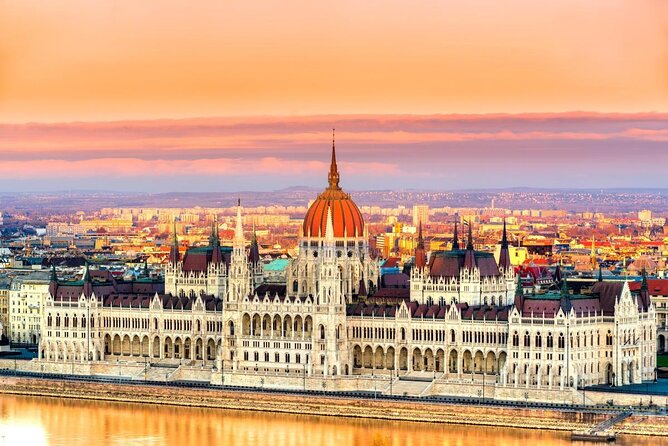
- 14) Parliament Building: renovation glow and Danube panoramas
- 15) Shoes on the Danube Bank: sobering and close
- 16) Chain Bridge pass: Budapest’s oldest river link
- 17) Rudas Baths and Gellért Baths passing by
- 18) Liberty Bridge: named history and a young-life viewpoint
- 19) Central Market and National Museum pass-by
- 20) Great/Central Synagogue (Nagy Zsinagoga): Moorish exterior finish
- Who should book this tour, and who should skip it
- What to bring so the ride feels easy
- Should you book this Budapest Historic Downtown Bicycle Tour?
- FAQ
- How long is the Budapest Historic Downtown Bicycle Tour?
- How much does the tour cost?
- Is the tour offered in English?
- Does the tour include entrance fees to museums and churches?
- What’s included with the ticket?
- Where is the meeting point?
- What time does the tour start?
- Is it suitable for beginners?
Key highlights worth centering your day
- Andrassy Avenue to Heroes’ Square: a focused sweep of Central Budapest’s most symbolic corridors
- Outside-only viewing of big landmarks: you get the highlights without hunting entrances and lines
- City Park in one stretch: Vajdahunyad Castle, House of Music, and Museum of Ethnography from the outside
- Danube riverbank memories: the Shoes on the Danube Bank stop plus Parliament panoramas
- Jewish Quarter finish with a look at the Great Synagogue’s Moorish style (no interior)
- Free luggage storage and bottled water for an easier, lighter ride
Why this Budapest bicycle route works for first-timers
This tour is built for the classic first-visit problem: Budapest has more “wow” per square meter than most cities, and walking can turn into a sweat-fest. By using bikes, you get a fast overview that still feels organized, because the guide keeps you pointed at what matters.
You’ll also get something I value on any bike tour: context while you move. You don’t just glide past buildings; you learn why the city’s layout makes sense and how the big squares and avenues connect to major chapters of Hungarian and Central European life.
You can also read our reviews of more historical tours in Budapest


Price and timing: what you’re paying for at $41.13
At about $41.13 per person for roughly 3 hours 30 minutes, you’re paying for four things that add up fast if you try to cobble them together:
- a bike and helmet
- a live guide for navigation and explanation
- bottled water
- free luggage storage during the tour
If you’re on a tight schedule, this can be a strong value. Three and a half hours is long enough to feel like you covered real ground, but short enough to keep the rest of your day flexible for museums, thermal baths, or a proper sit-down meal.
Group size and comfort: how this tour stays manageable
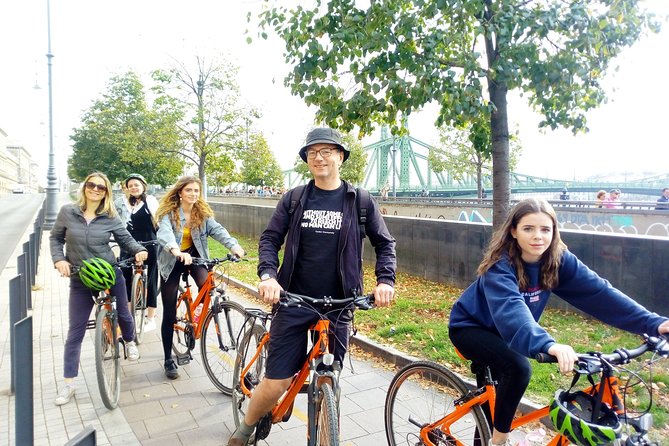
The tour runs with a small maximum group size (up to 10 travelers). That matters because Budapest streets can include mixed traffic, and you want less “herding cats” energy. In the feedback I’ve seen, guides like Oliver are praised for pacing that keeps the group together and for safety attention.
It’s also worth taking the “bike skill” note seriously. The tour is not recommended for beginners, and a confident rider will have the easiest time, especially when you’re weaving through city traffic and crossing between different neighborhoods.
The bike setup: helmets, water, and lighter touring
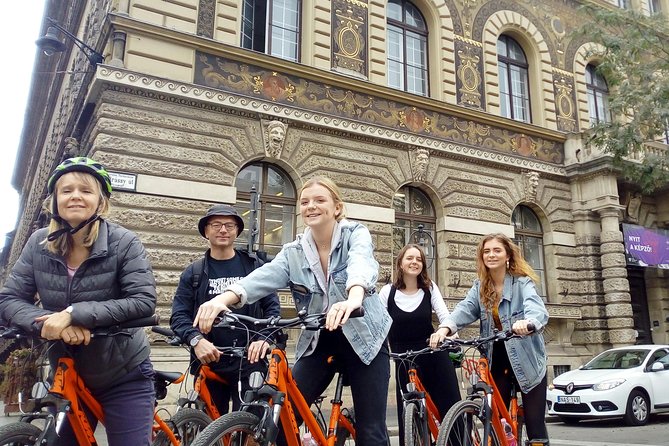
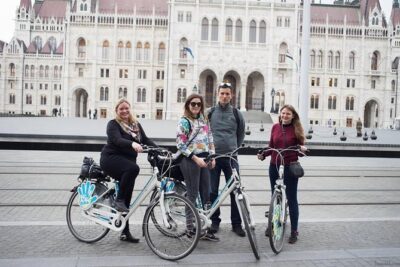
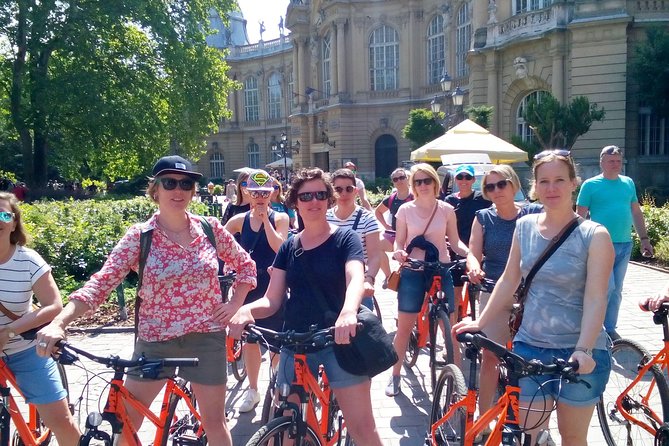
You’ll be provided with a bicycle, a helmet (they note it isn’t obligatory, but I still recommend wearing it), bottled water, and free luggage storage while you tour. That’s a practical package for people traveling with a backpack, a day bag, or a shopping detour from Central Market.
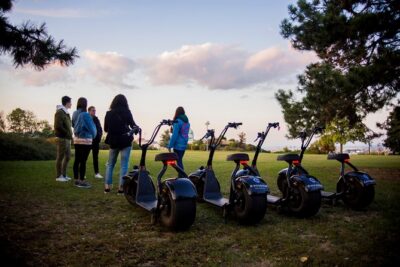
If you’re thinking about an e-bike upgrade, some departures have offered wooden-frame e-bikes in the past, and people liked them for handling hills with less effort. That isn’t guaranteed for every departure, so if you want help on steeper stretches, it’s smart to ask when you book.
Stop-by-stop: what you’ll see and what to watch for






1) Bike & Relax start area: get your bearings
You’ll meet in the city at Madách Imre út 12 (1075) and start at 10:30am, ending back at the same place. Expect a quick start rhythm—enough time to get assigned, check your bike, and settle in before the first photo-worthy neighborhood.
A good mental move here: don’t over-plan the rest of the day immediately. This tour will rearrange how you see the city, because you’ll connect major sites with the actual routes that link them.
2) Rumbach Street Synagogue exterior and street art
Your first major “look closer” stop is the Rumbach Street Synagogue area. You’ll get art deco architecture outside and street art vibes that feel more lived-in than the postcard squares.
This is a quick stop, so use it to reset your eyes. Budapest’s style shifts often, and this moment helps you spot those differences later when you’re on the big boulevards.
3) Liszt Academy and the music-meets-city vibe
Next you’ll pass by Liszt Academy, the music school with classical training right next to the Jewish District. Even without entering, it’s easy to appreciate how Budapest stacks culture right into the everyday streets.
This stop is also a reminder that you’re moving through working neighborhoods, not just tourist zones. Ride with an awareness of pedestrians and parked vehicles—city motion is part of the experience here.
4) Andrassy Avenue corridor toward House of Terror
From there, you’ll cruise the most famous link between the city center and the grand areas toward Heroes’ Square and City Park. The route description includes Nagymezö Street, often called the Broadway of Budapest, then Liszt Square and the ring-road system, with House of Terror along the way.
This section is one of the reasons I like booking a bike tour early in a trip. You start noticing how Budapest’s layout channels your movement, and that makes your later self-guided exploring far easier.
5) House of Terror viewpoint (Berlin Wall fragment in front)
You won’t enter the House of Terror Museum, but you will stop for a close outside look. It’s described as a former GESTAPO headquarters and later a communist-era prison, now turned into a museum.
You’ll see a portion associated with the Berlin Wall in front. It’s a heavy stop, but it gives the tour real stakes. For some people, the impact lands more strongly when you see it in the flow of the city rather than as a standalone museum mission.
6) Heroes’ Square: a history overview in one complex
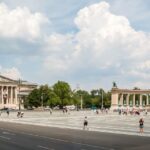
At Heroes’ Square, you get a proper moment: a designed space celebrating the 1000-year anniversary of Hungary in 1896. The stop is about 15 minutes, with an overview that connects major figures from King Stephen to revolutionary Kossuth.
The square is also useful for orientation. After this, you’ll understand why the city emphasizes grand axial routes: they’re about ceremony, memory, and visibility, not just efficiency.
7) City Park seasonal sights: ice rink or boating lake
Next comes City Park (Varosliget)—and the experience changes with the season. The tour notes that in winter you may see a famous ice rink, while in summer there’s an artificial lake suited for boating.
Even if you’re not stopping to do an activity, the bike-by view is a nice way to feel Budapest’s seasonal rhythm without committing your whole day to one plan.
Also, the park is described as undergoing some redesign work. That means you might see construction elements or temporary layouts, but it doesn’t ruin the overall feel of the area.
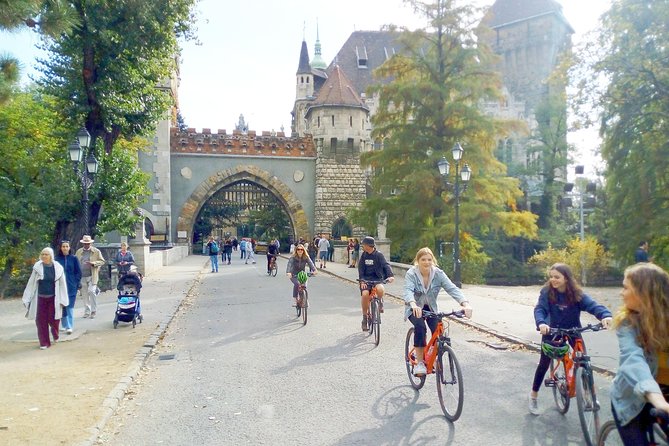
8) Vajdahunyad Castle exterior and the story behind the shape
You’ll stop at Vajdahunyad Castle, described as a kind of fake castle. That sounds funny until your guide explains why the design is what it is.
This is one of those stops that works even without entry because the architecture is designed to be looked at, not just passed through. It’s also a good spot to stretch your legs and take a few wider shots before you continue.
9) House of Music Hungary: modern architecture in City Park
Then you’ll see House of Music Hungary, noted for modern architecture and a concert hall setting. It’s a nice contrast: while you’re in a historic park zone, the city also keeps building new cultural spaces.
The stop is short, so treat it like a “glance and understand” moment—especially if you enjoy architecture more than deep museum hours.
10) Museum of Ethnography: contemporary shape at the park edge
At the Museum of Ethnography, you’re shown another piece of contemporary design, plus views around the park edge. The emphasis here is outward-facing: you’re absorbing the structure and the sightlines more than getting a ticketed experience.
If you want to go deeper later, this is a natural place to schedule an additional museum visit on a separate day.
11) Hungarian State Opera: Michael Ybl on UNESCO Andrassy Avenue
Back toward the city center you’ll pass the Hungarian State Opera on Andrassy Street, created by Michael Ybl. It’s tied to UNESCO World Heritage recognition for the Andrassy Avenue ensemble, and you’ll also learn about the late-19th-century styles and the M1 subway connection.
You won’t enter, but you can still enjoy the lesson: Budapest’s famous buildings are part of a bigger architectural plan, not random landmarks.
12) St. Stephen’s Basilica (outside): a specific religious detail
You’ll get an outside look at St. Stephen’s Basilica. The tour specifically highlights the idea of the right hand of St. Stephen shown under glass, and notes that the church has been beautifully renovated.
Even from outside, basilicas communicate scale. Still, if you want the inside experience, plan another stop later since this tour does not include entry.
13) Szabadság tér: memorial contrasts and reflective stops
At Szabadság tér, you’re positioned between “Wallstreet” energy and “bloody history,” with the tour mentioning controversial memorials and moments connected to the Holocaust and World War II in Budapest.
This stop isn’t meant to be fun. It’s meant to keep Budapest’s story accurate. The value is in the guide tying it back to the city’s spaces, so the memorials don’t feel like random plaques.
14) Parliament Building: renovation glow and Danube panoramas
You’ll pass the Hungarian Parliament Building and get a major viewpoint over the Danube and the Buda side. The tour calls out it as an operational parliament and a landmark on the river bank, also described as beautifully renovated.
You won’t enter, but you will get the “this is why the city matters” angle. If you’re a photo person, this stop plus the next few riverbank moments are where your pictures improve.
15) Shoes on the Danube Bank: sobering and close
You’ll pass the Shoes on the Danube Bank memorial next to the Parliament area. The tour also flags that direct access can depend on traffic, so don’t assume you’ll step right up to it in every moment.
This is one of the most emotionally direct stops on the route, and the bike-by pacing doesn’t water it down. It still lands as a strong reminder.
16) Chain Bridge pass: Budapest’s oldest river link
You’ll also pass the Chain Bridge, the city’s oldest bridge crossing the Danube. No long stop here, but it adds that “we’ve truly moved across the city’s core” feeling.
17) Rudas Baths and Gellért Baths passing by
On the Buda side, you’ll pass Rudas Baths, noted as one of the oldest Turkish baths. The tour points out that if you want to bathe, you should check opening schedules and that there are man-and-woman days for the hammam.
You’ll also mention the Gellért Baths area as your last Buda-side stop, known for art-deco style and its presence along the river bank. Again: you’re looking, not ticketing.
18) Liberty Bridge: named history and a young-life viewpoint
At Liberty Bridge (Szabadság hid), the tour shares the name story: originally named after Austrian Emperor Franz Joseph, then renamed “Liberty Bridge” after the end of the monarchy. It’s framed as a meeting point for students and youth enjoying the view.
This is a more relaxed stop that helps reset your brain after heavier memorial moments.
19) Central Market and National Museum pass-by
You’ll pass Central Market and the National Museum without a stop described for them. The market is called out as a place to return for Hungarian food and atmosphere, which is exactly what I recommend too: let your bike tour set you up, then use your free time to eat and wander.
20) Great/Central Synagogue (Nagy Zsinagoga): Moorish exterior finish
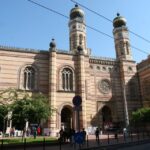
Finally, you’ll see the Great Synagogue on the border of the Jewish Quarter. The tour points to its Moorish style, and you won’t enter the synagogue on this ride.
This end matters because it closes the loop on earlier Jewish District stops and reminds you that Budapest’s architecture is tied to many communities over many eras.
Who should book this tour, and who should skip it
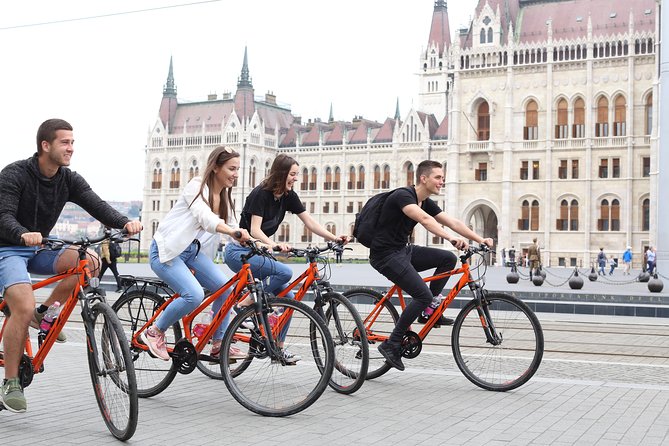
This tour makes the most sense if you:
- want a fast overview of downtown Budapest without long walking stretches
- enjoy history but also appreciate practical pacing
- can ride confidently through normal city conditions
I’d skip it (or at least think twice) if you’re:
- a brand-new cyclist (it’s not recommended for beginners)
- traveling with someone with visual impairment (also not recommended)
- above the 110kg weight limit
If you’re tempted by the e-bike idea, this route also has enough variety that an assisted bike can feel like a stress reducer rather than extra effort.
What to bring so the ride feels easy
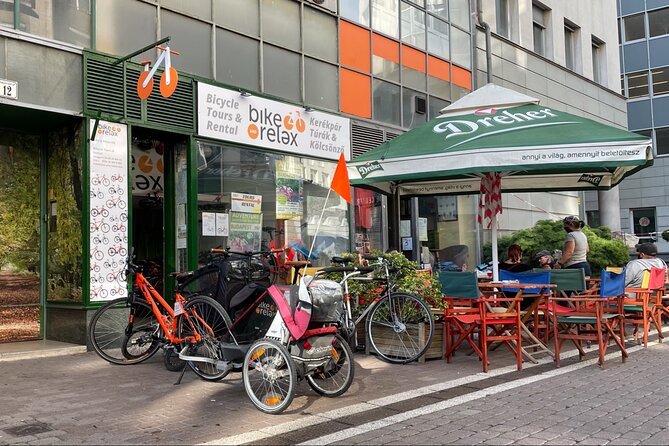
For a 3.5-hour morning cycle, pack like you’ll be warm quickly then cooled by wind. The route is city-based, so keep it simple:
- wear layers
- bring gloves if you get chilly on moving bikes
- expect some wind
- wear comfortable shoes for quick stops
Also plan your next meal right after. Central Market is easy to use as your follow-up plan because the tour passes near it and explicitly suggests returning.
Should you book this Budapest Historic Downtown Bicycle Tour?
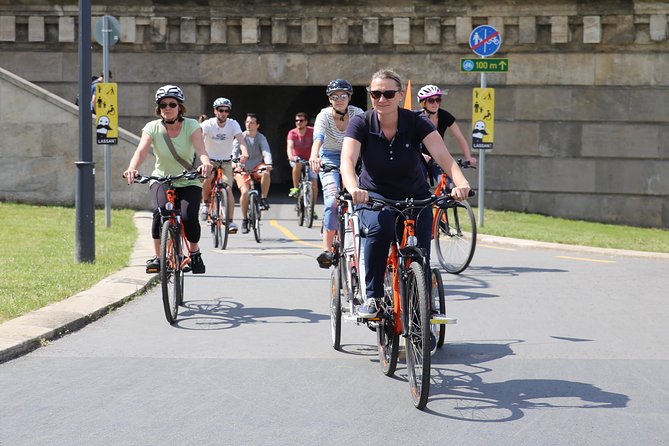
I’d book it if you want the best “first map” of Budapest in half a day and you like getting guided interpretation while you ride. The price is reasonable for the bike, the guide, the water, and the tight route that hits big-ticket sights like Heroes’ Square, the Danube riverbank, and the Parliament area without making you fight lines or tickets.
Skip it if you’re mainly chasing interior visits. This ride is built around seeing key landmarks from the outside, so you’ll need separate plans if you want full museum or church/synagogue entry. And if you’re not a confident cyclist, choose a different pace or another option, because the tour is not set up for training wheels.
If that matches your travel style, this is a smart way to get oriented and make the rest of your Budapest days feel easier.
FAQ
How long is the Budapest Historic Downtown Bicycle Tour?
It runs about 3 hours 30 minutes.
How much does the tour cost?
The price listed is $41.13 per person.
Is the tour offered in English?
Yes, it’s offered in English.
Does the tour include entrance fees to museums and churches?
No. The tour does not include entry, so you mostly view buildings from the outside.
What’s included with the ticket?
You get a bicycle, a live guide, a helmet, free luggage storage during the tour, and bottled water.
Where is the meeting point?
The meeting point is Budapest, Madách Imre út 12, 1075 Hungary. The tour ends back at the same place.
What time does the tour start?
The start time is 10:30am.
Is it suitable for beginners?
No. It’s not recommended for beginners, and you should be a confident cyclist.