REVIEW · BUDAPEST
Budapest Historical Sightseeing – Free Walking Tour
Book on Viator →Operated by Perfect European Tours - Budapest FREE Walking Tours. · Bookable on Viator
Budapest makes sense when you walk it. This Budapest Historical Sightseeing tour strings together the city’s Communist past and modern culture through major sights and street-level stories. I really like how it gives first-time visitors quick orientation, plus the kind of local context that helps you read the city as you move around it.
One thing to plan for: this is not a quick stop-and-go tour. You’ll do a lot of walking for about 2.5 hours, and it is not recommended if you can’t handle roughly 3 miles on foot.
In This Review
- Key things to know before you go
- Why this 2.5-hour walk helps Budapest click
- Start at Kálvin tér, then the National Museum gardens and the turul bird
- Kalvin Square and Unger’s House: religion, design, and style mix
- Elizabeth Square and Astoria: the Budapest Eye and a grand old facade
- The Jewish quarter: layered stories from community to ghetto to today
- Liberty Square and the communist memorial: why the visuals matter
- Parliament area viewpoints, plus Reagan and Bush statues
- Fisherman’s Bastion from across the river: best angles without ticket pressure
- Széchenyi Lánchíd and the Shoes on the Danube Bank: the ending that lands
- Price and value: why a low fee can still feel high quality
- Who the guides are and what makes the tour style work
- Practical stuff that can make or break your comfort
- Should you book this Budapest Historical Sightseeing tour?
- FAQ
- How long is the Budapest Historical Sightseeing free walking tour?
- What is the price per person?
- Is the tour offered in English?
- Where do I meet, and where does the tour end?
- What stops are included, and is admission included?
- Does the tour include coffee or food?
- Are public toilets free during the tour?
- Do I need to walk a lot?
- Are tips included in the price?
- Are dogs allowed on the tour?
Key things to know before you go
- Follow the yellow guides at the start point in Kálvin tér, then follow the route across Pest and the river area.
- It’s built for English speakers, with an in-person guide and a mobile ticket.
- You’ll see the big landmarks from the outside, including Parliament and St. Stephen’s Basilica (entry not included for some stops).
- Budget-friendly pricing, with the small listed tour price and tips left to you.
- Expect short, useful breaks for drinks and toilets (the tour doesn’t serve food or tea/coffee).
- Small logistics matter in cold weather: bring layers and comfortable shoes.
Why this 2.5-hour walk helps Budapest click
If Budapest is your first stop in Hungary, you’ll feel the difference between seeing buildings and understanding the story behind them. This tour focuses on how the city changed, especially through the Communist era and the culture that came after. That theme matters, because it changes how you look at what’s in front of you. A square becomes more than a photo spot. A statue becomes a clue. A river view becomes a reminder of borders, power, and survival.
I also like that the tour isn’t only about gloomy chapters. It mixes dark history with everyday Budapest reality: where people go out, what neighborhoods feel like now, and how the city works on a normal day. If you’re the type of traveler who wants a smart game plan for the rest of your trip, this kind of orientation tour is gold.
The route is paced like a real walking day, not a bus tour. If you’re comfortable on cobblestones and you pack for weather, you’ll enjoy it. If you want lots of sitting and indoor time, you’ll probably feel restless.
You can also read our reviews of more walking tours in Budapest



Start at Kálvin tér, then the National Museum gardens and the turul bird
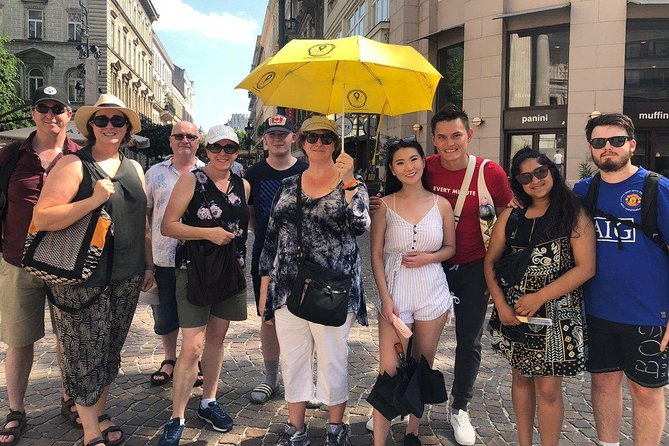
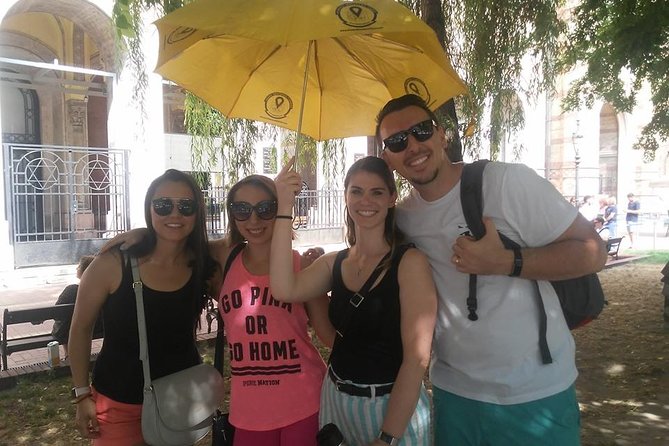
You begin at OTP Bank Budapest at Kálvin tér 12–13. Guides wear yellow, so it’s easy to spot them. Right away, you’re in the Budapest rhythm: city sidewalks, quick context, then a story tied to a landmark.
One of the first stops is the Hungarian National Museum gardens area. The focus here is not just the museum building, but the imagery and the political memories attached to the place. You’ll hear about the mythical turul bird statue in the gardens. That matters because it connects Hungarian national symbolism with the way people talk about identity—then and now.
You’ll also get a thread that runs through much of the tour: uprisings and the shifts in government. The guide’s explanation of the 1948 uprising gives you a framework for later stops, when the talk gets more modern and more visual. From this area, you’ll also hear about the VIII district, including its history when it was known for grand palaces. That detail helps you understand that Budapest’s current neighborhoods didn’t appear out of nowhere.
What to watch for: because this is mostly outdoor standing time, dress for the weather. You’re not ducking inside to warm up.
Kalvin Square and Unger’s House: religion, design, and style mix
From there, you move to Kalvin Square (Kálvin tér), where the tour meets at 12 Kálvin ter. The square has seating and shelter, which helps. The guide frames the area around John Calvin, the French Protestant Reformer. It’s a small stop, but it’s a good one for context: you start noticing how Budapest’s street map reflects Europe-wide influences.
Next comes Unger’s House, in the courtyard of a creation by architect Miklós Ybl. This stop is quick but memorable because the building’s style is a collage. You’ll hear that it mixes Byzantine, Gothic, Moorish, Renaissance, and Romantic elements. Even if you don’t call yourself an architecture nerd, this is the kind of detail that makes Budapest feel less generic. The guide’s job is to help you see the logic behind the visual chaos.
Tradeoff: these are short exterior/courtyard moments. If you want long time for photos or close-up exploring, plan to revisit key places after the tour with your own time.
Elizabeth Square and Astoria: the Budapest Eye and a grand old facade
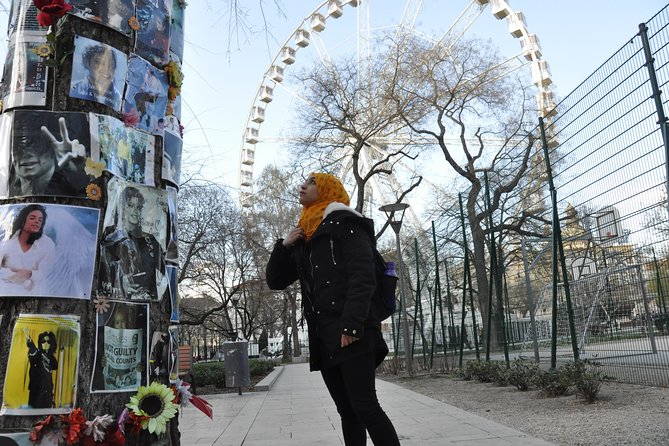
At Elizabeth Square, the story turns more playful. You’ll see the Budapest Eye nearby and learn about the square’s history. The guide also points out where some of Budapest’s favorite bar and nightlife areas sit, which is practical for planning your evening.
Then you pass Danubius Hotel Astoria, a grand building in a French Empire style. The tour keeps it human by connecting the architecture to what happened around it. You’ll hear it was a magnet for international stars and film productions, including the Josephine Baker Story directed by Brian Gibson. That film detail gives the building an extra layer beyond looks.
Why this stop works: it shows how Budapest can be glamorous without trying too hard. You’re not only learning about suffering and politics. You’re also seeing how the city sells itself, socially and culturally, in the present.
The Jewish quarter: layered stories from community to ghetto to today
One of the tour’s most important sections moves through the Jewish quarter. You’ll learn the big arc: it went from being home to a strong Jewish community to later becoming a ghetto during the Second World War. Then, more recently, the area has shifted again—now associated with artists and students, plus independent shops and bars.
Even when the group is walking quickly, you’ll get enough context to keep it from feeling like a checklist. The guide’s approach is usually to make you ask better questions while you’re standing in the street: What survived? What changed? What does the neighborhood feel like now, and why?
This is also where you’ll appreciate doing the tour earlier in your trip. It gives you a mental map for where to wander responsibly later.
You can also read our reviews of more historical tours in Budapest





Liberty Square and the communist memorial: why the visuals matter
As the tour heads toward Szabadság tér (Liberty Square), it slows down for a meaningful stop. You’ll spend time here and see a communist memorial. This part isn’t about aesthetics. It’s about symbolism—what the regime wanted people to remember, and what that memory means when you see it in daylight today.
The strongest benefit is the way the guide ties political history to location. When you’ve heard the earlier talk about uprisings and government shifts, the memorial becomes part of a bigger story instead of a random monument.
Parliament area viewpoints, plus Reagan and Bush statues

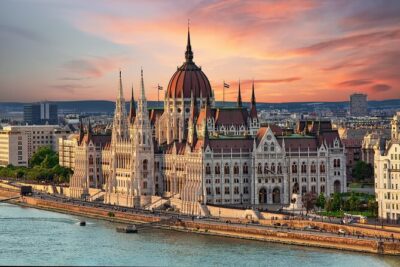
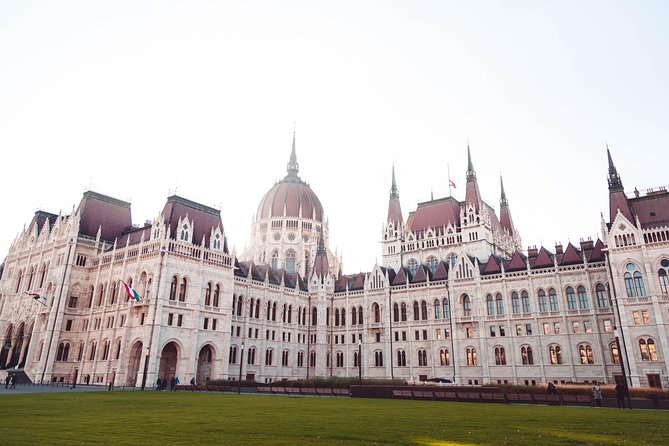
The middle-to-late stretch of the tour circles toward some of the most famous sights in Budapest, especially the Hungarian Parliament Building area. You’ll be outside, learning what you’re looking at: the building’s electric/neo-gothic style (as the tour describes it) and the view of the Danube from the square.
The guide also points out nearby important buildings, including the chocolate museum, the former ministry of Justice, and the agricultural museum. Even if you don’t go into them, you’ll leave with a better sense of what’s clustered around the Parliament and why this area feels like a power center.
There’s also a quick, funny-sounding stop that actually adds context: the Ronald Reagan Statue. You’ll learn why it’s positioned so it looks like Reagan is walking away from Parliament looking happy, and you’ll also hear about the Bush statue waiting nearby.
Note: some of the major buildings here have admission that is not included. If you want indoor time, plan separate tickets.
Fisherman’s Bastion from across the river: best angles without ticket pressure
At Fisherman’s Bastion (Halászbástya), you get views from the Pest side. You’ll learn how the area fits into the wider city history while you take in the castle area and the fisherman’s bastion view. You’ll also see St. Maytas church from afar, including its colored tiled roof, plus the Hungarian National Palace in the distance on the Pest side.
From this same general vantage, you’ll also hear about St. Margit Island and Gellért Hill from the Pest side. These are the kinds of viewpoints that feel too easy to photograph until someone helps you connect them to geography and story. After that, you stop treating the river like a postcard background.
Széchenyi Lánchíd and the Shoes on the Danube Bank: the ending that lands
The tour concludes near the Széchenyi Chain Bridge (Széchenyi Lánchíd). You’ll learn the bridge’s history and its reconstruction, then move toward one of Budapest’s most haunting memorials.
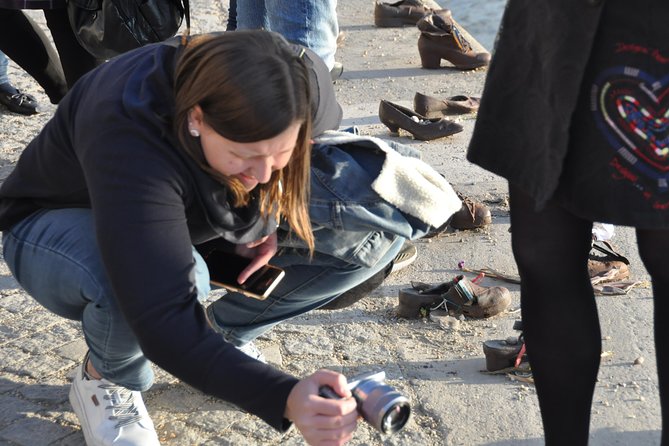
At Shoes on the Danube Bank, you’ll see the simple monument featuring 60 pairs of shoes dedicated to Holocaust victims. It is deliberately minimal. That is the point. The guide’s job here is to give you enough context to understand that the monument isn’t art for decoration; it’s a record of human loss.
From here, the official finish is at Id. Antall József rkp. 1 near the chain bridge. From that point, it’s easy to walk back toward the city center.
Price and value: why a low fee can still feel high quality
The listed price is $3.63 per person, and it operates as a walking-tour model where guide time is covered primarily through tips (tips are explicitly not included). That pricing is exactly why this tour works for budget travelers: you’re paying for orientation and interpretation, not ticketed entry to every site.
The best part for value is the coverage. You touch major landmarks on both sides of the river area without needing you to buy multiple attraction tickets as part of the tour. A few major sights have entrance fees not included, like St. Stephen’s Basilica, the Stock Exchange Palace, and the Parliament Building (entry not included). But you still get the external context and the story thread tying them together.
Also, the tour caps out at 50 travelers, and the pace is structured around guide storytelling plus quick stop-and-start photos. If you like group energy without chaos, this size can be a sweet spot.
Who the guides are and what makes the tour style work
Guide quality is where these tours can rise or fall. In the reviews tied to this experience, several names come up again and again: Peter, Victoria, Elizabeth, Sabi, and George. Common themes in their performances are clear English, lots of practical pointers for what to do next, and a mix of humor with serious material.
I like that the guide style is direct. Expect real talk about hard chapters in Hungary’s past. There’s also mention of comedy that can feel dark in tone at times. If you’re the type who wants a strictly upbeat tour no matter what, you might find the emotional subject matter heavy. If you’re okay with history that doesn’t sugarcoat, it fits this city.
Practical stuff that can make or break your comfort
This tour is about walking. Budapest is full of cobblestones and uneven streets, so wear real shoes. You’ll also do enough standing that layers matter.
The tour suggests bringing water, sunscreen, and weather protection like umbrellas or warm jackets. That is not overkill. Even if it’s bright, wind can hit hard along the Danube river views.
There’s no coffee or tea served during the tour. You’ll get a short 5-minute break to buy drinks and use the restroom. Toilets cost extra (the tour data gives a range of 100–500 HUF). If you want a warmer break, plan to buy a hot drink before you start or right at the beginning of that short stop, before the group timing forces you to grab what you can.
Two more practical notes:
- The guide cannot carry guest luggage or equipment, so travel light.
- Dogs are not permitted, but service animals are allowed.
Should you book this Budapest Historical Sightseeing tour?
Book it if you want a strong first-day framework for Budapest. It’s especially worth it if you like history that’s connected to places you’ll actually revisit later—Parliament, the basilica area, the Jewish quarter, the Danube memorials, and the chain bridge viewpoints.
Skip it (or choose a different format) if you hate standing around outside for long stretches, or if walking about 3 miles would be a struggle for you. Also think twice if you want lots of inside visits during the same outing. This tour is built for exterior sights and street-level storytelling, not ticketed museums back-to-back.
If your goal is to understand what you’re seeing and leave with a plan for your next moves in the city, this is one of the best ways to do it without blowing your budget. Just wear comfortable shoes, bring water, and plan on tipping your guide because that’s where the real quality lives.
FAQ
How long is the Budapest Historical Sightseeing free walking tour?
It lasts about 2 hours 30 minutes.
What is the price per person?
The listed price is $3.63 per person.
Is the tour offered in English?
Yes, it’s offered in English.
Where do I meet, and where does the tour end?
You meet at OTP Bank Budapest, Kálvin tér 12–13, 1085 Hungary. The tour ends at Budapest, Id. Antall József rkp. 1, 1052 Hungary near Lanchid.
What stops are included, and is admission included?
The tour includes multiple stops, but admission is not included for some places such as St. Stephen’s Basilica, the Stock Exchange Palace, and the Parliament Building. Other stops are listed as admission free.
Does the tour include coffee or food?
No. There is no food or drink served. There is a short break to buy drinks, and you pay yourself.
Are public toilets free during the tour?
No. The tour data says public toilet costs range from 100 HUF to 500 HUF.
Do I need to walk a lot?
Yes. It is not recommended if you are unable to walk 3 miles.
Are tips included in the price?
No. Tips for the guides are listed as not included.
Are dogs allowed on the tour?
Dogs are not permitted. Guide dogs are permitted if the owner carries the required official papers.