REVIEW · BUDAPEST
Private Jewish Heritage Tour of Budapest with Local Expert
Book on Viator →Operated by Friendly Local Guides · Bookable on Viator
Synagogues, ghetto stories, and dessert. That mix is why this private Jewish heritage walk in Budapest works so well. You’ll spend about 2.5 hours getting your bearings from Herzl Square through the Jewish Quarter, with a local guide who ties together places you can actually see.
I love the private format because you can ask real questions and move at a human pace. And I really like the food stop: you get famous flódni at Fröhlich Patisserie, so the lesson doesn’t end when the walking does.
One thing to consider: on rare occasions, a tour can be canceled if the guide gets sick, even when everything looks set. If you’re on a tight schedule, give yourself a little wiggle room.
In This Review
- Key highlights before you go
- A focused Jewish Quarter walk with a local guide
- Herzl Square to WWII ghetto landmarks: the starting line
- Timing note
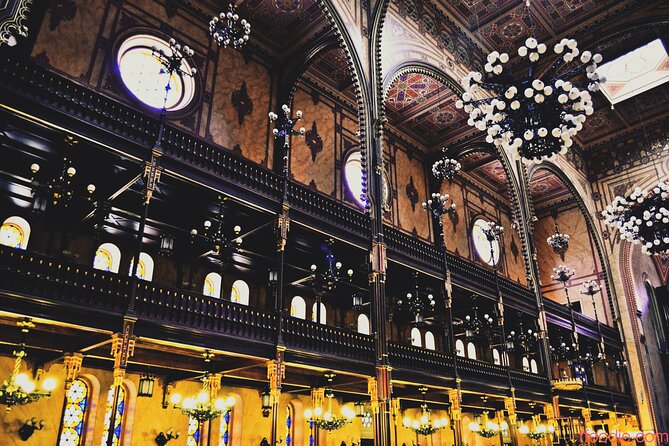
- Dohány Street Synagogue: big scale, big meaning
- Rumbach Street and Carl Lutz Memorial: the human stories
- Kazinczy Street synagogues, Art Nouveau details, and local tips
- Erzsébetváros and former ghetto streets: where the neighborhood holds the story
- Castle Garden and ritual baths: a quick stop with a strong visual
- Fröhlich Patisserie flódni and other named treats
- Price and value: $220 per person for a private route
- Who this tour suits best
- Should you book this Budapest Jewish heritage tour?
- FAQ
- How long is the private Jewish heritage tour?
- Is this tour private or shared?
- Is pickup available?
- Are tickets to the sites included?
- What food is included?
- Does it include a mobile ticket?
- Are there multiple start times?
- What kind of walking is involved?
- Are service animals allowed?
- What if I need to cancel?
Key highlights before you go
- Private walking tour just for your group, with a local guide doing the talking
- Herzl Square, Great Synagogue area, and WWII ghetto landmarks on a tight route
- Dohány Street Synagogue area visit, focused on scale and meaning
- Carl Lutz Memorial for one of the Righteous Among the Nations of the World
- Flódni at Fröhlich Patisserie plus other Jewish treats named for the stop
- Mobile ticket and coffee/tea included to keep the day easy
A focused Jewish Quarter walk with a local guide
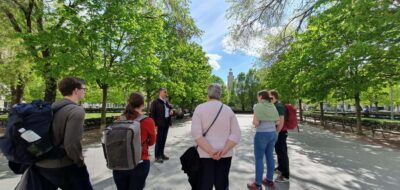
This tour is built for people who want more than a quick photo stop. You get a true “follow the story” route through Budapest’s Jewish Quarter, starting around Herzl Square and working your way toward the triangle of synagogues on and around Dohány, then looping back through the neighborhood. It’s 2 hours 30 minutes total, which is long enough to learn names and context, but short enough that you won’t feel like the day has been eaten by sightseeing.
Because it’s private, you also get flexibility in how you spend your time at key spots. If you’re the type who likes to ask about dates, community life, or why certain buildings look the way they do, this setup fits that style. And if you’re not a super-lecture person, the guide’s job is to keep the walking parts moving while still connecting each place to what came before.
One practical plus: the tour includes visual handouts, plus a notebook and souvenir pen. That sounds like small stuff, but it helps if you’re trying to remember details later, especially around WWII-era landmarks and multiple synagogues.
You can also read our reviews of more private tours in Budapest


Herzl Square to WWII ghetto landmarks: the starting line
The first stop begins in the Jewish Quarter, an area tied to Jewish culture that flourished in the 7th district for more than 200 years. Today it’s still a center of Jewish life in Eastern Europe, and the tour sets you up to see why that matters.
You’ll start at Herzl Square and move through the area connected to the Great Synagogue. From there, the guide focuses on major landmarks of the World War II Ghetto of 1944. That’s the kind of moment where a local explanation changes everything. The buildings and street layout are the stage; the stories put names to what happened here.
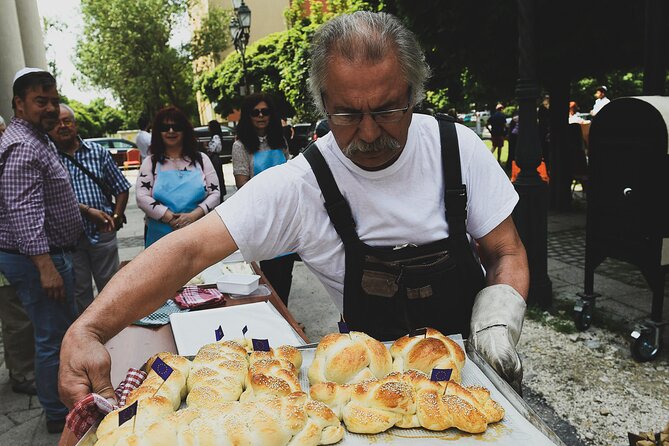
You also get a key food moment early: flódni at Fröhlich Patisserie. I like placing food around a learning-heavy section because it turns the whole experience into something you can remember with your senses, not just your phone camera. Expect this to be a real break, not a rushed stop.
Timing note
The first main cluster is around 20 minutes, and the pace is designed to keep the group together as the route moves through multiple sites.
Dohány Street Synagogue: big scale, big meaning
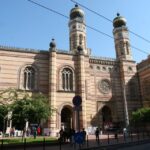
The tour’s main event is the vicinity of Dohány Street Synagogue. This is the largest in Europe and the second largest in the world, so even if you’ve seen synagogue photos before, seeing the scale in person is what lands.
This stop is short by design (about 20 minutes), but it’s not meant to feel incomplete. Instead, it’s a targeted visit where the guide helps you notice what you’re looking at: the structure, the neighborhood setting, and the way this site sits inside the broader story of Budapest Jewish life.
I also like that the tour doesn’t treat the synagogues as isolated attractions. It’s more like landmarks along one continuous walk. When you later stand near other synagogues, the Dohány Street visit makes more sense because you’ve already learned how to read the area.
Rumbach Street and Carl Lutz Memorial: the human stories
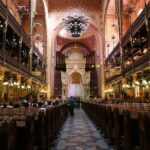
After Dohány Street, the route shifts to Rumbach Street Synagogue. Here, the focus is on the beauty of the interior decoration—specifically how the Moorish styling and light create a graceful, detailed look rather than a plain “big building” impression. The stop is about 15 minutes, so you’ll likely spend it absorbing the visuals and hearing the guide’s explanation rather than trying to do a deep self-guided checklist.
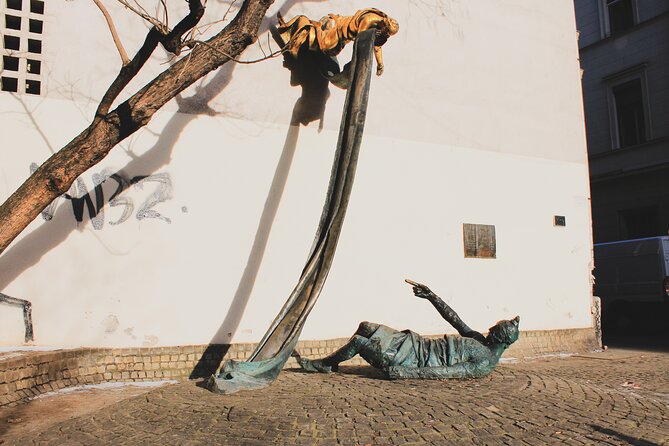
Then comes the Carl Lutz Memorial, dedicated to Carl Lutz, known as one of the Righteous Among the Nations of the World—often referred to as the Hungarian Schindler. This is one of the stops where I think the guide’s storytelling matters most. Memorials can feel abstract if you only read a plaque. A good explanation gives you the thread between individual choices and the wider tragedy that unfolded in the area.
Stop length is about 20 minutes, which is enough to slow down without turning the tour into a long pause.
You can also read our reviews of more historical tours in Budapest



Kazinczy Street synagogues, Art Nouveau details, and local tips
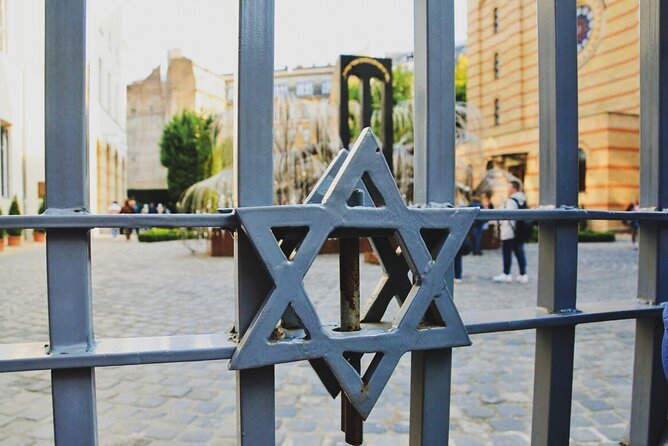
Next you’ll visit the synagogue on Kazinczy Street, described as one of the largest functioning Orthodox synagogues in Europe, built in the Art Nouveau style. If you’re into architecture, this is the moment to look closely—Art Nouveau usually means playful detail, not just straight lines and stone slabs. The stop is about 20 minutes, and you’ll be able to take in both the setting and the design notes the guide points out.
The tour also includes local tips around the neighborhood—especially about beer ruin culture and nightlife, plus street art and other “secrets.” Even if you’re not planning to party, these comments help you understand why this district feels the way it does today. It’s not a museum that shuts at 5 p.m.; it’s a living neighborhood.
And you’ll revisit the district center again as you walk past the Kazinczy area, where the former Jewish market days are part of the story. The description includes an image of Kazinczy that now resembles a wine cellar atmosphere, with kosher wine of high quality. That’s the sort of detail that makes your future exploring easier.
Erzsébetváros and former ghetto streets: where the neighborhood holds the story
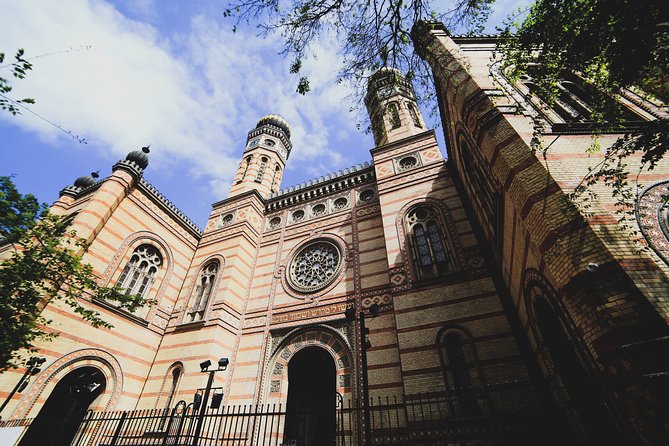
As you move into Erzsébetváros, you’ll learn that Budapest has 24 synagogues and pray houses, plus many monuments tied to Jewish history, culture, and religion. What the tour emphasizes is the idea of a “city within a city”—the historic Jewish quarter and the former ghetto sitting in the heart of old Budapest.
The walk here is about 20 minutes for this segment, but it’s not just a scenic loop. You’ll connect the past to what you can still see now: synagogues, monuments, kosher restaurants, and kosher shops. This is where you’ll start feeling the neighborhood as a place you could return to later, not just a route you crossed once.
You’ll also have a dedicated District VII / Jewish Quarter stroll area (again about 20 minutes), described as walking through streets of the former ghetto. The guide’s local stories are the point. You’ll hear what matters about the streets themselves, not just the buildings.
Castle Garden and ritual baths: a quick stop with a strong visual
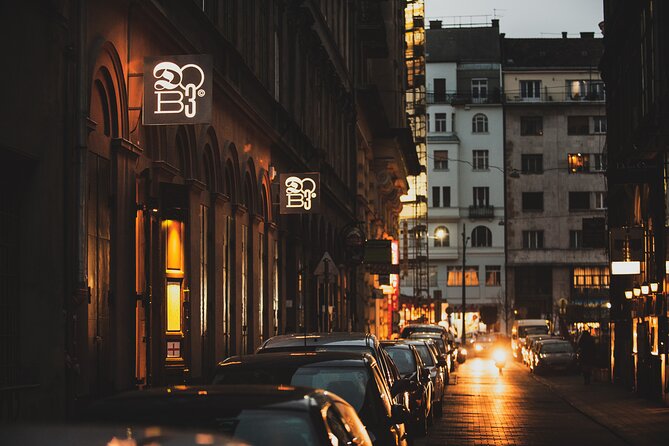
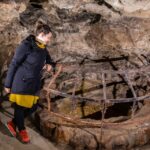
One brief stop is Castle Garden, where you can take a picture with the oldest traditional Jewish baths used for ritual purposes. It’s about 10 minutes, so think of it as a fast, memorable marker—one of those images that stays with you because it’s so specific and so easy to grasp visually.
If your brain likes contrasts, this is helpful. After synagogues and memorial context, a baths site reminds you that Jewish community life included everyday ritual and routines, not only major historical events.
Fröhlich Patisserie flódni and other named treats
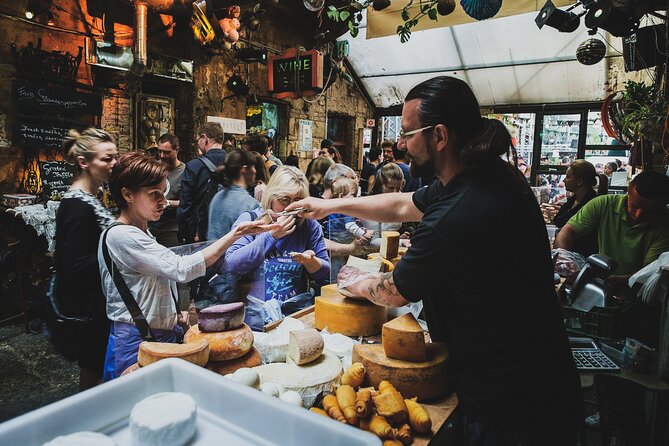
Food is handled in a way that feels tied to place, not tacked on. You’ll stop at Fröhlich Confectioner/Fröhlich Patisserie for flódni, described as iconic and modern Jewish comfort food in this context. The tour also names other items you may encounter at that stop, including chanukkai donut and Purim Haman’s ears, along with other Jewish delicacies.
I like that the tour calls out the specific treats. It means you can plan your day around it. If you’re picky about one food style, this is where you’ll learn what you’re getting rather than finding out after you’ve already paid for something else elsewhere.
Also, coffee and/or tea is included. That matters when you’re walking between multiple sites in one go, especially if you’ve been outside in the street long enough to feel it.
Price and value: $220 per person for a private route
At $220 per person for a 2.5-hour private walking tour, you’re paying for something simple: a guide tailored to your group and a focused route through the Jewish Quarter and synagogue triangle. You’re also getting all fees and taxes, plus the included items like a notebook, souvenir pen, visual handouts, and coffee/tea.
A big value point is that admission tickets are listed as free for the stops. That reduces friction. You’re not doing math mid-walk about what costs extra.
Is it the cheapest way to see Budapest’s Jewish landmarks? No. But it often beats trying to stitch together multiple sites on your own, especially if you want meaningful WWII ghetto context and explanations tied to what you’re actually standing in front of.
If you’re booking this as a couple or small group, a private format can feel even better because you’re not waiting for a big group to reach the next point. (The description also notes group discounts, which can help if you’re traveling with others.)
One last practical heads-up: on at least one occasion, a guide wasn’t able to perform due to illness and the tour was canceled and refunded. That doesn’t mean it’s common, but it’s worth knowing because private tours depend on the guide’s ability to show up. If your itinerary is tight, book with a bit of buffer.
Who this tour suits best
This tour is a good match if you want a walking route that connects synagogues, WWII ghetto landmarks, and memorial context in a short window. It’s also a strong pick if you like architecture details and religious-culture explanations, since the route includes different synagogues and styles and isn’t only exterior sightseeing.
You should also be comfortable with a moderate level of walking, since the experience is designed as an urban stroll through District VII and nearby streets. And if you want a guide who can explain without rushing, there’s real evidence of that. One guide named Miklos is described as on time, clear, and giving a lot of information without making the group feel rushed, even when time was limited.
Should you book this Budapest Jewish heritage tour?
If you care about learning the places and not just collecting photos, I’d book this. The route is compact, the stops are specific, and the food break at Fröhlich helps you remember it later. The private setup makes a difference, especially for people who like to ask follow-up questions around WWII context and why certain buildings matter.
I’d pause only if your schedule is extremely fixed. Since private tours can be canceled if a guide gets sick, you’ll want that buffer day or a backup plan. Otherwise, this is a smart way to experience the Jewish Quarter and major synagogue landmarks with clear guidance and a dessert finish.
FAQ
How long is the private Jewish heritage tour?
It lasts about 2 hours 30 minutes.
Is this tour private or shared?
It’s a private tour/activity, meaning only your group participates.
Is pickup available?
Pickup is offered.
Are tickets to the sites included?
All fees and taxes are included, and the tour lists admission tickets as free for the stops.
What food is included?
You’ll have a stop at Fröhlich Patisserie for flódni, and the tour also names other Jewish treats like chanukkai donut and Purim Haman’s ears. Coffee and/or tea are included. Food and drinks beyond what’s specified are not included.
Does it include a mobile ticket?
Yes, the tour includes a mobile ticket.
Are there multiple start times?
Multiple start times are available.
What kind of walking is involved?
It’s listed for travelers with a moderate physical fitness level.
Are service animals allowed?
Yes, service animals are allowed.
What if I need to cancel?
You can cancel for a full refund if you cancel at least 24 hours in advance of the experience’s start time.