REVIEW · BUDAPEST
Communism in Budapest: Private Tour with House of Terror Museum
Book on Viator →Operated by Travel Curious · Bookable on Viator
Hungary’s 20th-century story walks beside you. This private 3-hour political history tour starts at Bem József Memorial Square and leads you through landmarks like Kossuth Lajos Square, then finishes at the House of Terror Museum, built as a place to remember victims of the fascist and Communist regimes. I especially like how the route connects major sites—Soviet-era protests included—with everyday city details like statues and street vibes, and I love that the last stop is hands-on and meaningful without rushing you out the door.
The main thing to consider is tone: the House of Terror focuses on detention, torture, and killings, so it’s not a light sightseeing hour. If you prefer upbeat history tours, you might find the ending heavy.
In This Review
- Key Things to Know Before You Go
- A 3-Hour Budapest Walk That Connects Politics to the Streets
- Bem József Memorial Square and the 1956 Uprising Against Soviet Rule
- Falk Miksa Street, a Columbo Statue, and How Budapest Uses Humor
- Kossuth Lajos Square and Parliament’s Neo-Gothic Presence
- Liberty Square Monuments and the International Reach of Politics
- House of Terror Museum: Where Memory Takes Over the Walk
- Price and What You’re Really Paying For
- Who This Tour Suits (and Who Might Prefer Something Else)
- Should You Book the Communism in Budapest Private Tour?
- FAQ
- FAQ
- How long is the tour?
- What does the tour cost?
- Is this tour private or shared with other people?
- Where does the tour start and end?
- Is the House of Terror Museum ticket included?
- What about the Hungarian Parliament Visitor Centre—do I pay extra?
- How physically demanding is the walk?
- Do I get a mobile ticket?
- Is cancellation free, and how far ahead do I need to cancel?
- How far in advance should I book?
Key Things to Know Before You Go
- Bem József Memorial Square ties the walk to the 1956 student uprising against Soviet rule.
- Falk Miksa Street includes a surprising Columbo statue that adds a fun contrast to grim politics.
- Kossuth Lajos Square and Parliament give you a big visual anchor for modern Hungarian governance.
- Liberty Square includes a Ronald Reagan monument, a neat reminder that politics reaches far beyond Hungary.
- House of Terror entry is included, so you can focus on the story instead of ticket logistics.
A 3-Hour Budapest Walk That Connects Politics to the Streets
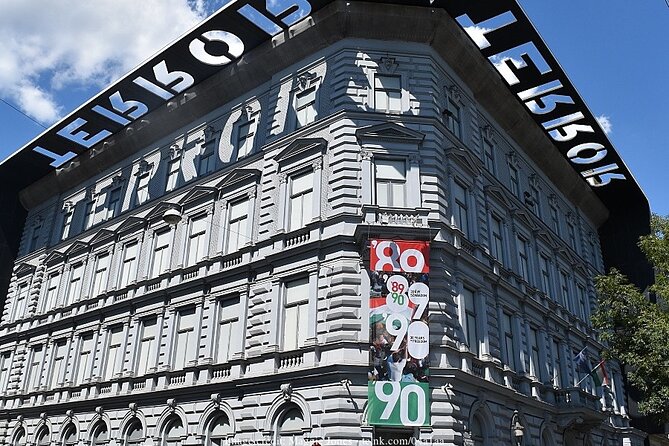
Budapest can look postcard-pretty from the Danube to Andrassy Avenue, but this tour treats the city like a living document. You’re not just checking boxes for famous buildings. You’re following the cause-and-effect chain from Nazi occupation through Hungary’s Communist period, then toward the birth of democracy. That’s the real value here: the history isn’t floating in an abstract textbook. It shows up in squares, monuments, and even odd little details that you’d otherwise miss.
Because it’s private, you can move at a pace that fits your group. If you want extra time for photos, you get it. If you’re the kind of traveler who likes to ask why something exists—why that statue is there, why a square matters—you can do that without feeling like you’re slowing down strangers.
The tour is built around a simple rhythm: start at a major turning point, walk through central Budapest with context, frame the modern political backdrop near Parliament, then end at House of Terror, where the museum does what memorials are supposed to do—hold memory in a physical space.
You can also read our reviews of more private tours in Budapest



Bem József Memorial Square and the 1956 Uprising Against Soviet Rule
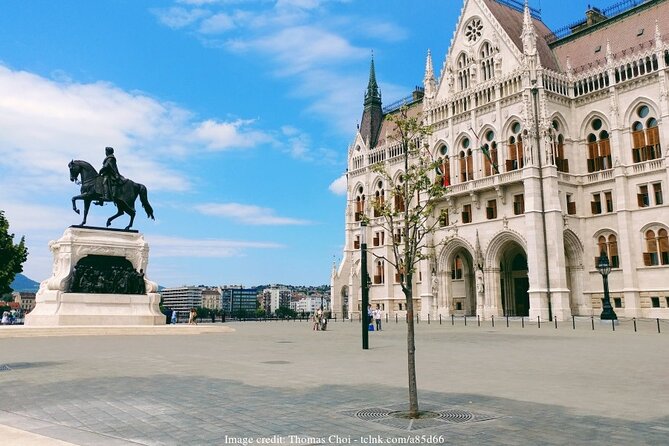
Your morning (or afternoon) begins at Bem József tér 2, in the area around Bem József Memorial Square. This is not just a pretty public space. It’s tied to 1956, when Hungarian students protested Soviet rule—and they did it at massive scale, around 200,000 students. That number matters because it helps you understand the energy and risk of that moment. The tour gives you a starting point where you can feel the political stakes instantly.
In about 30 minutes, you’ll get your bearings: how Budapest became a stage for power struggles, and why student movements were a spark in a wider conflict. I like starting here because it frames everything that comes later. When you move through other parts of the city, you’re not guessing what period you’re in—you know which “chapter” the guide wants you to see.
Practical tip: wear comfortable walking shoes right from the start. Even though this is a short tour, you’ll be on your feet for the full arc of the route.
Falk Miksa Street, a Columbo Statue, and How Budapest Uses Humor
After Bem József, the tour shifts into a more human scale. You’ll wander down Falk Miksa Street and hear about the Communist era through the lens of everyday urban life—what people saw, what they endured, and what they built despite pressure.
Then comes one of the tour’s most memorable contrasts: an unlikely statue of Columbo, the fictional LAPD detective known for a scruffy look and dogged determination to get to the truth. It’s a strange choice for a political-history walk. That’s exactly why it works. This kind of detail signals something important about Budapest: even in tight times, culture finds ways to slip in. Humor, pop culture, and street-level symbols can coexist with heavy political realities.
You also get a sense of central district texture, with references to retro bars and butcher shops as you move through the area. You’re not just walking past pretty scenery—you’re learning how daily routines persisted in the background while the big machinery of power changed around them.
Why this matters: when a tour connects history to street details, you remember more. You can picture the place later, not just the dates.
Kossuth Lajos Square and Parliament’s Neo-Gothic Presence
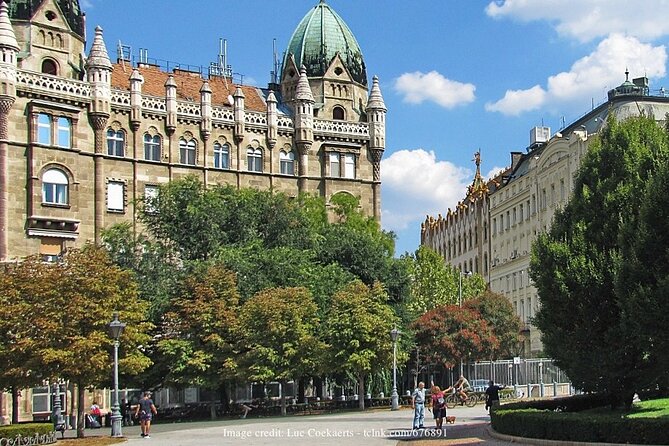
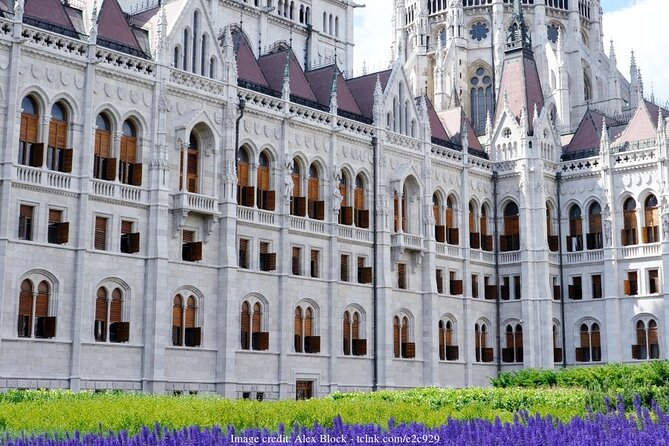
Next you’ll reach Kossuth Lajos Square, where the Hungarian Parliament building dominates the scene with its Neo-Gothic style. From the outside, it’s an instant reminder that power is visual. Architecture becomes a message: who represents the nation, where decisions happen, and how the state wants to be perceived.
You’ll spend around 15 minutes learning how the political backdrop evolved into the modern era. The tour focuses on the road from earlier centuries to today, linking the architecture you see with the political logic behind it.
One important note: the Hungarian Parliament Visitor Centre ticket is not included. That doesn’t make the stop a waste. You still get the core value—framing the bigger story while standing at the key stage for national politics. If you’re curious about the inside, that’s an optional add-on you can make separately, but don’t assume it’s part of what you already paid for.
Liberty Square Monuments and the International Reach of Politics
In the central district, you’ll also stop by Liberty Square and see a Ronald Reagan monument. That detail hits harder than it sounds because it shows how Communist-era politics wasn’t just local. Even leaders across the Atlantic shaped the narrative, alliances, and the way power was discussed and felt in Hungary.
This part of the tour is about perspective. Soviet rule and Communist ideology didn’t exist in a vacuum. You get to understand how Hungary’s story intersected with global politics—especially in the late 20th century—so the monuments you see aren’t random. They’re part of a long conversation about ideology, influence, and memory.
The tour keeps moving while it teaches. You’re walking, watching for squares and statues tied to the past, and building an internal map of political symbolism. If you like history that helps you interpret what you see, this is one of the best sections of the route.
You can also read our reviews of more museum experiences in Budapest





House of Terror Museum: Where Memory Takes Over the Walk
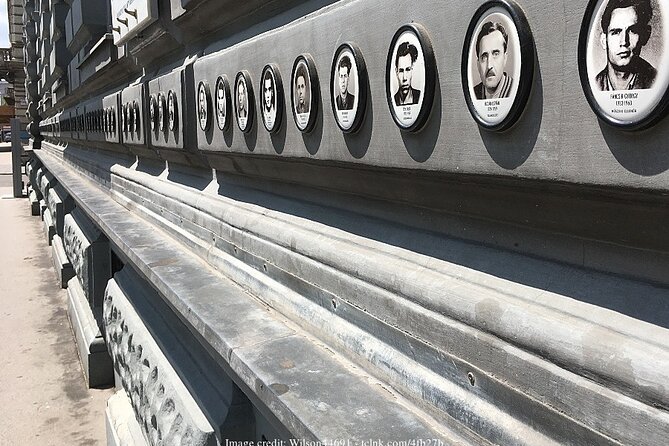
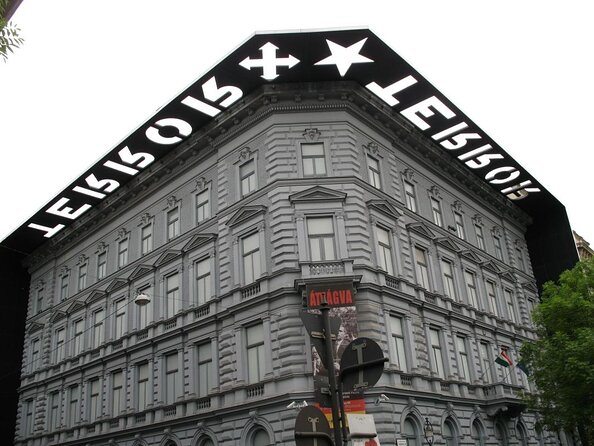
The final stop is the House of Terror Museum on Andrassy út 60. This is where the tone changes. The museum is a memorial to the horrors of the past, focused on people detained, tortured, and killed inside the building. It also includes exhibits connected to both fascist and Communist regimes of 20th-century Hungary.
The time here is about 30 minutes, with entrance tickets included. That’s a realistic amount of time for a guided visit at this kind of place. You won’t be able to read everything at a slow museum pace, but you should leave with a clear sense of the big picture and the emotional purpose.
I like that the tour ends here because earlier stops help you frame context. By the time you reach House of Terror, you’re not just reacting to shock—you understand why the museum exists and what it’s trying to prevent from fading into silence.
About your guide: the experience provider brings a friendly, professional guide for your own private group. In one of the tour notes, guide Vera is specifically praised for being knowledgeable and for giving interesting insights that make the Budapest story feel coherent, especially during the museum portion. If you’re lucky enough to get Vera, that reputation lines up with what you’d want for a tour like this.
Practical tip: plan for respectful behavior and slower reading. If you’re sensitive to heavy content, take a quick break if you need it and keep moving with the group.
Price and What You’re Really Paying For
At $180 per person for a private tour, this isn’t a bargain-bin walking tour. But it can be good value if you factor in two things: private guiding and included museum entry.
You’re getting:
- A dedicated guide for your own private group
- Enough time for photos along the way
- House of Terror museum admission included
You’re not paying extra for the main ticketed component of the route. That matters because the museum is the most “locked-in” part of the experience—if you had to buy tickets separately, you might lose time or face availability pressure.
Also, the tour lists group discounts. If you’re traveling as a pair or a small group, the per-person cost can feel more reasonable compared with paying for separate private bookings.
And yes, mobile tickets are used, which cuts down on friction when you arrive—just have your phone ready.
Who This Tour Suits (and Who Might Prefer Something Else)
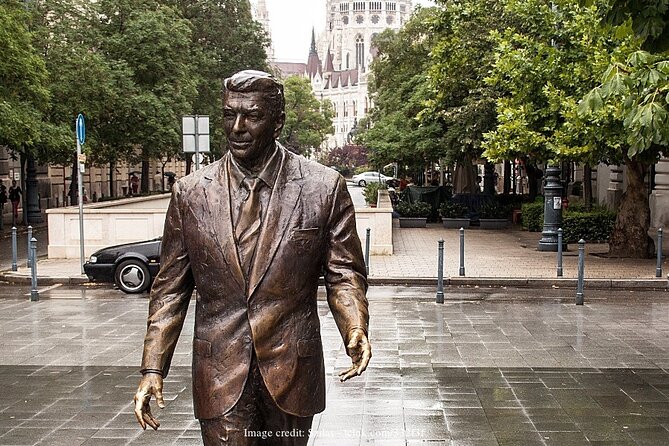
This tour is a strong fit if you want to understand Communist-era Hungary in a way that’s tied to place. It’s also ideal if you like walking tours that combine big political landmarks with odd street-level details, like the Columbo statue and the Ronald Reagan monument.
It’s also a good match for travelers who:
- Enjoy guided context more than self-guided reading
- Want a structured route that hits major “memory points” quickly
- Are comfortable with a moderate walking pace (the tour is listed for moderate physical fitness)
It may not be the best choice if you want a purely casual city stroll or if you strongly prefer sunny, low-emotion sightseeing. The museum ending is focused on suffering and violence, so you should choose it intentionally.
Should You Book the Communism in Budapest Private Tour?
Book it if you want a guided explanation that links Budapest’s political story to what you can actually see on the ground—1956 student protests, Parliament’s modern role, and the chilling memorial work of House of Terror. The structure is tight enough to fit in a half-day, and the included museum entry helps you avoid the most annoying parts of planning.
Don’t book it if you’re hoping for a light overview of Hungary’s past or if you don’t want your trip to end with heavy, explicit themes. In that case, you might prefer a different theme, like architecture-focused Budapest or a Danube-and-cafés style walking tour.
If you do book, I’d go in with a simple mindset: treat the last stop as the emotional center of the day, and let the earlier walking sections build the context you’ll want when you’re standing in House of Terror.
FAQ
FAQ
How long is the tour?
The tour lasts about 3 hours.
What does the tour cost?
The price is $180.00 per person.
Is this tour private or shared with other people?
It’s a private tour/activity, so only your group participates.
Where does the tour start and end?
It starts at Bem József tér 2, 1027 Hungary, and ends at the House of Terror Museum on Andrássy út 60, 1062 Hungary.
Is the House of Terror Museum ticket included?
Yes. Entrance to the House of Terror Museum is included, and your guide provides the tickets so you can visit at your own leisure after the tour finishes.
What about the Hungarian Parliament Visitor Centre—do I pay extra?
Admission to the Hungarian Parliament Visitor Centre is not included.
How physically demanding is the walk?
It’s suitable for travelers with moderate physical fitness.
Do I get a mobile ticket?
Yes, the tour uses a mobile ticket.
Is cancellation free, and how far ahead do I need to cancel?
Yes, free cancellation is available. You can cancel up to 24 hours in advance for a full refund.
How far in advance should I book?
On average, this tour is booked about 21 days in advance.