REVIEW · BUDAPEST
A Journey through Jewish Budapest – Walking Tour
Book on GetYourGuide →Operated by insightcities.com · Bookable on GetYourGuide
Jewish Budapest has a way of speaking in footsteps. This 3-hour historical walking tour links everyday Jewish life before WWII to the places where history turned.
I especially like two things. First, the format is guided by serious academics and writers, with help from a Jewish Studies Scholar inside the Dohány Street Synagogue complex. Second, it ends at the Shoes on the Danube Bank memorial, where you get time to reflect instead of just rushing past.
One drawback to plan for: the Dohány Synagogue ticket is not included, and you’ll need to cover shoulders and knees before you go inside.
In This Review
- Key things you’ll notice on this tour
- Why this 3-hour Jewish Budapest walk works so well
- Herzl’s birthplace square: where ideas start
- Dohány Street Synagogue: Moorish Revival, Jewish Studies guidance, and multiple sites in one complex
- The ghetto wall and 2014 memorial: seeing history where it was staged
- Kazinczy Street synagogue facades: Art Nouveau and Orthodox life in the streets
- Rumbach Street synagogue and Status Quo Ante: a term you’ll finally understand
- Shoes on the Danube Bank: the memorial stop that changes the volume in your head
- Price and value: $123 for 3 hours, plus the Dohány ticket
- What to expect from the guide style and group setup
- Who this tour is for
- Should you book A Journey through Jewish Budapest walking tour?
- FAQ
- How long is the Jewish Budapest walking tour?
- Where does the tour meet?
- Is the tour guide available in English?
- Is the Dohány Synagogue ticket included in the price?
- What should I wear for the Dohány Synagogue?
- Can I get a refund if I cancel?
Key things you’ll notice on this tour
- Academic, English-language guiding: professors, doctoral students, historians, journalists, art critics, and published authors lead the walk.
- Dohány Synagogue in context: you don’t just see the building; you get the story behind its role in Jewish Budapest.
- Real-world memory at the Danube: the Shoes memorial brings the message down to human scale.
- Different Jewish worlds in one neighborhood: you’ll pass synagogues tied to different traditions and community lines.
- Small group feel: reviews highlight personalized pacing, including tours running for just a couple.
Why this 3-hour Jewish Budapest walk works so well
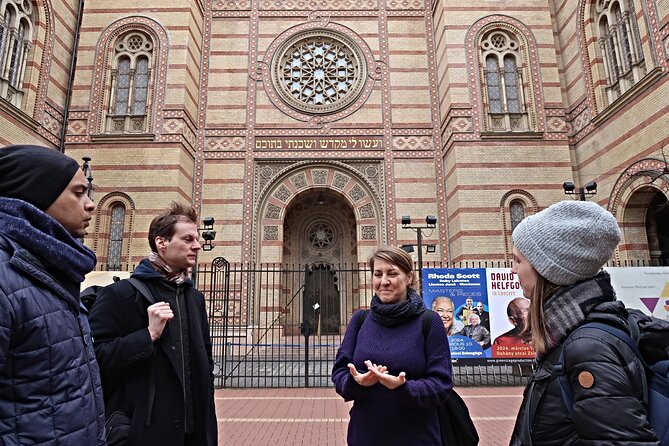
Budapest can feel big and complicated if you’re only doing major landmarks. This tour is built for the opposite experience. You move on foot between a handful of high-impact sites, and your guide gives you enough framing to connect them into one story.
The sweet spot is time. Three hours is long enough to learn what life looked like before WWII, and short enough that you’re not mentally exhausted by stop number three. I also like that the guides don’t just rattle off dates. In real-world terms, you learn why these places mattered, and how the community was organized before the catastrophe.
One more point: you’ll be walking through areas where people still live and worship today. That makes the history feel less like a museum exhibit and more like something that grew, changed, and is still shaping the city.
You can also read our reviews of more walking tours in Budapest



Herzl’s birthplace square: where ideas start
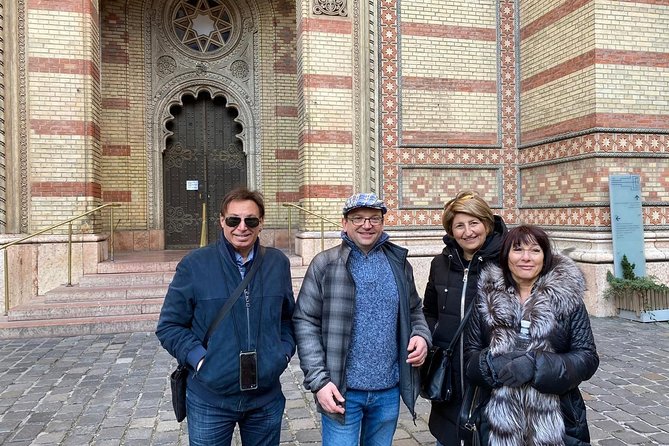
The tour begins near the square where Theodor Herzl, often called the father of modern Zionism, was born. This matters because it gives you a lens for the whole walk. When you’re learning about pre-WWII Jewish life in Budapest, it helps to know that identity wasn’t one single thing. It included religion, politics, culture, and big ideas about the future.
From that opening moment, the guide’s job is to help you notice how the city’s Jewish story was woven into multiple directions: community institutions, cultural life, and movements that looked beyond Hungary as well.
Practical tip: start with a comfortable walking pace. Early on, you’ll want your attention for the context, not your phone battery.
Dohány Street Synagogue: Moorish Revival, Jewish Studies guidance, and multiple sites in one complex
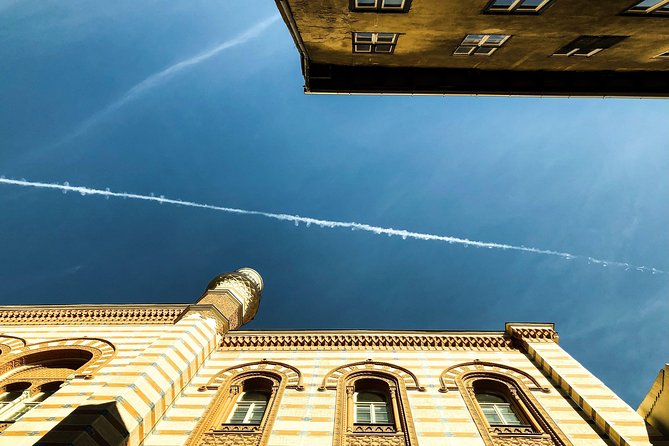
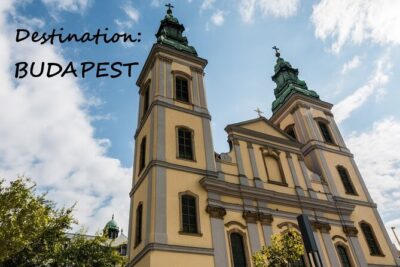
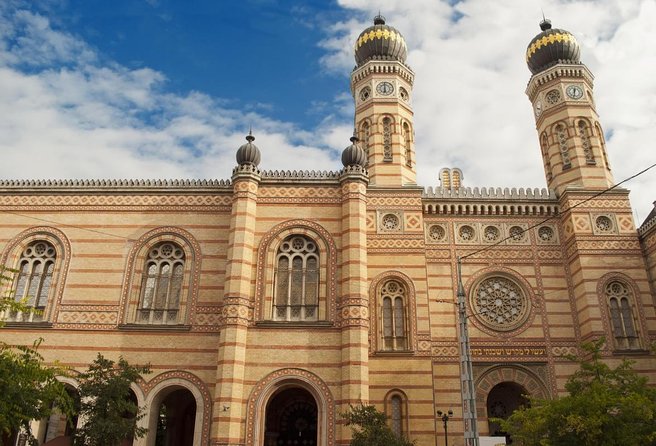
You’ll spend major time at the Dohány Street Synagogue, which is widely described as the largest Jewish house of worship in Europe. But the value here is not just size. You learn how to read the building.
Expect the architecture first. The synagogue’s Moorish Revival look can be startling if you only associate synagogues with plain exterior styles. Your guide helps you connect what you’re seeing to the way the congregation wanted to present itself and serve the city.
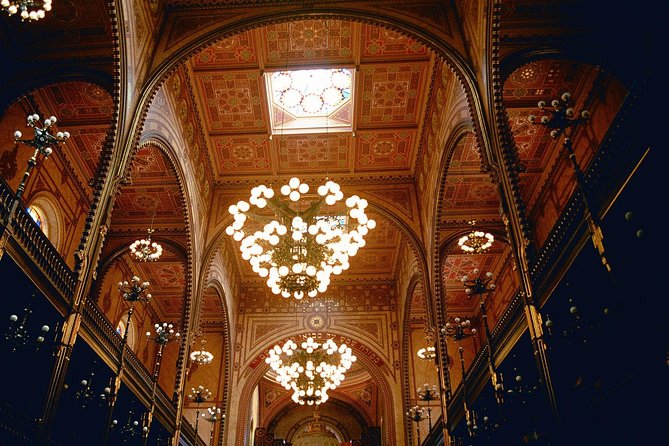
Another highlight: the tour includes support from a Jewish Studies Scholar during the synagogue visit. That’s important because the guide can go beyond general talking points and give you clearer explanations of Jewish religious life and community structures.
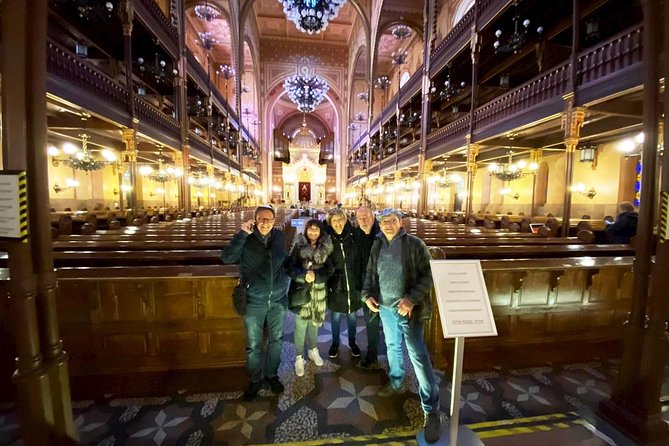
Inside the complex, you don’t only hit the main sanctuary. You also visit the Temple of Heroes, along with the Jewish Museum and a Memorial Park, all within the synagogue grounds. This is a smart use of time. You’re basically covering places of worship, education, and memory in one area, without needing to hop between distant neighborhoods.
The main consideration is practical and non-negotiable: the tour notes that visitors to Dohány Synagogue are requested to have shoulders and knees covered. If you show up in shorts and a sleeveless top, you’ll waste time fixing it. Bring something light you can layer.
A final detail I appreciate from experience with guides of this type: they often pace questions well. Reviews mention guides checking with their groups before moving on. In a complex like this, that small habit helps you absorb rather than stumble through.
The ghetto wall and 2014 memorial: seeing history where it was staged
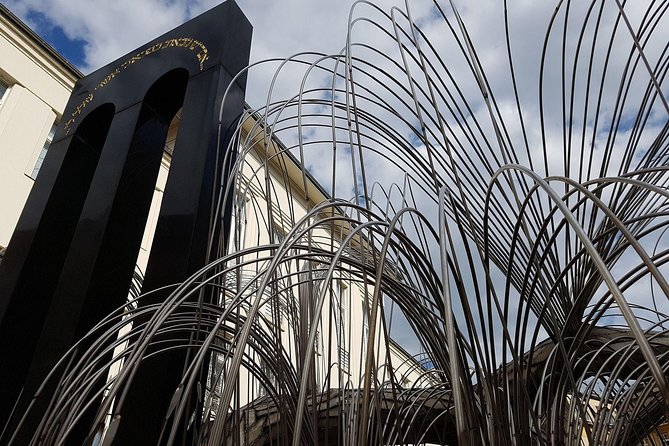
After Dohány, you continue toward the neighborhood memory markers, including the Ghetto Wall Memorial, erected in 2014. This is one of those stops that changes the feeling of the tour. The story shifts from community institutions to something harder: how communities were constrained, categorized, and then destroyed.
At this point, the guide’s job is to connect what you saw at the synagogue to what happened later. You’re not asked to “solve” the history. You’re guided to understand the progression: a place that once held community life and worship becomes part of a larger story of persecution and exclusion.
You’ll also pass by the area connected to ritual life, including a mikve (Jewish ritual bath). You may not spend long inside a mikve here, but passing the place is still meaningful. It’s a reminder that religious life was not only ceremonies at big venues. It was daily structure, tradition, and community practice.
A note for your expectations: the guide focuses on Jewish experience in Budapest before WWII, but it’s impossible to tell that story without moving toward the sites of loss. If you prefer light and upbeat sightseeing only, this won’t be your best match. If you want honest context, it’s exactly what you’re paying for.
Kazinczy Street synagogue facades: Art Nouveau and Orthodox life in the streets
Next, you’ll continue near the Kazinczy Street Synagogue, described as an Art Nouveau orthodox synagogue. The exterior matters here because you’re learning the “street reading” skill. In Budapest, religious communities left visible fingerprints in architecture, and the tour trains your eye to notice them.
Orthodox Jewish life in a city like Budapest wasn’t one single style. It had multiple streams and community arrangements. Even when you’re only seeing the outside of a building, the guide ties the facade to the life behind it.
This stop also keeps the walk feeling grounded. You’re not bouncing between only the largest tourist sites. Instead, you get a sense of how Jewish communities were embedded into the city’s fabric.
Practical tip: keep your camera ready, but don’t turn every corner into a photo frenzy. The guide’s pacing helps you connect the exterior details to the larger narrative.






Rumbach Street synagogue and Status Quo Ante: a term you’ll finally understand
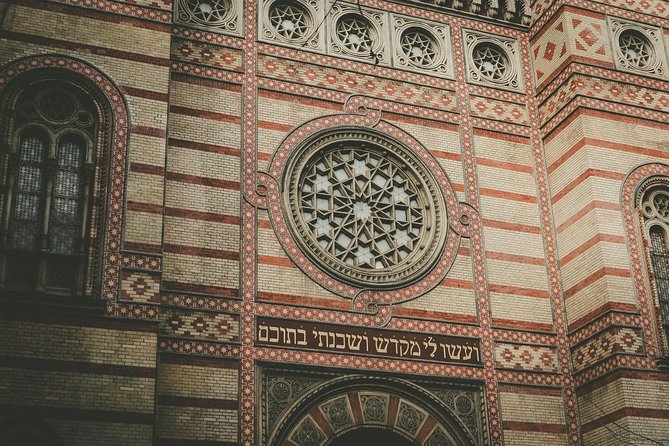
One of the most useful parts of this tour is the explanation tied to the Status Quo Ante stream of Judaism, using the Rumbach Street Synagogue facade as your anchor point. If you’ve never heard the term before, you’re not alone. That’s exactly why this tour works: it turns unfamiliar vocabulary into something practical.
The idea behind Status Quo Ante is about maintaining specific established arrangements. On a walking tour, you can’t read a textbook, but you can understand the concept when your guide connects it to how communities organized themselves and negotiated tradition and continuity.
This is the kind of stop that makes the rest of your Budapest time easier. After you learn how different traditions played out locally, you’ll notice patterns when you look at other synagogues and memorials around town.
Shoes on the Danube Bank: the memorial stop that changes the volume in your head
You finish at the Shoes on the Danube Bank memorial. This stop is not about sightseeing. It’s about remembering.
The guide frames it in relation to Jewish lives lost here, and you’re encouraged to reflect on what it means to see a memorial tied to a real physical location. The emotional impact can be intense, but it’s handled in a way that supports meaning rather than spectacle.
This is also where the walking tour format helps. After visiting buildings and community spaces, you end with something stripped down and direct. It brings the story back to the human level.
One thoughtful detail from guide experiences: some guides offer small, respectful actions on request, like cleansing several stumbling stones. That kind of optional participation can turn your remembrance into something personal, without turning the memorial into a performance.
If you’re sensitive to Holocaust-related sites, give yourself a minute before you arrive. You’ll likely feel more than you expect.
Price and value: $123 for 3 hours, plus the Dohány ticket
At $123 per person for a 3-hour guided walk, the big question is what you’re actually buying.
You’re paying for more than “a route.” You’re buying:
- a historian guide (often with advanced credentials),
- time spent at major sites with context,
- and the ability to ask questions in a structured way.
This is the kind of tour where the guide’s quality matters a lot. Reviews emphasize guides who are friendly, engaging, and thorough, with personalization for smaller groups. One review highlights a tour running for just a couple, with a warm welcome and nothing the guide felt couldn’t improve. Another points to a guide named Orsolya, described as thoughtful and thorough and attentive to group pace.
You also have to factor in the one notable extra cost: Dohány Synagogue tickets are not included. The ticket price noted is 14,500 Ft (Hungarian forint). If your budget is tight, plan ahead so the extra line item doesn’t surprise you.
Bottom line: if you want a meaningful, guided explanation at the key sites, $123 for three hours can be a good value. If you only want fast sightseeing photos, you might find it feels too “guided” for what you need.
What to expect from the guide style and group setup
The tour is designed for English speakers and runs with a live tour guide. It also offers private or small groups, which is a big deal for sites like synagogues and memorials, where you often want questions answered without a loud group chatter problem.
The “historian guide” part is backed by how the guides are described: professors, doctoral students, historians, journalists, art critics, and published authors. That breadth can sound like marketing, but in practice it matters. Different experts often interpret sites in different ways, and you end up with more layers than the typical facts-and-dates version.
You might notice a respectful rhythm. Reviews mention a guide named Orsolya checking with the group before moving to the next stop. That’s a real quality-of-life detail on a tour with emotionally heavy elements and formal site rules.
Who this tour is for
This tour is ideal if you want:
- a Jewish Budapest walking tour focused on the period leading up to WWII,
- serious context at Dohány Synagogue and the major surrounding sites,
- and a finish that connects history to the physical city through the Danube memorial.
It’s also a good match if you like tours that include a mix of religious, cultural, and memorial stops in one afternoon.
You might want to think twice if you’re looking for a purely relaxed, casual stroll with minimal talking. This walk gives you history, and it does so with enough substance to take seriously.
Should you book A Journey through Jewish Budapest walking tour?
Book it if you want your Budapest sightseeing to mean something beyond architecture and photos. The structure is efficient: Herzl’s birth context, then Dohány’s complex and scholarship support, then ghetto-era memory markers, then synagogues tied to different traditions, and finally the Danube memorial where the guide slows the story down.
Skip it or consider another option if you’re not ready for Holocaust-adjacent remembrance elements like the Shoes memorial, or if you’re not prepared for the practical reality of the Dohány ticket cost and the shoulders-and-knees dress request.
If you do book, I’d go in with one simple mindset: be ready to listen. This is the kind of tour where the best moments are the ones you can’t replicate on your own with a map.
FAQ
How long is the Jewish Budapest walking tour?
The tour lasts 3 hours.
Where does the tour meet?
The meeting point is Kamara Café, Dohany utca 1/A.
Is the tour guide available in English?
Yes, the tour is conducted in English.
Is the Dohány Synagogue ticket included in the price?
No. Dohány Synagogue tickets are listed as 14,500 Ft per person, and they are not included.
What should I wear for the Dohány Synagogue?
You’re requested to have your shoulders and knees covered.
Can I get a refund if I cancel?
Yes. Free cancellation is offered up to 24 hours in advance for a full refund.