REVIEW · BUDAPEST
Budapest: City Center Walking Tour
Book on GetYourGuide →Operated by Tourist Angel · Bookable on GetYourGuide
Two hours, and Pest already makes sense. This Budapest city-center walking tour strings together river views, grand 19th-century buildings, and the big monuments you’ll keep seeing all trip long. It’s an easy way to skip the tourist-bus chaos and start reading the city like a local.
I love the guides here. You’ll hear real context, not just dates, and the best ones (like Lena, Bea, and Dominik) manage to mix humor with serious history without turning it into a lecture. I also love the sight mix: St Stephen’s Basilica hits you with its dome and colonnade, then the walk lands you at the Parliament area with the kind of drama you can feel in the square.
One drawback to plan for: there’s no hotel pickup, and the meeting point can vary. Also, entrance fees aren’t included, so you’ll mainly admire the major sites from the outside and on the streets (which is great for orientation, but not the same as museum time).
In This Review
- Key highlights to look for
- Getting oriented in Pest fast (and the right way)
- Marcius 15 Square and Great Blessed Lady’s Gothic look
- Down the Duna Corso: where the Danube views do the talking
- Pesti Vigadó and Vorosmarty Square: the culture-and-café break
- Elizabeth Park and Budapest Eye: a modern landmark in a historic frame
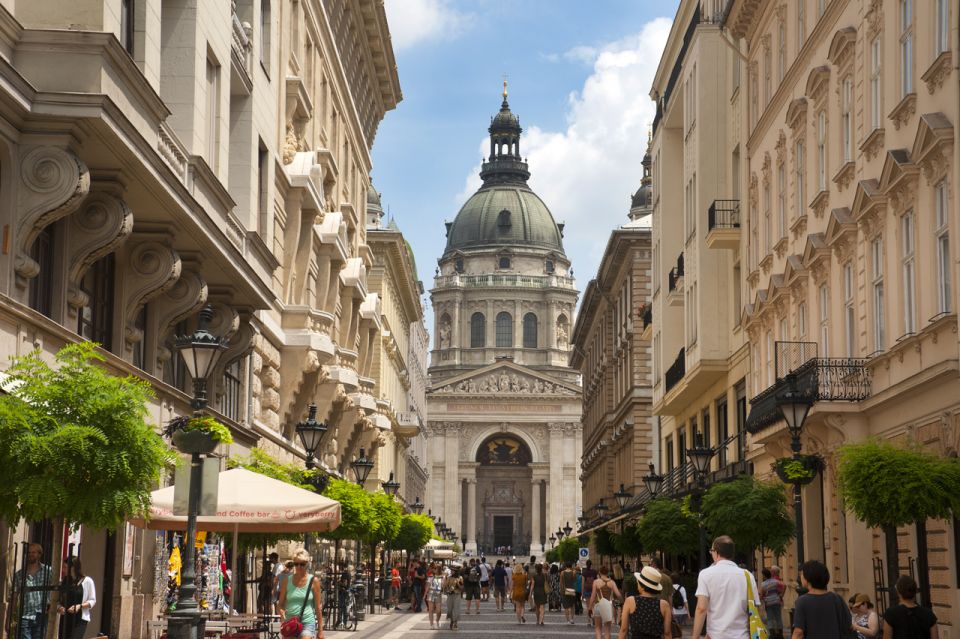
- St Stephen’s Basilica: the dome-and-colonnade moment
- Pedestrian streets and Mr. Safe: small moments with big personality
- Liberty Square: Nazi occupation and Communist oppression explained clearly
- Kossuth Square and the Hungarian Parliament: dictatorship and 1956
- After the tour: Shoes on the Danube Bank and the river walk option
- Price, group size, and how to maximize your 2 hours
- Who this tour suits best (and who should consider a different option)
- Should you book this Budapest city-center walking tour?
- FAQ
- How long is the Budapest city-center walking tour?
- What does the tour cost?
- Is the tour guided, and is it in English?
- What’s included in the price?
- Where does the tour start?
- Does the tour run in bad weather?
Key highlights to look for
- A strong, story-first guide: English-speaking guides like Lena, Bea, and Dominik are praised for answering questions and keeping the pace friendly.
- Basilica impact: you’ll get a close-up moment of St Stephen’s Basilica’s monumental dome and colonnade.
- Danube promenade photos: the Duna Corso stretch sets you up with views of bridges and the Castle of Buda across the river.
- Pest’s landmark cluster: Parliament-area monuments show up in one concentrated walk, ending near Kossuth Square.
- Serious history, clearly framed: Liberty Square is explained as a center of Nazi occupation and Communist oppression, including the 1956 revolution context.
- Small-group feel: small groups (and wheelchair accessibility) make it easier to hear and move at a comfortable speed.
Getting oriented in Pest fast (and the right way)
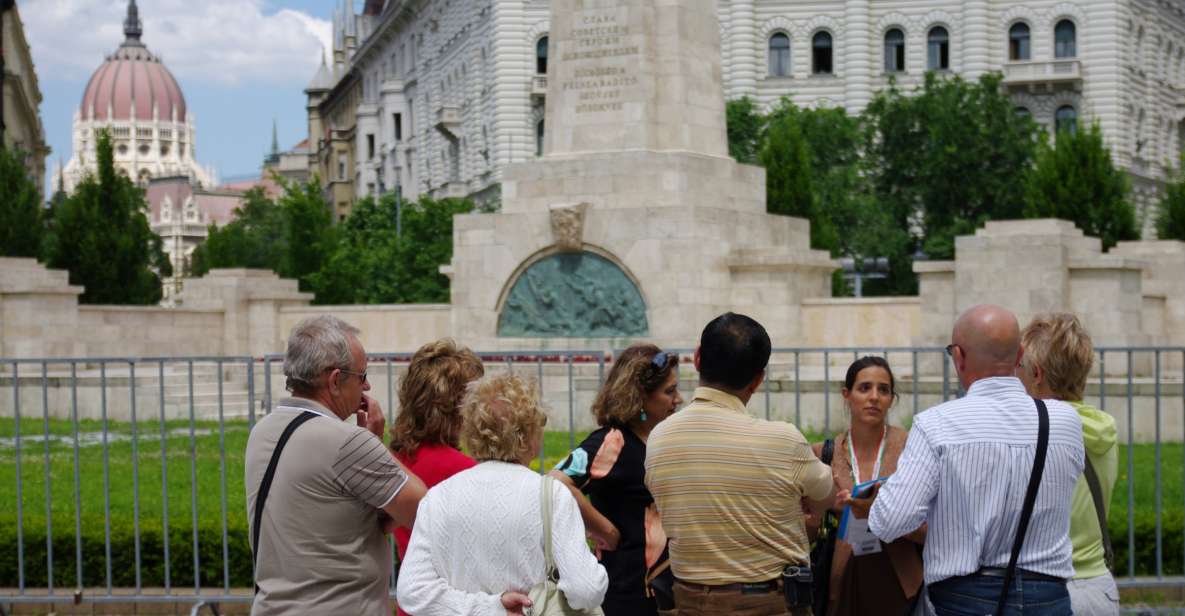
If this is your first day in Budapest, this tour does a smart job. It focuses on the inner city of Pest, so you get the street layout, the “who’s where,” and the sight lines that will help you later on the Danube waterfront, in cafés, and around the Parliament.
The big win is that you’re not stuck with a packed bus schedule. A good guide will point out what to notice as you walk—how buildings relate to each other, where key bridges line up, and which squares feel open versus tight. It also means you can adjust if you have questions. Many guides (including ones like Flora and Monika) are known for turning stops into short, human stories instead of rote history.
You’ll walk for about 2 hours, rain or shine. That means wear shoes you’d happily use on a long city day. If you’re coming in from another part of Budapest, plan to arrive at the meeting area under your own steam.
You can also read our reviews of more walking tours in Budapest



Marcius 15 Square and Great Blessed Lady’s Gothic look
The walk starts at Marcius 15 Square, a good place to begin because it sets a tone: Budapest loves big names, big facades, and visible symbolism. Right away, you’ll admire the Gothic Medieval cathedral of the Great Blessed Lady (an eye-catching structure even before you learn what it all means).
What’s useful here isn’t just the photo. It’s learning how Budapest mixes time periods in one city map. Once you see the cathedral’s style at the start, the later 19th-century architecture and the Parliament-area look will click faster. You’ll also get oriented to the direction you’re heading through Pest’s central streets.
If you want an early win, this stop is it: you’re getting your first architectural “anchor” before the walking rhythm picks up.
Down the Duna Corso: where the Danube views do the talking
Next, you’ll move toward the Duna Corso river promenade along the Danube. This is where Budapest tends to take your attention off your feet and put it on the river. Expect a view over the Danube: bridges stretching across and the Castle of Buda opposite you.
This part matters because it teaches you how Budapest arranges its postcard moments. From here, you understand why later sites feel like they’re tied together by the water. And you’ll be better prepared for independent sightseeing after the tour, when you’ll know which direction to look.
Practical tip: if you want the best photos, keep your phone handy before the crowd forms at viewpoints. River edges draw people fast, even on quieter days.
Pesti Vigadó and Vorosmarty Square: the culture-and-café break
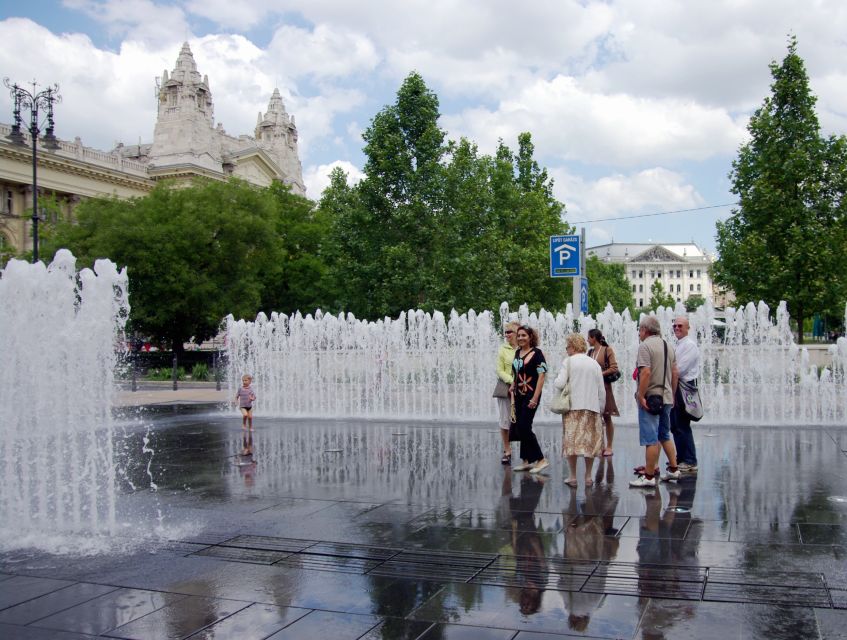
As you keep moving, you’ll pass the Pesti Vigadó dance palace, a striking building that signals how important arts and public life are in central Pest. Then the route brings you to Vorosmarty Square, where you can spot the historic Gerbeaud Cafe.
This is one of those stops that feels small while you’re standing in it—but it’s valuable for later. Budapest is full of “know-this-place” spots, and Vorosmarty Square is one of them. Once you recognize it, you’ll find it easier to plan a café break on your own schedule rather than hunting around while hungry.
If you’re the type who likes local rituals, this is a good moment for a mental note: where cafés and pedestrian streets cluster, and where you’ll likely want to pause.
Elizabeth Park and Budapest Eye: a modern landmark in a historic frame
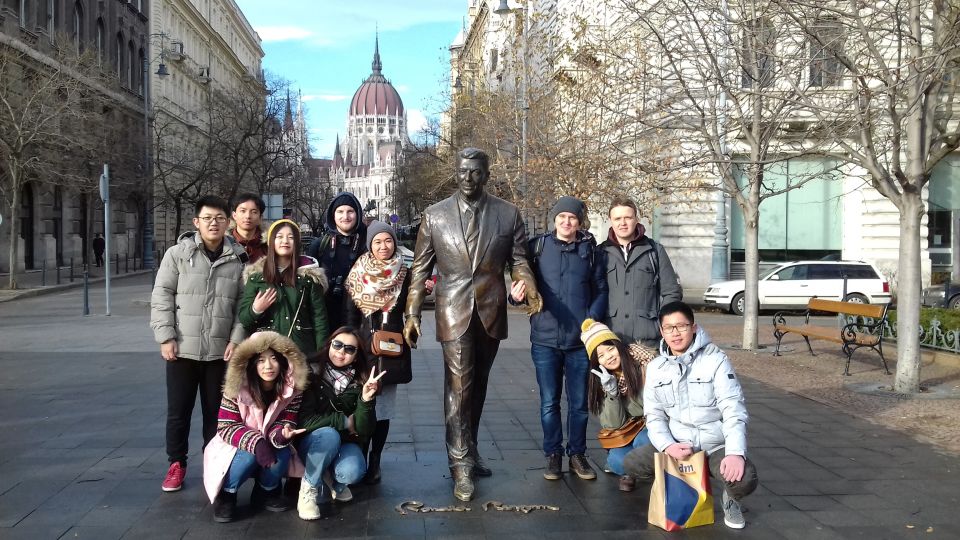
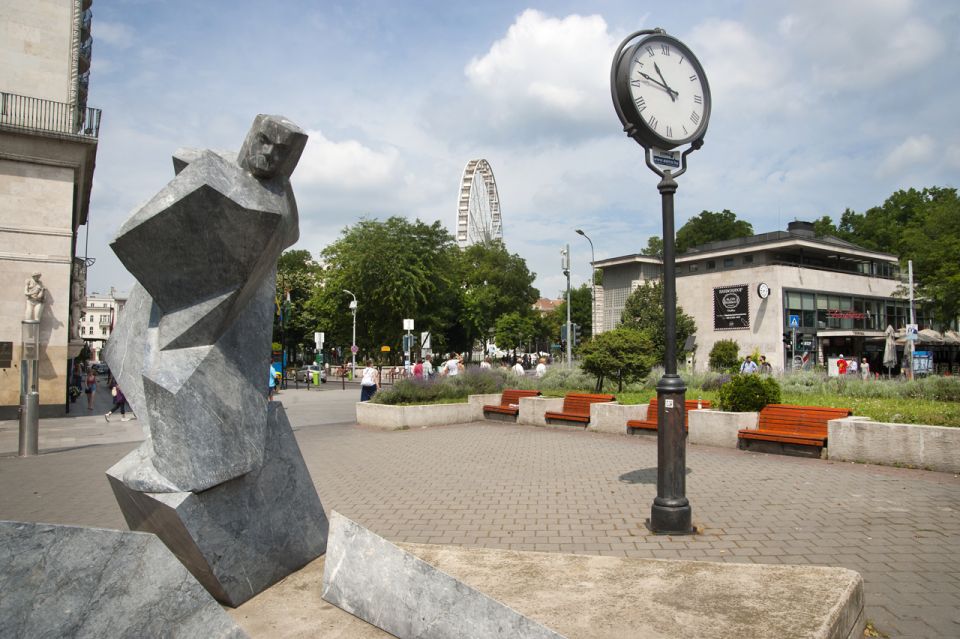
The tour then slips into Elizabeth Park and you’ll see the Budapest Eye, described as the largest Ferris wheel in Europe. This is a useful contrast point. You’re not just seeing old stone and grand facades; you’re also seeing how Budapest places modern attractions into the city’s public-space rhythm.
Even if you don’t ride it, the Ferris wheel helps you understand the skyline and where your future viewpoints could be. It’s also a chance to reset your pace before the walk becomes more monumental.
If it’s warm, this area can feel like a brief breather. If it’s cold or rainy, it’s still worth it—because the park moments keep the tour from becoming wall-to-wall hard history.
You can also read our reviews of more city tours in Budapest





St Stephen’s Basilica: the dome-and-colonnade moment
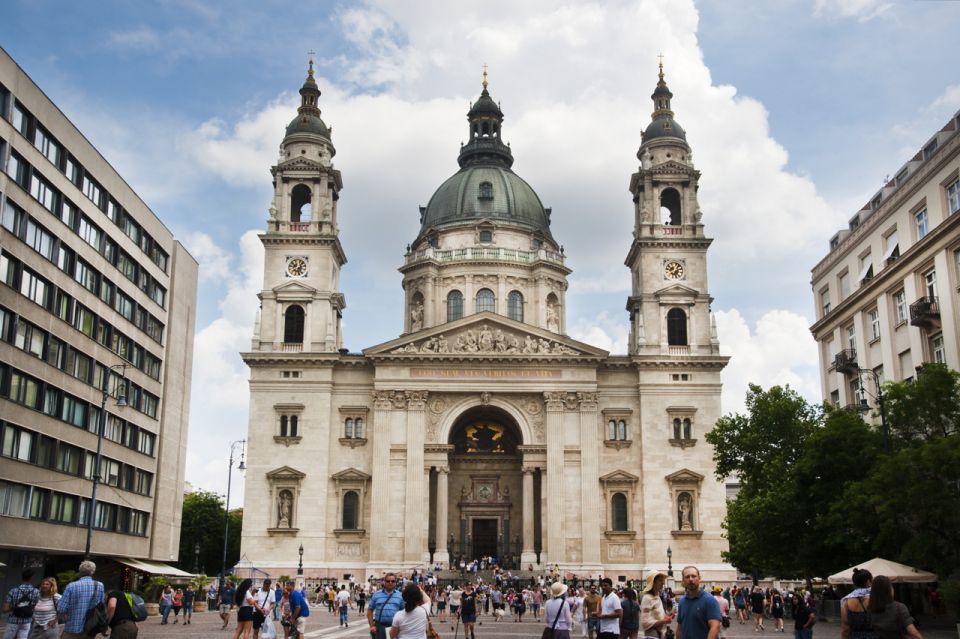
One of the tour’s true highlights is St Stephen’s Basilica. You’ll arrive after a short walk and get that first big “wow” of the day: the monumental dome and colonnade.
This stop is more than aesthetics. A guide can explain why the Basilica matters in the way Budapest tells its own story—religion, nationhood, and civic pride all mixed together. And from a traveler’s standpoint, it’s a timing win. By the time you reach it, you’ve already gotten context from earlier stops, so the Basilica lands with more meaning.
Practical advice: give yourself a few extra seconds for details. Look for how the building lines up with surrounding streets and how people naturally gather for views. That’s where you’ll spot the best angles for photos without sprinting.
Pedestrian streets and Mr. Safe: small moments with big personality
After the Basilica, the tour moves through traditional pedestrian streets. This is where Budapest becomes more playful and less strictly monumental. You’ll see the cute statue of Mr. Safe, a little oddball landmark that earns smiles on the spot.
This matters because it balances the heavier parts of the walk. If your itinerary elsewhere in Budapest gets too serious too fast, Mr. Safe and the street vibe give your brain a breather.
Also, pedestrian streets are how you learn how to move through central Pest efficiently. You’ll start noticing shortcuts and sight lines that are easy to miss when you’re just passing through in a hurry.
Liberty Square: Nazi occupation and Communist oppression explained clearly
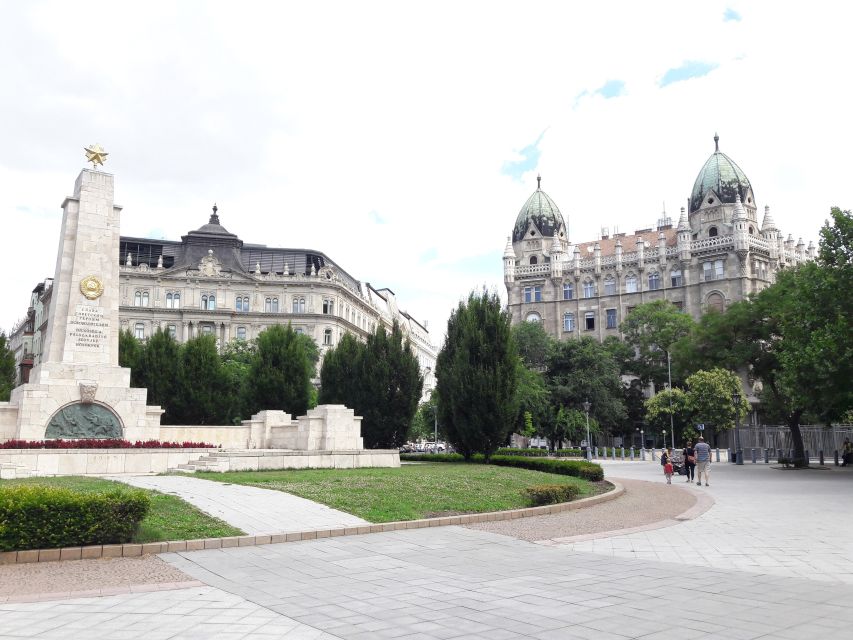
Then you reach Liberty Square, and the tone changes. Your guide will walk you through Budapest’s traumatic past as a center of Nazi occupation and Communist oppression.
This is the part of the tour where a skilled guide really matters. You’re asking for context, not a dramatic performance. The best guides keep it clear, with enough detail to help you understand what you’re seeing and why it matters, without overwhelming you.
If you’re someone who likes to connect monuments to real human history, this stop is a must. You’ll leave with a better understanding of why the city’s public spaces carry such emotional weight.
Kossuth Square and the Hungarian Parliament: dictatorship and 1956
The tour finishes at Kossuth Square, with sights around the majestic Hungarian Parliament building. This is where the architecture turns huge and the stories turn even more specific.
You’ll hear about dictatorship and the 1956 revolution—and the square becomes more than a backdrop. When you’re standing there, the explanation helps you see how political power shaped the built environment, not just the timeline.
This ending is also practical. Parliament-area streets are where you’ll likely pass again during your trip. After this tour, you’ll know what you’re looking at and what those monuments are saying.
If you’re short on time, this tour’s pacing is a good way to “set the frame” for your Budapest photos and your self-guided explorations afterward.
After the tour: Shoes on the Danube Bank and the river walk option
Once you’re done at the Parliament area, you can choose how to close the day. The tour highlights the option to visit the Shoes on the Danube Bank monument, or simply stroll along the riverbanks.
Both are good follow-ups because they connect back to what you learned earlier near the Duna Corso. You’re already thinking in river lines and viewpoints, so the Danube isn’t just scenery anymore—it’s part of the story.
If you do visit Shoes on the Danube Bank, plan a slow walk. This is not a “snap and go” stop.
Price, group size, and how to maximize your 2 hours
At $14 per person for a 2-hour walking tour, the value is mostly about what you’re buying: a guide to point out what matters and explain why it matters.
Because entrance fees aren’t included, it’s priced like an orientation experience, not a ticketed attraction tour. That’s a fair trade if your goal is to understand Budapest’s core and decide what you want to do later—like whether you’ll spend time indoors, take a museum day, or return for a focused visit.
Small group availability is another big plus. A smaller group means less time waiting and more time hearing your guide clearly. Many guides in this style of tour also use tools to keep everyone included—some guides have been praised for using a microphone so you don’t miss details at the front or back.
What to do to get the most out of it:
- Wear supportive shoes and plan for uneven pavement.
- Bring a light rain layer if the forecast looks shaky, since it runs rain or shine.
- Keep one question ready. Serious or silly—it helps your guide steer the walk in a way you’ll remember.
Who this tour suits best (and who should consider a different option)
This walking tour is perfect if you want:
- A first-day orientation to Pest’s major sights
- A balance of architecture and history
- A guide who can answer questions in English and keep you engaged
It’s also a good choice if you like authentic street travel. You’re moving on pedestrian streets, seeing real city corners, and picking up local references like Mr. Safe and the cafe spot in Vorosmarty Square.
You might want a different plan if you’re hoping for lots of indoor attractions. Since entrance fees aren’t included, the focus stays on what you can see and learn from the street and squares.
Should you book this Budapest city-center walking tour?
If you’re trying to make your first day in Budapest count, I’d book it. For the low price, you get a guided “map in your head” built from real landmarks—Basilica, Danube views, the Parliament area—and you’ll understand the emotional context at Liberty Square and the 1956 revolution ending.
It’s especially worth it if you learn best by walking while someone explains what you’re looking at. The experience works well for mixed ages too, and the stories stay accessible.
If you’re already planning to spend lots of time inside major sites and you don’t care about orientation, you could skip it. But if you want the fast route to feeling comfortable in Pest, this is one of the most sensible ways to start.
FAQ
How long is the Budapest city-center walking tour?
The tour lasts 2 hours.
What does the tour cost?
It’s listed at $14 per person.
Is the tour guided, and is it in English?
Yes. It includes a live tour guide, and the tour is offered in English.
What’s included in the price?
The tour guide is included. Entrance fees are not included.
Where does the tour start?
The meeting point may vary depending on the option booked.
Does the tour run in bad weather?
Yes. The tour takes place rain or shine.