REVIEW · BUDAPEST
Life Under Communism” with optional visit to the House of Terror
Book on Viator →Operated by Fungarian · Bookable on Viator
A few blocks in Budapest can feel like a history test. This 3-hour Communist-era walking tour connects big public monuments to everyday fear, resistance, and propaganda you can still see today. I especially liked the mix of street-level sights and the guide’s firsthand-feeling storytelling, plus the stop at Bambi Presszó for a coffee break rooted in communist-era culture. One thing to keep in mind: the optional add-ons (Memento Park or House of Terror) depend on which option you pick, so double-check your selection before you go.
This is a private setup for up to 5 people, guided in English with handouts to take home. If your guide is someone like Miklós or Balázs (names I’ve seen associated with this experience), you’ll likely get clear explanations and room for questions. If you prefer loud, fast pacing, note that a couple of visitors felt the guide could be hard to hear—so it helps to sit where you can catch every word and ask on the spot.
In This Review
- Key things I’d plan around
- Soviet statues, 1956 street corners, and the real shape of fear
- Start at Liberty Square and read the city’s World War II ending
- Szabadság tér: Habsburg planning, Soviet messaging, and the power of space
- Kossuth Square and the Hungarian Parliament: where 1956 turned violent
- From Március 15. Square to Petőfi’s statue: daily life beside the past
- Corvin köz: resistance in a small space
- Gellért Hill and St Gellért Square: the Liberty statue in the frame
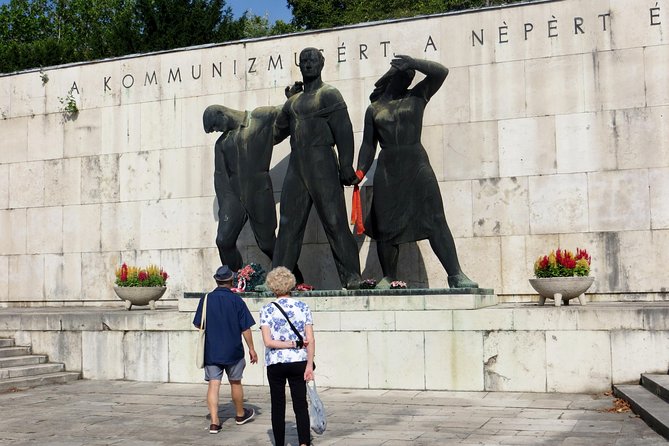
- Optional add-on: Memento Park and how Hungary handled its communist statues
- Optional add-on: House of Terror Museum for the systems side of repression
- The coffee stop at Bambi Presszó: propaganda you can taste
- Timing, walking, and who this tour fits best
- Value and the real question behind the price
- Should you book this Budapest communist walking tour?
- FAQ
- How long is the tour in total?
- What’s the meeting area for the tour?
- Is the tour private?
- What languages are available?
- Is pickup offered?
- Which optional visits can I add?
- Are entrance tickets included?
- Do I need to bring tickets?
- Is the tour suitable for children or people with disabilities?
Key things I’d plan around
- Freedom Square to Kossuth Square: Soviet Siege memorial, Parliament-area 1956 context, and the streets where the revolution turned from protest to firefight
- Corvin köz resistance stories: why this corner of the city mattered during the 1956 uprising
- Coffee culture at Bambi Presszó: a pause that makes the ideology feel less like a textbook and more like lived culture
- Gellért Hill viewpoints: the Liberty statue framing, with the square-by-square “why” explained
- Optional ticketed add-ons: Memento Park (statues saved after 1989) or the House of Terror Museum (renovated, with a T-54 tank on display)
Soviet statues, 1956 street corners, and the real shape of fear
Budapest wears its 20th-century history in stone, street plans, and renamed squares. On this walking tour, the guide doesn’t just point at monuments; you learn how the city’s official story was built—and how people experienced it day to day. The result is a route that feels practical: you get context fast, then you see the evidence with your own eyes.
At the same time, it’s not all heavy, closed-door museum time. The backbone is a walk through central Budapest—Liberty Square, Szabadság tér, Kossuth Square, Corvin köz, and up toward Gellért Hill—so you can connect the political to the physical. You’ll also get handouts, and the tour includes entrance tickets for the optional add-on (Memento Park or House of Terror), which helps you avoid decision fatigue on the day.
This is also a good choice if you want a smaller-group experience. With a group limit of up to 5, your guide can tailor pacing and questions. That matters on a topic like communism, where people often have very different starting points—some want the events of 1956, others want the daily “how did it feel?” details.
You can also read our reviews of more tours and experiences in Budapest.
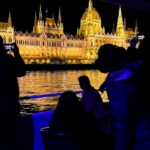


Start at Liberty Square and read the city’s World War II ending
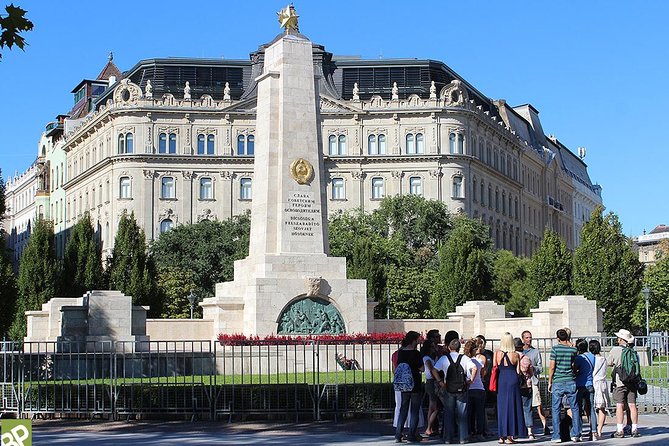
The tour begins around Liberty Square (Szabadság tér) with a stop at a major Soviet army memorial. This isn’t a subtle plaque. It’s a grand, formal monument tied to the Siege of Budapest—the 50-day encirclement of Hungary’s capital by Soviet forces near the end of World War II.
What I like about starting here is that it sets the lens. Many visitors see monuments as neutral. This tour trains your eye to ask: Who paid for it? What story did it advertise? And what did it erase? From this point, the guide’s explanations connect wartime power to postwar control—because propaganda rarely appears out of nowhere. It usually grows from something already won.
If you’re the type who likes to understand a place in one coherent line, this opening stop gives you that line. If you’re more of a “I’ll just look around” person, you’ll still pick up the basic cues: the official narrative was loud, and the city’s public space was part of the messaging system.
Szabadság tér: Habsburg planning, Soviet messaging, and the power of space
Next comes Szabadság tér, one of the city center’s stateliest squares. The dimensions aren’t random; they tie back to the Habsburg era, when the Bastille-like Újépület stood here. Even after the old building is gone, the “roominess” remains—an open canvas that can be used for rallies, ceremonies, and carefully staged visibility.
This stop sounds architectural, but it’s really political. Large squares create a certain feeling: you can be seen from far away, and the center becomes a stage. The guide uses that physical reality to explain how public space can be engineered to communicate authority.
Practical note: squares can be windy and exposed. If you’re touring in cooler months, bring a layer you can manage while walking between stops.
Kossuth Square and the Hungarian Parliament: where 1956 turned violent
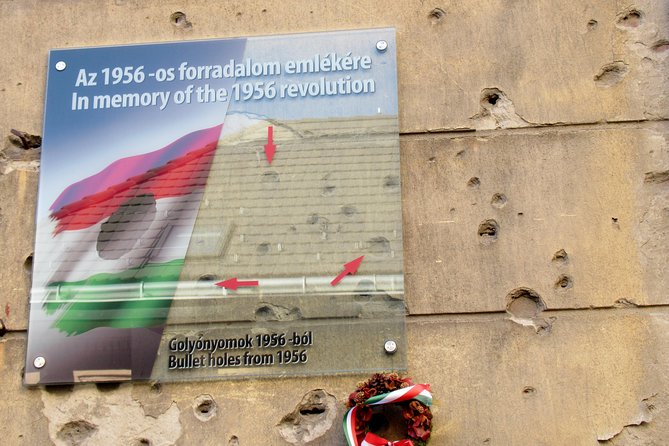
At Kossuth Square, you face the Hungarian Parliament Building (Lajos Kossuth’s name is the connection here). Your guide also explains how the square ties into the 1956 revolution. A firefight began in front of Parliament during the uprising, and even now, the exact number of demonstrators who died is not clearly established.
One of the more affecting details in this part of the route is the composition of the crowd. The guide frames the scene as mixed: civilians including women, children, and the elderly, not just young men in the street. That matters because it shifts the story from “riot vs. government” into something more human—fear spreading through a whole community, not just a handful of activists.
There’s also a timing advantage here. Parliament and Kossuth Square give you a central, iconic reference point, so you can mentally map what you’re seeing next. It’s also where your guide can connect specific locations to what people felt in the moment, rather than leaving it as abstract history.
From Március 15. Square to Petőfi’s statue: daily life beside the past
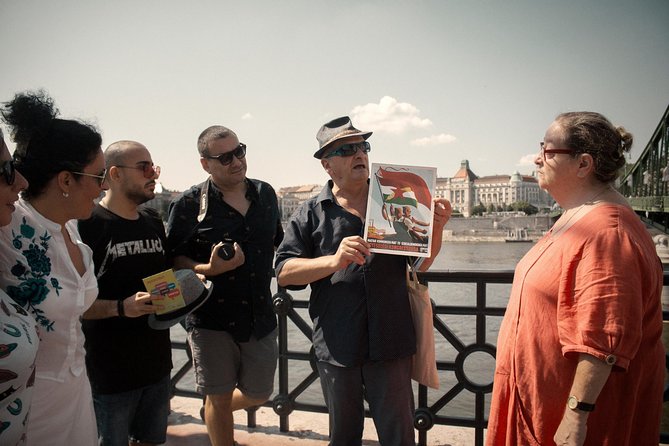
Next you head toward Petőfi Statue and Március 15. Square, near the foot of Erzsébet Bridge and close to the oldest church of Budapest. Thanks to a renovation in 2011, this area is a popular scene of social life—not only a tourist photo stop.
I like this pivot because it stops the tour from becoming a straight line of tragedy. It reminds you that political systems aren’t only experienced during uprisings. They are also experienced while walking to church, meeting friends, and living a normal day next to history.
This section is also good for photographers and people who like street texture. You’ll see how quickly Budapest can move from solemn memory to everyday energy.


Corvin köz: resistance in a small space
The tour then takes you to Corvin köz, described as a major resistance center during 1956. Here the story becomes specific: local youngsters fought invading Russians with Molotov cocktails and with guns stolen from soldiers to attack Soviet tanks.
What makes this stop valuable is that Corvin köz isn’t just a generic “resistance site.” The guide uses it to show how resistance can be improvisational and desperate—how people with limited power try to do something anyway. The street reminders you see around the area help turn slogans into actions.
If you’re a history nerd, you’ll probably want to ask questions here. It’s the sort of stop where you’ll naturally wonder about timing, routes, and why this spot became a focal point. The guide’s job is to keep those details grounded in what’s still visible on the ground.
Gellért Hill and St Gellért Square: the Liberty statue in the frame
You then cross one of Budapest’s beautiful bridges to reach the foot of Gellért hill and the next stop at St Gellért Square. This square is named after Bishop St Gellért, also called the Martyr for Hungarian Christendom.
The best part of this stage is the view. From here you get an excellent outlook toward the Liberty statue, erected in 1947 to commemorate the Soviet liberation of Hungary. That “liberation” word is a flashpoint in Eastern European history, so I’d encourage you to pay attention to what your guide is doing with language—how the same event gets framed differently depending on who controls the public story.
Even if you’ve read about the era already, this viewpoint helps you understand why propaganda was so effective. It’s not only about posters and broadcasts. It’s also about where you stand when you’re told what to feel.
Optional add-on: Memento Park and how Hungary handled its communist statues
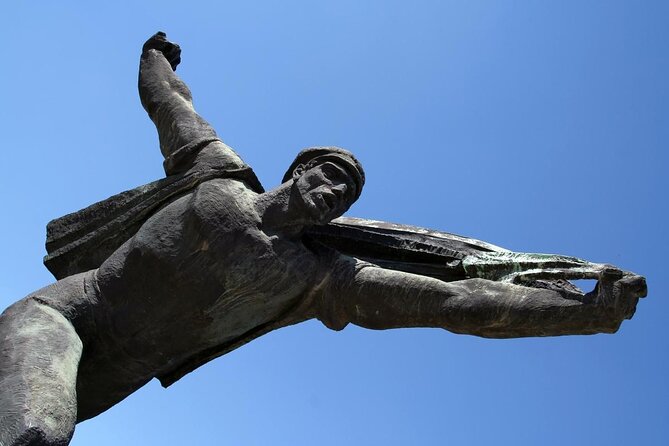
If you choose Memento Park, you’ll visit an open-air collection built to preserve communist-era public works after communism collapsed in Hungary in 1989. In 1993, Budapest’s city government decided to save the statues rather than destroy them, which is exactly how the idea for the park started.
This choice is ideal if you want a visual lesson in ideology. Instead of reading the messages, you see the symbols. And because it’s an outdoor park, the experience feels different from a museum: the statues sit in space the way they were originally meant to be seen, but now the surrounding meaning shifts.
Also, the visit comes with included admission, and it’s timed at about 1 hour. That makes it a solid add-on if you want something thought-provoking but less heavy than a darker museum.
Potential drawback: because the park focuses on statues and symbolism, it can feel more “visual overview” than “deep interrogation.” If you want the most intense, institutional story of terror, you might prefer the House of Terror option instead.
Optional add-on: House of Terror Museum for the systems side of repression
If you choose House of Terror Museum, plan on another 1 hour with included admission. This museum sits in a building that was fully renovated inside and out. The reconstruction plans were designed by architects János Sándor and Kálmán Újszászy.
What stands out from the outside is part of the point. The exterior becomes a kind of monument—an almost severe frame in black, with decorative entablature, blade walls, and a granite footpath. Inside, the museum has a T-54 tank on display, which is a blunt reminder that political control wasn’t only bureaucratic. It could be enforced with hardware.
This add-on is a strong fit if you want more than a street-walk overview. You’re looking at how power operated: institutions, intimidation, and the machinery behind ideology.
One practical consideration: a museum like this tends to work best when you can hear the explanations clearly and take your time in key rooms. If you prefer to rush and move on, you might feel it less.
The coffee stop at Bambi Presszó: propaganda you can taste
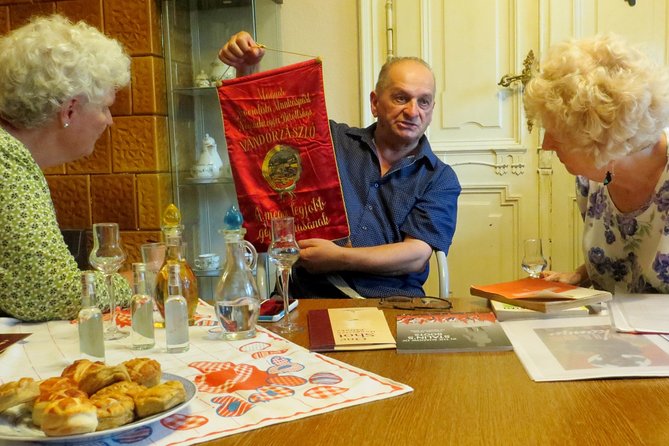
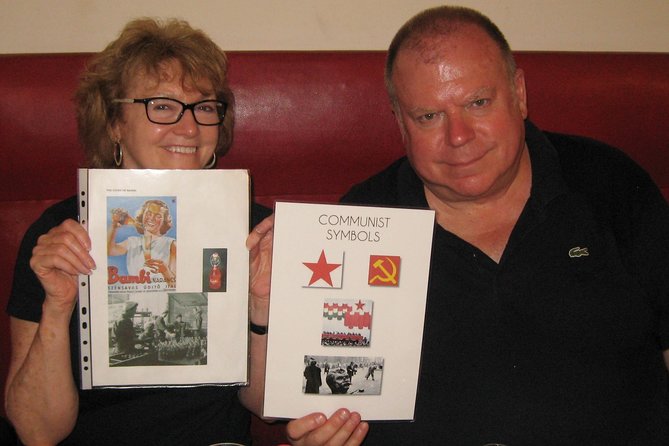
Between monuments and memorials, this tour includes a break for coffee at Bambi Presszó, described as the last stronghold of communist culture. Even if you don’t drink coffee much, the point isn’t caffeine. It’s atmosphere.
A coffee stop in a tour like this gives you mental pacing. After standing in official spaces and hearing about state messaging, it helps to reset and talk through what you’ve just learned—out loud, with questions, and while you’re still in the context of the city.
Practical tip: treat the coffee break like part of the learning. If your guide asks what you’re most curious about next, this is a good moment to say: I want more on 1956, or I want more on everyday life, or I want the why behind these monuments.
Timing, walking, and who this tour fits best
The tour runs about 3 hours and includes an optional add-on that adds around 1 hour. It’s a walking route, and the guidance says you should have a moderate physical fitness level, with the tour being near public transportation.
Because you’re walking through squares and crossing bridges, comfortable shoes matter. Also, Budapest weather can change quickly. Bring a layer you can manage.
Who it suits best:
- People who want a guided route instead of piecing together sites on your own
- History lovers focused on the 1956 uprising and how Soviet-era stories were built into Budapest
- Anyone who likes context at street level: statues, squares, and street corners that still feel “alive” even when the era is gone
If your main goal is pure entertainment, this isn’t that. It’s more of a thoughtful, guided confrontation with how ideology uses public space and how people lived under pressure.
Value and the real question behind the price
The price is $280.33 per group (up to 5) for a private experience. That’s the big value lever: you’re paying for a guide and a route, not per-person fees that spike once you’re in a crowd.
You also get:
- Informative handouts
- A local guide
- Entrance tickets included for the visit options (when you choose Memento Park or House of Terror)
So for families or small groups, this can work out well. If you’re traveling as a single person or a couple, you might feel the cost more—because there’s less “group math” to soften it.
My practical advice: decide which option you want in advance. If you’re only doing the base walk, you’re choosing a tighter route with monuments and street context. If you’re leaning into the darker side of repression, House of Terror adds a lot of weight. If you want the symbolism after the fall, Memento Park gives you a visual reckoning.
Should you book this Budapest communist walking tour?
Yes, if you want a small-group, guided way to understand Budapest’s Communist era through the city itself—Soviet memorials, 1956 sites like Corvin köz and Kossuth Square, and viewpoints from Gellért Hill. The optional add-ons are also a smart way to shape your experience: pick Memento Park for the statue-and-symbol angle, or House of Terror for a heavier museum focus.
I’d hesitate only if you’re sensitive to intense topics, want a very short sightseeing hit-and-run, or you’re counting on every stop to be equally loud and energetic. Also, choose your option carefully so you’re not disappointed on the day.
If you like your history with street-level proof and a guide who can answer questions as you walk, this is a solid booking.
FAQ
How long is the tour in total?
The walking tour is about 3 hours. The optional add-ons (Memento Park or House of Terror) each take about 1 additional hour.
What’s the meeting area for the tour?
The tour starts in Liberty Square.
Is the tour private?
Yes. It’s a private tour/activity, and only your group participates.
What languages are available?
The tour is offered in English.
Is pickup offered?
Pickup is offered, though hotel pickup and drop-off isn’t listed as included.
Which optional visits can I add?
You can choose Memento Park or the House of Terror Museum as an optional visit.
Are entrance tickets included?
Entrance tickets are included for the visit options you choose. Admission is also noted as free for the Hungarian Parliament stop.
Do I need to bring tickets?
You’ll have a mobile ticket.
Is the tour suitable for children or people with disabilities?
Children must be accompanied by an adult. The tour is described as requiring moderate physical fitness. Service animals are allowed.