REVIEW · BUDAPEST
Gems of the Budapest Castle District Walking Tour
Book on Viator →Bookable on Viator
Budapest Castle hill reads like a storybook. This walk strings together royal buildings and wartime scars, with a guide who makes the details click. I love the way it pauses at picture points around Fisherman’s Bastion and turns symbols like the double cross into plain, understandable stories. One catch: it’s still a hill-and-stairs stroll, so bring comfy shoes and don’t treat it like an easy flat-city amble.
I also like the value. At $3.61 per person, you’re getting a live guide plus a long list of viewpoints and monuments in about two hours and ten minutes. The tour runs in English, and the ticket is mobile—simple and low-fuss.
This is also timed for a great part of the day. Starting at 3:00 pm and finishing at the Castle Garden Bazaar area puts you in position for a follow-on wander afterward. Just note the tour needs good weather, so you’ll want a flexible plan if rain rolls in.
In This Review
- Key moments that make this tour worth your time
- What You’re Paying for: $3.61 with a Live Guide on Castle Hill
- Holy Trinity Statue: A Column of Symbols, Not Just a Pretty Landmark
- Matthias Church: Foundations First, Then the Details That Matter
- Fisherman’s Bastion: Double Cross Meaning Plus Panoramic Pest Views
- Pope, Kings, and an Old Built-Environment: Innocent XI and the National Archives
- Saint Mary Magdalene and the Ruins of WWII: The District’s Harder Edges
- Arpad Toth Promenade (Setany): First WWII Flag and the Siege Story
- Knights, the Labyrinth, and Dracula Lore in One Stretch
- Independence War Symbolism and the House of Houdini
- Szent György Street: Government Offices and Medieval Castle Ruins
- Buda Hill Funicular, Zero Kilometer Stone, and the Oldest Bridge Mention
- Turul Bird Statue and King Matthias’s Fountain: National Myth and a Romantic-Tragedy Mood
- Lions Court and Royal Riding Hall: Facades, Myth, and Stables
- Prince Eugene of Savoy and S. Maria Mater Dei: Liberation Statue and Bridge Connections
- Castle Garden and the Várkert Bazar Area Finish: Where the Walk Ends
- Who Should Book This Tour (and Who Might Prefer a Different Plan)
- Should You Book Gems of the Budapest Castle District Walking Tour?
- FAQ
- How much does the tour cost?
- How long is the walk?
- What language is the tour offered in?
- Is the ticket mobile?
- Where do I start and where does it end?
- What time does the tour start?
- Is the tour group size limited?
- Do I need to pay admission at the stops?
- Is there a live guide included?
- What if the weather is bad?
Key moments that make this tour worth your time
- Matthias Church in compact form: you get the foundation story and standout architectural cues without a long museum detour
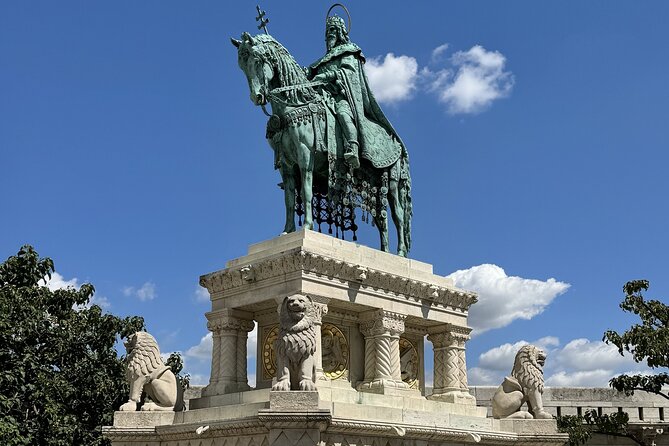
- Fisherman’s Bastion photo time plus a clear explanation of the double cross and what Hungarians read into it
- WWII siege & ruins show up in the middle of the walk, not as an afterthought
- Labyrinth stop ties a natural cave dungeon story to Vlad the Impaler lore
- Buda Hill Funicular and the “zero kilometer” stone keep the tour grounded in real Budapest geography
What You’re Paying for: $3.61 with a Live Guide on Castle Hill
Let’s talk value, because this price is almost silly for what you get. You’re paying $3.61 for a live guide and an approx. 2 hours 10 minutes route through some of the most recognizable parts of the Budapest Castle District. That time matters, because the Castle area is spread out, and it’s easy to do it randomly and miss the connections.
The tour keeps things moving: short stops, quick explanations, then you’re on your way. You’ll cover a lot of ground without feeling like you’re stuck listening for long stretches. The group size is capped at 45, which is big enough to feel sociable but usually small enough that the guide can still keep the flow.
Also, the tour is marked as English with a mobile ticket. You’ll want to have your phone charged, but that’s it. Nothing complex, no scrambling for paper tickets. And while it’s a walking tour, it’s described as suitable for most travelers, plus service animals are allowed.
One more practical note: this tour starts at Holy Trinity Statue and ends at the Castle Garden Bazaar area (by the Várkert Bazar). That end point is handy. It means you can keep exploring without backtracking down the hill in a panic.
You can also read our reviews of more walking tours in Budapest



Holy Trinity Statue: A Column of Symbols, Not Just a Pretty Landmark
The walk begins at the Holy Trinity Statue on Szentháromság u. This is the kind of place that looks like “just a monument” until someone explains what you’re seeing. Here, the guide focuses on the construction background of the Holy trinity column, plus quick symbolism for the figures.
This is a smart opening. You start with a clear framework: how Budapest layers meaning into stone. Once you understand that habit, the rest of the district makes more sense as you go—church carvings, royal statues, war memorial themes, all of it becomes less random.
Because the stop is brief, you won’t get lost in minutiae. Still, it sets the tone: you’re not just collecting photos; you’re learning what to notice.
Matthias Church: Foundations First, Then the Details That Matter
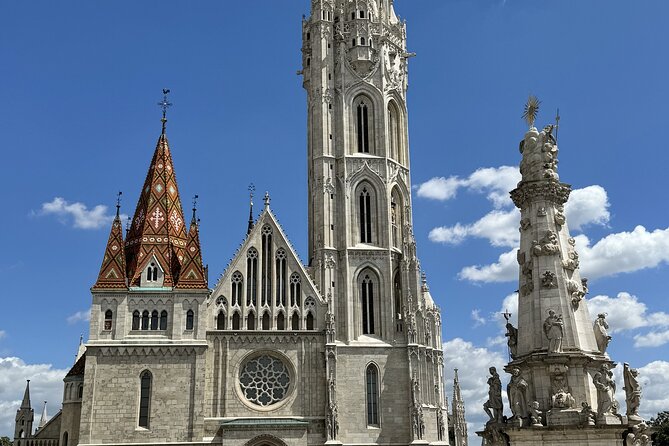
Next up is Matthias Church. The tour gives you a short background on the foundation of the church, then points out architectural details. This is where I like the format. Instead of treating the church as a single “look at the facade” stop, you get a reason why it exists and what architectural features to watch for.
In this kind of neighborhood, churches can blur together fast. A quick, guided “here’s what to pay attention to” keeps you from walking past the interesting parts. You also don’t feel rushed, because the stop stays around five minutes—enough to understand, not enough to bore.
If you’re the type who likes history but hates long lectures, this part is a good match.
Fisherman’s Bastion: Double Cross Meaning Plus Panoramic Pest Views
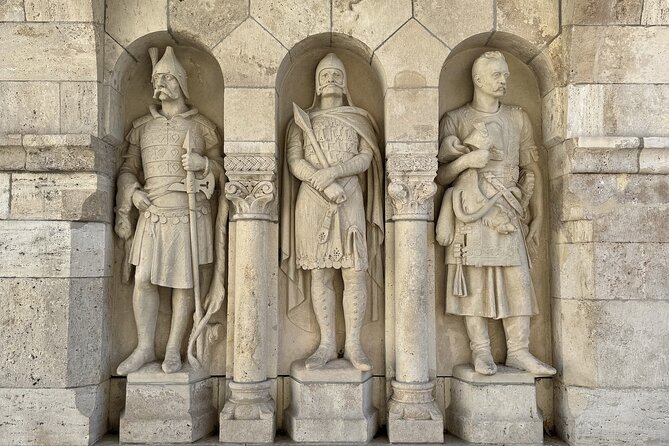
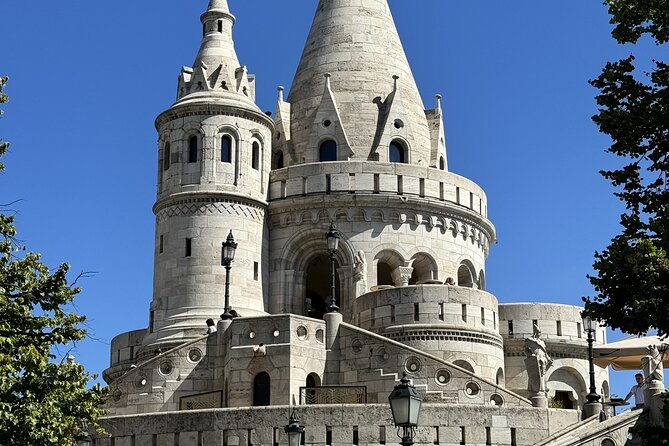
Then the tour hits Fisherman’s Bastion, and this is one of the big reasons to book. The guide works through the statues—what they represent—and then ties in the intriguing relation of the double cross to Hungarians, plus some legends.
I especially like that you get both interpretation and scenery. You’re not only told what to see; you’re also encouraged to look out over Pest for those famous views. There’s even a built-in photo break, around 20 minutes, which is enough time to line up shots without feeling like you’re sprinting.
Tip: go ready to take photos from multiple angles. The view is strong, but the statues change how the skyline frames. Even if you think you’ll only take two pictures, plan for a few more.
Potential drawback here: Fisherman’s Bastion is popular in general, so if crowds are thick, your “calm look” time might be shorter. The tour’s photo pause helps, but you’ll still want to stay flexible.
Pope, Kings, and an Old Built-Environment: Innocent XI and the National Archives
After the bastion, you’ll see the Statue of Pope Innocent XI. The explanation connects it to Pope Sylvester II and the coronation statue of King Matthias. The tour also calls out an important detail: the oldest building of Hungary is tied into this area’s story.
It’s a clever sequence because it keeps moving through power and legitimacy—who rules, who’s crowned, who’s commemorated. Even when you’re only stopping for about five minutes, the guide gives you the “why that statue is here” answer.
From there, you head to the National Archives of Hungary. This stop focuses on architectural wonders (including the Vienna gate), plus specific street-area details like Golden signatures by Uri street and the statues around the vicinity and their tales. This part is a little more “read the building” than “look at the view,” which balances the earlier photo-focused segment.
If you like architecture, this is one of the best stretches of the route. The tour keeps it digestible: you learn what to look for without needing a building-history degree.






Saint Mary Magdalene and the Ruins of WWII: The District’s Harder Edges
The next stop is Church of Saint Mary Magdalene. The guide mentions the monument of the coronation mantle of Hungarian kings and then shifts to a more somber topic: the ruins from WWII.
This is one of the most valuable parts of the tour, because it prevents the Castle District from becoming only a postcard. You get reminders that this area wasn’t just timeless—people rebuilt, lost, and repaired. Even a short stop works here because the guide connects the site to lived events, not just dates.
When a walking tour includes something heavy like this, the trick is keeping it respectful and brief. That’s exactly how this route handles it: five minutes, clear points, then onward.
Arpad Toth Promenade (Setany): First WWII Flag and the Siege Story
At Arpad Toth Promenade (Setany), you get the feeling of a place that remembers. The guide points out the first flag after WWII, plus a row of cannons, and the view of the Buda hills. There’s also mention of a statue of a Szekely Knight.
The walking history here is WWII and the siege of Budapest. It’s explained in a way that fits the short stop format, with enough context for you to connect what you see—cannons, memorial-style features, and the positioning—into a coherent story.
This section is also useful for orientation. Once you’ve heard the WWII framing here, other memorials you spot later in Budapest will feel less random.
Knights, the Labyrinth, and Dracula Lore in One Stretch
The tour continues to the Statue of Mounted Andras Hadik. The guide covers why Andras Hadik matters as the most famous Hungarian knight, and adds local trend color by pointing out the oldest Hungarian confectionery. That’s a fun pivot: history meets everyday culture right on the street.
Next is Labyrinth. The stop is about 10 minutes and frames it as a natural cave that was used as a dungeon. The guide then brings in a Dracula/Vlad the Impaler storyline, linking the “cave dungeon” idea to the broader cultural legend.
This is the type of storytelling I like on walking tours because it doesn’t require you to buy the myth hook, line, and sinker. You get the lore connection, and you also get the physical place context—why people would attach those stories to a cave-like underground space.
If you’re a horror fan, you’ll grin here. If you’re not, it’s still a strong change of pace from statues and church facades.
Independence War Symbolism and the House of Houdini
Then you’ll see the Statue of the Independence War, with background on the Hungarian revolution of 1848. The guide connects the symbolism of statues back to the original war, which makes the “why” feel grounded instead of ceremonial.
Right near this concept, the tour also mentions the House of Houdini. That’s a neat little pop of entertainment in the middle of political history. It helps keep your brain from turning into a timeline spreadsheet.
This stop is short (about five minutes), but it’s a good reminder that the Castle District includes both national movements and theatrical cultural moments.
Szent György Street: Government Offices and Medieval Castle Ruins
Next comes Szent György Street. Here the tour points out offices of the president and prime ministers, and then shifts to ruins of medieval castles.
This is another smart “balance” stop. You’re looking at the modern face of Hungary’s leadership while still seeing hints of older fortifications. It gives the district a sense of continuity: the hill still matters, just under different eras.
The “secret stories” note in the tour description is handled as quick, interesting context—not wild claims. Expect short narratives you can remember later when you spot other traces in the area.
Buda Hill Funicular, Zero Kilometer Stone, and the Oldest Bridge Mention
At Buda Hill Funicular, the guide calls it the second oldest funicular and ties in a couple of specific markers: the zero kilometer stone and the mention of the oldest bridge of Hungary. Even if you’re not riding anything during the tour, getting these reference points helps you map Budapest in your head.
The stop is about five minutes, but it’s not just “look at the funicular.” It’s about teaching you how this spot functions as a geographic anchor. That matters in a city like Budapest where the hills split neighborhoods and views.
If you tend to get turned around in hilly cities, this part is for you.
Turul Bird Statue and King Matthias’s Fountain: National Myth and a Romantic-Tragedy Mood
The tour moves to the Turul Bird Statue, the national bird of Hungary. The guide covers background on why the bird matters and shares the storyline about the naming of the Hungarians.
This is one of those stops where you’ll either love it or skim it. If you like national symbols, it clicks. If not, at least it gives you a key to decoding Hungarian iconography as you keep wandering.
Then you’ll reach the Fountain of King Matthias, described as the prettiest fountain of Budapest, with a romantic-tragedy theme. Even though it’s a brief look (about five minutes), the framing gives the fountain emotional weight instead of it being only decorative.
Lions Court and Royal Riding Hall: Facades, Myth, and Stables
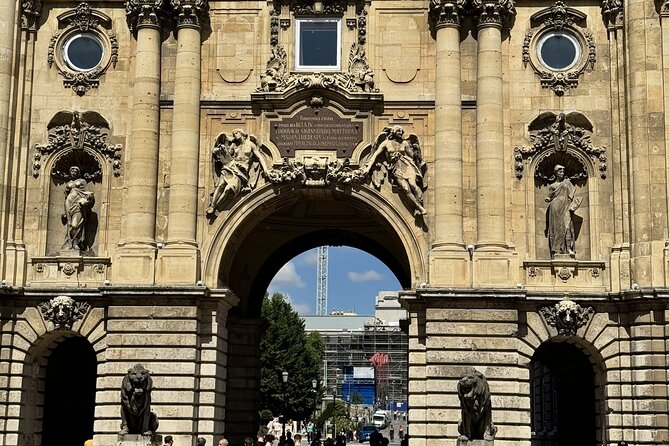
At Lions Court – Buda Castle, the tour focuses on the courtyard of the Buda Castle, plus mythical statues on the facade and explanations of what they mean. This is a good stop for anyone who likes stonework. You can look, then quickly connect the story to the carvings.
After that, there’s the Royal Riding Hall, the royal Hungarian stable. The tour keeps it short (about two minutes), but it gives you local trend style context tied to the stable setting.
This is one of those “speed stops” where you’re grateful it’s not longer. You get the idea and move on, and you still have energy for the big statue finish.
Prince Eugene of Savoy and S. Maria Mater Dei: Liberation Statue and Bridge Connections
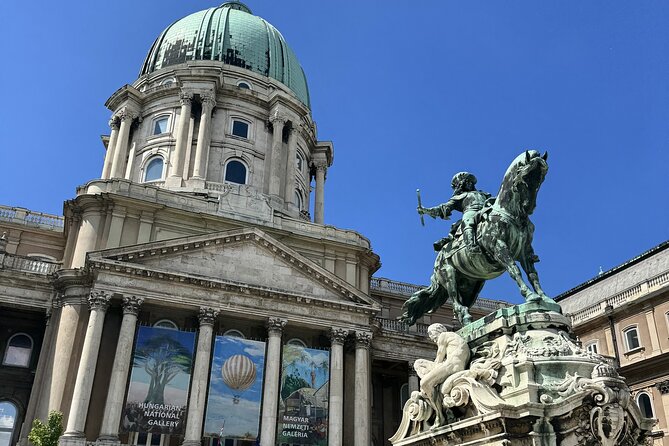
Next comes Prince Eugene of Savoy’s Equestrian Statue, described as the biggest statue in the castle district. The guide connects Prince Eugene to the liberation of Hungarians from the Ottomans, plus shares fun facts.
This is a strong visual end to the statue series. You get a large-scale monument feel, and the equestrian framing makes the leadership story easy to picture.
Then you’ll see S. Maria Mater Dei, with a statue of Virgin Mother Mary and baby Jesus. The tour’s note ties the bridges of Budapest to Hungarian monarchs, linking this religious marker to broader themes across the city.
It’s a short stop, but it gives you a way to notice bridge symbolism later.
Castle Garden and the Várkert Bazar Area Finish: Where the Walk Ends
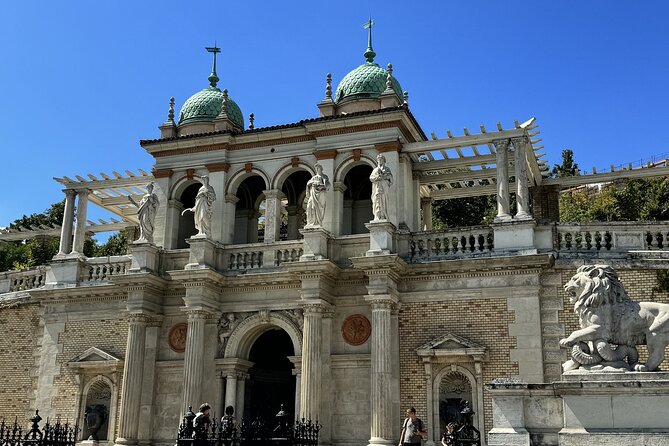
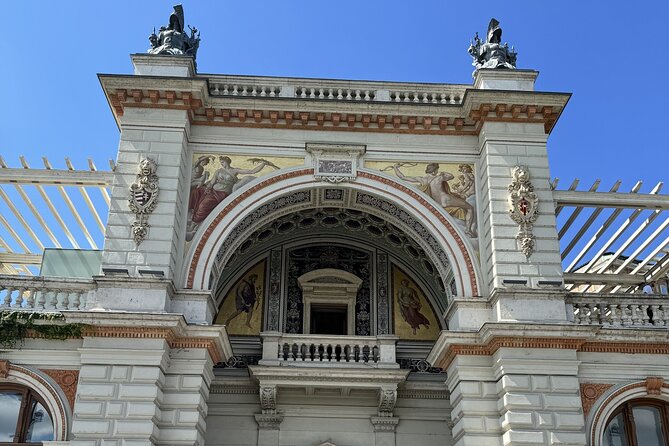
The final stretch includes Castle Garden, with a spiral staircase tower and Triton fountain. The garden gives you a breather after the more statue-and-history-heavy segments.
Then you end at Castle Garden Bazaar, with attention to the architecture of the Várkert Bazar. The guide points out statues on the facade of the infrastructure, which works well as a last “look up and notice” moment before you break away on your own.
The route ending here is practical. You’re close to where you can continue exploring, grab a drink, or simply wander downhill without needing to reorient.
Who Should Book This Tour (and Who Might Prefer a Different Plan)
This tour is a great fit if you want a fast, guide-led orientation to the Castle District. You’ll get a mix of major landmarks, statue stories, WWII references, and multiple photo breaks—especially at Fisherman’s Bastion.
I’d also suggest it for:
- First-time visitors who feel overwhelmed by the number of viewpoints
- Travelers who like history but want it explained in short, human chunks
- People who enjoy symbols—crosses, birds, royal iconography—more than only dates
You might want a different plan if:
- You expect lots of time inside buildings. This route stays mostly outside and keeps stops short.
- You hate walking uphill or handling uneven stone surfaces. The tour is doable for most travelers, but it’s still walking.
Should You Book Gems of the Budapest Castle District Walking Tour?
Yes, if you want an efficient way to understand the Castle District without wasting time guessing what matters. The route hits famous landmarks while also adding story connectors—double cross symbolism, WWII siege framing, Dracula lore, 1848 revolution ties, and national symbol explanations. For the price, the live guidance is the real draw.
If you can, book for a clear weather slot. It’s marked as weather-dependent, and you’ll enjoy the views more when they’re crisp. Wear shoes you don’t mind getting a workout from, and plan to take a few photos at the natural pauses, not at every single corner.
Also, if you’re lucky enough to be assigned a guide like Antel, you can expect strong English and a friendly, detail-heavy style that makes the stones feel less distant.
FAQ
How much does the tour cost?
The price is listed as $3.61 per person.
How long is the walk?
It takes about 2 hours 10 minutes (approx.).
What language is the tour offered in?
The tour is offered in English.
Is the ticket mobile?
Yes, the tour uses a mobile ticket.
Where do I start and where does it end?
You start at Holy Trinity Statue (Budapest, Szentháromság u., 1014 Hungary) and end at Castle Garden Bazaar (Budapest, Ybl Miklós tér 2-6, 1013 Hungary), right next to the castle garden by the Várkert Bazar.
What time does the tour start?
The listed start time is 3:00 pm.
Is the tour group size limited?
Yes. It has a maximum of 45 travelers.
Do I need to pay admission at the stops?
Each stop on the itinerary is marked Admission Ticket Free, so no paid admissions are indicated for the listed stops.
Is there a live guide included?
Yes. A live guide is included.
What if the weather is bad?
The tour requires good weather. If it’s canceled due to poor weather, you’ll be offered a different date or a full refund. You can also cancel up to 24 hours in advance for a full refund.