Murals, memorials, and nightlife—on one short walk. This guided 2-hour English stroll strings together District VII street art, Szimpla Kert, the Jewish Quarter, Szakszervezetek Háza, and the St. Stephen’s Basilica area, with plenty of meaningful context. I especially like that each major stop is built around free admission moments.
I also like the pace and feel: it’s a small group tour (max 15) with a professional guide, so you’re not stuck listening to a headset and scanning a map alone. One drawback to plan around: the route includes a couple extra spots that are intentionally left as surprises, so don’t schedule anything super tight right before or after.
In This Review
- Key highlights to expect
- Why This 2-Hour Budapest Walk Works for Your Time
- Szent István tér Meeting Point: Simple Start, Easy Finish
- District VII Murals: Budapest Street Art on the Move
- Szimpla Kert: A Nightlife Landmark With a Survivor Story
- Jewish Quarter Statues: Holocaust Remembrance Without Distance
- Szakszervezetek Háza: Trade Union Architecture From the 1970s
- St. Stephen’s Basilica Area and the Surprise Stops
- Group Size, Guide Style, and Getting the Most From 15 People
- Price and Value: Why $36 for 2 Hours Can Be a Smart Move
- Who Should Book This Tour (and Who Might Want Something Different)
- Should You Book This Budapest Walking Tour?
- FAQ
- How long is the Budapest walking tour?
- How much does the tour cost?
- Where do I meet the tour, and where does it end?
- Is the tour offered in English, and is it a small group?
- Is admission included for the stops?
- What is the cancellation policy?
Key highlights to expect

- District VII murals tied to Budapest’s Street Art Project, turned into an open-air gallery
- Szimpla Kert’s origin story, from a dilapidated building to a creative nightlife hub
- Jewish Quarter statue stops that point to Jewish community history and Holocaust remembrance
- Szakszervezetek Háza (1970s), an iconic central building that once served trade unions
- St. Stephen’s Basilica area plus a few extra surprise streets along the way
Why This 2-Hour Budapest Walk Works for Your Time
Budapest can feel huge on your first day, even when you’re staying in a central area. This tour fights that problem with a tight loop that mixes art, nightlife, memorials, and standout architecture without dragging on.
For me, the win is how the 2 hours are structured. You get several distinct chapters of the city—street art, creative culture, Jewish Quarter remembrance, then a major civic-era building—without needing to plan separate stops, tickets, or transport between them.
And because the key moments are timed (around 20–30 minutes each), it’s easier to stay engaged. You’re not staring at one place for so long that the rest of the city blurs together.
You can also read our reviews of more walking tours in Budapest



Szent István tér Meeting Point: Simple Start, Easy Finish
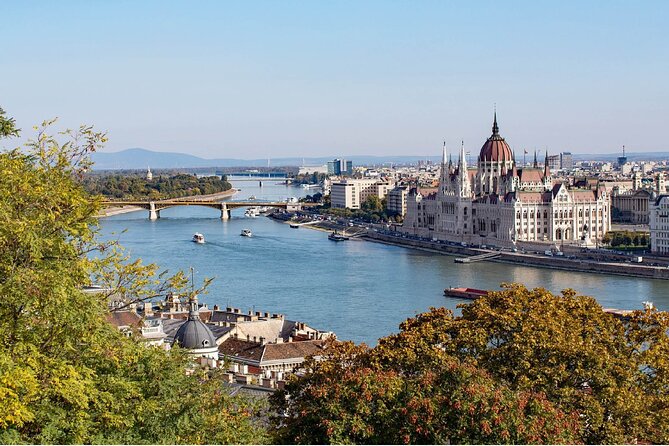
The tour starts at Budapest, Szent István tér 1, 1051 Hungary, and it ends back at the same meeting point. That sounds basic, but it’s practical: you don’t have to wonder where your walking day drops you off, especially if you’re connecting to dinner plans, a museum ticket, or public transit.
You’ll also be using a mobile ticket, so make sure your phone battery is good. It’s offered in English, and it runs near public transportation, which helps if you’re planning to arrive early or want a quick exit if something runs late.
District VII Murals: Budapest Street Art on the Move
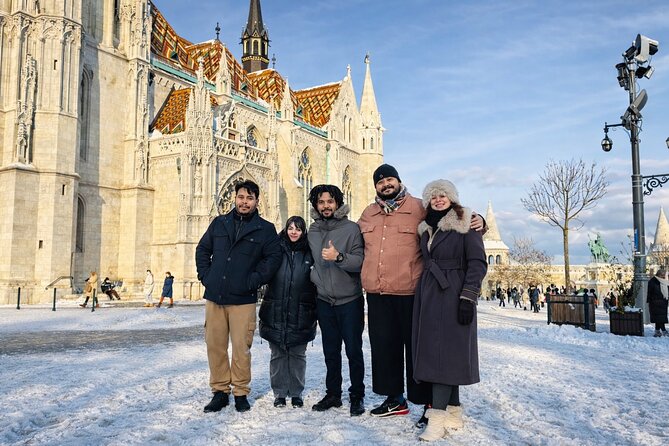
District VII is where street art turns into something you can read while you walk. This stop centers on murals created as part of Budapest’s Street Art Project, with the goal of transforming the area into an open-air gallery.
The practical value here is speed. In about 20 minutes, you can train your eyes on what makes these murals more than decoration. Look for how the artwork changes the feeling of the street: the way walls become landmarks, and ordinary blocks start to feel like outdoor rooms.
You’ll also get a guide’s framing, which matters. Street art can be easy to dismiss as random color unless someone connects it to the neighborhood’s evolution—especially in a city where layers of history show up everywhere.
What to watch for: stay a step or two behind your guide. Murals often work best when you’re positioned for the full message, not just a close-up tag.
Possible downside: since the murals are part of an active neighborhood, you’ll be sharing sidewalks with everyday foot traffic. If you want empty-photo conditions, don’t count on that here—just enjoy the real street context.
Szimpla Kert: A Nightlife Landmark With a Survivor Story
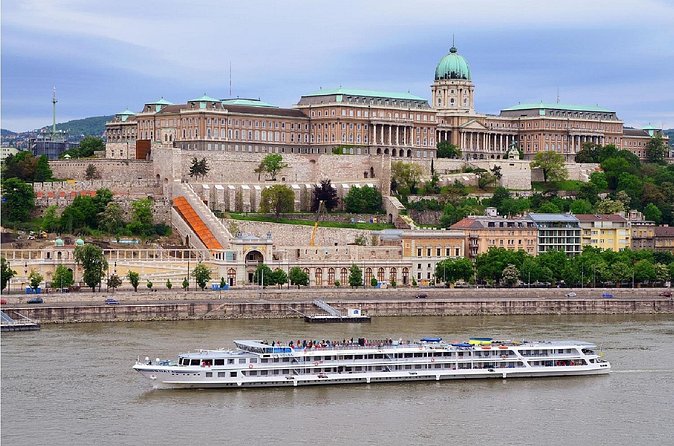
Next up is Szimpla Kert, a stop that’s all about Budapest after dark. The big idea is that it’s iconic partly because of what it used to be: it originally opened in a dilapidated building and later filled in with eclectic furniture, art, and live events.
That origin story is why this stop feels different from a normal “look at the building” pause. You’re seeing how a place can be repurposed into something creative and social, rather than just preserved as a static monument.
In about 20 minutes, you can pick up the overall mood even if you’re walking by during the day. The guide helps you understand why Szimpla Kert matters to Budapest’s identity—less like a museum stop and more like a living cultural switchboard.
How to make this stop pay off: glance around for how the setting mixes function and expression. The point isn’t to find one perfect photo. It’s to notice how the environment supports people gathering, creating, and staying curious.
Jewish Quarter Statues: Holocaust Remembrance Without Distance
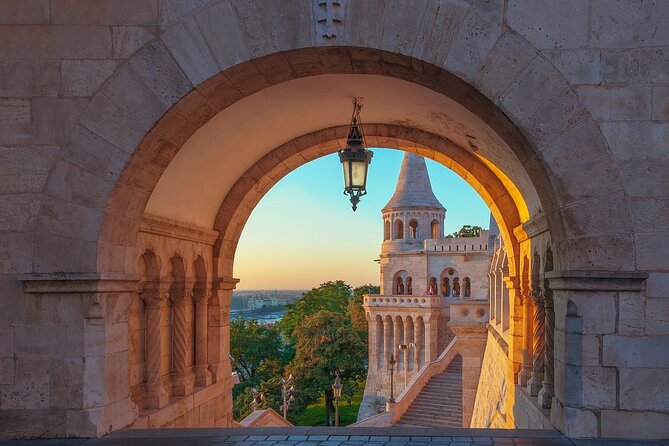
The emotional heart of this tour lands in the Jewish Quarter. You’ll spend about 30 minutes reflecting through statues that honor the Jewish community’s history and commemorate the lives lost during the Holocaust.
This is the kind of stop where context is everything. Statues can look straightforward until you slow down and learn what they’re pointing to—names, memorial themes, and the specific idea of remembrance in public space.
The value here is that you’re not relying on a guidebook’s paragraph length. You’re standing in front of the memorials, so the message stays concrete. That makes it easier to respect the site and absorb what you’re seeing.
Your approach matters: keep your voice down and put your phone away for a bit. If you want photos, do it briefly, but treat the stop like a moment of attention—not a background check.
Time consideration: it’s scheduled as a full 30-minute block. If you’re the kind of person who rushes, you might feel tempted to speed through. Try not to. This portion is worth the time.






Szakszervezetek Háza: Trade Union Architecture From the 1970s
Then you hit Szakszervezetek Háza, an iconic central Budapest building built in the 1970s. It originally served as a hub for trade unions in Hungary.
Even if you don’t know architectural terms, this stop works because it gives you a narrative. Instead of just saying the building is notable, the tour explains what it was for. That transforms your walk: you start looking at the building as a social tool, not just a landmark.
In roughly 30 minutes, you can connect what you see with the era it came from. You’re also getting a break from the more personal, reflective stops. It’s a shift from memory and people to institutions and civic life.
What I like about this pairing: street art, memorials, then a trade-union hub. It shows you Budapest as a city where different ideas share the same streets—sometimes in the same block.
St. Stephen’s Basilica Area and the Surprise Stops
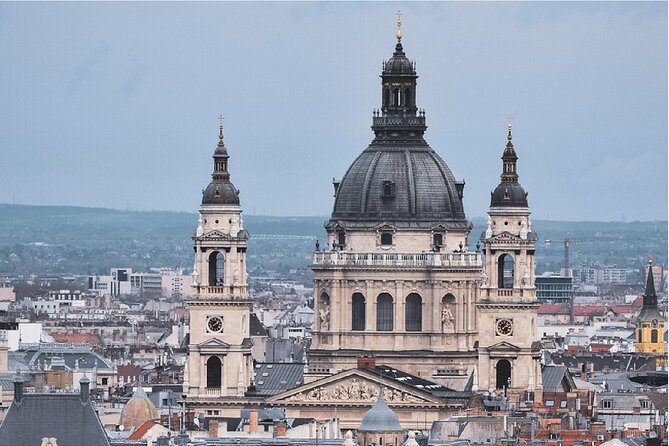
The tour includes a stop at Szent Istvan Bazilika for about 20 minutes. Along the way, there are also a few more stops that are intentionally kept as surprises.
That surprise element is partly what makes the walk fun. A checklist tour can feel like a game of ticking boxes. Here, you stay present because you don’t know every exact street corner before you reach it.
Practical advice: wear comfortable shoes. The tour is short, but it’s still a walking day, and the surprise stops can add little detours you didn’t mentally map.
Also, don’t plan to rush out immediately after the tour ends. Because it loops back to the meeting point, it’s tempting to treat it like a quick hit. I’d instead treat it like a warm-up—use it to get bearings, then decide what you want to return to on your own time.
Group Size, Guide Style, and Getting the Most From 15 People
This tour caps at 15 travelers, which is a big deal for a 2-hour experience. With a smaller group, it’s easier to ask questions and stay oriented—especially when the stops are emotional or require respectful attention.
The tour includes a professional guide, and one named guide that comes up in experiences shared by past guests is Janet. If your group is lucky enough to have her, expect a friendly, clear approach that helps you connect the dots without turning the walk into a lecture.
You can also help your own experience. If something hits you—whether a mural theme or a memorial message—ask one question. The guides on tours like this are usually best at taking your curiosity and pointing it at what you can actually see.
One more note from the kind of scheduling issues that can happen with short tours: if your time changes, confirm the exact neighborhoods included. I’d do that even if everything seems straightforward—because the difference between one district and another can matter a lot if it’s your final day in Budapest.
Price and Value: Why $36 for 2 Hours Can Be a Smart Move
At $36.00 per person, you’re paying for more than a walk. You’re paying for a guided route that stitches together multiple major themes in a short window, plus a professional guide to frame what you’re seeing.
Value also comes from what’s included at the stops: admission is free at each listed stop. That means you aren’t doing a tour that feels “cheap” because everything costs extra. Instead, you’re mostly paying for interpretation and timing.
And because it’s 2 hours, it’s a practical option if you don’t have a full day for Budapest orientation. You get several anchor points—District VII murals, Szimpla Kert, Jewish Quarter memorial statues, Szakszervezetek Háza, and Szent Istvan Bazilika area—so you can later choose where to spend more time on your own.
Gratuities aren’t included, which is normal for guided tours. If you feel the guide earned it, you’ll know by the end.
Who Should Book This Tour (and Who Might Want Something Different)
This tour fits best if you want a balanced Budapest snapshot. It’s for people who like mixing art with important remembrance stops, and who prefer guided structure over wandering with zero plan.
It’s also a good match if you’re traveling in a small window of time. When you only have a couple hours to get oriented, this kind of route gives you a set of reference points that make the city easier to explore later.
Who might skip it? If you’re looking for a long museum-style experience or you want a deep, slow pace at one single site, 2 hours can feel tight. This tour is built to cover ground and meaning quickly, not to linger for hours in any one place.
Should You Book This Budapest Walking Tour?
I’d book it if you want a well-paced introduction to Budapest’s different sides: street art in District VII, creative nightlife culture at Szimpla Kert, memorial focus in the Jewish Quarter, and a union-era landmark in central Budapest.
Before you go, do two simple things:
- If your schedule is flexible, great. If it’s not, build a little buffer for the surprise stops.
- If your tour time ever changes, confirm the route so you know which neighborhoods you’ll actually cover.
If that’s your style of travel, this tour is an efficient, meaningful way to get your bearings without turning your day into logistics.
FAQ
How long is the Budapest walking tour?
It’s approximately 2 hours long.
How much does the tour cost?
The price is $36.00 per person.
Where do I meet the tour, and where does it end?
You meet at Budapest, Szent István tér 1, 1051 Hungary, and the tour ends back at the same meeting point.
Is the tour offered in English, and is it a small group?
Yes, it’s offered in English, and it has a maximum group size of 15 travelers.
Is admission included for the stops?
Admission is listed as free for each stop included on the itinerary.
What is the cancellation policy?
You can cancel for a full refund if you cancel up to 24 hours before the experience’s start time, using local time. If you cancel less than 24 hours before, the amount paid is not refunded.