REVIEW · BUDAPEST
Budapest All in One Small Group Walking Tour with Strudel Stop
Book on Viator →Operated by Absolute Tours · Bookable on Viator
Budapest is best understood on foot. This small-group tour mixes big sights in both Pest and Buda with public transport, and it includes an included strudel stop that gives you a real break. The one thing to plan for: it skips interiors, so you will hear the stories from the outside, not do long inside visits.
I like how the route is built to get you oriented fast: state landmarks early, then parks and thermal-bath area, then the Danube and finally the best viewpoints in Buda. I also appreciate that the guide is English-speaking and the group stays under 10, so you can ask questions without feeling like you are shouting over a crowd.
If you want quiet, slow strolling with lots of museum time, this is not that. It is a paced walking tour with short stops, aimed at covering around 6 km / 4 miles total, and it runs in all weather.
In This Review
- Key things to know before you go
- The big idea: Pest and Buda, connected by smart transport
- Andrássy Avenue and Heroes’ Square: the national-symbol sweep
- City Park, Vajdahunyad Castle, and Széchenyi: park scenery with a spa angle
- St. Stephen’s Basilica area and the Strudel House break: energy management
- Szabadság tér, Parliament area, and the Danube: politics meets the river view
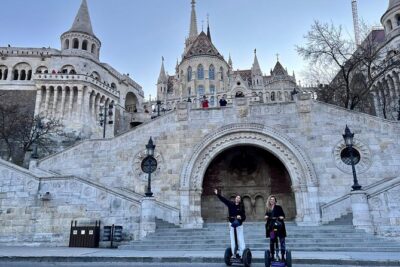
- Matthias Church story and the Buda Castle District finale at Fisherman’s Bastion
- Value for the price: what you get for about $100
- Who this tour suits best (and who should rethink it)
- Should you book this Budapest highlights tour?
- FAQ
- How long is the tour, and how much walking should I expect?
- Is the tour in English, and do you use headsets or audio equipment?
- What is included in the strudel stop?
- Does the tour include interior visits to churches or buildings?
- Are public transport tickets included?
- Where does the tour start and where does it end?
Key things to know before you go
- Max 10 people: you get a more personal pace and time to ask questions.
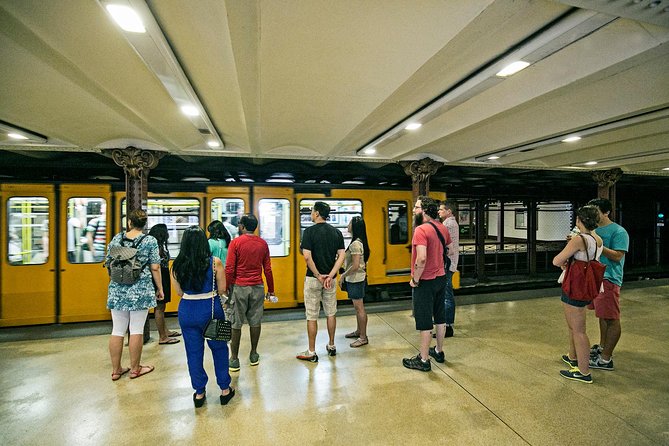
- Metro + walking balance: less backtracking, more sights packed into about 4 hours.
- Strudel House break included: strudel plus coffee or tea, planned as a recharge point.
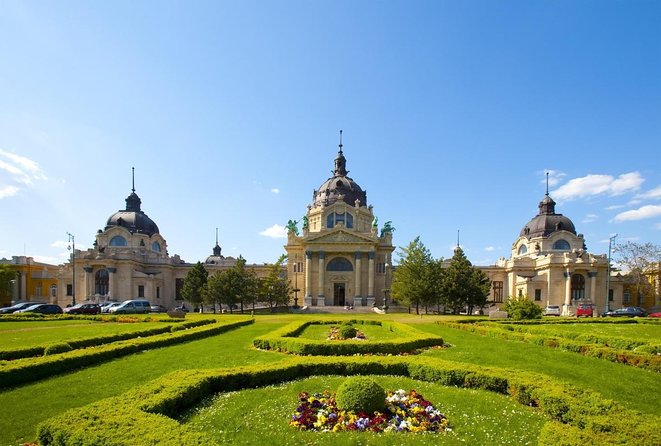
- Spa culture stop: you get a look at the Szechenyi thermal-bath area without committing to a full bathing session.
- Danube Promenade viewpoint time: photo-friendly stops for the river, Gellért Hill/Citadel views, and Chain Bridge.
- Buda Castle District finish: Fisherman’s Bastion arcades are free for the views, with the upper terrace requiring admission.
The big idea: Pest and Buda, connected by smart transport
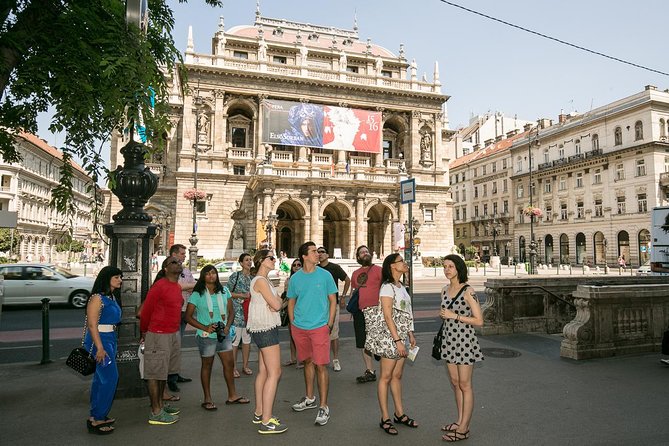
This is the kind of Budapest introduction that makes you feel less lost by the time you end. The tour starts at the Hungarian State Opera House area on Andrássy út 22 (1061), then uses the metro for quick jumps so you are not spending your time fighting transit lines or doubling back on foot.
What makes it work for a first visit is that it strings together the city’s “why it matters” moments in a logical order. You begin with grand avenues and national monuments, shift to City Park and the thermal-bath neighborhood, and then move toward the political center and the riverfront. After that, you climb into the Buda side for lookout time at Fisherman’s Bastion.
Because there is no audio equipment on this tour, your best move is to stay close when the guide is speaking. The route has enough walking and moving between areas that you will want to be able to hear clearly without relying on headsets.
You can also read our reviews of more walking tours in Budapest


Andrássy Avenue and Heroes’ Square: the national-symbol sweep
You start with a story stop at the Hungarian State Opera House, listening to context about the building before the tour gets into motion. Then you head to Andrássy Avenue for about 15 minutes, where the guide helps you understand why this boulevard is such a key part of Budapest’s image.
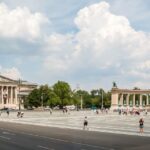
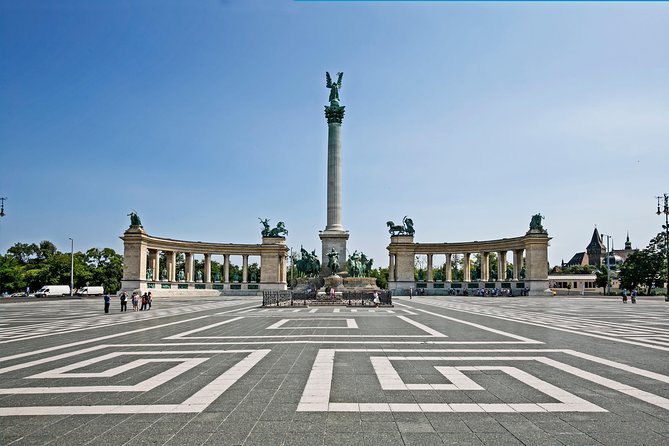
Next comes Heroes’ Square, a 30-minute block that is less about wandering and more about focus. This is where you see statues and understand the monument’s role in telling Hungary’s story over the long span of time—especially the big “1,000 years” theme referenced by the site’s framing.
What I like about these first stops is the rhythm. You are not just looking at pretty facades and then sprinting to the next place. You are given a structure for what you are seeing, and it makes the later sights land harder—particularly when you reach the political and religious landmarks.
The downside? Heroes’ Square is open and exposed. If it is windy or rainy, you will feel it more than in the covered streets of the city center. Dress for the weather.
City Park, Vajdahunyad Castle, and Széchenyi: park scenery with a spa angle
After the first civic and royal-style sights, the tour shifts to Varosliget (City Park). This is the big local park space, and you get time to walk through it (about 10 minutes at this stop stage), plus more “learn while you look” moments around nearby landmarks.
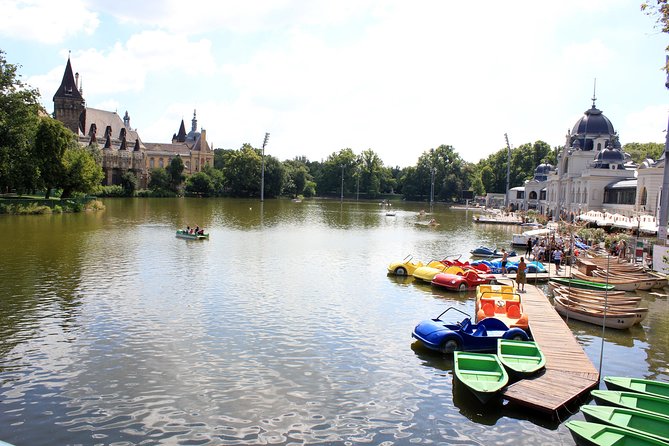
A major highlight here is Vajdahunyad Castle, built for the Millennial Exhibition of 1896, marking 1,000 years since the Hungarian Conquest of the Carpathian Basin. You go into the yard area and get the architecture story, which is a smart way to keep the tour moving without requiring interior tickets.
Then you get the Szechenyi Spa connection. The tour does not sell you on a full spa day. Instead, you peek into the bath house and learn about local spa culture. It is a taste of why Budapest is famous for thermal baths, even if you skip the bathing part.
One consideration: since the tour does not include interior visits to buildings and churches, your time at these spots is more about views, exteriors, and guided explanations than about doing activities. If you hoped to fully soak at Szechenyi, you will need a separate plan.
St. Stephen’s Basilica area and the Strudel House break: energy management
After you move away from the park area, you return toward the city center by metro. One of the iconic landmarks you encounter along the way is St. Stephen’s Basilica, described as one of the two tallest buildings in Budapest. The tour keeps things outside-focused, with a guide story around the church.
Then comes the part many people end up remembering most: the strudel stop. The tour includes strudel plus coffee, tea, or mineral water (hot drink is included in the ticket value), served at a Strudel House in a downtown setting.
This break is more than a snack. It works as a pacing tool. You get seated time while the tour resets for the next stretch: Soviet-era context, the Danube riverfront, and the Buda Castle District finale. A few details make this stop feel special in real life: the break is treated as a planned group moment, and the setting is known for strudel service that fits well during a cold day scenario.
If you do not like strudel much, know that this is part of the package. Some people love the pause; others just treat it as a warm, included stop. Either way, the drink and dessert are part of what you are paying for, so it helps to see it as part of the tour’s design.
Szabadság tér, Parliament area, and the Danube: politics meets the river view
Once you leave the park-and-basilica zone, the tour moves into the city’s political geography.
At Szabadság tér, you stop to see a Soviet Memorial and learn about communist times. This is where Budapest’s 20th-century story becomes visible in a way that is harder to pick up from casual sightseeing alone. The guide helps connect the location to what it represents, so you are not just taking a photo next to a monument.
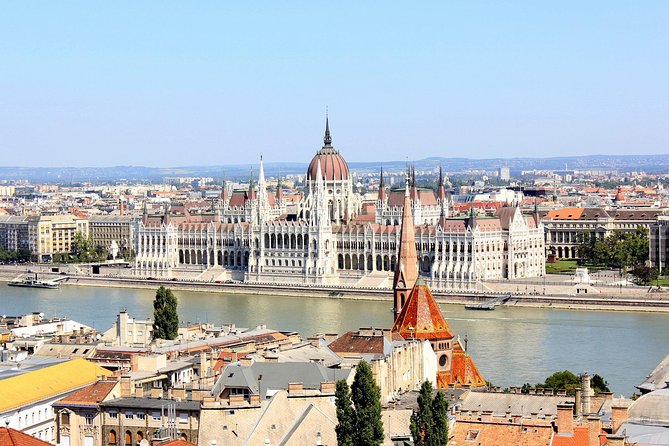
From there, the route includes a stop tied to the Hungarian Parliament building and the guide’s take on current politics in Hungary. The tour does not promise an interior visit, so the value is in explanation plus exterior viewing angles rather than ticketed architecture time.
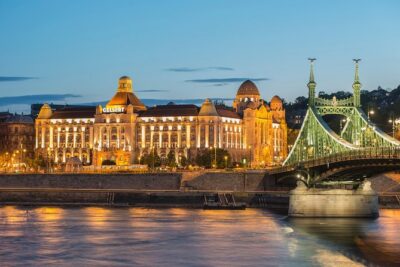
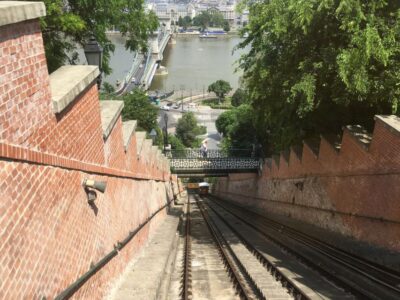
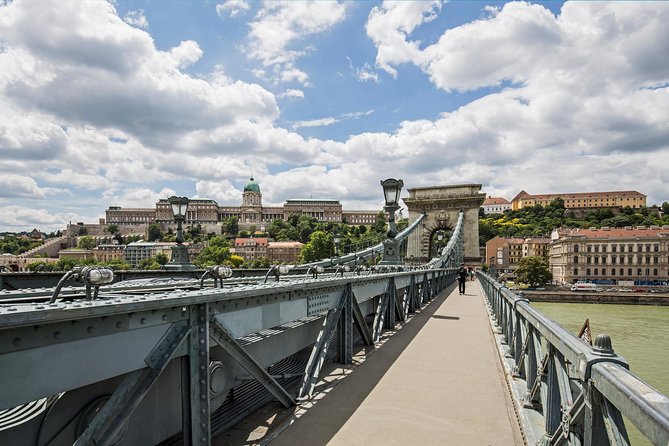
Then you shift into the river section. You get a Danube River stop for about 10 minutes on the bank, followed by a short move to Chain Bridge (reached after the river walk, around 5 minutes). The guide shares history of the bridge as you take in the panorama of nearby features like Gellért Hill and the Citadel.
This sequence is great for photos, but it can also be the most exposed part of the morning. If weather is rough, plan on wearing layers and bring something that handles wind.





Matthias Church story and the Buda Castle District finale at Fisherman’s Bastion
The tour finishes on the Buda side, with the mood shifting from grand monuments and river views to hilltop viewpoints.
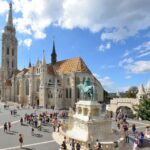
At Matthias Church, you get a short stop (about 5 minutes) focused on story: the coronations and why the Ottomans converted the church into Buda’s main mosque. This is a “quick context” stop, not an inside tour, which matches the tour’s overall style.
Then you do a Buda Castle walk-through for about 15 minutes. It is time to soak up the street-level feel of the district without turning it into a half-day ladder workout.
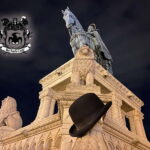
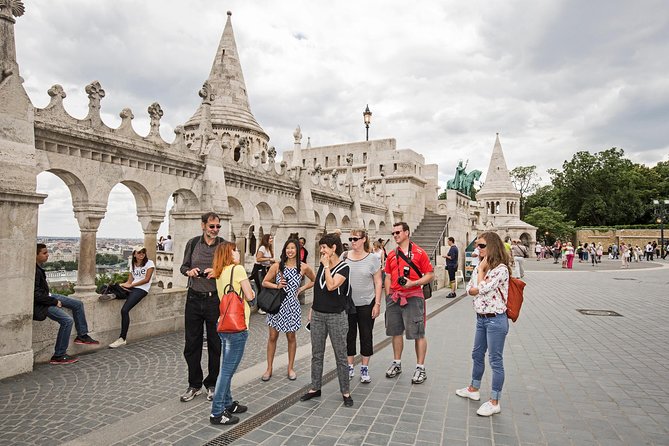
Finally, you reach Fisherman’s Bastion. You get about 10 minutes for views from the arcades, and the key practical detail is that viewing from the arcades is free, while the upper terrace requires admission. For most people, the arcades are enough to get that skyline photo moment across the city.
If you have moderate physical fitness, this ending is manageable. Still, hilltop areas mean uneven stone and steps. Good shoes matter more than you think.
Value for the price: what you get for about $100
At $100.37 per person, this is not the cheapest way to see Budapest. But the price makes more sense when you look at what is included.
You get:
- A private English-speaking guide
- A small-group size (maximum 10)
- Public transport tickets during the tour
- 1 gratis single ticket so you can return to downtown
- Strudel and coffee/tea (plus mineral water is part of the drink option)
- A mobile ticket
For first-time visitors, the value comes from saving your brain. Budapest’s distances are not huge, but getting the “right order” of sights is where most DIY plans go off the rails. This tour uses the metro to stitch together Pest and Buda at the right pace.
It also helps that the guide-led explanations reduce the guesswork. You are not just standing in front of Heroes’ Square or the Danube thinking, okay… what am I supposed to be seeing. The guide gives you the story threads, from Hungarian national symbols to Soviet-era reminders and the bridge’s background.
One more practical point: because the tour is built around short stops, it tends to work well even if you are not trying to go “full museum mode” on day one.
Who this tour suits best (and who should rethink it)
This tour is ideal if you:
- Want a high-impact introduction to both major sides of Budapest
- Like guided context, not just photos
- Prefer a small group experience
- Are okay with a walking pace of roughly 6 km / 4 miles over about 3.5 to 4 hours
- Value included food and drink as part of the schedule
You might rethink it if you:
- Want lots of interior time (churches and buildings are not visited inside on this tour)
- Want a slow, laid-back wander with minimal transit and fewer stops
- Really do not care about thermal-bath culture stops (you only get a look and learn, not a full spa session)
Should you book this Budapest highlights tour?
I think it’s a smart booking for most first-time Budapest trips, especially if you want to understand the city’s major symbols without spending your day hopping between disconnected neighborhoods. The best part is the structure: it gives you a guided backbone from the Opera House to Heroes’ Square, through City Park and Szechenyi’s area, then along the Danube to the hilltop finish at Fisherman’s Bastion.
If you are short on time, this is one of the easiest ways to get your bearings fast. If you already know you want to go inside specific churches or do a full thermal bath experience, plan that separately. Book this as your orientation day, then build from there.
FAQ
How long is the tour, and how much walking should I expect?
The tour runs about 3 hours 30 minutes to 4 hours, with around 3 hours of walking and short stops. Expect roughly 6 km / 4 miles total, and a moderate fitness level is recommended.
Is the tour in English, and do you use headsets or audio equipment?
Yes, the tour is offered in English and includes an English-speaking guide. There is no audio equipment or headphones used.
What is included in the strudel stop?
The ticket includes strudel plus coffee or tea, with mineral water also an option for the included drinks.
Does the tour include interior visits to churches or buildings?
No. The tour does not include interior visits to churches or buildings. You’ll hear stories and see exterior areas during stops.
Are public transport tickets included?
Yes. Public transport tickets are included during the tour, and you also get 1 gratis single ticket to return to downtown.
Where does the tour start and where does it end?
The tour starts at Budapest, Andrássy út 22, 1061 Hungary at 9:00 am and ends on the Buda side at Fisherman’s Bastion (including stops at Matthias Church).