REVIEW · BUDAPEST
Budapest walking tour: Parliament and Shoes Memorial
Book on Viator →Operated by Luna Walking Tours · Bookable on Viator
Two hours, and Budapest starts talking.
This small-group Budapest walking tour links famous stops with local legends and real context, starting at St. Stephen’s Basilica and moving along the Danube corridor with an English-speaking guide. I like that you can ask questions as you go, not just listen while you walk.
What I also like: the pace feels easy. The route is mostly flat, and the guide mixes serious facts with light humor so the walk stays engaging even when you hit darker moments.
One thing to consider: the Shoes on the Danube Bank memorial is emotionally heavy, and it’s meant to be treated that way.
In This Review
- Key things that make this walk worth your time
- Starting at St. Stephen’s Basilica: why the tour begins here
- The Hungarian Parliament Building: what to notice before you stare
- Shoes on the Danube Bank: the stop you shouldn’t rush
- Vörösmarty Square: the city’s meeting point energy (without the hard sell)
- Café Gerbeaud: a quick landmark pause for real Hungarian sweetness
- Chain Bridge (Széchenyi Lánchíd): lions, legends, and the Danube view logic
- Vigadó Concert Hall (Pesti Vigadó): Romantic architecture with a purpose
- The Hungarian Academy of Sciences: why the language of science matters
- Erzsébet Square and Danubius Fountain: a central hub where the Danube shows up again
- Gresham Palace: the luxury history cue you’ll recognize later
- Price and logistics: is $3.63 a good deal?
- Who this tour suits best
- Should you book the Parliament and Shoes Memorial walking tour?
- FAQ
- How long is the Budapest Parliament and Shoes Memorial walking tour?
- What is the price per person?
- What language is the tour offered in?
- How many people are in the group?
- Where does the tour start and end?
- Is the Parliament Building admission included?
- Are the other stops free to view?
- Can I cancel for a full refund?
Key things that make this walk worth your time
- Small group (max 10 people) means real back-and-forth questions, not one-way storytelling
- A mix of mood: big-sight architecture plus the quiet weight of the Holocaust memorial
- Short stops that teach you what to look for, from the Parliament dome to the Chain Bridge lions
- Easy orientation for day one, since you cover a central Danube stretch and learn how the city connects
- Guide help for the rest of your trip, including practical restaurant and bar ideas
Starting at St. Stephen’s Basilica: why the tour begins here
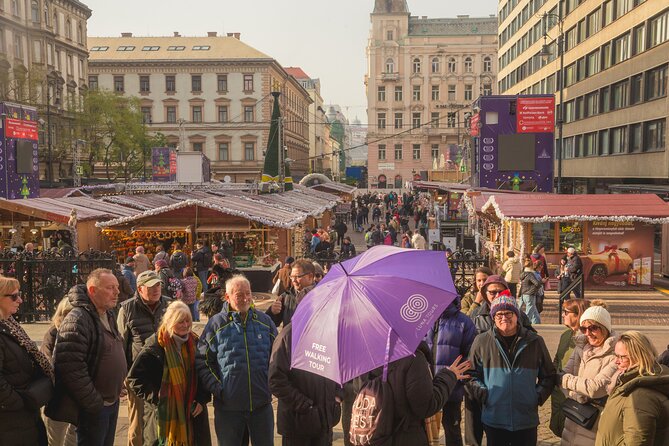
The meeting point is at St. Stephen’s Basilica (Szent István Bazilika). The start time is 11:00 am, and the walk has you begin with quick orientation right where the crowds tend to be thickest.
Do yourself a favor and arrive a bit early. One useful detail I picked up from people who went before: the meeting point is not necessarily at the church’s front door area. If you’re facing the basilica, look around the other side to your left and keep an eye out for the colored-umbrella guides.
In the first stretch, your guide spends about 15 minutes sharing history and legends connected to the basilica. This isn’t a long church tour. It’s more like a story warm-up, giving you a way to read Budapest from street level instead of treating each building like a postcard.
You can also read our reviews of more walking tours in Budapest



The Hungarian Parliament Building: what to notice before you stare
Next comes the Hungarian Parliament Building, with its famous golden dome and all that detail work you might otherwise skim past. The stop is around 15 minutes, and admission is not included, so you’re mostly appreciating it from outside.
Still, there’s a lot you can learn at street distance. I like this approach because it helps you see the building as a symbol, not just a photo. With the guide’s explanations, you start noticing why the architecture looks the way it does, and how national identity gets expressed through stone, position, and scale.
Practical note: if you want to go inside, plan on buying your own tickets separately. The tour’s value is mostly in helping you understand what you’re seeing and where to stand for the best perspective—without turning into a ticket scramble.
Shoes on the Danube Bank: the stop you shouldn’t rush
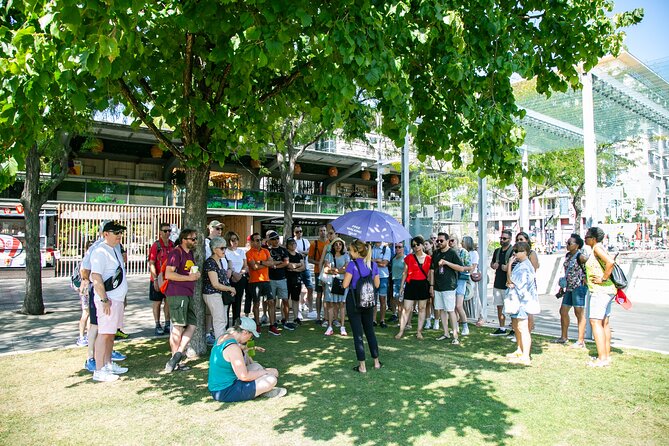
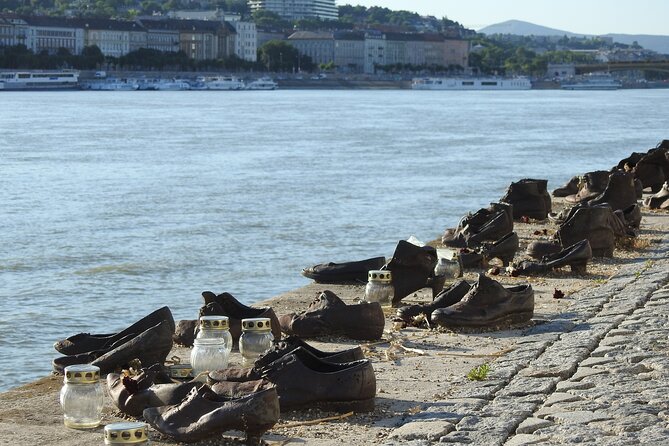
After Parliament, you reach the Shoes on the Danube Bank memorial, with a time of about 15 minutes. This is a free stop, and it’s the moment where the tone shifts from sightseeing to reflection.
This memorial is designed to be haunting. Even if you think you already know the general story, pause long enough to really take in the symbolism. I recommend giving yourself a few extra seconds at each view angle your guide points out, because the power here is in the layout and the quiet context, not in what you can “finish” quickly.
Because it’s sobering, it’s also a moment where a good guide matters. You want someone who can handle the subject with care while still keeping the flow of the walk moving at a respectful pace. If you prefer lighter topics only, this tour may feel intense.
Vörösmarty Square: the city’s meeting point energy (without the hard sell)
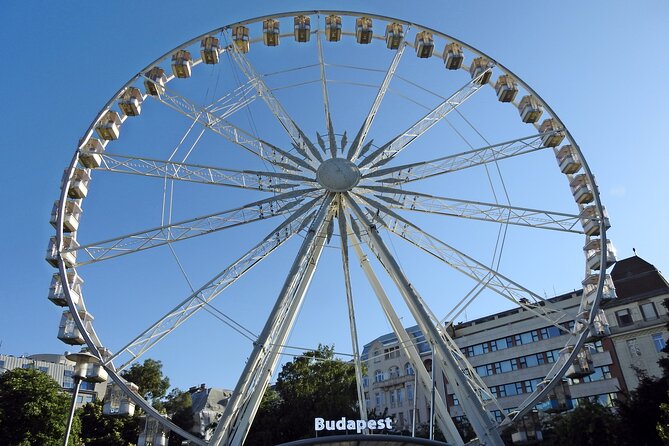
You’ll then head to Vörösmarty Square (Vorosmarty ter), one of the central downtown meeting points. The stop is brief—around 10 minutes—but it’s a smart break in the route because the square helps you grasp how everyday Budapest life connects to major sights.
The guide’s stories add context for why the square feels like a natural hub. You’ll see the kind of elegant architecture people come to see, plus the cafe culture that makes this area function like a social living room.
If you’re hungry, this is a good place to decide what you want next. The tour also includes a stop that ties directly into the city’s dessert legacy.
Café Gerbeaud: a quick landmark pause for real Hungarian sweetness
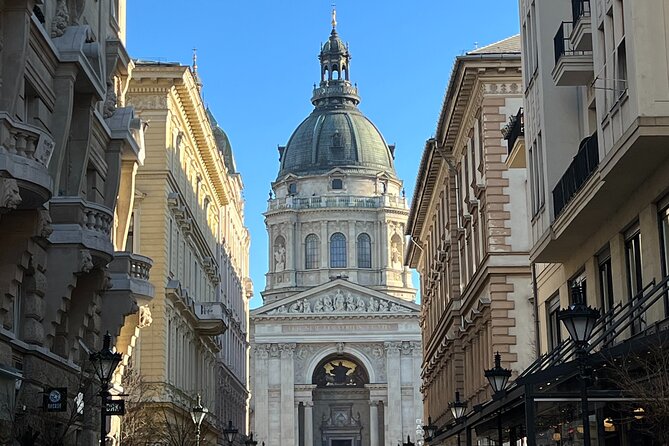
The tour includes a stop at Café Gerbeaud in Vörösmarty Square. Time on site is about 10 minutes, and admission is free in the sense that you’re not paying for entry as part of the experience.
Gerbeaud is known for its classic Hungarian confections, and the famous Gerbeaud slice is the one people usually go for when they want a taste that matches the setting. Even if you skip dessert, I like using this stop to understand Budapest’s old-world cafe tradition—this is where you learn what “Hungarian dessert culture” means beyond a single bakery name.
If you do order something, keep it simple and share. This part of the tour is short by design, so you don’t want to get stuck waiting for a big meal.






Chain Bridge (Széchenyi Lánchíd): lions, legends, and the Danube view logic
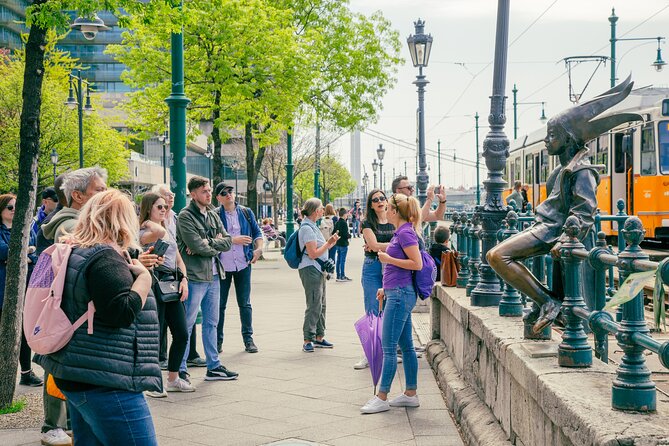
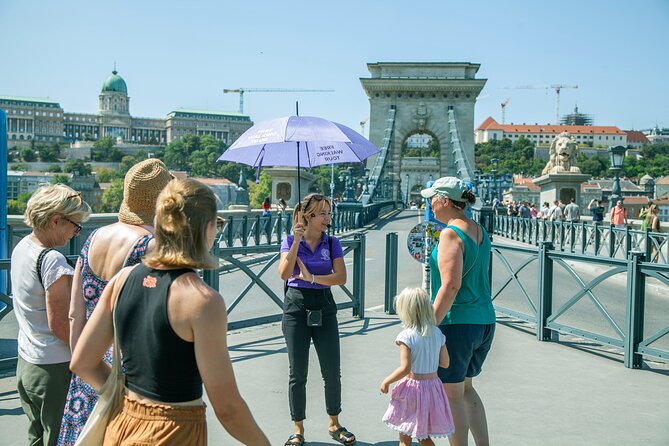
Then it’s time for the Széchenyi Lánchíd, the Chain Bridge. The stop is about 10 minutes, and it’s free to visit.
This is where the walking tour becomes useful for navigation later. Your guide connects the bridge to the way Buda and Pest relate to each other, and the stories about the bridge construction help you understand why this crossing became so iconic. You’ll also get a better appreciation for the stone lions—small details you can easily miss when you’re focused only on the skyline.
If you’re photographing, don’t treat this as a single shot. I’d give yourself two angles: one that includes the bridge as a whole, and another that emphasizes the lion guardians or the curve of the arches.
Vigadó Concert Hall (Pesti Vigadó): Romantic architecture with a purpose
Next up is Pesti Vigadó, Budapest’s grand concert hall on the Danube. The stop is around 10 minutes, and it’s free.
This is more than a pretty facade stop. Your guide explains what the building represents and why it mattered as a gathering place for emperors and artists in earlier times. Even if you don’t attend a concert, it’s useful to see how architecture reflects the city’s cultural priorities.
If you like buildings that have character, this is one of the better “pause and look” moments on the walk. You learn what to pay attention to—ornamentation, symmetry, and the way the structure faces the river.
The Hungarian Academy of Sciences: why the language of science matters
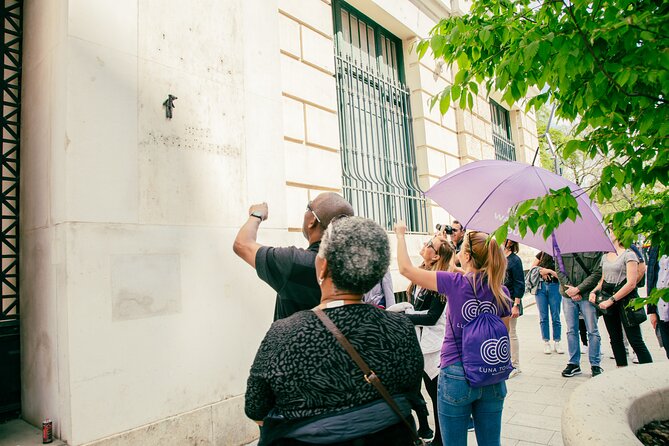
The route continues to the Hungarian Academy of Sciences, another Danube-side landmark with neoclassical styling. You’ll have about 10 minutes here, also free.
This stop is a good contrast to the political symbolism of Parliament. Instead of power through government, you get power through knowledge—your guide connects the academy to efforts to preserve the Hungarian language and support innovation. If you’re the kind of person who likes how everyday national identity shows up in institutions, this is the kind of stop you’ll appreciate.
A detail you might enjoy if it’s new to you: the tour connects Hungarian inventions to the way the country contributes to global everyday tools, from the Rubik’s Cube to the ballpoint pen.
Erzsébet Square and Danubius Fountain: a central hub where the Danube shows up again
You’ll then reach Erzsébet Square (Erzsebet ter). The stop is about 10 minutes and free. This area is famous for being a central gathering spot, and the Budapest Eye Ferris wheel and fountain area help give the square a modern personality.
Right after, you’ll see the Danubius Fountain. It’s a short stop—about 5 minutes—and also free. Your guide ties the fountain’s symbolism back to the Danube itself, with sculpture details representing the river and its tributaries.
This is a “reset your eyes” moment. After the bridges and memorials, the fountain stop gives you a chance to look up, breathe, and think about Budapest as a city that celebrates both nature and culture in the same visible space.
Gresham Palace: the luxury history cue you’ll recognize later
The final part of the walk includes Gresham Palace, a prestigious building that now functions as a Four Seasons hotel. The stop is about 10 minutes and free.
Your guide connects the palace to a long list of notable international guests over time—political figures, royalty, and celebrities. Even if you never plan to stay here, I find it useful to understand where luxury history sits in the city map.
It also helps you see Budapest’s layers: imperial-era ambition, modern branding, and the continuity of the grand-address feel along the Danube and downtown.
Price and logistics: is $3.63 a good deal?
At $3.63 per person for an approximate 2-hour walking tour, this is priced in the category of exceptional value—especially since it’s a small-group experience capped at 10 people.
Here’s what you get for that price:
- A local English guide who handles history and legends
- A route that hits major sights along the Danube corridor
- Plenty of time for questions and clarifications
- Personal recommendations after the tour (restaurants, bars, museums, spas)
What you might spend extra on:
- Hungarian Parliament Building admission is not included
- Tips are not included (so plan a tip if you want to show appreciation)
Timing also matters. Starting at 11:00 am and finishing after a couple hours means you can comfortably do it early in your trip without losing an entire day. And because the walking is largely flat, it’s a better fit than many “big day” tours if you want to keep energy for later.
One logistical tip worth repeating: the meeting area can be crowded. If you’re not finding the guide right away, don’t guess. Look for other guides with colored umbrellas and ask which one matches your tour.
Who this tour suits best
This is a great match if you want:
- A first-day orientation to Budapest’s central Danube sights
- A guide who brings stories beyond the typical brochure facts
- A comfortable group size where you can ask questions without feeling rushed
It’s also a good fit for people who enjoy walking tours that move at a pace that doesn’t punish you. The tour duration is short enough that you still feel like you did something, not like you survived something.
If you hate walking or prefer quiet, self-paced sightseeing only, you might prefer a slower option. And if you want to avoid emotional topics, think carefully before choosing this one because the Shoes memorial is a core stop.
Should you book the Parliament and Shoes Memorial walking tour?
Yes—if your goal is to understand Budapest fast and honestly, this is a strong pick. The combination of famous architecture (Parliament, Chain Bridge, Vigadó) plus a deeply human memorial (Shoes on the Danube Bank) gives your day a real arc. Add the small-group format and the guide’s willingness to share practical advice, and the price feels like a bargain.
I’d book it if you’re planning only a couple major activities and you want one tour that sets you up for the rest. Just go in prepared for the seriousness of the memorial, and arrive early enough to find your guide easily.
FAQ
How long is the Budapest Parliament and Shoes Memorial walking tour?
It lasts about 2 hours.
What is the price per person?
The tour price is listed as $3.63 per person.
What language is the tour offered in?
The tour is offered in English.
How many people are in the group?
The tour has a maximum of 10 travelers.
Where does the tour start and end?
It starts at St. Stephen’s Basilica (Szent István Bazilika) and ends at Budapest, Kossuth Lajos tér.
Is the Parliament Building admission included?
No. The Parliament stop notes that an admission ticket is not included.
Are the other stops free to view?
The Shoes on the Danube Bank and the other listed stops show admission as free on the tour details.
Can I cancel for a full refund?
You can cancel up to 24 hours in advance for a full refund.
If you want, tell me your travel dates and where you’re staying, and I’ll suggest the easiest way to fit this walk into your first day in Budapest.