REVIEW · BUDAPEST
1.5 Hour Budapest Segway Tour – To The Castle Area
Book on Viator →Operated by Segway BP · Bookable on Viator
Segways make Buda’s castle zone feel close. In about 2 hours you can glide past major sights above the Danube and into the castle area without wrestling crowds on foot. I love the training time that helps you get comfortable quickly, and I also love the private pace that keeps the ride feeling personal.
One thing to plan for: this is a short sightseeing loop, and some entry costs are on you. The tour pricing includes the Segway and ride time, but Buda Castle and Matthias Church entrance fees are extra, and the experience needs good weather.
If you care about safety and good guidance, you’ll likely feel in good hands. Guides like Hafa, Ahmed, Akmed, Alex, Sam, and Daniel have been highlighted for calm instruction and smart tips, including helping nervous riders feel secure so the whole group can enjoy the views.
In This Review
- Key highlights to look for
- Why a Segway tour fits Budapest’s Castle Area so well
- Meet at Haris köz 2: training, helmets, and a calm start
- Erzsébet Bridge: the Danube crossing that links Buda and Pest
- Szent Gellért Monument: monk statue, hill views, and river air
- Queen Elizabeth statue: a quick landmark moment
- Semmelweis Museum area: architecture you can spot even without going inside
- Clark Ádám Square and the Chain Bridge connection
- Matthias Church area: where the views start doing the talking
- The Frigyes Schulek note you’ll hear along the way
- What makes the tour feel worth it: photos, video, and guide pacing
- Price and value: what $47.16 really buys you
- Timing and comfort: what to wear and when to expect the best ride
- Who should book this Budapest Segway Castle Area tour
- Should you book it: my practical take
- FAQ
- FAQ
- How long is the Budapest Segway tour to the Castle Area?
- How much does it cost?
- Is the tour private?
- What language is the tour offered in?
- What’s included in the price?
- What entrance fees should I expect to pay?
- Where do I meet for the tour?
- Does the tour end at the same place?
- What happens if the weather is bad?
- Can most people participate?
Key highlights to look for
- Practice first, then ride confidently so you spend less time worrying and more time seeing.
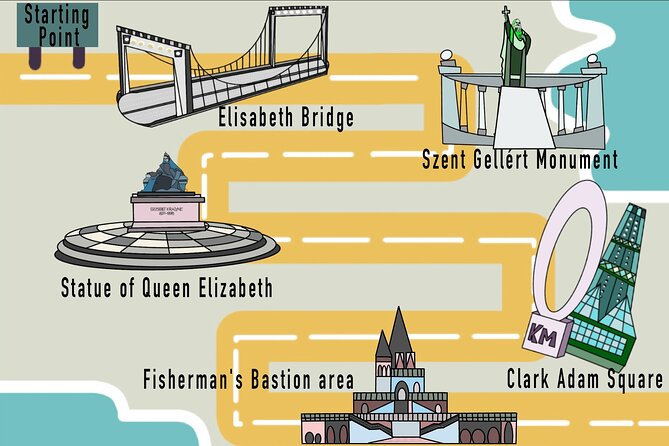
- A Danube-and-castle route that strings together classic spots like Erzsébet Bridge and Matthias Church in one go.
- Private group energy with no need to stay glued to a big bus-style crowd.
- Photo and video recording included, so you’ll actually come home with proof.
- Guide tips beyond the monuments that help you plan the rest of your Budapest days.
- Matthias Church area viewpoints with sweeping city, river, and Parliament views.
Why a Segway tour fits Budapest’s Castle Area so well
Budapest’s Castle District can feel like two different trips at once: steep views and historic buildings on one side, and tight little streets on the other. A Segway is a practical shortcut. You still get the dramatic stops, but you’re not using all your energy to cover distance.
This tour is also a smart way to get oriented. You cover key landmarks—bridge, monuments, then the Church area—so later, when you explore on foot, you’ll have the layout in your head. It’s not a museum day, but it’s excellent for seeing the big picture fast.
You can also read our reviews of more tours and experiences in Budapest.



Meet at Haris köz 2: training, helmets, and a calm start
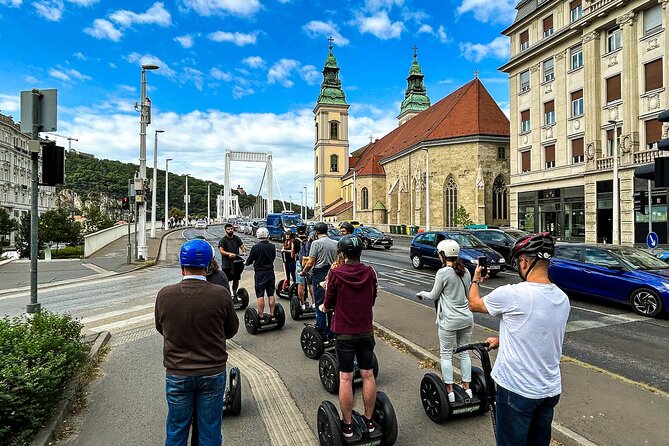
You meet at Haris köz 2, 1052 Hungary, and the tour ends back at the same point. It’s a good setup if you don’t want to figure out a second drop-off location after your ride.
Before you head out, you’ll have training time and you’ll be given a helmet and a personal Segway. This matters more than it sounds. When guides emphasize safety early, you tend to ride smoother, stop more comfortably, and enjoy the viewpoints instead of worrying about balance.
In the feedback you can see a pattern: some groups were praised for taking special care with riders who were a little nervous. One guide, Akmed, was specifically praised for extra reassurance with a younger rider by staying close and helping them feel secure. Another, Hafa, was praised for tips that helped people get confident quickly and for keeping safety as the top priority.
Erzsébet Bridge: the Danube crossing that links Buda and Pest
Your ride begins at Erzsébet Bridge, a suspension bridge completed in 1964. Even if you’ve seen it from photos, being up close gives you scale. The bridge becomes a natural “how Budapest works” lesson: Buda on one side, Pest on the other, with the Danube acting like the divider and the connector at the same time.
Expect some time here to look, take photos, and let your guide explain the bridge’s role in the city’s layout. Admission isn’t required for this stop, so you’re free to focus on the views and the story.
The main drawback at any bridge stop is simple: it can be windy. If you’re planning to take photos, bring the right clothing, keep a grip on your phone, and don’t fight the gusts.
Szent Gellért Monument: monk statue, hill views, and river air
Next comes the Szent Gellert Monument—a colonnaded structure on a hill with river views and an imposing statue of an 11th-century monk. This is where Budapest starts feeling dramatic in a very real way. A higher vantage point plus the Danube below makes everything look more connected.
Your guide gives context as you pause. You’ll likely spend around 10 minutes here, which is short enough to keep the ride moving but long enough to take in the view. Admission isn’t required, so you’re not stuck waiting for tickets.
Keep in mind that hills mean temperature changes. If it’s cool in the city center, it can feel cooler at the hilltop viewpoints. Layering helps.
Queen Elizabeth statue: a quick landmark moment
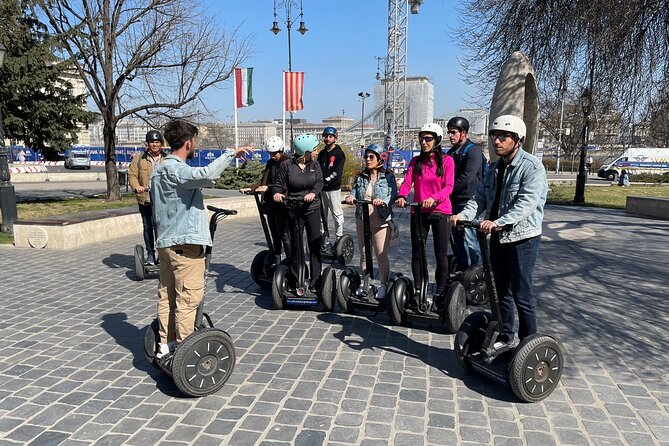
You then stop for a Statue of Queen Elizabeth for about 5 minutes. This is the kind of stop that works best when your guide gives quick context, because five minutes is just enough for a photo and a basic storyline.
If you like your tours light and efficient, this kind of brief landmark stop is ideal. If you want long explanations at every single monument, you might wish the pacing was slower.



Semmelweis Museum area: architecture you can spot even without going inside
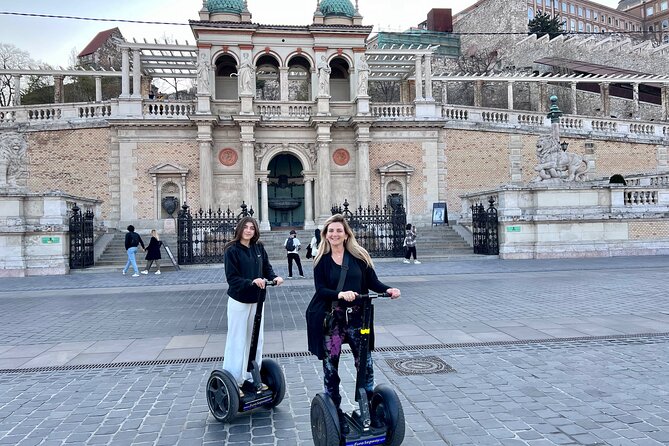
After the monument stops, you pass by the Semmelweis Museum, described as a renovated 19th-century Neo-Renaissance complex with exhibition halls, theaters, gardens, and restaurants. Even when you don’t enter, the building style is noticeable. It’s one of those moments where you can see how “Budapest” isn’t only about castle walls and churches.
Because entrance isn’t included here (and no admission info is listed for this stop), you’re really using this time for outside views, quick photos, and a bit of narrative from your guide.
Clark Ádám Square and the Chain Bridge connection
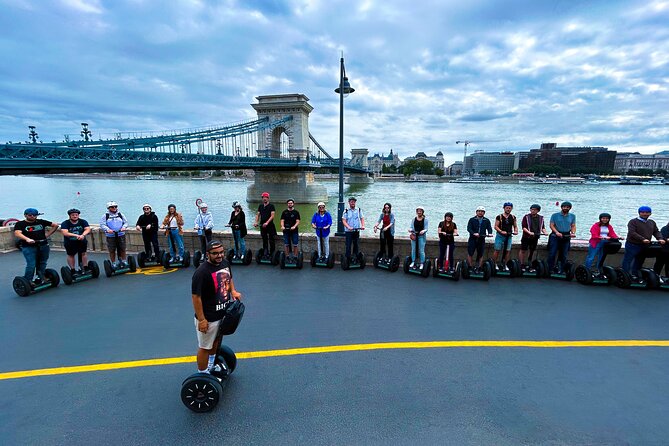
Then you roll into Clark Ádám Square (Clark Ádám ter), in front of the famous Chain Bridge. The square is named after the British architect who designed the bridge. This is a great moment to connect engineering and scenery: you’re not just looking at a historic crossing, you’re seeing how it anchors the wider city view.
You’ll likely get about 10 minutes here. Admission isn’t required, so you’re again free to focus on composition and perspective rather than ticket lines. If the light is right, the bridge and river make for some of the easiest photos from the whole day.
Matthias Church area: where the views start doing the talking
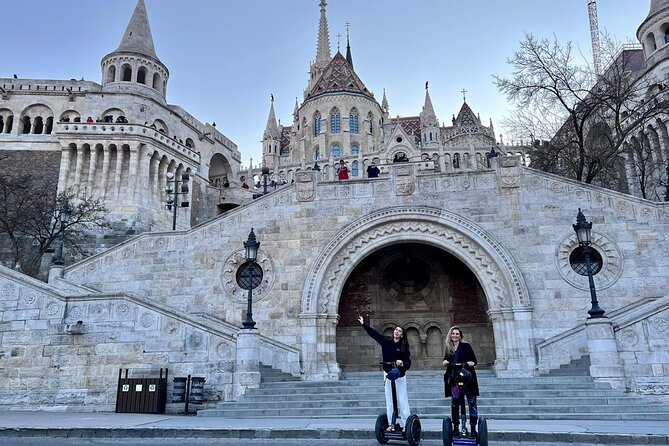
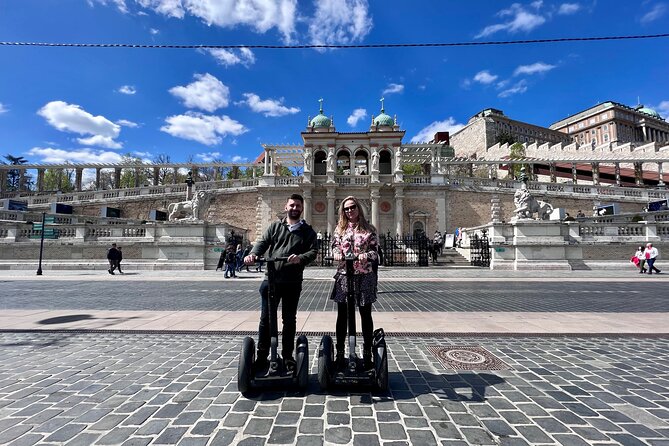
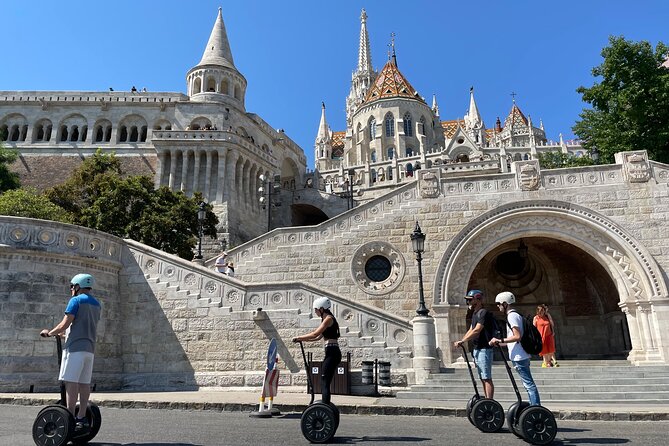
The heart of the castle-area portion is Matthias Church. It’s described as a 13th-century church named for King Matthias, who married here. There’s also an ecclesiastical art museum, which is part of why this area is such a magnet for visitors who love old-world buildings.
You’ll spend about 25 minutes here, which is a meaningful window for a short look around and photos from the surrounding area. Entrance fees aren’t included, and Matthias Church has an extra $5.00 per person listed for access.
This is also where the tour leans into one of Budapest’s best payoffs: views. The tour description specifically points to magnificent looks over the city, the river, and the Parliament. That’s the kind of payoff you can’t always replicate on a quick walk.
The Frigyes Schulek note you’ll hear along the way
As you move through the castle zone area, you’re also given an architectural connection: Halaszbastya’s architect Frigyes Schulek is also associated with restoration and redesign work on the Church of Our Lady, known as the Church of St. Matthias. Even if you don’t remember every detail, this kind of connection helps you read Budapest like a single story instead of separate sites.
What makes the tour feel worth it: photos, video, and guide pacing
A lot of short city tours forget one key thing: you want souvenirs without stopping your whole flow. Here, photo and video recording is included. That’s practical value for two reasons. First, it reduces the stress of trying to manage a phone while riding and stopping. Second, it gives you usable results instead of blurry “hope it worked” shots.
Guide style matters, too. In the feedback, guides were praised for being patient and clear. Alex was highlighted for excellent, informative guidance and for helping a first-time rider feel safe. Ahmed was praised not only for ride guidance but also for recommendations around Budapest’s social side and for helpful tips after the tour. Sam and Alex were noted for patience with a larger group dynamic on a hen do, which signals that the guides can handle different energy levels without losing control.
You’ll still want to listen and follow directions, but the point is: you should spend your time seeing Budapest, not trying to figure out how to ride around Budapest.
Price and value: what $47.16 really buys you
At $47.16 per person, the tour is built around a focused time block: about 1 hour 40 minutes to 2 hours. That price includes:
- your personal Segway
- helmets
- training time
- the tour leader
- photo and video recording
It does not include:
- Food and drinks
- Entrance fee for Buda Castle ($5.00 per person)
- Entrance fee for Matthias Church ($5.00 per person)
Here’s the value math that helps you decide. You’re paying for equipment, safety support, and guided movement through a part of the city that’s hard to cover quickly on foot. If you were to do this with separate guides and multiple transports, the time cost would add up fast. The main “extra” is simply the entrance you choose to pay for.
Also, this tour is usually booked ahead—around 23 days in advance on average. That’s not a guarantee, but it’s a good sign that dates can sell out when the weather looks good.
Timing and comfort: what to wear and when to expect the best ride
This experience requires good weather. That’s not small talk; wind, rain, and cold can change how enjoyable a Segway ride feels. The provider notes you’ll be offered a different date or a full refund if it’s canceled due to poor weather.
Plan around the ride being outdoors for much of the time. Wear comfortable shoes and layers. If you’re visiting in shoulder season, you’ll feel the temperature shift when you’re on bridges and hill viewpoints.
If you’re traveling with mixed comfort levels, this setup can work well. Some groups included teens, and the guide was praised for helping the younger rider feel secure. If you’ve got someone who worries easily, the earlier training and patient pacing are exactly what you want.
Who should book this Budapest Segway Castle Area tour
Book it if you want:
- a fast, fun way to get Buda’s big highlights in one go
- a guided route that covers bridge landmarks and the Matthias Church viewpoint zone
- training and safety support so you don’t feel thrown onto a machine
- a private group feel without the rigid mood of a large tour
Consider another option if:
- you want long museum time and deep, slow history at every site
- you hate paying extra for entrances once you’re already in the area
- weather is unpredictable and you can’t be flexible with dates
Should you book it: my practical take
If your goal is to get a strong first look at Buda—bridge, monuments, and the Church viewpoints—this tour is a very efficient choice. The combination of training, helmets, and short stop times means you’re more likely to enjoy the ride instead of just enduring it.
If you’re the type who wants to linger inside churches and treat entrances like a priority, budget for Matthias Church (and possibly Buda Castle). And if weather might be rough, make sure your schedule can bend.
Overall, I think this is a good value when you want motion plus guidance: you’ll leave with photos, views, and a clearer sense of where everything sits in the Castle District.
FAQ
FAQ
How long is the Budapest Segway tour to the Castle Area?
It runs about 1 hour 40 minutes to 2 hours.
How much does it cost?
The price is $47.16 per person.
Is the tour private?
Yes. It’s a private tour/activity, with only your group participating.
What language is the tour offered in?
The tour is offered in English.
What’s included in the price?
You get a personal Segway, helmets, training time, a tour leader, and photo and video recording.
What entrance fees should I expect to pay?
Buda Castle and Matthias Church each list an $5.00 per person entrance fee, which is not included.
Where do I meet for the tour?
The meeting point is Budapest, Haris köz 2, 1052 Hungary.
Does the tour end at the same place?
Yes. It ends back at the meeting point.
What happens if the weather is bad?
The experience requires good weather. If it’s canceled due to poor weather, you’ll be offered a different date or a full refund.
Can most people participate?
The tour notes that most travelers can participate.