REVIEW · BUDAPEST
Budapest: Jewish District Private Walking Tour
Book on GetYourGuide →Operated by Travel Van Kft. · Bookable on GetYourGuide
Budapest’s Jewish Quarter rewards slow attention. In just three hours, you’ll connect the story of Jewish life here to what you can still see on the streets, with stops like the Dohány Street Synagogue and a proper taste of the ruin-bar scene at Szimpla Kert. The best part is that this is a private group format with an English live guide who can answer your questions on the spot, but do note that synagogue interiors are optional and entrance tickets are not included.
You’ll also get real variation in the way the tour is taught, and you can see it in the guide names people mention most: Eszter, Emi, Andras (Andy!), and Gary. One practical consideration: synagogues have set closures (Friday afternoons, Saturdays, and Jewish high holidays), so you’ll want your timing to match the days you’re in town.
In This Review
- Key Points You’ll Care About Before You Go
- Why This Jewish Quarter Walk Works in Only Three Hours
- Rumbach Street Synagogue: A Restored Landmark You’ll Notice Immediately
- Dohány Street Synagogue and the Hungarian Jewish Museum: Where Scale Meets Memory
- Raoul Wallenberg Memorial Garden and the Tree of Life: A Quiet Pause With Meaning
- Gozsdu Court: Where the Jewish Quarter Feels Like Today
- Kazinczy Street Orthodox Synagogue: Art Nouveau Meets a Place of Worship
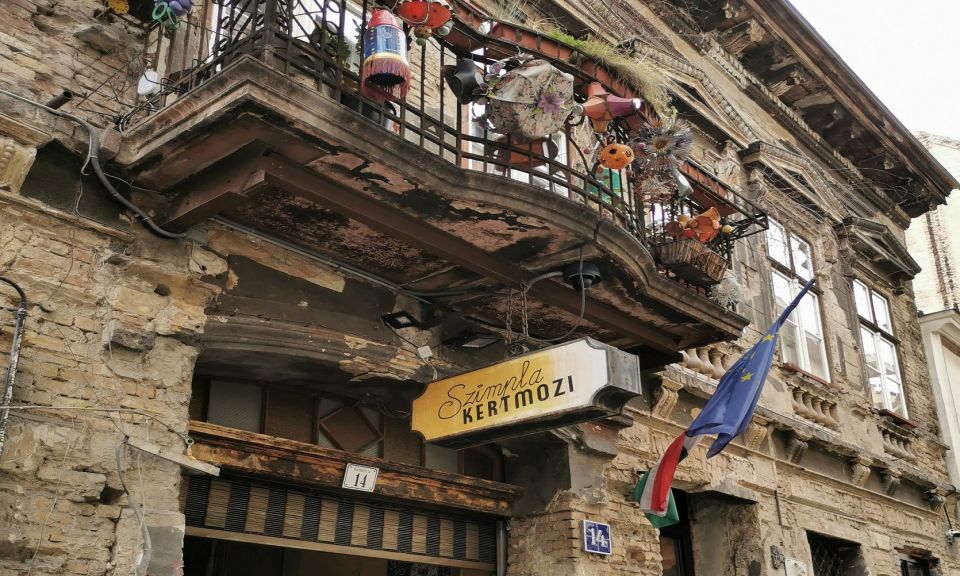
- Szimpla Kert Ruin Bar: The Bohemian Side Without Losing the Plot
- Street Art and Murals: Why They Matter in This Neighborhood
- Price and Value: Is $229 Per Group Up to 20 Worth It?
- Who This Tour Suits Best (and Who Might Want Something Different)
- Small Rules That Can Affect Your Day
- Should You Book This Budapest Jewish District Private Walking Tour?
- FAQ
- What’s the duration of the Budapest Jewish District private walking tour?
- Is pickup included?
- Are entrance tickets included for the synagogues and museum stops?
- Does the tour include a skip-the-ticket-line benefit?
- What language is the tour guide?
- When are the synagogues closed during this tour schedule?
- Are luggage and sleeveless shirts allowed?
Key Points You’ll Care About Before You Go
Synagogues are the backbone: Rumbach Street, Dohány Street, and the Kazinczy Street Orthodox Synagogue, with interior visits optional
A focused 3-hour route: enough time for the major sights without turning it into an all-day marathon
Street art and murals are built in: you’re not just learning names and dates; you’ll see modern Budapest layered over the neighborhood
A real local hangout stop: Szimpla Kert (the classic ruin bar) plus the Gozsdu Court food-and-drink area
You can tailor questions: private format means your guide can slow down where you want more detail
Why This Jewish Quarter Walk Works in Only Three Hours
This tour is designed for people who want substance without wandering for half a day. You’ll cover the Jewish Quarter’s key physical anchors—synagogues, museum grounds, memorial space, and the neighborhood hangouts—while still leaving room for photos and quick questions.
What I like most is the pacing. Instead of treating every stop like a checklist, the guide ties each place to what Jewish life has looked like in different eras—past and present—using what’s still visible right there on the streets. You should also know you’re walking through an active neighborhood, not a museum set, which keeps it grounded and human.
The one thing to plan around is flexibility with synagogue interiors. You’ll have the chance to visit inside, but you must handle entrance tickets yourself, and closures can affect which buildings are available on your day.
You can also read our reviews of more walking tours in Budapest



Rumbach Street Synagogue: A Restored Landmark You’ll Notice Immediately
Your walk begins at the synagogue on Rumbach Street. This building has been recently restored, and the impact is visual: you get the sense that you’re looking at something cared for and brought back with attention, not just an old exterior left to weather.
Your guide walks you through the building’s history and the details that matter, so it’s not just a quick photo stop. You’ll learn how to read the place—what you’re seeing on the structure and why it connects to the story of the community.
Practical note: there’s a tour-style flow here, so if you’re someone who likes to linger long at one landmark, you’ll probably want to ask your guide to spend extra time while you’re in that moment. Private format helps with that.
Dohány Street Synagogue and the Hungarian Jewish Museum: Where Scale Meets Memory
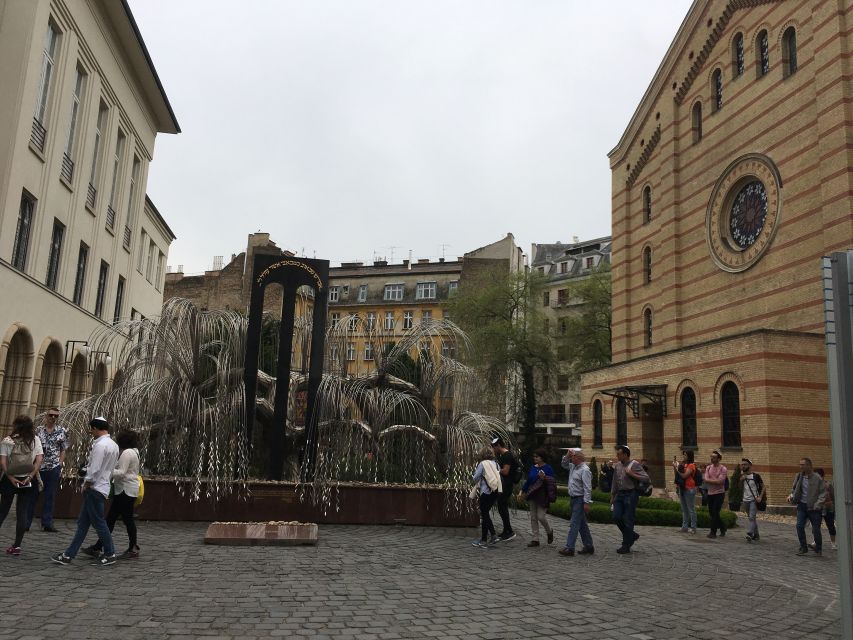
Next comes Dohány Street Synagogue, described as the biggest synagogue in all of Europe. Even if you don’t know a single fact going in, you’ll feel the scale from outside, and your guide helps you connect that size to community needs and historical context.
From there, you continue to the Hungarian Jewish Museum with your guide. The value here is that you’re not only seeing religious architecture—you’re getting the added layer of interpretation. A museum stop helps translate what you saw on the street into a clearer timeline and a deeper sense of how the neighborhood connects to the broader story.
Also, the tour includes skip-the-ticket-line for what’s available under the tour experience. That matters because synagogue and museum entry can be slow when lines form, and your time is only three hours.
Raoul Wallenberg Memorial Garden and the Tree of Life: A Quiet Pause With Meaning
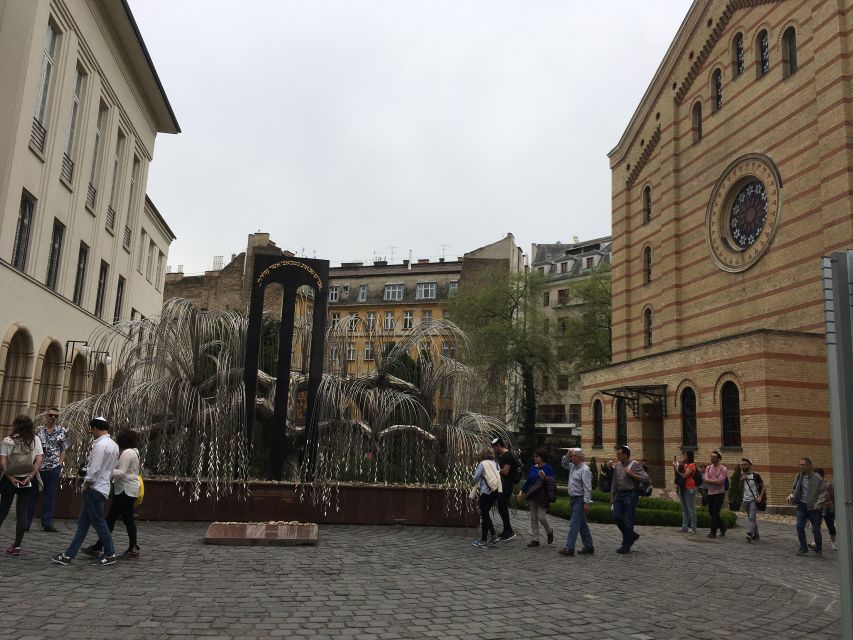
After the synagogue-and-museum segment, the tour shifts into reflection at the Raoul Wallenberg Memorial Garden. This is one of those stops where the guide’s explanation can completely change how you experience the space.
You’ll see the famous Tree of Life monument, and it’s the kind of detail that’s easier to remember later because it’s visual and symbolic. If you’re traveling with teens or adults who like photographs, this is also a strong moment to frame a shot—without feeling like you’re forcing it.
What’s good for you here is pacing. You’ve just taken in a major religious landmark and a museum component, and the garden gives your brain a break. It makes the rest of the walk more memorable instead of rushing through everything.
Gozsdu Court: Where the Jewish Quarter Feels Like Today
Then comes the more everyday side of the neighborhood at Gozsdu Court. Your guide takes you to this food and beverage district, and the point isn’t just where to eat—it’s how the area lives now.
Think of it as a bridge stop. One part of the tour focuses on memory, architecture, and community history. The Gozsdu Court segment helps you see how people spend time here today, which makes the earlier stops feel less distant.
You should expect this portion to be about vibe and location, not a formal meal. Food and drinks aren’t included, so if you want to snack, you’ll decide what fits your taste and budget on the day.
You can also read our reviews of more private tours in Budapest






Kazinczy Street Orthodox Synagogue: Art Nouveau Meets a Place of Worship
The final synagogue stop is the Kazinczy Street Orthodox Synagogue. This is the one that rewards your eye—your guide highlights its Art Nouveau architecture, and you can also explore inside if interior visits are available during your time slot and day.
The practical benefit of including this stop last is that your attention is already “on.” Earlier you learned how to read synagogues as historical anchors. Here, you can look for architectural clues with fresh context—how style, design, and religious function intersect.
If you care about design, this is also a great place to slow down and notice the details your guide points out. If you’re not a “details person,” you’ll still get something out of it because the guide connects the building’s look to what makes it distinct within the neighborhood.
Szimpla Kert Ruin Bar: The Bohemian Side Without Losing the Plot
Now the tour turns to the bohemian side of the Jewish Quarter at Szimpla Kert, also known by the so-called ruin bar idea. This is one of the original ruin bars, and your guide uses it as a lens for how the neighborhood reinvented itself while keeping its identity.
You’ll get the chance to try a drink at Szimpla Garden. Food and drinks aren’t included, so treat this as a flexible option: order something small, take a quick break, and then keep walking with the story in your head.
What makes this stop work is that it doesn’t feel like a random bar detour. You’re still in the Jewish Quarter, still learning the layers of how the area changed, and still seeing how people gather here now.
Street Art and Murals: Why They Matter in This Neighborhood
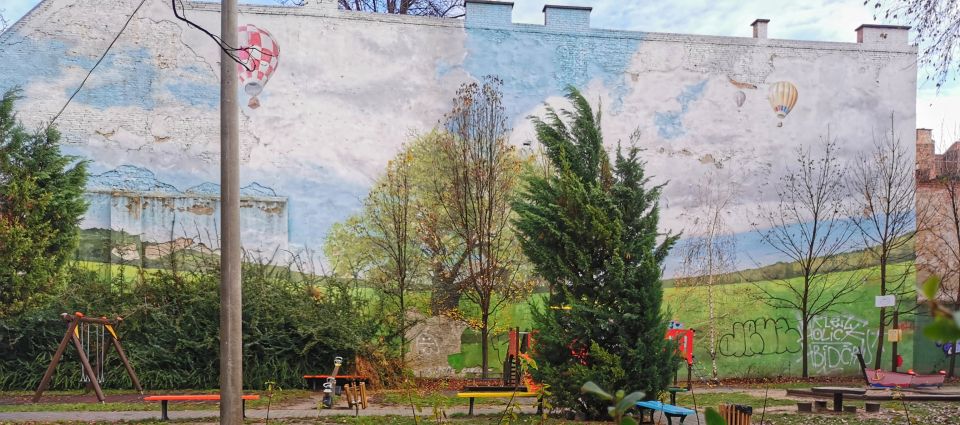
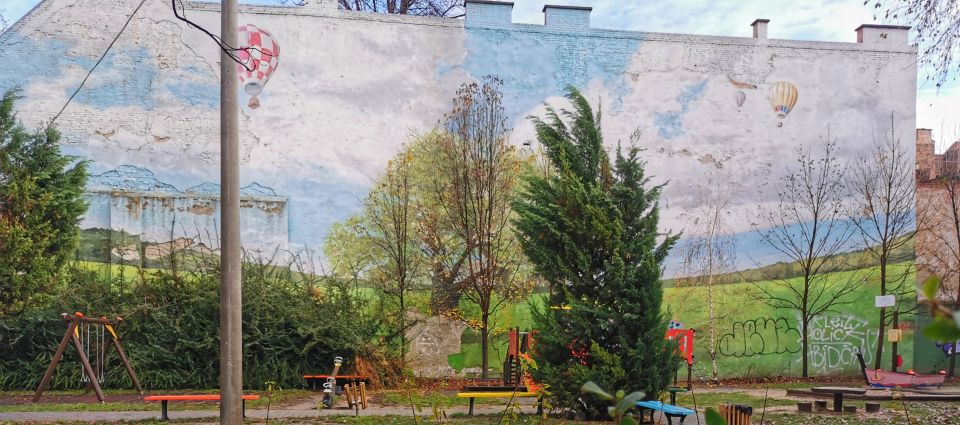
Throughout the walk, you’ll see famous murals and underground street art in the Jewish Quarter. This isn’t just color for photos. In a neighborhood like this, street art can act like a modern layer of storytelling—proof that the streets are being used, talked about, and reinterpreted in real time.
For practical travel reasons, these art stops also make the walk easier. Between heavier historical stops, street art gives you visual variety, and it helps you spot interesting spots even if you’re not trying to do a “heritage circuit.”
If you plan to photograph, bring a fully charged phone or camera. Lighting can change quickly across narrow streets, and you’ll want to capture details while you’re there instead of waiting for a perfect moment.
Price and Value: Is $229 Per Group Up to 20 Worth It?
The price is $229 per group up to 20 for a three-hour private tour. That pricing structure is the key: you’re paying for private guiding rather than per person.
So the value depends on your group size. If you’re traveling as a couple or a small group, you may feel the cost more. If you’re a family group or a handful of friends, it often starts to feel reasonable because you’re splitting one guided experience across several people.
Also, the tour includes pickup from your hotel or wherever you request in advance, and you get an English live guide. Those are real value items because you don’t have to navigate meeting points or coordinate the route yourself in a walkable but lively district.
One more consideration: since entrance tickets aren’t included and interior visits are optional, your total spend may be a bit higher than the base price depending on what you choose to enter.
Who This Tour Suits Best (and Who Might Want Something Different)
This tour is a great match if you want a guided orientation that includes both the major historic anchors and modern neighborhood texture. It’s especially good for you if:
- You like asking questions and getting direct answers as you walk
- You want synagogues plus the surrounding context, not just one building
- You’re interested in how the neighborhood looks and feels today, not only what it used to be
It may not be the best fit if you want a long, slow, museum-heavy day. At three hours, you’ll cover a lot of ground, but it’s not built for deep independent wandering afterward at every stop. If that’s your style, you might pair this with extra time on your own later.
Small Rules That Can Affect Your Day
This is practical travel advice that can save you hassle at the door. The tour doesn’t allow luggage or large bags, and sleeveless shirts are not allowed.
Also, synagogue closures matter. Synagogues are closed on Friday afternoons, Saturdays, and on Jewish high holidays. If your travel dates land on those windows, you’ll want to coordinate with the tour provider so your route still makes sense.
Should You Book This Budapest Jewish District Private Walking Tour?
I think you should book this tour if you want a guided Jewish Quarter experience that connects architecture, memory, and modern street life—without wasting hours. The strongest selling points are the synagogue-focused route, the inclusion of the Raoul Wallenberg Memorial Garden and Tree of Life monument, and the balance of heavy meaning with street art and a ruin-bar stop.
If you’re the type who likes clarity—what you’re looking at and why it matters—this format with an English live guide is a smart way to get your bearings fast. Just remember to budget for entrance tickets if you want interior visits, and plan your dates to avoid synagogue closure days.
FAQ
What’s the duration of the Budapest Jewish District private walking tour?
The tour lasts 3 hours.
Is pickup included?
Yes. The guide meets you at your hotel or wherever you please.
Are entrance tickets included for the synagogues and museum stops?
No. Entrance tickets are not included, and interior visits of the synagogues are optional.
Does the tour include a skip-the-ticket-line benefit?
Yes, it includes skip-the-ticket-line.
What language is the tour guide?
The tour is in English.
When are the synagogues closed during this tour schedule?
Synagogues are closed on Friday afternoons, Saturdays, and on Jewish high holidays.
Are luggage and sleeveless shirts allowed?
No. Luggage or large bags aren’t allowed, and sleeveless shirts aren’t allowed.