REVIEW · BUDAPEST
Budapest: Rent a Wide-Wheel E-Scooter
Book on GetYourGuide →Operated by Excelia Tours Kft · Bookable on GetYourGuide
Budapest on wheels feels like skipping lines. With a MonsterRoller e-scooter, you can cover serious ground under your own timing—faster than walking, flexible enough for quick coffee stops, and easy enough to learn in minutes. I love how quickly you get comfortable riding, and I also like the practical included gear (helmets and locks). One catch: if you push too far from the core loop, the battery range can feel tight on the way back.
This is a self-guided rental that’s set up so you can work your route around your mood—bike lanes included thanks to the scooter being treated as an e-bike. Your “day” can be a tight 1–hour highlights run or a longer 3-hour sweep reaching places like Gellért Hill, Castle Hill, Margaret Island, and both river sides.
In This Review
- Key takeaways before you rent
- Meeting at Bécsi u. 8 and getting your MonsterRoller set
- Riding in Budapest traffic without turning it into stress
- The money question: is $30 worth it here?
- A 1–3 hour route that actually makes sense
- Parliament area: where the day starts with big views
- Castle Hill and the story behind the terraces
- Gellért Hill: panoramic payoff (without a long climb day)
- Margaret Island: the green reset
- St. Stephen’s Basilica: quick photo energy in the center
- Heroes’ Square and Andrássy Avenue: the grand boulevard feeling
- Chain Bridge: river crossing, city scale
- Fisherman’s Bastion: viewpoint photos that feel like a finale
- Returning to Bécsi u. 8
- What’s included (and what you’ll still need)
- How to plan your day for the best ride length
- Service and ride quality: what the high ratings tend to mean
- Who this suits (and who should skip it)
- Should you book the MonsterRoller e-scooter in Budapest?
- FAQ
- How long is the MonsterRoller e-scooter rental?
- Where do I meet the scooter?
- What’s included with the rental?
- Do I need a driving license?
- Can I ride on bike lanes?
- What should I bring?
- Is the e-scooter suitable for everyone?
Key takeaways before you rent
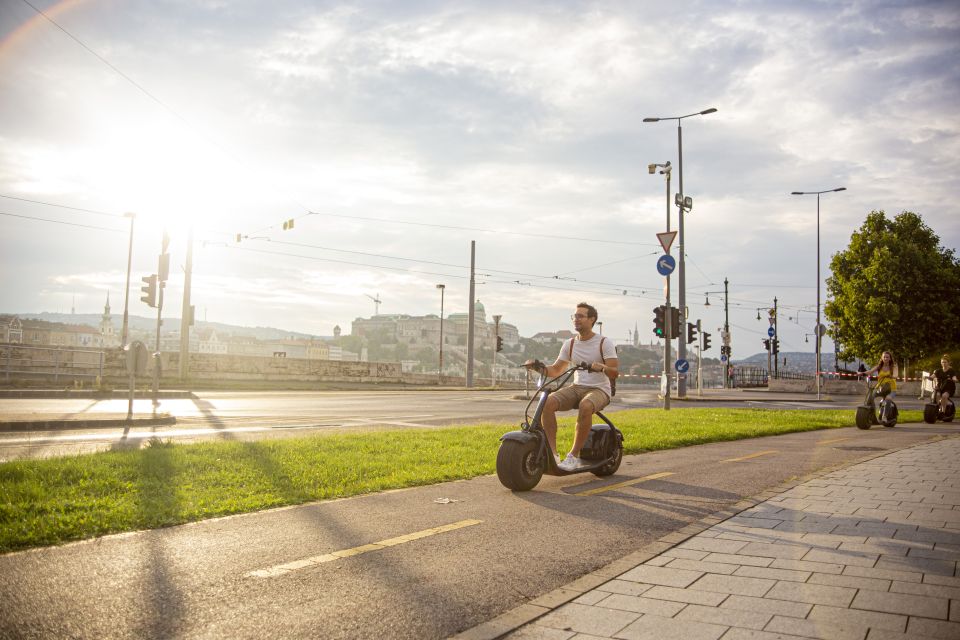
- Learn-fast ride style: a few minutes of practice is usually enough to get going.
- Panoramic photo route: Parliament, Gellért Hill, St. Stephen’s Basilica, and Fisherman’s Bastion are built into the classic loop.
- Bike-lane friendly: the scooter qualifies as an e-bike, so you can use bike lanes.
- Stops are flexible: you can pause for pictures, snacks, and sightseeing without syncing to a group.
- Range is the real limit: plan around a return to your starting point, especially if you stray farther out.
- Safety basics included: helmets, a lock, and gloves/rain protection when needed.
Meeting at Bécsi u. 8 and getting your MonsterRoller set
The ride starts at Bécsi u. 8, close enough to be easy to reach before you commit to wheels. The shop is about a 2-minute walk from Deák Ferenc tér (metro lines M1, M2, M3), and the easiest cue is finding scooters outside with the E-Magine sign.
This kind of rental works best when you treat the first 10 minutes like a warm-up, not the start of your sightseeing clock. Before you head toward the major landmarks, take a short loop on safer streets and get a feel for turning and braking. Once you’re smooth, the fun part clicks in fast: you’ll feel like you’re “surfing” the city instead of squeezing it in between buses and tram stops.
Also, bring your passport or ID—that’s required. No bare feet, and keep alcohol and drugs off the scooter. You’ll want to be able to concentrate, not negotiate.
You can also read our reviews of more tours and experiences in Budapest



Riding in Budapest traffic without turning it into stress
Budapest is not a car-free theme park. Even if you’re mostly on bike lanes, you’re still sharing space with real traffic patterns. The good news is that MonsterRollers are built for city riding, and you can travel faster than walking or public transport once you’re settled.
Here’s the practical way to keep it smooth:
- Stay predictable. Slow down before intersections and give yourself extra time for turns.
- Keep your hands and eyes busy: use the lane you’re in, don’t “last-second” swerve around obstacles.
- When you want a photo, plan a safe stop first. It’s better to park correctly than to freeze in the middle of a bike flow.
One more tip that matters: scooters can feel tricky at the start, especially when you’re mixing with traffic noise and close passes. After a few minutes, things often get much easier. If you’re nervous, start with the shorter route and save the longer, hillier stretches for later if your battery and confidence are both good.
The money question: is $30 worth it here?

At $30 per person for 1–3 hours, this is the kind of activity where value depends on how you plan your “time math.”
If you’re sightseeing in a compact but heavy-traffic city, an e-scooter can be a very efficient tool:
- You gain distance without burning energy like a long walking day.
- You can stop exactly where you want—especially at viewpoints—without the “wait for the next tram” rhythm.
- You get to combine river views and hills in the same outing.
But it’s not magic. One downside worth factoring in: the scooter isn’t meant for an all-city marathon. If you try to run a route far beyond the core sights, you might run into battery limitations before you finish the loop. For me, the sweet spot is using the scooter as a fast connection between the big photo stops rather than treating it like a unlimited “go wherever” pass.
A 1–3 hour route that actually makes sense
You can flex your timing, but this order keeps the day logical—starting from the center, hitting the river corridor and viewpoint clusters, then returning.
Parliament area: where the day starts with big views
You’ll ride to the Hungarian Parliament Building for a photo stop. This is one of those landmarks where you don’t just take one picture—you’ll want a couple angles. If the area is busy, just slow down and choose a safe spot to frame it, then move on. The scooter shines here because you’re not stuck in a long walk with a dead leg before the first view.
Possible drawback: Parliament-area traffic and pedestrians can mean slower riding in short bursts. Think of it as a “pause zone,” not a cruising zone.






Castle Hill and the story behind the terraces
From there, head toward Castle Hill. This is one of Budapest’s signature zones: stone streets, viewpoints, and the kind of “step up and look around” energy that pairs well with a scooter. Take a short ride through the hill area, then park and wander briefly when you hit stairs or spots where wheels aren’t practical.
If you care about scenery, Castle Hill is where the whole city vibe turns from street-level to “look at everything” mode. The scooter gets you into the area fast, and walking short sections helps you actually enjoy it.
Practical note: the more time you spend hopping between viewpoints, the more you should watch your battery. If you have a full 3 hours, great. If you only booked 1–2 hours, keep it tighter.
Gellért Hill: panoramic payoff (without a long climb day)
Next comes Gellért Hill for sightseeing. This is a top-tier stop because the viewpoint payoff usually feels worth the effort. The scooter helps you reach the viewpoint areas with less strain than a purely walking day, so you can spend your energy on looking, not grinding up the route.
When you stop for photos, take 60 seconds to adjust where you stand. Viewpoints often have multiple “right” spots depending on the light and how busy the area is. A little repositioning beats rushing.
Margaret Island: the green reset
Then it’s Margaret Island, where you get free time plus scooter riding. This is the part of the route that turns the city trip into a break. Gardens, fountains, and even medieval ruins give you variety without the pressure of constant “go-go-go” movement.
The island is also where you can slow down and practice riding in a more relaxed setting. If your first minutes earlier felt chaotic, this stop can help you feel confident again.
One key planning detail: if your ride is already leaning toward the longer end, this is where you should watch your return time. It’s tempting to linger, and lingering can eat battery.
St. Stephen’s Basilica: quick photo energy in the center
You’ll swing back toward the city core for a St. Stephen’s Basilica photo stop. Think of this as a “brief, satisfying hit” rather than an all-day church visit. The scooter gets you there efficiently and helps you connect different districts without losing your momentum to transit waits.
If you want the classic basilica photos, slow down near a good viewpoint spot, snap what you need, and keep going. Don’t let one photo stop turn into a long delay if you’re riding on a time budget.
Heroes’ Square and Andrássy Avenue: the grand boulevard feeling
Next you reach Heroes’ Square, with a visit and continued self-guided touring. Along the way is Andrássy Avenue, a World Heritage-listed stretch that feels wide, formal, and very Budapest. It’s also one of the best corridors for the scooter style of travel: you get movement without nonstop stop-start.
This part of the route is where you’ll appreciate not having to coordinate with others. If you want to linger 5 minutes, you can. If you want to cruise on, you can.
Chain Bridge: river crossing, city scale
Then it’s Chain Bridge—visit and sightseeing with scooter riding along the way. This is a natural centerpiece. Even if you’ve seen river-crossing photos before, being there changes the scale. The scooter helps you take in the bridge corridor without losing time to getting from one side to the other.
A small reality check: bridges and major junctions can be crowded. Ride slower, expect pedestrians, and take fewer risks. The goal is enjoyment, not speed.
Fisherman’s Bastion: viewpoint photos that feel like a finale
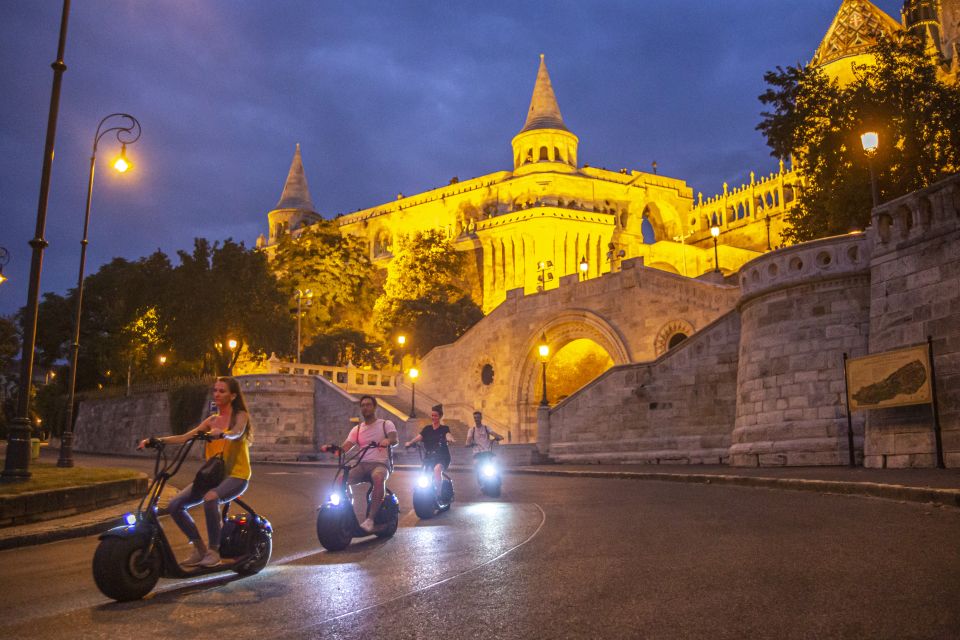
Finally, Fisherman’s Bastion for photo stop and sightseeing. This is one of those places where your pictures will look better because you’re above the city angle rather than at street level. It’s also a perfect place to wrap up your loop because the viewpoint feeling lands well as a “closing scene.”
If you’re riding only 1–2 hours total, I’d treat Fisherman’s Bastion as your last big stop. If you’re doing the full 3 hours, you can afford a bit more wandering in between.
Returning to Bécsi u. 8
You finish back at Bécsi u. 8. On the way back, make your decisions based on time and battery, not enthusiasm. One real lesson from this kind of rental: the easiest time to manage range is early, not late. If you feel like you’re pushing the distance, cut back on detours and aim for the return loop.
What’s included (and what you’ll still need)
This rental is pleasantly practical because it includes the gear that usually makes scooter days safer and more comfortable:
- Helmets
- Locks
- Gloves in cold weather
- Rain poncho depending on the weather
What’s not included:
- Tour guide
- Food and drinks
- Personal travel insurance
That last point matters. The scooter is straightforward, but it’s still an activity with safety requirements. If you don’t already have travel insurance that covers rental activities, you’ll want to sort that out separately.
How to plan your day for the best ride length
The experience is designed for 1–3 hours, and that range is not just “time options”—it changes how you plan your route.
A smart approach:
- If you only have 1 hour, focus on a tight loop with fewer “hill and island” detours.
- If you have 2 hours, you can usually do multiple major photo stops, but keep the wandering controlled.
- If you have 3 hours, you’ll likely feel comfortable adding hill viewpoints and island time.
One more caution I’d take seriously: if you get too far from the core loop, you may find the battery becomes a limiting factor before your return. Keep your plan flexible. Build in time to get back, not just time to go out.
Service and ride quality: what the high ratings tend to mean
The overall rating is 4.6 with 105 reviews, which tells me the setup works for a lot of people. There’s also a strong score on transport quality—about 87% gave a perfect score—so you’re not buying a mystery machine. In plain terms: the scooter is usually the easiest part of the day; your route choices are what will make or break the experience.
Staff service also seems to matter. Friendly help makes a big difference when you’re learning traffic rhythms and figuring out the right places to stop and park.
Who this suits (and who should skip it)
This is a great fit if you:
- want self-paced sightseeing without booking a guided tour
- enjoy switching between viewpoints and quick walks
- can follow basic riding rules and stay alert in traffic
It’s not suitable for:
- pregnant women
- people with mobility impairments
You also need to be comfortable riding a scooter and keeping your balance while stopping often for photos.
Should you book the MonsterRoller e-scooter in Budapest?
I’d book it if you want an efficient, fun way to string together Parliament, Castle Hill viewpoints, Gellért Hill, Margaret Island, and the river icons like Chain Bridge and Fisherman’s Bastion—without spending your day in transit lines or in knee-wobbling uphill walks.
I’d think twice if your plan is to roam far beyond the central sightseeing loop or if you’re hoping the scooter will replace a full-day exploration. The experience works best when you treat it like a city tool: use it to connect the best stops, then enjoy the sights up close.
If you book, do this and you’ll likely love the day: ride conservatively at first, plan your route so you’re not sprinting back at the end, and use the scooter’s biggest strength—fast access to viewpoints—for a trip that feels like you’re in charge of your own Budapest.
FAQ
How long is the MonsterRoller e-scooter rental?
The duration is 1 to 3 hours. You can check availability for specific starting times.
Where do I meet the scooter?
Meet at Bécsi u. 8. Look for scooters in front of the store and the E-Magine sign. It’s about a 2-minute walk from Deák Ferenc tér metro station (lines M1, M2, M3).
What’s included with the rental?
Included items are helmets and locks, plus gloves in cold weather and a rain poncho depending on the weather.
Do I need a driving license?
No. The rental doesn’t require a driving license.
Can I ride on bike lanes?
Yes. The scooter qualifies as an e-bike, so you can travel along bike lanes.
What should I bring?
Bring a passport or ID card.
Is the e-scooter suitable for everyone?
It’s not suitable for pregnant women or people with mobility impairments. Alcohol and drugs are not allowed, and bare feet aren’t allowed.