REVIEW · BUDAPEST
Budapest: Inner City Walking Tour in German
Book on GetYourGuide →Operated by Tourist Angel · Bookable on GetYourGuide
Budapest clicks fast when you have a local guide’s eye. This German-speaking inner-city walk moves through Pest’s landmark architecture and the dramatic stories behind it.
Two things I really liked: you get a standout view-and-stories combo at St Stephen’s Basilica, and the tour connects the big squares (Liberty Square and Kossuth Square) to real 20th-century events.
One thing to consider: it packs a lot into 2 hours, and some of the history is heavy, so it helps to be ready for Nazi occupation, Communist oppression, and the 1956 revolution.
In This Review
- Key Highlights on This German-Language Inner-City Walk
- Why This Pest Walking Tour Feels Like Budapest, Not a Checklist
- Meeting at Molnar’s Kürtöskalacs and Getting Your Bearings Fast
- Elizabeth Park to Budapest Eye: The Easy Win Start
- St Stephen’s Basilica: Dome Views and the Colonnade Effect
- Pedestrian Streets and Mr. Safe: Where the Tour Gets Human
- Liberty Square: Nazi Occupation and Communist Oppression, Explained Where You Stand
- Kossuth Square and the Hungarian Parliament: 1956 Stories in the Open Air
- Shoes on the Danube Bank: A Quiet Finish by the River
- German Guidance Makes a Real Difference (Especially When You Ask Questions)
- Price and Value: What $23 Buys in 2 Hours
- Who This Tour Suits Best
- Should You Book This German Inner-City Walk?
- FAQ
- What language is the tour offered in?
- Where do I meet the guide?
- How long is the Budapest inner-city walking tour?
- What are the main sights on the route?
- Is this tour wheelchair accessible?
- What are the booking and cancellation options?
Key Highlights on This German-Language Inner-City Walk
- St Stephen’s Basilica up close, with its monumental dome and colonnade
- Elizabeth Park and the Budapest Eye (Europe’s large Ferris wheel)
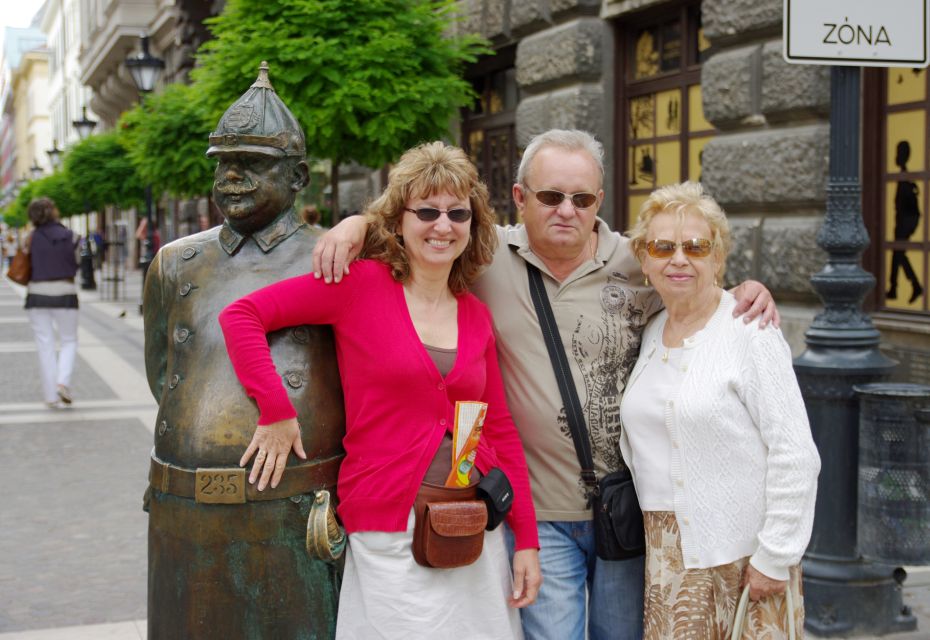
- Pedestrian-street vibes plus the playful Mr. Safe statue stop
- Liberty Square lessons on Nazi occupation and Communist oppression
- Kossuth Square and the Hungarian Parliament area, including stories tied to 1956
- A thoughtful finish at the Shoes on the Danube Bank memorial (with an optional river stroll)
Why This Pest Walking Tour Feels Like Budapest, Not a Checklist
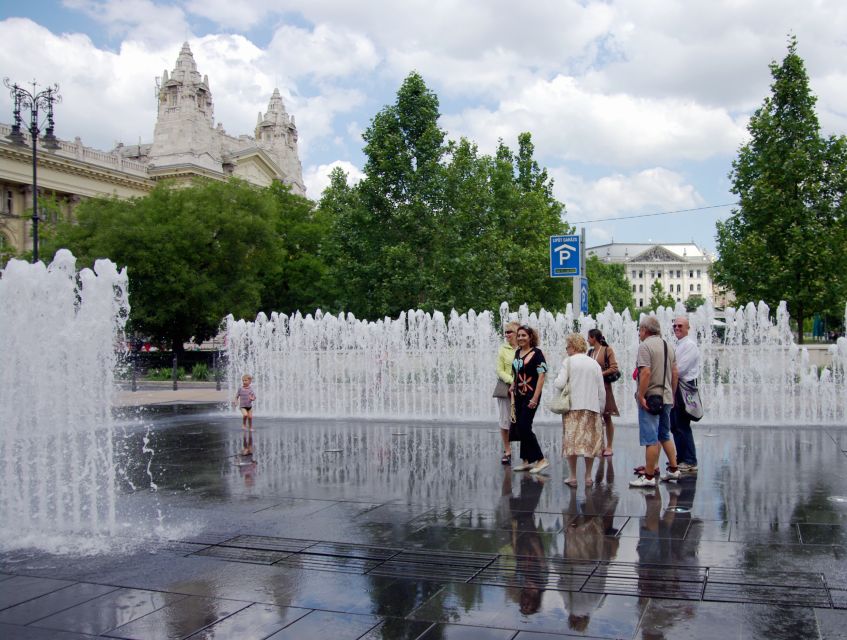
Budapest has a way of looking beautiful from every angle. The difference here is that you walk it with a German-speaking local guide who can point out what you’re seeing and why it matters. The result is less wandering and more sense-making.
I like this format because it stays practical. In two hours, you cover the key “I can’t miss that” spots on the Pest side, but you’re not stuck inside. You’re out in the city center atmosphere, between architecture, monuments, and the Danube’s pull.
The private-group setup also helps. When I’m on a smaller group tour, it’s easier to ask questions and get answers that fit how you’re thinking. Several guides associated with this tour have a warm, responsive style, including Zsóka and Uschi, who were praised for being charming, for making the information stick, and for handling questions well.
That’s also why this works for first-timers. You’ll get an overview of Buda and Pest’s development, plus Hungary’s early beginnings, without it turning into a lecture marathon.
You can also read our reviews of more walking tours in Budapest



Meeting at Molnar’s Kürtöskalacs and Getting Your Bearings Fast
Your tour starts in front of the café/pastry shop Molnar’s Kürtöskalacs. That’s a handy, easy-to-find landmark, and it means you can arrive, grab a quick snack if you want, and settle in without hunting for a mysterious meeting spot.
You’ll want comfortable shoes. This is a walking tour with multiple landmark stops, and you’re moving through pedestrian streets and around major squares. The upside is that you’re not rushing across the city with transfers. You’re staying in the inner city zone and building a mental map as you go.
One more small advantage: because the tour is wheelchair accessible, the route is designed with real-world movement in mind. It doesn’t mean it’s effortless, but it signals that the tour-planners considered how people actually get around.
Elizabeth Park to Budapest Eye: The Easy Win Start
The tour opens with a stroll through Elizabeth Park. This is a smart first move. The park area helps you settle into the city’s rhythm and gives you a smooth transition into the grand monuments later.
From there, you’ll see Budapest Eye, the largest Ferris wheel in Europe. Even if you don’t ride it, you’ll get a sense of how this part of the city balances modern landmarks with the older architectural story you’ll see as the tour continues. Think of it as your “orientation” step: it marks the waterfront/park vibe and sets up the Danube-centered setting of Budapest.
What I like here for your planning: Elizabeth Park is a good place to notice scale. Budapest loves big vistas, and this is one of the areas where that becomes obvious quickly. You’ll also learn what to look for as the guide moves from park views into the historic core.
St Stephen’s Basilica: Dome Views and the Colonnade Effect
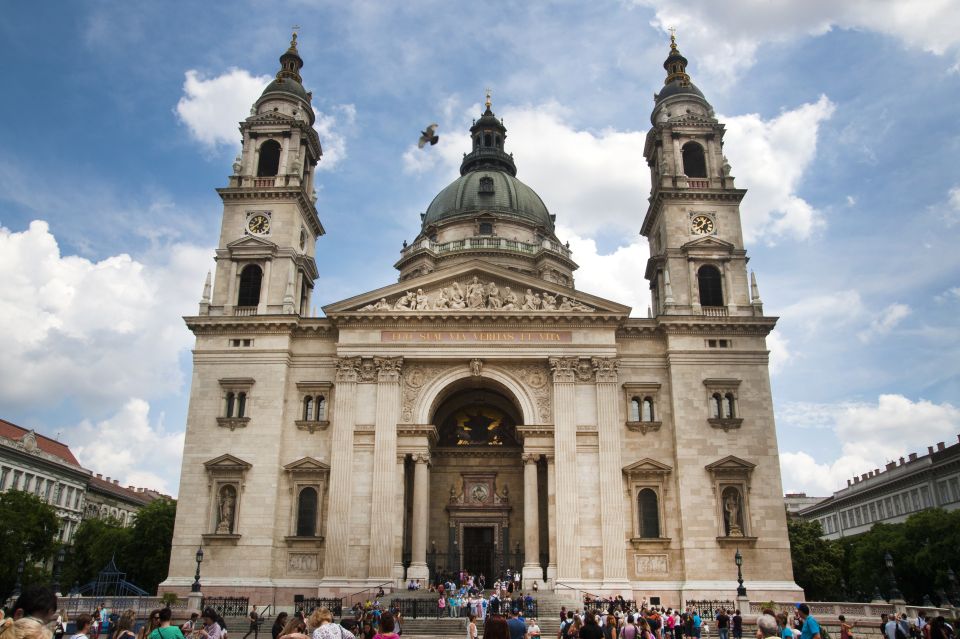
Next comes one of the clearest wow-moments in Pest: St Stephen’s Basilica. You’ll admire the monumental dome and the colonnade. That combination matters because it shows how Budapest’s religious architecture aims for both grandeur and order.
Inside and around this church area, the guide’s job is to connect what you’re seeing to Budapest’s broader story. This isn’t just “look at the building.” You’re being taught how to read it: why it feels so formal, why the dome looks the way it does, and how the Basilica fits into the city’s self-image.
If you’ve only glanced at photos online, you’ll likely be surprised by how imposing the setting feels in person. The basilica area also acts like a turning point in the tour. Before this, you’re getting oriented and noticing street life. After this, you’re moving into the big political and historical squares.
For a practical tip: spend a moment letting your eyes rest on the dome line. When you do that first, the guide’s explanations land better because you’re already “seeing the shape.”
Pedestrian Streets and Mr. Safe: Where the Tour Gets Human
After St Stephen’s Basilica, you’ll move through traditional pedestrian streets. This portion is valuable because it slows the energy down just enough to feel like you’re in real Pest, not a scripted photo route.
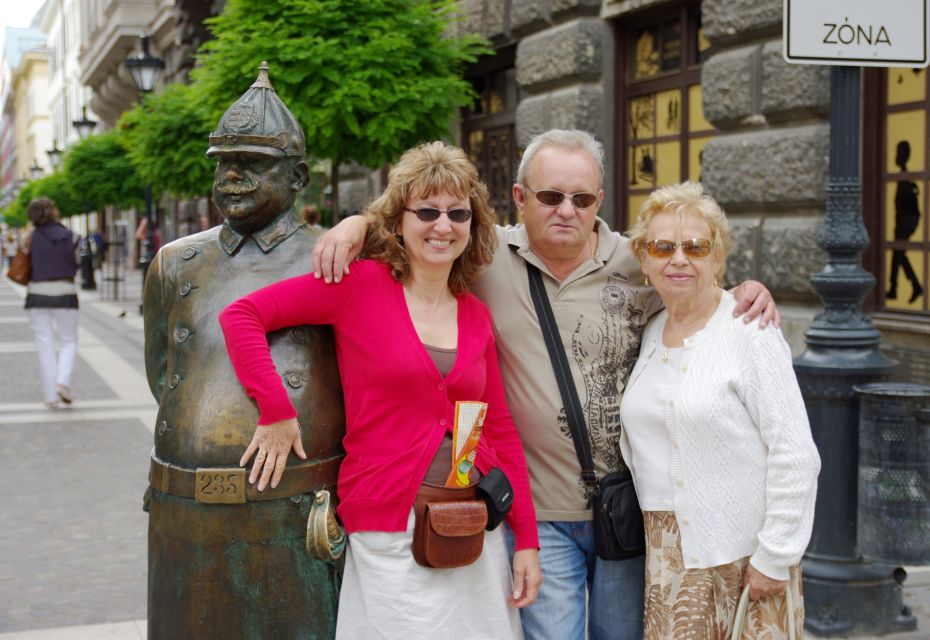
Then you hit a fun, memorable stop: the statue of Mr. Safe. This is one of those details that makes a tour feel lighter without turning it silly. It’s a reminder that Budapest’s inner-city identity isn’t only monuments and official buildings. There’s humor, character, and street-level charm too.
I also appreciate how this stop functions as a palate cleanser. Right after the grand Basilica, you’re still in “architectural appreciation” mode, but now you’re switching into “people and place” mode. The guide keeps the flow moving, so you’re not waiting around for each viewpoint.
If you like tours that mix serious context with small moments of joy, this is one of the best parts of the itinerary.
You can also read our reviews of more city tours in Budapest




Liberty Square: Nazi Occupation and Communist Oppression, Explained Where You Stand
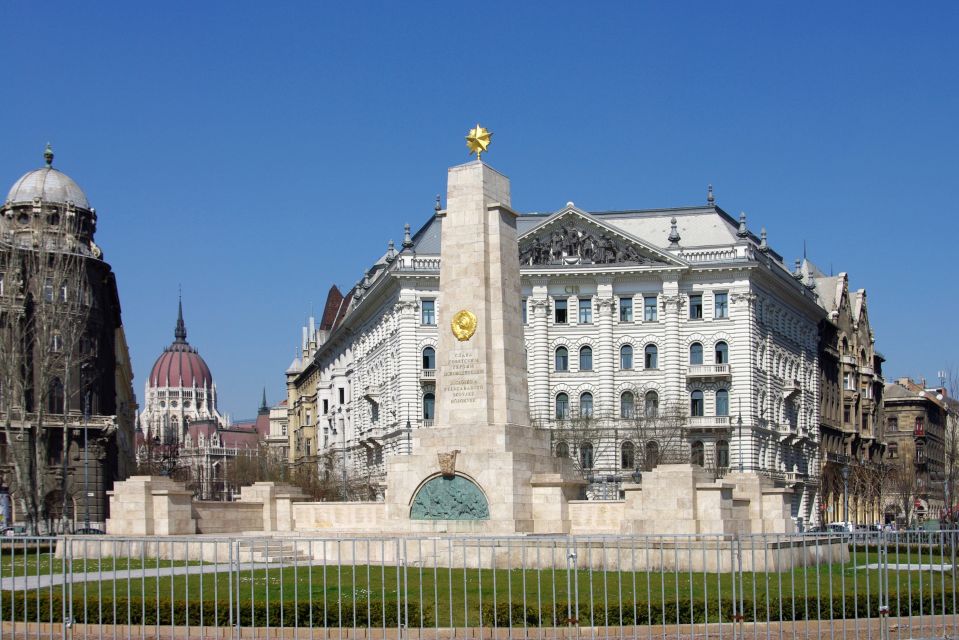
Then the tone shifts. At Liberty Square, you’ll learn about Budapest’s traumatic past as a center of Nazi occupation and Communist oppression.
This kind of stop can go two ways on a walking tour: either it becomes vague, or it becomes too heavy too fast. The value here is that the guide gives the context while you’re standing on the right ground—so you’re not learning history as abstract facts. You’re learning it anchored to the city’s layout and the locations that shaped daily life and political change.
Liberty Square is also the kind of location where you’ll want to pause and pay attention to the surrounding monuments and streets. Even if you’re not a “history person,” having a guide interpret why this place matters makes it easier to process what you’re seeing.
For your emotional pacing, I’d treat this as a moment to slow down. If you feel the weight of the topic, that’s normal. The tour doesn’t skip it, but you’re given time to connect the story to the setting.
Kossuth Square and the Hungarian Parliament: 1956 Stories in the Open Air
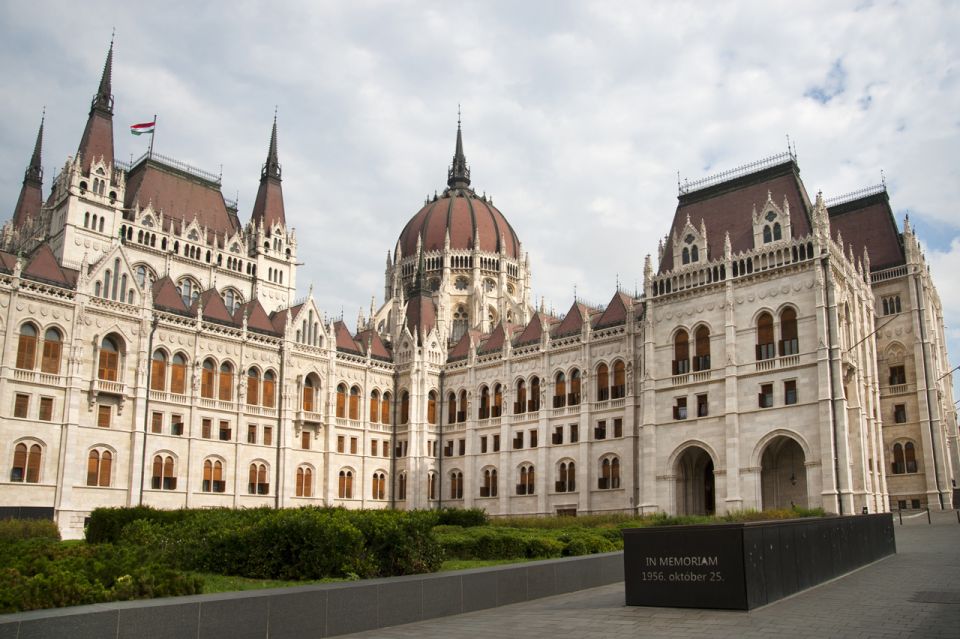
The tour finishes at Kossuth Square, focusing on the sights surrounding the majestic Hungarian Parliament building. This area is huge and dramatic, and that’s the point. Parliament sits at the center of how Hungary thinks about governance, identity, and public memory.
Here, the guide shares stories of dictatorship and the 1956 revolution. This is where the earlier stops begin to click together. Liberty Square gave you the shadow of occupation and repression; Kossuth Square brings the thread into Hungary’s later struggle and the push for change.
What I like for your experience is that you’re not only viewing a building. You’re building context for why people remember it the way they do. When you can connect a monument to a specific historical turning point, it stops being just a photo backdrop.
And because you’re outdoors, you also get a sense of scale that indoor exhibits can’t match. The Parliament area is one of the best places in Budapest to feel how power, architecture, and public space all overlap.
Shoes on the Danube Bank: A Quiet Finish by the River
After Kossuth Square, you’ll visit Shoes on the Danube Bank, a poignant memorial. This stop is powerful because it’s direct and minimal, and it forces you to slow down.
Then you can choose to continue with a stroll along the riverbanks. That matters because it gives your brain a landing spot after heavy history. You get a chance to look at the Danube’s surface and the city views without a guide talking nonstop the entire time.
I recommend using the river walk as your decompression window. Even a short, unhurried walk changes the way you remember the memorial stop. You’ll come away with the sense that Budapest’s story isn’t locked behind museum glass. It’s built into the streets and the waterline.
German Guidance Makes a Real Difference (Especially When You Ask Questions)
The tour is German-language, led by a professional local guide. If you’re comfortable in German, you’ll get more than basic directions. You’ll get explanations that help you understand how Budapest developed and why the city’s “big scenes” look the way they do.
The tour also benefits from guides with a friendly, attentive style. In the feedback connected to this experience, people praised the way guides made the tour personal and responsive to questions, and even adjusted to what the group wanted. Names that came up included Zsóka and Uschi, both described as charming and very capable at explaining complex material in a way you can actually follow.
So if you’re traveling with someone who likes to stop and ask why, this is a good choice. You’re walking in a compact area, and the guide can keep connecting the dots instead of just moving you from one landmark to the next.
Price and Value: What $23 Buys in 2 Hours
At about $23 per person for a 2-hour walking tour, the value comes from three things: focus, guidance, and coverage.
First, it’s focused. You’re not doing a long bus ride or hopping across the whole city. You’re staying in the inner-city Pest area and hitting the most iconic monuments and squares efficiently.
Second, you’re paying for interpretation. The difference between seeing Parliament in a photo and understanding what the guide connects to it is huge. The same goes for St Stephen’s Basilica and the Liberty Square context. The guide turns “I saw it” into “I understood it.”
Third, time matters. Two hours is long enough to build an overview, but short enough that you don’t feel trapped on a single activity day. It’s a great “morning or afternoon anchor” before you explore on your own afterward.
If you want a deep, museum-style experience, you’ll still need other stops. But for orientation, iconic sights, and meaningful context in a compact time window, this price-to-value ratio is strong.
Who This Tour Suits Best
This experience is ideal if you want:
- A first or second visit to Budapest and you want the Pest highlights with context
- A German-speaking guide who explains architecture and political history without turning it into a book report
- A balance of monumental stops and lighter moments, like the pedestrian streets and Mr. Safe
- A route that works within the city center without complicated transfers
It may be less ideal if:
- You prefer a lighter, purely scenic walk. This tour includes difficult historical material.
- You only want one type of experience (all architecture or all history). The mix is intentional, but it’s still a mix.
Should You Book This German Inner-City Walk?
I’d book it if you like your Budapest tours practical and story-driven. You’ll cover key landmarks on the Pest side, understand why Liberty Square and the Parliament area matter, and end with a meaningful memorial by the river.
You should also like the style if you value a guide who answers questions and keeps things personal. The positive feedback tied to this tour repeatedly points to guides who explain clearly and stay responsive, which is exactly what you want on a route this dense.
If you’re unsure, here’s the quick decision rule: if you want iconic sights plus real context in 2 hours, this fits. If you want only calm scenery or you don’t want heavy historical topics, you might choose a different kind of walking tour.
FAQ
What language is the tour offered in?
The tour is offered in German.
Where do I meet the guide?
Meet your guide in front of the café/pastry shop Molnar’s Kürtöskalacs.
How long is the Budapest inner-city walking tour?
The tour lasts 2 hours.
What are the main sights on the route?
You’ll see Elizabeth Park and the Budapest Eye, St Stephen’s Basilica, the Mr. Safe statue, Liberty Square, Kossuth Square and the Hungarian Parliament area, and you’ll have time for Shoes on the Danube Bank and/or a riverbank stroll.
Is this tour wheelchair accessible?
Yes, it is wheelchair accessible.
What are the booking and cancellation options?
You can cancel up to 24 hours in advance for a full refund, and you can use the reserve now & pay later option (pay nothing today).