REVIEW · BUDAPEST
Budapest: Castle District Walking Tour
Book on GetYourGuide →Operated by Triptobudapest.hu - Free Budapest Walking Tours · Bookable on GetYourGuide
Buda Castle Hill clicks into place with a guide. This tour makes the Castle District feel readable fast, with a route that connects the what you’re seeing to the why it mattered over centuries. I especially liked the guided walking tour format, since you’re not left guessing where to go next.
I love two things in particular: first, the big-name sights get timed well—Matthias Church and Fisherman’s Bastion included—so you can focus on photos and details. Second, you get the story behind the stones: everyday life across German, Jewish, and Hungarian communities, plus the wartime scars and the defense role of Castle Hill.
The main drawback is simple: you’re dealing with stairs and an uphill stretch. There’s a 10-minute uphill walk and it’s not suitable for wheelchair users or people over 95, so pack your legs (and your shoes) accordingly.
In This Review
- Key highlights worth penciling in
- Starting at Batthyány tér: easy meetup, smarter pacing
- Walking the Castle District: what you’ll cover in ~2 hours
- Matthias Church and Fisherman’s Bastion: architecture plus the fun facts
- The Castle Hill characters: huszár light cavalry and Budapest’s statues
- Underground Castle Hill and WWII damage: the stories behind the walls
- Jewish Prayer House, Gül Baba, and Hungarian symbols you’ll actually notice
- Pest-side panoramas and the trick of the free viewpoint
- Price, tips, and whether $2.27 is a good deal
- Who this Budapest Castle District walk suits best
- Should you book this Budapest Castle District walking tour?
- FAQ
- Where is the meeting point for the Budapest Castle District walking tour?
- How long does the tour last?
- Is the tour wheelchair accessible?
- What should I bring for the walk?
- What major places will we visit?
- Is the hike difficult?
- Is there tipping, and how much is typical?
- How many people are in the group?
Key highlights worth penciling in
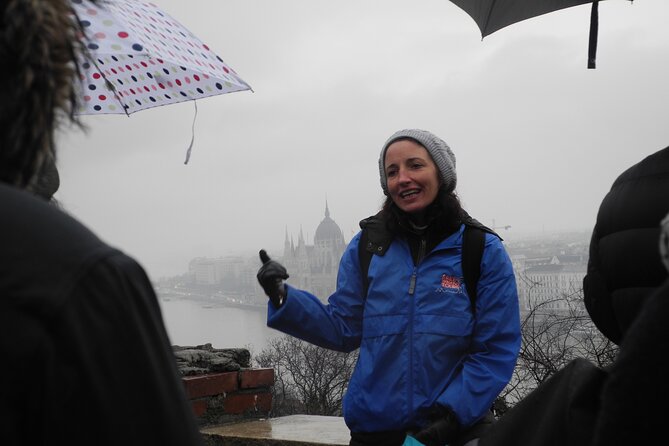
- Blue-flag meetup at Batthyány tér so you start on time and stay stress-free
- Matthias Church, Royal Palace area, and Fisherman’s Bastion without wandering in circles
- The quirky lessons: why Fisherman’s Bastion connects to Walt Disney, and cross-strip meanings
- Underground Castle Hill: labyrinths and an underground cave system built for defense
- Multi-layer Budapest: medieval Jewish sites, Ottoman history (Gül Baba), and Hungarian symbols
Starting at Batthyány tér: easy meetup, smarter pacing
Your tour starts at Batthyány tér metro exit, about 15 meters from St. Anna Church. Look for the guide holding a royal blue sign/flag—that blue marker is your fast “we’re in the right place” cue. The tour ends back at the meeting point, so you don’t have to solve the logistics of getting down after your legs get tired.
This is the kind of start that matters. The Castle District is famous for steep streets and sudden viewpoints, and if you start late or wander early, you lose the best parts. Here, you’re placed right where the hill route begins, with time to move before you’re just “walking around” for its own sake.
You’ll want comfortable shoes and water. The tour is for international visitors (so don’t expect it to be geared toward locals), and it’s capped at 30 travelers, which keeps the group manageable for questions along the way. You’ll be walking at a moderate fitness level, with that notable uphill portion.
You can also read our reviews of more walking tours in Budapest



Walking the Castle District: what you’ll cover in ~2 hours
The route is built to save time while still letting you feel like you saw the important pieces. In the Castle District, a short walk can still feel huge—because the sites sit on different levels and you’re often moving toward a viewpoint—so a guide’s pacing matters.
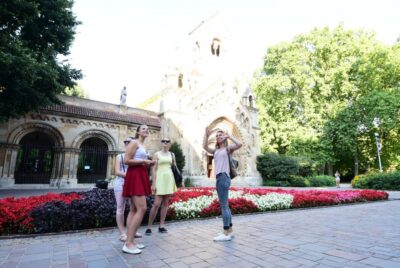
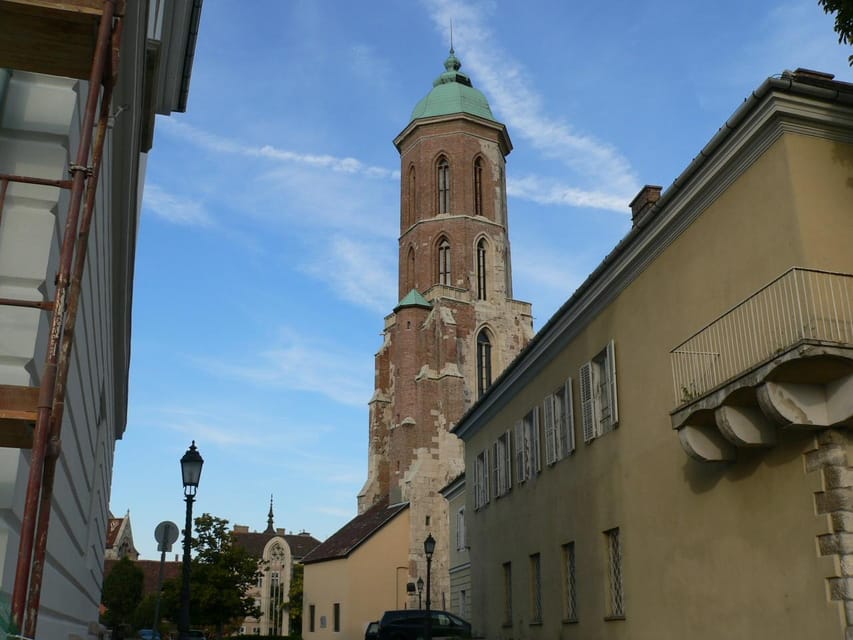
You’ll be shown the Royal Palace area, Matthias Church, Fisherman’s Bastion, and nearby landmark buildings such as the Maria Magdalena Church Tower. You’ll also get stops connected to daily-life history and symbols: public art mini monuments, lookout terraces, and even urban public art/statues that you might otherwise miss if you were speed-scrolling photos only.
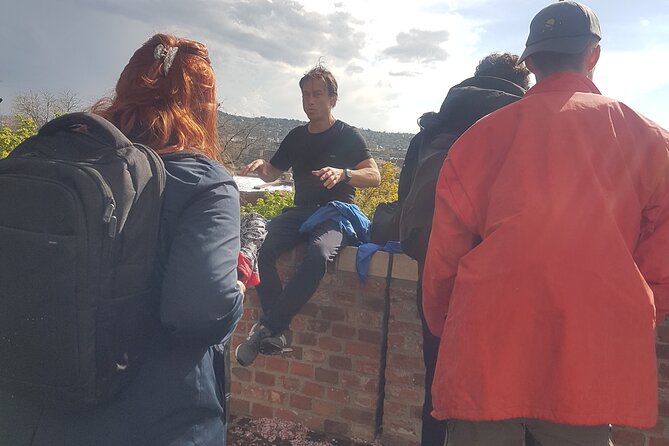
Two things make this format click. First, you’ll hear context as you approach each spot, not after you’ve already taken the picture. Second, you can ask questions while you still have the landscape in front of you—especially useful when you’re trying to separate similar-looking monuments or understand what’s ceremonial versus functional.
The tour includes a 10-minute uphill walk, and the route is not described as wheelchair-friendly. If you’re someone who needs frequent flat breaks, plan for the climb and take it steady.
Matthias Church and Fisherman’s Bastion: architecture plus the fun facts
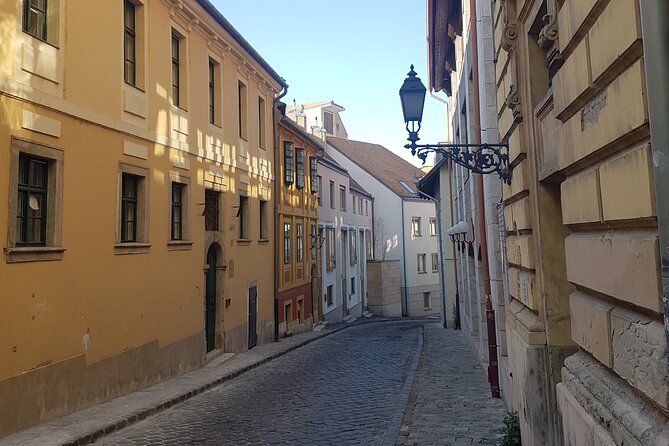
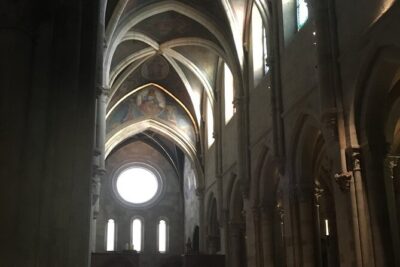
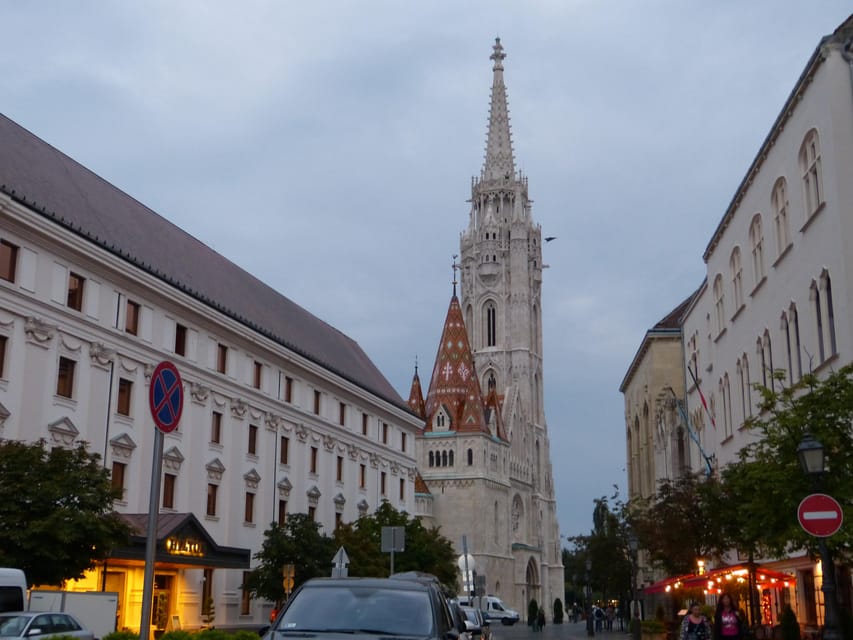
Matthias Church and Fisherman’s Bastion are the classic anchors of the Castle District, and this tour makes them more than a stop-and-go photo moment. You’ll get the kind of explanation that makes the details look intentional—why the buildings matter, how they relate to centuries of power shifts, and what to notice while you’re standing right there.
Two standout tidbits you’ll hear: the guide connects Fisherman’s Bastion to a connection involving Walt Disney, and you also learn about the meaning behind a cross with one, two, or three strips. Those are exactly the sort of small-but-specific lessons that turn “I saw it” into “I understood it.”
This is also a good tour if you care about symbolism. Castle District sites aren’t just pretty; they’re loaded. The guide connects what you see to the people who lived here—so the spaces start to feel lived-in rather than museum-like.
One practical note: Fisherman’s Bastion and the terraces attract photo crowds. With a guide, you’ll have a better shot at timing and angles, but you still want patience. Bring a camera strap you won’t fight with on steps.
The Castle Hill characters: huszár light cavalry and Budapest’s statues
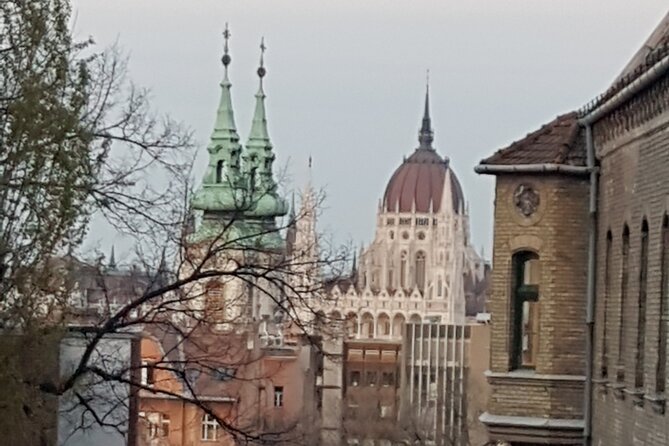
Budapest does humor well, and the Castle District has its share of playful public art. On this tour, you’ll learn about huszár light cavalry fighters—called womanizer fighters in the tour’s story—and you’ll get pointed to the “funny statues” style moments around the district.
These parts aren’t filler. When a guide points out a statue and explains what it references, you start reading the city differently. You stop treating the outdoors as background and start treating it like a lived stage where history and jokes both made appearances.
You’ll also get a sense of how Castle Hill works as a cultural stage: mini-monuments, urban art details, and viewpoints that feel like they were placed for a reason. It helps that the tour builds in time for questions, because you’re walking among symbols that can look similar if you don’t know the story behind them.
If you’re the kind of traveler who likes your sightseeing with personality, this section is one of the reasons the reviews are so consistent about the experience being enjoyable, even when the route is steep.
Underground Castle Hill and WWII damage: the stories behind the walls
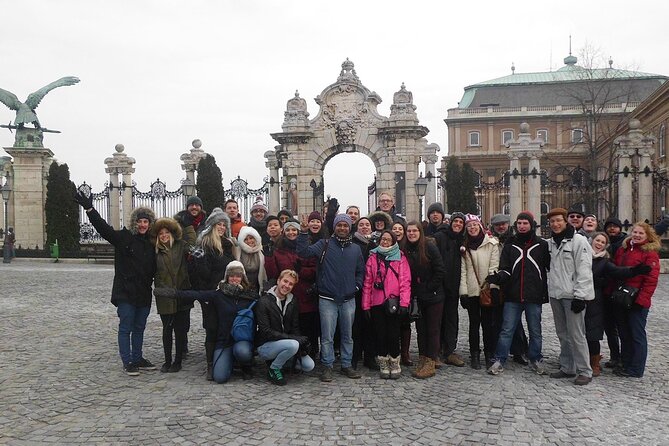
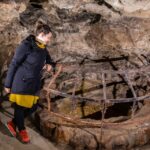
One of the most memorable parts is the switch from “pretty monuments” to “why these streets exist.” You’ll hear about the underground cave system and the labyrinths of Castle Hill—how the underground spaces relate to defense over the centuries.
That defense angle changes how you think while you walk. Instead of only asking what a building is, you start asking what problem it solved: protection, movement, survival. Even when you’re only seeing entrances or small cues, the guide’s explanation helps you imagine the layers under your feet.
The tour also covers major WWII destruction and the wartime power struggle in the district. You’ll learn about where the Nazi stronghold was, and you’ll get the overall sense of how badly the area was hit—and how the rebuilt spaces reflect that trauma.
This is a heavy topic, but the format keeps it moving. You’re not stuck listening for an hour in one spot. You hear the history in small chunks while standing near the places connected to it.
If you prefer lighter historical storytelling, this section still works because it stays practical: you’re not just hearing dates, you’re being shown connections in real time.






Jewish Prayer House, Gül Baba, and Hungarian symbols you’ll actually notice
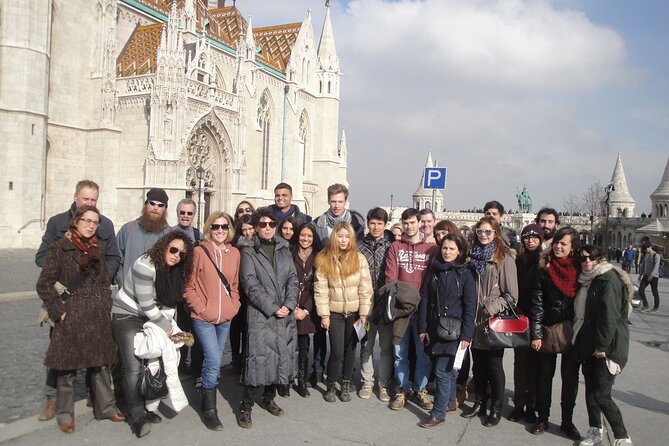
The Castle District isn’t just one story. It’s overlapping ones: German, Jewish, Hungarian life; medieval religious sites; Ottoman-era connections; and Hungarian political symbolism.
You’ll visit the Medieval Jewish Prayer House and see baroque residential buildings around it. That mix matters. It shows the district wasn’t only palaces and churches—it was also homes and community spaces with daily routines.
You’ll also hear about the Ottoman connection: Gül Baba, an Ottoman Turkish monk and soldier, and a Muslim pilgrimage site connected to him. The tour’s approach makes it easier to keep the timeline straight by linking it to specific physical places you can look at.
Along the way, you’ll pick up other Hungarian cultural markers, including the mythical bird of the Hungarians and where president and prime ministers’ offices are located. These are the kinds of details that sound abstract until you see them in context—then the city starts feeling like a map of ideas, not just buildings.
There’s also a WWII-to-everyday-life bridge. You’ll hear how different populations lived here and what life looked like, so the district feels human instead of only historical.
Pest-side panoramas and the trick of the free viewpoint
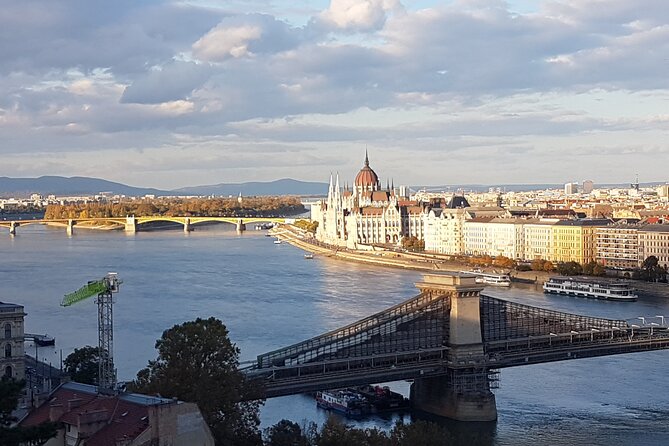
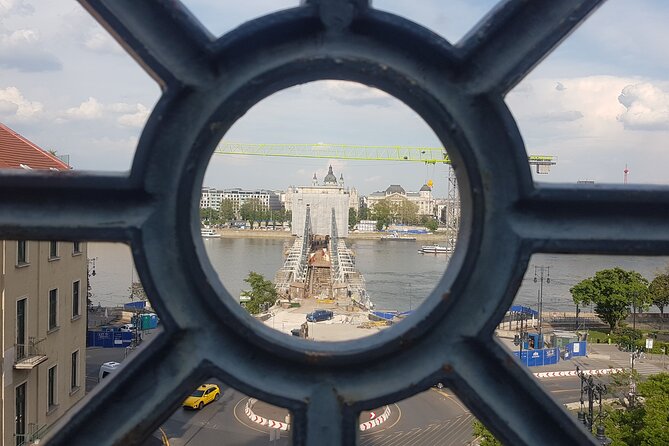
Buda Castle Hill earns its reputation for views, and this tour doesn’t stop at one viewpoint. You’ll get time to soak in the panorama of the Pest side of the Danube from a terrace area.
What I like here is the combination of payoff and guidance. Instead of you guessing where the best view is, the guide helps you position yourself and understand what you’re looking at across the river.
Then you get a practical tip: the guide explains how to enjoy a free view from Castle Hill. The exact spot isn’t described as paid or free in your information, but the core idea is useful—knowing where you can get a similar payoff without extra ticketing.
This “view + practical advice” pairing is the right kind of travel bonus. Views are great, but they’re also easy to overpay for if you don’t know what’s out there.
After the terraces, you’ll wrap up with practical information and time for your remaining questions, which is ideal if you’re trying to map out the rest of your Budapest day or night.
Price, tips, and whether $2.27 is a good deal
The listed price is $2.27 per person, for a 2-hour English live guided tour. Even if that price is only partly reflective of what you think you’re paying for (most tours have extra costs), the value proposition is strong because you’re getting guided routing, major stops, and history you can’t easily reconstruct on your own in the same amount of time.
There is a booking fee paid to GetYourGuide for administration and marketing. That fee is separate from what you typically pay the guide in tips. The tour’s own guidance encourages tipping, and it notes that most guests tip about €10 per person, with some tipping more.
So here’s the honest way to think about cost: you’re not just buying a walk to landmarks. You’re buying a structured route, plus someone who explains why the district is layered with German, Jewish, and Hungarian life and how WWII and defense shaped what you see today.
If you go in with the right mindset—comfortable shoes, willingness to climb a bit, and openness to ask questions—you’ll likely feel like the price fits the experience.
Who this Budapest Castle District walk suits best
This tour is best for you if you want a smart first pass through the Castle District. It’s also great if you like your history in stories: you’ll hear about major eras, but you’ll also learn specific meanings (like the cross-strip detail) and fun context (like the Fisherman’s Bastion and Walt Disney connection).
It’s less ideal if you need step-free walking. It’s not suitable for wheelchair users, and the tour notes a moderate fitness level with a 10-minute uphill walk. If you’re traveling with limited mobility, plan for extra caution and pick a different option.
The tour is English-led, and it’s capped at 30 people, which means you can usually get answers instead of being one more face in the crowd.
Should you book this Budapest Castle District walking tour?
I’d book it if you want to see the key spots—Matthias Church and Fisherman’s Bastion—while learning why they matter, not just taking pictures. The guide-led mix of architecture, WWII context, underground defense stories, and cultural layers makes the 2 hours feel well used.
Skip it (or choose another style) if you strongly dislike stairs or have mobility limits. Castle Hill is Castle Hill: steep parts are part of the package.
If you match the pace, you’ll leave with a clearer sense of Budapest—how the district’s history is written into every terrace and wall.
FAQ
Where is the meeting point for the Budapest Castle District walking tour?
The meeting point is Batthyány tér metro exit, about 15 meters from St. Anna Church. Look for your guide holding a royal blue sign/flag.
How long does the tour last?
The tour lasts about 2 hours. Starting times depend on availability.
Is the tour wheelchair accessible?
No. The tour is not suitable for wheelchair users.
What should I bring for the walk?
Bring comfortable shoes and water. Wear weather-appropriate clothing, since it’s outdoors and you’ll be walking on uneven, hilly streets.
What major places will we visit?
You’ll see key Castle District landmarks including Buda Castle (Royal Palace area), Matthias Church, Fisherman’s Bastion, Maria Magdalena Church Tower, and more buildings and viewpoints in the area.
Is the hike difficult?
It’s designed for travelers with moderate physical fitness, and you should be able to handle a 10-minute uphill walk. Plan on steps and climbing in the Castle Hill area.
Is there tipping, and how much is typical?
Tipping is encouraged at the end of the tour. The guidance says most guests tip around €10 per person, and some tip more.
How many people are in the group?
The tour has a maximum group size of 30 travelers and is led by an English live guide.