REVIEW · BUDAPEST
Memento Park: Official Guided Tour with Entry Ticket
Book on GetYourGuide →Operated by Memento Park · Bookable on GetYourGuide
Propaganda statues in the open air can’t hide their story. At Memento Park, you get a guided walk that helps you read the meanings in those bronze giants, so the whole place starts making sense fast.
I especially like two things: the symbolism explained clearly, and the way the tour turns the grounds into a real timeline of everyday life under communist rule. With English guide Ildi leading, the stories land because she connects architecture, pose, and political messaging in a way you can actually see.
One thing to consider: this visit is history-heavy. If you only want to stroll and take photos with no context, the time with a guide may feel like it’s carrying a lot of background.
In This Review
- Key things you should notice before you go
- Entering Memento Park’s World: Ticketed, Guided, and Built for Interpretation
- Witness Square to the Outside Unit: The Start of the Story
- Stalin’s Grandstand: Hidden Rooms, Power, and How the Site Communicates
- Statue Park Walk: Reading Workers, Leaders, and Events as Messaging
- The Waving Balcony View and the Photo Moment You’ll Actually Enjoy
- Inside After the Walk: Movie Screenings and The Most Cheerful Barrack
- Price and Value: What $28 Buys You at Memento Park
- Logistics That Matter: Meeting Time, Weather, and Gravel Paths
- Who Should Book This Guided Tour (and Who Should Skip It)
- Should You Book Memento Park’s Official Guided Tour?
- FAQ
- Is the Memento Park guided tour in English?
- Where do I meet for the tour?
- How early should I arrive?
- How long does the tour take?
- Does this tour include admission?
- Is there an option to skip the ticket line?
- Does the tour run in bad weather?
- Is Memento Park accessible for wheelchair users?
- Is this tour suitable for children?
Key things you should notice before you go
- Witness Square sets the tone for everything you’ll see next.
- Stalin’s Grandstand and its hidden rooms add a behind-the-scenes layer to the site.
- Waving Balcony views help you understand how the park was meant to be experienced.
- Statue Park is a “decode the message” walk, not just a photo stop.
- Trabant photo time is a fun break from heavy themes.
- The film and exhibitions after the walk give propaganda a sharper, more human edge.
Entering Memento Park’s World: Ticketed, Guided, and Built for Interpretation
This is not a museum where you wander until you figure it out. The value here is the structured route, the live guide, and the entry included in your ticket. You meet at the desk, show your voucher first, then join the group and start the walk.
Memento Park sits in the outskirts of Budapest, so I treat it like a planned excursion, not a quick add-on. Public transport takes about 40 minutes, and the paths are covered with gravel. If your shoes aren’t comfortable for uneven walking, you’ll feel it more here than in the city.
The tour itself is designed to be interactive. The walking portion is described as about 70 minutes, and in practice you should plan around roughly 70–95 minutes with the guide, depending on the flow of questions and how the group moves. You’ll get time for photos and extra indoor stops after the guided portion, too.
If you like your history with explanations you can use, this tour is a smart choice. You’re not just looking at statues. You’re learning how propaganda worked—why it looked the way it did and what it was trying to make people believe.
You can also read our reviews of more tours and experiences in Budapest



Witness Square to the Outside Unit: The Start of the Story
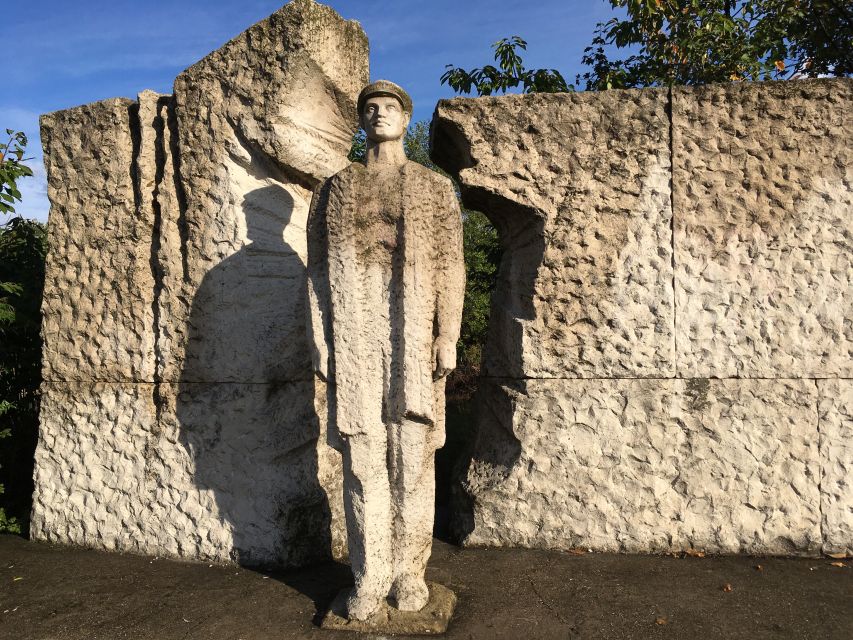
The walk begins at Witness Square, the area in front of Memento Park. That opening moment matters. It frames the site as a political stage rather than a random collection of monuments.
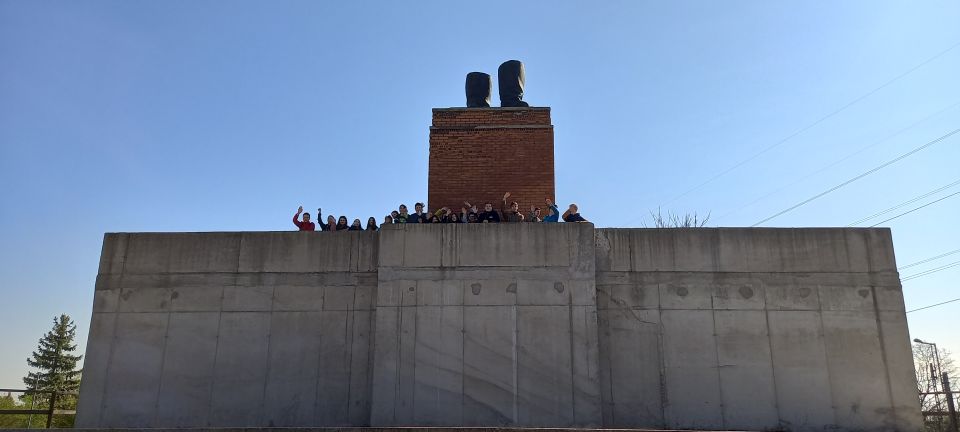
From there, the tour focuses on the outside unit of the museum grounds. You’ll see Stalin’s Grandstand and learn about hidden rooms, including the kind of details that are hard to notice on your own. This is one of the big reasons to take the guided option. The grandstand isn’t just an impressive object. It’s tied to control—how power was displayed, and how crowds and leaders were meant to experience the space.
Then you move toward the Waving Balcony. The point isn’t only the view, though it’s a fascinating one. It’s also the idea of perspective: where you’re standing, what you can see around you, and how the site was built to shape attention. It helps you understand how the park could feel grand and theatrical, even when you know the politics behind it were coercive.
If you’re the type who normally skips signage, this is where you’ll want to pay attention. The guide turns stone-and-bronze layouts into something you can read.
Stalin’s Grandstand: Hidden Rooms, Power, and How the Site Communicates
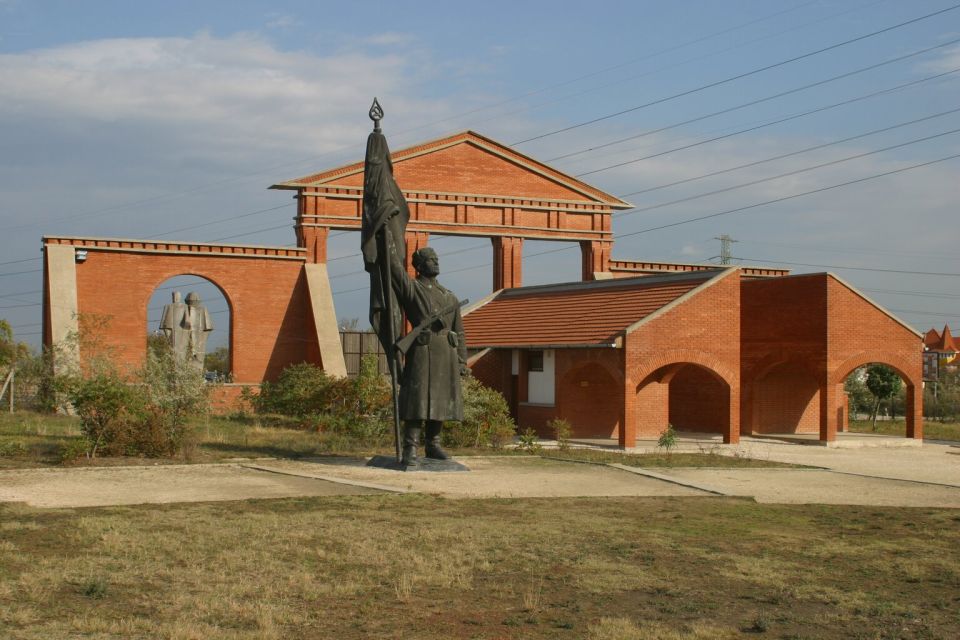
Stalin’s Grandstand is the area that gave me the strongest sense of how propaganda operated as a system. You’re looking at massive forms, but the tour helps you connect scale to message. Big figures, dramatic angles, and controlled viewpoints all reinforce the idea that the regime was always watching—and always in control.
Learning about the hidden rooms makes the grandstand feel less like a statue and more like a machine. The idea is that the public-facing part of power had an internal logic too: spaces for movement, planning, and operations that supported what the public would see.
This is also where the guide’s approach shines. With Ildi in English, the explanations don’t stay in theory. She connects the architectural design and the symbolism to the reality of what people were meant to feel. That matters because the park can look like art or history from a distance. Up close, and with the right context, it becomes a lesson in persuasion.
Statue Park Walk: Reading Workers, Leaders, and Events as Messaging
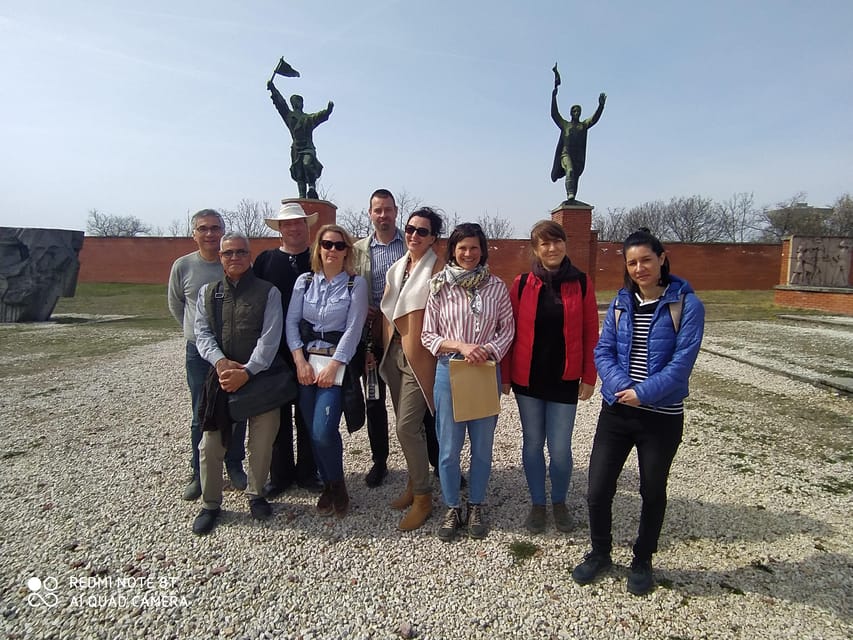
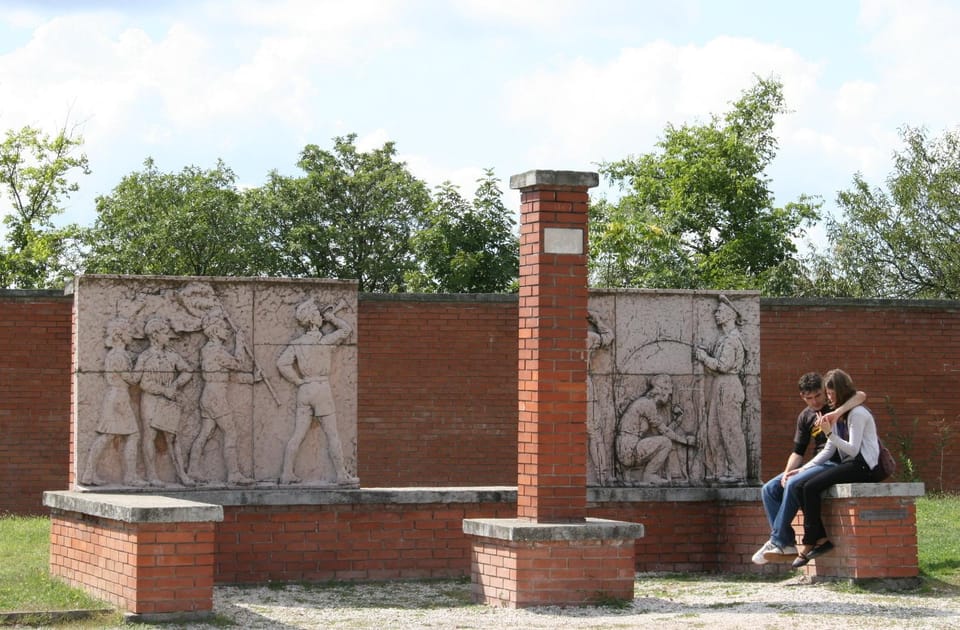
After the outside focus, you head into the Statue Park. This is the core of the experience: a walking route where your guide introduces the unwanted remnants of the communist era.
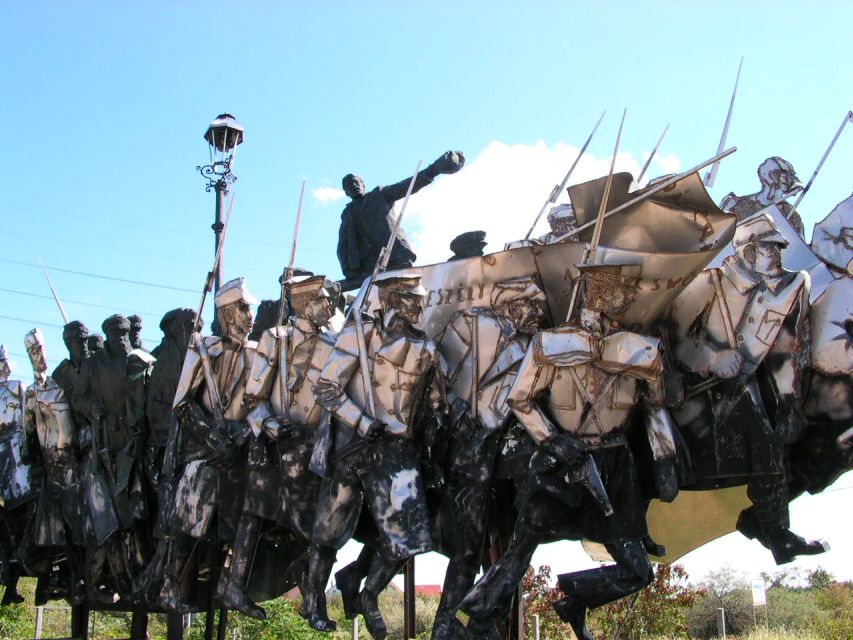
What you’ll see isn’t random. The statues depict workers, Hungarian and international communist persons, and outstanding events connected to the workers’ movement. The guide helps you decipher the message in each grouping. That’s the difference between seeing propaganda as old metal and understanding propaganda as a tool.
Here’s the practical payoff: you start noticing how posture, uniform details, and composition push a story. Even without deep prior knowledge, you can follow the logic because the guide translates what the statues were meant to communicate—about labor, unity, authority, and the right version of history.
You’ll walk along the route and eventually finish at the End Wall. That closing point gives the tour a shape. It feels like you walked from the regime’s visible front stage to the end of its intended narrative arc.
This section is also when I’d recommend keeping your camera ready. But don’t rush it. The statues are best when you pause long enough for the explanation to land, then grab a photo right after—so your memory matches what you learned.
The Waving Balcony View and the Photo Moment You’ll Actually Enjoy
Not every stop on a history tour feels fun, and that’s okay. But Memento Park wisely adds a human, slightly playful photo moment: a chance to take a picture in a retro car, the Trabant.
That Trabant break does two things. First, it gives your eyes a rest from bronze giants and political poses. Second, it quietly reconnects you to everyday life—vehicles people used, the look and feel of ordinary routines under the regime.
Pair that with the Waving Balcony view earlier in the route, and you get a better rhythm: spectacle, meaning, then a grounded visual reminder. Even if the themes are heavy, the experience becomes more balanced because you’re not stuck only in one mood.
You can also read our reviews of more guided tours in Budapest





Inside After the Walk: Movie Screenings and The Most Cheerful Barrack
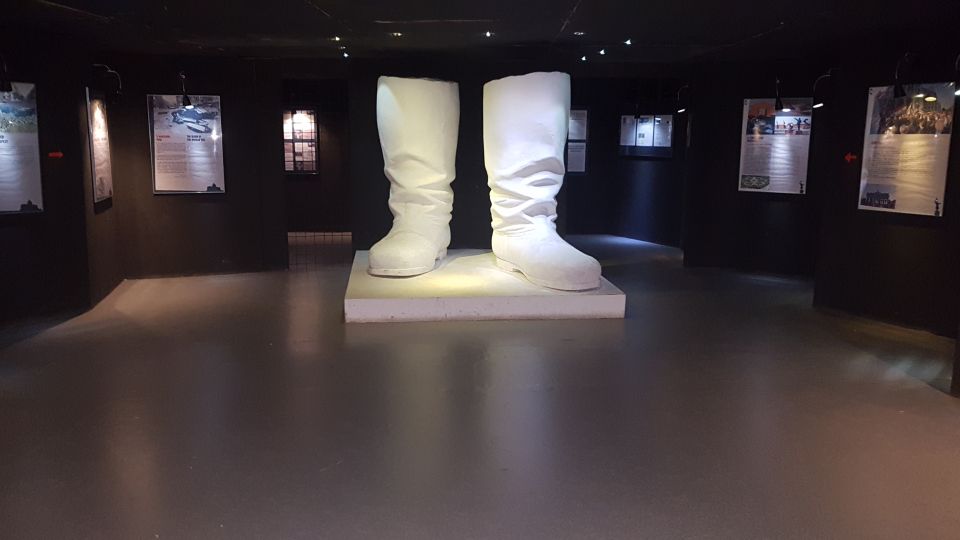
Once the guided portion ends, you’re on your own time. You can take more photos, browse the souvenir shop, and check out the indoor pieces—especially the movie show and the exhibitions in The Most Cheerful Barrack.
This is where the park shows another side of propaganda: its tone. In the film program, you can run into Soviet-era spy recruitment films that land with unintended humor. That doesn’t make the history light. It makes the messaging easier to see. When propaganda looks awkward or overconfident, you start to notice the tactics more clearly.
The Most Cheerful Barrack is also useful because it helps you move from statues as symbols to statues as outcomes. You begin to understand how ideology shaped daily life, jobs, expectations, and what people were told to admire.
If you have energy for it, give yourself time here. The walk provides context, but the indoor elements tend to stick longer because you’re watching and reading, not just walking.
Price and Value: What $28 Buys You at Memento Park
At around $28 per person, this tour isn’t cheap, but it’s also not overpriced for what’s included. You’re getting admission plus a live English-guided tour, and that’s where the value really sits.
If you tried to do this on your own, you’d still see the monuments. But you’d likely miss the deeper layer: the explanations about architectural symbolism, hidden spaces at Stalin’s Grandstand, and the interpretive “decode the message” approach in Statue Park. Paying for the guide is what turns the site from pretty-scale sculpture into a readable political story.
Also, the tour includes a small practical advantage: skip-the-ticket-line. That’s not glamorous, but when you’re heading out to the outskirts and trying to manage time, it helps you stay on schedule.
Bottom line: if you care about understanding how communist propaganda worked, the price makes sense. If you mostly want casual photo ops, you might question whether you want to pay for guided interpretation.
Logistics That Matter: Meeting Time, Weather, and Gravel Paths
The tour runs rain or shine, so plan for weather. Bring weather-appropriate clothing and keep sunscreen and comfortable shoes on your list. The promenades at Memento Park are covered with gravel, so flip-flops and slick sneakers aren’t your friend.
Arrive about 15 minutes before the activity starts. You’ll go to the cash desk first and present your voucher, then the guide will bring you into the group. That short buffer is worth it because it helps you avoid rushing when the timing of the walk matters.
Location is the other logistics point. Since it’s in the outskirts of Budapest, I think of it as a day-trip style stop. If you hate travel time, you’ll feel it. If you plan for it, you’ll be fine.
Who Should Book This Guided Tour (and Who Should Skip It)
This is a great fit if you want history with a guide that connects visuals to meaning. You’ll like it if:
- You’re curious about communist and Soviet influence in Hungary.
- You want to understand how propaganda used art, scale, and staging.
- You like interactive tours where you can ask questions.
It may not be your best match if:
- You only want a quick photo loop and little explanation.
- You dislike history tours that carry heavy political themes.
- You’re traveling with kids under 10. This one isn’t suitable for children under 10.
If you’re already seeing other parts of Budapest’s 20th-century story, this stop can deepen the picture because it shows propaganda in its original monument-scale form.
Should You Book Memento Park’s Official Guided Tour?
Yes—if your goal is understanding, not just sightseeing. The best reason to book is the live English guidance that helps you decode symbolism, connect architecture to message, and interpret the statues as political communication. With a guide like Ildi, the explanations feel purposeful rather than like a lecture.
If you’re on the fence, ask yourself one question: do you want to leave with a clearer sense of how the communist dictatorship shaped what people saw and how they were influenced? If the answer is yes, this tour is one of the more valuable ways to experience Memento Park.
FAQ
Is the Memento Park guided tour in English?
Yes. The tour is listed as available in English with a live guide.
Where do I meet for the tour?
You meet at the desk in Memento Park. You need to present your voucher first, then join the group.
How early should I arrive?
Arrive about 15 minutes before the activity starts so you can check in smoothly at the cash desk.
How long does the tour take?
The tour is described as interactive and takes about 70 minutes, with the guided portion listed as 95 minutes in the schedule. Plan for roughly 1 to 1.5 hours of guided walking.
Does this tour include admission?
Yes. It includes admission to Memento Park and its premises, plus the guided tour.
Is there an option to skip the ticket line?
Yes. It says skip the ticket line is included.
Does the tour run in bad weather?
Yes. The tour runs in rain or shine.
Is Memento Park accessible for wheelchair users?
Yes. It is listed as wheelchair accessible.
Is this tour suitable for children?
No. It is listed as not suitable for children under 10.