REVIEW · BUDAPEST
Buda Castle Walking Tour: A Kingdom of Many Nations
Book on Viator →Operated by Insight Cities · Bookable on Viator
Castle Hill is Budapest’s open-air time machine. I love the UNESCO-protected Castle Hill setting and the max-six group size, which keeps things relaxed and easy to follow. You get a tight, story-driven walk through the city’s oldest quarter—royal power, Ottoman rule, and modern Budapest views—without wasting time.
You’ll hear how the buildings changed jobs again and again: fortress to palace, seat of empires, and later reconstruction after the devastation of World War II. The guide style also matters here. A tour can be paced around your interests, and the best ones really connect the big timeline to small details you’d otherwise miss.
One thing to plan for: major stops have entrance fees at your own expense—including Buda Castle, Matthias Church, and Fisherman’s Bastion—so the price on the booking isn’t the whole bill.
In This Review
- Key things you’ll notice on this Buda Castle walk
- Price and what you’re really paying for (3 hours, max-six group)
- The setting: Castle Hill as a UNESCO storybook, minus the museum maze
- Stop 1: The palace-and-church silhouette that defines the whole hill
- Stop 2: The palace history lesson—fortress, Renaissance court, Ottoman rule, WWII rebuilding
- Quick break: Sándor Palace and what modern power looks like
- Stop 4: Matthias Church, the colored roof and the ticketed interior
- Stop 5: Fisherman’s Bastion—views engineered for postcards, built for meaning
- Last visual: Vienna Gate and the Roman echo in Obuda
- Timing: morning or afternoon departures and why it affects your photos
- The small-group difference: why the guide can make or break the tour
- Who should book this Buda Castle walking tour
- Should you book Buda Castle Walking Tour: A Kingdom of Many Nations?
- FAQ
- How long is the Buda Castle walking tour?
- What’s the price per person?
- How large is the group?
- Is this tour offered in English?
- Where does the tour start and end?
- What’s included in the tour price?
- Which attraction tickets are not included?
- Does the tour include food or hotel pickup?
- When does the tour depart?
- Can I cancel for a refund?
Key things you’ll notice on this Buda Castle walk

- Castle Hill UNESCO area: narrow, cobbled lanes wrapped around layers of history
- Small group (up to six): more Q&A, less shuffling, better pacing on hills
- Matthias Church focus: the famous colored roof plus an amazing interior if you pay to go in
- Fisherman’s Bastion viewpoints: Danube, Pest, and the sweeping skyline from the terraces
- A palace story, not just a postcard stop: royal seat, Turkish rule, Habsburg era, WWII rebuilding
- Ends at Vienna Gate: an easy final “look out” before you head back down
Price and what you’re really paying for (3 hours, max-six group)
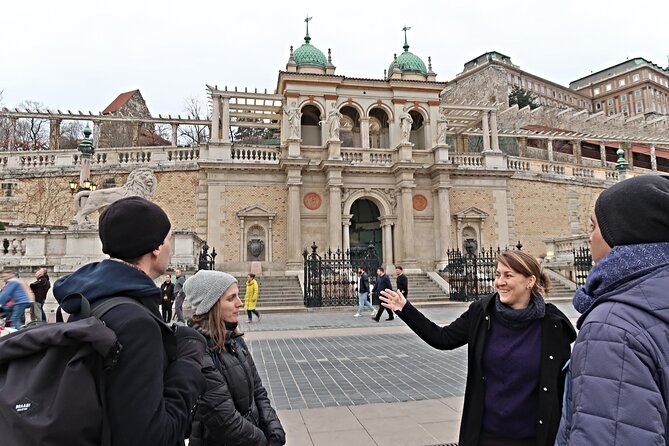
At $126.15 per person for about 3 hours, this is not a budget-only walking tour. But you are paying for two things that matter in Budapest: a guide who can explain the place fast, and a small group so the time stays productive.
The value is strongest if you’re the kind of traveler who wants a clear thread through the mess of empires and architectural styles. Castle Hill can feel like a grab bag—palace shapes, church roofs, viewpoints—unless someone puts the timeline in order. This tour is built to do that, stop by stop, while keeping you moving at a human pace.
Also, the group size helps. With a maximum of six people per booking, you’re less likely to feel like you’re listening from the back of a cattle line. You can ask questions, and the guide can adjust if your focus is more on Hungarian history, architecture, or the day-to-day life behind the walls.
You can also read our reviews of more walking tours in Budapest



The setting: Castle Hill as a UNESCO storybook, minus the museum maze
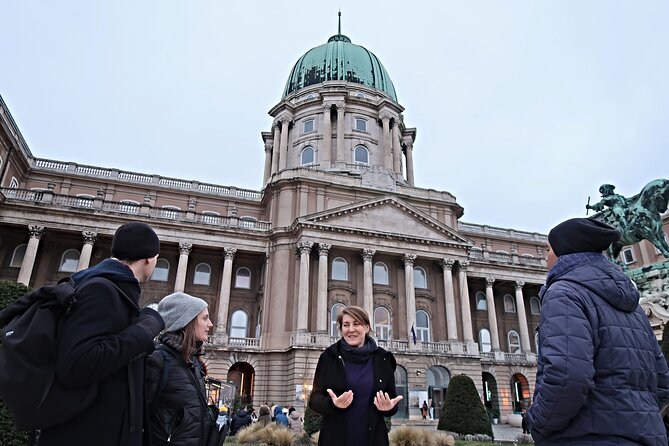
You’re starting in the heart of Castle Hill, Budapest’s oldest quarter, and it really does feel like a neighborhood first and an attraction second. The hill’s streets are narrow and cobbled, and the facades mix Baroque and Gothic details in a way that matches the area’s history of rebuilding and repurposing.
This is a district where “what you see” and “what happened here” are tightly linked. The palace mass at the southern tip of the hill, the colorful roofline of Matthias Church, and the terraces of Fisherman’s Bastion all sit within short walking distance. That makes the time window efficient: you can pack in several major sights while still learning what each one was for.
And because it’s a walking tour, you get the “arrive and look” feeling that you don’t always get with big bus tours. You’re out in the actual space—wind, angles, views—so the story clicks faster.
Stop 1: The palace-and-church silhouette that defines the whole hill
The walk begins on Castle Hill with two visual anchors. On one side, you have the massive palace structure at the southern tip of the hill. On the other, you have Matthias Church’s colored roof and the church’s tall spire cutting up toward the sky.
Even from the outside, you’ll get why this is such a strong opening. The palace gives you the power vibe—big, imposing, permanent. The church gives you the drama—bright roof colors and a style that feels built for attention. Together they frame the rest of the district.
One important point for your expectations: this isn’t just a “go inside and tick boxes” tour. A big chunk of the learning is about the district as a historical layer-cake, so you’ll likely spend plenty of time looking, listening, and orienting yourself to how the hill works.
Stop 2: The palace history lesson—fortress, Renaissance court, Ottoman rule, WWII rebuilding

When you focus on Castle Hill long enough, you realize you’re not really seeing one building. You’re seeing a timeline.
Here’s the sequence you’ll hear:
- Around 1250, King Béla IV built a fortress on the site after a devastating Mongol invasion.
- In the Renaissance, King Matthias turned it into one of Europe’s best-known courts at the end of the 15th century.
- Then came the long era of Turkish pashas, ruling for over 150 years.
- After that, Hapsburg emperors took over.
- The current eclectic look took shape after World War II, when the palace had been through cycles of rebuilding and destruction.
That changing-function theme matters for you because it keeps the architecture from being just decoration. You’ll be able to read the buildings as evidence: who was in charge, what they needed, and what survived.
If you love history but hate lectures, you’ll still get something from this part. The story stays grounded in visible forms—why the palace looks the way it does, why certain periods left stronger marks than others.
Quick break: Sándor Palace and what modern power looks like
Next up is the Sándor Palace, the official residence of the President of Hungary and the seat of the Office of the President since 2003.
You’ll also learn the earlier origin: the original palace was commissioned in 1806 in a Neoclassical style, by Count Vincent Sándor, described as an aristocrat and philosopher within the Austro-Hungarian Empire.
This stop works as a reset. It helps you connect the ancient story to present-day Hungary. And it reminds you that Castle Hill isn’t only a historical stage—it still hosts official roles today.






Stop 4: Matthias Church, the colored roof and the ticketed interior
Matthias Church is one of the tour’s biggest payoffs. Outside, the church’s abundantly decorated roof is the headline: it’s colorful, sharp, and unmistakable. Up close, you’ll also notice the sheer precision of the building style.
What makes it worth planning for is the interior. The church is described as a Neogothic reconstruction fantasy from the end of the 19th century, and it’s the kind of place where the details reward your time. The tour includes discussion and orientation here, but Matthias Church admission is not included, so you’ll pay for entry separately if you want to see the interior.
Practical advice: if you care most about interior art and stonework, this is the stop to prioritize for paid entry. If you’re more view-focused, you can still enjoy a lot from the outside, but you’ll miss the main interior highlight.
Stop 5: Fisherman’s Bastion—views engineered for postcards, built for meaning

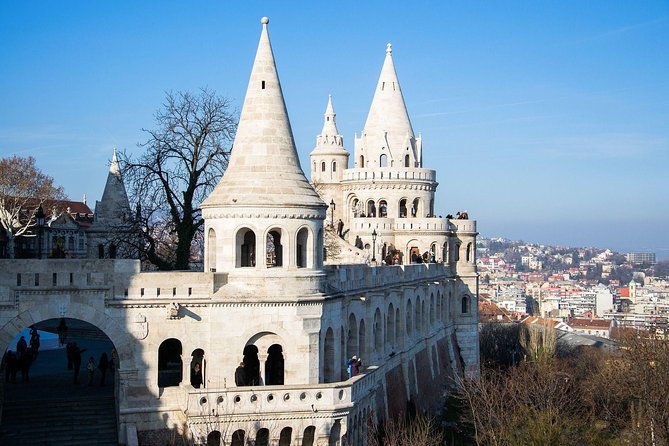
Fisherman’s Bastion is famous for a reason. It’s an architectural fantasy built between 1895 and 1902, in neo-Gothic and neo-Romanesque styles. You’ll hear the seven towers represent the seven Magyar tribes that settled in the Carpathian Basin toward the end of the 9th century.
This is a great stop for two reasons:
1) It gives you major skyline perspective over the Danube and across toward Pest, Margaret Island, and Gellért Hill.
2) It ties that view to a specific founding story, not just scenery.
The ticket here is also not included. But even if you decide not to pay for any paid access areas, plan to stand where the terraces open out. This is one of those places where the city looks organized, even if your feet don’t yet.
Last visual: Vienna Gate and the Roman echo in Obuda

The walk ends at Vienna Gate. From here, you get an angle that reaches across toward Obuda (Old Buda), where the Romans founded a city called Aquincum.
That Roman link is useful. It keeps Budapest from becoming only a medieval story. It’s a reminder that the region has been a crossroads for a long time—just with different languages and rulers writing their own chapters.
Timing: morning or afternoon departures and why it affects your photos
Departures happen either in the morning or in the afternoon depending on the day. That matters because light changes quickly around Castle Hill, and you’ll be stopping at viewpoints.
If you’re trying to maximize photo quality:
- Morning can feel cleaner for skies and less crowded on the hill.
- Afternoon can give you warmer tones on stone and rooftops.
There’s no perfect answer because weather decides more than scheduling does. But picking the time that fits your energy level is the smart move. This is a 3-hour walk. You want your legs to be ready for cobbles and hill paths.
The small-group difference: why the guide can make or break the tour
The strongest theme in the tour’s reputation is the guide. Names that have been associated with this walk include Peter, Judith, Gergely (Gregory), Kata, Veronica, Marianna, and Runa—and the consistent pattern is that guides make the history understandable and adjust to the group’s interests.
That’s exactly what I’d want from this kind of tour. Castle Hill is dense with dates and power shifts. Without a good guide, it’s easy to memorize facts and forget the meaning. With a strong guide, you leave with a map in your head and an eye for what’s worth noticing next.
You’ll also appreciate the small-group format if you like asking follow-ups. A walk like this is where you can get straight answers, like how the Ottoman period fits into the building story or why Matthias Church ended up as it did.
Who should book this Buda Castle walking tour
This tour fits best if you:
- Want a focused introduction to Castle Hill without spending your day in multiple ticket lines
- Like history that connects to visible architecture
- Prefer a maximum of six instead of navigating big groups
- Are visiting for a short stay and want the key highlights plus the context
It also suits families and solo travelers who don’t want a rigid museum schedule. The walk is designed so most travelers can participate, and it’s offered in English.
If you’re the type who only cares about one site—like you only want church interiors—you might feel like this tour is a bit more than you need. But if you want the full story of the hill, it’s a solid match.
Should you book Buda Castle Walking Tour: A Kingdom of Many Nations?
Yes, if you want a smart, organized way to understand why Castle Hill looks the way it does and what each era changed. The standout value is the small group and the way the tour turns the palace-and-church skyline into a clear history lesson.
I’d book it if you also plan to pay for at least one major ticketed highlight, especially Matthias Church or Fisherman’s Bastion. The base tour price isn’t the end of your costs, but it sets you up to spend those entrance fees wisely—on the parts that truly pay off.
If you want a totally self-guided stroll with zero planning, you might skip this. But if you want your time on Castle Hill to feel coherent and not random, this is the kind of tour that helps you get your bearings fast.
FAQ
How long is the Buda Castle walking tour?
It runs for about 3 hours.
What’s the price per person?
The price is $126.15 per person.
How large is the group?
It’s a small group with a maximum of six people per booking (and a maximum of eight travelers for the activity).
Is this tour offered in English?
Yes, it’s offered in English.
Where does the tour start and end?
It starts in Budapest, Országház u. 31, 1014 Hungary and ends in Budapest (the walk finishes at the Vienna Gate area).
What’s included in the tour price?
You get a 3-hour guided walk with a professional guide.
Which attraction tickets are not included?
You pay entrance fees yourself for Buda Castle, Matthias Church, and Fisherman’s Bastion.
Does the tour include food or hotel pickup?
No. There’s no hotel pickup or drop-off, and food and drinks are not included unless specifically noted.
When does the tour depart?
It offers morning or afternoon departures, depending on the day.
Can I cancel for a refund?
Yes. Free cancellation is available if you cancel up to 24 hours in advance for a full refund.