REVIEW · BUDAPEST
Budapest Art Nouveau Walking Tour
Book on Viator →Operated by Insight Cities · Bookable on Viator
Art Nouveau hides in plain sight. This 3-hour Budapest walk brings it to life through historian-led stories and standout buildings like Gresham Palace and Ödön Lechner’s bank; you’ll finish with a satisfying sense of how the movement shaped the city. One thing to consider: you may use public transport during the tour, and a synagogue interior visit has an extra admission cost (and can be affected by the day).
What I like most is the focus on specific architecture you can actually see up close, plus the small-group vibe (it’s kept limited, so questions don’t get lost in the crowd). I also like how the tour connects the dots between design, materials, and Hungarian pride in the style. A minor drawback: the meeting point area can be busy, so give yourself a couple extra minutes and be ready to orient fast.
If you want Art Nouveau that feels practical—not just pretty photos—this tour is a strong way to get your bearings while learning what to look for.
In This Review
- Key highlights you’ll remember
- Why Budapest Art Nouveau is more than pretty façades
- Price and value: what’s included, what costs extra
- The rhythm of a 3-hour walk with a small group
- Stop 1: Gresham Palace and the hotel-meets-opulence feeling
- Stop 2: Postatakarek Bank and Ödön Lechner’s flair
- Stop 3: Thonet House and the tiled trick you can spot quickly
- Stop 4: Kazinczy Street Synagogue and Art Nouveau in a sacred space
- You’ll get more out of this tour if you bring these expectations
- Practical tips for making the most of your 3 hours
- Is this worth $126.16? A value-minded verdict
- Who this tour is best for (and who might skip it)
- Should you book the Budapest Art Nouveau Walking Tour?
- FAQ
- How long is the Budapest Art Nouveau Walking Tour?
- Is the tour in English?
- What’s included in the price?
- Is the group small?
- Will we need public transportation?
- Can I visit the synagogue interior?
Key highlights you’ll remember
- Ongoing lessons from an historian guide that turn façades into stories
- Gresham Palace: Budapest’s most luxurious hotel exterior and interior details (with admission included)
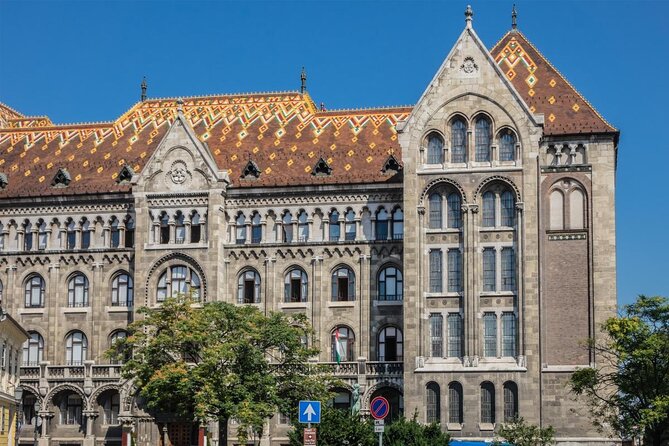
- Ödön Lechner’s Royal Postal Savings Bank and its flamboyant entrance-hall design
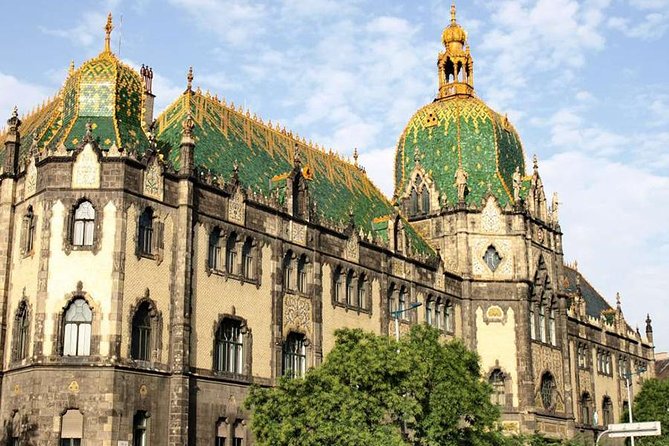
- Zsolnay porcelain and ceramics from Pécs, explained through the tiled look Hungarian Art Nouveau became famous for
- Kazinczy Street Synagogue with Art Nouveau decoration, plus an interior visit except on Saturdays
- Small group format (morning or afternoon options) that keeps the pace comfortable
Why Budapest Art Nouveau is more than pretty façades
Budapest has a talent for making you slow down. Art Nouveau here isn’t trapped behind museum glass. It shows up on street corners, in bank façades, and in the way entrances announce themselves. The great part about this tour is that you don’t just admire details—you learn what they mean and why they appear the way they do.
You’ll walk through a curated slice of the city that highlights the movement’s signature language: decorative surfaces, expressive forms, and the material choices that made buildings feel handcrafted. And because the tour is led by an historian guide, the background stays tied to what you’re seeing in front of you.
That matters for value. At $126.16 per person, you want your money to buy more than movement from one landmark to another. Here, the “more” is the interpretation—how the architecture movement shaped Budapest, not only during one trend, but as a lasting identity.
You can also read our reviews of more walking tours in Budapest



Price and value: what’s included, what costs extra
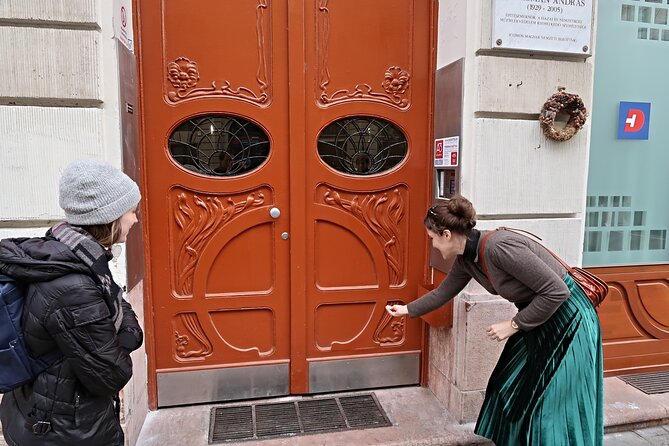
This tour clocks in at about 3 hours, and the price reflects a guided walking experience rather than a museum-heavy day. The included historian guide is the core value, and the route includes several stops where admission is free.
Here’s the practical math idea for you:
- Stops at Gresham Palace, the Royal Postal Savings Bank, and Thonet House are set up as walk-and-look moments with admission free.
- The Kazinczy Street Synagogue interior visit is not included, and it may be unavailable on Saturdays.
Also keep in mind the tour uses some public transport. That part is at your expense, so you’ll want a small local-transport budget ready just in case the route uses a tram or bus segment.
If you like tours that minimize guesswork (what to see, where to look, what to pay attention to), this one fits that style well.
The rhythm of a 3-hour walk with a small group
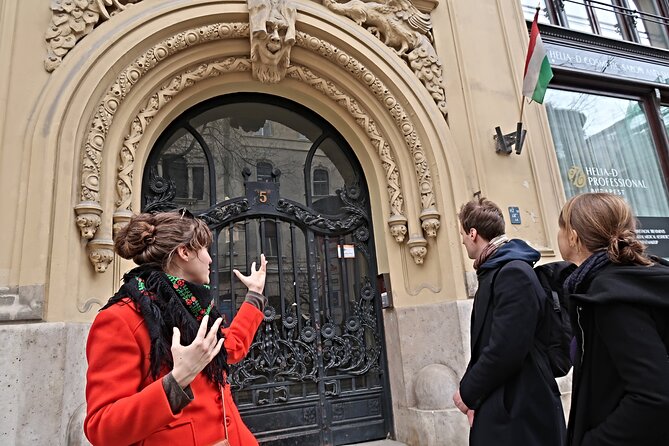
The format is built for a comfortable pace: moderate walking, with comfortable shoes recommended. It’s short enough that you won’t feel cooked by the afternoon, but long enough to get beyond the “photo stops only” approach.
You get morning or afternoon departures, which is great if you’re juggling sightseeing in other neighborhoods. The group is kept small (maximum size is stated as eight, and the departure style is described as limited to a maximum of six), which usually means:
- more time at each building
- easier listening for the guide’s explanations
- better chances to ask questions without repeating yourself
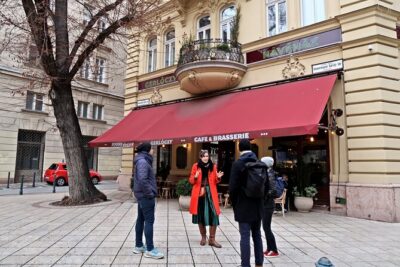
One tip: don’t treat the meeting place as a calm zone. The start is at Madal Café, Alkotmány u. 4, and that area can be busy. If you arrive early, you’ll avoid the stress of trying to spot your group while people stream past.
Stop 1: Gresham Palace and the hotel-meets-opulence feeling
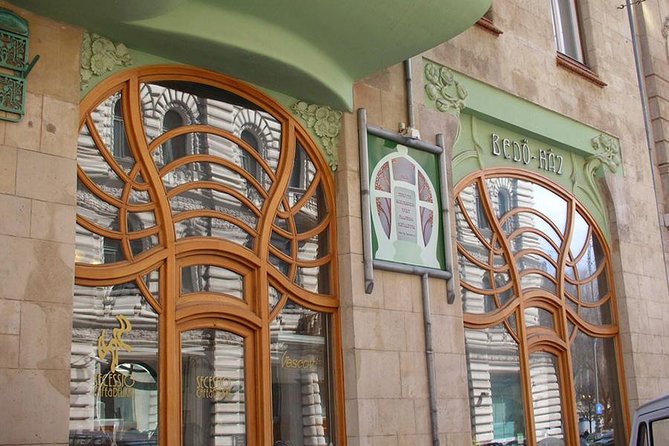
Gresham Palace is the kind of building that instantly makes you lift your head. This stop is designed to show you the Art Nouveau layers on both the façades and the interior atmosphere, even though the building’s uses have changed over time.
What makes this stop special is that you get a dual perspective:
- The exterior reads like a statement piece.
- The interior connects the design to real luxury, because the building has served as office space and luxury apartments, and it’s now the most luxurious hotel in Budapest.
The tour allots about 20 minutes here, and admission is free. That short window is intentional: you won’t be stuck inside for hours, but you’ll have enough time to notice decorative elements you might otherwise miss in a quick walk-by.
What to look for at Gresham Palace:
- how ornamentation frames doors and transitions
- how interior spaces continue the same visual language as the exterior
- details that suggest the movement wasn’t only about form, but about identity
If your goal is to understand why Art Nouveau mattered in Budapest, this is a strong starting point. It sets the tone for what you’ll spot later at other stops.
Stop 2: Postatakarek Bank and Ödön Lechner’s flair
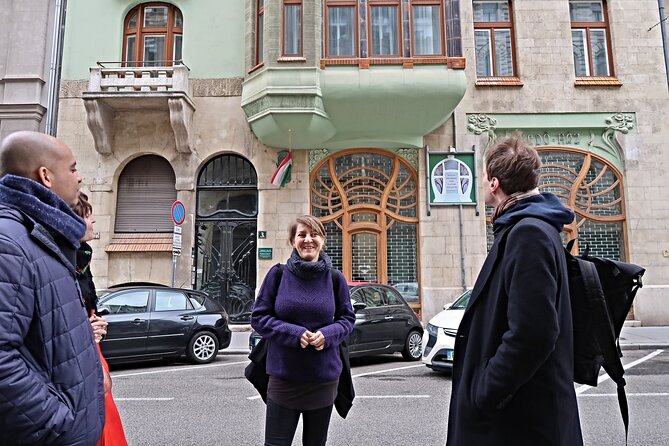
Next comes a building that’s hard to forget: the Royal Postal Savings Bank, associated with Ödön Lechner. You’ll hear him discussed as one of Hungary’s best-known Art Nouveau architects, sometimes compared to Gaudí of Hungary. That comparison is more than hype. Lechner’s work is full of personality.
This stop is centered on the bank’s entrance-hall presence and its flamboyant energy. You’ll get about 20 minutes, and admission is free.
Why this stop is such good value:
- Banks were major public-facing architecture, so they had to impress.
- Art Nouveau in these civic spaces shows the movement’s confidence, not just its whimsy.
- By focusing on the interior entrance hall, you see how the style guides you from the street into the building’s identity.
When you’re there, pay attention to how decorative choices support a sense of arrival. Art Nouveau often uses flowing lines, patterned surfaces, and material emphasis to make an entrance feel like a scene, not just a doorway.
Also, don’t rush the guide’s explanation here. This is where you’ll likely start understanding the connections between architect, materials, and Budapest’s broader visual language.






Stop 3: Thonet House and the tiled trick you can spot quickly
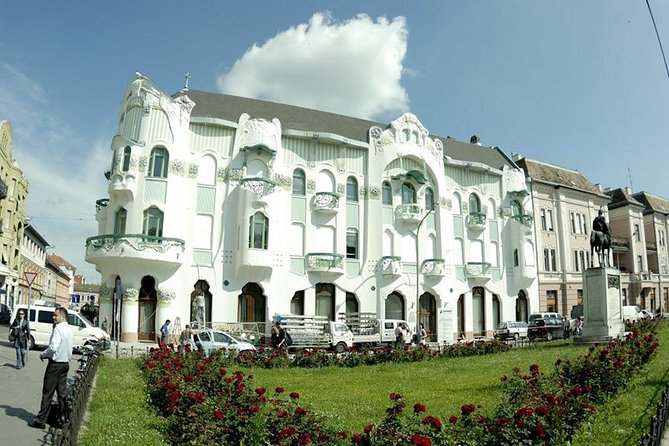
At Thonet House, you’re in the zone where Hungarian Art Nouveau becomes much easier to recognize on your own. The key clue is tiles—a look the style became famous for in Hungary. You’ll pause here for about 20 minutes, with admission free.
The tour also brings in a specific material story: innovations from the Zsolnay porcelain and ceramics factory in Pécs, a town in southern Hungary. That context matters because it explains why the surface of buildings looks the way it does. Tiles aren’t just decoration; they’re part of a local design and production ecosystem that gave Hungarian Art Nouveau its distinctive “finish.”
Here’s how to make this stop click while you’re standing there:
- Look at façades and notice repetition patterns versus individual flourishes.
- See how tiles shape curves, borders, and window-adjacent areas.
- Try to identify where the building uses texture as design, not just as a coating.
This is a great stop if you like architecture that rewards close observation. Even if you’re not an “art history person,” tiles are a visual language you can pick up in minutes, especially when a guide points out what to watch for.
Stop 4: Kazinczy Street Synagogue and Art Nouveau in a sacred space
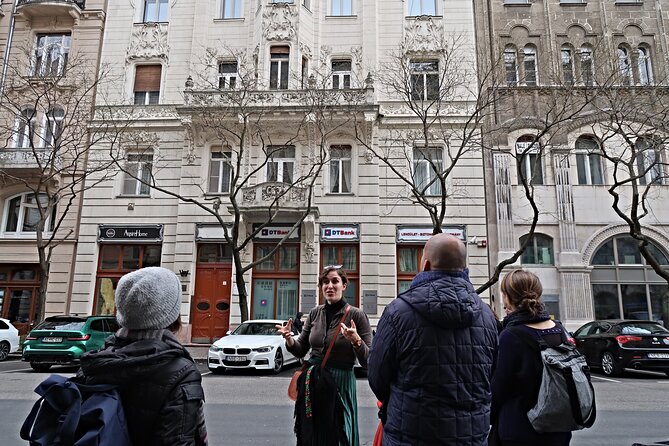
The last stop is the Kazinczy Street Synagogue, decorated in Art Nouveau style. It’s a fascinating ending because it shifts the mood from civic and commercial architecture into a house of worship context.
You’ll get around 25 minutes here. Interior access is included in the sense of a guided visit except on Saturdays. Admission to the synagogue interior is not included, so plan for that extra cost if you can go inside.
Why this ending works:
- It shows Art Nouveau wasn’t limited to one kind of building.
- It helps you see how design can coexist with religious space and identity.
- It gives you a memorable final image—something you’re unlikely to forget after the walk.
If you’re visiting on a Saturday, you might have to focus more on exterior views and the general design cues rather than the inside. The tour notes that the interior visit is an exception, so if synagogue interior matters to you, double-check the day of your booking.
You’ll get more out of this tour if you bring these expectations
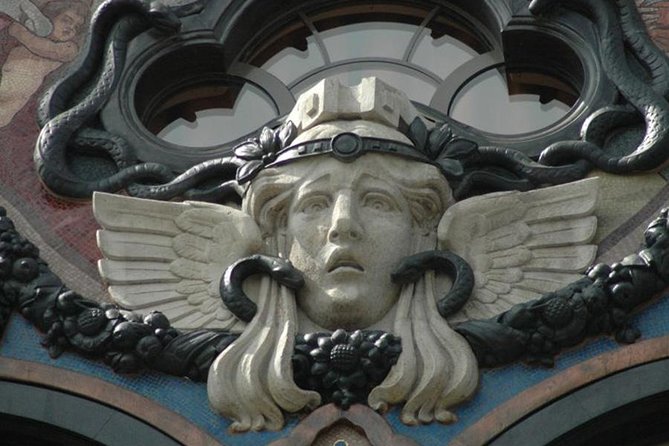
This isn’t a “sit and listen” lecture. It’s a walking tour where the storytelling is timed to what you’re about to see. If you come expecting Instagram-level façades only, you’ll still enjoy it. But if you come curious about why these buildings look like they do, you’ll get the payoff.
I’d go in with three mental checklists:
- Materials: stone, ceramics, and how surfaces carry the style.
- Design elements: ornament around entrances, transitions, and prominent façade areas.
- Architect connection: how a named figure like Ödön Lechner helps you connect dots across Budapest.
One more practical point: the guide’s role can feel flexible. The best experiences here are the ones where you ask questions, not only about the stops but about what to chase next in Budapest. If you’re the type who likes tailoring your day, this kind of historian-led tour tends to work well.
Practical tips for making the most of your 3 hours
- Wear comfortable shoes. The walking isn’t extreme, but you’ll want your feet to stay happy.
- Arrive a few minutes early at Madal Café so you can handle the busy start area without rushing.
- Bring a bit of cash or card flexibility for a public transport pass if the route uses transit.
- If you care about synagogue interiors, plan around the Saturday exception and expect an additional ticket cost.
- Use the route to train your eye. When you’re back out on the street, try spotting tiles and façade ornamentation the same way the guide taught you.
These are small things, but they make a big difference in how smooth your day feels.
Is this worth $126.16? A value-minded verdict
For Budapest, $126.16 per person is a mid-range price for a guided walking tour. What makes it feel worth it is how much is delivered through guidance rather than extras:
- A historian guide does the heavy lifting.
- Multiple major stops are included with free admission (for the key buildings before the synagogue).
- You get architecture-specific context, not generic city history.
The one real cost watch-out is the synagogue interior, plus any public transport segment. If you plan for that, you’re basically paying for a focused learning experience in three hours, with several of Budapest’s Art Nouveau touchpoints in a compact loop.
Who this tour is best for (and who might skip it)
You’ll love this tour if:
- you enjoy architecture and want to learn what to notice
- you like guided storytelling tied to real buildings
- you want an efficient way to understand Budapest’s Art Nouveau identity
You might skip it if:
- you’re only interested in free, self-guided photo stops
- you dislike walking tours and want more time to sit
- you’re not interested in design explanations and names like Ödön Lechner
If you’re on the fence, think of it like this: this tour is less about checking boxes and more about building a mental map of the city’s style.
Should you book the Budapest Art Nouveau Walking Tour?
I’d book it if you want a compact, high-signal introduction to Budapest’s Art Nouveau. The combination of a small-group format, a historian guide, and multiple major stops with free admission makes it a practical way to spend your time. Add the built-in finish at the Kazinczy Street Synagogue, and you end with something memorable that goes beyond façades.
Book it especially if you like when a guide can turn details into understanding, and if you’re willing to walk a bit and look closely. Just come prepared for possible transit costs and the synagogue ticket situation, depending on the day.
FAQ
How long is the Budapest Art Nouveau Walking Tour?
It runs for about 3 hours.
Is the tour in English?
Yes, it is offered in English.
What’s included in the price?
The included portion is the historian guide, and admissions for the first three stops are listed as free. The synagogue interior admission is not included.
Is the group small?
Yes. The tour is described as a small-group experience limited to a maximum of six, and the overall maximum group size is stated as eight.
Will we need public transportation?
Some parts of the tour may use public transport, and passes are at your own expense.
Can I visit the synagogue interior?
Except on Saturdays, the tour includes an interior visit to the Kazinczy Street Synagogue. Interior admission is not included.