REVIEW · BUDAPEST
Walking tour in the Buda Castle incl. Fisherman’s Bastion
Book on Viator →Operated by Luna Tours Budapest · Bookable on Viator
Buda Castle, told by a real local. This Budapest walking tour links the big sights you keep hearing about—Matthias Church, Fisherman’s Bastion, and the Castle District—with stories and legends that make the place click fast. I love the easy meet-up with a small group (max 20), which keeps things relaxed instead of chaotic. I also love the mix of famous viewpoints and practical stops, like the oldest coffee house at Ruszwurm and the coin-and-legend moment at King Matthias Fountain. One drawback to keep in mind: Matthias Church’s admission ticket is not included, and the route is on castle-hill terrain, so you’ll want comfortable shoes.
At around 2 to 2 hours 15 minutes, it’s a great first taste of Buda, especially if you want your bearings before wandering on your own. The tour runs in English with a mobile ticket, and the guidance tends to be funny and question-friendly—names like Claudia, Bela, and Panna show up often in the kind of feedback I’ve seen about this experience. If you like your guide, plan to tip whatever feels right; it’s part of the culture of these small-group tours.
In This Review
- Quick hits on this Buda Castle and Fisherman’s Bastion walk
- Getting oriented fast around Szentháromság tér
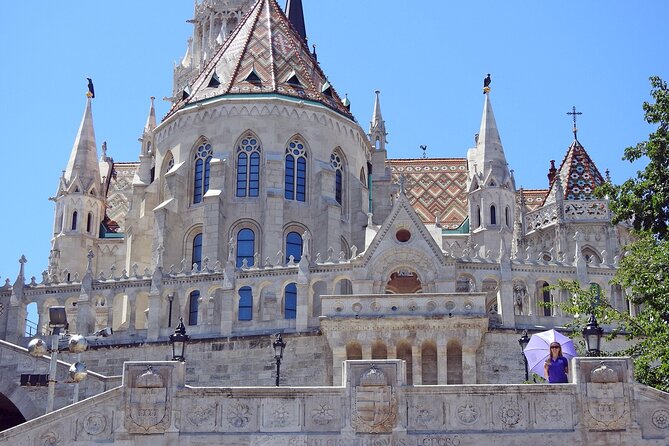
- Matthias Church: the first stop that sets the tone
- St Stephen’s statue: quick pause, big meaning
- Fisherman’s Bastion: fairy-tale views you can actually enjoy
- Ruszwurm: the short food stop that breaks the castle rhythm
- Hadik’s equestrian statue and Setany’s promenade moments
- Uri Street and the residential-to-royal switch
- Labirintus Budavari: caves and rock-level stories
- Karmelita Kolostor: monastery stories tied to government lore
- King Matthias Fountain: coin legends and the palace approach
- Guide style and pacing: why this tour often feels worth it
- Price and value: what $3.63 actually buys
- Who this tour suits best
- Should you book this Buda Castle and Fisherman’s Bastion walk?
- FAQ
- How long is the Buda Castle and Fisherman’s Bastion walking tour?
- What language is the tour offered in?
- Where do you meet, and where does the tour end?
- Is Matthias Church admission included?
- How many people are in the group?
- Is tipping expected?
Quick hits on this Buda Castle and Fisherman’s Bastion walk
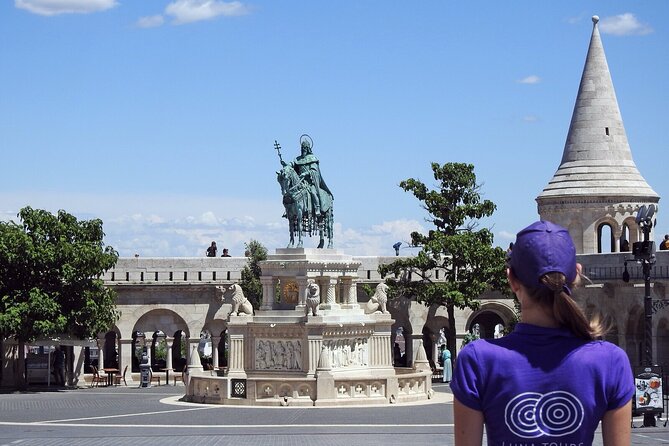
- Small group pace (max 20): You’re not lost in the crowd. It’s easier to ask questions and get directions.
- Legend-forward storytelling: You stop for photos, but you also leave understanding the why behind what you’re seeing.
- Fisherman’s Bastion views included: You get the classic viewpoint without needing to figure out the best way to approach it.
- Oldest coffee stop (Ruszwurm): A short, worthwhile break at a long-running Budapest pastry shop.
- Touch-for-luck moments: From St Stephen to the equestrian statue, you’ll know which spots people treat like rituals.
- Two-ticket reality check: Everything is free to enter on most stops, but Matthias Church admission is not included.
Getting oriented fast around Szentháromság tér
This walk is built for the first-time Budapest brain. You meet at Szentháromság tér (1014 Hungary) and then move through the Castle District area with a guide who keeps the flow moving. With a duration of about 2 to 2 hours 15 minutes, you’ll finish with enough context to explore the rest of Buda on your own.
What makes this feel practical is that it’s not a long, exhausting all-day march. It’s short enough to fit into a busy itinerary, but you still hit major landmarks and several of the smaller stops that most people skip. Also, the guide helps with directions and travel advice during the walk, which saves time later when you’re deciding where to go next.
The tour ends at Szent György tér 2 and continues from there toward the Parliament area. That finish point matters: it can make it easier to pivot to the next part of your trip instead of backtracking across town.
Group size stays capped at 20, and the vibe is built for interaction. If you like hearing stories while you walk, this format fits you well.
You can also read our reviews of more walking tours in Budapest



Matthias Church: the first stop that sets the tone

Matthias Church is the opening anchor of the route, with the guide meeting you at the main entrance. You get a history-style introduction right away, and it’s described as funny—so you’re not just standing around reading plaques. This is also where you’ll set your expectations for the rest of the day: short stops, clear context, and plenty of time to look.
Here’s the key practical note: Matthias Church admission is not included. That means you should check whether you need to buy tickets separately based on what access is available during your visit. If you’re trying to keep costs down, mentally budget for that one place.
Even if you’re not a deep architecture person, this first stop helps. It gives you names and themes to recognize later, so later statues and legends land better. It also turns the whole walk into something more than a sightseeing checklist.
St Stephen’s statue: quick pause, big meaning
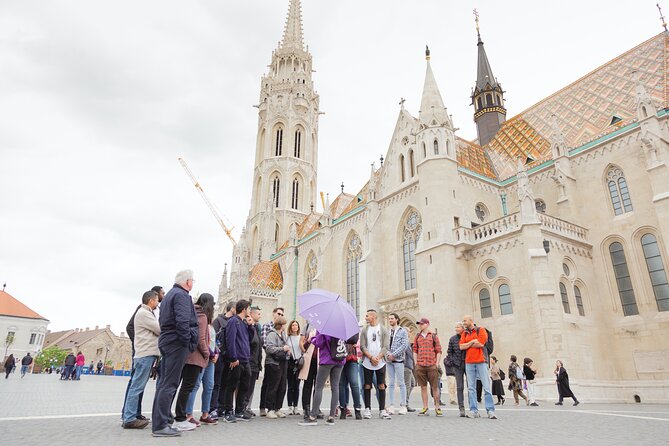
Next up is the Statue of St Stephen, presented as the state founder, Szent István. This is a short stop by design—about ten minutes—so you get the meaning without getting bogged down.
The value here is the framing. When you later see other royal and state-related references around the castle hill area, you’ll understand what the guide is pointing to. If you’re traveling with kids or someone who gets bored at slow museum speeds, this kind of brief landmark stop helps keep attention.
Fisherman’s Bastion: fairy-tale views you can actually enjoy
Fisherman’s Bastion is where the walk earns its reputation. The experience described here is immediate: you stand there and the “wow” moment hits. You’ll spend about 20 minutes at the viewpoint, with lots of room for photos and just plain staring.
This stop is included for a reason. It’s one of Budapest’s best-known panorama spots, and having a guide here helps you focus on what matters. You’re not just hunting for the right angle; you’re learning the story behind the spot, which makes your photos feel less random.
It’s also a good moment to slow down. If the rest of the walk is about context and names, this is where context turns into appreciation. Even on days when weather is less friendly, this viewpoint stop can still be the highlight—one piece of feedback I’ve seen emphasized how well the experience held up even in rain.
Keep your phone charged. You’ll want it at this part.
Ruszwurm: the short food stop that breaks the castle rhythm

Then comes Ruszwurm, described as the oldest coffee house and pastry shop in Budapest. This is a quick stop (around five minutes), so think of it as a taste-and-stand moment rather than a full coffee break.
Why it’s worth including: it resets your energy during a walking tour that’s otherwise mostly standing and looking. It also adds a very Budapest flavor—coffee and pastry culture—without pulling you away for long.
If you’re the type who likes a souvenir snack, this is the place to do it. If you’re not, you can still use the stop to regroup, take a couple quick photos, and get ready for more legends and statues.






Hadik’s equestrian statue and Setany’s promenade moments
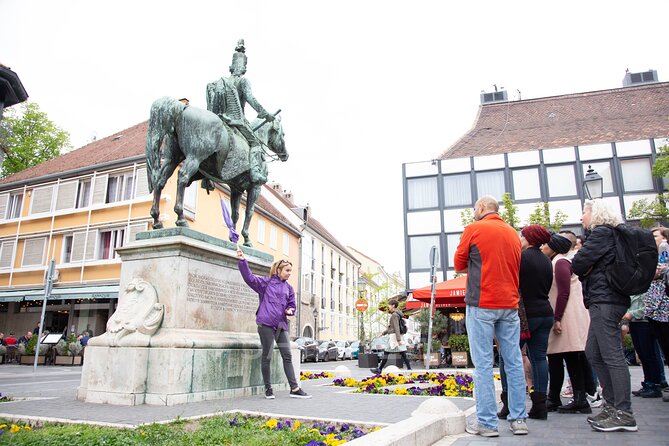
After the quick pastry stop, the tour takes you to the Statue of Mounted Andras Hadik. This one has a simple crowd tradition: touch it if you want a luck boost. The stop is brief (around five minutes), but it adds a playful element that makes the walk feel human, not museum-like.
Next is the Arpad Toth Promenade (Setany). You’ll spend about ten minutes here, and the guide shares local gossip, rumors, and history about the area. One nickname makes it memorable: the Hungarian Beverly Hills. Even if you don’t treat it as literal, it gives you a sense of how the area is perceived and why the views and homes matter.
This stretch is valuable because it connects the famous castle-zone landmarks with the residential and daily-life side of Buda. You start to see the hill as a living neighborhood, not just a backdrop for postcards.
Uri Street and the residential-to-royal switch
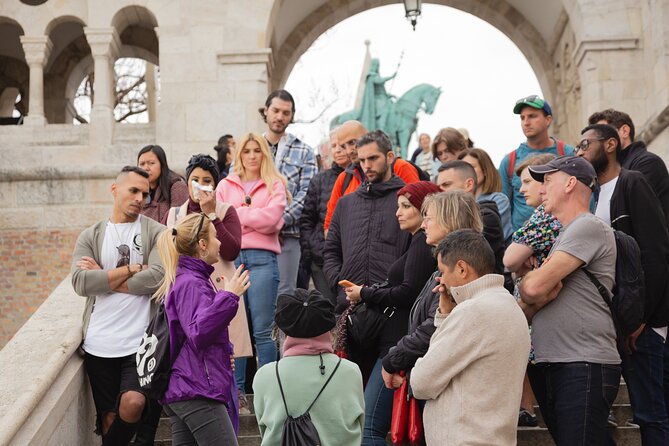
Uri Street is where the guide walks you through the Castle District’s layout: the residential part and the royal part. The stop is short (about ten minutes), but it changes your understanding of where you are.
This is one of those moments that helps you explore more effectively after the tour ends. When you have that mental map—residential here, royal there—you stop feeling like you’re wandering randomly. You can also take better photos because you know what angle matches which vibe.
If you like to return later on your own, this is the kind of orientation that makes your second pass faster and more enjoyable.
Labirintus Budavari: caves and rock-level stories
Under the castle district is the Labirintus Budavari area, described as a cave system with hidden museums, including the Labyrinth and Hospital in the rock. You’ll spend about ten minutes around this stop as the guide shares the story behind the underground world.
You might not get a long sit-down museum experience here, since this walk is time-limited. Still, it’s a powerful contrast to the daylight landmarks. The value is knowing there’s a whole layer beneath the castle walls—so when you see entrances, stone textures, or signs nearby later, you’ll understand what they’re referring to.
The terrain is part of the experience. Even if you’re only viewing from the route, this stop helps you feel the castle district as a complex system, not a single courtyard.
Karmelita Kolostor: monastery stories tied to government lore
At Karmelita Kolostor, the guide brings in everyday-life stories, plus the background connected to the Prime Minister Offices and the Hungarian White House reference. The tour keeps it around ten minutes, but the payoff is how it connects old religious spaces to modern political geography.
This stop works well if you like stories that link past and present without getting overly academic. It helps you understand why certain buildings matter to Hungarians beyond pure sightseeing.
Also, the tone here is described as more than dates and facts. You get background and human context, which makes the area feel closer to real life.
King Matthias Fountain: coin legends and the palace approach
The Fountain of King Matthias is another short highlight, about five minutes. The guide shares the legend connected to it, including the idea that you can drop a coin and sometimes return to Budapest again. It’s the kind of small ritual that turns into a fun photo moment and a conversation starter afterward.
After that, the tour heads to Buda Castle, described as medieval ruins and the Royal Palace. This stop takes about twenty minutes, which is a good chunk for the final anchor. Even if you don’t plan to enter every structure, you’ll have time to look around and understand what you’re seeing.
This is the moment to decide what you want next. Some people like to linger here after the tour ends, using the guide’s pointers to choose where to go in your remaining time. If you’re the planning type, the tour sets you up to choose your next stops with fewer second guesses.
Guide style and pacing: why this tour often feels worth it
The biggest difference between an average walking tour and a great one is the guide’s rhythm. In this case, the walk is described with a consistent theme: funny storytelling, clear explanations, and space for questions.
I’ve seen feedback calling out guides such as Claudia, Bela, Panna, and Paloma for being engaging and for explaining the Buda Castle area clearly. One person noted the guide’s microphone and speaker helped everything stay audible, which matters on hill streets where you might otherwise struggle to hear.
You also get practical help. Some feedback highlights that the guide offered direction advice and ways to travel around Budapest. That’s not just friendly; it’s value. If your time in the city is limited, having someone point you toward efficient transit or smart next steps can matter as much as the landmark stories.
Group size helps here too. With a max of 20 people, the guide can still manage a group conversation and handle questions without the tour turning into a one-way lecture.
Tip: if you care about a specific theme—food, architecture, legends, or just getting oriented—ask early. The tour is set up for questions, and your guide can tailor answers on the fly.
Price and value: what $3.63 actually buys
At about $3.63 per person, this tour is priced like an easy add-on. The real value is not that it’s cheap—it’s that it concentrates guided time into the exact area where self-guided wandering can feel confusing.
Most stops are listed as free for admission, including Fisherman’s Bastion, Ruszwurm, the equestrian and St Stephen statues, and the Castle District viewpoints and streets. The one clear exception in the schedule is Matthias Church admission not included.
So your cost usually turns into paid narration and guidance more than paid entry fees. That’s a good trade when you want context, photo direction, and a structure for walking. It also helps if you’re on a tighter trip budget but still want the “big sights” experience.
One more value point: the duration is short. You’re not paying for a half-day you might not fully use. You’re buying a guided circuit that ends in a useful area so you can keep going.
Who this tour suits best
I think this tour fits you best if:
- You want a structured introduction to Buda Castle and Fisherman’s Bastion in about two hours.
- You like stories and legends mixed with straightforward sightseeing.
- You prefer small-group pacing over big-bus crowds.
- You’re traveling in a group where different people want different things—views, statues, food stop, and history talk.
It might be less ideal if:
- You hate walking on slopes or want a completely flat route.
- You want long museum time at indoor sites. This experience is built around short stops, not full-ticket museum immersion.
If your goal is to leave with a mental map and the confidence to explore Buda afterward, this is a strong match.
Should you book this Buda Castle and Fisherman’s Bastion walk?
If you’re choosing between doing the Castle District on your own and getting guided context, I’d lean toward booking this—especially for a first day in Budapest. For the price, you get a packed route with major landmarks, plus the kind of legend and local storytelling that makes photos feel meaningful instead of random.
The one decision point is Matthias Church. If you’re okay handling that separate admission ticket, the rest of the experience is set up to feel like a smooth, efficient orientation walk.
If you’re unsure, ask yourself this: do you want to “figure it out” while you walk, or do you want to show up, meet the guide, and let the area make sense quickly? This tour is built for the second option.
FAQ
How long is the Buda Castle and Fisherman’s Bastion walking tour?
It runs for about 2 hours to 2 hours 15 minutes.
What language is the tour offered in?
The tour is offered in English.
Where do you meet, and where does the tour end?
You start at Szentháromság tér (1014 Hungary). The tour ends at Szent György tér 2 (1014 Hungary), near the Hungarian Parliament area.
Is Matthias Church admission included?
No. Matthias Church admission is not included, while the other listed stops have admission marked as free.
How many people are in the group?
The tour has a maximum of 20 travelers.
Is tipping expected?
The experience highlights that you can tip your tour guide whatever you feel is necessary.