
REVIEW · BUDAPEST
Self Guided Tour In Budapest With 100 Captivating Audio Stories
Book on Viator →Operated by Trales Audio Guides · Bookable on Viator
Budapest has a way of talking back. This self-guided audio tour strings together 100 location-based stories across Buda and Pest, so your walk feels like a guided day even when you’re on your own. You control the pace, you stop when you want, and you don’t need a tour group schedule.
I really like two things here. First, the access is simple: it’s a mobile ticket plus a web app with a map and a one-step link to start your audio, with no extra app installs. Second, the stories are built to match what you can see outside—big landmarks like Buda Castle and the Parliament Building, plus quieter stops like libraries and railway rooms.
The main drawback to keep in mind is practical: you’ll need a smartphone with internet access and your own headphones. If you lose signal or battery, the tour can’t “keep talking.”
In This Review
- Key points before you go
- Budapest in your headphones: what this 100-story route feels like
- Press play on a web app: tickets, map, and no downloads
- Price and value: why $3.62 makes sense for a day of walking
- How to plan your 1 to 8 hour route across Buda and Pest
- Buda Castle to Fisherman’s Bastion: the hilltop legends
- What to watch for
- Chain Bridges and Parliament: crossing with context
- Why this works
- Heroes’ Square, City Park, and Vörösmarty: big scenes with human stories
- A small practical note
- Synagogues, libraries, and stations: the odd corners worth pausing for
- Why I think you’ll appreciate this
- Medical, science, and music stops: Budapest beyond monuments
- A quick caution
- Danube at sunset: Shoes on the Bank and the bridges
- Practical tip
- Should you book this self-guided audio tour of Budapest?
- FAQ
- How long is the Budapest audio tour?
- Is the tour self-guided or does it include a guide?
- What do I need to use the audio guide?
- Can I download the content for offline use?
- What language is it offered in?
- Are there ticket costs for the stops?
- Is this tour refundable?
- Is it a private experience?
Key points before you go

- 100 location-based audio stories spread across the city, so you’re not stuck with one fixed walking route.
- Web access (no downloads) means you can start from your browser right away.
- Short stop times (often 10–20 minutes) work well for hop-on, hop-off sightseeing.
- Admission ticket-free stops are listed for each location, so you’re paying for the guide, not venue entry (where applicable).
- Private by default: it’s just your group, not a mixed crowd.
- Best match for flexible planners who like to wander and decide on the fly.
Budapest in your headphones: what this 100-story route feels like
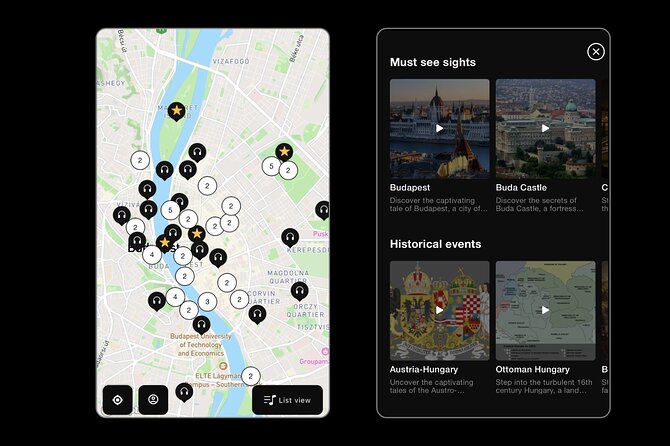
This experience turns Budapest sightseeing into a choose-your-own-adventure. Instead of staring at plaques, you get soundscapes and storytelling tied to where you are. The format is outside walking, so the audio stays grounded in real street corners, river views, and hilltop panoramas.
What makes it work is the control. You can start, pause, and continue whenever your energy level changes. That’s huge in a city where you might want to slow down for a café break, take more photos, or simply enjoy the view without forcing it.
It also helps that many stops are designed around obvious “look-at-this” moments: the chain bridges, Parliament, Heroes’ Square, St. Stephen’s Basilica, and the Danube banks. Then it throws in smart curveballs like major libraries, railway architecture, and memorials—so your day doesn’t feel like a checklist.
You can also read our reviews of more guided tours in Budapest



Press play on a web app: tickets, map, and no downloads
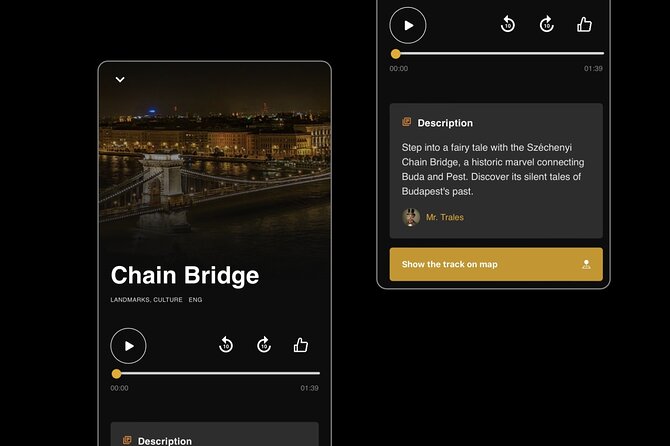
Let’s talk logistics, because this is the part you’ll actually use. You get a mobile ticket and access through a web app with a map. There’s also a one-step link to activate and reach your audio guide, so you’re not hunting through menus like it’s a digital scavenger hunt.
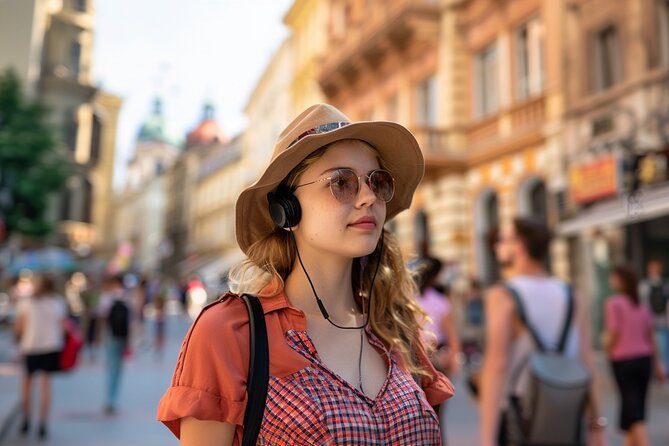
You’ll be using your smartphone with headphones. The tour is offered in English, which matters if you want the stories to stay in sync with what you’re seeing. And since it’s browser-based with no offline access included, it’s built for steady city use—think: grab 4G/5G, keep headphones ready, and you’re good.
One more detail I appreciate: the tour is near public transportation and ends back at your starting area. That makes it easier to mix in other plans, because you’re not stuck at some random drop-off point far from where you want to be.
Price and value: why $3.62 makes sense for a day of walking
At $3.62 per person, this is priced like a small add-on that can dramatically upgrade your day. You’re not buying comfort like a private driver, and you’re not buying “someone to herd you around.” You’re buying narrative value: the stories, the locations, and the audio guidance.
You also get control, which is part of the value. If you only have an hour, you can pick a few stops that match your interests. If you have a full day, you can stretch it toward a longer loop through multiple neighborhoods. The duration is listed as 1 to 8 hours (approx.), and that flexibility is exactly what makes the price feel reasonable.
Just don’t expect it to replace admission tickets where you’d normally need them. The stops are marked admission ticket free in the tour descriptions you see, which is great for sightseeing flexibility. But if a venue itself has a paid option, your audio pass doesn’t automatically make that cost disappear.
Also: the experience is non-refundable and can’t be changed. That’s not unusual, but it’s still something to factor in if your plans might be disrupted.
How to plan your 1 to 8 hour route across Buda and Pest
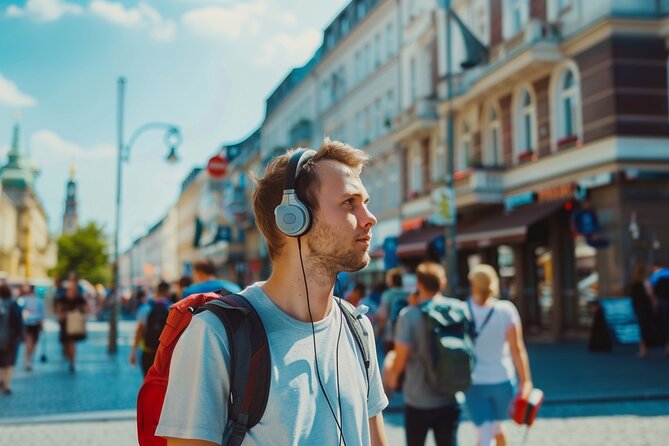
This isn’t a “start here, end there” escort tour. It’s a web-guided route with many story points. Practically, that means you can treat it like a menu:
- Want classic hill views? Focus on Buda Castle, Fisherman’s Bastion, Gellért Hill, Citadella.
- Want city squares and big architecture? Hit Heroes’ Square, the Parliament area, St. Stephen’s Basilica, and Vörösmarty/Kossuth squares.
- Want a quieter angle? Choose libraries, archives, synagogue, and railway interiors like Nyugati’s Royal Waiting Room.
Most stops are set for about 10 minutes, with some longer moments like Buda Castle (about 20 minutes) and Margaret Island (about 20 minutes). Those time frames are useful because they help you avoid the trap of “I’ll just listen to one more story,” which turns into a sunset you didn’t plan for.
A smart tip: use your phone like a compass, not a distraction. Pause your walking, listen to the story, then move on. If you try to listen while speed-walking through crowds, you’ll miss the best parts.
Buda Castle to Fisherman’s Bastion: the hilltop legends

Your day can begin with Buda Castle, described as a fortress tied to battles and royalty. This is the kind of stop where audio works particularly well because the area looks different depending on your viewpoint—courtyard angles, wall lines, and panoramic outlooks all help the story “land.”
From there, you can stay in Buda-mode and move toward Fisherman’s Bastion. The audio frames it as folklore-meets-fortress, and even if you’ve seen photos, you’ll understand why it draws people: you’re on a high viewpoint with the river city laid out below. That match between story and view is the point.
If you want to add more texture, include Gellért Hill and Citadella. The audio focus here is history and folklore, plus that big “see the city from above” payoff. Then, if you’re curious about the less-obvious side of the hill, there’s Gellért Hill Cave, which brings a “mysterious underground” angle into the mix.
You can also read our reviews of more tours and experiences in Budapest






What to watch for
On the Buda side, plan for hills and stairs. The audio stops don’t tell you how steep your route will be, but your body will notice. Give yourself a slower start, especially if it’s warm outside.
Chain Bridges and Parliament: crossing with context
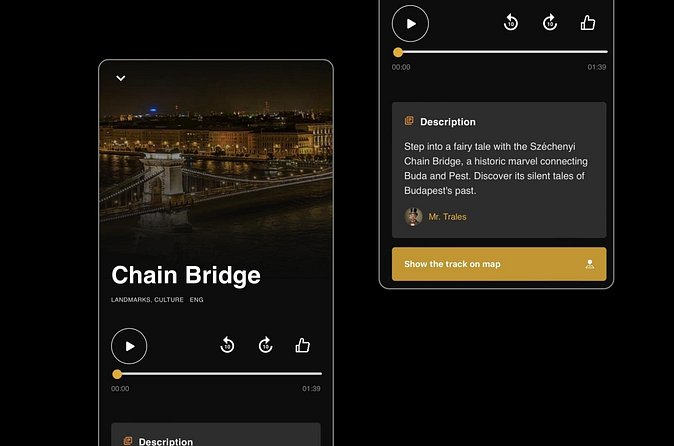
Budapest’s bridges aren’t just connectors. This tour treats them like storyboards.
Start with the Széchenyi Chain Bridge, where the audio is built around quiet tales of Budapest’s past. Then you can add Margaret Bridge, described with its unique design, and Liberty Bridge, Erzsébet Bridge, plus the Danube River and Shoes on the Danube Bank later for a more reflective stretch.
And don’t skip the political landmark: the audio stop for the Hungarian Parliament Building is included as an iconic symbol of Hungary’s past and present. Even if you don’t go inside, hearing a story as you face it helps you read the building beyond its postcard look.
Why this works
Bridges are perfect for audio because you’re moving through a visual transition—river water, city skyline shifts, and shifting perspectives. It turns “walking across” into a guided sequence without locking you into a group pace.
Heroes’ Square, City Park, and Vörösmarty: big scenes with human stories
If you want the ceremonial Budapest feeling, go to Heroes’ Square. The audio emphasizes the Millennium Monument and frames the square with nearby cultural buildings. This is one of those places where a story helps you notice details you’d otherwise gloss over.
From there, you can connect toward City Park and even the park’s ice rink area at Varosligeti Mujegpálya Es Csonakázót (the audio points you there as a seasonal leisure spot). City Park is listed as another stop too, so you can treat it like a pause zone rather than a rushed transfer.
For lively street energy, listen at Vörösmarty Square. The audio frames it as changing identity since 1812, which is a fun way to get your bearings in a place where you’ll probably see a mix of locals and visitors.
If you want the governmental heartbeat, use Kossuth Lajos Square as your audio anchor. The story focus is on the square’s role as the heart of Budapest and how hidden tales shaped it. Keep an eye on how the square feels different compared to the riverfront: more civic, less reflective.
A small practical note
These are central areas. You’ll likely pass plenty of shops and transit options. Use the tour’s flexibility to step aside from crowds and stand where you can hear the audio clearly.
Synagogues, libraries, and stations: the odd corners worth pausing for
One of the most interesting parts of this guide is that it isn’t only about monuments. It nudges you into places where Budapest shows its brains and its daily life.
Start with the Great / Central Synagogue (Nagy Zsinagóga), described as Europe’s largest synagogue in the audio. If architecture is your thing, this stop adds a strong “not just another square” moment.
Then consider the knowledge stops:
- National Archives of Hungary for centuries of history in a historical treasure trove.
- National Széchényi Library for culture and knowledge, with a royal journey framing.
- Metropolitan Ervin Szabó Library for a palace-turned sanctuary of knowledge.
Even if you only listen from outside, the stories are designed to make the buildings feel intentional.
And then there’s the surprise category: transit architecture.
- Nyugati Railway Station Royal Waiting Room is included as an elegant interior idea, tied to the creators of the Eiffel Tower in the audio description.
- Budapest-Keleti is another railway stop, presented as an architectural gem.
Why I think you’ll appreciate this
Most city tours ignore the “in-between” buildings. Here, the guide keeps pulling you toward institutions. That means your Budapest photos end up looking more varied, and your memories aren’t just one type of landmark.
Medical, science, and music stops: Budapest beyond monuments
Budapest can feel like a city of grand viewpoints. This audio tour balances that with real institutions that shaped lives.
Music fans will like Franz Liszt Academy of Music, framed as musical legends and a major institution. For academia and research, there’s Hungarian Academy of Sciences, with a focus on progress since 1825.
You also get science-and-people themes through:
- Semmelweis Museum of Medical History, tied to medical breakthroughs and history.
- Universita Corvinus Di Budapest, presented as a historic beacon of knowledge.
- Hungarian National Bank Headquarters, focused on national pride and the story of cryptic currencies and transitions.
And if you want a “how do people live” stop, there’s Újlipótváros, described as a place where history meets modern charm.
A quick caution
Some of these spots may be busy with workers and students. Keep your volume reasonable and don’t block entrances while you listen.
Danube at sunset: Shoes on the Bank and the bridges
The Danube section is where the audio pacing often feels most emotional, even though you’re listening on your phone. You’ll find:
- Danube River as a promenade-style story point.
- Shoes on the Danube Bank, built around a haunting memorial and the stories behind each pair.
- Then bridge-crossing beats through Liberty Bridge (Szabadság hid) and Erzsébet Bridge.
This is also the part of the day that can make your whole route feel coherent. Earlier stops give you context through architecture and institutions. The Danube gives you context through lived impact.
Practical tip
If you can, time your Danube listening for a cooler hour. The riverfront can be beautiful in different light, and you’ll enjoy pausing longer if the weather cooperates.
Should you book this self-guided audio tour of Budapest?
Book it if you want a budget-friendly way to make Budapest feel guided, without giving up freedom. At $3.62, the value is in the storytelling structure: 100 audio stops, short listening windows, and a route that spreads across major sights and more unusual institutions.
Don’t book it if you hate relying on your phone for navigation and sound. This tour requires internet and you must bring your own headphones. Also, it’s marked as not recommended for travelers with hearing impairment.
If you do go, I’d especially recommend it for first-time visitors who want to avoid missing the story behind the headline monuments. And a personal-style tip from real usage: I used the mobile ticket flow to get ahead of lines at St. Stephen’s Basilica. That small time win can make a big difference in a city where you can lose an hour quickly if you default to ticket offices.
FAQ
How long is the Budapest audio tour?
The tour lasts about 1 to 8 hours, depending on how many of the 100 audio stories you choose to listen to.
Is the tour self-guided or does it include a guide?
It’s self-guided. You get a web app and audio storytelling, but there is no physical in-person guide included.
What do I need to use the audio guide?
You’ll need a smartphone and headphones. The tour also uses a web connection, so you’ll want internet access.
Can I download the content for offline use?
No. The tour does not include offline access.
What language is it offered in?
The audio guide is offered in English.
Are there ticket costs for the stops?
The stops shown include Admission Ticket Free, meaning the locations are presented without an included admission ticket cost in the tour description.
Is this tour refundable?
No. It is non-refundable and cannot be changed for any reason.
Is it a private experience?
Yes. It’s listed as a private activity, so only your group participates.