REVIEW · BUDAPEST
Historical and Cultural Guided Tour of Budapest
Book on Viator →Operated by György Rashad Salamon · Bookable on Viator
Budapest has a way of telling stories fast. In one full day, you’ll move from grand national monuments to memorials and castle views, with a guide who can connect the sights to everyday Hungarian life and hard-won history. I like the private guide attention and I also like how the day’s pacing is flexible.
The best part is the mix of iconic stops and “you’ll notice this differently now” context. I’m especially drawn to the Jewish Quarter walk around the Holocaust memorial area, and the climb up to Buda Castle and Fisherman’s Bastion for that sweep of the Danube.
One thing to consider: it’s a packed day with a lot of moving between neighborhoods, so comfortable shoes matter, and some major experiences still mean you’ll pay extra entry if you choose ticketed options.
In This Review
- Quick hits
- A day that actually teaches you how to read Budapest
- Who this is best for
- Starting at Heroes’ Square: national identity, in stone
- City Park stroll: Budapest as a place people actually live
- Vajdahunyad Castle: why a “fairytale” building is historical anyway
- Watch for the big clue in the park
- Andrássy Avenue and the Hungarian State Opera: style with purpose
- The Opera House: a highlight you can read as a symbol
- The Jewish Quarter: where memory lives in the streets
- Why this stop is worth the time
- St. Stephen’s Basilica: a relic and a statement
- How to use this stop
- The Hungarian Parliament Building and the 1956 story
- The practical trade-off
- Shoes on the Danube Bank: the most “photo-real” memorial
- How to make it hit
- Chain Bridge to Buda Castle: kings, centuries, and views
- Why two hours works
- Fisherman’s Bastion: the panoramic payoff
- Price and logistics for a 7-hour private day
- What’s included, and why it matters
- A realistic expectation on pace
- How the guides shape the experience (and why that’s worth paying for)
- Who should skip this tour
- Should you book this Budapest history and culture tour?
- FAQ
- Is this tour private?
- How long is the tour?
- What time does the tour start?
- How much does it cost?
- Is hotel pickup included?
- Is the tour in English?
- Are entry fees included for all stops?
- Do I need tickets for the Parliament building?
- Is food and drink included?
- What kind of physical activity level should I expect?
Quick hits
- Private full-day access for up to 15 people, so questions stay easy and timing is in your control
- Heroes’ Square through City Park start you with Hungarian identity, then shifts to how people actually relax in Budapest
- Andrássy Avenue + Hungarian State Opera House gives you the city’s “showplace” feel in one concentrated stretch
- Jewish Quarter focus links visible sites like the Holocaust memorial area to the wider story of the city
- Shoes on the Danube Bank turns a famous photo spot into a place you’ll remember
- Buda Castle + Fisherman’s Bastion end with real views you can use to plan the rest of your trip
A day that actually teaches you how to read Budapest
If you’re the type who wants to leave a city knowing how it works, this tour is built for that. The schedule is structured like a story arc: national origins, imperial-era elegance, wartime trauma and survival, then communist-era politics—ending in the medieval core where Budapest still looks like it has its own gravity.
You’ll spend the day with a local guide and a second professional guide support (when offered), and that matters. You get the big-picture framing, plus the little “wait—notice that detail” explanations that make monuments stop being wallpaper. In the past, guides tied to this tour have included György and Rashad, and the common thread is clear: they talk in plain language and adjust the flow if you want more time on one theme.
You can also read our reviews of more guided tours in Budapest



Who this is best for
This fits you if you want a fast but human-paced orientation day—especially if you’re visiting for the first time and don’t yet know which sights are truly essential. It also makes sense if you have limited days and hate the idea of stitching everything together on your own.
Starting at Heroes’ Square: national identity, in stone
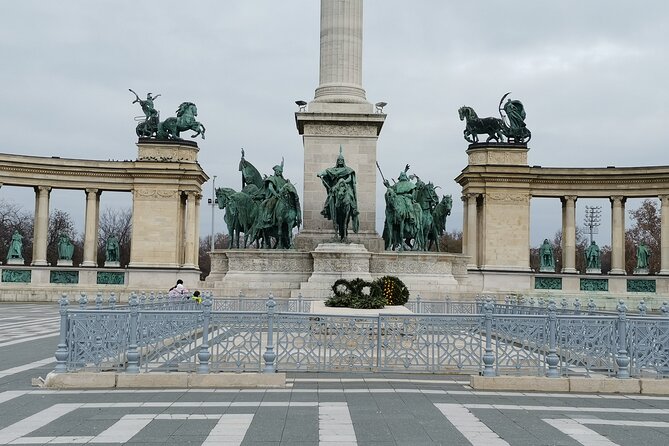
The day opens at Heroes’ Square, one of Budapest’s most iconic public monuments. You’ll stand among the statues of major figures from Hungarian history, and your guide will point out how the square’s design is meant to communicate identity and continuity. It’s a good opener because it gives you a reference point for everything that follows.
What I like about starting here: you don’t get lost in dates immediately. Instead, you get the sense of how the Hungarians see themselves—through symbols, national memory, and public space.
The good news: this stop is free admission and quick (about 25 minutes), so it doesn’t eat your day.
City Park stroll: Budapest as a place people actually live
From there you’ll head to Budapest Park (City Park). This is more than a pretty break. It’s a window into Budapest’s idea of leisure, and it’s also a lesson in urban design—City Park is often described as among the world’s first major public parks. That’s the kind of detail your guide can connect to what you’re seeing in front of you.
You’ll get time here (about 45 minutes), which I think is the right amount for a walk-through without turning into a march. If you’re the type who likes to slow down and look at building silhouettes and street rhythm, this portion works well.
Vajdahunyad Castle: why a “fairytale” building is historical anyway
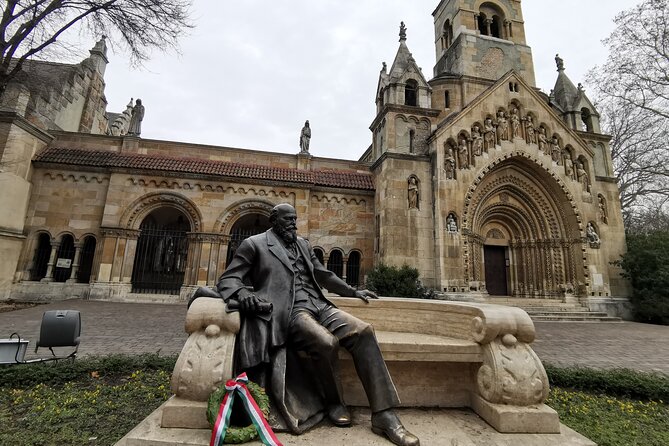
In City Park you’ll also visit Vajdahunyad Castle, a structure that’s known for its historical-style pastiche—an architectural collage showing evolution across centuries and styles found in Hungary. Expect it to feel playful at first glance, but your guide will explain why that mattered: it’s a way of presenting national architecture as a story you can walk through.
This is a shorter stop (about 15 minutes), and admission is listed as free.
You can also read our reviews of more historical tours in Budapest




Watch for the big clue in the park
During your walk, you’ll see the largest spa in Europe. The exact building name isn’t the point. The point is the context: Budapest’s thermal culture isn’t a side note. It’s part of how the city thinks about health, leisure, and identity.
Andrássy Avenue and the Hungarian State Opera: style with purpose
Next comes Andrássy Avenue, Budapest’s answer to a grand boulevard. You’ll recognize the vibe immediately—Neo-renaissance façades, townhouses, and the whole “people-walk-here-because-it’s-beautiful” feeling. Your guide will help you connect this elegance to who built it and why, so it doesn’t become just a photo stop.
You’ll spend about 30 minutes here, and it’s free of admission charges.
The Opera House: a highlight you can read as a symbol
On the same avenue you’ll stop at the Hungarian State Opera House (Magyar Állami Operaház). It’s listed as free admission for this visit time (about 20 minutes). In practice, this is a look-and-listen moment: you’ll see the building up close and get the significance behind it—how the city used major cultural institutions to project status and ambition.
If you’re even slightly into architecture or old-school performance culture, this is one of those “the building is the history” stops.
The Jewish Quarter: where memory lives in the streets
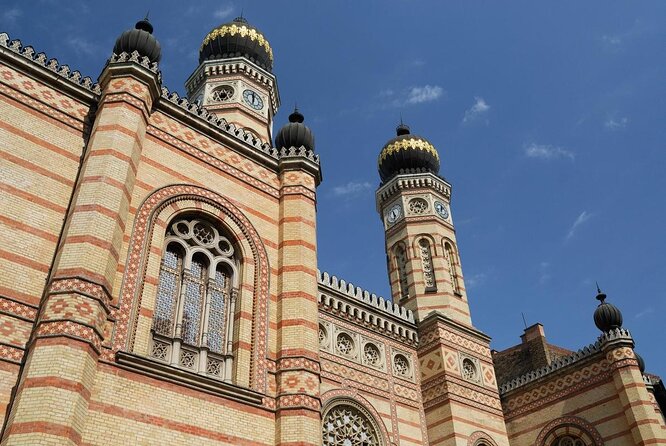
This is the emotional center of the day, and it’s also where the guide’s approach matters most. You’ll spend around one hour exploring Budapest’s Jewish Quarter, including the area that was used as a ghetto, plus key reminders such as the largest synagogue in Europe and the Holocaust Memorial nearby. You’ll also hear about the atmosphere of ruin bars and the way nightlife and memory can exist side by side in the same neighborhoods.
Important practical note: the Jewish Quarter stop is listed with admission ticket not included. That doesn’t mean you can’t look at the streets and memorial areas. It means if you want to enter specific ticketed sites, you’ll pay extra.
Why this stop is worth the time
You don’t just get facts here. You get something you can carry with you the rest of the trip: a sense of how Budapest absorbed trauma, rebuilt identity, and still shows layers of history in daily life. Even if you’ve read about the Holocaust, seeing memorial design in place changes how the story lands.
If you want a respectful pacing, you’ll be glad you have a scheduled hour rather than rushing through it as a side stop.
St. Stephen’s Basilica: a relic and a statement
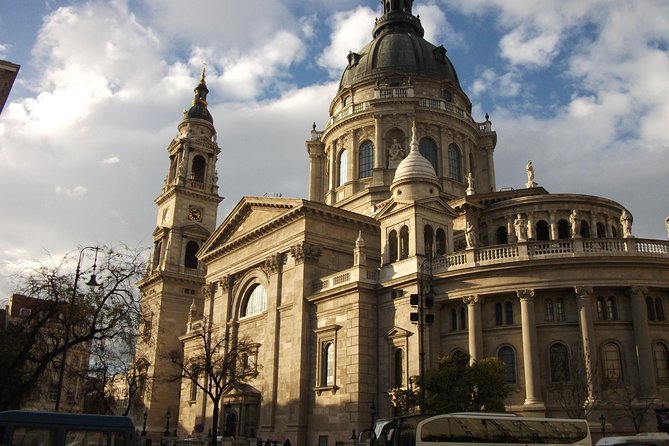
After the Jewish Quarter, you’ll head to St. Stephen’s Basilica (Szent István Bazilika). This stop centers on Hungary’s first king and includes an especially meaningful relic: the Holy Right Hand, described as the mummified hand of St. Stephen.
You’ll have about 20 minutes here, and it’s listed as free admission.
How to use this stop
This is a great place to slow down and look upward, then listen. A good guide will help you understand why the basilica isn’t only religious. It also functions as national symbolism—one more way the country puts identity into stone and ritual.
The Hungarian Parliament Building and the 1956 story
No first-time Budapest day feels complete without the Hungarian Parliament Building. Here you’ll walk around the outside and hear the history tied to communist Hungary, dictatorship, and the 56’ revolution.
You’ll spend about 30 minutes, and the outside visit is admission free. But there’s a key add-on you should know about: if you want to join an inside tour, you must book your Parliament ticket online in advance, then send the tour start time so your schedule can be adjusted.
The practical trade-off
Inside tours take time and timing matters. If you prefer to keep the day moving and avoid ticket stress, stick to the exterior and use the guide’s walk-around explanation. If interior access is a must for you, plan your ticket first so the day stays smooth.
Shoes on the Danube Bank: the most “photo-real” memorial
Next you’ll visit Shoes on the Danube Bank. This stop is short (about 5 minutes) and free admission, but it packs a punch. It’s designed around the sad story of people killed along the river, and the effect is strongest when you take it slowly rather than treating it like a quick snapshot.
How to make it hit
I recommend giving it your full attention for those few minutes. If you’re the kind of person who reads plaques quickly and moves on, force yourself to stop. This is one of those places where the detail is the point.
Chain Bridge to Buda Castle: kings, centuries, and views
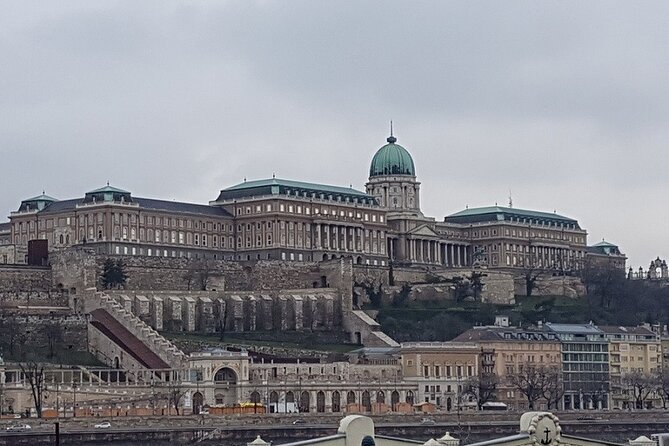
Then comes the transition across the city’s story line. After crossing the Chain Bridge, you’ll reach Buda Castle, the medieval residence of Hungarian kings from the 14th century.
You’ll have about two hours here, and it’s listed as free admission. That extra time is important. Castle area sights aren’t all “one-and-done.” Even if you don’t go into every museum, you need time to orient yourself and walk the grounds.
Why two hours works
With two hours, you can do this in a relaxed way:
- get oriented on the hilltop layout
- take in the castle architecture
- slow down for viewpoints your legs will want later
Your guide will help you understand what you’re looking at—so you’re not just moving through old walls. You’ll also be able to decide where to spend extra time if you want to return later in your vacation.
Fisherman’s Bastion: the panoramic payoff
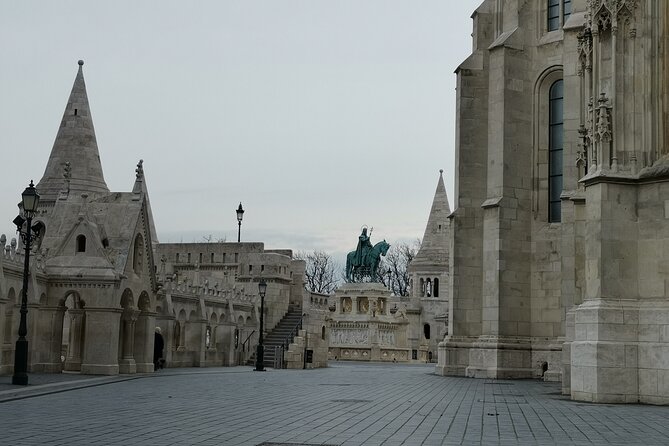
Finally, you’ll visit Fisherman’s Bastion for about 15 minutes. This is the classic viewpoint area where you can take panoramic photos of the city.
Admission is listed as free, and this stop is perfect as a closing chapter: you finish the day with a view that makes the whole route feel connected. When you’ve been walking through history, a big skyline moment helps you put it all together.
Price and logistics for a 7-hour private day
The price is $396.52 per group (up to 15 people) for about 7 hours. That group pricing can be great value if you can fill most of the group. If you’re traveling with friends, the per-person cost can drop fast.
But two things affect your real value:
1) How many people are in your group (up to 15).
2) Whether you add ticketed interiors like Parliament.
Entry fees are extra where listed, so you should budget a bit beyond the base price if you plan to go inside any ticketed attraction.
What’s included, and why it matters
Included features are strong for a history-focused day:
- Local guide / professional guide
- Private tour
- Hotel pickup
- Mobile ticket
- Offered in English
Hotel pickup is the underrated part. It saves time and reduces the anxiety of finding the right meeting point. It’s also helpful when your day spans multiple neighborhoods.
One more logistics note: transportation to and from attractions isn’t listed as included, so expect that your guide will rely on a mix of walking and getting around by public transit when needed, rather than a private bus transfer.
A realistic expectation on pace
This is a moderate-activity day. It’s not extreme hiking, but it’s a lot of walking between neighborhoods and viewpoints. Comfortable shoes are non-negotiable.
How the guides shape the experience (and why that’s worth paying for)
What you’re paying for here isn’t just a checklist of famous stops. It’s the guide’s ability to connect:
- why a monument was built that way
- what a building meant at the time
- how Hungary’s political turns show up in the streets
In the guide tradition tied to this tour, that flexibility shows up in how the day can be adjusted. Guides like Rashad have been praised for tailoring the itinerary to what you want to focus on, and for making visitors—especially those traveling with family—feel comfortable in a new city.
That matters if your interests are specific, like political history, architecture, or memorial design. You’ll get more out of the day when the guide can shift the emphasis.
Who should skip this tour
If you hate walking, want a slow café day, or prefer total freedom with no structure, you might feel boxed in by the schedule. Also, if you absolutely require multiple museum interiors with no extra costs, you’ll want to plan for entry fees not included at certain stops.
Should you book this Budapest history and culture tour?
If you’re visiting Budapest for the first time and want a single day that gives you context, direction, and memorable stops, I’d book it. The private guide attention, the sequence from Heroes’ Square to the Jewish Quarter to Parliament, and the final hilltop viewpoints make the day useful—not just scenic.
Book it sooner rather than later if your dates are fixed. It’s commonly reserved about 80 days in advance, which usually means it sells out or gets tight closer to the trip.
FAQ
Is this tour private?
Yes. It’s a private tour with only your group participating.
How long is the tour?
It runs for about 7 hours.
What time does the tour start?
The start time is 9:00 am.
How much does it cost?
The price is $396.52 per group (up to 15 people).
Is hotel pickup included?
Yes. Hotel pickup is included.
Is the tour in English?
Yes. It’s offered in English.
Are entry fees included for all stops?
No. Entry fees are extra. Some stops are listed as free, while others are listed as not included.
Do I need tickets for the Parliament building?
If you want an inside Parliament tour, you should book your ticket online before and send the tour start time so the schedule can be modified. The inside visit is not included by default.
Is food and drink included?
No. Food and drinks are not included.
What kind of physical activity level should I expect?
It’s listed as moderate physical fitness, since the day includes walking between neighborhoods and viewpoints.