REVIEW · BUDAPEST
Downtown Pest Walking Tour
Book on GetYourGuide →Operated by insightcities.com · Bookable on GetYourGuide
Budapest’s Pest feels like a living textbook. This 3-hour walk is built around one idea: how the city became Hungary’s political, financial, and religious center in the late 1800s. I love the historian-guided storytelling that makes the streets feel purposeful, and I love the way you cover major landmarks without rushing. One thing to consider: it’s mostly a walking route, so comfortable shoes really matter.
The route hits big visual hits in short order. You’ll spend time at Kossuth Square’s Parliament and move on to Freedom Square and the Stock Exchange Palace, plus signature Art Nouveau architecture and grand civic monuments.
The only potential drawback is pacing for people who prefer long photo stops. This tour packs a lot into three hours, and the focus stays on explanations as you go.
In This Review
- Key highlights you’ll actually feel
- Why Downtown Pest Still Feels Like a 19th-Century Power Center
- Meeting at Szamos Cafe: a simple start with an easy launch pad
- Kossuth Square and Hungary’s Parliament: scale outside, art inside
- Holocaust Monument by the Danube: a required moment of context
- Freedom Square and the Stock Exchange Palace: money, beauty, and power
- Cardinal Mindszenty and St. Stephen’s Basilica: politics, faith, and power
- The second-largest synagogue in the world: Jewish Budapest’s city-building role
- Andrassy Boulevard and the Opera House: noble planning in motion
- Heroes Square finale: the 1896 1,000-year anniversary feeling
- Price and value: what $123 buys in three hours
- Practical tips to make your walk smoother
- Should you book this Downtown Pest Walking Tour?
- FAQ
- Where does the tour meet?
- How long is the Downtown Pest walking tour?
- What’s the price per person?
- Is the tour in English?
- What kind of group is it?
- What is the tour cancellation policy?
Key highlights you’ll actually feel
- Historian guide, English language tour: Live interpretation with a focus on context, not just facts.
- Kossuth Square to Heroes Square in one sweep: A clear downtown line along the Danube-side core and the grand avenues behind it.
- Parliament and Freedom Square are the heavy hitters: You get both the exterior scale and the inside artwork-focused experience at Parliament.
- Holocaust Monument right by the river: A sobering stop that frames the area in WWII history.
- Art Nouveau + Andrassy Boulevard layout: Budapest’s famous style isn’t just seen, it’s explained as urban design.
- Major Jewish landmarks on the route: You’ll visit the second-largest synagogue in the world as part of a broader city story.
Why Downtown Pest Still Feels Like a 19th-Century Power Center
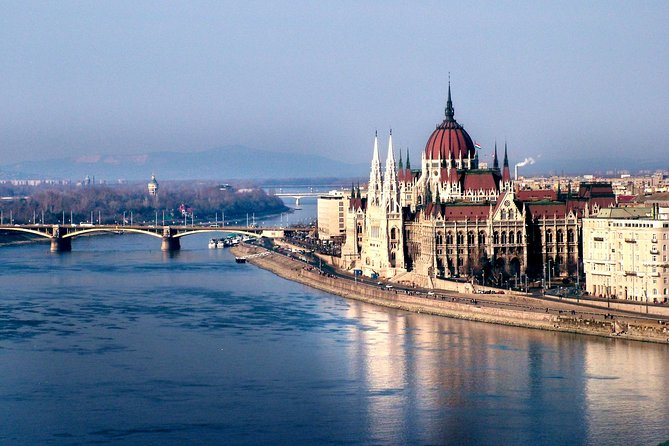
Pest is the “city of institutions” side of Budapest. The Danube splits the story, but in Pest you see where the young Hungarian nation wanted to project strength—politically, financially, and religiously—starting in the second half of the 19th century.
What makes this tour work is that it doesn’t treat landmarks like separate photo ops. The walk is framed as one connected rise: how money and governance pulled people, styles, and architecture into the same districts. That’s why the itinerary keeps moving from Parliament and the Holocaust Monument toward the banking-focused core at Freedom Square, and then out toward the grand avenue planning associated with nobility along Andrassy Boulevard.
If you like walking tours that help you understand what you’re looking at, this style fits. You’re not just seeing famous buildings—you’re getting the reason they were built where they were.
You can also read our reviews of more walking tours in Budapest


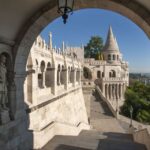
Meeting at Szamos Cafe: a simple start with an easy launch pad
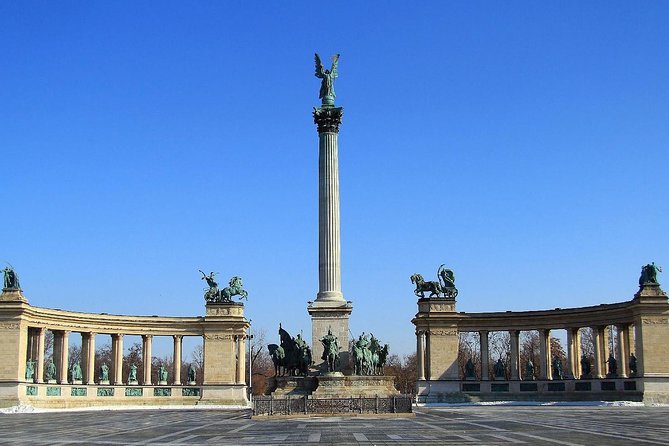
The meeting point is Szamos Cafe, at Kossuth Lajos tér 10. This is a practical place to start because you’re already in the heart of the Kossuth Square area where the tour begins.
From there, the walk starts at Parliament at Kossuth Square. That matters because Parliament sets the tone. Once you see the scale and ambition of that 1896 landmark, it becomes easier to understand why later stops—banking buildings, grand civic squares, and religious institutions—feel so serious and planned.
For the best experience, I’d suggest arriving a few minutes early so you can settle in before the group starts moving. This kind of downtown route is tight, and the explanations flow best when you’re already with the group.
Kossuth Square and Hungary’s Parliament: scale outside, art inside
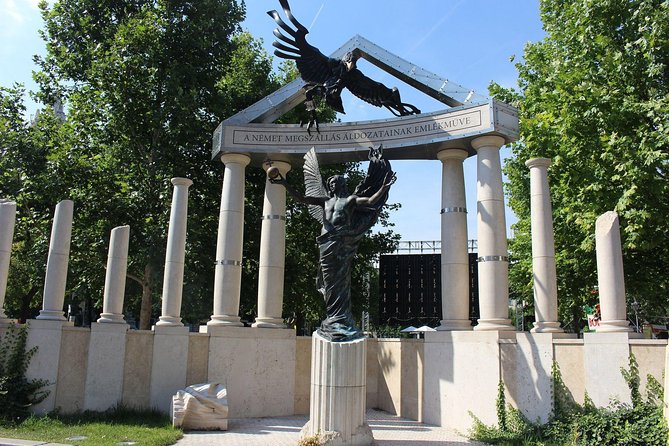
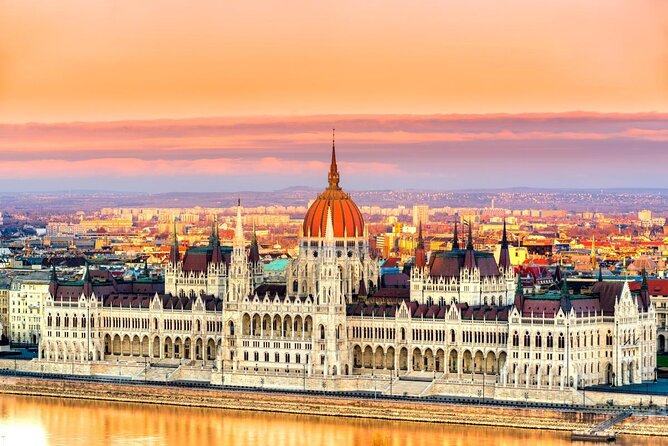
The tour begins with Hungary’s Parliament. It was inaugurated in 1896, and it was described as the largest and most costly structure ever built in Hungary at that time. From the outside, the building reads as pure authority: size, symmetry, and a clear message that the nation wanted to look permanent.
Then you shift inside, where the focus is on the artwork. You’ll see pieces that represent nearly every famous Hungarian painter and sculptor of the era. That artistic sweep is a big deal, because it shows how politics and culture were linked in the late 1800s. This wasn’t just a seat of power—it was also a national stage.
Around Kossuth Square you’ll also admire the surrounding monuments and buildings. The value here is that the tour doesn’t stop at one “wow” structure. It uses Parliament as the reference point to help you notice what else was placed nearby and why.
One note: if you’re the type who loves long museum-style viewing, you might want extra solo time afterward. This stop is strong, but the tour keeps the momentum.
Holocaust Monument by the Danube: a required moment of context
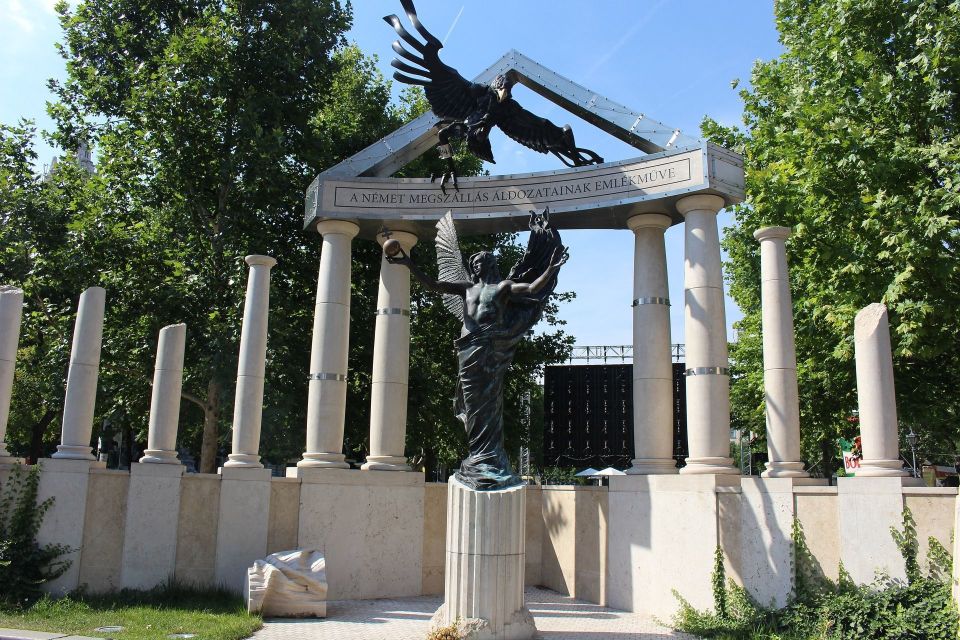
Just behind Parliament, on the riverfront, the walk includes the Holocaust Monument. It memorializes thousands of Jewish citizens of Budapest who were killed on that same spot in the last months of WWII.
This is not a casual stop. It’s a moment that reframes the surrounding grandeur. You start the walk with architecture meant to project national strength, and you end up facing the brutal reality that those same streets and neighborhoods were part of real human catastrophe.
If you want to be thoughtful here, slow down. Let the guide’s framing land, and give yourself a few seconds to absorb what the location means before moving on.
Freedom Square and the Stock Exchange Palace: money, beauty, and power
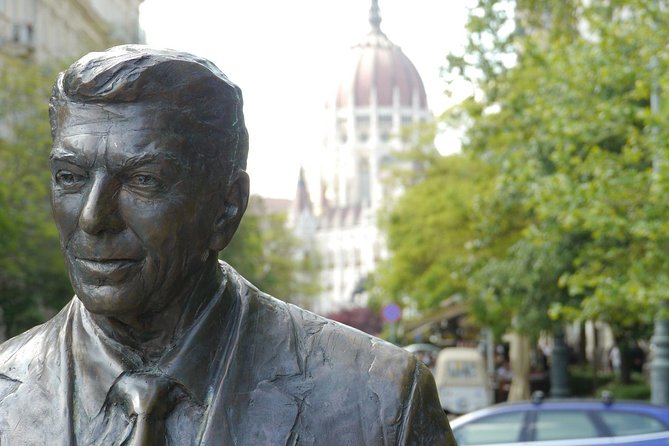
Next up is Freedom Square, originally built as the financial center of the city. Many people call it Budapest’s most beautiful square, and the design helps explain why. The space reads grand without being random: it’s the kind of public room where banking institutions make sense.
The centerpiece in your route is the Stock Exchange Palace, a massive structure that still sits like a symbol of the city’s historic economic ambition. The tour also spotlights the surrounding opulent buildings that housed banks—so you understand this wasn’t just one impressive address, but a whole financial district idea.
This stop is one of the best value moments for first-time visitors. You get a compact education in how the city organized wealth and influence. And you see how the look of finance—stone, scale, and formal architecture—was meant to communicate credibility and permanence.






Cardinal Mindszenty and St. Stephen’s Basilica: politics, faith, and power
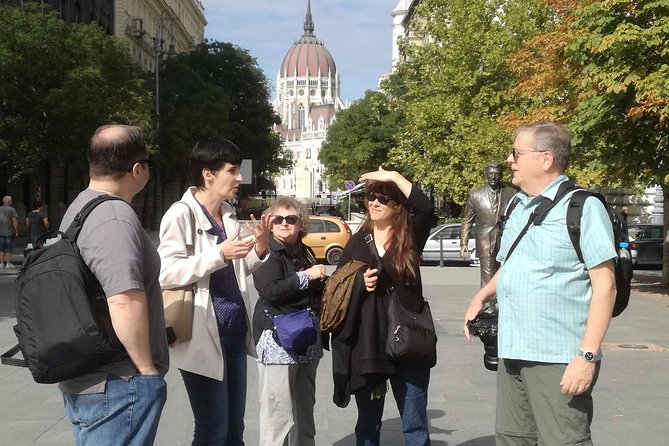
From Freedom Square, you’ll see the statue of Cardinal Mindszenty, a major figure in Hungary’s Catholic Church. The guide explains that he lived hidden for 15 years in the U.S. embassy while he was on the run from the communists.
That detail matters because it turns the square into more than scenery. It shows how religious leadership intersected with political pressure, and how even international spaces like an embassy became part of Hungary’s internal conflict.
Then the walk continues toward St. Stephen’s Basilica. On the way, you pass several of Budapest’s famous Art Nouveau buildings. These aren’t described as decoration only. The tour connection helps you notice the shapes and street presence of the style and how it supports the overall feel of the district—formal, confident, and designed to impress.
A practical tip: if you’re planning photos, bring your camera-ready attention here. Art Nouveau details reward close looking, and the walking pace may not give you long pause time unless you spot your angle quickly.
The second-largest synagogue in the world: Jewish Budapest’s city-building role
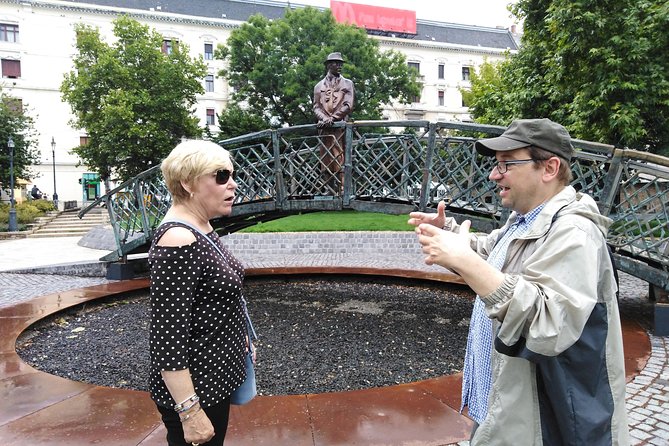
A bit farther along, you’ll visit the second-largest synagogue in the world. It’s presented as a monument to the important role the city’s Jewish population—especially its wealthy bourgeois—played in Budapest’s development.
This is a key part of the story this tour tells: the city didn’t grow just through government and industry. It grew through communities that brought resources, leadership, and culture—then built institutions that still shape the skyline.
If your usual travel style is “I want one stop that changes how I see the city,” this is it. The synagogue stop helps you connect architecture to community impact, not just to religious practice.
Andrassy Boulevard and the Opera House: noble planning in motion
After the synagogue area, the route travels along—and even under—Andrassy Boulevard, described as an esplanade designed for the country’s nobility. The key idea is planning: the boulevard wasn’t just a road. It was a designed public space with status built into its purpose.
You’ll also get a short stop at the Opera House. Even if you don’t go inside, the exterior presence works well in a walking tour because it’s one of those anchor buildings that helps you visualize the broader cultural ambitions of the city during this period.
This stretch is where the tour starts to feel like a “how the city works” walk. You’re tracing the space for people who had the influence to shape urban life. That makes the later finale at Heroes Square more meaningful.
If you’re a person who loves city layout, this section tends to click instantly.
Heroes Square finale: the 1896 1,000-year anniversary feeling
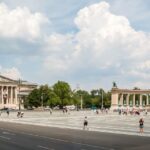
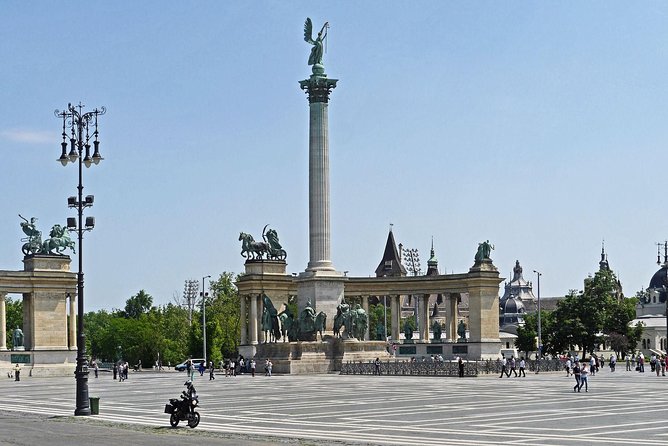
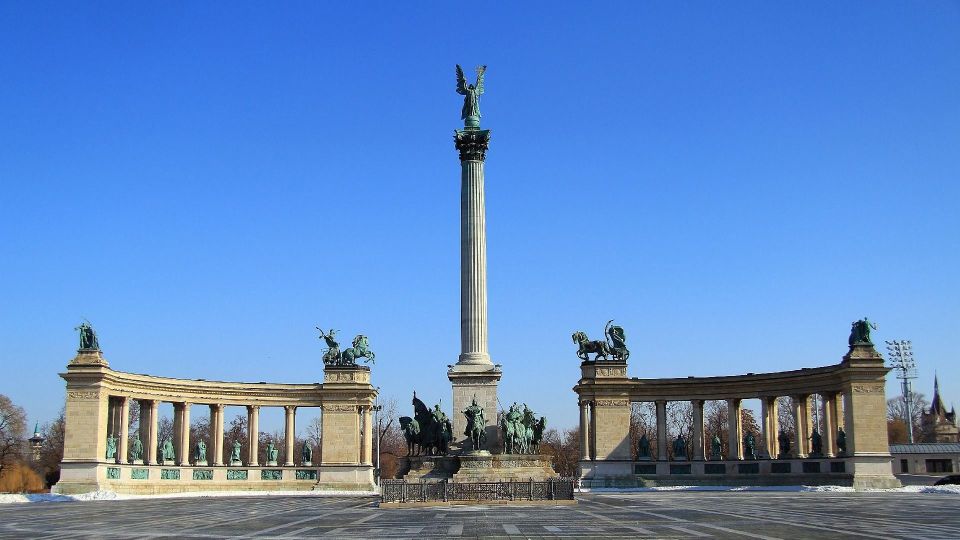
The tour ends at Heroes Square. In 1896, Hungarians celebrated the 1,000-year anniversary of the founding of their kingdom.
It’s a fitting finish. After learning how the city rose into a center of power—financially, politically, and culturally—the square becomes a national conclusion. It’s not just a crowd-pleaser location. It’s the symbolic endpoint of a nation telling itself a story.
Heroes Square also gives you a chance to step back after the walking pace. Take a moment, let the scale register, and think about how the tour’s landmarks are connected by one theme: a country building legitimacy through visible institutions.
Price and value: what $123 buys in three hours
At $123 per person for a 3-hour guided walk, the value depends on what you want from a city tour. If you’re the type who can read a brochure and move on, you might not get enough. But if you want your time in Budapest to do more than sightseeing—if you want context delivered clearly—this price can make sense.
Here’s what you’re paying for, in practical terms:
- A live historian guide who keeps the storyline moving through real locations
- A route that focuses on major districts and “why” behind the architecture
- A tour format that hits both landmark exteriors and meaningful interpretive stops like the Holocaust Monument
The guided quality is also a standout factor. In the past, the tour has been led by guides like András and Zsofia, both highlighted for strong storytelling, answering questions without rushing, and maintaining an objective tone in how history is presented. The big takeaway for you: you’re not just getting a script—you’re getting a guide who can slow down and still keep the group moving.
Practical tips to make your walk smoother
This route is designed for walking, so plan for real time on your feet. I’d wear comfortable shoes and dress for the weather you’ll face in Central Hungary that day.
Bring a water bottle if it’s warm, and keep your phone charged for photos at the big architectural stops: Parliament, Freedom Square, and the Art Nouveau streets you pass on the way to St. Stephen’s Basilica.
Also, decide how you like to travel: if you love asking questions, this kind of tour format is friendly because the guide’s job is to explain as you go. If you’re quieter, don’t worry—the stops still work even if you keep to yourself.
Should you book this Downtown Pest Walking Tour?
I’d book it if you want a tight, smart introduction to downtown Pest with a historian who connects buildings to the national story of the late 1800s. It’s especially worth it if Art Nouveau architecture, civic monuments, and the political-religious-economic links between them are your kind of travel theme.
Skip it (or add extra time independently) if you prefer tours with lots of long free time. This one is designed to cover a lot, and it favors explanation over extended wandering.
If you can match your expectations to the format—three hours of focused storytelling through major sites—it’s a strong way to see Pest with purpose, not just pretty views.
FAQ
Where does the tour meet?
The meeting point is Szamos Cafe, Budapest Kossuth Lajos tér 10.
How long is the Downtown Pest walking tour?
It lasts 3 hours.
What’s the price per person?
The price is $123 per person.
Is the tour in English?
Yes, it’s a live English tour with a guide.
What kind of group is it?
It’s offered as private or small groups.
What is the tour cancellation policy?
You can cancel up to 24 hours in advance for a full refund.