REVIEW · BUDAPEST
Communist Budapest Walking Tour
Book on GetYourGuide →Operated by insightcities.com · Bookable on GetYourGuide
Budapest’s communist years, explained street by street. This walking tour makes the ideology feel concrete by pointing at the exact places where Hungary lived under tight political control, yet still got small daily liberties. I like how the historian-guide approach stays conversational, often using old photos on an iPad to show what changed. I also like the route itself, moving from the 1956 uprising sites to everyday architecture from the 1970s. One possible drawback: if you already know Hungary’s late-20th-century story well, you may find the framing more focused on setting the stage than on deep technical detail about every policy shift.
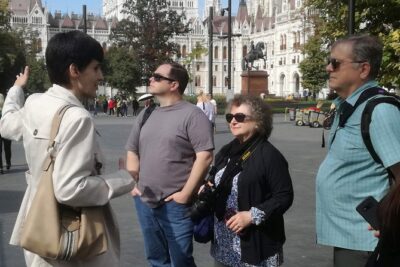
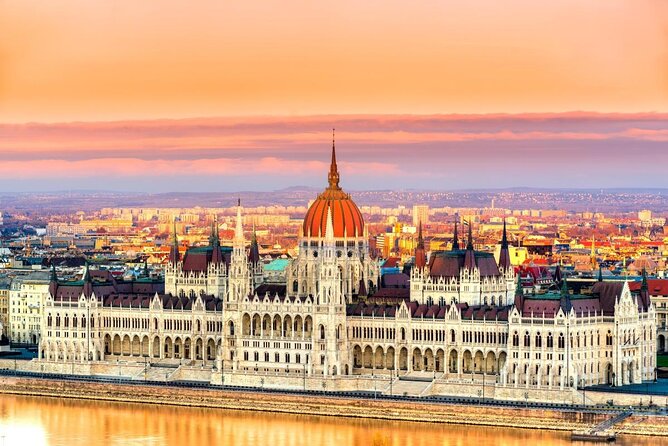
You start in central Budapest at Bambi Eszpresszó (Frankel Leó út 2/4, 1027), then keep moving by foot and public transit as the tour traces power from parliament and revolutions to secret-service repression and Cold War showpieces. The overall tone is balanced: this is not just propaganda trivia, and it is not just a tragedy parade either. The goal is to help you read the city like a document—stone, statues, street layouts, and even building upgrades.
Plan on a 3-hour walk with some metro and a short trolley-bus ride. That means comfortable shoes matter, and you’ll want to pace yourself so you can absorb what you’re seeing. (Also, tram and metro tickets are not included, so you’ll need to sort those separately.)
In This Review
- Key things that make this tour worth your time
- Bem József Square and a 1960s coffeehouse: starting with real street life
- Kossuth Square and Parliament: learning to read monuments after the shooting stopped
- Freedom Square’s Cold War symbols: four stone reminders with different meanings
- 1970s housing estates: grey blocks that once meant modern life
- Puskás (People’s) Stadium and Socialist Realism: propaganda you can walk around
- Stalin’s trolley bus to Dozsa György Street: how parades turn streets into power
- House of Terror and the Berlin Wall slab: the hard ending that makes sense
- Price and logistics: does $123 feel fair for what you get?
- Who should book this tour (and who might want something else)?
- Practical tips to get more out of the walk
- Should you book the Communist Budapest Walking Tour?
Key things that make this tour worth your time
- Historian-guides with real research backgrounds lead the walk, not just a script.
- Old photos on an iPad help you compare then vs. now, especially on the Stalin-era parts.
- 1956 gets anchored in specific squares like Bem József and Kossuth, not vague background.
- You see everyday communism in 1970s housing estates, where comfort meant power and control.
- Socialist Realist art shows how the state wanted you to feel about workers, soldiers, and the future.
- House of Terror and the Cold War markers at Freedom Square add the hard edges and symbolism.
Bem József Square and a 1960s coffeehouse: starting with real street life
The tour opens at Bem József Square, tied to the early energy of the 1956 uprising. This matters because it sets a theme you keep seeing throughout the walk: political change wasn’t happening in a vacuum. It started with gatherings, rumors, and crowds on recognizable city ground.
From there, you’ll pass a coffeehouse that has kept its original interior from the 1960s. Even if you’re not a café person, this is a smart move by the guide. Communism can sound like big laws and big speeches, but the country’s texture was also in ordinary spaces—where people sat, talked, and tried to live normal lives while the state watched the boundaries.
I like the way the tour uses moments like this to underline the system’s bargain: small liberties here, obedience there. You can almost feel how everyday routine continued, while politics pushed against it.
Practical note: you’ll likely be outside and inside on the route, so dress for Budapest’s weather and keep an eye on meeting times so you don’t lose the flow.
You can also read our reviews of more walking tours in Budapest



Kossuth Square and Parliament: learning to read monuments after the shooting stopped
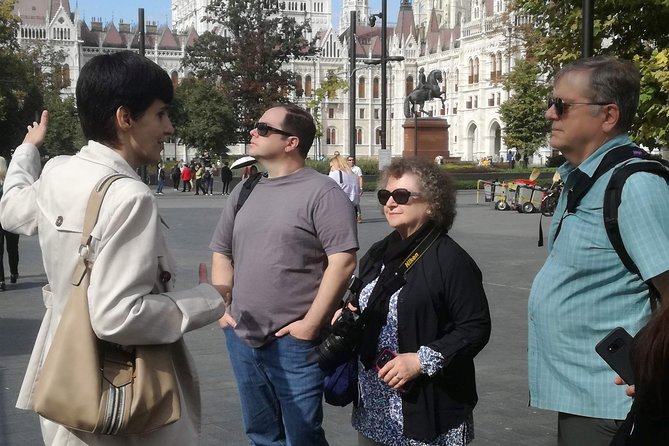
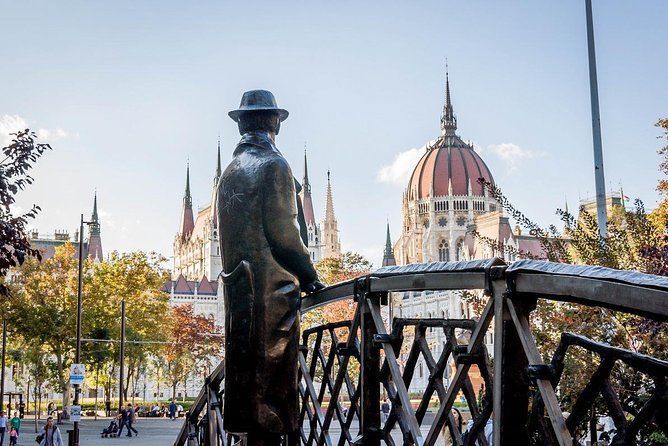
Next comes Kossuth Square, a key setting for the revolution’s turning points. The tour connects what happened in 1956 to what still stands in front of you. That’s the difference between hearing about history and actually using it: you learn what to look for when you see plaques, statues, and symbolic placements.
From Kossuth Square and the Parliament area, you’ll also see monuments that mark the political and armed conflicts of 1956. The value here is interpretive. The city’s memorials can look like decoration if you don’t know the context. On this walk, they become evidence—signals of whose story was allowed to dominate, and how power wanted future generations to remember.
This stop also helps you understand something that’s easy to miss: regimes don’t just rule through force. They rule through interpretation. What gets remembered, and what gets ignored, becomes part of control.
Freedom Square’s Cold War symbols: four stone reminders with different meanings
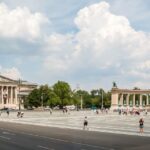
The route then shifts to Freedom Square, where the Cold War is presented in concrete, literal form. You’ll see four stone structures connected to major foreign powers and secret infrastructure: the U.S. embassy, a monument to the Soviet army, a statue of President Ronald Reagan, and the entrance to a secret atomic shelter.
I love this part because it forces you to think about Budapest as an international stage, not only a Hungarian story. Under communism, Hungary was not just governed internally. It also existed in a global power game where symbols mattered. An embassy building, a statue, and a shelter entrance are all messages—but they’re messages in different languages.
You don’t just see objects. You get guided explanations that tie them back to how the regime and its allies wanted people to feel about security, threat, and legitimacy. It’s a good reality check if you tend to think of communism as purely ideological.
Tip: bring your curiosity here. Freedom Square is visually straightforward, but the meaning is layered once you’ve heard the framing.
1970s housing estates: grey blocks that once meant modern life
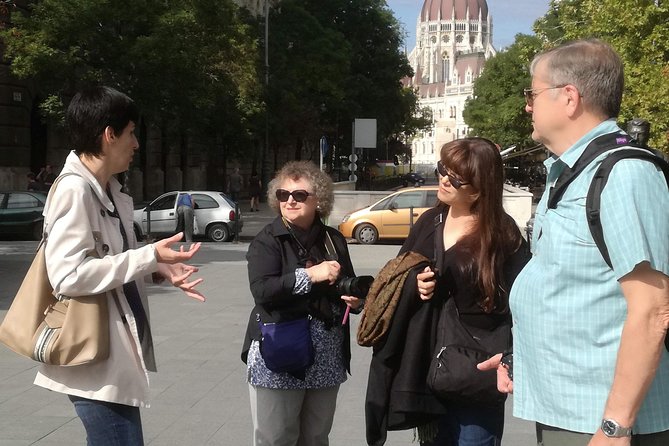
One of the smartest itinerary choices is the stop at the 1970s housing estates at the edge of the city center. Today, those drab and grey apartment blocks can feel bleak at first glance. But the guide will explain the mindset shift that happened at the time: young Hungarian families were often overjoyed to receive apartments with elevators and modern conveniences that didn’t exist in older buildings.
This is where the tour becomes especially useful for understanding daily life under an authoritarian system. The state could restrict you in big ways, yet still deliver tangible benefits. That mix is part of how control worked. People weren’t only governed by fear; many were also soothed by the promise of improvement.
If you’ve ever wondered how everyday people coped under communism—without turning the story into a simple good vs. bad narrative—this stop helps you see the human mechanics.
What to watch for: look at how the neighborhood design supports density, movement, and routine. Even without being an architecture nerd, you can sense how urban planning can serve political goals.
Puskás (People’s) Stadium and Socialist Realism: propaganda you can walk around
Next you’ll visit the former People’s Stadium, now known as Puskás Soccer Stadium. It’s highlighted as one of the places in Budapest where you can still see typical Socialist Realist statues—heroic workers, soldiers, and intellectuals posed like they’re pointing toward a bright future.
This is art, but it functions like messaging. Socialist Realism wasn’t made to be neutral; it was made to teach citizens what to admire. On the tour, the statues aren’t just a photo stop. They’re explained in terms of how the regime wanted to shape identity: who mattered, what labor meant, and how the future should look.
I also like that the tour ties the aesthetics to the political logic rather than treating the statues as odd relics. Once you connect the style to the goal, you can understand why it was everywhere—because it trained people’s sense of what success and virtue looked like.




Stalin’s trolley bus to Dozsa György Street: how parades turn streets into power
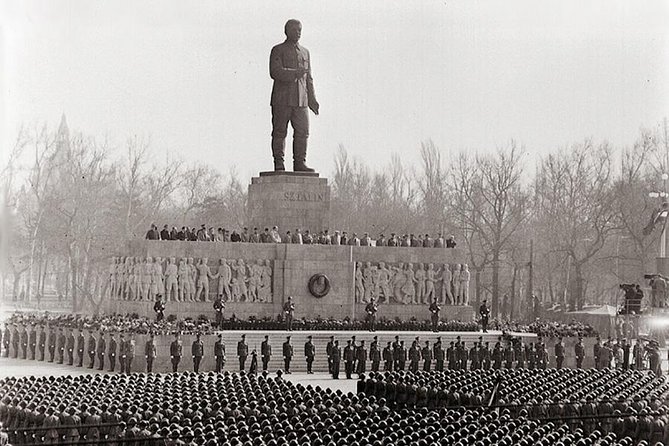
A short ride on one of Stalin’s trolley buses then takes you to Dozsa György Street, a broad boulevard used for May Day parades. This is a fun but meaningful transition. The transport itself isn’t just a novelty; it’s a moving reminder that the era’s identity was built into public life.
You’ll also hear about how the boulevard became a stage for collective display. May Day parades weren’t just celebrations. They were rehearsals for unity under the system, with the state controlling the choreography of pride.
The guide uses the iPad and older photographs to show the contrast between today’s look and the city as it was during Stalin’s era. That visual comparison is a real help here. You don’t have to guess what used to happen on these streets. You can see the gap.
House of Terror and the Berlin Wall slab: the hard ending that makes sense
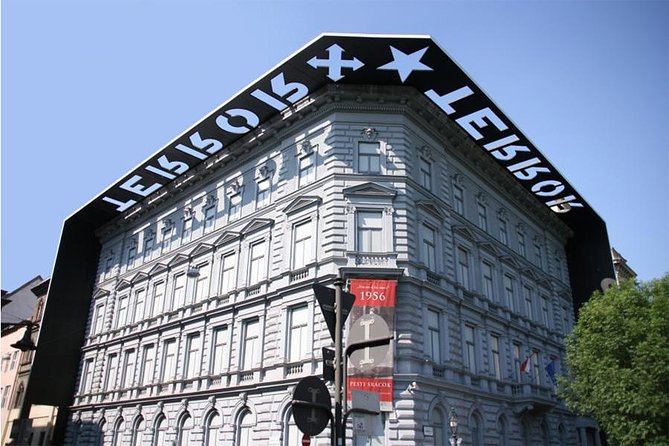
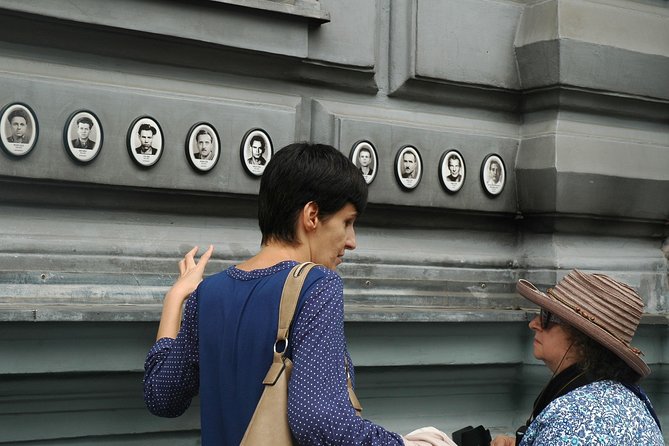
The final major stop is the House of Terror, a museum housed in the former headquarters of the secret services. This is the part where the tour’s tone tightens, because the museum focuses on the crimes of communism, especially during the Stalinist years.
The location matters. When a museum like this is in a former headquarters, you’re not only learning about what happened—you’re standing in the kind of space where repression was organized. It gives weight to the earlier points about obedience and control.
In front of the building, you’ll also see a slab of the Berlin Wall. That detail adds a wider perspective. Hungary wasn’t alone in its experience. The wall symbolized a system of division stretching beyond one country’s borders, and it helps you connect Budapest to the broader Cold War architecture of fear.
This stop can be emotionally intense. If you tend to prefer lighter sightseeing, you might want to mentally pace yourself so you can absorb the messages without feeling overwhelmed.
Price and logistics: does $123 feel fair for what you get?
At $123 per person for a 3-hour guided experience, the value depends on what you want. If you’re only after a quick overview, you might feel it’s pricier than a standard “see the sights” walk. If you want someone to connect the dots between monuments, daily life, and the political deal behind it all, the price starts making sense.
Here’s what you’re paying for in practical terms:
- A historian guide (and the tour specifies guides from academic and professional backgrounds like professors, doctoral students, journalists, art critics, and published authors).
- A route that uses multiple layers of Budapest—political squares, everyday housing, propaganda art, Cold War symbolism, and a major repression museum.
- Live interpretation in English and a guide who can adapt the pacing to what you already know.
Also, tram and metro tickets are not included. That’s not a dealbreaker, but you should plan for it so you’re not scrambling mid-tour.
If you care about flexibility, the tour offers free cancellation up to 24 hours in advance and reserve now & pay later options, which is handy when your schedule is still shifting.
Who should book this tour (and who might want something else)?
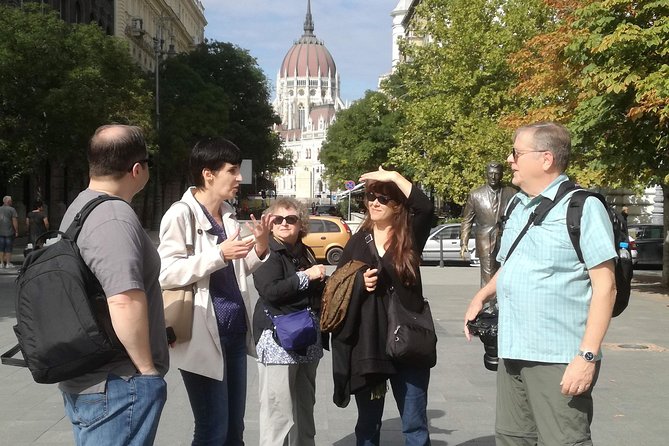
I think this tour fits best if you want history tied to street-level reality. You’re going to walk through the city’s political layers: revolution-era locations, Cold War symbolism, Soviet influence, and the architecture of daily life.
It’s also a good choice if you like guides who can adjust to your baseline. One standout theme from the experience is that the guide can adapt to what you’ve already seen, which helps avoid redundancy and makes the interpretation feel more personal.
I’d consider a different option if you already have a deep familiarity with Hungary’s late-20th-century timeline. In that case, you may crave more on the fine-grained mechanics of change and transition. This tour’s strength is framing and anchoring, not trying to be an hour-by-hour academic lecture.
Best match:
- First-time visitors who want meaning behind Budapest’s communist-era remnants
- Travelers who enjoy socially grounded history, not only battles and leaders
- Anyone who wants to pair the more famous sites with the less obvious everyday machinery of the system
Practical tips to get more out of the walk
Bring comfortable shoes. Even though the tour includes metro and a short trolley ride, the city stops add up.
Come with a light curiosity mindset:
- When you see a statue, try asking what the state wanted you to admire.
- When you see an apartment building, ask what it offered people in exchange for staying inside the system.
If you prefer a slower pace, it’s worth noting the tour has been described as conversational and at a relaxing tempo. That’s a sign it should work well even if you’re not the type to sprint between sights.
Finally, if you’re planning to ride metro and tram during the tour window, sort your tickets ahead of time so you don’t lose time waiting at the machines.
Should you book the Communist Budapest Walking Tour?
I’d book it if you want Budapest’s communist-era story explained through the places you can actually stand in front of: 1956 squares, Cold War symbols, 1970s housing optimism, Socialist Realist statues, and the House of Terror.
Skip it or at least consider alternatives if you already know the era in detail and you’re chasing a technical, deeply granular timeline. This experience is at its best when it helps you see how control and daily life interacted—stone by stone, street by street.
If you want a guided route that turns the city into a readable document, this one is a strong pick.