REVIEW · BUDAPEST
Communist Budapest Walking Tour
Book on Viator →Operated by Insight Cities · Bookable on Viator
Budapest has a second, darker skyline. This 3-hour Communist history walk ties the Cold War to what you can still see in plain daylight. I especially liked how the small-group format keeps the questions coming, and how guides like András and Kata turn monuments into real stories you can understand fast.
What surprised me most was the mix: big, famous places like Parliament and Liberty Square, plus the lesser-seen political details around them. If you like learning how propaganda and power show up in everyday streets, this is your kind of tour.
One possible drawback: if you only want postcard views and zero heavy topics, this one may feel like a history lesson in walking shoes.
In This Review
- Key highlights worth your time
- What you’re really buying: a guided “politics map” of Budapest
- The group size and the guide make a difference
- Getting to the start: where the tour begins and how you move
- Stop 1: Parliament area and Kossuth Square’s 1956 thread
- Stop 2: House of Terror outside view and the Berlin Wall slab
- Stop 3: People’s Stadium (now Puskás) and socialist realist propaganda
- Stop 4: Ronald Reagan’s statue and Hungarian reactions to the Iron Curtain
- Stop 5: Bem József Square, coffee culture with a 1960s interior
- What to bring (so you don’t waste the experience)
- Best fit: who should book this Communist Budapest walk
- Price, value, and what you get for your time
- If you’re deciding: should you book?
- FAQ
- How long is the Communist Budapest walking tour?
- What does the tour cost?
- Is the tour in English?
- What’s included in the price?
- Is admission to the House of Terror Museum included?
- Where does the tour start and where does it end?
- Do I need transit tickets in Budapest?
- Can I pick a morning or afternoon departure?
- What’s the cancellation policy?
Key highlights worth your time
- Small group pacing: up to 8 people, so you’re not lost in the crowd
- Historian-led: local hosts with answers that go past the basics
- Soviet and Cold War landmarks: including the Soviet Army memorial area and Freedom Square context
- 1956 uprising sites: you connect the dots between streets and monuments
- House of Terror stop: you finish right outside, with the Berlin Wall slab in view
- Socialist realist art in real locations: statues at the former People’s Stadium area
What you’re really buying: a guided “politics map” of Budapest
Yes, it’s a walking tour. But the real value is that you leave with a mental map of how the communist era shaped Budapest’s public space. Instead of random facts, you get a timeline you can test on the street: revolutions, Soviet influence, and the Cold War all show up in stone, statues, and square layouts.
The guide’s job is to make those visuals legible. You’ll hear why certain buildings and monuments were placed where they were, and what they were meant to signal to ordinary people. That’s also why this tour tends to work so well for non-history people—because it explains what you’re looking at, not just when it happened.
At $126.50 per person for about 3 hours, the price only feels high if you expect a casual chat and a quick photo stop. Here, you’re paying for a historian-led walk with structured stops, plus help with transit if you don’t already have a pass. In practice, it’s not about “more sights.” It’s about getting more meaning per stop.
You can also read our reviews of more walking tours in Budapest


The group size and the guide make a difference
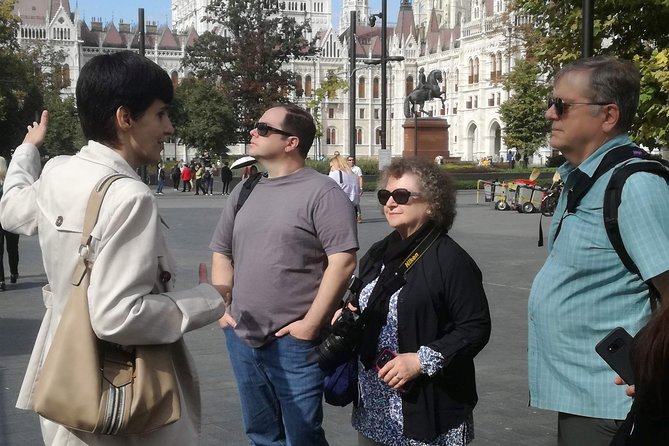
This tour runs as a small group (maximum of 8). That matters because communist-era history is not one-note. You’ll likely want to ask follow-ups like: Why did certain symbols show up here? What did this square mean in 1956? How did foreign pressure feel on the ground?
That’s where guides like András really shine, based on how people describe their conversations and the depth of answers. Guides like Kata also seem to hit a key point: if you want only sightseeing, you may find it too focused on context. If you want to understand why Budapest’s streets look the way they do, the hosting style is a big win.
English is offered, and you can choose morning or afternoon departure. That flexibility helps if you’re planning around museum time later.
Getting to the start: where the tour begins and how you move
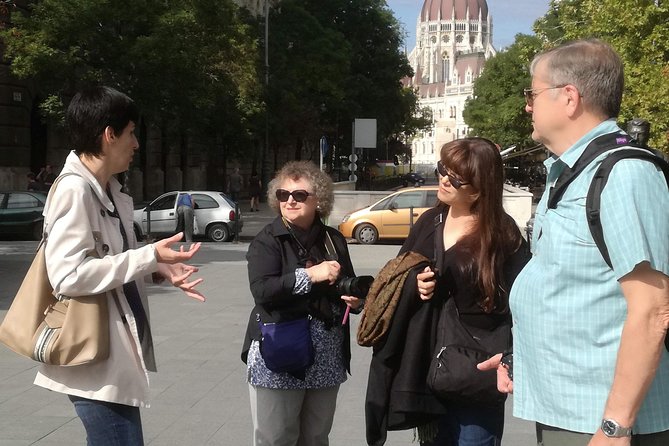
The walk starts at Frankel Leó út 2-4, 1027 Hungary. From there, you’ll head toward central sites using local public transit—there’s at least one subway leg on the way.
Don’t stress if you don’t already have transit sorted. The guide will help you purchase Budapest tram and metro tickets if you don’t have a visitor pass. That’s a practical touch because nothing slows a history tour like fumbling for the right ticket while everyone else is already learning the story of the next monument.
By the end, you’ll finish outside the House of Terror Museum area at Andrássy út 60, 1062 Hungary. You’re also close to where you might want to go next if you decide the story needs more facts than the tour provides.
Stop 1: Parliament area and Kossuth Square’s 1956 thread
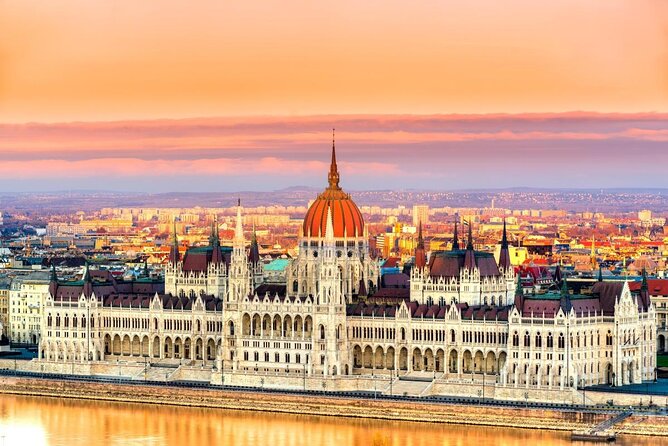
The tour opens with the Hungarian Parliament Building and the monuments around Kossuth Square. You’re basically stepping into a setting where political change is meant to be seen. From there, the guide walks you through markers tied to the 1956 revolution—not as vague background, but as visible elements you can point to.
This first stretch also does something smart: it connects revolution imagery with later Cold War messaging. That way, when you reach Liberty Square, you’re not hearing two separate stories. You’re seeing the evolution of power and propaganda in the same city.
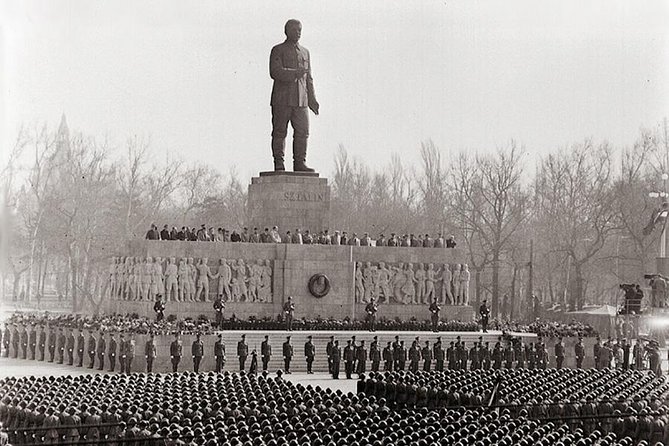
As you move toward Liberty Square, you’ll discuss Cold War themes connected to major political actors and what their presence signaled in Budapest. Expect stops near the US Embassy, the monument to the Soviet Army, and a Ronald Reagan statue. You’ll also get context tied to an atomic shelter.
Practical tip: bring your walking stamina for this early part. The tour is timed, and the guide keeps the flow moving so you don’t lose the narrative thread.
Stop 2: House of Terror outside view and the Berlin Wall slab
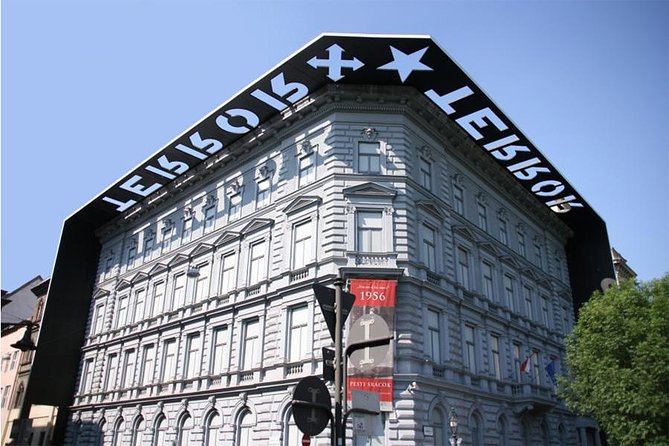
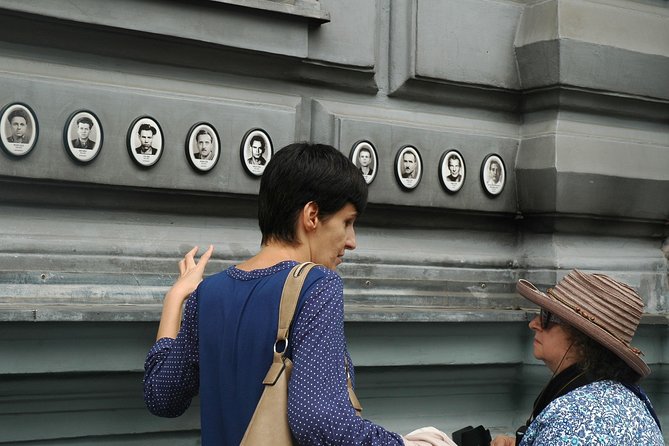
The second major moment is the House of Terror Museum. Here’s the key detail: the tour does not include admission to the museum exhibits. Instead, you get an outside orientation at the impressive building—its identity tied to the former communist secret services.
Right in front, you’ll see a slab of the Berlin Wall. Even without going inside on the tour, that visible artifact gives the stop weight. It’s a visual shortcut to the era the tour is discussing, and it helps you understand why the museum is considered a serious piece of historical memory.
Possible drawback: if you were hoping the tour would function like a full museum visit, it won’t. You finish outside, and if you want the inside exhibits, you’d need to plan that separately. Still, as a landing point for Cold War learning, it works well because you leave with a sharper sense of what the building represents.




Stop 3: People’s Stadium (now Puskás) and socialist realist propaganda
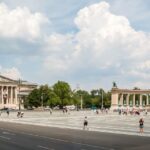
Next you’ll stop at the former People’s Stadium, which is now Puskás Ferenc Stadium. What makes this stop interesting isn’t sports nostalgia—it’s the political art.
Classic socialist realist statues remain in place, and the guide uses them to talk about how regimes promoted ideology through public imagery. This is one of the smartest segments for anyone who’s tired of hearing history as speeches or dates. You’re seeing how power wanted to look: confident, permanent, and impossible to ignore.
Time here is short (around 20 minutes), so you won’t get a museum walkthrough. But you do get enough to notice details and understand why the style mattered.
Practical tip: keep your camera ready, but also pause and read what the guide points out. The point isn’t just taking photos—it’s learning what to look for.
Stop 4: Ronald Reagan’s statue and Hungarian reactions to the Iron Curtain
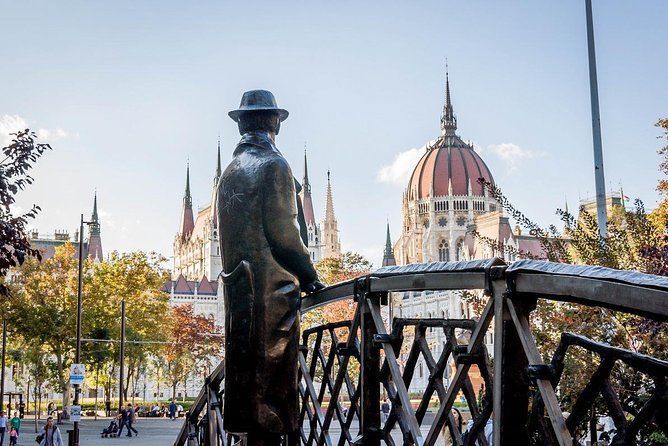
Budapest doesn’t treat the Cold War as an abstract term. At Ronald Reagan’s statue, you’ll hear about the Hungarian sense of obligation to him for his efforts to bring down the Iron Curtain.
This stop can feel a bit unusual if you expect all the story to be Soviet or strictly local. It isn’t. The guide uses Reagan as a way to show how Cold War narratives crossed borders and became part of local memory and interpretation.
Why this is valuable: it shows that propaganda wasn’t only one-way. People in communist systems absorbed foreign pressure and messaging, then reinterpreted it inside their own political reality.
Stop 5: Bem József Square, coffee culture with a 1960s interior
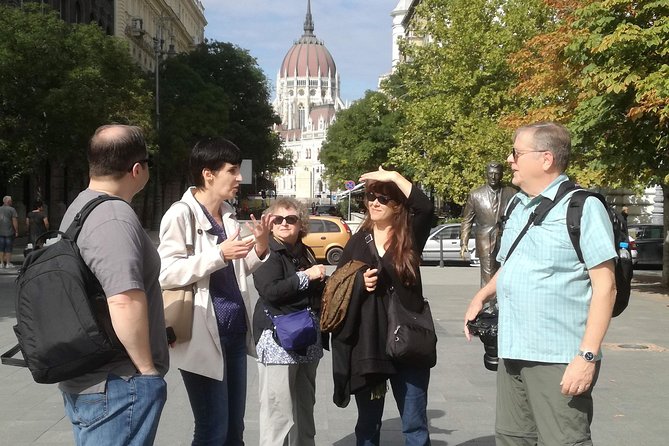
The final stop area is Kossuth Lajos Square and Bem József Square. This is where the tour anchors the 1956 uprising in physical space, including the note that the square saw the first big demonstration of the uprising.
You’ll also get an interesting extra: a coffeehouse on the square that has retained its original interior from the 1960s. That might sound small compared to the grand monuments, but it’s exactly the kind of detail that makes the era feel real. People didn’t live only inside official buildings and political gatherings. They met, talked, and spent time in places like this, too.
If you like history that touches everyday life, this stop often lands well. It’s also a nice way to cool down after more intense memorial topics.
What to bring (so you don’t waste the experience)
Because this is a 3-hour walking tour, wear good walking shoes. A lot of people also recommend bringing water. You don’t need to overpack, but Budapest weather can shift, and you don’t want your attention to drift from the guide’s explanations because your feet are arguing with you.
Also, keep your schedule flexible afterward. The tour ends outside the House of Terror area, which makes it easier to decide on your own whether to go inside for more context.
Best fit: who should book this Communist Budapest walk
You’ll be happiest with this tour if you want:
- Cold War and 1956 context tied to visible landmarks
- a guide who answers questions with real explanations
- a structured route so you don’t waste time hunting down the political meaning yourself
It may be less satisfying if you want only scenic Budapest highlights with no heavy themes. This tour isn’t trying to be a relaxed stroll through pretty architecture. It’s a guided interpretation of power, fear, and messaging in public space.
If you’re a history nut, you’ll likely love the way sites connect. If you’re not, you’ll still benefit because the guide shows you how to read the city like a document.
Price, value, and what you get for your time
Let’s talk value honestly. At $126.50 for about 3 hours, you’re paying for:
- a guided walk with a historian
- English-speaking hosting
- a set route hitting multiple key locations
- support with tram/metro tickets if you need it
- a mobile ticket for smoother entry
You’re not paying for museum admissions. The tour includes outside time at the House of Terror, but the exhibits are not included. So if you want the museum as a major centerpiece, budget extra time and possibly extra ticket cost.
Still, the guided portion is what makes the price feel fair. You’re not just seeing buildings—you’re learning why they matter and how the story fits together.
If you’re deciding: should you book?
I’d book this tour if you want Budapest with context. It’s one of the easiest ways to understand how communist rule and the Cold War shaped what you see—from the Parliament area and 1956 connections to Soviet memorial symbolism and the end-point at the House of Terror.
Choose it when you can handle thoughtful, occasionally heavy material. Bring good shoes, plan to walk for real, and come ready to ask questions. If you want a history-led route that helps you interpret Budapest instead of just photographing it, this is a strong pick.
FAQ
How long is the Communist Budapest walking tour?
The tour lasts about 3 hours.
What does the tour cost?
The price is $126.50 per person.
Is the tour in English?
Yes, it is offered in English.
What’s included in the price?
You get a 3-hour guided walk with a historian.
Is admission to the House of Terror Museum included?
No. The tour concludes outside the House of Terror Museum, and the exhibits inside are not included.
Where does the tour start and where does it end?
It starts at Budapest, Frankel Leó út 2-4, 1027 Hungary and ends outside the House of Terror Museum at Budapest, Andrássy út 60, 1062 Hungary.
Do I need transit tickets in Budapest?
If you don’t already have a visitor pass, the guide can help you purchase Budapest tram and metro tickets.
Can I pick a morning or afternoon departure?
Yes. The tour offers a choice of morning or afternoon departure.
What’s the cancellation policy?
You can cancel for free up to 24 hours in advance for a full refund. Canceling less than 24 hours before the start time is not refunded.