REVIEW · BUDAPEST
Budapest Private 4 Hour City Tour Experience with a car / van
Book on Viator →Operated by Gabor Dora · Bookable on Viator
This is the fast track to Budapest. In a private car/van with hotel pickup, you can hit major sights in about four hours without wasting time on transit or guessing your route.
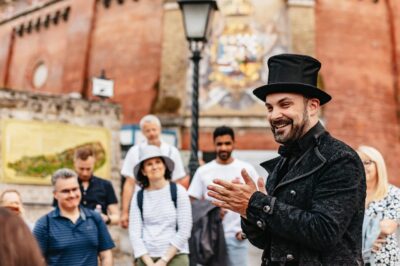
I love how flexible the tour feels. Your English-speaking guide, Gabor Dora, adjusts the day around what you care about and keeps the pace realistic for short stops.
One thing to consider: entrance tickets aren’t included, so add a bit of budget if you want to go into places like the Great/Central Synagogue, St. Stephen’s Basilica, or Szechenyi Baths.
In This Review
- Key highlights worth planning around
- How the private 4-hour format works in Budapest
- Market Hall and the river-to-city approach: starting strong in Pest
- The Jewish Quarter and Great/Central Synagogue stop you’ll actually remember
- New York Palace and classic city drives: art, glamour, and transit landmarks
- Heroes’ Square, Hungarian Fine Arts Museum, and the art you can’t skip
- Szechenyi Baths: the best payoff for a thermal-bath day
- City Park landmarks: Vajdahunyad Castle and the photo-stop rhythm
- House of Terror and the Opera House: two very different moods
- St. Stephen’s Basilica interior visit: the holy right hand moment
- Parliament Building and the Danube crossing: where scale hits you
- Fisherman’s Bastion, Matthias Church, and the Castle District town hall
- Gellért Hill and the Liberty Statue: final views from high ground
- Price and entry fees: what $124.82 gets you (and what it doesn’t)
- Who this tour suits best in Budapest
- Should you book this Budapest 4-hour private city tour?
- FAQ
- How long is the Budapest private city tour?
- What does the price include?
- Are entrance tickets included for attractions?
- Do you get hotel pickup and drop-off?
- Is this tour private or shared?
- Can the route be changed to match my interests?
- What language is the tour offered in?
- Is there a mobile ticket?
- Who is the tour for?
Key highlights worth planning around
- Hotel pickup and drop-off so your day starts and ends on your schedule
- Jewish Quarter stops around Europe’s largest synagogue, plus a look at the Jewish district vibe
- Thermal-bath time at Szechenyi with a quick, easy window to enjoy the pools (if you choose entry)
- Big-photo moments from Heroes’ Square, Fisherman’s Bastion, and across the Danube to Parliament
- Castle District walking that stays short but meaningful, including Matthias Church views
- A guide who tailors the route in clear English and makes history feel usable, not lecture-y
How the private 4-hour format works in Budapest
Budapest is spread out in a way that can surprise you. Pest is busy and flat, Buda is hilly, and the viewpoints are not always where you expect. This tour solves the main problem: moving between areas quickly, in comfort, with parking handled.
The time plan is also smart. You get a mix of quick photo stops, short walks, and a couple of longer moments where it makes sense to pause. That’s the difference between a sightseeing “checklist” and a day that actually helps you understand where you are.
Because it’s private, you can slow down for something that grabs you and skip what doesn’t. The tour can be tailored to your wishes, which matters in a city where two different travelers can want totally different things in the same time window.
You can also read our reviews of more city tours in Budapest


Market Hall and the river-to-city approach: starting strong in Pest
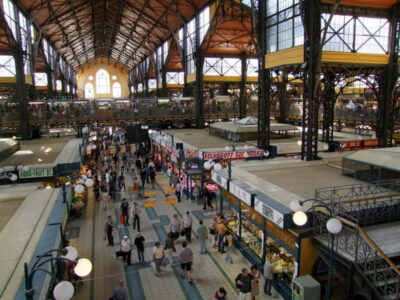
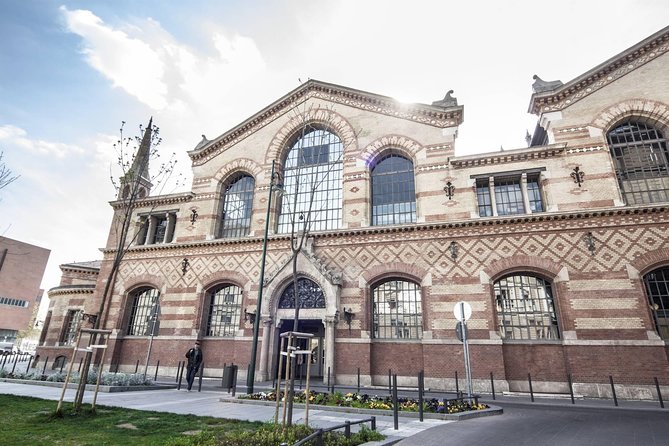
The tour opens with the largest covered Market Hall in Central Europe. Even if you don’t plan to buy anything, this is a great way to “read” Budapest. Markets tell you what locals eat, how people shop, and which neighborhoods are tied to everyday life.
From there, you head along the little ring road area, passing the National History Museum of Hungary. This is one of those drives that helps you connect buildings with the bigger stories behind them. You’ll also get a sense of how the city’s grand institutions sit right alongside working streets.
The pacing here is useful. You’re not stuck for an hour inside one site before you’ve even gotten your bearings. You’re seeing the city layout early, so later viewpoints make more sense.
The Jewish Quarter and Great/Central Synagogue stop you’ll actually remember
This is one of the most meaningful parts of the day. You stop by the Great/Central Synagogue (Nagy Zsinagóga)—described as the largest synagogue in Europe—and you get a taste of the unique Jewish quarter area.
Even with a short visit window, it helps to have an English-speaking guide who can frame what you’re seeing: the scale, the architecture, and the neighborhood context. The reviews you’ll hear about this guide often mention exactly that kind of clear storytelling, and it’s easy to see why. When a place is big and historically loaded, you want the “why” explained simply.
Note: an admission ticket is not included for this stop. If you want full entry, plan to pay separately. If you’re traveling on a tight schedule, you might decide to focus on what you can see from outside plus the neighborhood walk.
New York Palace and classic city drives: art, glamour, and transit landmarks
After the synagogue area, the tour includes a quick stop by New York Palace, a glamorous café-house that was a prominent meeting spot in the late 19th and early 20th century. It’s brief, but it’s a good reminder that Budapest has always been a city of cafés, writers, and public gathering places.
You also drive by major landmarks that are useful reference points. The Keleti railway station is one of them—enagorated in 1884 and still functioning as a main rail hub. When you see it from the road in a guided loop, it’s easier to understand why this side of town matters for connections.
There’s also a drive past the largest stadium in Hungary, built to hold around 67,000 visitors. It’s not a “tourist must,” but it helps round out the sense of Budapest as a working modern city with big public spaces.
Heroes’ Square, Hungarian Fine Arts Museum, and the art you can’t skip
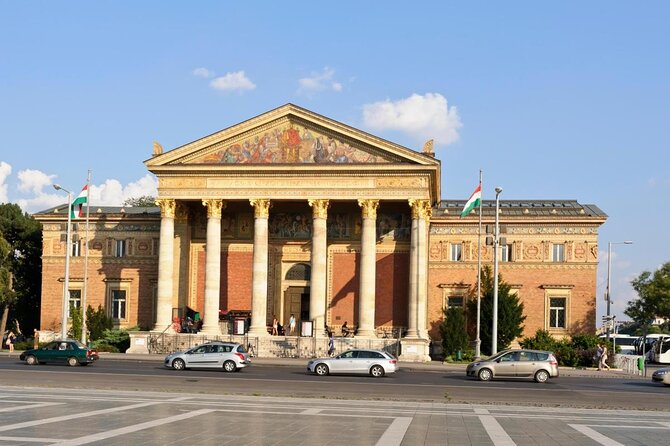
Heroes’ Square is a centerpiece stop, with time set aside to know the important personalities of Hungarian history. Even if you’re not a museum person, this is one of those places where monuments communicate political identity. And it’s a great place for your guide to make the symbols click.
Right after that, you’ll see the Hungarian Fine Arts Museum, including a note about its combination of Spanish and Flemish paintings, plus an outstanding Egyptian collection. If you’re an art-focused traveler, it’s a helpful introduction. If you’re not, it still works as a visual “anchor” to remind you that Hungary’s museum culture extends beyond one theme.
The route also passes a classicist-style building now used for modern art. There’s value here even as a drive-by: you start noticing architectural eras and how Budapest layers them instead of replacing them.
One quick stop idea worth your mental note: the tour includes the oldest fine dining restaurant of the country and mentions the birthplace of a beloved Hungarian dessert. Even if you don’t eat there today, it’s the kind of local-food clue that helps you find your best meals later.
You can also read our reviews of more private tours in Budapest




Szechenyi Baths: the best payoff for a thermal-bath day
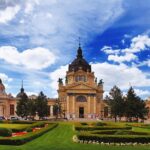
No Budapest visit feels complete without at least one thermal-bath moment, and Szechenyi Baths and Pool is the one people plan around. This tour includes time to enter the largest thermal bath in the capital and mentions the hottest thermal spring in Central Europe.
The key practical point: admission fees are not included. So you’ll want to decide upfront whether you’re doing a quick soak and pool time, or if you’re happy just to get your bearings outside and move on. Either way, the location is a win for anyone who wants a memorable, distinctly Budapest experience.
Also, the schedule makes sense. You’re not arriving at the baths after you’ve already been walking for hours. You should feel like you still have some energy left for the pools or the atmosphere.
City Park landmarks: Vajdahunyad Castle and the photo-stop rhythm
Vajdahunyad Castle is on the program, with a short stop and just enough time to take in the setting in City Park. This is one of those locations where the view and the buildings work together, so even brief time can still deliver good pictures and a sense of place.
The tour then continues along a World Heritage pedestrian/city-planning corridor described as the Hungarian Champs-Élysées—filled with eclectic neo-renaissance palaces and houses. In practical terms, this is a scenic drive that helps you see how the city built prestige areas along major boulevards.
If you like architecture, don’t rush your eyes here. This stretch is about style and planning, not just individual buildings.
House of Terror and the Opera House: two very different moods
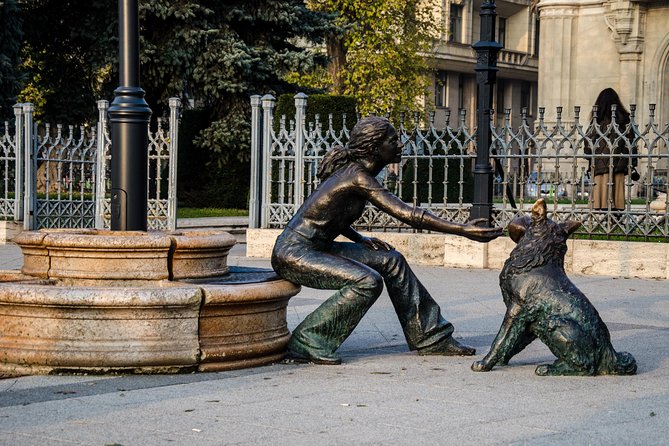
You get a drive-by of the House of Terror Museum, with a chance to understand how Hungarians survived two regimes and what life looked like before the collapse of the Berlin Wall. Even without entering, the location and the context matter. You’ll likely feel the shift in mood the moment you’re near it.
Then you pass the Hungarian State Opera House (Magyar Állami Operaház), a neo-renaissance building that’s the center of ballet and opera performances in the country. If you’re into performing arts, this drive-by can still help you place Budapest in a wider European arts circuit.
Nearby, the tour also references the city center area with the big ferris wheel linked to the Budapest Eye. It’s a small detail, but it’s a practical one: it helps you visualize where you might want to return later for a nighttime view or a calmer stroll.
St. Stephen’s Basilica interior visit: the holy right hand moment
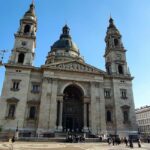
St. Stephen’s Basilica (Szent István Bazilika) is included as an interior visit, with time set aside to marvel at the Holy Right Hand of the first king of Hungary. Even if you aren’t religious, it’s still a striking stop because the tour focuses on a specific object tied to Hungarian identity.
As with other stops, admission isn’t included. In many cases, the ticket is what turns a quick look into a more complete experience. If your schedule is tight and you’re budget-conscious, you might still appreciate the outside area, but the interior visit is the part this tour highlights.
Parliament Building and the Danube crossing: where scale hits you
Walking up to the Hungarian Parliament Building is one of those moments that can reset your sense of Budapest’s size. The tour emphasizes that it’s the largest building of the country, and the walk time is set so you can actually take it in instead of just passing by.
From there, the tour drives by a WWII memorial and crosses the Danube to the hilly Buda side via the first bridge of the country (the Chain Bridge is the one people typically associate with this “first” reference). Getting across by vehicle also saves time and keeps the day smooth.
If you want quick “orientation learning,” this is where it happens. The viewlines from Parliament toward the Castle District are not obvious until you’ve already seen the geography from the river.
Fisherman’s Bastion, Matthias Church, and the Castle District town hall
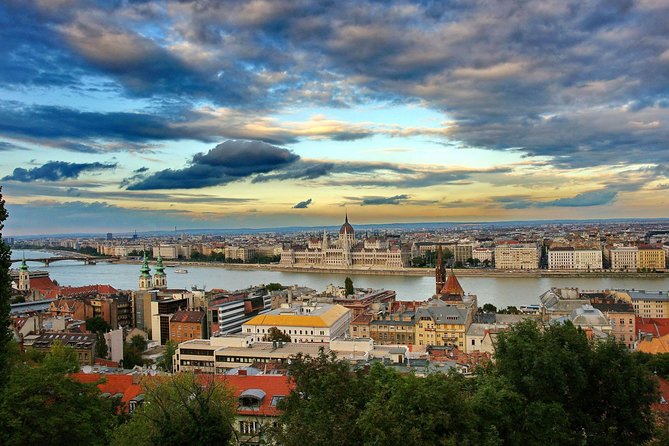
Fisherman’s Bastion is next, with a focus on the fantastic view over the Parliament building and the meaning of the seven towers. Even in short time, this is where Budapest gives you its famous postcard perspective.
Then you walk by Matthias Church, with time set aside to understand why it’s called Matthias Church today. It’s a quick walk, but it’s the kind of stop that pairs well with context—especially when your guide can connect the name to what you’re seeing.
The tour also includes Castle District Townhall, tied to Holy Trinity Square and the meaning of the Old Town Hall. That’s a good choice for travelers who want a hint of civic life and not only royal or religious sites.
In general, remember the timing here. The walks are not long, but Buda streets can be uneven. Wear shoes that feel stable if you plan to pause often for photos.
Gellért Hill and the Liberty Statue: final views from high ground
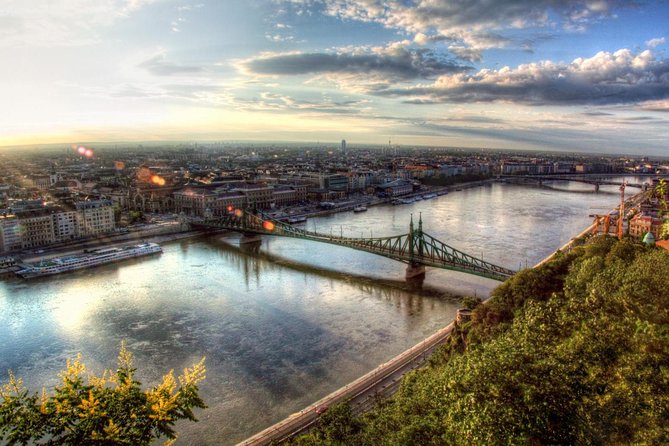
To end, the tour drives up to Gellért Hill for the Liberty Statue and its outstanding views over the city, also mentioned as part of the World Heritage Site. With about 15 minutes, it’s long enough for a calm look, a few good photos, and a sense of how Pest and Buda fit together.
This is a strong ending because you get the “whole picture” before the tour wraps. After earlier stops—synagogue areas, museum districts, Parliament—you’re finally seeing the city as a connected map.
Price and entry fees: what $124.82 gets you (and what it doesn’t)
At $124.82 per person for roughly 4 hours, you’re paying for a private guide, a private air-conditioned car/van, bottled water, and parking fees and taxes. That’s the core value.
Where costs can vary is inside the attractions. The tour notes that entrance fees to optional sights are not included. You’ll likely pay extra for stops such as:
- Great/Central Synagogue
- St. Stephen’s Basilica interior
- Szechenyi Baths
So the best way to think about the budget is this: you’re buying convenience and a guided route that compresses a lot into one day. If you plan to enter multiple ticketed sites, your day-to-day total will climb. If you mainly want guided context and exterior views, the day can stay closer to the advertised price.
One more planning note: the cancellation terms are non-refundable and can’t be changed. If your dates are flexible, consider that before booking.
Who this tour suits best in Budapest
This is a great fit if you:
- Want a private day with only the sights you care about
- Are short on time and want a route that covers both Pest and Buda
- Like guided context, not just monuments in a photo list
- Appreciate a smooth ride between neighborhoods, rather than lots of transfers
It’s also a good first-visit choice. You’ll see the biggest landmarks and learn how they connect spatially. That makes the rest of your trip easier.
The only traveler type I’d flag is the person who hates paying separate entry fees. Since several key highlights are ticketed, you’ll want to choose what matters most before you arrive.
Should you book this Budapest 4-hour private city tour?
I’d book it if you want your first day in Budapest to feel organized, not rushed. The private format, the hotel pickup, and the guide tailoring make a real difference in a city where travel time can quietly eat your sightseeing plan.
If you’re excited by the Jewish Quarter, enjoy architecture and monuments, and want at least one thermal stop, the itinerary hits the right mix. And if you care most about views, Fisherman’s Bastion plus the Parliament-to-Danube-to-Buda flow is a strong payoff.
Just go in with two expectations: some stops are short by design, and entrance fees aren’t included. If that matches your style, this is a smooth, efficient way to get a lot of Budapest into a half-day.
FAQ
How long is the Budapest private city tour?
The tour is about 4 hours.
What does the price include?
It includes a professional English-speaking guide, a private air-conditioned car/minivan, parking fees and taxes, and bottled water.
Are entrance tickets included for attractions?
No. Entrance fees to optional sights are not included.
Do you get hotel pickup and drop-off?
Yes. The guide picks you up from your hotel or apartment reception at an agreed time and returns you afterward.
Is this tour private or shared?
It’s private. Only your group participates.
Can the route be changed to match my interests?
Yes. The duration and route can be tailored according to your wishes.
What language is the tour offered in?
The tour is offered in English.
Is there a mobile ticket?
Yes, the tour includes a mobile ticket.
Who is the tour for?
Most travelers can participate, and it’s designed as a hassle-free, efficient way to see major highlights in Budapest.