REVIEW · BUDAPEST
Budapest Hammer & Sickle Communist Times Tour
Book on Viator →Operated by Absolute Tours · Bookable on Viator
Communism in Budapest hits fast, then lingers. This 2.5-hour guided walk connects Hungary’s major 20th-century turning points—WWI and WWII, the 1956 Revolution, and life under Soviet-style control—with real city landmarks and a hands-on stop at the Budapest Retro Interactive Museum.
What I like most is the clear, context-first storytelling (not a scatter of names), and the way the walk ends with everyday objects and routines that make the era easier to picture.
Guides who lead this tour—like Anna, Celeste, and George—tend to bring both historical structure and personal texture, including family-style details that help it feel human. The small group size (max 10) also makes it realistic to ask questions instead of just listening while standing in a crowd.
One practical consideration: there’s no audio equipment or headphones. If the street noise is loud or you’re not close to your guide, you’ll want to position yourself where you can hear.
In This Review
- Key Things You Should Know Before You Go
- What This Tour Covers: from WWI to 1956, with everyday life in between
- The Part I’d Pick for Most People: the Retro Interactive Museum stop
- A Walk Through Budapest’s Key 1956 Moments (and why the order matters)
- Stop: Szent Istvan Bazilika and the squeeze on religious life
- Stop: Szabadság tér Soviet Memorial and how power changed after WWII
- Hungarian Parliament area: the first days of 1956 and Imre Nagy’s shadow
- In memoriam 1956. October 25: when Soviet tanks fired into the crowd
- Imre Nagy statue and Remembrance Day (Oct 23): why 1956 still matters
- Where WWII fits in: Shoes on the Danube Bank Holocaust memorial
- The Squeeze of No Headphones: how to make sure you hear everything
- Included coffee/tea (and why that tiny break is smart)
- Price and value: does $79.65 make sense for 2.5 hours?
- Who This Tour Fits Best (and who might want a different option)
- Tips to get the most out of your guide
- Should You Book This Communist Times Tour?
- FAQ
- How long is the Budapest Hammer & Sickle Communist Times Tour?
- What language is the tour offered in?
- Where does the tour start and end?
- Is the Retro Interactive Museum admission included?
- Are the Szent Istvan Bazilika and Parliament building admissions included?
- Does the tour provide audio equipment or headphones?
- What’s the group size limit?
- Is pick-up or drop-off included?
Key Things You Should Know Before You Go
- A 1956-focused route with multiple memorial points, from the uprising atmosphere to the Oct 25 tragedy
- Retro Interactive Museum entry included, built around daily life under the Iron Curtain—passport delays, black markets, and more
- Small group feel (up to 10 people), which makes Q&A actually work
- WWII tie-in with a stop at Shoes on the Danube Bank Holocaust memorial
- You’ll see the Soviet story from two angles: the Soviet Memorial and the end-of-occupation tribute area near Liberty Square
- A simple break included: coffee or tea or a soft drink
What This Tour Covers: from WWI to 1956, with everyday life in between
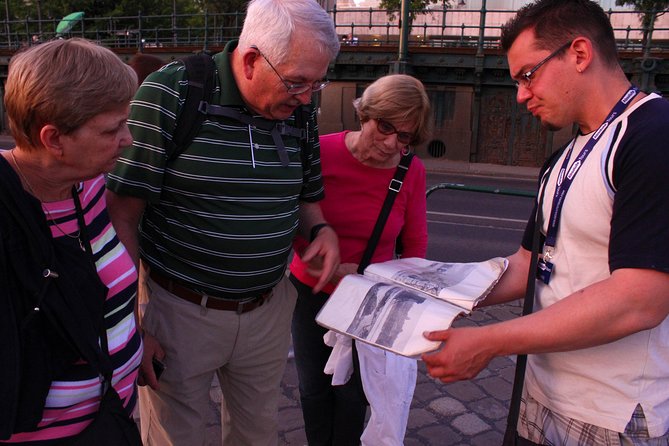
This is a short afternoon that tries to do something harder than most “communism tours”: it gives you the timeline and the lived texture. You start with context that explains how Hungary got pulled into the big European conflicts of the 20th century, then it tightens toward WWII, the Soviet occupation, and finally the 1956 Revolution.
The emotional spine of the tour is October 1956—speeches, protests, marches, and where the Soviet response landed. And the practical spine is the daily grind: how travel worked, how families made do, and what “normal life” looked like when the state watched everything it could.
You’ll also get a clear link between events in 1956 and the larger story of the Iron Curtain’s eventual collapse, so the end doesn’t feel like a dead stop.
You can also read our reviews of more tours and experiences in Budapest.


The Part I’d Pick for Most People: the Retro Interactive Museum stop
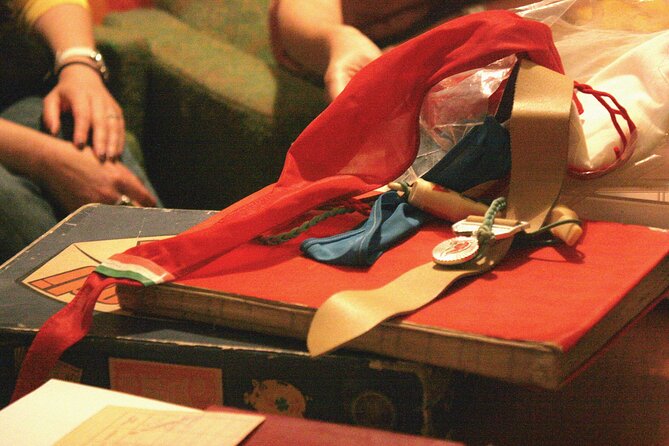
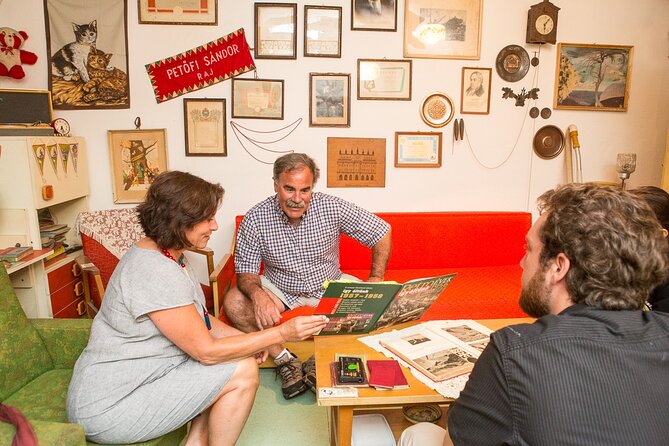
The highlight that most strongly sets this tour apart is the Budapest Retro Interactive Museum entry that comes with it. This isn’t just a room of posters. It’s built around the kind of everyday stuff that tells you how life was organized when people couldn’t fully control their time, movement, or choices.
You’ll walk through the exhibition with your guide explaining the stories behind objects, including details like how long it could take to get a passport and what life looked like with black markets and “banana lines.” Those are the kinds of specifics that stick because they’re concrete.
In several cases, the tour also connects this museum experience back to what you just saw outdoors—so the buildings, squares, and memorials don’t float off into the past. Instead, they turn into places where the same restrictions (and hopes) played out.
A Walk Through Budapest’s Key 1956 Moments (and why the order matters)
You meet at Deák Ferenc tér (Lutheran Church of Ferenc Deák Square) at 3:00 pm, then you move toward the city center finale near Liberty Square. The route is designed like a timeline on foot: you build understanding first, then you visit the spots where 1956’s pressure became visible.
That order matters. If you jump straight into memorials without the context, the names and dates blur together. Here, you’re usually given enough background that each stop feels like a chapter, not a random photo op.
Your group stays small (max 10), so your guide can slow down when questions come up. And since the tour lasts about 2 hours 30 minutes, it fits well as a “serious history” block on a day that still has room for dinner and exploring.
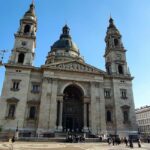
Stop: Szent Istvan Bazilika and the squeeze on religious life
One early stop is Szent Istvan Bazilika for about 15 minutes, and the admission ticket is not included. The focus isn’t architecture bragging rights. It’s how communism affected religious life and the practical operation of different churches.
That angle is worth your time because it explains something many visitors miss: religious life wasn’t just personal belief. It had public visibility, institutions, schedules, and community roles—and those were targets under a system that wanted control.
Even if you’re not a church-detail person, you’ll leave with a clearer idea of what kind of pressure ordinary communities faced.
Stop: Szabadság tér Soviet Memorial and how power changed after WWII
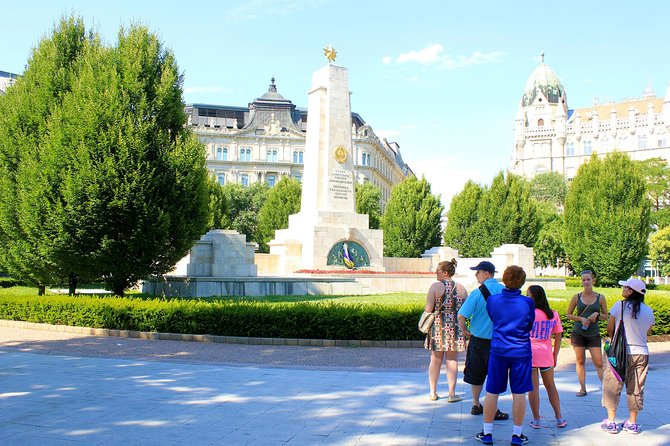
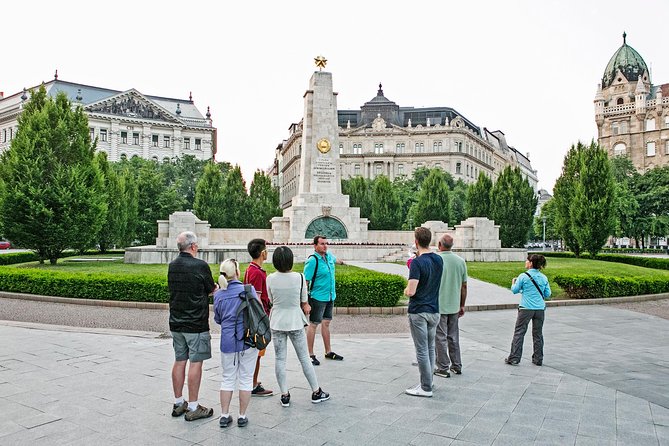
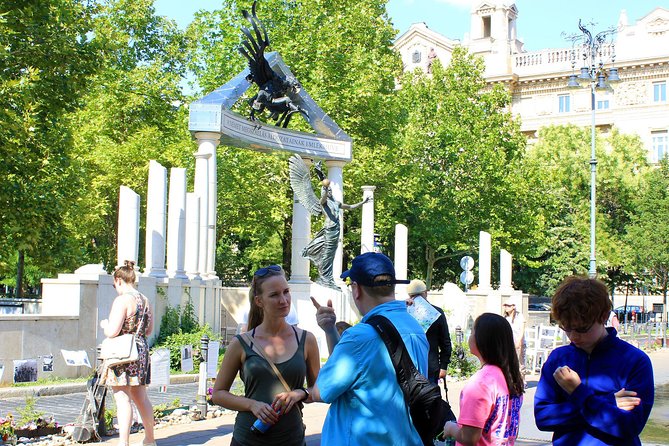
Next you head to Szabadság tér for around 15 minutes at the Soviet Memorial. Entry here is free. This stop frames the transition from the end of WWII to occupation, and how the Communist Party seized power.
This is the part that turns the Cold War from a distant label into a mechanism. You’ll hear how the political shift worked in practice, and why the later resistance in 1956 wasn’t random anger—it grew from the lived reality of control and disruption.
If you like history that connects government moves to human consequences, this stop is one of the most useful.


Hungarian Parliament area: the first days of 1956 and Imre Nagy’s shadow
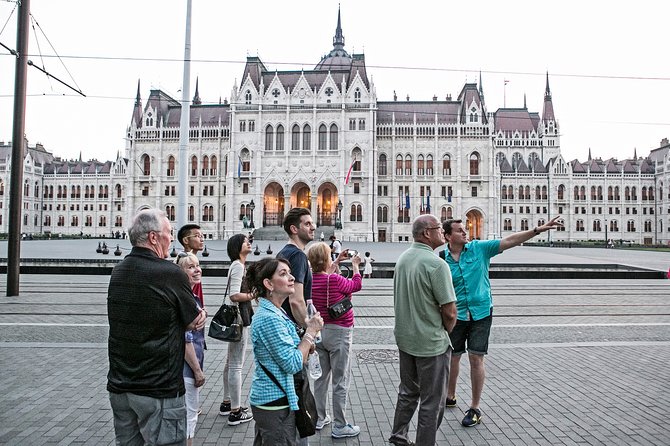
The tour then reaches the Hungarian Parliament Building area for about 20 minutes, with admission not included. The guide focuses on the square in front of Parliament during the early days of the 1956 Revolution—where the atmosphere turned into action.
You’ll also connect what happened there to Imre Nagy, a major Hungarian figure who is remembered for defying Soviet leaders in Moscow, then later being executed for treason. The lesson isn’t just who he was. It’s why his resistance mattered to the wider idea of Hungarian self-determination.
One more thing: this stop helps you understand why Parliament is symbolic. It isn’t only a landmark. It becomes a stage where political legitimacy and state authority collide.
In memoriam 1956. October 25: when Soviet tanks fired into the crowd
You’ll visit In memoriam 1956. October 25. Memorial and Exhibition for about 15 minutes. Admission is free. This stop focuses on a specific and brutal moment: on October 25, 1956, military authorities and Soviet tanks fired into a gathering crowd.
The exhibition presents the events with archive footage and recollections, which makes the emotional impact clearer without turning it into melodrama. You get the stark timeline, then you understand what it meant for people on the ground that day.
If you’re sensitive to heavy subject matter, give yourself a moment here. It’s one of the stops that tends to stick longer than the photos.
Imre Nagy statue and Remembrance Day (Oct 23): why 1956 still matters
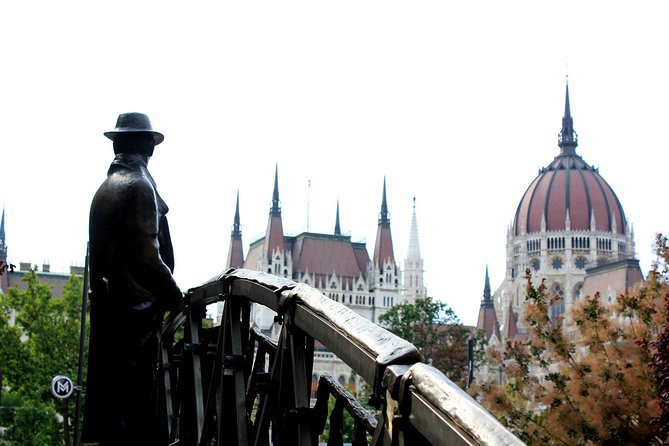
Another free stop is the Monument to Imre Nagy connected to Oct 23 Remembrance Day, also about 15 minutes. This is where the story turns from events to memory—and memory turns into politics.
You’ll learn how Nagy’s reburial became important in the change of regime. That thread matters because it shows how nations write history after the fact, and how public memory can become a form of accountability.
This is a good moment to slow down, absorb what you’ve just seen, and let the timeline settle.
Where WWII fits in: Shoes on the Danube Bank Holocaust memorial
This tour also includes a WWII overview and a visit to Shoes on the Danube Bank Holocaust memorial. Even though the outdoor walking schedule mixes several time periods, the point is consistent: you’re not just learning 1956—you’re learning why the 20th century in Hungary was catastrophic and how that catastrophe shaped the next era.
The memorial is quiet, visual, and hard to forget. You’ll get the context your guide gives so you don’t just see objects; you understand what they represent and why they were placed there along the river.
If you’re the type who likes to connect history to the actual streets you’re standing on, this stop earns its place.
The Squeeze of No Headphones: how to make sure you hear everything
Because there’s no audio equipment or headphones, your listening game matters. I’d plan to stand close to your guide, especially during explanations outside. Wind, street noise, and general city sounds can compete with your attention.
The upside is that when you’re close enough, the guide can read the group and adjust the pace. In a small group setting, that can feel more like a conversation than a lecture.
Also, since the tour runs in all weather conditions, bring clothing that helps you stay comfortable. You’ll get the most out of the story if you’re not fighting the elements.
Included coffee/tea (and why that tiny break is smart)
You get coffee or tea or a soft drink included. That’s not just a perk. It’s useful when you’re walking, listening, and absorbing heavy historical material.
Even a short pause helps you stay alert for the museum segment, where the tour shifts from outdoor landmarks to indoor artifacts and interactive exhibits.
Price and value: does $79.65 make sense for 2.5 hours?
At $79.65 per person for about 2 hours 30 minutes, the value comes from what’s included and what’s not.
Included:
- English-speaking guide
- Entry to the Budapest Retro Interactive Museum
- Coffee/tea/soft drink
- Mobile ticket
Not included:
- Admission for Szent Istvan Bazilika
- Admission for the Parliament building (if you’re going into paid areas)
So the question isn’t whether it’s a bargain. It’s whether you want a guided, structured route plus a museum entry that turns abstract Cold War stories into something you can point at. If yes, the price often feels fair because you’re paying for interpretation, not just access.
For many visitors, this is the kind of tour that makes other Budapest history sites more meaningful for the rest of the trip.
Who This Tour Fits Best (and who might want a different option)
This is best for you if you want:
- A guided history timeline from WWII and the Soviet occupation through 1956
- A specific focus on everyday life under communist rule
- An interactive museum component, not only street stops
It’s also a good fit early in your stay, because it gives you a frame for what you’ll notice later around Budapest.
It’s not recommended under age 14, so families with younger kids may want something less intense. And if you hate walking or want a fully indoor experience, the format may feel like a lot of outdoor time.
Tips to get the most out of your guide
- Bring questions. With small groups, you can usually steer the conversation.
- Stand close during the no-headphones outdoor segments.
- Dress for real weather. The tour runs in all conditions.
- Plan that some paid admissions (Bazilika and Parliament) are on you, so don’t assume every “big building” is included.
If you’re lucky enough to have a guide like Anna or Celeste, the mix of neutral historical framing and family-level detail tends to land especially well. Guides such as George or Tomas have also been described as high-energy with hands-on, object-based teaching—so you’ll want to stay mentally switched on during the museum portion.
Should You Book This Communist Times Tour?
Yes, if you want a well-structured 1956 and Cold War afternoon that doesn’t stop at dates. The Retro Interactive Museum entry is the big reason to choose this one, and the route through major memorial points helps the story stay coherent.
I’d think twice only if you strongly prefer audio-guided tours, avoid heavy topics, or want everything included with no extra admissions. Otherwise, this is a great way to get your bearings fast on modern Budapest history—while seeing the places where resistance, repression, and memory all show up in the same afternoon.
FAQ
How long is the Budapest Hammer & Sickle Communist Times Tour?
It runs for about 2 hours 30 minutes.
What language is the tour offered in?
It’s offered in English, with an English-speaking guide.
Where does the tour start and end?
It starts at Deák Ferenc tér 4 (near the Lutheran Church of Ferenc Deák Square) and ends near Liberty Square at Szabadság tér 1.
Is the Retro Interactive Museum admission included?
Yes. The tour includes entry to the Budapest Retro Interactive Museum.
Are the Szent Istvan Bazilika and Parliament building admissions included?
No. Admission to Szent Istvan Bazilika and the Parliament building is not included.
Does the tour provide audio equipment or headphones?
No. There is no audio equipment or headphones available on this tour.
What’s the group size limit?
The tour has a maximum of 10 travelers.
Is pick-up or drop-off included?
No pick-up or drop-off is included.