REVIEW · BUDAPEST
Budapest Castle District Walking Tour
Book on Viator →Operated by Triptobudapest.hu - Free Budapest Walking Tours · Bookable on Viator
Budapest’s Castle District has a way of pulling you uphill—then rewarding you at the top. This walking tour strings together the big landmarks and the side stories, so you get context fast. I like that it stays practical (you know where to meet and what you’ll see), and I also love the mix of famous sights with oddball details that make the area stick.
The route is short—about 2 hours—but it still involves real walking and some steep sections. The main drawback is simple: there are stairs and an uphill climb, so you’ll want solid shoes and a pace you can handle. If you hate hills, you may find this tour a grind more than a treat.
In This Review
- Key Highlights You’ll Actually Care About
- Budapest Castle District Walking Tour: Fast Context With Real Stops
- Meeting at Batthyány tér: Where You Start and How You’ll Navigate the Hill
- Stop-by-Stop: From Batthyány Square to Matthias Church Without Extra Tickets
- Stop 1: Batthyány Square (the orientation moment)
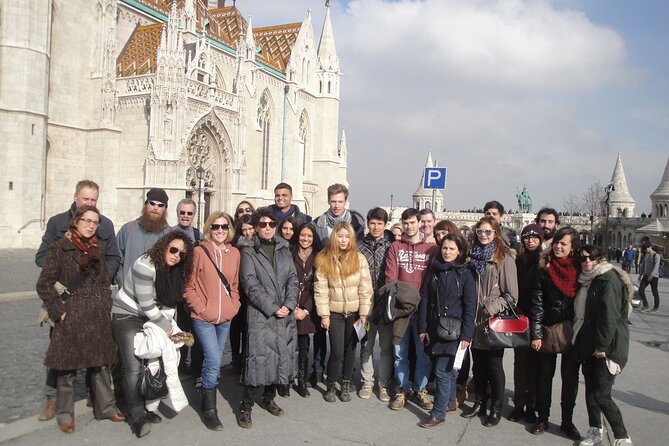
- Stop 2: Matthias Church (learn outside, keep moving)
- Fisherman’s Bastion: Disney Trivia, Cross Strips, and a Free View Hack
- Medieval Jewish Prayer House: Baroque Neighborhood Details You’ll Notice Later
- National Archives Stop: WWII Damage, Nazi Stronghold Clues, and Gül Baba
- Hospital in the Rock Nuclear Bunker Museum: Underground Defense and Oddball Humor
- Buda Castle: Royal Palace Scale, Rebuilds, and the Mythical Bird
- Prince Eugene of Savoy Equestrian Statue Finish: Pest Views and Questions
- Price and Value: Why $3.62 Doesn’t Tell the Full Story
- Timing, Weather, and What to Bring for the Stairs
- The Tour Style: How Guides Keep the Group Moving
- Who This Walking Tour Fits Best (And Who Might Want a Different Plan)
- Should You Book This Budapest Castle District Walking Tour?
- FAQ
- Is this tour really only about 2 hours?
- Where do I meet the guide?
- Do we enter Matthias Church or other indoor sites?
- Is there a lot of walking and stairs?
- What language is the tour in?
- What if the weather is bad?
Key Highlights You’ll Actually Care About
- Two hours, lots of landmarks: Batthyány Square up through Buda Castle and back down to the Prince Eugene area
- No church entry required: you learn at Matthias Church without going inside
- Hospital in the Rock stop: bunker-and-defenses storytelling in an underground setting
- Fisherman’s Bastion trivia: Walt Disney connection and cross-strip clues for smart photo viewing
- Small-to-mid group: capped at 30 people, with guides who keep things moving
- Donation-based guidance: the low booking price is mainly for the tour platform, with guide earnings coming from your support
Budapest Castle District Walking Tour: Fast Context With Real Stops
If you want the Castle District without wandering like a confused tourist with a map app and no plan, this is built for you. The whole thing is designed as a walking thread through the Royal Palace area, the churches, the viewpoints, and the defensive layers of Castle Hill. You’ll cover a compact circuit that explains why each place matters—war, empire, religion, everyday life—without turning the day into a lecture marathon.
The best part is how the tour connects dots. Fisherman’s Bastion isn’t treated like a postcard stop; it’s used to explain symbols, myths, and how people have read the skyline for centuries. The underground angle is also a standout: you’re not just seeing stone buildings, you’re learning how the hill worked as a defensive system through time.
You’re also buying a guide’s street-level context. Even with iconic landmarks, Budapest has lots of nuance in placement, history, and what you can (and can’t) easily understand just by looking.
You can also read our reviews of more walking tours in Budapest



Meeting at Batthyány tér: Where You Start and How You’ll Navigate the Hill
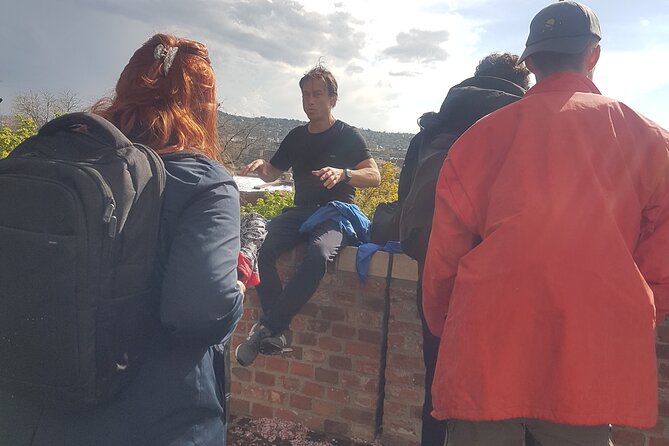
You meet at Batthyány tér 1, 1011 Hungary, at the metro exit in the park. The timing matters because the tour gets underway at the meeting point, and you’ll want to arrive a bit early so you can find your guide before the group starts moving.
From the start, you’re headed toward the top of Castle Hill. That’s not optional. The tour includes a 10-minute uphill walk consideration, and in practice it means you should expect steep bits and stair clusters. The good news: guides in this style typically keep the flow tight, with enough short pauses to keep the group together.
If you’re doing this on your first day, you’ll appreciate the structure. It’s a “get your bearings fast” kind of tour—especially helpful when you’re trying to plan the rest of your day on both sides of the Danube.
Stop-by-Stop: From Batthyány Square to Matthias Church Without Extra Tickets
Stop 1: Batthyány Square (the orientation moment)
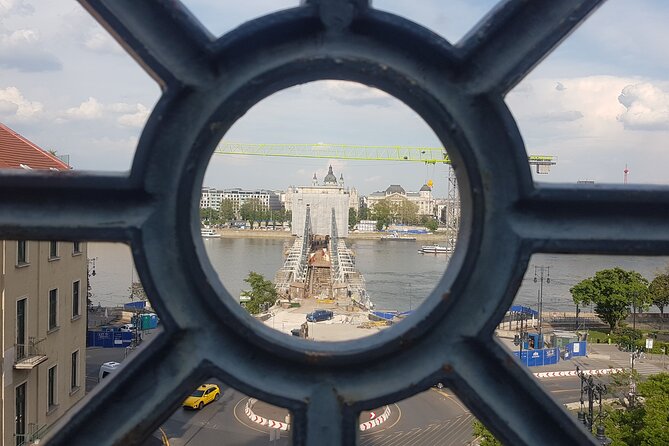
Your first stop is Batthyany Square, where the guide introduces what you’ll be walking through and why this district is central to Budapest’s identity. Castle District landmarks include the Royal Palace complex, Matthias Church, Fisherman’s Bastion, and even smaller urban art elements around the area. You’ll also hear about terraces and the underground cave system that shows up later.
This early orientation is valuable because it prevents the usual Castle Hill problem: you arrive, you see buildings, and you still don’t know how the pieces connect. Here, you get the skeleton first.
Stop 2: Matthias Church (learn outside, keep moving)
Next is Matthias Church. The tour focuses on the long timeline of the area—wars, occupations, and how different communities lived here day to day. You do not enter the church, so you’re spared the extra schedule friction, lines, and ticket juggling.
This works well if you want history with momentum. You’ll still get the story, and you won’t lose the group to a slow inside visit.






Fisherman’s Bastion: Disney Trivia, Cross Strips, and a Free View Hack
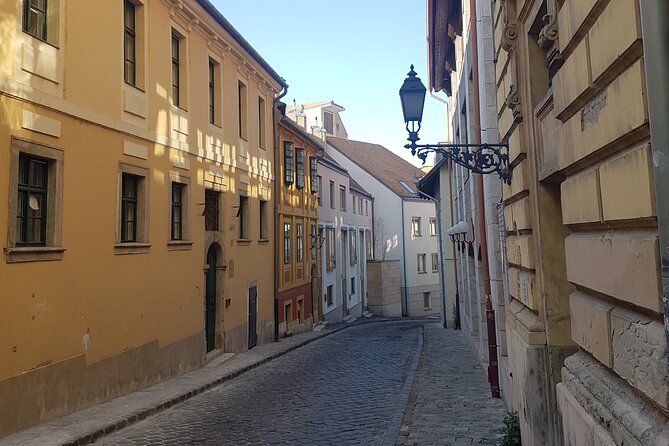
Fisherman’s Bastion is where the tour starts getting fun. You’re told about the connection between Walt Disney and the Bastion, plus a clever bit of symbol trivia: the difference between a cross with one, two, or three strips.
That kind of information might sound like party talk—until you’re standing there looking at details you would otherwise miss. It turns a viewpoint stop into an actual “look differently” moment.
You also get a practical tip: how to enjoy a free view from Castle Hill. The Castle District is full of paid lookouts and ticket-only ways to see the panorama, so it’s smart to learn what’s available without spending more money. If you time it right, this is one of the best photo stretches of the whole walk.
One watch-out: the area can get crowded, especially at peak times. If you’re sensitive to jostling and slowdowns around popular viewpoints, plan to keep your expectations flexible.
Medieval Jewish Prayer House: Baroque Neighborhood Details You’ll Notice Later
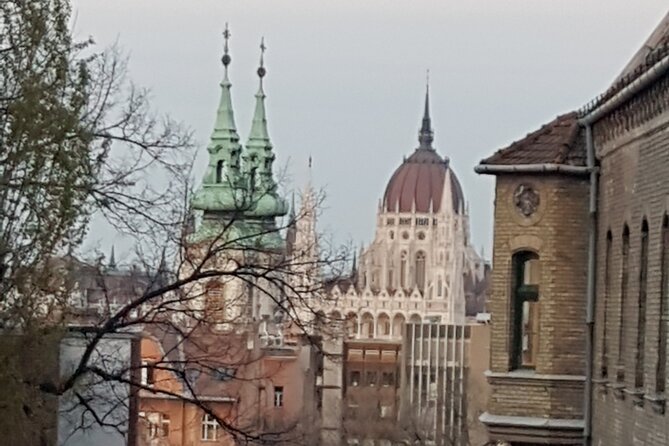
At the Medieval Jewish Prayer House, the tour shifts from landmark icons to the texture of the district. You’ll get an introduction to the prayer house itself and the beautiful baroque residential buildings around it.
This stop matters because it reminds you the Castle District wasn’t only castles and royal power. It was a lived-in neighborhood. The architecture and placement give you cues about community life, not just state power.
If you like walking tours that help you notice buildings rather than just recite dates, this is a great pause on the route.
National Archives Stop: WWII Damage, Nazi Stronghold Clues, and Gül Baba
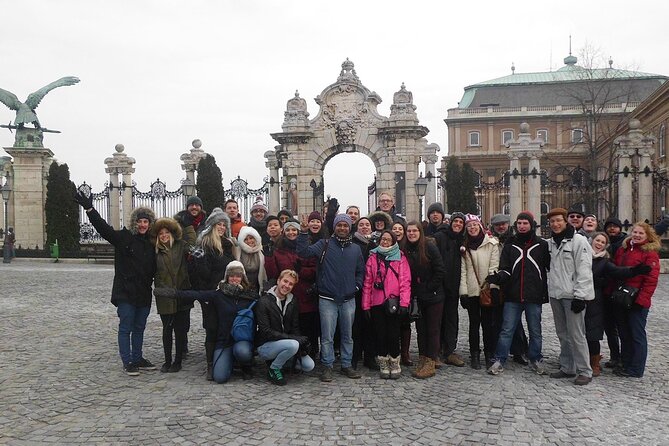
Next comes the National Archives of Hungary. Here, you’re guided through what WWII destruction did to this part of Budapest, and where a Nazi stronghold was located (as explained by your guide). The tour also points out where you’d find “rich Hungarians” living and brings in an Ottoman connection tied to Gül Baba, an Ottoman Turkish monk and soldier with a pilgrimage site.
This stop is heavy on context, but it’s also useful. It helps you read the Castle District as a place shaped by conflict and rebuilding, not just a preserved museum of itself. The stories give the architecture a reason to exist—why it looks the way it does and why history leaves marks.
Hospital in the Rock Nuclear Bunker Museum: Underground Defense and Oddball Humor
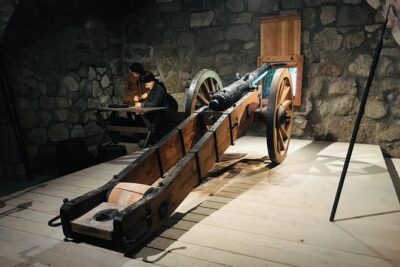
Then you hit the tour’s most unusual stop: Hospital in the Rock Nuclear Bunker Museum. The guide explains life in the underground Castle Hill world—labyrinths, defense uses over centuries, and how this space functioned when the city had to plan for danger.
There’s also humor in the mix. You’ll hear about funny public statues in Budapest and learn about “huszar,” described here as womanizer light cavalry fighters. That kind of story lightens the mood after the WWII context, and it keeps the tour from feeling like one long solemn moment.
If you only have one “non-main-spot” stop in your day, this is the one. It’s memorable because it’s different from the typical Castle District walking loop.
Buda Castle: Royal Palace Scale, Rebuilds, and the Mythical Bird
The big finish begins at Buda Castle. You’ll see the massive building that served as a residence of Hungarian kings—rebuilt many times after war damage. You’ll also hear about the mythical bird of the Hungarians, along with where major government offices are located, including areas associated with the president and prime minister.
This is also where the tour gives you practical value. Instead of just staring at the palace walls, you learn what you’re looking at and why the layout and repeated rebuilding matter.
Give yourself a moment for the photos. One common pacing complaint is that visitors want a bit more time for pictures at the castle itself. If photos are a top priority for you, keep your camera ready so you can grab a quick set during the allocated time.
Prince Eugene of Savoy Equestrian Statue Finish: Pest Views and Questions
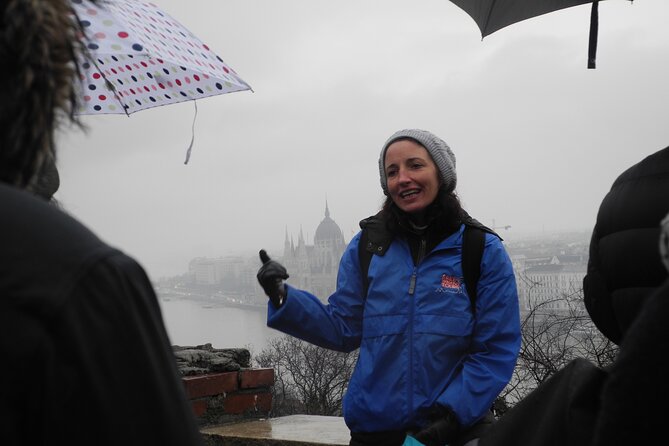
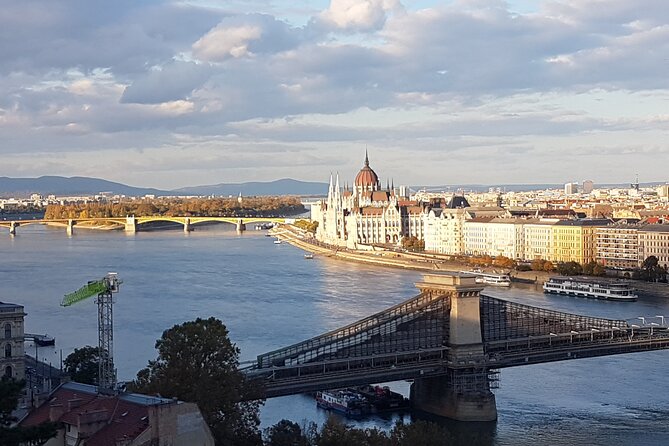
The tour concludes at Prince Eugene of Savoy’s equestrian statue. You’ll get panorama time looking toward Pest side of the Danube from a terrace, with the guide keeping an eye on the group as they take it in.
This is also the last stretch for quick interactions: if you’re lucky, the guide tests your knowledge with tricky landmark questions, then wraps up with practical information and time to ask your remaining questions.
This ending works well because it doesn’t just dump you in a landmark parking-lot feeling. You’re left near a viewpoint and a recognizable meeting conclusion, which makes it easier to plan your next stop.
Price and Value: Why $3.62 Doesn’t Tell the Full Story
The listed price is $3.62 per person, and it includes a booking fee. The important part is what isn’t baked into that number: guides depend on donations at the end of the tour. So think of the low price as the platform cost that helps you reserve your spot, not as the total cost of guiding.
That means you should treat this tour as a value-for-money experience with a “pay what you feel” element. If you want higher-quality guidance and clear storytelling at each landmark, it’s worth budgeting for a generous donation.
Also, the price-to-time ratio is strong: about 2 hours at a low cost can save you time you’d otherwise spend figuring out where to go and what to focus on. If you’re doing your Castle District day anyway, this can be a smart first layer.
Timing, Weather, and What to Bring for the Stairs
This experience requires good weather. If it’s canceled due to poor weather, you’ll be offered a different date or a full refund. That matters because Castle Hill walking is less fun when surfaces are wet or slippery.
Bring:
- Comfortable shoes with grip. You’ll be dealing with stairs and an uphill start.
- A light jacket if you’re going in cooler months. The Castle District can feel extra exposed.
- Water. There are mentions of bathrooms at Buda Castle and opportunities to refill water bottles at the castle, which is a huge sanity saver on a hill day.
Also, plan around crowds. Fisherman’s Bastion can be busy, and that can affect how long you can enjoy views without rushing.
The Tour Style: How Guides Keep the Group Moving
What really gets praised here is guide delivery. Different guides bring different flavors, but the common thread is keeping the tour lively and interactive—answers welcome, questions encouraged, and pauses built in.
You’ll hear references to guides such as Dora, Zsófia, Rita, Esther, Andy, Endre, Gabor, Sophia, Valeria, Emma, Gary, Judit, Bulyus, and Odea. Some are noted for humor and pace (including ways to keep steps from feeling endless), while others are singled out for balancing information with rest. A few reviews mention guides finding shade when possible, plus letting the group catch breath on steep stretches.
Pacing can vary. One downside that shows up is tours can feel a bit quick at the castle portion, which matters if you’re the type who likes deep photo time.
Who This Walking Tour Fits Best (And Who Might Want a Different Plan)
This tour is great for:
- First-time Budapest visitors who want a structured route through the Castle District
- People who like stories that connect landmarks to wars, communities, and symbolism
- Travelers who want a short commitment: around 2 hours, not a half-day trek
You may want to rethink if:
- You have limited tolerance for stairs or steep walking
- You’re traveling in conditions where wind or cold will make uphill walking unpleasant
- You’re hoping for a slow, lingering visit inside major sites. This tour focuses on exterior learning and movement through multiple stops.
If you do book it, wear shoes you trust on uneven stone and keep your expectations realistic: this isn’t a sit-down museum crawl.
Should You Book This Budapest Castle District Walking Tour?
Yes—if you want the Castle District explained in a way that helps you actually enjoy it. The combination of major landmarks plus one underground stop makes the tour feel more complete than a simple “take photos and move on” walk. The low price also makes it easy to justify booking early so you can build the rest of your day with confidence.
Book it especially if you’re doing Budapest on a tight schedule or you like learning as you walk. Just be honest with yourself about the hill: bring good shoes, expect stairs, and plan to go slower when needed.
If you want, tell me your travel month and your fitness level, and I’ll suggest the best time to do this route and what to pair it with afterward (Danube views, museum options, or a calmer afternoon on the Pest side).
FAQ
Is this tour really only about 2 hours?
Yes. The experience runs for about 2 hours and is structured as a compact loop from Batthyány tér up through the Castle District landmarks, ending near Prince Eugene of Savoy’s equestrian statue.
Where do I meet the guide?
You meet at Batthyány tér 1, 1011 Hungary, at the Batthyanyi ter metro exit in the park area. The meeting point is clearly tied to the metro exit.
Do we enter Matthias Church or other indoor sites?
The tour notes Matthias Church with free admission and specifies that you learn there but do not enter the church. For other stops, the experience lists stops as free admission, but you should expect mostly guided visiting and learning on-site.
Is there a lot of walking and stairs?
Yes. The tour is designed for guests with moderate physical fitness and specifically notes a 10-minute uphill walk. Reviews also point out that there are stairs and it may not be ideal for mobility limitations.
What language is the tour in?
The tour is offered in English and uses a mobile ticket.
What if the weather is bad?
This experience requires good weather. If it’s canceled due to poor weather, you’ll be offered a different date or a full refund. You can also cancel up to 24 hours in advance for a full refund.