REVIEW · BUDAPEST
Half day Budapest city tour by car / minivan
Book on Viator →Operated by Private Sightseeing Tours in Budapest and in Hungary · Bookable on Viator
Budapest in four hours beats a slow day. This half-day private city tour uses an air-conditioned car with door-to-door pickup, so you get the big sights without wasting time on transit. It’s also built for your pace: you can choose a start time that fits your day and get a guide who can tailor the flow a bit.
What I really like is how efficiently it strings together Budapest’s most photogenic neighborhoods—starting around Andrássy Avenue and pushing all the way to Buda viewpoints. You’ll make short stops at major landmarks like Heroes’ Square and the Danube bridges, then end with scenery from places like Citadel Lookout and thermal-bath country.
One drawback to plan for: some of the most famous buildings have optional interior tickets (think St. Stephen’s Basilica, Matthias Church, and the upper level of Fisherman’s Bastion). Also, several stops are short, so if you’re hoping for a long museum-style visit, this won’t be that kind of day.
In This Review
- Key Things That Make This Half-Day Tour Work
- How a Car Tour Actually Helps You Understand Budapest
- Andrássy Avenue: World Heritage Boulevard in a Single Ride
- Heroes’ Square: The Statue Complex and Why It Feels Political
- Vajdahunyad Castle in City Park: A “History Theme Park,” But Fun
- House of Music Hungary: Modern Budapest Shows Its Musical Side
- Széchenyi Bath Area: Thermal Bath Culture From the Outside
- Opera, Basilica, and Quick Big-Façade Stops
- Liberty Square and Parliament: Classic Power in Stone
- Danube Bridges and the Zero Kilometre Stone: The City’s Distance Marker
- Fisherman’s Bastion and Matthias Church: Where the Views Do Most of the Talking
- Gellért Hill and the Citadella: A View Plus a Backstory
- Gellért Baths Finish: Architecture Meets Thermal Culture
- Price and Value: Is $141.56 Worth It for Four Hours?
- What Tour Style You’ll Like (and What You Might Not)
- Who Should Book This Budapest Half-Day Private Car Tour
- Should You Book It?
Key Things That Make This Half-Day Tour Work
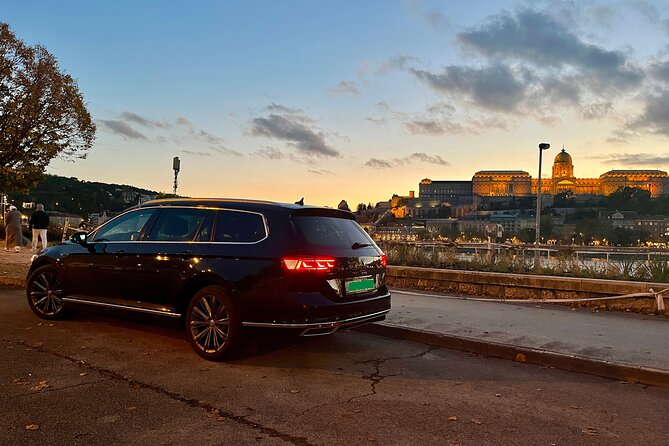
- Door-to-door pickup from any Budapest hotel or accommodation
- Car-first route that saves energy while crossing between Pest and Buda
- Andrássy Avenue World Heritage scenery with grand facades and classic boulevard views
- Fast landmark breaks designed for photos plus quick stories, not long waits
- Music-and-architecture stops at House of Music Hungary (opened January 2022)
- Lookout-and-thermal ending near Gellért Hill and Gellért Baths
How a Car Tour Actually Helps You Understand Budapest

Budapest is split by the Danube into two personality-packed halves. A car tour makes sense here because you spend less time figuring out routes and more time seeing the real structure of the city.
This is also a good format for first-timers or anyone on a tight schedule. In about four hours, you get sweeping boulevard scenes, major squares, and the kind of panoramic views that normally take longer to piece together.
Because it’s private, you’re not forced into a slow group shuffle. You can also ask questions in the moment, which is where this kind of tour becomes more than just a sightseeing checklist.
You can also read our reviews of more city tours in Budapest



Andrássy Avenue: World Heritage Boulevard in a Single Ride

Your day starts along Andrássy Avenue, a grand boulevard in Budapest that dates to 1872. It stretches between the city center and Heroes’ Square, and it’s famous for its Neo-Renaissance mansions and townhouse facades.
This is one of those places where the street view tells you a lot. You’ll notice the mix of architecture, embassies, theaters, cafés, and luxury shopping without needing to plan separate walks.
The World Heritage designation matters because it explains why the architecture feels so deliberate and consistent. It’s not random streetscape—this avenue was designed to impress, and seeing it from a car helps you cover it fast.
Heroes’ Square: The Statue Complex and Why It Feels Political
Heroes’ Square is one of Budapest’s headline squares, anchored by a statue complex featuring the Seven chieftains of the Hungarians and other major national leaders. The Memorial Stone of Heroes also plays a role in the square’s meaning.
What makes this stop more than a photo moment is the layer of modern history tied to the area. The square has hosted political events, including the reburial of Imre Nagy in 1989.
You get about 20 minutes here, which is usually just right for quick orientation. You’ll have enough time to take photos and understand what you’re looking at, but you won’t be stuck watching the clock for hours.
Tip for your time: if you’re even a little interested in how Hungary’s story is told in public art, look at the statue groupings first, then widen your view to the square. The design is meant to be read.
Vajdahunyad Castle in City Park: A “History Theme Park,” But Fun
Next up is Vajdahunyad Castle, located in Budapest’s City Park. The castle was built in 1896 as part of the Millennial Exhibition celebrating 1000 years of Hungary since the Hungarian Conquest of the Carpathian Basin in 895.
Here’s what makes it interesting: the castle was designed to include copies of landmark buildings from across the Kingdom of Hungary. So even if you’re not a “castle person,” this stop explains how countries build shared identity through architecture.
You’ll have around 15 minutes. That’s enough for a good look at the exterior and the idea behind the design, without turning it into a long park detour.
House of Music Hungary: Modern Budapest Shows Its Musical Side
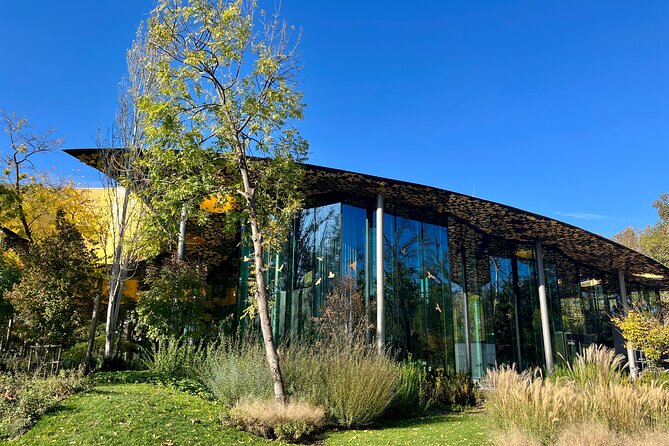
A short stop brings you to House of Music Hungary, a major musical education and exhibition venue in City Park. The building opened in January 2022 and was selected from 170 international projects in the architectural competition.
This is the kind of stop that gives you a balanced snapshot. Budapest isn’t only old stone and sweeping views—there’s also a push to teach and display music history in a modern way.
Expect about 10 minutes. That’s often enough to understand the concept and grab photos, especially since this tour isn’t trying to turn City Park into a full day.





Széchenyi Bath Area: Thermal Bath Culture From the Outside
The route includes the Széchenyi Medicinal Bath area, and the quick context helps you place it. Széchenyi is often described as the largest medicinal bath in Europe, with water supplied by two thermal springs.
The temperatures listed are very hot—about 74°C (165°F) and 77°C (171°F). Even if you don’t step inside, knowing that makes the whole “bath culture” feel real rather than just a tourist label.
Because the tour is time-limited, don’t expect a full spa experience. Think of this as a cultural waypoint, not a soak-and-stay plan.
Opera, Basilica, and Quick Big-Façade Stops
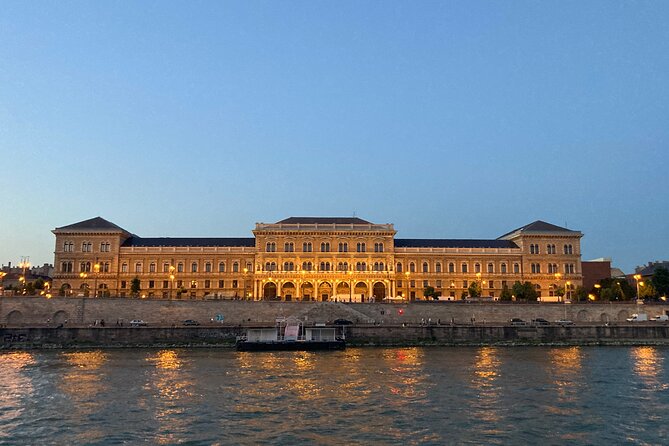
You’ll pass the Hungarian State Opera House on Andrássy Avenue. The opera house is in a neo-Renaissance style, and it’s one of those buildings you tend to remember long after you leave the street.
Then comes St. Stephen’s Basilica, a Roman Catholic basilica named for Stephen, the first King of Hungary. His right hand is housed in the basilica’s reliquary, and the church is described as the third largest church building in present-day Hungary.
This stop includes an important heads-up: the interior ticket isn’t included. You can still enjoy the exterior and the scale, but if you want inside, budget for optional entry.
A practical approach: if you’re deciding on ticketed interiors, save your energy for one. With only four hours, choosing your “must-see inside” is the smart move.
Liberty Square and Parliament: Classic Power in Stone
Liberty Square sits in the Lipótváros neighborhood and mixes business and residential buildings. It’s also where you’ll notice major institutions, including the United States Embassy and the Hungarian National Bank headquarters.
Some buildings here have Art Nouveau touches, which makes this stop feel more textured than a pure government corridor.
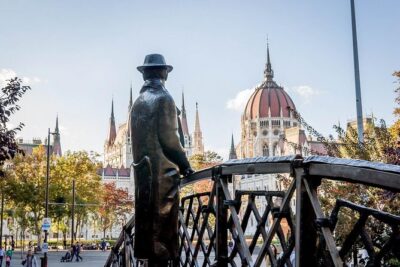
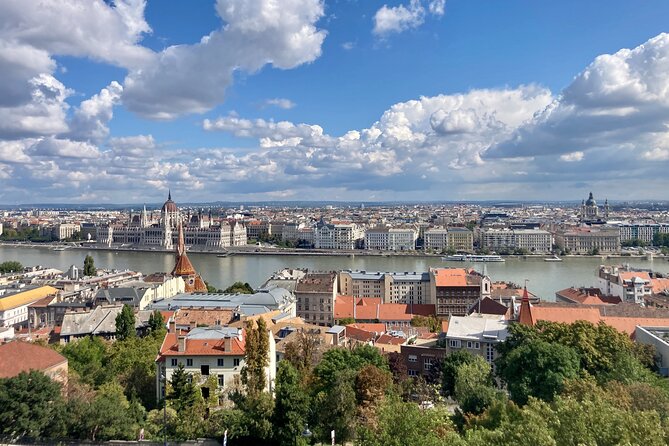
From there, the tour heads to the Hungarian Parliament Building on Kossuth Square, on the Pest side of the city and on the Danube’s edge. It’s the seat of the National Assembly of Hungary and is described as the largest building in Hungary.
This is another interior-free moment by default (the tour focuses on the outside viewpoints), and that can be a good thing. You get a clean orientation to the city’s political heart without losing time to lines.
Danube Bridges and the Zero Kilometre Stone: The City’s Distance Marker
From Parliament area viewpoints, the tour works its way toward the Danube crossing sights.
You’ll see Margit Bridge, noted as the second oldest bridge in Budapest, opened in 1876. It connects Pest and Buda and leads toward Margaret Island, a name you’ll hear again and again when you plan future walks.
Next is the Zero Kilometre Stone, a 3-meter limestone marker that functions as Budapest’s reference point for road distances. You’ll see the inscription on its pedestal reading KM, which is the sort of small detail that makes the city feel measurable and real.
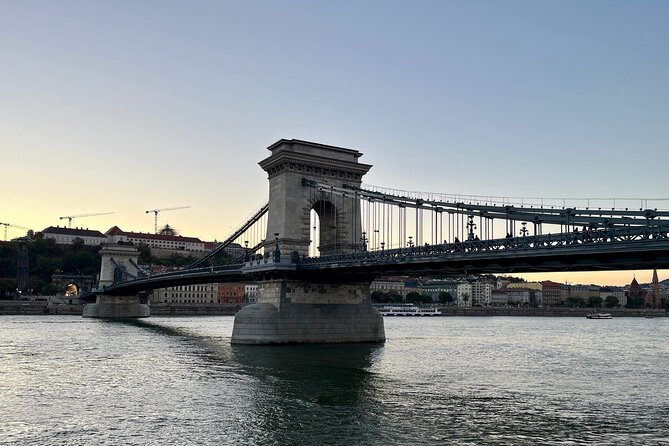
Finally, you get the Chain Bridge (Széchenyi Chain Bridge). It spans the Danube between Buda and Pest and was built as the first permanent bridge across the river in Hungary. It opened in 1849, engineered by William Tierney Clark with Scottish engineer Adam Clark.
If you only have a short time, these bridge moments are worth it because they visually explain the city’s geography. You’re not just seeing landmarks—you’re seeing how Budapest connects itself.
Fisherman’s Bastion and Matthias Church: Where the Views Do Most of the Talking
Your Buda-side viewpoints are the payoff section.
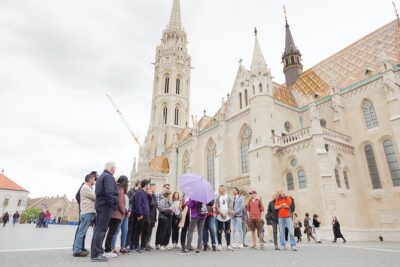
Matthias Church is in the Castle District, and the current building is described as late Gothic with florid details from the second half of the 14th century, restored extensively in the late 19th century. It’s positioned in front of Fisherman’s Bastion, so the two stops make sense as a paired photo-and-history sequence.
Fisherman’s Bastion is one of Budapest’s best-known sights for a reason: the terraces offer a wide panorama over the Danube and Pest skyline. It was built between 1895 and 1902 on the base of older castle walls, with a neo-Romanesque look.
You’ll get about 15 minutes here. That’s short, but usually enough for the classic viewpoint photos plus a quick read of the scale. Just know this area involves stairs and uneven stone in places, so comfortable shoes help.
Also note: the tour lists the interior/up-top experiences as optional ticket items. So you’ll be selecting between a quick terrace look and a deeper “inside and up” plan.
Gellért Hill and the Citadella: A View Plus a Backstory
From the Castle District side, the tour reaches Citadel Lookout at the Citadella on top of Gellért Hill. The fortification was built in 1851 by Julius Jacob von Haynau, who served as a commander of the Austrian Empire.
This is one of those lookout points where the history adds weight. You don’t just see the city—you understand why a controlling power would want this height.
You’ll have around 20 minutes, which is a realistic amount for standing back, taking photos, and taking in the Danube bend and the spread of neighborhoods.
Gellért Baths Finish: Architecture Meets Thermal Culture
To wrap, you reach St. Gellért Thermal Bath and Swimming Pool. The bath complex is part of the famous Hotel Gellért in Buda, and it was built between 1912 and 1918 in Art Nouveau (Secession) style.
Even if you don’t go in for a soak, the style is worth noticing. Art Nouveau bath buildings tend to feel more like a public hall than a locker-room facility.
This stop is around 10 minutes. It’s a nice way to end on a Budapest signature: thermal baths are part of daily culture here, not just a tourist gimmick.
Price and Value: Is $141.56 Worth It for Four Hours?
At $141.56 per person for about four hours, you’re paying for three big things: a professional guide, private transportation, and door-to-door service. The value becomes clearer when you think about how much time a city like Budapest eats when you’re bouncing between neighborhoods.
In practice, you’re buying efficiency and comfort. An air-conditioned vehicle plus bottled water means you can focus on sights instead of logistics. You also get the advantage of short guided stops, which usually beats wandering alone when time is tight.
The biggest value lever is flexibility. Start times vary, and since it’s private, you can align the day with your energy level and interests. If you’re traveling with family or a small group, the private transport cost can also feel more reasonable compared with multiple separate taxis and guide time.
Just remember: entrance fees for certain interiors aren’t included. If you plan to go inside multiple big-ticket sites, your final spend will rise.
What Tour Style You’ll Like (and What You Might Not)
If you want a “see the map” day, this tour style fits well. You get a sequence that runs from major boulevards to squares and then into major Buda panoramas—exactly the kind of route that helps you understand the city fast.
You’ll also probably enjoy the guide interaction if you like asking questions. In past experiences, guides named Gergely Szabó, Gregory, and Gabriel have been praised for fluent English, clear explanations, and answering all sorts of questions that go beyond just dates and names.
The main mismatch is expectations. This is not built for long museum time. One less-satisfying version of this format can feel like a lot of driving and short looking, especially if you’re hoping for longer, deeper stops.
A smart compromise: choose a couple of places where you’re willing to buy an interior ticket, and let the rest stay as guided exterior moments.
Who Should Book This Budapest Half-Day Private Car Tour
This is a strong fit for:
- First-timers who want orientation fast
- Couples or small groups who prefer door-to-door comfort
- People who want big sights without long lines and long walks
- Anyone who likes the story of buildings, squares, and architecture as you ride between them
It may not be ideal if:
- You want a deep museum schedule
- You’re trying to schedule multiple interiors in one short day
- You hate quick stops and prefer slow, lingering time on foot
Should You Book It?
Yes, I’d book it if you’re trying to get your bearings fast and you want a guided, comfortable route through Budapest’s top hits. The combination of door-to-door pickup, air-conditioned private transport, and short stops at iconic places makes it practical, especially in a limited time window.
Book it with the right mindset: think photo-and-context, not all-day ticket sightseeing. If you decide in advance which interior you care about most—like Basilica or Fisherman’s Bastion—you’ll feel like you used your four hours wisely.