REVIEW · BUDAPEST
Private Budapest Sightseeing Tour: Royal Castle, Heroes Square, Chain Bridge
Book on Viator →Operated by Randon Travel · Bookable on Viator
Royal views, great guide, zero guesswork. This private loop is a smart way to get your bearings fast, starting with Széchenyi Chain Bridge and sweeping up into Buda for the Castle District and Matthias Church. I especially like the stops that turn into photo-and-walk moments, plus the chance for a real back-and-forth with your guide—Gabriel gets praised for patient history explanations and time for questions. The one thing to consider is that with a 3-hour format, you’ll see a lot of major landmarks, but it’s not built for long, slow hangs at every site.
You also get real convenience: hotel pickup and drop-off and transport in a private vehicle, so you’re not spending your limited time figuring out routes. Another plus is the variety in the route—castle views, hilltop viewpoints at Gellért Hill, a market hall browse, and then the wide boulevards and squares on the Pest side. The tradeoff? You’ll be walking, and you’ll want comfy shoes, especially if your departure includes more sightseeing time than you expect.
In This Review
- Key Highlights You’ll Actually Notice
- Royal Castle to Heroes’ Square: Why This Route Works
- Chain Bridge First: The Best Start for Photo-Ready Orientation
- Castle District and Royal Palace Walk: Matthias Church and Fisherman’s Bastion
- Up Gellért Hill to the Citadel Area: Big Views, Quick Context
- Great Central Market Hall Time: A Useful Break from Landmarks
- Jewish Quarter, Synagogue Area, and Stopping for Real City Texture
- Andrássy Avenue, State Opera House, and Heroes’ Square
- City Park, Vajdahunyad Castle, and St Stephen’s Basilica
- Price and Value for a Private 3-Hour Loop
- Who This Tour Suits Best (and Who Might Skip It)
- Should You Book This Budapest Private Sightseeing Tour?
- FAQ
- How long is the private Budapest sightseeing tour?
- What’s included in the tour price?
- What language is the tour offered in?
- Does the tour include food and drinks?
- Does the tour visit Széchenyi Chain Bridge and the Castle District?
- What are the key stops in the Buda side?
- Is there time to explore Great Central Market Hall?
- Does the itinerary include Heroes’ Square and Andrássy Avenue?
- Is there an option to extend the tour?
- What’s the cancellation policy?
Key Highlights You’ll Actually Notice
- Hotel pickup, drop-off, and private vehicle make this easy on your schedule and energy.
- Chain Bridge to Buda gives you a classic, high-impact first look at the city.
- Castle District stops include Matthias Church and Fisherman’s Bastion for iconic architecture and viewpoints.
- Gellért Hill and Citadel area adds the dramatic city panorama without needing to plan transit.
- City Park and Andrássy Avenue connect the dots between grand landmarks, squares, and monuments.
Royal Castle to Heroes’ Square: Why This Route Works
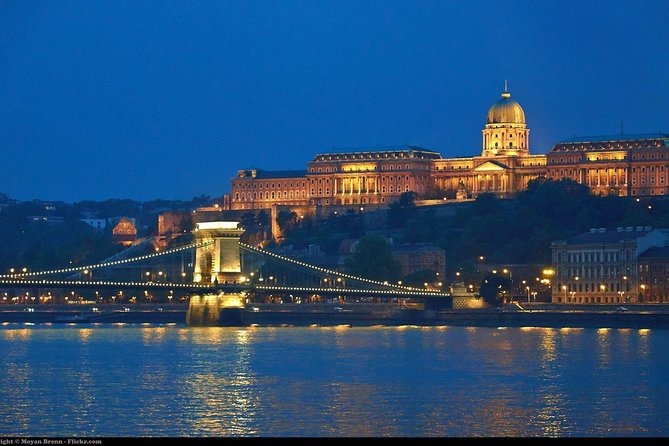
Budapest can feel like two cities—Buda’s hills on one side, Pest’s wide avenues and grand civic buildings on the other. This tour is designed to show you that contrast quickly, without drowning you in logistics. You start by crossing the Széchenyi Chain Bridge, which is not only famous, it’s also the clean “before and after” moment when Budapest suddenly makes visual sense.
Your pace stays practical. You get the big sights—Castle District, Gellért Hill, Great Central Market Hall, the Jewish Quarter, Andrássy Avenue, Heroes’ Square, City Park, and a peek inside St Stephen’s Basilica—but the guide keeps the route moving so you still get time to stop, take photos, and ask questions. One review specifically called out how the guide made time for pictures and discussion, and that’s exactly what you want on a first visit: clarity, context, and great angles.
Also, you’ve got flexibility built in. There are several departure times through the day, so you can match it to your own sightseeing rhythm. If you’re trying to build a smooth first-day plan, this is the kind of tour that helps you decide what to return for later.
You can also read our reviews of more private tours in Budapest



Chain Bridge First: The Best Start for Photo-Ready Orientation
The tour’s opening move matters. Crossing the Széchenyi Chain Bridge right away puts you on the historic spine between Pest and Buda. Even if you’ve seen photos, seeing it in person helps you understand why locals built the city this way: bridges here are more than crossings; they’re viewpoints and landmarks in their own right.
From there, you move onto the hilly Buda side. This is where Budapest’s drama shows up—steep streets, lookout spots, and architectural layers that feel older than the city’s modern bustle. With private transport and pickup, you don’t waste time early on. You’re already walking where the scenery starts.
What I like about this approach is that it’s not random. The bridge-to-hills sequence gives you momentum. You’re not hopping from place to place with long transit gaps, and the guide can explain what you’re seeing as you’re seeing it—especially helpful when your head is spinning from landmark overload.
Castle District and Royal Palace Walk: Matthias Church and Fisherman’s Bastion
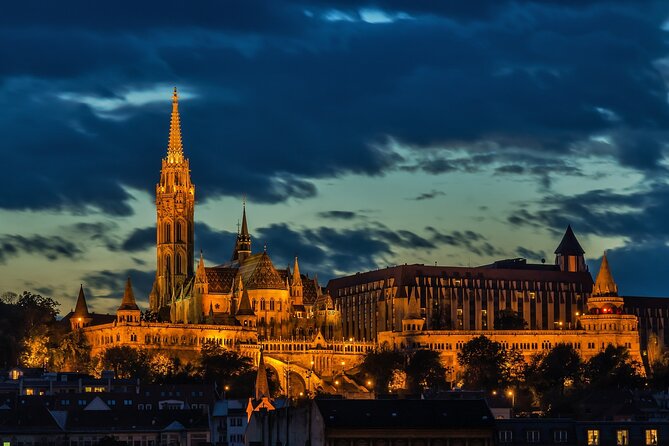
Once you’re in the Castle District, you’re in the “Budapest postcard” zone. You’ll walk around the Castle District and the Royal Palace area, with stops to admire Matthias Church and Fisherman’s Bastion.
Matthias Church is the kind of building that rewards looking up. The description here points to its Gothic style, and you’ll feel that character as you get closer—details in the façade and the overall vibe shift from plain skyline to something more intricate and ceremonial.
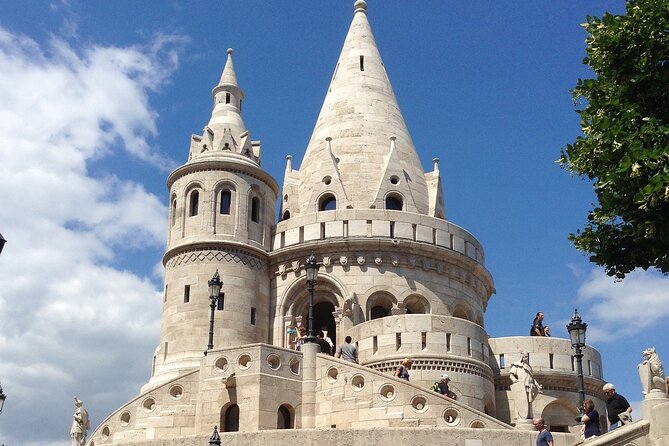
Then comes Fisherman’s Bastion, which functions as both a viewpoint and an architectural landmark. It’s one of those places where you instantly understand why people schedule time for photos. You don’t just pass by—you walk through the area, and you’re in position to capture the views back toward the river.
Practical tip: wear shoes you can handle on uneven stone streets. This part is scenic, but it’s not “museum-smooth.” If you’re the type who pauses for lots of photos, tell your guide early. The guide can help you time stops so you still cover the highlights within the 3-hour window.
Up Gellért Hill to the Citadel Area: Big Views, Quick Context
After the Royal Castle area, the route climbs up toward Gellért Hill. This is where Budapest turns dramatic again: elevation, panoramic lines, and that “how did they build a city here?” feeling.
You’ll explore historic sites in this hilltop stretch, including the Citadel, Gellért Spa, and the Liberty Bridge area. Even if you’ve only seen the names, the visual impact here is hard to miss. The Citadel area is about viewpoint payoff, while the mention of Gellért Spa and Liberty Bridge adds variety so it’s not just one look at one angle.
This is also where a good guide earns their keep. The best tours don’t just point; they connect. With Gabriel specifically, one review highlighted that he took time to explain history of the buildings and monuments. That’s exactly what helps you understand why these hilltop and bridge landmarks matter in the bigger story of the city.
Consideration: the more you’re sensitive to walking uphill, the more you’ll want to manage pacing. A private guide makes it easier to slow down for photos or rest stops, but the schedule still assumes you’re comfortable moving.
Great Central Market Hall Time: A Useful Break from Landmarks
Next is the Great Central Market Hall, where you get time to browse stalls and sample traditional Hungarian foods if you want. Even though food isn’t included (so you’ll pay for what you choose), this stop is a smart break in the day’s rhythm.
Why it works: after castles and viewpoints, a market re-centers your senses. It’s less about monuments and more about everyday Budapest. You can keep it light—just wander, look around, grab a snack—then jump back into sightseeing without losing momentum.
Practical move: if you plan to eat, set a budget before you get inside. Since food and drinks aren’t included, costs can vary based on what you pick. If you’re traveling with someone with different tastes, the market is flexible because you can each choose something small and share the experience.






Jewish Quarter, Synagogue Area, and Stopping for Real City Texture
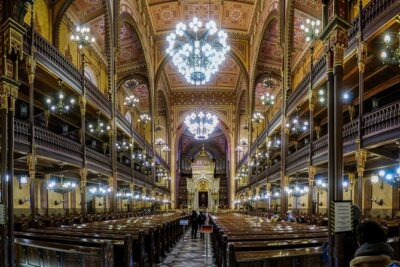
As you move on, the tour passes the National Museum and heads toward the Jewish Quarter, including time to see a beautiful synagogue. This part gives the tour emotional range, balancing royal and civic architecture with religious and cultural landmarks.
The route also keeps you moving through neighborhoods rather than treating the city like a list of isolated monuments. You’re not just checking boxes; you’re tracing how different parts of Budapest contribute to the whole.
In particular, the synagogue visit is a meaningful change of pace. It’s a stop where details matter more than height or panorama. Even if you only peek briefly, having a guide’s context helps you notice what you’d otherwise walk past.
Andrássy Avenue, State Opera House, and Heroes’ Square
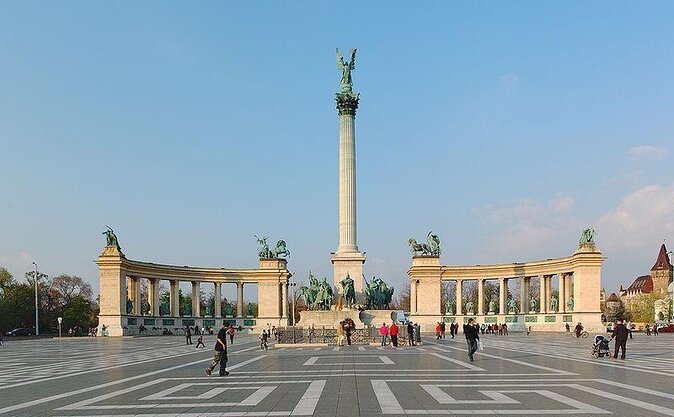
Now you cross into the grand “Pest side” style. You’ll walk down Andrássy Avenue to see the State Opera House and then continue to Heroes’ Square.
Andrássy Avenue is the kind of place that feels ceremonious even when it’s full of normal city life. The State Opera House brings that formal, European grand-design energy. Then Heroes’ Square takes over with its scale and symbolism—another landmark that works best when you understand what you’re looking at.
This is also where the private-guide format pays off again. In short windows like this, explanation helps you read the monuments instead of just photographing them. One thing the reviews repeatedly praise about Gabriel is exactly that: making history understandable and answering questions without rushing you out.
Tip for pacing: if you’re the type who wants to stand and study, pick one main stop to linger at—either the Opera area or Heroes’ Square. Otherwise you’ll try to do both and feel rushed.
City Park, Vajdahunyad Castle, and St Stephen’s Basilica
After Heroes’ Square, the tour shifts to a greener feel at City Park, passing Vajdahunyad Castle and the Széchenyi Zoo area. You’re not getting a full park day, but the change of scene is useful. It breaks up the density of monuments and makes the day feel less like a straight line of sightseeing.
Then you take a peek inside St Stephen’s Basilica. That’s a great finishing experience because it feels like the tour reaches a recognizable “final chapter.” Having time to step inside (even briefly) adds contrast from everything you’ve been seeing outdoors.
Consideration: a peek is not the same as a long, slow visit. If you love churches, you might want to plan a return on your own later. But as part of a 3-hour sampler, this hits the main note.
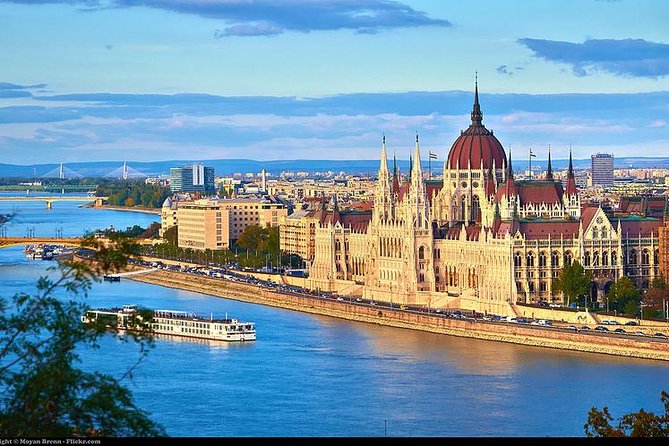
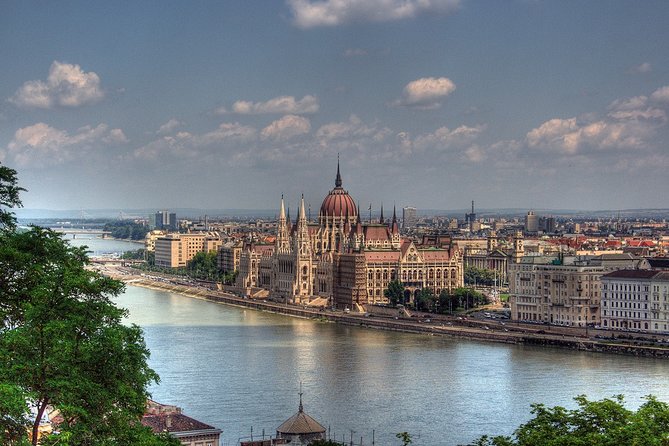
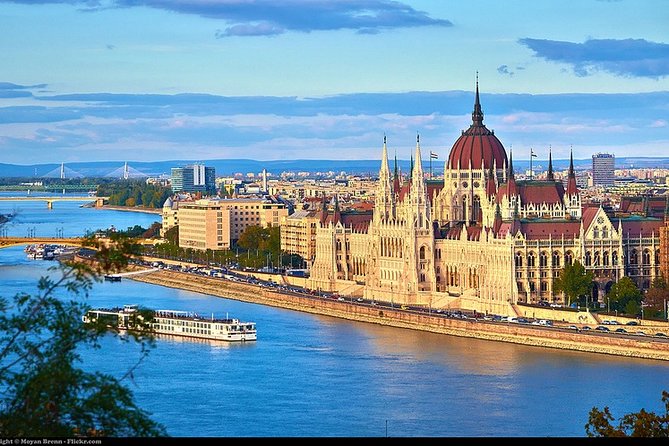
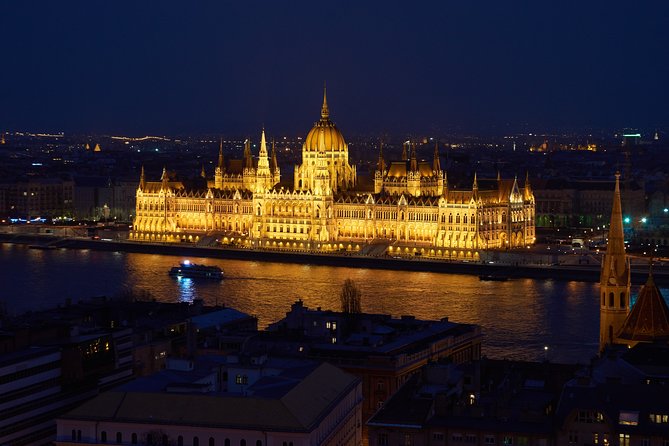
The tour ends in the city center close to the parliament building, which is a convenient drop-off point if you’re continuing your day with more sightseeing.
Price and Value for a Private 3-Hour Loop
At $235.51 per person for roughly 3 hours, this is not a budget deal. It’s a “pay for convenience and guidance” deal. You’re getting hotel pickup and drop-off, private transport, and a private guide, plus a route that stitches together several top landmarks into one coherent first-visit plan.
So the real value question isn’t just what you pay—it’s what you save:
- You save transit planning time between far-flung areas (Castle District, hilltop viewpoints, market, and Pest’s grand boulevard stops).
- You save the mental effort of figuring out the best order for photos and walking.
- You gain context fast, especially when your guide is like Gabriel, who’s praised for history explanations and making time for questions.
If you’re traveling with someone you’d rather not split into separate groups, the private format can also be a better fit than joining a larger tour where you’re more likely to get rushed.
If you want a “do-it-all” day with zero stress, this pricing can make sense. If you prefer to roam freely with a guide book and public transit, you may be better off choosing a self-guided plan and spending the money elsewhere.
Who This Tour Suits Best (and Who Might Skip It)
This private route is best for:
- First-time visitors who want a guided orientation across both sides of the river
- People who like structure but still want time for questions and photos
- Travelers who want their history explained in plain language by a guide like Gabriel, praised for friendliness and thorough answers
You might skip it if:
- You already planned to spend a full day in the Castle District and Gellért Hill and want unstructured time
- You’re not comfortable with walking between multiple landmark zones in a short window
- You want food as a main focus—because food and drinks aren’t included, the market stop is more of a browse-and-snack moment than a meal plan
Should You Book This Budapest Private Sightseeing Tour?
Book it if you want a confident first pass through Budapest with a guide who can explain what you’re seeing and keep you moving at a pace that still allows photos and questions. The combination of hotel pickup, Chain Bridge-to-Castle District, hilltop viewpoints at Gellért Hill/Citadel, a market hall browse, and major Pest landmarks like Heroes’ Square and St Stephen’s Basilica makes this a strong “get oriented fast” option.
Skip it if you’re after long stays, deep museum time, or a purely food-and-neighborhood day. Also, if you’re someone who hates stepping on and off cars and wants fully independent exploring, a private tour may feel a bit scheduled.
If you’re trying to make your Budapest trip easier—especially on day one—this is the kind of tour that helps you choose what to revisit later.
FAQ
How long is the private Budapest sightseeing tour?
It runs for about 3 hours.
What’s included in the tour price?
You get a local guide, hotel pick-up and drop-off, a private tour, and transport by private vehicle.
What language is the tour offered in?
It’s offered in English.
Does the tour include food and drinks?
No. Food and drinks are not included. You can choose what you want at the market.
Does the tour visit Széchenyi Chain Bridge and the Castle District?
Yes. The route includes crossing the Széchenyi Chain Bridge, then walking around the Castle District and the Royal Palace area.
What are the key stops in the Buda side?
You’ll see Matthias Church, Fisherman’s Bastion, and spend time around Gellért Hill, including the Citadel, Gellért Spa, and the Liberty Bridge area.
Is there time to explore Great Central Market Hall?
Yes. You’ll have time to browse the stalls and you can sample traditional Hungarian foods if you want.
Does the itinerary include Heroes’ Square and Andrássy Avenue?
Yes. You’ll walk down Andrássy Avenue to see the State Opera House and then go to Heroes’ Square.
Is there an option to extend the tour?
Yes. You can get an extra hour for 35 EUR, if you inform the provider in advance.
What’s the cancellation policy?
There’s free cancellation. You must cancel at least 24 hours before the experience’s start time for a full refund.