REVIEW · BUDAPEST
Original Budapest Walking Tour
Book on Viator →Operated by Original Budapest Tours · Bookable on Viator
For $2.88, you get Budapest in motion. This Original Budapest Walking Tour strings together the city’s biggest wow-factors—plus the stories that usually never make it into a guidebook—so you walk away with real orientation for your next day or two.
I especially like the value: an English-speaking local guide, major landmarks, and multiple stops all in about 3.5 hours. I also like that the guide uses question-style trivia and lived-in context, with names like István, Robert, and Janet mentioned as standout guides, so the tour feels personal rather than scripted. One thing to consider: the route can be tight, and some departures may lean more toward Pest than you expect—so don’t plan a second, strict Buda Castle schedule immediately afterward without buffer time.
In This Review
- Key things to know before you go
- Price and what $2.88 really buys you
- Starting at St. Stephen’s Basilica: a smart launch point
- Hungarian Parliament Building: more than a postcard exterior
- Széchenyi Chain Bridge: the Danube crossing that teaches the city
- Buda Castle area: time for atmosphere, not rushing
- Matthias Church: the church face people remember
- St. Stephen’s Basilica: seeing it twice (and why that can work)
- Fisherman’s Bastion: panoramic views with a purpose
- Liberty Square: banking meets monuments
- Ferris Wheel of Budapest: the best seat in town is sometimes off to the side
- Andrássy Avenue: architecture you can read on the move
- Shoes on the Danube Bank: the stop that hits hardest
- Margaret Island: a break inside the city
- Gellért Hill: views over the Danube, plus a named legend
- Széchenyi Square: a quick statue stop with long roots
- Pacing, comfort, and what to bring
- Guide quality can make or break the experience
- Should you book this Budapest walking tour?
- FAQ
- What is the duration of the Original Budapest Walking Tour?
- Where does the tour start?
- What time does the tour begin?
- How much does the tour cost?
- Is the tour offered in English?
- What’s included and what should I bring?
- What happens if the weather is poor?
Key things to know before you go

- Major sights, minimal cost: $2.88 for a long run of top landmarks, with no bottled water included.
- Storytelling that adds meaning: you’re not just taking photos; you get context at places like the Shoes on the Danube.
- A route built for first-timers: Parliament to Castle Hill to Andrássy Avenue gives you a clear map of how Budapest works.
- Short stop times, so move when it’s your turn: plan for a quick look-and-learn pace rather than slow sightseeing.
- Good weather matters: the experience requires decent conditions, and rain can change plans.
- Language is English: this is offered in English with a local guide.
Price and what $2.88 really buys you
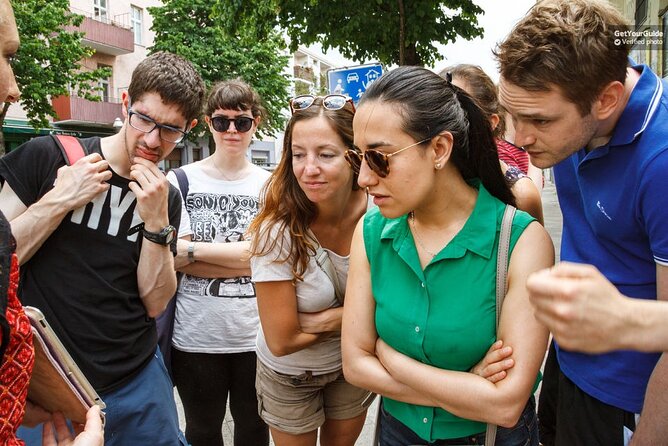
Let’s talk value, because this is where the tour earns its keep. At $2.88 per person, you’re not paying for museum tickets or private vehicle time—you’re paying for a local guide to connect the dots between places you’d otherwise visit one by one.
That price point can be a win, but it also shapes your expectations. You’ll get lots of stops and context, yet you won’t have time for deep inside-the-building visits at every stop unless the day runs smoothly and the line-up of public areas cooperates.
You can also read our reviews of more walking tours in Budapest



Starting at St. Stephen’s Basilica: a smart launch point
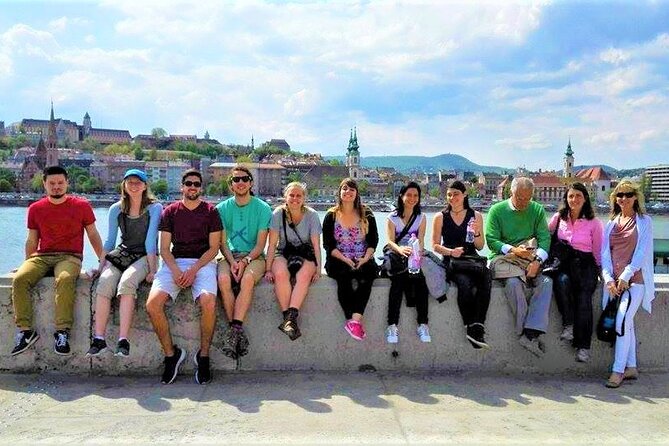
You meet at St. Stephen’s Basilica (Szent István tér 1), with a start time of 11:00 am. Even if you’ve seen photos online, standing near the square gives you a feel for why Budapest’s layout makes sense: you’re close to the core of Pest, with easy connections out toward the Danube and beyond.
From here, the tour’s logic is simple. It pulls you from Pest’s big civic sights toward the river crossings and up into Buda’s historic heights. If you’re on a tight schedule in Budapest, this is the kind of “first-day geometry” that helps everything you do afterward feel easier.
Hungarian Parliament Building: more than a postcard exterior
The walk begins with the Hungarian Parliament Building, the seat of the National Assembly and one of Hungary’s most recognizable landmarks. You’ll spend about 10 minutes here, so treat it like an orientation stop: look, absorb, then move on while the story is still fresh.
What I like about a stop like this is that it teaches you what you’re actually looking at. When you understand that this is the national assembly, not just a pretty building, the scale and location start to feel purposeful.
Széchenyi Chain Bridge: the Danube crossing that teaches the city
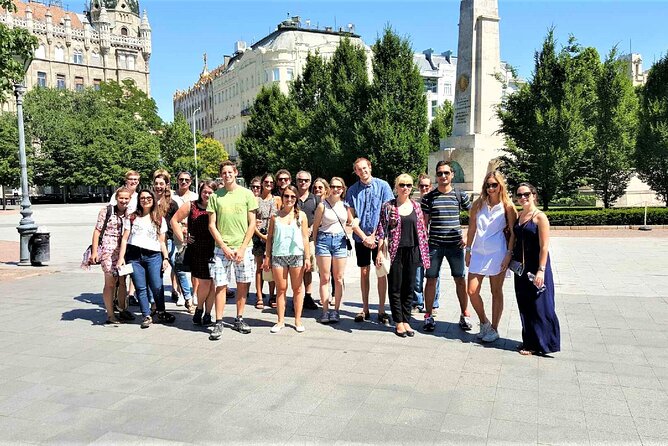
Next comes Széchenyi Chain Bridge, the icon that historically connected Buda and Pest by foot. Expect roughly 15 minutes to take in the views and understand why this crossing matters so much to the city’s identity.
This stop is also where you can mentally “zoom out.” When you look across the Danube from here, Budapest stops feeling like a set of separate attractions and starts feeling like one unified place with multiple layers—politics, history, and daily life all stacked along the river.
Buda Castle area: time for atmosphere, not rushing
You’ll head to Buda Castle, the royal complex that’s been evolving since the 1200s, with the large Baroque palace built from 1749 to 1769. The tour gives you about 20 minutes in this area, and that’s just enough to get the feel of Castle District without trying to do everything at once.
The key benefit is context. Once you learn what the complex was called in earlier eras (Royal Palace/Royal Castle) and how the site changed over time, the buildings stop looking random. They start reading like chapters.
A practical note: Castle District is photogenic, but it can also feel like you’re always on stairs. If your legs are already tired, pace yourself early so you enjoy the views instead of just surviving them.






Matthias Church: the church face people remember
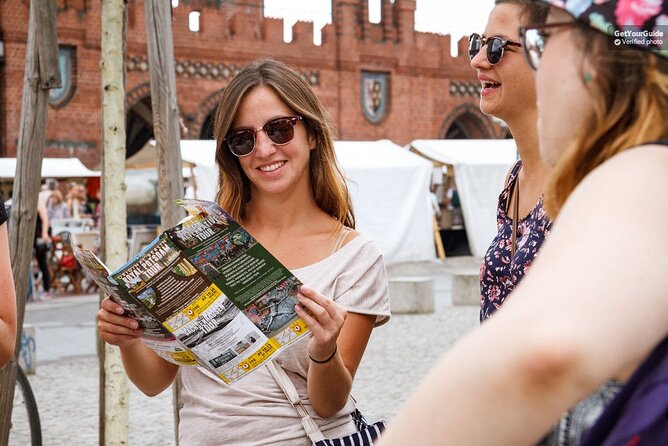
Then it’s Matthias Church (the Church of the Assumption of the Buda Castle), located by Holy Trinity Square near Fisherman’s Bastion. You get about 20 minutes, which is great for taking in the setting—especially the way the area frames the church against the Castle District backdrop.
This is one of those stops where the tour’s storytelling can make a difference. Knowing why it’s commonly called Matthias Church (and understanding its connection to coronations as a lesser-known name) helps you look beyond the walls and start noticing the layers of use over centuries.
St. Stephen’s Basilica: seeing it twice (and why that can work)
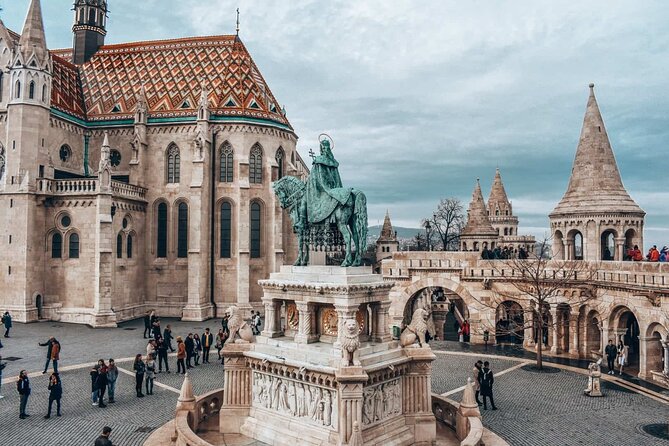
After Matthias Church, the itinerary includes St. Stephen’s Basilica again for another 20 minutes. That might sound odd, but it can actually be useful.
If your first sighting was more about launch and orientation, this second visit can shift into appreciation mode—time to absorb details, the square, and the overall role the basilica plays in the center of Pest.
Fisherman’s Bastion: panoramic views with a purpose
Next is Fisherman’s Bastion (Halászbástya), famous for its terraced outlooks near Buda Castle. The tour provides about 20 minutes, and the big value here is the perspective.
You’re not just checking a viewpoint off a list. When you look out from here with a bit of city layout in your head—Buda on one side, Pest on the other—you start understanding where landmarks sit relative to each other. That makes later self-guided walks feel more confident.
Liberty Square: banking meets monuments
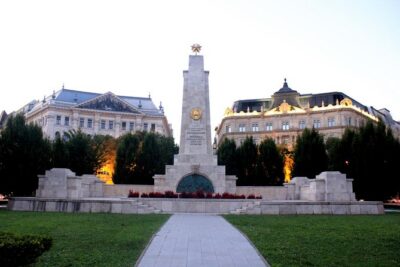
From Castle Hill, the tour moves back into Pest with a stop at Liberty Square (Szabadság tér). You’ll spend about 10 minutes, enough time to notice the square’s mix of business and residential buildings, plus historicist and Art Nouveau touches.
This stop can be surprisingly helpful. Even if Liberty Square isn’t on everyone’s “top ten photos” list, it gives you a sense of the city’s civic rhythm—where old styles sit next to modern life and major institutions like the U.S. Embassy and the Hungarian National Bank’s historic-style presence.
Ferris Wheel of Budapest: the best seat in town is sometimes off to the side
Then you get to the Ferris Wheel of Budapest, nicknamed the Eye of Budapest in the tour description. The idea here is the panoramic reach: views that can extend toward the Danube ships, Buda Castle, and Pest’s church towers.
The practical reality with a walking tour stop like this is that you may not have time for a full ride. But even without tickets, you can still enjoy the visual payoff by using this stop as a “map marker” for where the city opens up.
Andrássy Avenue: architecture you can read on the move
Andrássy Avenue is next, with about 15 minutes here. Dating back to 1872 and recognized as a World Heritage Site in 2002, it’s lined with Neo-Renaissance mansions and townhouses with standout facades.
What you’ll likely appreciate is that this isn’t just a place to look at buildings. It helps you understand Budapest’s “prestige corridor” feeling—how certain streets were designed to signal status and power, not just move traffic.
Shoes on the Danube Bank: the stop that hits hardest
Then comes one of the most important stops on the route: Shoes on the Danube Bank. The memorial marks those who lost their lives during Arrow Cross rule and consists of 60 pairs of iron shoes anchored along the riverbank.
This is the stop where the tour’s storytelling matters most. You’re given history that changes your posture. You’ll likely slow down without being told to, because the meaning is immediate and personal in a way that’s hard to replicate from a caption.
Margaret Island: a break inside the city
The route continues with Margaret Island, described as a calm green break between Buda and Pest. You get the idea of it quickly: pedestrian promenades, an art nouveau water tower, ruins connected to a 13th-century Dominican convent, a musical fountain, and even a small zoo.
If your day has been fast and focused on landmarks, this stop can function like a pressure release. It’s still sightseeing, but it’s a softer type—good for walking slower, taking a breather, and resetting your brain before the hill views return.
Gellért Hill: views over the Danube, plus a named legend
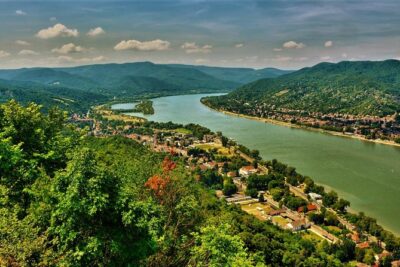
Next is Gellért Hill (235 m high), overlooking the Danube and located in the 1st and 11th districts. The hill is named after Saint Gerard, who was thrown to death from the hill—an example of how Budapest’s scenery and legends mix together.
With about 15 minutes, your job is simple: look outward and connect the dots to what you’ve already seen. This is the kind of viewpoint that makes the river feel like the backbone of the city, not just a backdrop.
Széchenyi Square: a quick statue stop with long roots
Then you’ll reach Széchenyi Square, with a quick stop to find the statue of Széchenyi that has been in place since 1880. Expect about 10 minutes.
This is a good reminder of why walking tours work. You don’t have to spend hours in every location. Sometimes the value is in noticing one anchor detail that helps you remember where you are later.
Pacing, comfort, and what to bring
This tour is about 3 hours 30 minutes, with short time windows at each major point. That means you’ll spend most of your energy listening and walking, not deep roaming.
Here’s how to make it more comfortable:
- Wear shoes you can walk in for an extended morning.
- Bring your own water (bottled water is not included).
- If you’re sensitive to hills and stairs, plan to move at a steady pace and take quick breaks when the group stops.
Also keep in mind a real-world issue from the format: the route includes Buda Castle and Fisherman’s Bastion, but in practice the balance between Buda and Pest can feel different depending on the day. If you’re hoping for a long inside visit to Buda Castle the same afternoon, give yourself extra time so you don’t feel rushed.
Guide quality can make or break the experience
One consistent theme tied to high ratings is guide energy and communication. Names like Robert, István, and Janet come up as guides who keep people engaged with clear pacing, fun trivia questions, and story-driven context.
That matters because many stops can blur together if you’re only using signage. A good guide helps you remember the story behind the spot—why it exists, what it meant, and what to notice while you’re standing there.
Should you book this Budapest walking tour?
Book it if:
- You want a low-cost way to hit major highlights in one morning.
- You value local storytelling that turns famous buildings into meaningful landmarks.
- You like a structured route where you can then branch out on your own.
Skip it or book something else if:
- You need lots of time for inside visits and long museum-style wandering.
- You have a tightly timed second plan later that depends on a specific amount of Buda Castle time.
If you’re visiting Budapest for a first full day, this is a strong “get your bearings fast” option. It won’t replace day-long exploring, but it sets you up so future wandering feels smarter.
FAQ
What is the duration of the Original Budapest Walking Tour?
The tour runs about 3 hours 30 minutes.
Where does the tour start?
The meeting point is St. Stephen’s Basilica at Szent István tér 1, 1051 Hungary.
What time does the tour begin?
The start time is 11:00 am.
How much does the tour cost?
The price is $2.88 per person.
Is the tour offered in English?
Yes, the tour is offered in English.
What’s included and what should I bring?
A local tour guide is included. Bottled water is not included, so plan to bring your own.
What happens if the weather is poor?
This experience requires good weather. If it’s canceled due to poor weather, you’ll be offered a different date or a full refund.