Jewish life in Budapest feels personal fast. This 3-hour Jewish Heritage tour pairs major historic sights with a real discussion on what it means to be Jewish in Hungary today.
I love the small group size and the fact that you get a local licensed guide, Edith, who turns dates into human stories. I also like that the schedule is short enough to keep your day open, with one big paid highlight plus two free, high-impact memorial stops.
One drawback to plan for: Dohány Street Synagogue entry is not included (listed at €26 per person), so your total cost will be higher than the tour price alone.
In This Review
- Key highlights worth planning around
- Why This 3-Hour Jewish Heritage Tour Works in Budapest
- Meeting at Deák Ferenc tér: Small Group, Clear Pace
- Dohány Street Synagogue: Inside the Second Largest Synagogue in the World
- What to expect inside
- Jewish Cemetery, Emmanuel Tree, and the Living District Around You
- Shoes on the Danube Bank and the German Invasion Memorial
- Shoes on the Danube Bank (15 minutes, free)
- Memorial to the Victims of the German Invasion (15 minutes, free)
- Edith’s Storytelling and the Discussion Part You’ll Appreciate
- Price, Timing, and Planning Your Day Around It
- Who This Tour Is For (and Who Might Want More Time)
- Should You Book This Jewish Heritage Tour?
- FAQ
- What sites does the Jewish Heritage tour include?
- How long is the tour?
- What is the meeting point and the end point?
- What’s included in the tour price?
- Is transportation included?
- Do I need to pay for entrance fees?
- What language is the tour offered in?
- What if the weather is bad?
- Is there a cancellation policy?
Key highlights worth planning around
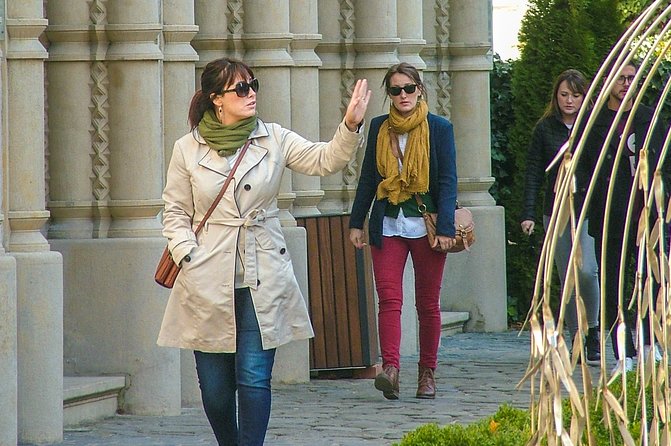
- Edith’s guided approach turns the Jewish Quarter into something you can understand, not just photograph
- Dohány Street Synagogue + cemetery gives you scale (it’s the second largest synagogue in the world) and context
- Raoul Wallenberg Memorial Garden adds a meaningful thread of righteous action to the story
- Shoes on the Danube Bank is brief but brutally effective
- A controversial German Invasion memorial shows how history stays loud in public space
- A short 3-hour format means you can pair it with other Budapest plans the same day
Why This 3-Hour Jewish Heritage Tour Works in Budapest
Budapest can feel like a city of layers. One street is grand architecture. Turn a corner and you hit history that’s darker, then somehow still alive today. This tour is built for exactly that. It moves quickly enough that you won’t feel trapped on a schedule, yet it hits the three places that people most want to understand: community life, Holocaust-era memory, and what the city still argues about.
The tour also doesn’t treat Judaism in Hungary like a museum exhibit behind glass. The format encourages dialogue, so you can ask questions and connect the past to present-day identity. That’s rare. Most tours give you facts and move on.
You’ll finish with a lot to think about, but you won’t leave exhausted or lost in logistics. It’s an intelligent use of time.
You can also read our reviews of more historical tours in Budapest


Meeting at Deák Ferenc tér: Small Group, Clear Pace
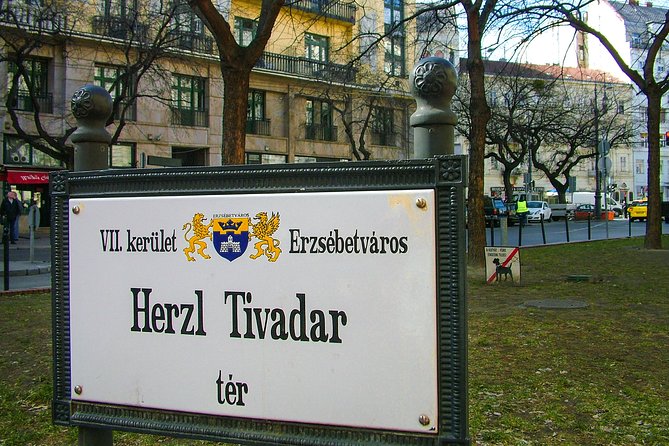
You start at Deák Ferenc tér in central Budapest. That’s a smart base because it’s well connected to public transportation, and it makes the day easier if you’re juggling other plans. The tour ends at Dohány u. 2 near the synagogue area, so you’re not forced into a long return walk right after the emotional stops.
The group stays small. The tour description mentions a maximum of ten people for a more personalised experience, and the overall listing states a maximum of 13. Either way, it’s not a giant bus crowd. In practice, that means more chances to ask questions and get answers that fit what you care about, whether that’s wartime history, postwar changes, or the everyday reality of Jewish life now.
Also, you’ll be mostly walking through a dense part of the city. Wear shoes you can live in for a few hours. Even with breaks, you’re covering enough ground to make comfort matter.
Dohány Street Synagogue: Inside the Second Largest Synagogue in the World
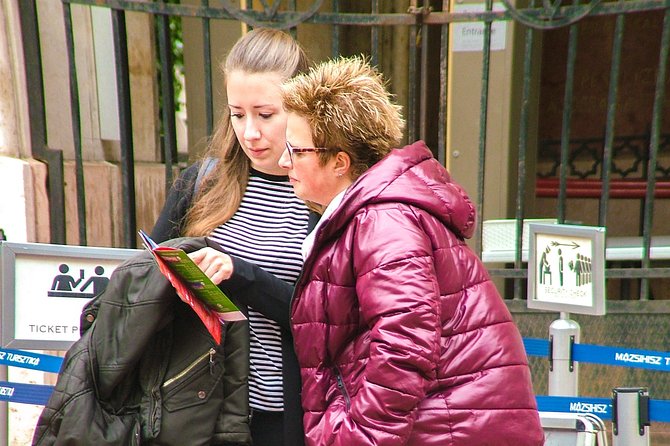
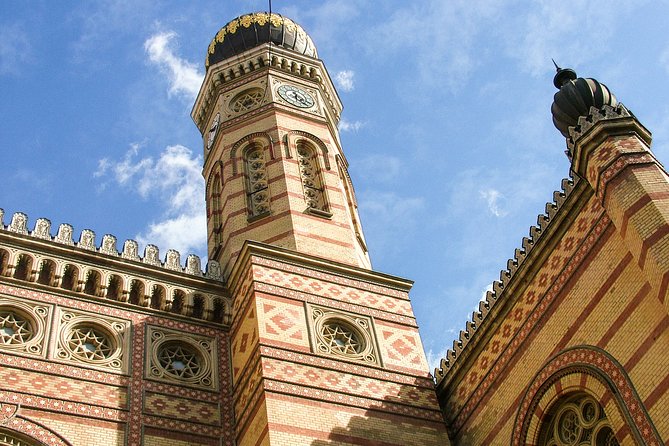
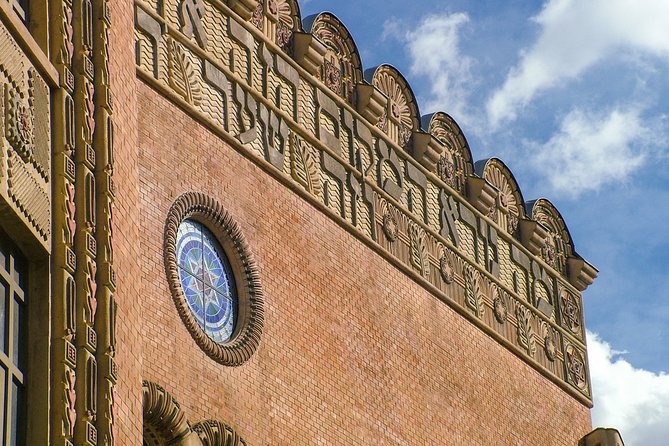
Dohány Street Synagogue is the centerpiece. You’ll visit the synagogue building along with the Raoul Wallenberg Memorial Garden and the Jewish Cemetery. This is the kind of site that deserves time, because it’s not just one building. It’s an entire complex that reflects scale, community, and survival.
One practical detail: the synagogue admission fee is not included. It’s listed at €26 per person. I’d treat that as part of your budgeting, not a surprise. You’re paying for access to the interior and the grounds that help you understand why this place matters in Hungarian Jewish history.
From a value perspective, this is the only stop with a paid entry requirement, and the tour price is fairly reasonable for what you get: a licensed guide plus a structured look at several linked sections rather than a quick “look and go.” If you’re choosing only one heritage-focused outing in Budapest, this is a strong anchor.
What to expect inside
You’ll see and learn the synagogue itself, plus the memorial and cemetery areas that sit alongside it. The tour also includes a taste of current life in the Jewish Quarter. That matters because it keeps the story from feeling frozen in one era.
Jewish Cemetery, Emmanuel Tree, and the Living District Around You
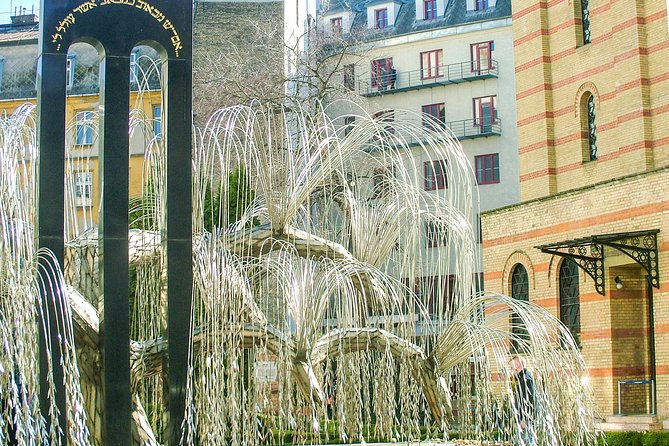
The walk doesn’t stay locked on the main sights. Around the synagogue complex and the Jewish Quarter area, you’ll get a sense of how the district functions today. The tour includes an outside visit to a second functioning synagogue, so you’re not just studying history—you’re seeing community in use.
A unique moment here is the mention of the Emmanuel Tree (often linked to the Tree of Life concept), connected to Tony Curtis. It’s one of those details that sounds odd until you learn the why behind it, and then it clicks: monuments here are sometimes spiritual, not just historical.
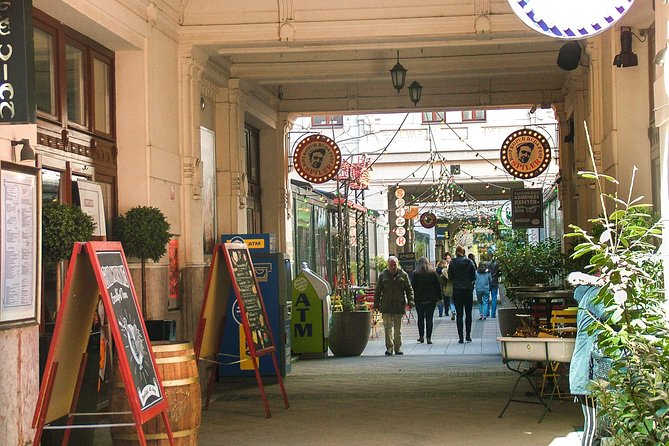
You’ll also hear about historic streets and former communities that once lived in the area. That helps you read the neighborhood like a text. Even if you come back later on your own, you’ll recognize more.
There’s also a lighter side to the district. The Jewish Quarter is known for street art and nightlife, and the tour uses that fact to show contrast. That contrast isn’t disrespectful. It’s part of what makes the area feel real.






Shoes on the Danube Bank and the German Invasion Memorial
This tour hits two memory sites that are short in time but heavy in impact. They’re both free, which is good for your budget, but more importantly they shape the emotional arc of the morning.
Shoes on the Danube Bank (15 minutes, free)
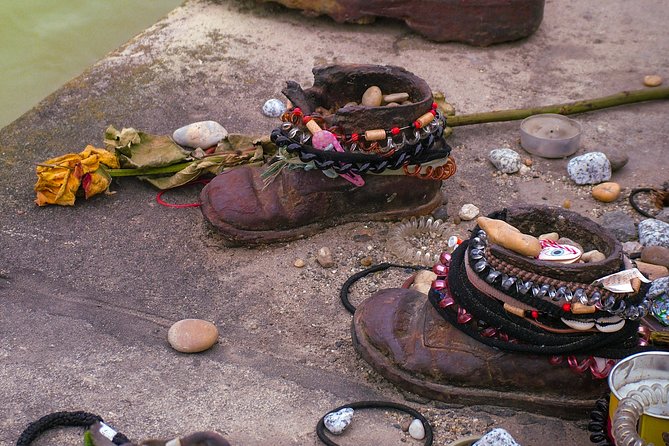
You stop at the Shoes on the Danube Bank memorial, dedicated to the thousands of Jews who were shot into the river Danube. It’s brief by design. The memorial is made to force a slow look, not a quick photo.
In a tour with lots of narrative, this one still cuts through. Even if you’ve read about the Holocaust before, the physical presence of the monument changes how the story lands in your body.
Memorial to the Victims of the German Invasion (15 minutes, free)
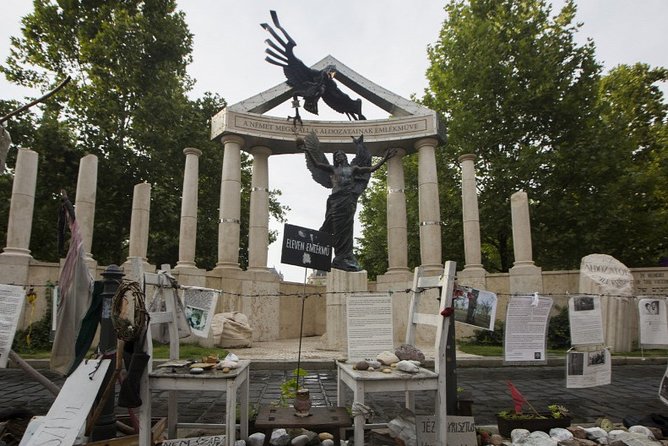
Next comes a much more contested memorial: the one honoring victims who were mostly Jews during the period tied to the German invasion. This is described as one of the more controversial memorials in the city, erected under cover of night and guarded by policemen. People protest daily ever since it was established about ten years ago.
That means you’re not just looking at stone. You’re observing how memory politics work. You’ll see the site in a way that turns it into a live civic question: what should public remembrance look like, and who gets to decide?
If you prefer tours that stick only to neutral, polished narratives, this stop may feel uncomfortable. But discomfort is part of what makes it important.
Edith’s Storytelling and the Discussion Part You’ll Appreciate
The biggest difference on this tour is the guide: Edith. Across the feedback, her name comes up again and again, and the common thread is how she makes the material come alive. She’s described as exceptional at explaining Jewish heritage in Budapest across time, not just during World War II. That matters because the story doesn’t end at one terrible chapter.
I also like that the tour actively encourages questions and discussion. You’re not pushed into a script. You can steer the conversation toward what you’re trying to understand. That turns a walking tour into something closer to a guided conversation with a professional who knows the terrain.
Edith is also repeatedly praised for being flexible with needs and for communicating clearly in English. People mention her answering questions patiently and using personal reflections alongside historical context. That mix helps you connect the facts to real lives.
One small bonus: the guide’s familiarity with the city shows in how she handles the route. Some participants mention walking plus using the local transit system. Since transportation isn’t included, you’ll want to have your own transit plan handy, but having someone lead the way reduces stress.
Price, Timing, and Planning Your Day Around It
Let’s talk money without hand-waving. The tour costs $80.86 per person for about 3 hours. In many cities, that price can buy a short highlight tour with minimal access. Here, your guided time is used on major stops that each carry weight.
Your cost stack looks like this:
- Included: local licensed guide
- Not included: Dohány Street Synagogue entrance fee at €26 per person
- Free stops: Shoes on the Danube Bank and the German Invasion memorial
So you’re basically paying for the guide plus the paid access to the synagogue complex. The two memorial stops are already open and free, so you get more value for the time you’re spending.
Timing is another strength. The tour is short enough that you can still do other Budapest activities the same day. That’s not a small deal. When a tour is only 3 hours, you’re less likely to feel like you’re sacrificing your whole afternoon to one outing.
One more planning note: the tour requires good weather. If weather cancels, you’ll get a different date or a full refund. If you’re visiting in shoulder season or winter, keep a backup plan for the same time slot.
Who This Tour Is For (and Who Might Want More Time)
This is a great fit if you want a focused, guided route through the most meaningful Jewish heritage sites in central Budapest—without spending half your day commuting or guessing what matters most.
It also works well if you like a guide who can connect history to present-day identity. The dialogue approach is useful for first-timers who want a guided framework, and it’s also helpful for people who already know some of the history but want a better map of what to notice in Budapest specifically.
If you want a slow, museum-heavy day with long time inside multiple exhibits, you might still want extra independent time before or after. This tour is built to be sharp and efficient, not exhaustive.
Should You Book This Jewish Heritage Tour?
If you want one guided outing that hits the big emotional and historical points—synagogue life, the Holocaust memorial along the Danube, and the ongoing controversy around public memory—book it. The pricing is fair for what you get, especially because the free stops give you strong impact per minute.
The real selling point is Edith and the small group format. You’ll come away with a clearer understanding of the sites and a better feel for the district as it exists today, not just how it existed decades ago.
If you’re okay paying the synagogue entry fee on top of the tour price and you’re ready for an emotionally heavy but well-paced morning, this is an excellent choice.
FAQ
What sites does the Jewish Heritage tour include?
The tour focuses on Dohány Street Synagogue (including the synagogue building, Raoul Wallenberg Memorial Garden, and Jewish Cemetery), the Shoes on the Danube Bank memorial, and the Memorial to the Victims of the German Invasion.
How long is the tour?
The experience is about 3 hours.
What is the meeting point and the end point?
You start at Budapest, Deák Ferenc tér, Hungary, and the tour ends at Dohány Street Synagogue, Budapest, Dohány u. 2, 1074 Hungary.
What’s included in the tour price?
The tour includes guiding by a local licensed tour guide.
Is transportation included?
No. Transportation is not included.
Do I need to pay for entrance fees?
Yes for Dohány Street Synagogue: the entrance fee is listed as €26. The Shoes on the Danube Bank and the German Invasion memorial are free.
What language is the tour offered in?
The tour is offered in English.
What if the weather is bad?
The experience requires good weather. If it’s canceled due to poor weather, you’ll be offered a different date or a full refund.
Is there a cancellation policy?
Free cancellation is available. You can cancel up to 24 hours in advance for a full refund. If you cancel less than 24 hours before the start time, the amount paid is not refunded.