REVIEW · BUDAPEST
Budapest: Memento Park Ticket
Book on GetYourGuide →Operated by Memento Park · Bookable on GetYourGuide
Communism made monuments. Now you walk among them. At Budapest’s Memento Park, you get Socialist-era propaganda monuments collected after the statues were cleared from Budapest, and you also get the relaxed side of the story with a Trabant car you can pose in for photos. I like the sheer scale of the outdoor pieces, because it makes the propaganda feel physical, not abstract. I also like that the ticket includes indoor exhibits and a documentary screening, so you are not only looking at statues—you’re learning what they were meant to say. One consideration: the ground is mostly gravel, and this park is not suitable for wheelchair users.
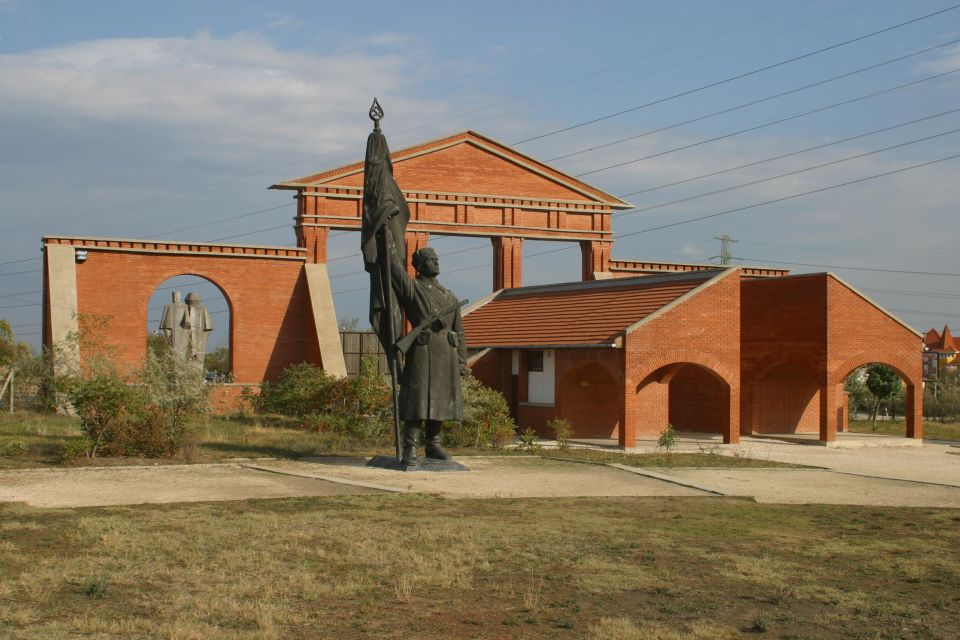
You start right away with Stalin’s enormous grandstand replica, made to recall the parade-ground days when leaders staged big socialist holidays. Then you can move at your own pace through the exhibitions, including a photo presentation and a documentary shown in The Most Cheerful Barrack. You’ll also see familiar faces from Soviet-style messaging, like Lenin and Red Army soldiers, which helps the park feel real rather than like a museum behind glass.
This is a self-paced ticket for up to 1 day, not a guided tour. That is a good thing if you want freedom with your timing, but it also means you’ll want to read signage and plan your route so you hit the main indoor stops before you lose steam.
In This Review
- Key things to know before you go
- Stalin’s Grandstand, Lenin statues, and the outdoor propaganda shock
- Price and value: what $10 buys you in a 1-day visit
- Your self-guided route: start outdoors, then hit the indoor storytelling
- The Most Cheerful Barrack documentary: The Life of an Agent
- Photo exhibition + “under Stalin’s Boots”: connect what you see
- Stalin’s grandstand views: why the buildings matter for photos
- Trabant car photo point: the fun side that doesn’t erase the message
- How Memento Park explains the fall of communism through removed statues
- Getting there and planning your day from Budapest
- Who should book this ticket—and who might not love it
- Should you book the Budapest Memento Park Ticket?
- FAQ
- How long does the Memento Park ticket last?
- What is included with the ticket?
- Is this ticket a guided tour?
- Where do I present my voucher?
- Is transportation included?
- Is the park suitable for wheelchair users?
- What documentary is shown in The Most Cheerful Barrack?
- How much does the ticket cost?
- Can I cancel for a refund?
- Can I reserve now and pay later?
Key things to know before you go
- Stalin’s Grandstand replica is your first big moment and it sets the tone fast.
- The Most Cheerful Barrack includes a documentary screening plus exhibition space.
- The Most popular photo stop is the Trabant car—expect lots of camera time.
- Statues are the whole point here, gathered from Budapest after the communist era ended.
- Gravel paths can make the walk harder if you have mobility issues.
Stalin’s Grandstand, Lenin statues, and the outdoor propaganda shock
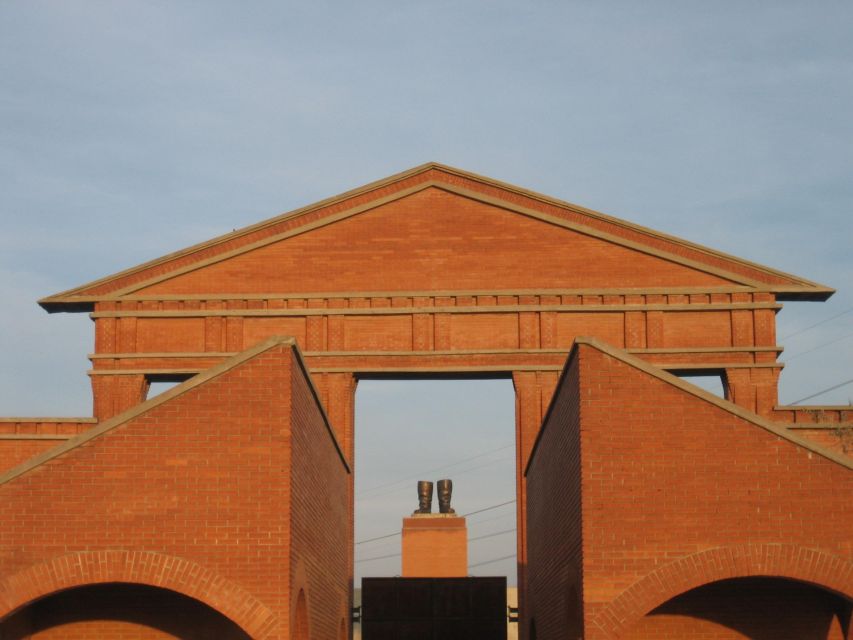
Memento Park is not trying to be subtle. The park is built around huge socialist monuments—most of them tied to dictatorship-era symbols, staged “liberation” themes, and the kind of public messaging that demanded attention from everyone passing by. When I look at this kind of park, I focus on one question: does it help you understand power, or does it just show off size? Here, the scale is part of the lesson.
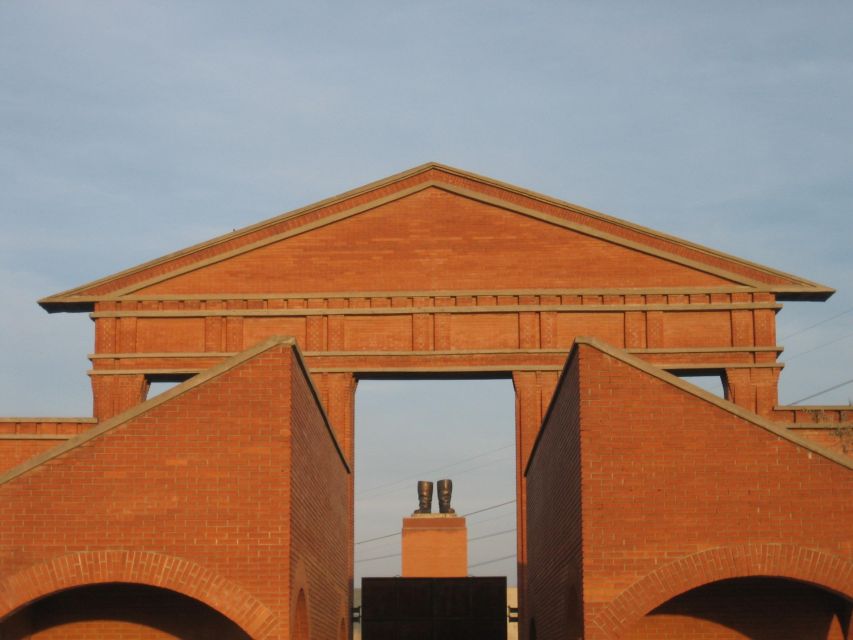
Your entrance experience begins with Stalin’s grandstand replica. It is the kind of structure that makes you stop walking and look around, because it is designed for spectacle—exactly what the original parade square served. From there, it is easy to understand how socialist events used buildings and statues as a stage set.
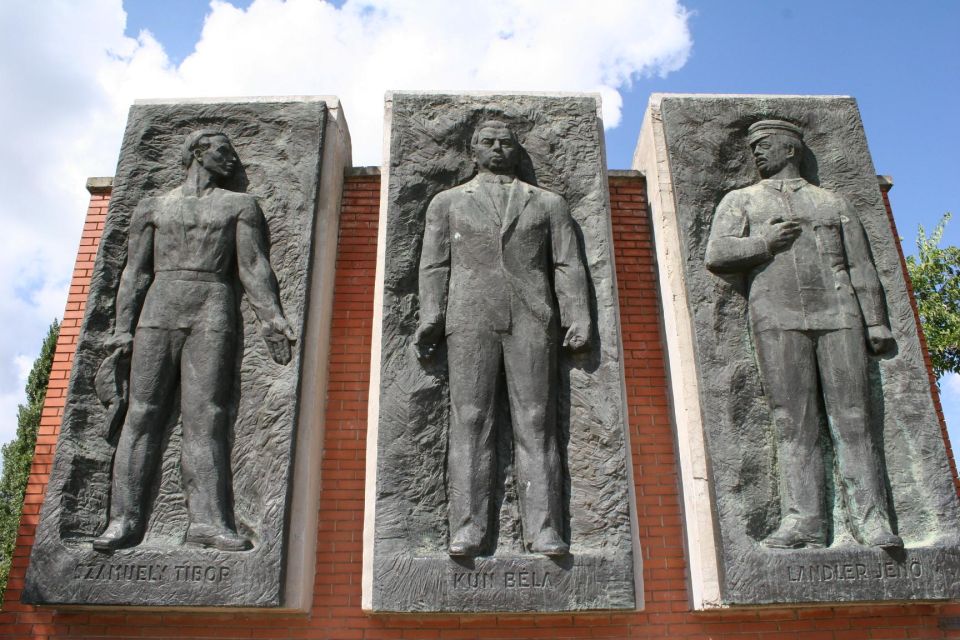
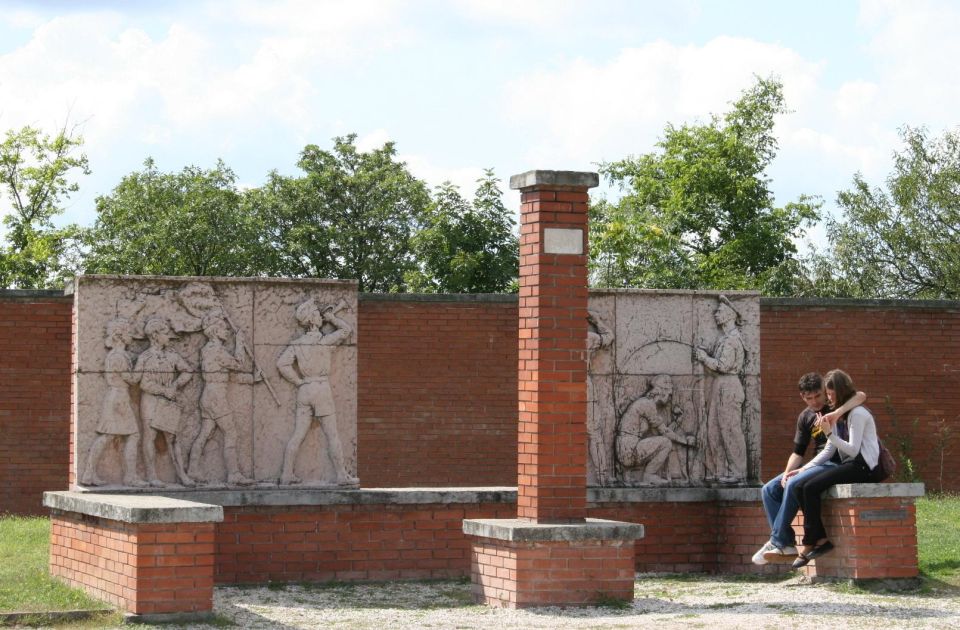
Once you start moving through the outdoor area, you will spot more of what the era relied on: monuments and statues celebrating famous figures from the labor movement, plus soldiers of the Red Army. And yes, you can also run into more famous propaganda icons like Lenin and the Soviet soldiers, which people often treat as photo points. The humor is not meant to erase the message, but it does lower the tension enough that you can actually move through the site and absorb it.
You can also read our reviews of more tours and experiences in Budapest



Price and value: what $10 buys you in a 1-day visit
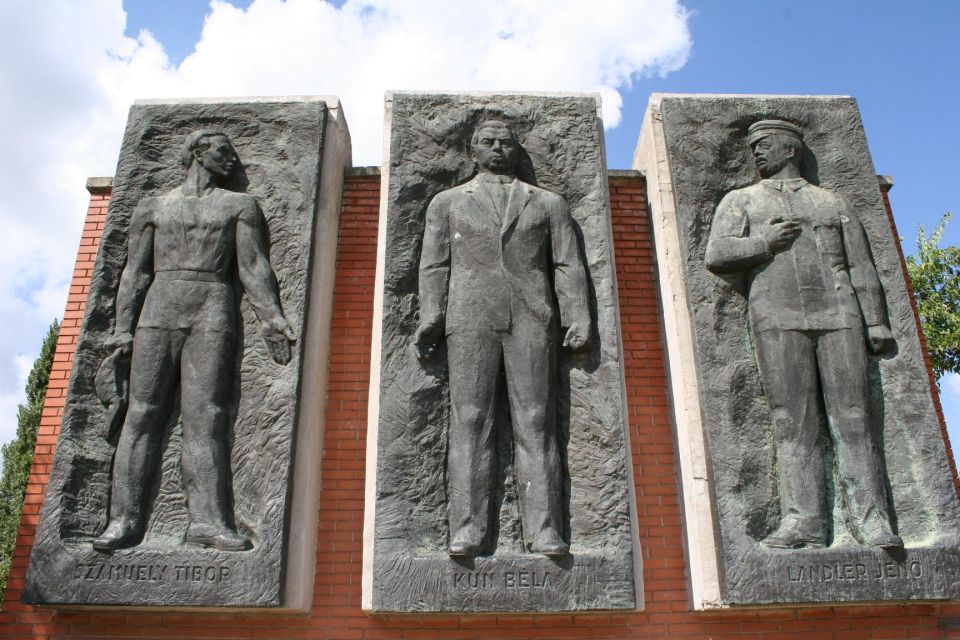
At about $10 per person for roughly 1 day, this ticket is strong value because it covers both the outdoor monument grounds and the main indoor learning stops. You’re not paying just for a quick photo loop.
Here is what is included:
- Admission to Memento Park
- A photo exhibition and a movie show in The Most Cheerful Barrack
- A storage showroom and an art exhibition under Stalin’s Boots
- An original Trabant car for photos
That bundle matters. If you only visited the outdoor statues, you might spend a short time there, take pictures, and leave still wondering how it all connects. The indoor stops turn it into a longer, more complete experience—especially the documentary screening and the photo materials.
Also, because it is not a guided tour, the cost is not inflated by staffing. You can pause where you want, linger where the statues catch your attention, and skip the parts that feel repetitive. For a one-day stop, that flexibility helps.
Your self-guided route: start outdoors, then hit the indoor storytelling
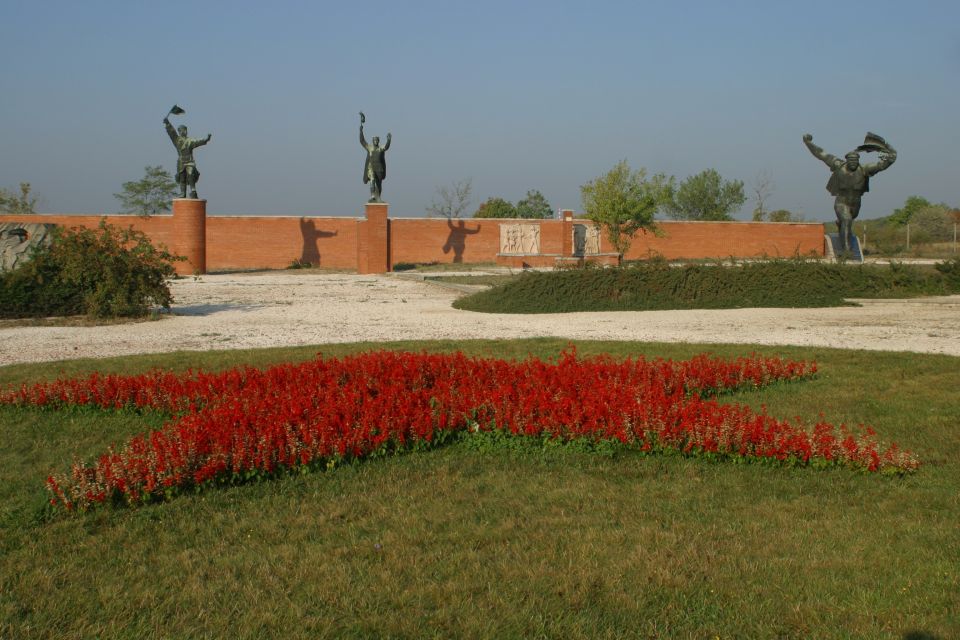
There is no required order, but I recommend this simple rhythm: begin outside for impact, then move indoors once your legs and attention need a reset.
Step 1: Walk the outdoor monuments first.
This is where the park hits hardest—gigantic pieces, political symbolism, and a sense of place that feels built for mass events. Take a slow walk at the beginning, not because you want to be efficient, but because the park’s layout makes the meaning clearer once you have seen multiple types of statues.
Step 2: Plan your indoor breaks around the key exhibits.
The ticket includes two major indoor experiences:
- The photo exhibition plus a documentary screening in The Most Cheerful Barrack
- The storage showroom and an art exhibition under Stalin’s Boots
If you go in the wrong order, you might lose the story thread. I like outdoor first, then indoor, because the documentary and photos help you interpret what you already saw outside.
Step 3: Save the Trabant photo time for the middle or end.
The Trabant is one of those “you’ll know it when you see it” photo points. You can stop any time, but if you wait until you’ve taken in a few statues, the photo feels like a contrast: propaganda turned into a souvenir moment.
The Most Cheerful Barrack documentary: The Life of an Agent
One of the smartest parts of this ticket is that it brings in an audio-visual layer instead of relying only on signs and statue names. The documentary titled The Life of an Agent is shown in The Most Cheerful Barrack, and that setting makes the message more pointed. You are not watching a detached film in a clean auditorium. You are watching it inside an exhibit space tied to the period’s political atmosphere.
What I like about this stop is how it shifts the focus. Statues can tell you what rulers wanted you to admire. A documentary about the political secret service pushes you toward how the system worked—how control, information, and fear supported public performance. Even if you do not know Hungarian politics in detail, the framing helps you connect propaganda to power.
Practical tip: since this is a movie show inside a specific barrack/exhibit space, build it into your timing. Don’t leave it as an afterthought. If you wait until you are tired, you might miss the chance to make the documentary part of your visit.
Photo exhibition + “under Stalin’s Boots”: connect what you see
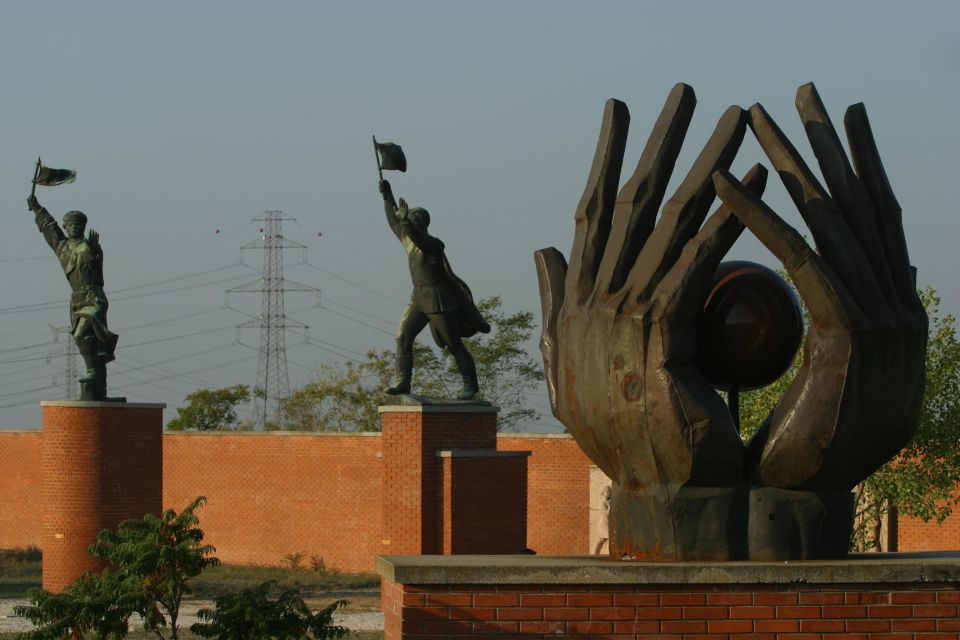
Alongside the documentary, there is a photo exhibition included with the Most Cheerful Barrack experience. Photos often do something statues cannot: they show scale in human terms. You get a better sense of the era’s staged events and the way propaganda was meant to feel present in everyday public life.
Then there is the storage showroom and the art exhibition under Stalin’s Boots. The phrase under Stalin’s Boots sounds theatrical, and it is, but the function is serious: it adds another angle to the site. Instead of treating the monuments only as outdoor artifacts, you get more context through exhibitions that sit inside the memorial landscape itself.
I like this combination—outdoor monuments plus indoor contextual displays—because it prevents the most common museum problem: seeing objects without the framework to interpret them. With the exhibitions included in the ticket, you’re more likely to walk away with a clearer understanding of what the park is doing.






Stalin’s grandstand views: why the buildings matter for photos
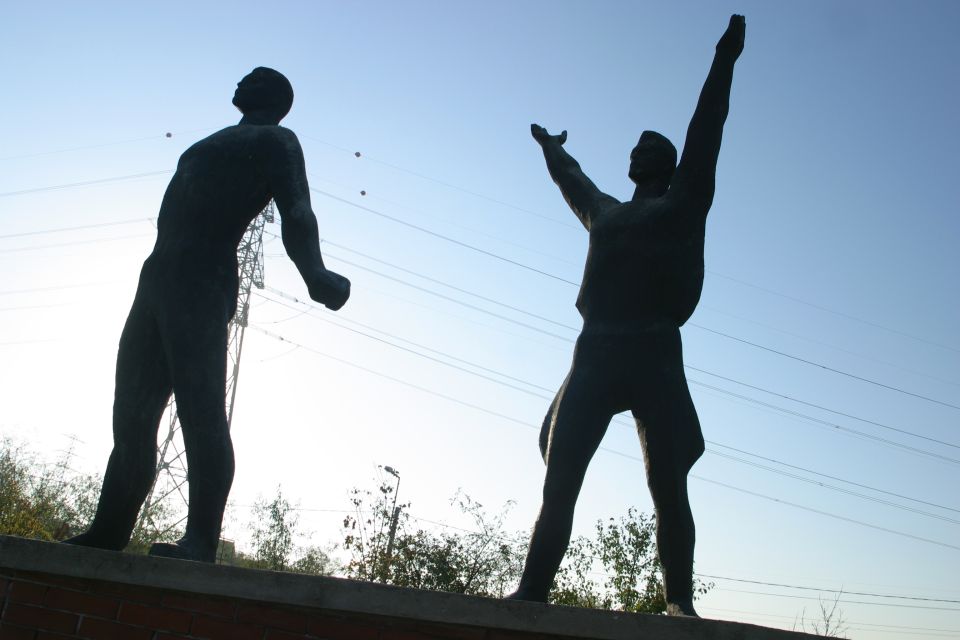
The grandstand replica is not just a static centerpiece. It changes how you see everything around it. Even if you are not a photography person, you’ll notice how the sightlines pull you toward certain angles—like the park wants you to stand where the leaders once stood (or where the crowd would have been oriented).
This matters because propaganda design is not random. Structures and monuments were arranged so viewers would feel small, impressed, or guided—whatever the regime needed you to feel in public. Standing in and around the grandstand area gives you a physical clue about those intentions.
Take a minute here and just look around before you start snapping. The best photos at Memento Park usually come after you understand the layout and where the “stage” effect is strongest.
Trabant car photo point: the fun side that doesn’t erase the message
A Trabant is one of those objects that instantly turns a political park into a more human-feeling experience. The included original Trabant car gives you a playful photo moment, and it is widely used as a stop-on-the-way.
Here’s the balance I find useful: treat the Trabant photo as a contrast tool, not as the whole experience. The park is asking you to think about dictatorship-era messaging. Photos with an old car don’t cancel that. They just make the walk more enjoyable and help you spend more time on site without burning out.
If you care about getting a good shot, aim to choose a moment when the area around the car is not packed. The ticket includes it, so you can build your schedule around waiting a bit, rather than rushing through everything else.
How Memento Park explains the fall of communism through removed statues
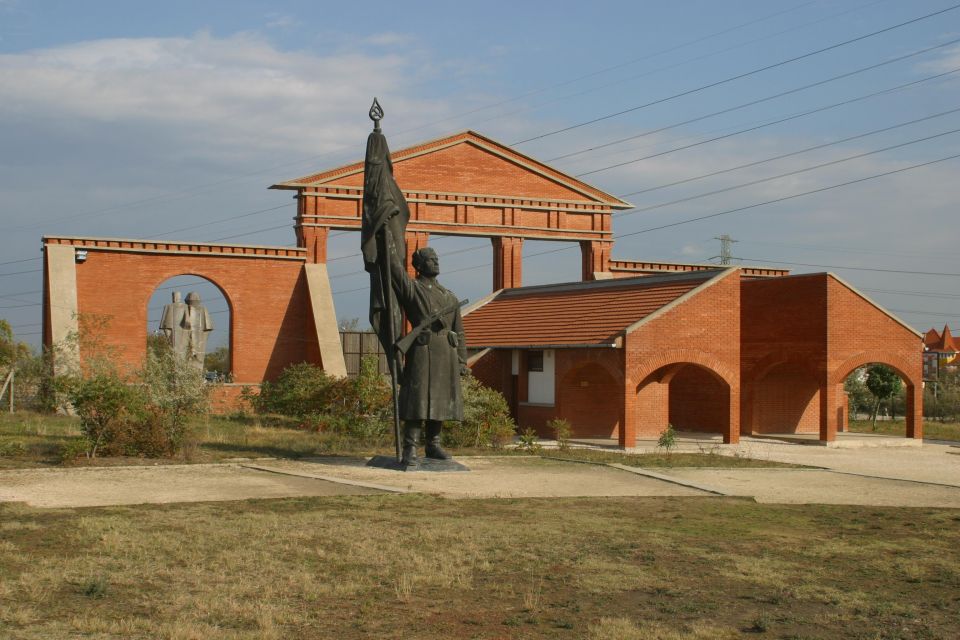
The park’s core idea is simple: when the communist era ended, the statues were removed from the streets of Budapest and set up in this park as a reminder of that time. That is the big conceptual twist. Instead of hiding the symbols, the city moved them—so you can confront them in a new setting.
Memento Park portrays the fall of communism in a specific way: not as a clean break, but as an ongoing presence in public memory. You can think of it as the difference between forgetting a sign versus re-reading it with context. Here, the “context” comes from the documentary, the photos, and the exhibitions.
If you like history sites that do more than list dates, this structure is useful. The outdoor monuments give you the visual language of power. The indoor exhibits help you understand why that language existed.
Getting there and planning your day from Budapest
This ticket does not include transportation, so you’ll need to handle your own trip to the entrance at Balatoni út – Szabadkai út sarok, 1223 Magyarország. When you arrive, you present your voucher at the park entrance.
One practical heads-up: if you are relying on buses, double-check service and stops, especially if there are roadworks. One of the useful notes tied to public transit is that buses numbered 101E and 150 did not stop close to the park in at least one instance. That doesn’t mean it’s always like that, but it is enough reason to verify your route shortly before you go.
Also, plan for walking. You’re moving through outdoor grounds with gravel paths, and the park is not set up as an easy stroll for everyone. I recommend wearing shoes you do not mind getting dusty and planning water and small snacks.
And about food: there is no included mention of a café or on-site meal service. If lunch matters to you, bring a plan. Even a basic stop nearby can make the difference between a relaxed visit and a rushed one.
Who should book this ticket—and who might not love it
This is a strong match if you:
- Want to understand socialist-era Hungary through the objects the regime built
- Like history sites that use media (documentary + photos) along with monuments
- Enjoy photography at historical sites, especially with playful-but-relevant photo points like the Trabant
- Prefer self-paced visits with a defined set of included stops
It may not be the best fit if you:
- Need wheelchair-friendly terrain (the paths are gravel and the park is not suitable for wheelchairs)
- Expect a guided narrative from a professional guide (this ticket does not include a guided tour)
- Want an easy “sit and rest a lot” experience, since it is built around outdoor monuments and walking between areas
If you want one clear reason to go: Memento Park is one of the rare places where you can see dictatorship-era symbolism in huge scale, then get supporting context inside the site, all for a modest one-day ticket.
Should you book the Budapest Memento Park Ticket?
Yes, I’d book it if your goal is a meaningful, photo-friendly day that goes beyond surface sightseeing. For about $10, you’re not only paying for entrance—you get the documentary show in The Most Cheerful Barrack, the photo exhibition, and the exhibitions tied to Stalin’s Boots, plus the Trabant photo point.
You might skip it (or rethink timing) if you need wheelchair access or if you strongly prefer a guided tour structure. And if you’re coming from central Budapest, plan your transport with care, since getting the last stretch right can depend on road conditions.
If you can handle gravel paths and you’re curious about how regimes shape public space with monuments, this ticket is a very practical way to spend a day—and you’ll leave with images and context that are hard to forget.
FAQ
How long does the Memento Park ticket last?
It is valid for 1 day.
What is included with the ticket?
Admission to Memento Park is included, plus the photo exhibition and movie show in The Most Cheerful Barrack, the storage showroom and art exhibition under Stalin’s Boots, and access to an original Trabant car photo stop.
Is this ticket a guided tour?
No. A guided tour is not included.
Where do I present my voucher?
Present your voucher at the Memento Park entrance at Balatoni út – Szabadkai út sarok, 1223 Magyarország.
Is transportation included?
No. Transportation is not included.
Is the park suitable for wheelchair users?
No. The paths are covered with gravel and the park is not suitable for wheelchair users.
What documentary is shown in The Most Cheerful Barrack?
The documentary titled The Life of an Agent is shown.
How much does the ticket cost?
The price is $10 per person.
Can I cancel for a refund?
Yes. Free cancellation is available up to 24 hours in advance for a full refund.
Can I reserve now and pay later?
Yes. You can reserve your spot and pay nothing today.