REVIEW · BUDAPEST
Budapest Walking Tour with Your Private Guide: 10+ Highlights
Book on Viator →Operated by Budapest with Lara · Bookable on Viator
Budapest clicks faster on foot. This Pest-to-Buda route is framed like a time-travel walk, starting on the Pest side and gradually moving back toward older Buda, then finishing at Fisherman’s Bastion.
I like the way this tour gives you both big sights and real context. Two things stand out for me: first, Lara kicks off with a mini history lesson of Hungary so you understand what you’re looking at as you go; second, she shares stories and details people often miss on their own.
One thing to keep in mind: admission fees aren’t included, so if you want to go inside any major stops, plan extra time and extra money beyond the tour price.
In This Review
- Key highlights worth planning around
- Why this Pest-to-Buda walk feels like time travel
- Getting oriented at Elizabeth Square (Deák Ferenc tér)
- St. Stephen’s Basilica: your first “anchor” stop
- Hungarian Parliament Building and Kossuth Lajos Square
- Széchenyi Lanchid (Chain Bridge) and the Academy area
- Little Princess Statue: why small details matter
- Sándor Palace: power and presence in a single glance
- Matthias Church and the final pull to Fisherman’s Bastion
- Price and value: what $162.56 buys you (and what it doesn’t)
- Lara as your guide: the practical, flexible factor
- Who should book this and who might prefer something else
- My booking advice: the smartest way to make it worth it
- Should you book this Budapest walking tour?
- FAQ
- How long is the Budapest walking tour?
- Is this tour private or shared with other groups?
- What stops are included on the route?
- What is included in the price?
- Are admission fees included for churches or monuments?
- What’s the meeting point and where does it end?
- Can I get a full refund if I cancel?
Key highlights worth planning around

- Lara’s mini history lesson at the start helps you read the city instead of just taking photos.
- Flexible, friendly guiding—including practical help like bus ticket purchases at the end.
- Iconic, walkable anchors on both sides of the Danube: Basilica, Parliament, Chain Bridge, and more.
- Private format: only your group, so you can ask questions without holding up strangers.
- Mobile ticket included, with a meeting point near public transportation.
- Budget note: admission fees are extra, even though the guide is included.
Why this Pest-to-Buda walk feels like time travel
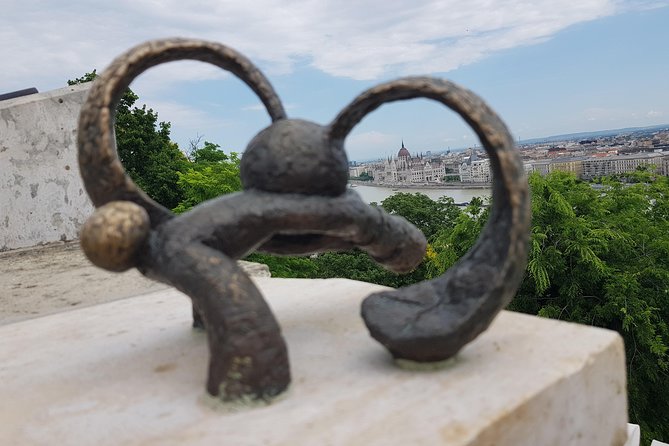
Budapest can feel like two cities. This tour leans into that. You start on the Pest side, move toward the Buda side as the walk progresses, and the guide keeps the story moving so the landmarks don’t feel random.
What makes this format useful is how it changes your focus. Instead of treating each stop like a separate checklist item, you get a guided thread that helps you connect monuments to the bigger picture—power, culture, and how the city developed. If you’re visiting for the first time, this is the kind of orientation that makes later wandering more fun.
And because the tour ends at Fisherman’s Bastion, it gives you a clean finale at one of the most famous Buda hilltop viewpoints. The walk is only about three hours, so it’s long enough to feel satisfying, but short enough that you can still do self-guided exploring afterward.
You can also read our reviews of more walking tours in Budapest



Getting oriented at Elizabeth Square (Deák Ferenc tér)
The meeting point is Elizabeth Square (Deák Ferenc tér 2, 1052), with the tour ending back at the same location. That matters more than it sounds. You don’t need to figure out where you’ll finish, how you’ll get back to your hotel, or how to line up your next plan.
It also helps that the meeting area is described as near public transportation. For most people, that means you can arrive without stress and don’t have to plan a special taxi or ride share. If you’re the type who likes to keep your day simple—this works.
One more small but real advantage: the tour runs daily during a set window (listed as 10:30 AM to 3:30 PM in the provided hours). So even if your plans shift, there’s usually a time that fits.
St. Stephen’s Basilica: your first “anchor” stop
The walk begins at St. Stephen’s Basilica (Szent Istvan Bazilika). You can think of this first stop as a mood-setter. The guide uses the opening segment to lay out background and then ties it into what you’ll see next.
What I especially like about starting here is the way it gives you something concrete right away. A grand church landmark helps you calibrate the city’s scale—how monumental the architecture can feel and how much meaning people attach to religion and national identity.
Lara’s start is practical, not just academic. She begins with a mini history lesson of Hungary before you move into the streets. That means when you get answers to questions like why certain buildings matter, you don’t have to wait until later to understand the city’s “why.”
If you’re traveling with someone who usually tunes out on long explanations, this is a smart approach. The history comes first, then you walk to the evidence.
Hungarian Parliament Building and Kossuth Lajos Square
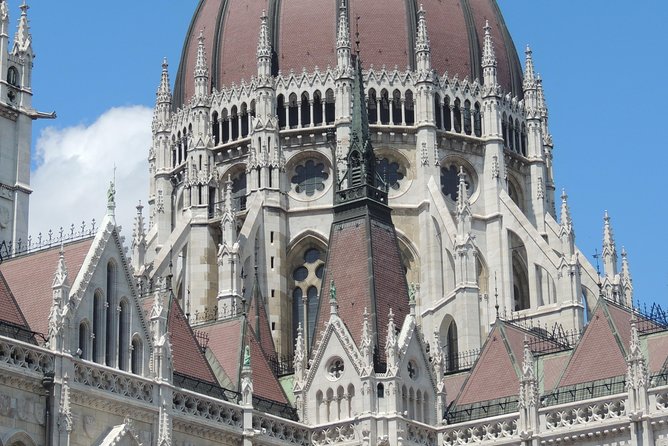
Next up is the Hungarian Parliament Building, followed by Kossuth Lajos Square. These stops are the city’s political backbone—at least in how the guide frames them. They’re also great for understanding Budapest beyond the postcard layer.
Here’s what this section does well: it connects civic spaces to national storylines. Even if you don’t go inside, you’ll likely notice how these areas function as symbols. The guide’s anecdotes fill in the gaps that your eyes alone might not catch.
Potential drawback: if you’re the type who hates “looking only,” remember that admission fees aren’t included. You might want to pick beforehand which stops you truly care about entering. Otherwise, you can end up paying for entry tickets on the fly while trying to keep up with a schedule.
Practical tip: bring a quick question list. Examples you can ask Lara during this stretch: what each area represents, what you should watch for in architecture, and which streets are worth walking later when the tour ends.
Széchenyi Lanchid (Chain Bridge) and the Academy area
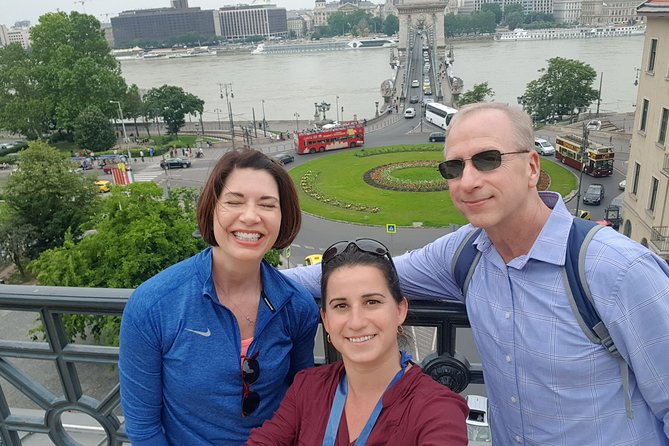
Then you’re at Széchenyi Lanchid (the Chain Bridge), followed by the Hungarian Academy of Sciences. This part of the route helps you shift gears—from monuments to the urban “connective tissue” that ties different neighborhoods together.
The Chain Bridge is a natural focal point because it’s one of the clearest markers of connection between the sides of Budapest. Even if you’ve seen bridge photos before, being there in person changes how you measure the city. The guide’s time-travel framing makes it more than a crossing—it becomes a turning point in the story.
And after the bridge, the Academy stop gives the walk a more thoughtful tone. It signals education and institutions rather than just governance or worship. That variety is useful in a three-hour tour because you don’t want every highlight to feel like the same kind of building.
Comfort note: bridges and square areas often involve open space and steady walking. So wear shoes that won’t make you regret the second hour.
You can also read our reviews of more guided tours in Budapest






Little Princess Statue: why small details matter

In the itinerary, you’ll stop for the Little Princess Statue. This is the kind of stop that many people skip because it doesn’t sound as “big” as Parliament or Basilica.
But that’s exactly why it’s valuable. When a guide adds a smaller landmark, it usually means there’s a story behind it—something tied to Budapest’s personality and local culture. Lara uses moments like this to give the city texture, not just scale.
This is also where a private guide can shine. A group tour can race. A private walk can slow down for the details that make a place feel lived-in.
If you’re the type who likes photo stops, this statue likely gives you a break in the pacing. If you’re more into meaning, expect Lara to connect it to the surrounding city feel.
Sándor Palace: power and presence in a single glance
Next is Sándor Palace. Palaces in European cities tend to be about more than beauty—they’re about who had access, who held authority, and how public spaces signal that authority.
Even without extra entry time, a palace stop works because it teaches you how to “read” the city. You’ll notice how the surrounding area is arranged, how the building’s presence dominates the street, and how the city uses architecture to communicate status.
This is also a good moment to ask Lara a question you might not think of until you’re standing there. For example: what should I pay attention to when I walk past government or cultural buildings later? A guide’s answers here can help you become your own walking expert after the tour ends.
Matthias Church and the final pull to Fisherman’s Bastion
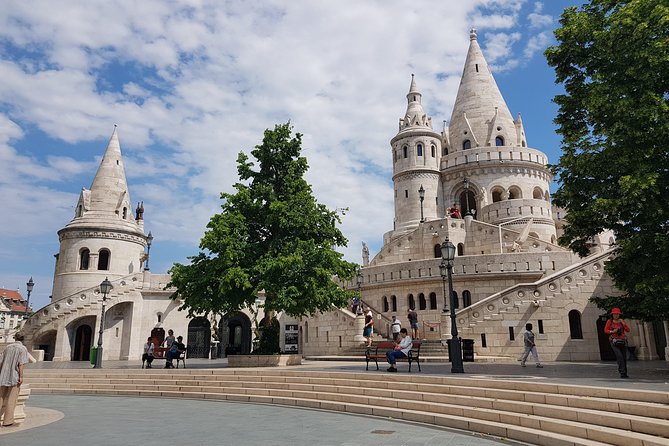
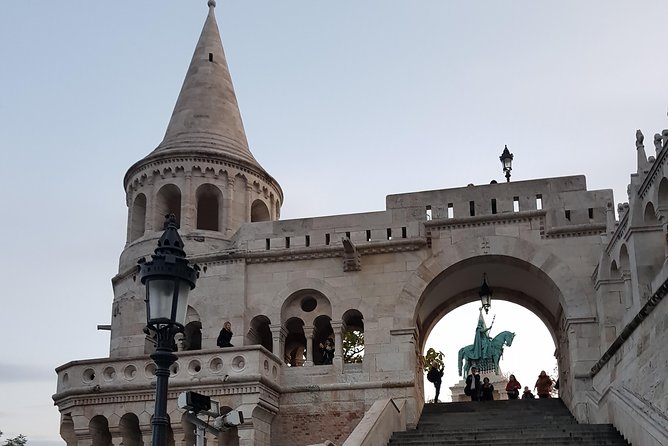
The tour continues to Matthias Church and finishes at Fisherman’s Bastion. These are Buda-side highlights that bring the walk full circle into the “older” portion of the city story.
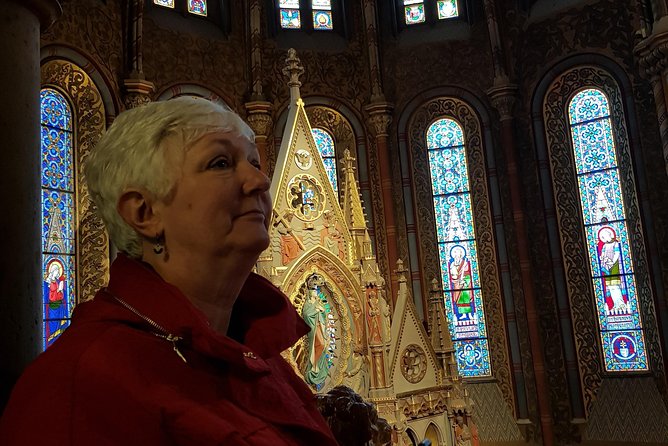
Matthias Church works as a bridge between the guide’s background lesson and the dramatic feel of the Buda hilltop area. If your earlier stops felt more political and civic, this one shifts back toward faith, identity, and the kind of architecture people remember.
Then you reach Fisherman’s Bastion for the finale. The tour description calls the places breathtaking, and the structure of the walk supports that idea: you spend time building context, then end at a spot that’s famous for its setting and atmosphere. It’s the kind of end point that helps you feel like you closed the loop on your first-day orientation.
A small consideration: because this is the final stop, don’t plan a timed activity immediately after. Leave a little breathing room so you can linger, take a few extra photos, and mentally reset before moving on.
Price and value: what $162.56 buys you (and what it doesn’t)
The price is $162.56 per person for a tour lasting about three hours. That sounds like a lot until you break down what’s actually included.
You get a licensed tourist guide and a mobile ticket. You also get a private tour format, meaning only your group participates—no waiting while others filter in and out or deciding whether you’re going to split up to catch the next stop.
You’re also buying a guided route that covers multiple major icons across Pest and Buda. For first-timers, that can save hours of map-thrashing and indecision. Instead of asking where to go, you’re asking what to notice—and that’s usually the difference between a chaotic day and a memorable one.
What’s not included is the big one: admission fees. That means you should treat the tour price as the guiding cost and context. If you want to enter any sites, you’ll need to pay separately.
So how do you decide if it’s worth it? I’d say it’s a strong value if you:
- want a guided story rather than a self-guided checklist
- prefer a private pacing where you can ask questions
- will actually use the guide’s recommendations after the walk
It’s less ideal if you already know Budapest well, don’t plan to pay any admission fees, and would rather walk with just a map.
Lara as your guide: the practical, flexible factor
The experience really hinges on the guide. In the feedback you have, Lara comes through as the kind of person who makes the walk feel easy.
Two standouts are her mini history lesson at the start and her use of anecdotes to catch details you might miss. That combination matters. A history lecture without real-world connections can feel abstract. Anecdotes without context can feel random. Lara’s approach seems to tie both together.
Flexibility is another big advantage. One note you have is that Lara helped with practical logistics like bus tickets to get back to the hotel. That’s the kind of thing that quietly saves your day—especially if you don’t speak much Hungarian and don’t want to spend your sightseeing time figuring out transit.
Also, she’s described as smiling and welcoming. That might sound soft, but it affects real travel comfort. When a guide is warm and adaptive, you’re more likely to ask questions and get better answers.
Who should book this and who might prefer something else
This tour fits best if you:
- are seeing Budapest for the first time and want instant orientation
- like private guiding and conversation
- want background that makes landmarks mean something
- value practical help as much as sightseeing
It can also work for couples who want to walk, talk, and learn without being stuck in a loud group rhythm. And it’s described as suitable for most people, with service animals allowed.
You might want to choose a different option if:
- you already have a clear plan to cover everything yourself
- you don’t want to pay extra admission fees at any stop
- you prefer an even slower, neighborhood-by-neighborhood style walk rather than a 3-hour highlight route
My booking advice: the smartest way to make it worth it
If you book this, do two things to get maximum value.
First, decide what you want to enter. Since admission fees aren’t included, knowing what matters to you helps avoid surprise spending and time crunches.
Second, use the guide as a resource beyond the walking. Lara’s practical help with transit is a hint of how she works: ask for recommendations for what to see or do afterward, especially if you’re unsure where to go next.
And since the tour ends back at the meeting point, you can treat it like a strong “first leg” of your Budapest day. You’ll be set up to explore the city on your own afterward with better instincts.
Should you book this Budapest walking tour?
I’d book this if you want a guided, story-driven walk that covers major Pest and Buda landmarks in about three hours, led by licensed guide Lara. The value is in the context, the private pacing, and the practical support—especially the mini history lesson and help with transit.
Skip it only if you already know Budapest well, dislike paying extra for admissions, or want a slower walk with less structure. Otherwise, it’s a solid way to get your bearings fast and leave with ideas for your next stops.
FAQ
How long is the Budapest walking tour?
It runs for about 3 hours.
Is this tour private or shared with other groups?
It’s a private tour/activity, so only your group participates.
What stops are included on the route?
The tour includes stops at St. Stephen’s Basilica, the Hungarian Parliament Building, Kossuth Lajos Square, Széchenyi Lanchid, the Hungarian Academy of Sciences, the Little Princess Statue, Sándor Palace, Matthias Church, and Fisherman’s Bastion.
What is included in the price?
A licensed tourist guide is included, and you also receive a mobile ticket.
Are admission fees included for churches or monuments?
No. Admission fees are not included.
What’s the meeting point and where does it end?
The meeting point is Elizabeth Square (Deák Ferenc tér 2, 1052 Hungary), and the activity ends back at the meeting point.
Can I get a full refund if I cancel?
Yes. Free cancellation is available if you cancel at least 24 hours before the experience’s start time for a full refund.