REVIEW · BUDAPEST
Budapest: Guided Downtown Electric Bike Tour
Book on GetYourGuide →Operated by Bike Tour Kft · Bookable on GetYourGuide
Budapest on a bike beats the usual walking grind. This 3.5-hour guided e-bike tour strings together the big sights fast, from Andrássy Avenue to Castle Hill, with electric help for the steep parts. I like that you ride through real neighborhoods and sightline viewpoints, not just a straight museum checklist, and that the guide stories connect what you see to what happened here.
My favorite part is the practical ease: you’ll pedal, but the assist makes the Castle Hill climb feel doable, and you still get great photos at spots like Matthias Church and Fisherman’s Bastion. One thing to plan for: this is a ride-and-look tour—you won’t go inside the major landmarks you pass, so if you want ticketed interiors, you’ll need extra time on your own.
In This Review
- Key points before you set off
- Why an e-bike fits Budapest so well
- Bike & Relax in the Jewish Quarter: where the tour starts
- Andrássy Avenue to Heroes’ Square: grand sights, good story flow
- City Park and Vajdahunyad Castle: the playful side of Budapest
- St. Stephen’s Basilica and Liberty Square: religion, money, and memory
- Parliament to the Danube: the view payoff starts
- Castle Hill on electric assist: Matthias and Fisherman’s Bastion
- Back down to the river: Rudas Bath, Gellért Hill, and Liberty Bridge
- Central Market Hall and the National Museum area: food-and-art energy
- The Dohány Street Synagogue finish: a strong close to the loop
- Pace, distance, and what 3.5 hours feels like
- What to watch for: open chains, bike comfort, and who should skip it
- Value for $63: what you get, and why it’s a smart use of time
- Should you book this Budapest downtown e-bike tour?
- FAQ
- Where is the meeting point?
- How long is the tour?
- What’s included in the price?
- What languages are offered?
- Will I enter the landmarks during the tour?
- Do I need to be able to ride a bike?
- Are food and drinks included?
- Is hotel pickup or drop-off included?
- Can I cancel for a refund?
Key points before you set off
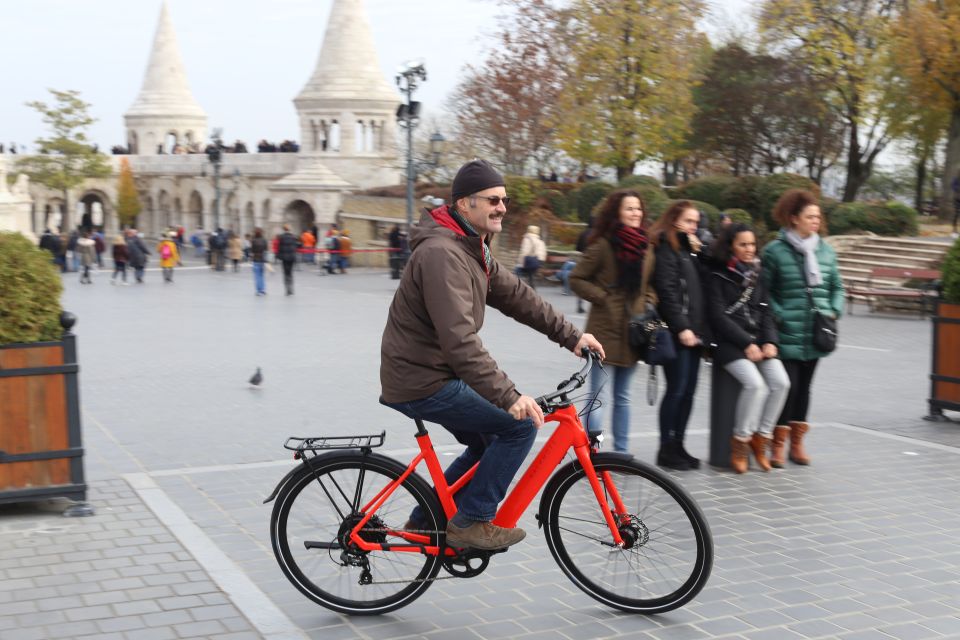
- Electric assist for Castle Hill so you can enjoy the views instead of fighting the gradient
- Small group (max 10) with a pace that keeps stopping for photos and short looks
- Major sights connected in one loop, including Andrássy Avenue, the Parliament area, and both Danube banks
- City Park thermal-bath scenery with quick stops at places like Vajdahunyad Castle and Széchenyi Thermal Bath
- Danube highlights with the right kind of caution, including the Shoes memorial area where access can vary
- Meeting is easy from the Jewish Quarter, near Deák Ferenc tér and the M1/M2/M3 metro
Why an e-bike fits Budapest so well
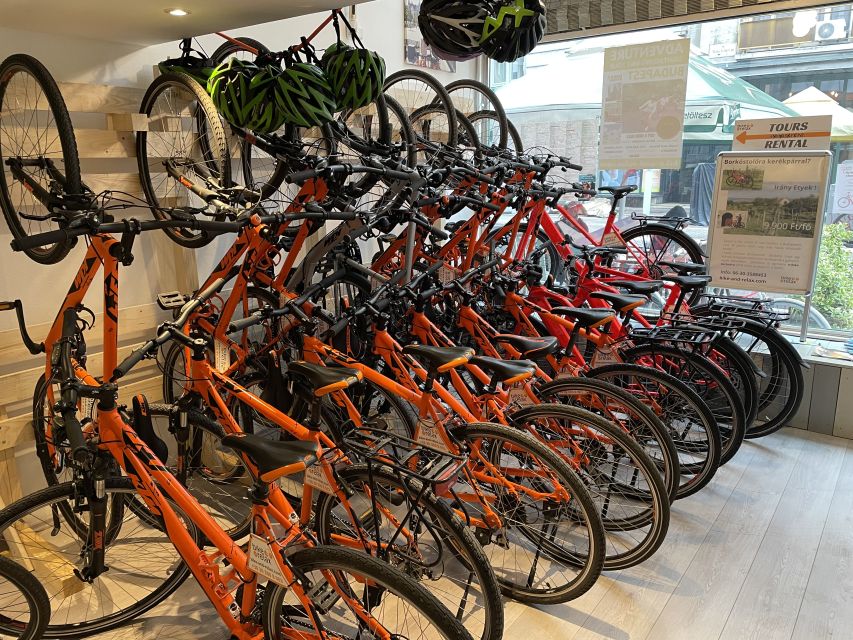
Budapest is dramatic, but it can be annoying to tour the old-school way. You’ve got hills on the Buda side, long bridges to cross, and enough back-and-forth to make your calves file a complaint. An e-bike turns that into a sightseeing tool. You still pedal (it’s not a scooter), but the motor support helps you keep moving at a steady pace—especially on the Castle Hill push.
I also like that this tour leans on bike lanes and smaller streets when possible. That means you spend more time rolling through the city and less time stuck in pedestrian traffic. And because the ride is guided, you’re not trying to piece together your own route between huge landmarks like the Parliament Building, the Chain Bridge area, and the Danube viewpoints.
The best mindset going in: think of this as a guided “get your bearings” loop. You’ll see a lot, understand how the neighborhoods relate, and then you’ll know what to revisit later on foot.
You can also read our reviews of more cycling tours in Budapest



Bike & Relax in the Jewish Quarter: where the tour starts
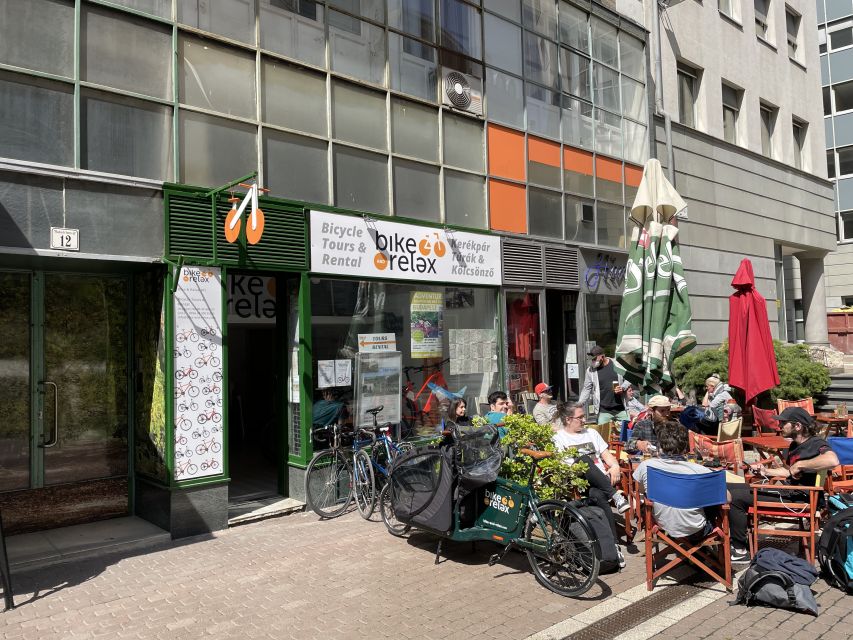
You meet at Bike & Relax in the center of the Jewish district, right around the connection between Madách tér and the Gozsdu udvar area. Look for Café Hivatal beside the shop. Deák Ferenc tér is the nearest metro hub (M1, M2, M3 plus trams 47, 48, 49, and Airport bus 100E).
This matters more than it sounds. Starting in the Jewish Quarter keeps the first part of the ride from feeling like pure transit. Instead, you quickly plug into the historic street network and you get ready for the loop rather than starting your day with logistical stress.
Plan to show up in comfortable clothes and shoes. You’re not bringing a backpack-to-the-entrance situation here; the tour rules say no luggage or large bags. Helmets are available but optional, so if you’re the type who likes a little extra protection, bring your own preference.
Andrássy Avenue to Heroes’ Square: grand sights, good story flow
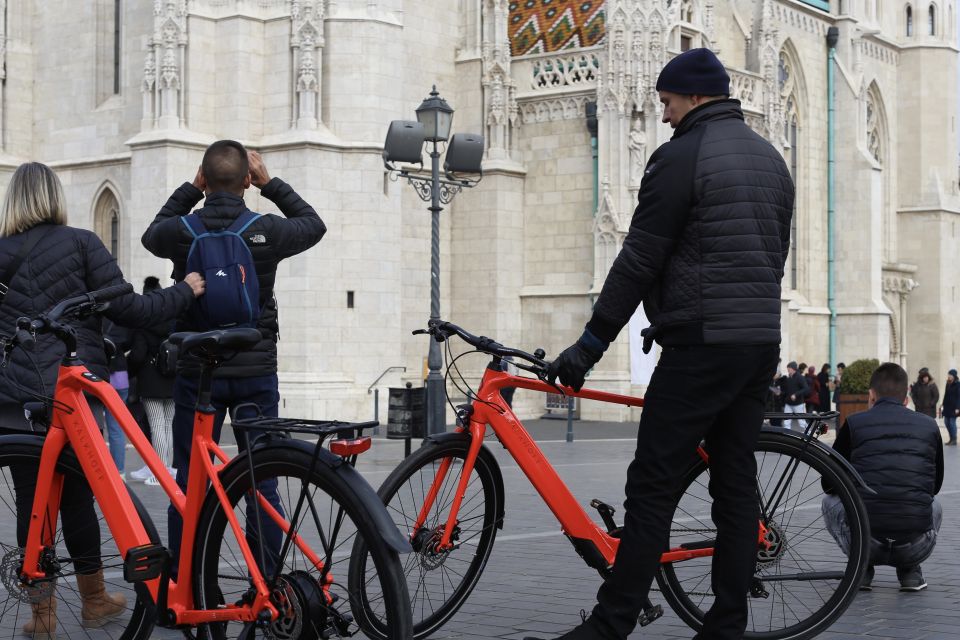
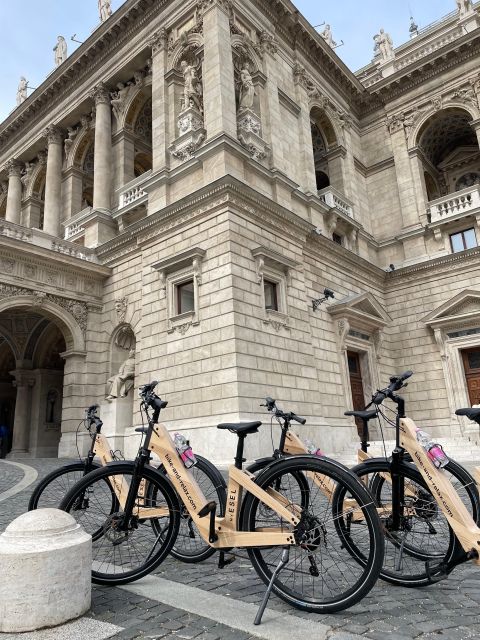
The big first visual hit is the Andrássy Avenue corridor. It’s the kind of boulevard that instantly makes you understand why Budapest compares itself to Paris. On this tour you roll past major landmarks including the Hungarian State Opera House and you’ll also stop for views tied to the House of Terror area.
Then you reach Heroes’ Square, which works as a perfect mid-ride anchor. It’s big, open, and easy to photograph without playing street-jenga around other tourists. More importantly, it gives the guide a natural place to connect national identity, architecture, and 19th/20th-century history—so the route doesn’t feel like random stops.
If you’re nervous about riding in a city, don’t overthink it. The tour is designed for mixed comfort levels (as long as you can ride a bike). You’ll get instructions on using the e-bike before you start, and the small-group format (limited to 10) helps keep the ride controlled.
City Park and Vajdahunyad Castle: the playful side of Budapest
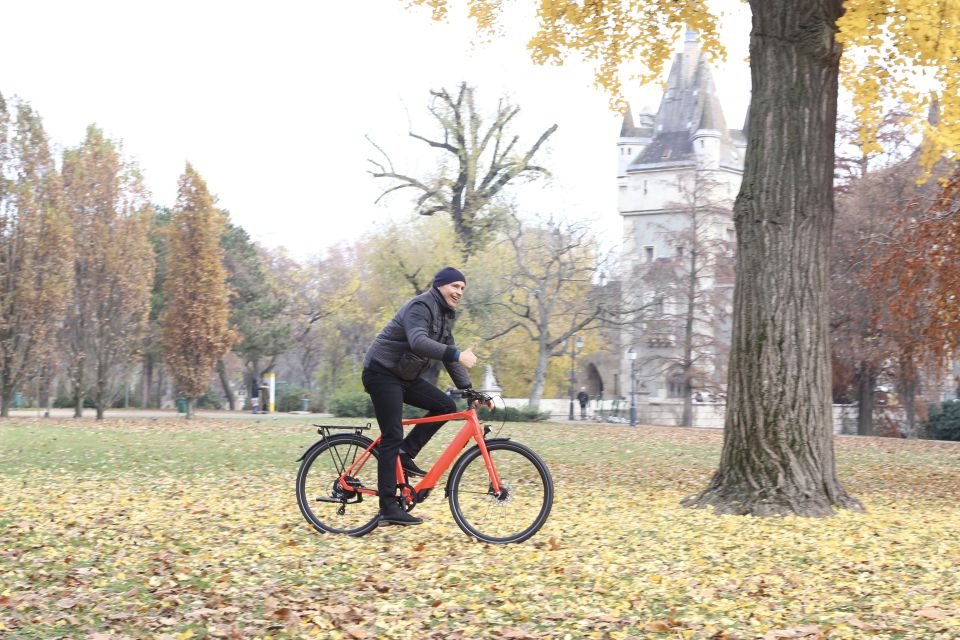
From Heroes’ Square, the ride continues into City Park. This stretch has that “Budapest is theatrical” feeling. One highlight you’ll pass is the fake castle look—Vajdahunyad Castle is the name that usually grabs people’s attention here. It’s a photo-stop you can appreciate even if you don’t go inside anything that day.
You’ll also see the Széchenyi Thermal Bath area. Even without entering, the sheer scale of this spa complex gives you a real sense of Budapest’s thermal-bath culture. It’s a different kind of landmark from what you’ll see on the more formal downtown streets: lively, everyday, and part of how locals think about leisure and health.
One nice practical touch: this is a good place to pause and reset. City Park can be spacious enough that you’re not squeezed into tight crowds. I’d use that downtime to look around, grab a few photos, and stretch your legs before the ride returns to the denser core.
St. Stephen’s Basilica and Liberty Square: religion, money, and memory
Downtown is where Budapest gets serious. You’ll pass and stop near St. Stephen’s Basilica, which is the largest church in the city. Even as a photo stop, it’s worth the moment because it anchors the skyline—especially when you’re used to cities where the big church is more of a background detail.
From there you head toward Liberty Square in the financial district. The guide’s job here is crucial because Liberty Square is tangled in layered history, including bloody events and a disputed Holocaust memorial. Your e-bike tour can’t replace slow reading at a museum, but it can still set the context so when you see the memorial or the square again later, it means something beyond a caption.
Expect more big-picture explanation than technical details. This is the part of the ride where a good guide can make Budapest feel coherent. In the real world, the tour guides have shown strong storytelling style in different languages—names that came up in guide feedback include Ollie and Katalin, and their pacing and humor were repeatedly praised.
You can also read our reviews of more guided tours in Budapest






Parliament to the Danube: the view payoff starts
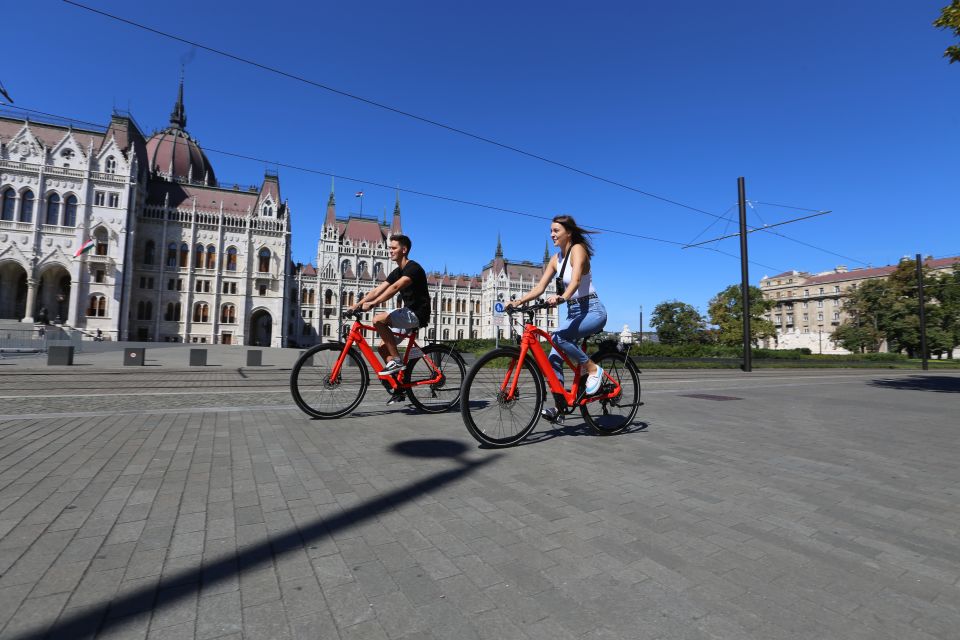
The Hungarian Parliament Building is next on your radar. It’s one of those landmarks that doesn’t just look impressive—it tells you immediately where the city’s political weight sits. You’ll stop for photos rather than entry, so treat this like a “get the best angle now” moment.
After that, you reach the Danube River area, where the tour shifts into pure scenery mode. You’ll get breathtaking views of the Buda side of the city. This is where the biking really earns its keep. You’re not just walking up and down streets; you’re getting moving perspective as the river and hills frame the skyline.
You’ll also pass the Monument of the Shoes along the Danube bank. Important caution: direct access to the monument area can’t always be granted. So if you don’t get the exact angle you hoped for, don’t panic—this tour is still timed and routed to keep you seeing key Danube landmarks.
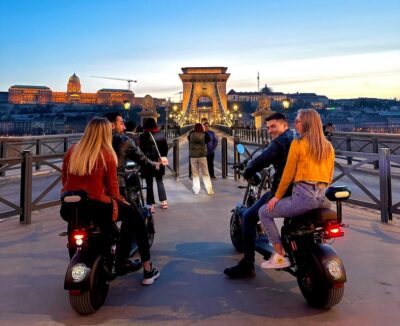
Then you cross the newly renovated Chain Bridge area. The tour notes that it’s closed for private cars now, which generally helps make this section feel calmer for cyclists and pedestrians. It’s a classic Budapest crossing and a strong setup for what comes next on Buda’s hill streets.
Castle Hill on electric assist: Matthias and Fisherman’s Bastion
This is the tour’s signature “wow, we’re really doing it” moment. On Buda, you start climbing Castle Hill. The electric support shows its strength here. You’ll still pedal, but the assist helps you avoid arriving at the top sweaty and spent.
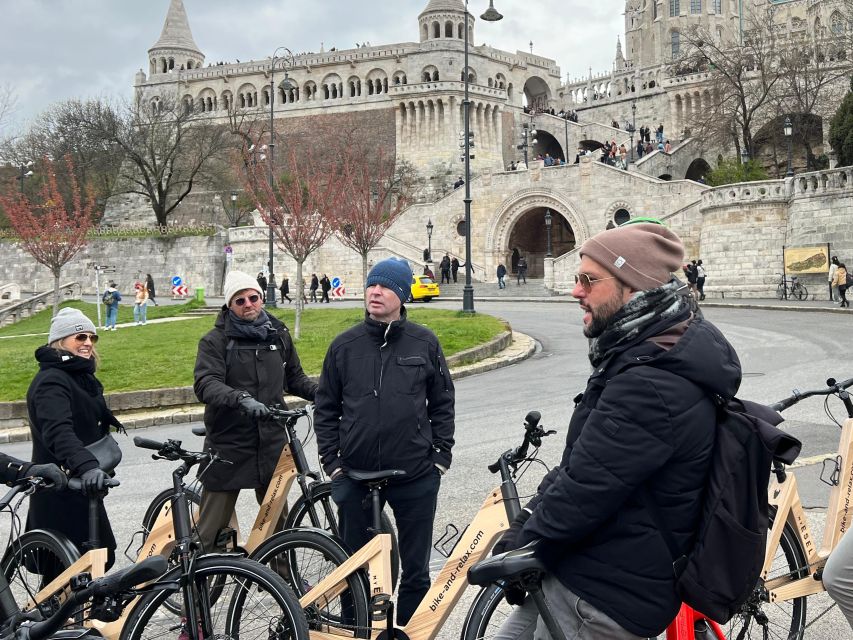
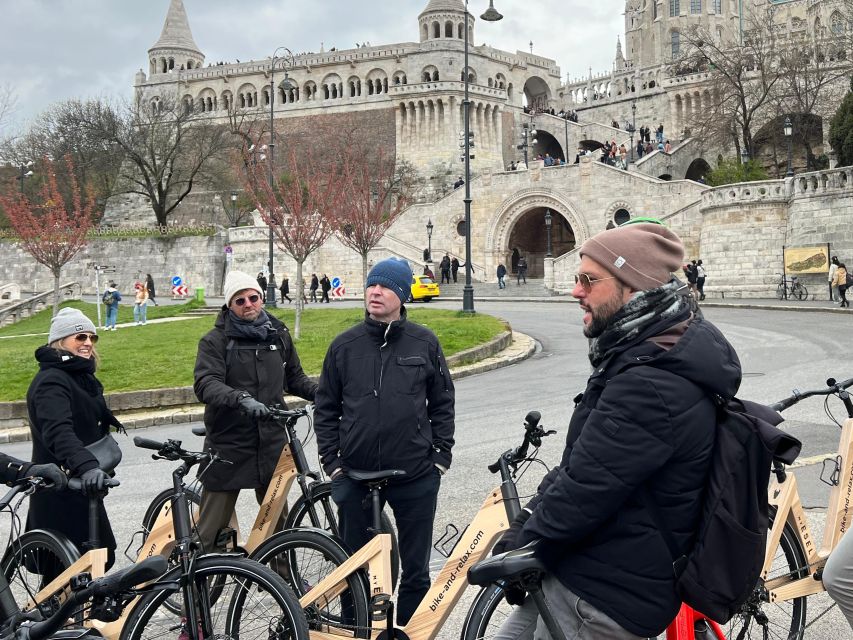
Once you’re up, the views begin to land in your camera roll fast. You’ll admire key stops like Matthias Church and the Fisherman’s Bastion. Even if you’ve seen these in photos, seeing them as part of a moving ride through the neighborhood gives you a better sense of scale and how those viewpoints overlook the river.
This also tends to be the part of the tour where your guide’s timing matters. You want photo stops that don’t feel rushed, and you want a short enough stay that the ride still flows. Based on feedback, the guides keep the content at the right level—enough story to stick, without turning the day into a lecture.
The practical takeaway: if you’ve got limited days in Budapest, prioritize Castle Hill angles. This tour gets you there efficiently, and it’s one of the easiest ways to make sure you actually see the Buda skyline without making the climb the whole day.
Back down to the river: Rudas Bath, Gellért Hill, and Liberty Bridge
After the Castle Hill viewpoints, the route heads back toward the Danube banks. One stop you’ll pass is the historical Rudas Bath. Again, you’re not entering, but you’ll see the bath as part of the city’s long relationship with thermal waters.
You’ll then reach Gellért Hill and the Gellért Thermal Bath area. This is another angle where Budapest feels like it’s built on layers—hills, bridges, river life, and grand stone architecture all at once. The ride keeps you moving, so you’re not just standing and hoping for the right photo lighting.
Then comes Liberty Bridge, which the tour describes as the most popular bridge in Budapest. Crossing here is great because it links the viewpoints from the Buda side back to Pest’s dense city fabric. You end up with a loop that feels complete: hilltop sights, Danube views, then back into the busier streets where you can plan your next day.
Central Market Hall and the National Museum area: food-and-art energy
Once you’re back in Pest, the tour heads toward Central Market Hall and the Hungarian National Museum. Central Market Hall gives you that “this is what locals do” vibe, even if you only look from the outside or at stop time. The point isn’t to shop during the tour; it’s to see the place and connect it to the neighborhoods around it.
The Hungarian National Museum stop is another big flag. Like the others, it’s a photo and look stop, not an interior visit. Still, it’s a useful orientation moment: you’ll understand where the museum sits in relation to the rest of the loop, and that makes it easier to decide later if you want to do a museum day.
After those downtown anchors, the route finishes by moving toward the Dohány Street Synagogue, a powerful end to the day because it ties your ride back into the Jewish Quarter area where you started.
The Dohány Street Synagogue finish: a strong close to the loop
The final stop is the Dohány Street Synagogue. Even if you don’t step inside, it lands well after everything else because you’ve covered major Budapest threads: grand civic architecture, river history, and neighborhood-scale heritage.
Then you head back to Bike & Relax and you’re done in about 3.5 hours. This timing is a big part of the value. It’s long enough to feel like you did something meaningful, but short enough that you still have energy left for dinner, a night walk, or a return visit to one or two places you liked best.
Pace, distance, and what 3.5 hours feels like
The tour is listed as 3.5 hours, but it can vary depending on conditions on the day. That’s normal for city riding—traffic patterns, how quickly groups can regroup, and weather all affect timing.
What helps: the group is limited to 10 participants. In practice, that usually means less waiting around at crossings and more consistent spacing so the guide can give you real stories while still moving along.
Also, this tour isn’t designed for a sprint. Reviews praise that the guides don’t rush people through stops, and that there’s time at key points to walk around and take photos. You should still expect a “stop, look, photo, small discussion” rhythm rather than long museum-style hangs.
If you’re planning your day, I’d treat this as an early or middle activity. A reviewer who did it early said it helped them decide what to return for. I agree with that strategy: use the tour to map your priorities, then choose your deeper dives afterward.
What to watch for: open chains, bike comfort, and who should skip it
Before you book, read the fit rules. This is not suitable for everyone:
- children under 13
- pregnant women
- people with mobility impairments
- anyone who can’t ride a bike
- height and weight limits apply (listed as under 5 ft 2 in / 160 cm, and over 243 lbs / 110 kg, with additional under-5 ft 1 in / 155 cm guidance)
- no large luggage or bags
Two small-but-real riding notes:
1) The e-bikes have open chains that may touch your clothes. Wear something you don’t mind getting a bit close to bike parts.
2) Seat comfort can be hit-or-miss depending on your preference. One feedback note mentioned seat comfort, even though the ride itself was easy.
Weather is the other consideration. One experience described rain during part of the ride, and the company had rain ponchos and water ready. Still, bring the right layer and don’t plan to wear your nicest outfit.
If you’re anxious about the hill climbs, you’re exactly the person e-bikes are for. The motor support is meant to help you reach viewpoints without turning the day into a workout you didn’t ask for.
Value for $63: what you get, and why it’s a smart use of time
At $63 per person for a 3.5-hour guided ride, this is priced like a “do it all at once” city experience. The key inclusions are practical: e-bike rental and the tour guide. Helmets are optional (available), and you’ll be moving through a lot of major sights without needing separate tickets just to see the exterior angles.
You do not get hotel pickup or drop-off, and food and drinks aren’t included. That’s fine, because the tour is mainly about routing and context—not meals. You should plan a snack plan yourself and keep a water strategy.
The value shows best if you’re short on time. One review said the tour covered around 15 miles. Even if your exact distance varies with route and pace, it gives you a sense of how much ground you’re covering in a guided setting. For the cost, you’re paying for transportation help plus expert storytelling—so you’re not just moving, you’re learning where to look next.
Should you book this Budapest downtown e-bike tour?
I’d book it if you want a fast, guided sampler of Budapest’s top zones: Andrássy Avenue grandeur, downtown big monuments, Danube river views, and Castle Hill viewpoints. It’s also a strong pick for mixed fitness levels because the electric assist makes the steep parts workable.
I wouldn’t book it if your priority is going inside buildings and museums. This tour is explicit about not entering the landmarks, so you’ll need separate plans if you want interiors like churches, synagogues, or museum galleries.
If you’re choosing when to do it, consider booking early in your trip. That way, the loop works like a map you can return to—especially for the Buda skyline areas and the Jewish Quarter.
FAQ
Where is the meeting point?
Meet at Bike & Relax in the center of the Jewish district, near Café Hivatal beside the shop. It’s around the connection between Madách tér and Gozsdu udvar court. Deák Ferenc tér is the nearest metro stop.
How long is the tour?
The tour duration is about 3.5 hours, and it can vary depending on day conditions.
What’s included in the price?
The price includes an e-bike rental and a tour guide. A helmet is available but optional.
What languages are offered?
The live tour guide is available in German, French, and English.
Will I enter the landmarks during the tour?
No. You will not enter any of the mentioned landmarks during this tour.
Do I need to be able to ride a bike?
Yes. This is not suitable for people who can’t ride a bike, and it also has height/weight limits.
Are food and drinks included?
No. Food and drinks are not included.
Is hotel pickup or drop-off included?
No. Hotel pickup and drop-off are not included.
Can I cancel for a refund?
Yes. Free cancellation is available up to 24 hours in advance for a full refund.