REVIEW · BUDAPEST
Budapest Cooking Class & Market Tour with Local Guide & Wines
Book on Viator →Operated by Foodapest Experiences · Bookable on Viator
Paprika starts at the market. This Budapest Cooking Class & Market Tour turns Central Market Hall shopping into a hands-on meal plan: you taste Hungarian specialties, then cook traditional dishes from family recipes with your group. I love the mix of market culture + real instruction, and I also like that the food is built around what’s seasonal and local. The main trade-off: you should expect some walking and a kitchen setup that can feel close, especially on busier days.
What makes it feel genuinely Hungarian is the way the guide connects ingredients to everyday life—more than just recipes on cards. Hosts like Kinga, Ben, and Mesi come through in the reviews as warm, focused teachers who keep things relaxed and include everyone. If you want a food experience with people and context (not just a meal), this hits that target.
Planning-wise, it’s about four hours total and capped at a small group size. I’d still plan footwear and stamina for roughly 30 minutes through the market plus about 15 minutes to the apartment afterward, since those are the walking moments that come up for real. And if you’re very strict about dietary restrictions, treat the dietary info as essential—not an afterthought—because shared kitchen environments always require extra care.
In This Review
- Key Highlights That Matter
- How Central Market Hall Sets the Tone for Hungarian Food
- The Market Walk: What to Expect (And How to Prepare)
- What You’ll Cook: Lecsó, Dumplings, and That Paprika Comfort
- Starters and Tastings: Salami, Cheese, Pickles, and Palinka
- Family-Style Dinner in a Cozy Kitchen (Not a Classroom)
- Dessert, Wine Pairing, and the Timing Reality
- Dietary Options: How to Think About Gluten-Free and Vegan
- Group Size, Noise Level, and Hear-Everything Expectations
- Learning You Can Actually Use at Home
- Value Check: Is $99 Worth It?
- Who Should Book This Cooking Class
- Quick Advice: How to Avoid Booking the Wrong Kind of Food Experience
- Final Verdict: Should You Book It?
- FAQ
- Where does the tour start?
- How long is the experience?
- What’s the group size?
- Is it offered in English?
- What dishes are included?
- Are there dietary options?
- Is there wine or alcohol?
- Will there be walking?
- What’s the cancellation policy?
Key Highlights That Matter
- Central Market Hall first: sample local products from real Hungarian producers before you cook.
- Grandma-style recipes: dishes are taught as family-method cooking, not just step-by-step demo.
- Paprika-driven comfort food: look for lecsó with dumplings and sessions that also feature chicken paprikash.
- Wine and palinka pairings: built into the tasting flow with options for non-drinkers.
- Small groups and family-style eating: you cook together, then sit down as a group meal.
- Dietary options available: gluten-free, vegan, vegetarian options can be arranged in advance.
How Central Market Hall Sets the Tone for Hungarian Food
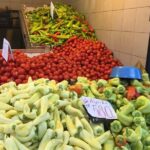
Central Market Hall is one of Budapest’s best “food landmarks.” The class starts here for a reason: you get oriented fast. Instead of arriving hungry and guessing, you’re guided toward the flavors Hungarians actually build dinners around—meats, cheeses, pickles, and that paprika-and-stock comfort style that shows up again and again.
A big part of the value is the mini tasting during the market portion. You’re not just looking; you’re snacking along the way so the cooking later makes sense. Expect tastings tied to what you’ll cook, like cured salamis and cheeses, exotic pickled items, and a palinka taster. There’s also a wine pairing as part of the meal flow, sourced from local wineries.
This approach works well for both beginners and confident cooks. Beginners get flavor context. Confident cooks get ingredient ideas they might not buy on their own.
One more practical upside: you learn where things live and how people talk about them. That’s useful beyond the class. You can return later and shop smarter.
You can also read our reviews of more guided tours in Budapest



The Market Walk: What to Expect (And How to Prepare)
Your market time is not a slow museum stroll. One review notes about 30 minutes of walking inside the market, and it can be a little uneven, crowded, and noisy. That’s normal for Central Market Hall, but it matters if you’re sensitive to crowds or need extra mobility support.
Then you’ll head to a nearby apartment kitchen. Plan on an additional walk of about 15 minutes after the market stop. This is short, but it’s not nothing—especially if you’re traveling with kids, have limited stamina, or are using a wheelchair. The good news from the reviews: when an elevator wasn’t working, the escalator option helped in at least one case.
What I recommend you do:
- Wear shoes you can move in for a few blocks.
- If you need a calm, easy pace, say so when you book, so the guide can set expectations for your group.
What You’ll Cook: Lecsó, Dumplings, and That Paprika Comfort
The class is built around a traditional Hungarian main with dumplings. In the described menu, the centerpiece is Hungarian Sausage Lecsó with Dumplings, taught as Grandma’s recipe. You may see a gluten-friendly approach too—like using potato options instead of gluten-based dumplings for certain dietary adaptations.
In real sessions, the cooking may also rotate around paprika-based classics. Reviews mention chicken paprikash along with Hungarian dumplings (nokedli/nakedli style). That’s a good sign if you’re trying to learn the “Hungarian comfort food” core, because chicken paprikash teaches the same paprika-forward logic: sauté, build the sauce, thicken gently, and serve with the right dumplings.
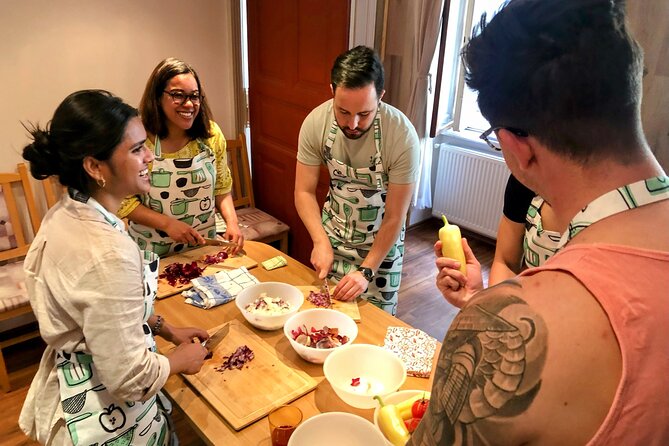
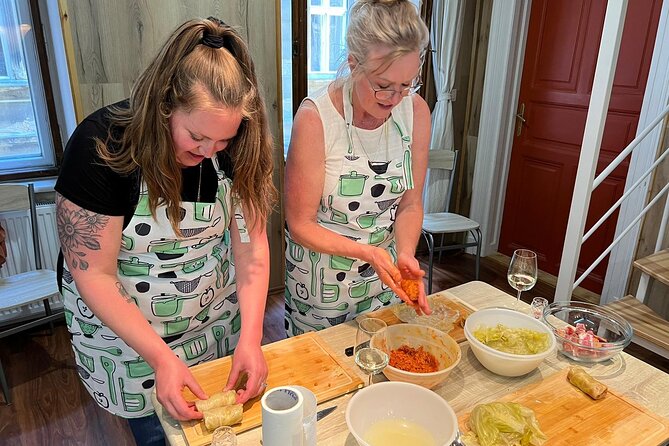
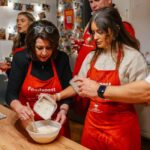
Either way, the teaching style is hands-on. Multiple reviews say instructions are step-by-step and that you get to participate—not just watch. That matters because Hungarian cooking can feel intimidating if you only see it on restaurant plates. In this format, you practice the actual movements: chopping, stirring, timing, and seasoning.
You’ll also have plenty of chances to taste as you go. That’s not just for fun; it’s how you learn what “right” feels like for Hungarian flavor. The guides also point out what specific ingredients do, like how paprika changes the sauce.
Starters and Tastings: Salami, Cheese, Pickles, and Palinka
One of my favorite parts of this tour is how it builds your appetite with variety instead of a single long waiting period. Before the cooking begins, you’re served a spread designed to teach you what Hungarians pair together.
The starter flow can include:
- cured salamis and cheeses
- a selection of Hungarian pickles (the “exotic” ones are part of the fun)
- a taster of palinka
- wine pairing with the meal from local wineries
If you’ve never had palinka before, don’t think of it as a random shot. It’s traditionally tied to Hungarian spirits, and it shows up in small tastings like this so you can understand it without overdoing it.
If you don’t drink, you still get options. One review complains about limited non-alcohol choices in a specific situation, but the overall setup includes flavored water/sensible alternatives alongside the wine. Still, if you’re traveling with someone who avoids alcohol completely, I’d mention it when you book so the team can plan better.
Family-Style Dinner in a Cozy Kitchen (Not a Classroom)
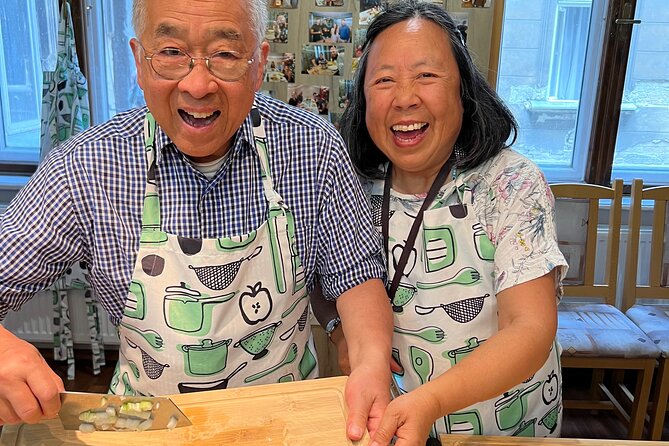
After shopping, you move to the kitchen for the cooking session and the shared meal. The vibe matters here. Reviews repeatedly describe the apartment kitchen as cozy, home-like, and organized—more “friend’s place” than “sterile cooking studio.”
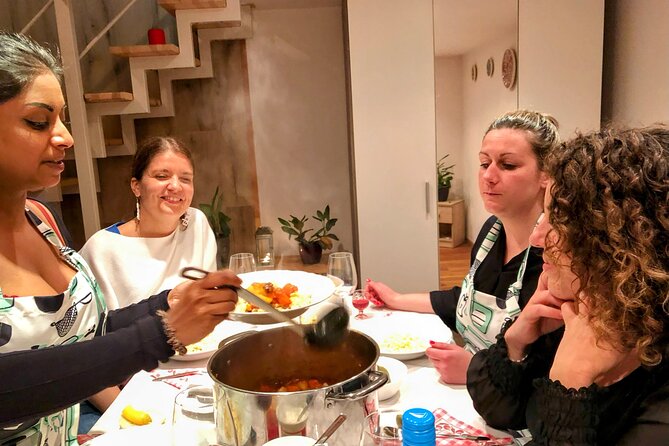
This is where the group dynamic clicks. You cook together, you taste together, and then you sit down as a group for the final meal. Several reviews mention meeting fellow travelers who became friends, and one mentions a relaxed pace where you don’t feel rushed.
This format is also a plus for families. There’s at least one review where an 11-year-old had a great time and enjoyed the experience enough to recommend it.
You can also read our reviews of more shopping tours in Budapest


Dessert, Wine Pairing, and the Timing Reality
Dessert is part of the described menu: a traditional Hungarian pudding. Wine pairing is also built into the meal flow with tastings from local wineries.
Here’s the only timing caution I’ll give you: one negative review says the dessert listed in the plan wasn’t made during their specific session. That doesn’t mean it won’t happen for you, but it does mean you shouldn’t assume every element appears exactly on schedule if your date is unusual (for example, very busy or a day when market activity shifts). If dessert is a must, you can ask ahead of time what’s currently included for your date.
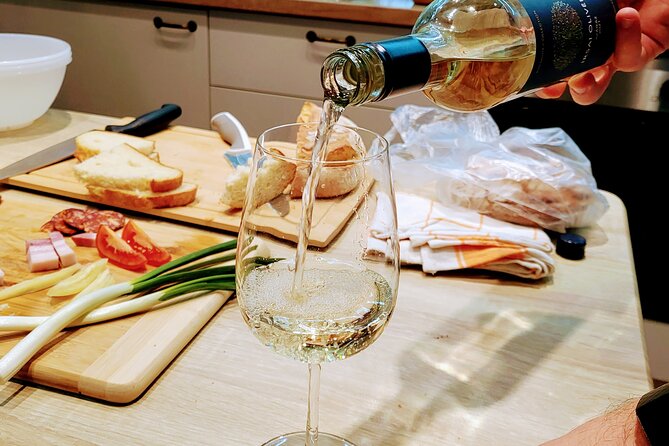
On the wine side, some sessions include free-flowing wine. If you’re the kind of traveler who wants to sip slowly, plan to pace yourself. The class also includes alcohol tastings, so you’ll likely want a water buffer between pours.
Dietary Options: How to Think About Gluten-Free and Vegan
The experience states that gluten free, vegan, and vegetarian options are available. That’s excellent, and it’s not a small detail. Hungarian dishes often use flour-heavy dumplings, so being able to adapt matters.
But here’s the practical part. One review flagged cross-contamination risk for someone who is coeliac, and the response from the provider acknowledged that cross-contamination can happen in a shared kitchen environment. In other words: you can often get a safe version, but you should be realistic about risk if your condition is strict.
My advice if dietary needs are serious:
- Confirm the exact adaptations for your date (especially gluten and cross-contact).
- Don’t treat this as a certified allergy-free kitchen unless it’s explicitly stated.
- If you’re vegan or vegetarian, you’ll still want to ask how ingredient swaps are handled so the flavor stays Hungarian, not just “leftovers without meat.”
Group Size, Noise Level, and Hear-Everything Expectations
On paper, the class is capped at a small group size (maximum 12 travelers). Reviews praise the intimacy and relaxed feel when group size stays small—some even mention smaller groups like five, which is ideal.
Still, the negative reviews point out that when group dynamics get larger, it can feel cramped and harder to hear. One person specifically mentioned whisper systems for market navigation as a helpful tool and that the room felt too small for their group size.
So if you’re hard of hearing or you know you dislike crowded instruction spaces, you’ll want to book with that in mind and arrive ready to ask questions in a way your guide can handle.
Learning You Can Actually Use at Home
This isn’t just a “try it once” meal. The best reviews emphasize that you get enough guidance to reproduce the dish at home. One review says they felt confident they’d remake the meal, and another notes that the dish was simple enough to reproduce—but still wonderfully tasty.
What you’ll likely take home:
- how paprika-based sauces come together
- how to time dumplings alongside the main dish
- practical seasoning instincts (what to taste for, when to adjust)
- a recipe you can follow later (at least some sessions provide recipes)
Even if you never cook much, you’ll still gain something valuable: understanding how Hungarian flavors work together—meat + paprika sauce + dumplings + the sharp lift of pickles and cured sides.
And that matters because Budapest has plenty of restaurants. Knowing the logic behind the food helps you choose dishes you’ll actually enjoy.
Value Check: Is $99 Worth It?
At $99 per person for about four hours, you’re paying for three things at once:
- a guided Central Market Hall visit with tastings
- hands-on cooking instruction and participation
- a full group meal with wine pairings and Hungarian sides
If you only wanted a market tour, you’d pay for a guide. If you only wanted a cooking class, you’d pay for instruction and a kitchen. Here, you get the market context that makes the cooking feel meaningful, and you get the meal that turns it into a full experience.
The pricing also makes sense for the small-group feel. Reviews often mention the host making everyone part of the process. That’s hard to deliver in large numbers.
Your best way to judge value is your goal:
- If you want a cultural food lesson with actual cooking time, it’s good value.
- If you only want drinking and a light snack, you might find the cooking portion less aligned with your expectation.
Who Should Book This Cooking Class
You’ll probably love it if:
- you want a market-to-meal experience and not just a restaurant dinner
- you like learning by doing, not watching
- you’re traveling with friends or family and want conversation-friendly group dining
- you care about Hungarian classics like paprika sauces, cured meats, pickles, and dumplings
You might want to think twice if:
- you hate walking through crowded indoor markets
- you need a fully allergy-free environment for severe gluten/cross-contact issues
- you prefer very quiet instruction or lots of personal space (busy sessions can feel tight)
Quick Advice: How to Avoid Booking the Wrong Kind of Food Experience
One review described a mismatch where a guest thought they booked a small intimate cooking class but ended up with a more tasting-focused format around Budapest. To avoid that, confirm the experience you pick includes:
- Central Market Hall as the start
- a hands-on cooking session in an apartment-style kitchen
- a family-style meal cooked together (not only food stops around town)
If it says you’re cooking in the end, you’re in the right lane.
Final Verdict: Should You Book It?
I think this is a strong choice for a first serious Hungarian food experience. The market start at Central Market Hall gives you context fast. The cooking portion is hands-on, and the format—cook, eat, talk—tends to create that friendly group energy the best reviews describe.
Book it if you want more than dinner: you want the recipe logic and the flavor map of Budapest. Skip it if you’re extremely mobility-limited, need medically strict no-cross-contact gluten handling, or you’re expecting a big-wine party with minimal cooking.
If you’re somewhere in the middle—curious, hungry, and ready to learn—this is exactly the kind of Budapest activity that turns a city stop into a skill you can reuse back home.
FAQ
Where does the tour start?
It starts at Central Market Hall in Budapest (1093 Hungary). The activity ends back at the meeting point.
How long is the experience?
It runs about 4 hours.
What’s the group size?
The experience has a maximum of 12 travelers.
Is it offered in English?
Yes, it is offered in English.
What dishes are included?
The described main dish is Hungarian Sausage Lecsó with dumplings (with options to adapt for gluten-free). Starters can include cured salamis and cheeses, Hungarian pickles, palinka tasting, and wine pairing. Dessert is listed as traditional Hungarian pudding.
Are there dietary options?
Yes. Gluten free, vegan, and vegetarian options are available.
Is there wine or alcohol?
There is palinka tasting and wine pairing with the meal. Non-alcoholic options are mentioned as available.
Will there be walking?
Plan for walking in and around Central Market Hall and then a walk to the nearby apartment kitchen. One review mentions about 30 minutes walking in the market plus around 15 minutes to the apartment.
What’s the cancellation policy?
You can cancel up to 24 hours in advance for a full refund.