REVIEW · BUDAPEST
Accessible Budapest Tour
Book on Viator →Operated by Tourist Angel · Bookable on Viator
Budapest can be beautiful, but getting around it can be exhausting. This tour is built for wheelchair users and mobility challenges, with an itinerary that favors accessible routes and gives you a guide’s help where self-guided plans often stumble. I especially like the accessible Saint Stephen’s Basilica visit (including the right kind of entry), and I also love that you’re taken along for the big panoramic hits without wrestling with steps.
The main thing to keep in mind is that not every major church stop is fully wheelchair-accessible. Matthias Church isn’t accessible inside for wheelchair users, and a small timing slip can mean you miss an optional interior visit even if you still see the important viewpoints.
In This Review
- Key things that make this tour work
- A wheelchair-friendly Budapest route that actually respects your pace
- Getting there: pickup, meeting point, and the smooth ride to Buda
- St. Stephen’s Basilica: what’s included and what accessibility doesn’t cover
- Buda Castle panoramic terrace: the views that make the crossing worth it
- Fisherman’s Bastion and the Matthias area: great exteriors, ticket reality checks
- The Presidential Palace area (Sandor Palace) and a quick history hit
- Andrassy Avenue by accessible bus and Heroes’ Square for the big picture
- Millennium Monument and the unknown heroes
- City Park and Vajdahunyad Castle: classic Budapest on easier terms
- Anonymus Szobor: a small stop with a big meaning
- Price and timing: is $142.97 a good value?
- Accessibility notes you should plan around (before you arrive)
- Who should book this accessible Budapest tour
- Should you book it
- FAQ
- Is this a private tour?
- How long is the Budapest tour?
- Does the price include hotel pickup and drop-off?
- What sites are included with admission?
- Is Saint Stephen’s Basilica accessible for wheelchair users?
- Is Matthias Church accessible inside for wheelchair users?
- Do I need to buy public transport tickets?
- What languages is the tour offered in?
- What should I wear for the church stops?
Key things that make this tour work
- Wheelchair-first routing that avoids stair-heavy bottlenecks and focuses on what you can reach comfortably
- Accessible elevator at St. Stephen’s Basilica (with a real note about which areas are not part of the lift access)
- Buda Castle panoramic terrace time for those Danube-and-city views without the usual scrambling
- Public-transport rides handled for you, plus an accessible minibus option if you request it
- A clear ticket split: Basilica is included, while other sites may not be
A wheelchair-friendly Budapest route that actually respects your pace
If you’ve ever tried to tour Budapest alone in a wheelchair, you know the problem: the city is amazing, but the “quick shortcut” is usually stairs, uneven transitions, or a staircase where you’d expect an easy entry. This tour is designed around that reality. The guiding idea is simple: you’ll hit the iconic places, but you’ll do it in a way that avoids the step-and-level traps that can make a solo day feel like a workout you didn’t ask for.
You also get the human part that matters. A professional, licensed guide (in English) doesn’t just point at buildings; they adjust timing and route so you can spend your energy on sightseeing, not logistics. That’s not a small detail. In places like central Buda and the older church areas, a good guide can be the difference between a tense day and a calm one.
And yes, you’ll still get plenty of classic Budapest scenery: the Basilica interiors you can access, the Royal Palace terrace views, Heroes’ Square, City Park, and the big-photo zones like Fisherman’s Bastion and the Parliament area viewpoint.
You can also read our reviews of more tours and experiences in Budapest.


Getting there: pickup, meeting point, and the smooth ride to Buda
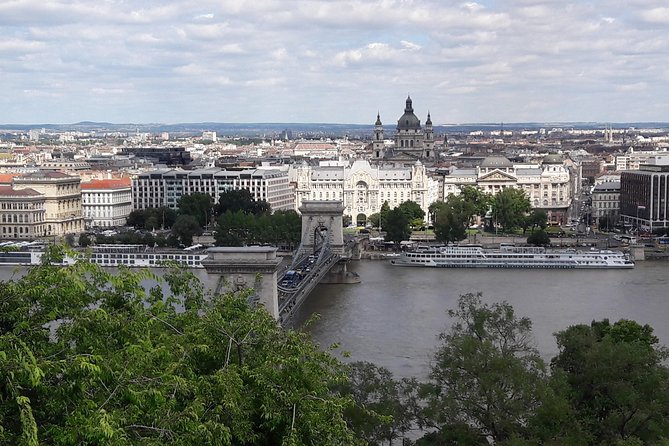
The tour starts at Szent István tér 4, 1051 Hungary and returns there. If you need pickup, the guide meets you at the reception desk of your hotel or right in front of your accommodation address. After the tour, drop-off can be at your hotel or another selected city point.
This matters because mobility-friendly touring isn’t only about the sites. It’s the first 20 minutes too: getting to your first stop, staying coordinated, and not wasting your best energy on unclear meeting logistics.
Transportation is handled either by accessible minibus on request or by accessible public bus between key areas. The itinerary crosses from Pest toward Buda by using an accessible public bus after a ride from Budapest’s central junction (the hub that lets you move between Pest’s old-town area and the inner city). If you’re comfortable with transit, that’s often a good way to keep the day moving. If you’re not, you’ll want to request the minibus option early so the transport matches your needs from the start.
St. Stephen’s Basilica: what’s included and what accessibility doesn’t cover
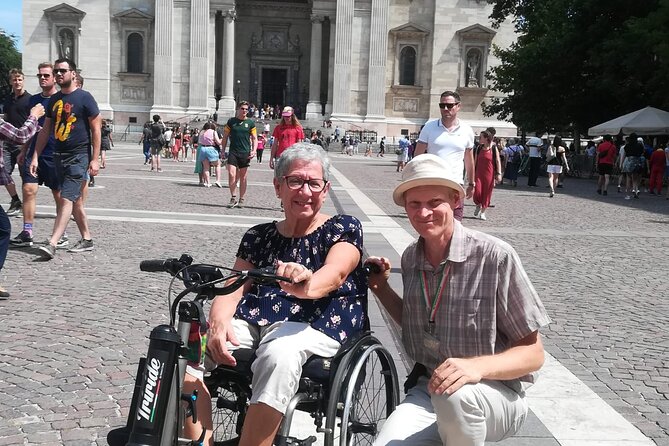
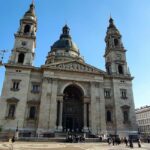
Saint Stephen’s Basilica (Szent István Bazilika) is one of those churches you see in photos and then still feel surprised by in person. The tour includes admission entry except Sunday morning religious service. You’ll spend about 45 minutes inside, and you’ll get context for the story of the first Hungarian king, plus the Basilica’s statuary and frescoes.
One striking detail you’ll hear about is the mummified right hand of the first king. It’s the kind of odd-but-real detail that makes a guide’s explanation worth it. Without context, you might just see artifacts and miss the meaning.
Accessibility-wise, the tour notes a very important truth: there’s an accessible elevator for wheelchair users to get inside the church, but the tower-area areas tied to the treasury and panoramic terrace aren’t part of wheelchair elevator access. So you can expect a fulfilling church visit, but not the full “climb and view from the tower” experience.
Practical tip: bring or wear something that helps with the church dress requirement. The tour specifies that legs and shoulders must be covered in church areas. That’s not about comfort; it’s about getting in without friction.
Buda Castle panoramic terrace: the views that make the crossing worth it
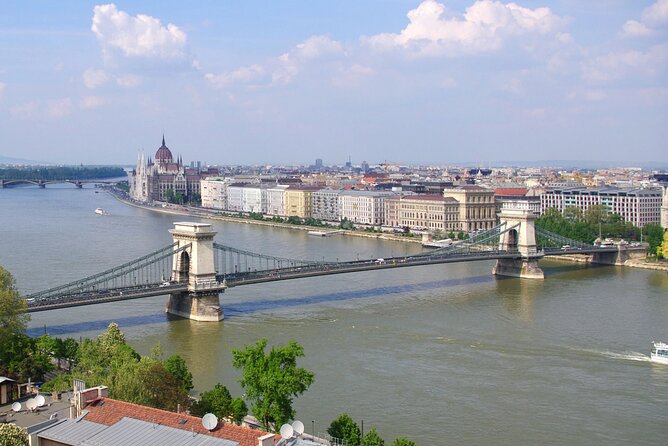
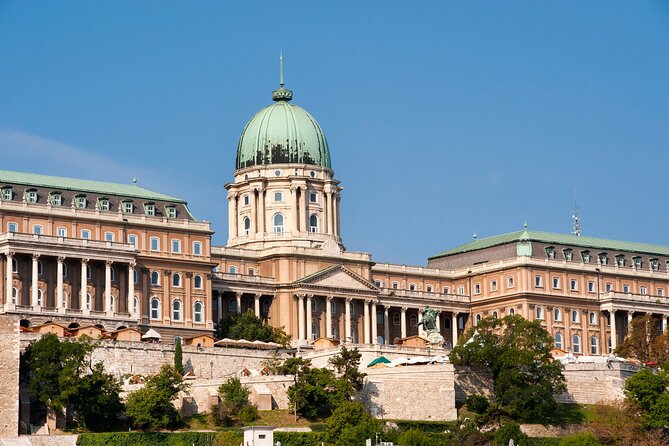
After getting across toward Buda, the tour goes to the Castle of Buda area. The focus here is smart: you get time at the Royal Palace panoramic terrace, which is where you can enjoy some of the best city-spread views in Budapest.
This is one of the most valuable parts of the route because it’s a “payoff stop.” You’re not only walking from one monument to the next; you’re collecting perspectives. From this terrace area, you’re positioned for wide-angle views across the river toward Pest, plus the layered shapes of the city.
Time-wise, you get about 45 minutes and there’s no admission cost mentioned for this stop. That makes the value feel good: you’re paying for the guide and access help, and the terrace itself is the reward.
Fisherman’s Bastion and the Matthias area: great exteriors, ticket reality checks
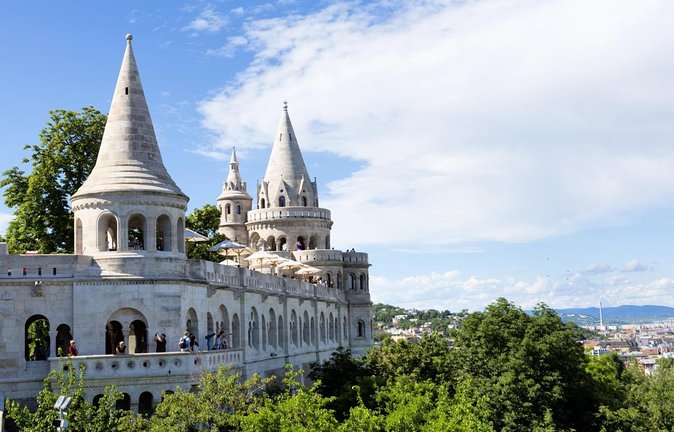
You’ll hit Fisherman’s Bastion next for around 15 minutes. Even without entering any paid interiors, it’s built for panoramic appreciation. The key draw here is the view over the Danube and toward the Hungarian Parliament building. It’s the kind of place where you’ll want your camera ready because the scene works from multiple angles.
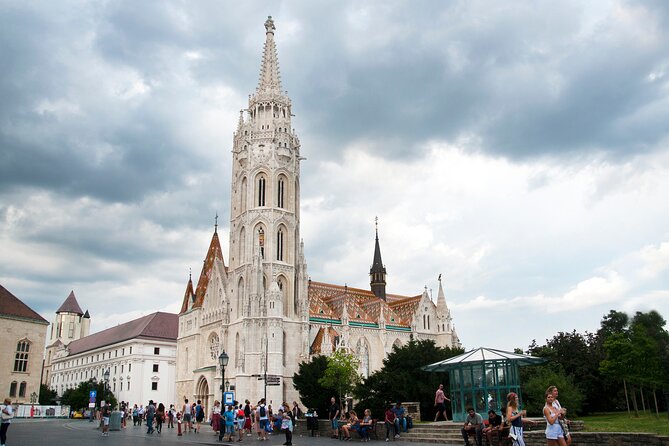
But you should know the ticket picture before you’re standing there. Fisherman’s Bastion is listed as not included, and Matthias Church is not included too. For Matthias Church, the accessibility note is especially important: the church is not accessible inside for wheelchair users. You can still walk around outside as part of the time on the route.
The tour does allow a compromise: walkers can visit Matthias Church upon request, which means if your group has mixed mobility needs, you’ll likely be able to coordinate alternatives rather than lose the stop entirely. For wheelchair users, expect an outdoor experience rather than an interior one.
Another logistics heads-up: an iconic bridge is mentioned as being under renovation in the 2021–2022 window. Since your trip is now later, you should still expect route plans to depend on current work schedules, so don’t assume the exact same pedestrian flow if construction has changed. A good guide will handle adjustments, but it’s worth noting in advance.


The Presidential Palace area (Sandor Palace) and a quick history hit
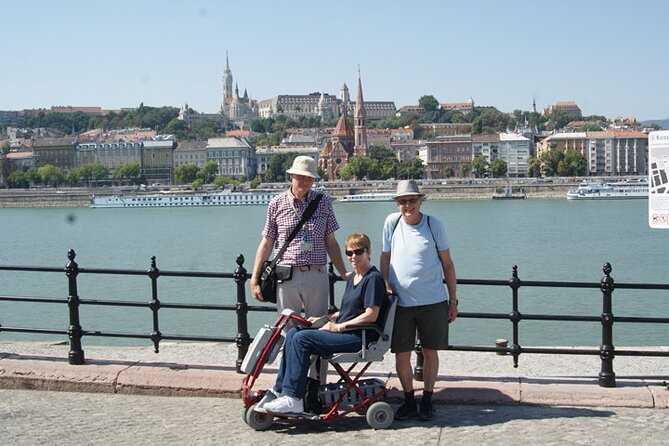
From the Castle of Buda area, you move to Sandor Palace, the palace of the president, with guards in historical uniforms. This is a short stop—about 10 minutes—and admission is listed as not included.
This is the kind of stop that can be ideal for mobility needs: it’s time-limited, visually interesting, and doesn’t require a long interior visit. You get the moment, you watch the uniforms, and then you move on before fatigue sets in.
If you’re a person who hates rushed photos, this stop is still likely a good fit because the time allocation is explicit and short. It’s not “stand around for an hour waiting to see if the group moves.”
Andrassy Avenue by accessible bus and Heroes’ Square for the big picture
One of the route’s smartest touches is the change of pace on Andrassy Avenue, described as a 2-mile historical thoroughfare. Instead of forcing everyone to walk the long stretch, the tour takes you along by accessible public bus to Heroes’ Square.
That bus ride is more than transportation. It’s a way to reduce strain while still experiencing the city’s major historical spine. If you’re using a wheelchair or mobility aids, long stretches on uneven sidewalks can wear you out fast. This approach helps you save your energy for the places that deserve your full attention.
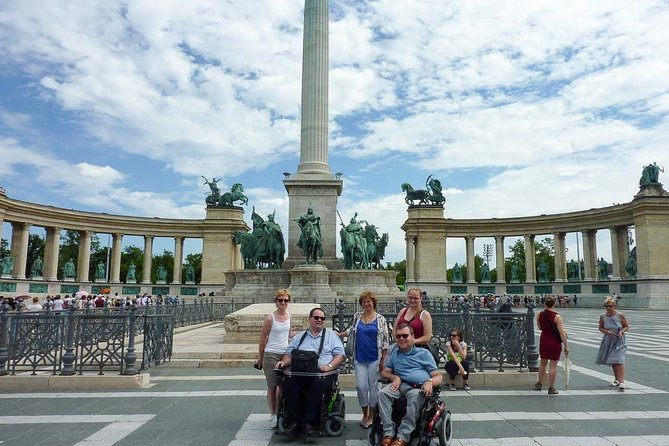
At Heroes’ Square, you’ll walk through for about 10 minutes. The square is the largest in Budapest, and the tour points out the Millennium Monument in the middle. You’ll also see major buildings on both sides: the Arts Hall and the Fine Arts Museum.
Millennium Monument and the unknown heroes
The Millennium Monument visit is another short but meaningful stop—around 10 minutes. You’ll learn what it commemorates: 1000 years of Hungarian history. The tour also calls attention to the grave of the unknown heroes in front of the monument, plus statues in the colonnades featuring major kings and leaders.
This is where a guide earns their keep. Without explanation, you might see the monument as a grand sculpture and move on. With the guide’s framing, the monument becomes a story you can actually read with your eyes.
Practical note: if you’re spending time in the square during busy hours, plan your viewing angles carefully. Space can tighten near the most photographed parts, but because the visit is time-boxed, you’re less likely to get stuck waiting for the next step in a longer queue.
City Park and Vajdahunyad Castle: classic Budapest on easier terms
Next comes Vajdahunyad Castle in Budapest City Park, described as the oldest public park in the world. You’ll spend about 15 minutes here.
The tour’s approach is a good one for mobility needs: you walk across a bridge to reach the island area, then focus on the courtyard and the architectural “copies” representing different periods and styles of Hungarian architecture. It’s designed for sightseeing without requiring you to commit to long, tiring interior exploration.
Admission is listed as free for this stop. So you get a lot of visual variety for the cost of your booked time and guide support.
Anonymus Szobor: a small stop with a big meaning
Inside the castle courtyard, you’ll find the Anonymus Szobor statue—about 10 minutes. This statue represents Anonymus, described as the first history writer of Hungary who lived in the 12th century.
This is a nice “details stop.” It’s not the kind of landmark most people expect on a must-see list, but it adds texture to what you’re seeing at City Park. It also breaks up the day between big panorama zones and big-square zones.
Price and timing: is $142.97 a good value?
At $142.97 per person with a duration of about 4 to 6 hours, you’re paying for more than sightseeing. You’re paying for:
- Licensed guide time in English
- A private tour limited to your group
- Hotel pickup and drop-off
- Access-related planning, like knowing where stairs and restricted areas block entry
- Optionally coordinated transport by accessible bus or an accessible minibus
When you compare that to the cost of doing multiple paid entrances on your own (plus the mental load of figuring out accessible routes), the price can feel reasonable—especially for families or small groups where a guide helps prevent missed time.
But here’s the value reality check: some major sites are listed as not included for admission (like Matthias Church and Fisherman’s Bastion, plus Sandor Palace not listed as included). So your total “out-of-pocket” may rise depending on what you choose to enter on your own and whether your mobility needs affect what you can access.
And timing matters. The tour duration is broad (4 to 6 hours), and the day includes several short stops plus transport time. If you’re the type who needs every single interior visit, consider building in extra margin and being clear with your guide at the start about which stops matter most.
Accessibility notes you should plan around (before you arrive)
This is an accessible-focused experience, and the route aims to avoid step-heavy problem areas. That said, the tour data makes two accessibility limitations very clear:
- St. Stephen’s Basilica has wheelchair elevator access inside, but tower-area zones (treasury and panoramic terrace) are not accessible by wheelchair.
- Matthias Church is not accessible inside for wheelchair users, though exterior viewing is part of the visit and walkers can request an optional interior visit.
So your best strategy is to treat these as expectations, not disappointments. You’re still getting the key church experience at Basilica, and you’re still seeing the architectural icon outside at Matthias.
If your group has mixed mobility (wheelchair users plus people who can walk some steps), the “upon request” note for Matthias Church interior is the one that can help you split up briefly without losing the overall tour flow.
Also, for the touring comfort factor: the tour runs in all weather conditions. Bring what you need for rain or shine, and remember the church dress rule for legs and shoulders.
Who should book this accessible Budapest tour
You should seriously consider booking if:
- You want an accessible route with a guide who plans around mobility limitations rather than expecting you to fight your way through
- You care about the big Budapest anchors: Basilica, Buda Castle views, Heroes’ Square, City Park, and Fisherman’s Bastion
- You’d rather spend your day looking at Budapest than studying maps for step-free alternatives
You might look elsewhere if:
- Your priority is a long list of multiple church interiors, especially because Matthias Church interior isn’t accessible for wheelchair users
- You’re traveling with a strict agenda that can’t handle a short stop here and there
Should you book it
If your main goal is to see Budapest’s signature sights without the stress of planning step-free routes, this tour makes a lot of sense. The biggest reason to book is the access-first design, especially the elevator-supported Basilica entry and the way the itinerary is arranged to reduce trouble spots.
My advice: decide early what you want most—interior access versus exterior views—then talk those preferences to the guide at the start. If you align expectations with what’s actually accessible (and you’re okay with some optional choices), you’ll likely leave with the kind of day that feels smooth, scenic, and genuinely worth your time.
FAQ
Is this a private tour?
Yes. It’s a private tour/activity, and only your group will participate.
How long is the Budapest tour?
It runs about 4 to 6 hours, depending on conditions and timing. An optional one-hour lunch break can be added and may be excluded from the tour duration.
Does the price include hotel pickup and drop-off?
Yes. Hotel pickup and drop-off are included, either by public transport or by car/minibus depending on the selected option.
What sites are included with admission?
Saint Stephen’s Basilica entry is included (except Sunday morning religious service). Other stops like Fisherman’s Bastion and Matthias Church are listed as not included.
Is Saint Stephen’s Basilica accessible for wheelchair users?
An accessible elevator allows wheelchair users to get inside the church, but the tower area (including the treasury and panoramic terrace) isn’t covered by elevator access.
Is Matthias Church accessible inside for wheelchair users?
No. The church is not accessible inside for wheelchair users, though walkers may be able to visit upon request.
Do I need to buy public transport tickets?
Public transport tickets are not included.
What languages is the tour offered in?
The tour is offered in English.
What should I wear for the church stops?
You’ll need to cover your legs and shoulders in church areas.