REVIEW · BUDAPEST
Buda Hills 2-Hour Segway Live-Guided Tour
Book on Viator →Operated by Segway Tours Budapest by GetSegway™ · Bookable on Viator
Budapest in one fast ride is the point. This two-hour, live-guided Segway tour gives you a quick way to stitch together Buda’s best views and the Danube’s most famous stops, with a guide turning locations into stories as you glide. I like that it’s built for movement, so you spend less time in lines or slow walking and more time getting bearings on your first visit.
The other thing I really like is the practical setup: full training, helmets, and a photo service baked into the route. The one drawback to plan for is simple: each stop is brief, around five minutes, so it’s more about seeing and framing than lingering.
In This Review
- Key tour highlights at a glance
- Why the Buda Hills Segway route feels so efficient
- Training, helmets, and the guide that keeps it smooth
- Buda Castle ridge: Varhegy to Matthias Church in quick, scenic bursts
- From basilica domes to Váci Street: seeing Buda and the city center connect
- Danube memorials and bridge views: Shoes on the Danube Bank and Erzsébet Bridge
- Buda Hill Funicular and the Soviet contrast: a route with emotional range
- What you actually get for $71.38 in two hours
- Who should book this Segway tour, and who might prefer something else
- Should you book this Buda Hills 2-hour Segway tour?
- FAQ
- FAQ
- How long is the Buda Hills 2-hour Segway live-guided tour?
- What is the price per person?
- Is the tour offered in English?
- Where is the meeting point?
- How big is the group?
- What’s included in the tour?
- Is there free cancellation?
Key tour highlights at a glance
- Small groups (up to 15) for a ride that stays friendly and manageable
- Training + helmets included, so you’re not learning from scratch on the hills
- Photo service at major photo stops while you roll through the “must-sees”
- Buda Castle district views fast, from Varhegy’s castle walls to Matthias Church
- Danube memorials and Soviet-era stops in the same route, for emotional variety
- Covers a lot of ground in two hours, including funicular area viewpoints and bridge views
Why the Buda Hills Segway route feels so efficient
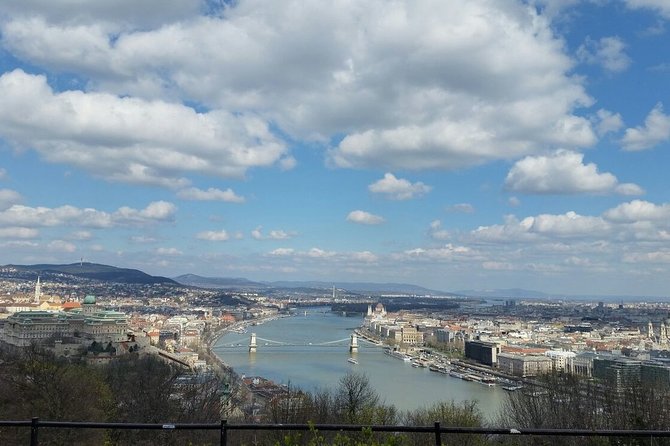
Budapest has two faces: the grand, postcard Danube front, and the steep, layered Buda side above it. Walking can make that second face slow. A Segway cuts through that problem, letting you keep momentum as the route climbs and curves. In a short window, you still get the sweep of what matters: castle ridge angles, basilica domes, riverfront memorials, and a bridge perspective.
This is also a tour that helps you understand the geography instead of just collecting photos. You’re not only stopping at sights—you’re riding between them, which gives you a better sense of where everything sits in relation to the river and the hill towns.
You can also read our reviews of more guided tours in Budapest



Training, helmets, and the guide that keeps it smooth
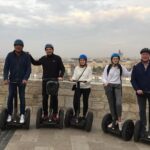
Your experience starts with a professional live guide, plus full guided training and all the gear. That means helmets come with the ride, and you get time to learn how to control the Segway before you’re committed to hills and turns.
What makes this kind of setup valuable is confidence. The route includes uphill segments and tight sightlines around classic landmarks. If you’re new to Segway riding, training matters more than bravado. The goal is that you feel stable enough to actually look up at the views, not down at your feet.
Guide quality is a big part of why the tour works. Names like Jahan and Hami show up in people’s feedback for being informative and personable, and that’s the sweet spot for a fast tour: you want clear stories, not a lecture. This one is offered in English, and it’s run by multi-lingual guides, which helps keep the commentary moving at a comfortable pace.
Finally, there’s a small but useful detail: raincoats are provided if needed. With Budapest weather being what it is, that can turn a soggy walk into a still-fun ride.
Buda Castle ridge: Varhegy to Matthias Church in quick, scenic bursts
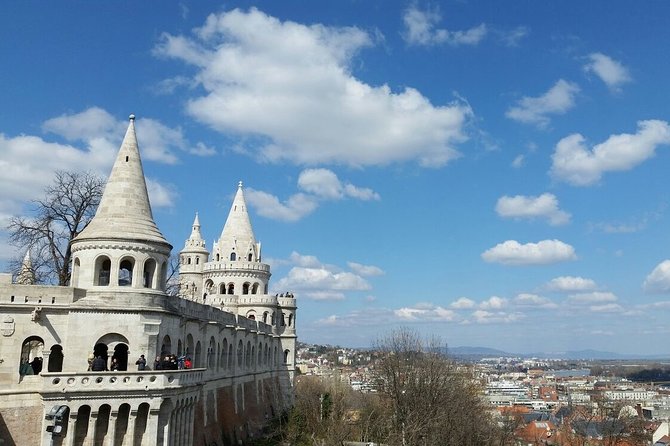
The route kicks off at Varhegy, where you get a look at the castle walls area. Even if you don’t have hours to explore the full fortifications, this first stop sets the tone: you’re on the ridge, you’re above the city, and you can start mentally mapping Budapest from the high ground.
Next comes Fisherman’s Bastion. This is the part of Buda that feels instantly recognizable—white stone terraces, lookout angles, and that classic viewpoint energy. The stop is short, but it’s long enough to get a couple of composed shots and to understand why people keep pointing their cameras here.
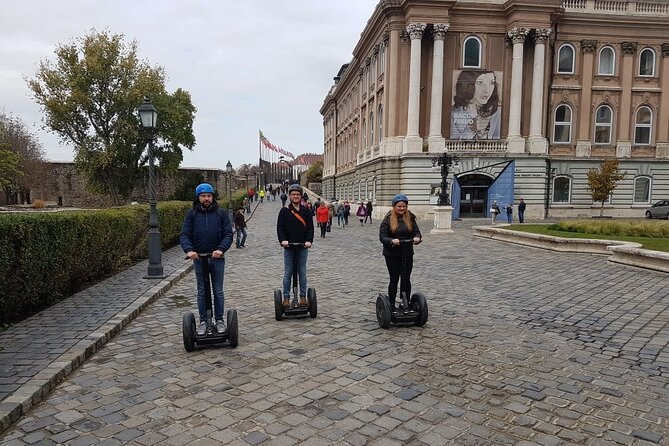
Then you roll into Buda Castle itself. This isn’t just a single building; it’s an entire complex vibe. With only about five minutes here, think of it as a “spot the big picture” stop. You’ll see the scale and get oriented so that if you come back later for deeper exploring, you know what you’re looking at.
After that, Matthias Church gives you a closer look at one of the district’s star facades. Even in a brief pause, it helps to have a guide because the point isn’t just seeing the building—it’s picking up what makes it significant so the architecture lands in your brain.
The tradeoff with all of this is time. If you’re the type who wants 30–60 minutes inside one landmark, this isn’t that kind of tour. But if you want a smart, high-impact overview of the Buda ridge area, it’s exactly the right format.
From basilica domes to Váci Street: seeing Buda and the city center connect
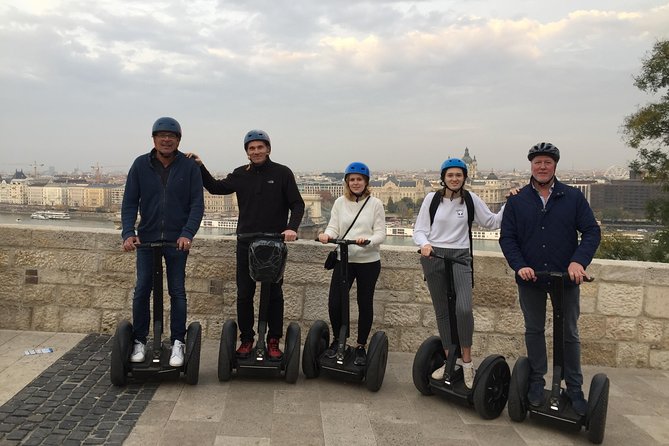
After the castle-zone stops, the route drops you into a different Budapest mood.
You’ll reach St. Stephen’s Basilica (Szent István Bazilika). This is one of those landmarks that changes how the city feels. From street level, the basilica’s presence is hard to miss. The short stop still helps because it lets you connect the grand hill views to the flatter, more central city energy.
Next is Váci Street (Váci utca), one of Budapest’s best-known pedestrian shopping streets. This is where you get a feel for what tourists actually walk through day to day. If you’re planning a longer visit later, this stop is useful for “route planning in real life.” You’ll also be able to spot nearby directions and landmarks that are easier to find once you’ve ridden past them.
A stop at the Statue of St Stephen ties the basilica area to broader national symbolism. Then you move to the Danube River, where the tour starts emphasizing the “big view” angles—what Budapest is famous for, and why the riverfront is such a powerful spine for the city.
Danube memorials and bridge views: Shoes on the Danube Bank and Erzsébet Bridge
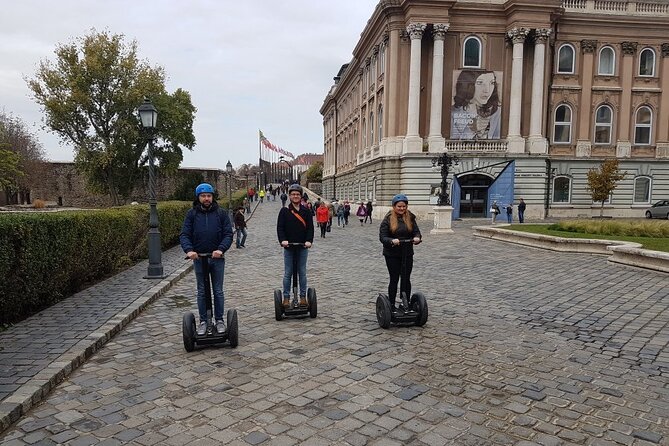
Budapest does not shy away from difficult memory, and your route includes that directly.
At Shoes on the Danube Bank, you’ll stop at the Jewish Memorial. This is not a “cute photo spot.” Even when the stop is brief, the impact is immediate because the memorial is designed to make you slow down. If you’re sensitive to heavy topics, it’s worth mentally preparing for that mood shift so it doesn’t feel random in the middle of a ride.
Then the tour continues to the Hospital in the Rock Nuclear Bunker Museum. This is a major tonal pivot: from memorial stillness to Cold War bunker reality. Even if you don’t go into a museum for long, getting this stop on your route helps you understand how Budapest has been shaped by different eras of fear and survival—not only by monarchs, churches, and classic architecture.
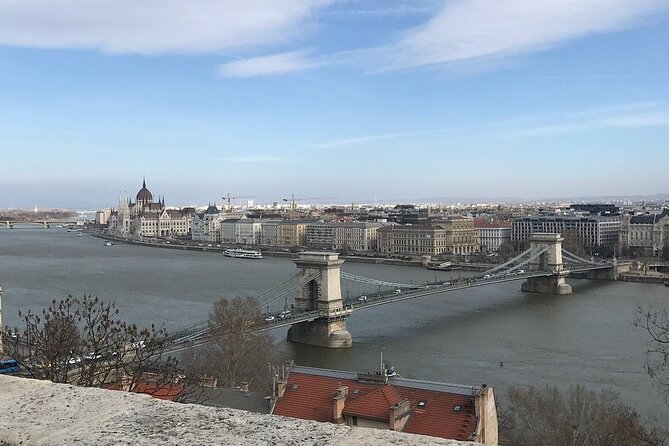
From there, you reach Erzsébet Bridge (Erzsébet Hid). Bridge views are a strong payoff on any quick tour, and here they give you a wide-angle sense of how the city’s hill and river sides connect. It’s also the kind of photo that feels different at golden hour versus midday, so even a short pause can still produce satisfying results.
You can also read our reviews of more tours and experiences in Budapest




Buda Hill Funicular and the Soviet contrast: a route with emotional range
One stop you’ll want to pay attention to is Buda Hill Funicular (Castle Funicular). Even if you’re just using it as a viewpoint/photo moment, it’s a useful clue for how people actually get up and down this steep area. In practice, it helps you picture the city’s vertical transit logic, which makes later independent sightseeing less confusing.
Then the tour continues through the upper-and-historic area with more landmark variety, including the Fountain of King Matthias. This is a small-but-memorable detail stop because fountains are often skipped on fast trips. Getting it here keeps the route from feeling like only “big buildings” and “big memorials.”
You then reach Trinity Square and the National Archives of Hungary. These stops add a calmer, civic rhythm to the day. With only five minutes each, your goal is recognition: you want to know what you’re looking at and where it sits in the broader district so you can return later if you want.
The tour also includes the Ferris Wheel of Budapest (Budapest Eye). Even if you don’t ride it, seeing the wheel helps you place modern Budapest against the older stone and official architecture nearby.
Finally, you’ll stop at the Soviet Heroic Memorial. That ending note is important. The route has already included a memorial about genocide and another stop connected to nuclear-era fear. Finishing with a Soviet memorial makes the lesson clear: Budapest’s story is not only about beauty and empire. It’s also about 20th-century power shifts that still show up in statues and public space.
What you actually get for $71.38 in two hours
At $71.38 per person for roughly two hours, the value depends on one thing: how much you care about saving time while covering ground efficiently.
You’re not just paying for transportation. You’re paying for:
- a professional live guide
- full guided training
- all necessary equipment (including helmets)
- photo service
- raincoats if needed
- a route structured around short photo stops so you see a lot without wasting time
For many visitors, the best part is the time math. If you tried to replicate this mix of hill ridge sights plus Danube memorials plus bridge viewpoints with independent transport and walking, you’d spend a lot more time moving between areas—and you might not have the storytelling context. Here, the route is already arranged so you get both the view and the meaning in a single block of time.
A couple of practical notes that affect value:
- Each stop is brief (about five minutes), so you’re buying breadth and orientation.
- The guide’s pacing and the Segway training quality are what keep the ride from feeling rushed. This matters because the tour is capped at 15 travelers, which helps keep it smooth.
The overall signal is strong: the experience holds a 5 out of 5 rating with 218 reviews, and 99% recommendation. That lines up with what usually matters most for a Segway tour: safety comfort, guide communication, and not feeling like you’re just being herded from one spot to the next.
Who should book this Segway tour, and who might prefer something else
This tour is a great match if you want to:
- get a first-day feel for Budapest’s hill-and-river layout
- see a stack of famous sights without spending the whole day walking
- travel with limited time but still want guided context
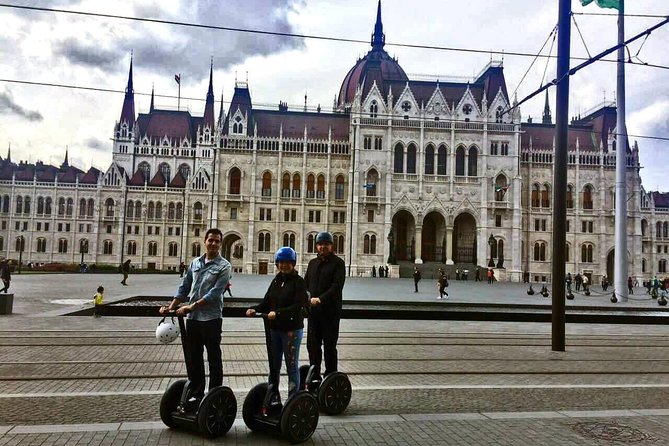
- enjoy the fun factor of Segways on the slopes, especially around the castle area
It may be less ideal if you prefer slow travel. If you like to sit in a place and take your time with one church, one museum, or one viewpoint, the five-minute stops can feel short. In that case, you might use this as a “starter tour” and then plan longer returns to the sights that grab you most.
Also, note the format: most travelers can participate. That doesn’t mean it’s for everyone, but it does suggest the training and structure are designed for a broad range of visitors.
Should you book this Buda Hills 2-hour Segway tour?
If you’re excited by the idea of getting bearings fast, I’d say yes, book it. This is the kind of experience that helps Budapest click: you see Buda Castle ridge sights like Fisherman’s Bastion and Matthias Church, then you connect to the city center with Szent István Basilica and Váci Street, and you end up with the Danube’s emotional weight at Shoes on the Danube Bank plus the Cold War contrast at Hospital in the Rock.
Choose this tour when you want:
- guided storytelling with major landmarks in a tight time window
- a fun, active way to handle steep ground
- built-in photo support instead of scrambling for selfies at every stop
Skip it (or pair it differently) if you already know you’ll want lots of time inside one attraction. In that case, you might prefer a slower walking tour or a museum-focused day.
FAQ
FAQ
How long is the Buda Hills 2-hour Segway live-guided tour?
The tour lasts about 2 hours.
What is the price per person?
The price is $71.38 per person.
Is the tour offered in English?
Yes, it is offered in English.
Where is the meeting point?
The meeting point is Budapest, Galamb u. 3, 1052 Hungary.
How big is the group?
The tour has a maximum of 15 travelers.
What’s included in the tour?
It includes a professional live guide, full guided training, all necessary equipment including helmets, photo service, and raincoats if needed.
Is there free cancellation?
Yes. You can cancel for a full refund up to 24 hours in advance of the start time.