REVIEW · BUDAPEST
8-hour private Budapest city tour by car / minivan
Book on Viator →Operated by Private Sightseeing Tours in Budapest and in Hungary · Bookable on Viator
Budapest can be a lot fast. This private 8-hour tour by car/minivan is built for covering major sights without turning your day into a marathon. You get a driver-guide who can explain what you’re seeing and adjust the plan on the fly, so you get the big-picture story fast.
I really like two things about this setup. First, the door-to-door pickup means you skip the awkward logistics of getting to meeting points, and you spend daylight on the city. Second, guides like Gergő (Gregory), Gergely, and Gabriel are specifically praised for enthusiasm and for weaving Hungary’s twists and turns into a clear, walkable narrative.
The main drawback is simple: eight hours is not a lot of time per stop, so some interiors cost extra and you may only get quick looks unless you choose to pay and linger. If you love museums deep-dives, plan a second day for that.
In This Review
- Quick hits: what makes this tour work so well
- Why an 8-hour private car tour beats a sprint on foot
- Door-to-door pickup and the rhythm of “drive, step out, repeat”
- Andrássy Avenue and Heroes’ Square: where Budapest puts on its best outfit
- Széchenyi Baths and City Park icons: the “Budapest postcard” moment
- St. Stephen’s Basilica, the Opera House, and Liberty Square
- Hungarian Parliament, the Danube, and the Chain Bridge to Shoes memorial
- Matthias Church, Fisherman’s Bastion, and Buda Castle: the Castle District you came for
- Citadel Lookout on Gellért Hill: finish with the best city view option
- Price and value for up to 3 people
- Who should book this tour (and who should plan differently)
- Should you book this Budapest private car tour?
- FAQ
- Is pickup included?
- How long is the tour?
- What’s the group size?
- Is the tour in English?
- Are attraction entrance fees included?
- Do we need to walk a lot?
Quick hits: what makes this tour work so well
- Private pacing: you can step out for photos, then hop back in without fighting crowds
- Car-to-viewpoint logistics: big sights get handled fast, with only light walking
- Danube history on the ground: Chain Bridge plus the Shoes on the Danube memorial
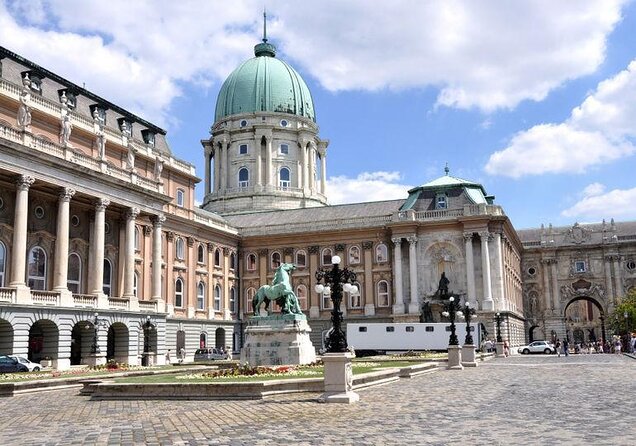
- Buda Castle District panoramas: Matthias Church, Fisherman’s Bastion, and the castle complex
- Thermal-bath option: Széchenyi Baths stop is short, but it’s a real “Budapest” moment
- City Park hits: Vajdahunyad Castle and the House of Music Hungary are quick wins
Why an 8-hour private car tour beats a sprint on foot
Budapest is gorgeous, but it’s also spread out. This private format solves the big problem: you can go from grand boulevards to the riverbank and up into Buda without wasting your day on transfers and long walks.
You’re not stuck with a fixed bus crowd. Since it’s private, you can ask for small detours or spend an extra few minutes where your eyes land. That flexibility matters around the Danube and the Castle District, where viewpoints are amazing—but the “best angle” often depends on the light and the line for a staircase.
And the guide part is the glue. Seeing the sites is one thing. Understanding why Hungary looks the way it does—emperors, nationalism, communism, and today’s politics—turns the city into a story you can repeat later while you eat dessert and argue about which church looks best.
You can also read our reviews of more city tours in Budapest


Door-to-door pickup and the rhythm of “drive, step out, repeat”
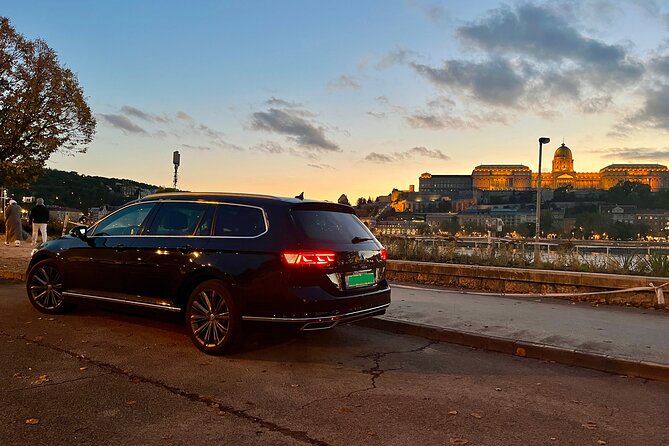
This tour is designed for a comfortable pace. Distances are covered by private car or minivan, and you do light walking between nearby areas. Parking fees and taxes are handled, so you’re not stuck circling or playing guess-the-spot.
The pickup is from any hotel or accommodation in Budapest. That’s a big deal if you’re staying outside the center or if you’re arriving by riverboat and want a smoother start. It also helps families and anyone with limited mobility feel less stressed. Service animals are allowed, and the tour is offered for English speakers.
Time management is the key: many stops are short (often 10–30 minutes). You get enough time for exterior photos and orientation, then you move on. If you want an interior visit—like going inside major churches—you’ll likely treat that as an add-on and decide case-by-case.
Andrássy Avenue and Heroes’ Square: where Budapest puts on its best outfit
You start on Andrássy Avenue, a major boulevard dating to 1872 and recognized as a World Heritage Site. This is where Budapest shows off its Neo-Renaissance facades, the kind that make you slow down even when your schedule says keep moving. It’s also a practical shopping-and-cafés corridor, plus it’s home to embassies and theaters.
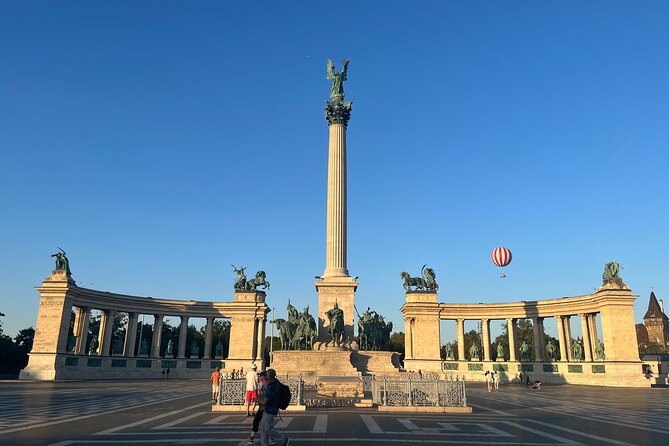
Next comes Heroes’ Square, the monumental hub with the iconic statue complex of the Seven chieftains and other national leaders, plus the Memorial Stone of Heroes. The place isn’t just decorative. It has been tied to real political moments, including the 1989 reburial of Imre Nagy. You’ll also be near cultural institutions like the Museum of Fine Arts and the Art Gallery—handy if you want to come back for more.
These two stops are a strong opening because they do something rare on a short day: they give you a sense of what Budapest wanted to be, architecturally and politically, before you hit the religious and riverbank areas.
Széchenyi Baths and City Park icons: the “Budapest postcard” moment
Your next big “Budapest, yes this is it” stop is Széchenyi Baths and Pool in City Park. This is the largest medicinal bath in Europe, with water from thermal springs at about 74°C and 77°C. The stop is short here, so treat it like a taste. If you want full soaking time, you’ll need a separate plan or pay extra time at the bath.
Then you head into City Park territory with Vajdahunyad Castle, built in 1896 as part of the Millennial Exhibition celebrating 1000 years since the Hungarian Conquest (dated 895). The idea was playful and clever: the castle includes copies of landmark buildings from different parts of the Kingdom of Hungary. It’s a quick way to see Hungary’s architectural imagination without hopping cities.
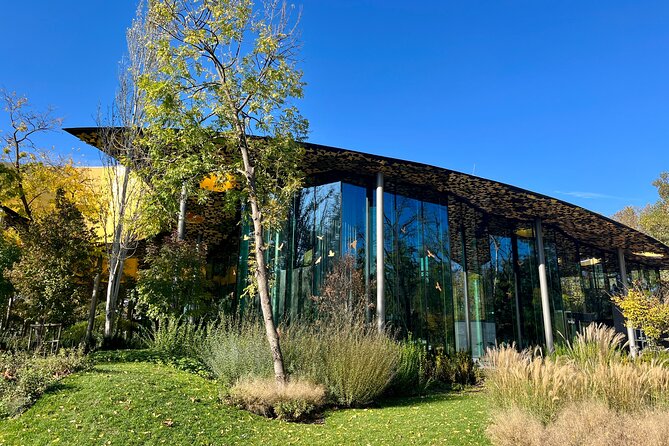
Right after that is House of Music Hungary, a modern counterpoint in the same park area. The iconic building opened in January 2022 and presents the history of music. It was selected from 170 international projects, which helps explain why it has turned into an attention magnet. Even if you don’t go inside, it’s a good reality check that Budapest isn’t only about old stone and river views.
St. Stephen’s Basilica, the Opera House, and Liberty Square
From City Park you shift toward the core of Pest. The Hungarian State Opera House sits on Andrássy Avenue and is a neo-Renaissance opera house in a historic boulevard setting. Entry isn’t included, but even a quick exterior stop helps you connect the dots between the avenue’s grandeur and Hungary’s public arts life.
Then you get St. Stephen’s Basilica (Szent István Bazilika). It’s named for Stephen, the first king of Hungary, and its reliquary is one of its defining features. This stop is also marked for optional interior time, with admission not included. If you do pay to go in, it’s one of those moments where the building’s scale changes the way you understand the city.
Liberty Square follows—more everyday and diplomatic than flashy. You’ll spot the U.S. Embassy in Hungary and the Hungarian National Bank building, plus an Art Nouveau mix in the surrounding architecture. It’s a nice break from purely monumental sights and a reminder that Budapest is a functioning city with real offices and real life.
If you enjoy turning corners and noticing building styles, this section is where you’ll feel your day’s pacing click.
You can also read our reviews of more private tours in Budapest






Hungarian Parliament, the Danube, and the Chain Bridge to Shoes memorial
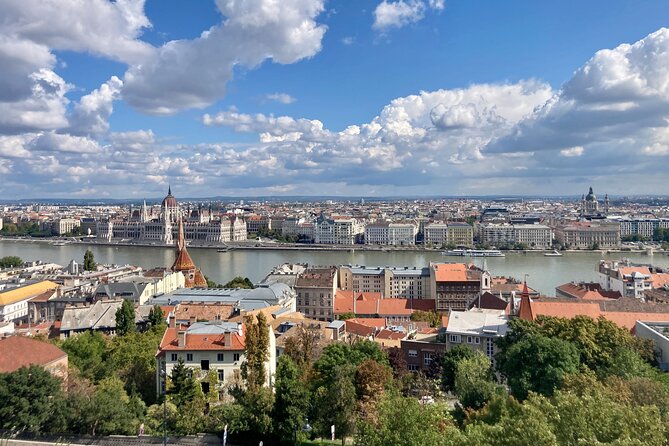
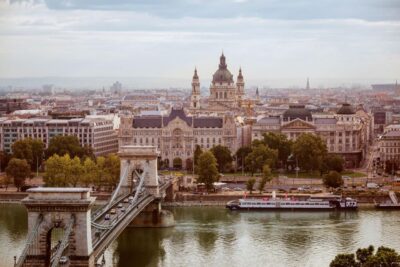
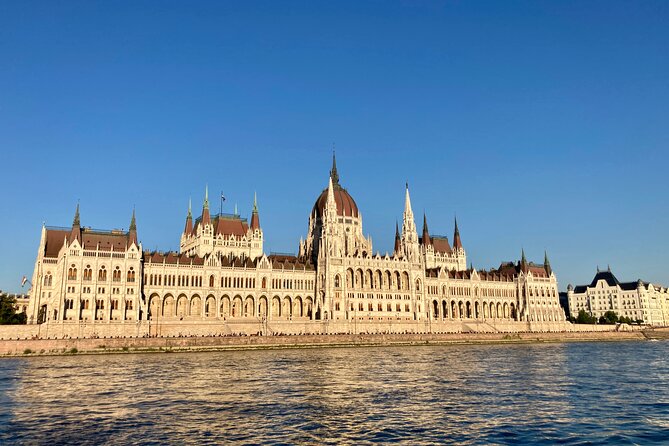
The Hungarian Parliament Building is one of the city’s signature landmarks and the seat of Hungary’s National Assembly. It sits in Kossuth Square on the Pest side on the Danube’s banks and is the largest building in Hungary. Even from outside, it’s the kind of architecture that forces you to look up and then re-check your camera settings.
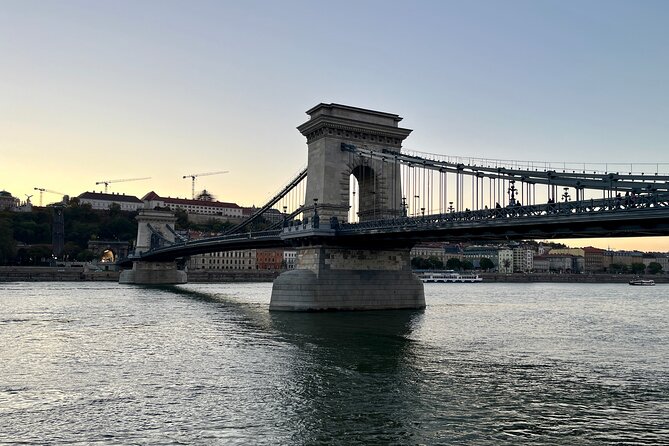
Then the tour moves to the river spine with the Széchenyi Chain Bridge, the first permanent Danube bridge in Hungary, opened in 1849. It was designed by English engineer William Tierney Clark and built by Scottish engineer Adam Clark—a neat reminder that Budapest’s “local pride” has always been tied to international engineering.
Right on the same riverfront theme is Shoes on the Danube Bank, a memorial conceived by film director Can Togay with sculptor Gyula Pauer to honor the Jews killed by Arrow Cross militiamen during World War II. This stop isn’t for photos in the same carefree way as a view deck. It’s quiet and heavy, and that’s exactly why it matters. Pairing it with the bridge makes the history feel painfully grounded.
The tour also includes additional bridge/landmark passes like the Margit Bridge (second oldest bridge in Budapest, opened 1876) and the Zero Kilometre Stone marking the reference point for road distances. These are quick moments, but they help your brain map the city into something you can navigate later.
Matthias Church, Fisherman’s Bastion, and Buda Castle: the Castle District you came for
Now comes the part most people picture when they think of Budapest. The tour visits Matthias Church, a Roman Catholic church in the Castle District. The current late Gothic building dates to the second half of the 14th century and was restored in the late 19th century. Like many major churches here, it’s an “if you want the inside, you pay for it” situation.
Next is Fisherman’s Bastion, built between 1895 and 1902 on the base of Buda Castle walls. The terraces are famous for the panorama, and the main façade stretches about 140 meters along the Danube-facing side. Interior admission isn’t included, but the upper-floor option may require a ticket—so plan based on how long you want to linger for views.
Finally you move into Buda Castle, the historical palace complex of Hungarian kings. The site dates back to 1265, while the current Baroque palace was built between 1749 and 1769. The whole area is part of the Budapest World Heritage Site, declared in 1987. The best value here is not trying to “do everything.” It’s getting your bearings, walking the exterior areas, and letting the place set the mood for the rest of your trip.
This section is also where your guide’s storytelling helps most. Budapest’s Buda side feels like theatre—beautiful, elevated, and dramatic—so knowing the timeline behind it makes the stones feel less random.
Citadel Lookout on Gellért Hill: finish with the best city view option
To wrap the day, the tour heads to Citadel Lookout at Gellért Hill. The fortification is known as the Citadella, built in 1851 by Julius Jacob von Haynau for the Austrian Empire. Even if you don’t go deep into the fort’s details, the payoff is the viewpoint.
This is the final “connect it all” moment. You’ve seen the boulevard grandeur, the Parliament monument, the bridges, and the Buda skyline. From Gellért Hill, it all clicks into one map, and you start understanding how the city uses elevation and rivers to shape everything—views, traffic flow, and even where people felt safe or exposed in different eras.
It’s also a good stop to ask your guide what you should revisit later, because by now you’ve learned enough to make better choices.
Price and value for up to 3 people
The price is $505.73 per group (up to 3) for about 8 hours. That’s the big selling point: private touring is usually expensive per person, but here the cost is grouped.
If you’re traveling as a duo or trio, the per-person math can be very fair compared to paying for multiple separate tickets, taxis between neighborhoods, and time lost on logistics. You’re also getting private guiding plus the convenience of private transportation, including parking fees and taxes.
Just be realistic about optional costs. Several interior stops aren’t included, including St. Stephen’s Basilica and Matthias Church (with Fisherman’s Bastion upper-floor also mentioned as optional ticketed time). The tour time at attractions like Széchenyi Baths is brief, and bath entry isn’t included either, so you’re paying less for time spent and more for access. Think of this tour as a guided “greatest hits with context,” not a museum marathon.
Who should book this tour (and who should plan differently)
This private tour makes the most sense if you’re in Budapest for a short stay and you want structure without stress. It’s ideal for first-timers who want to know where everything is and what to prioritize for later.
It also suits anyone who gets tired quickly. Since distances are handled by car and you do only light walking, you can enjoy the views and then rest without guilt.
If you’re the type who loves going inside every major church and museum, you might feel held back by the short stop durations. In that case, use this tour for orientation and pick a second day for deeper ticketed experiences.
Should you book this Budapest private car tour?
If your goal is to see Budapest’s must-see areas in one day with a guide who can explain the city’s big changes, this tour is a strong choice. The consistency shows up in the praise for guides like Gergő (Gregory), Gergely, and Gabriel, especially for customizing the day, keeping it moving, and making history make sense instead of feeling like a textbook.
I’d book it if:
- you want door-to-door convenience
- you’re traveling with up to 3 people and want private pacing
- you want a fast, organized view of Pest plus the Castle District
I’d think twice if:
- you’re planning on doing lots of paid interiors and staying long inside each one
- you prefer slow wandering with no planned route at all
FAQ
Is pickup included?
Yes. The tour can start from any hotel or accommodation type in Budapest.
How long is the tour?
It runs for about 8 hours.
What’s the group size?
It’s a private tour for your group, up to 3 people.
Is the tour in English?
Yes, it’s offered in English.
Are attraction entrance fees included?
Some are free, but not all. The tour notes that entrance fees are not included for several optional interiors, including St. Stephen’s Basilica and Matthias Church, and the upper floor of Fisherman’s Bastion. Széchenyi Baths admission is also not included.
Do we need to walk a lot?
No. Distances are covered by car, with only light walking and chances to stop for photos and short breaks.