REVIEW · BUDAPEST
Welcome to Budapest 3 hrs Must See Private Tour by car
Book on Viator →Operated by Sweet Travel Private Tours Kft. · Bookable on Viator
Big sights, zero guesswork, and fast rides. This 3-hour private car tour strings together Budapest’s highlights in a tight loop, with a guide in English to help connect what you’re seeing. I like the fact that it’s door-to-door pickup from your hotel or apartment, and I also like the mix: markets, major religious landmarks, grand avenues, and thermal baths all show up in one go.
One thing to keep in mind: several stops don’t include admission, and the time at each place is short (often 10–15 minutes). If you want long, slow wandering, you’ll need to plan extra time outside this tour, and you should also make sure your guide sticks to the route you expect.
In This Review
- Key highlights you’ll feel right away
- The 3 hours plan: tight timing, smart flow
- Central Market Hall to Dohány Street Synagogue: culture you can see up close
- St. Stephen’s Basilica and Andrássy Avenue: icons plus the street between them
- The State Opera moment: why a quick look can still pay off
- Vajdahunyad Castle and City Park: a fairytale complex with a real backdrop
- Széchenyi Baths area: why being nearby matters even without entry
- Heroes’ Square: a free admission stop that sets the tone
- Gellért Hill and UNESCO views: fast climb, big payoff photos
- Fisherman’s Bastion and Matthias Church: Buda highlights in a short window
- Hungarian Parliament Building drive-by (and why it can work)
- Price and value: $360.46 for up to 2 people
- What to expect from your guide and driver (including the one red flag)
- How to get the most out of each short stop
- Should you book this Budapest 3-hour private car tour?
- FAQ
- How long is the Budapest private tour?
- What’s the price and group size?
- Do you get pickup from your hotel or apartment?
- Is the tour conducted in English?
- Are admission tickets included for everything?
- Can I cancel for a full refund?
Key highlights you’ll feel right away
- Door-to-door hotel or apartment pickup so you’re not hunting meeting points with luggage and jet lag
- A fast-hit route that packs Central Market Hall, major sights on both sides of the river, and City Park into 3 hours
- Central Market Hall + Heroes’ Square are listed as free admissions, which helps value
- Panoramic viewpoints built in at Gellért Hill and Fisherman’s Bastion for quick, payoff photos
- City Park thermal-bath area stop with Széchenyi Bath nearby, even though entry isn’t included
- Small-group feel (up to 2 per booking) where questions are easier to handle
The 3 hours plan: tight timing, smart flow
This tour is built for one job: giving you a workable “Budapest first impression” in about 3 hours. The schedule is packed, but the pacing is helped by the private car. You’re not stuck in transit limbo between neighborhoods, and that matters when daylight is short or you’re trying to fit everything into a tight trip.
Because each stop is brief, you’ll want to treat it like a guided sampler. Think: look, orient yourself, then decide later where you want more time. The tour’s structure also helps if you’re the type who enjoys hearing the story while you’re standing in the exact place where the story happened.
The best part is you’re not doing it alone. The guide runs the route and fills the gaps so you can recognize what you’re looking at—rather than just taking photos and hoping it later makes sense.
You can also read our reviews of more private tours in Budapest



Central Market Hall to Dohány Street Synagogue: culture you can see up close
You start at Central Market Hall, described as the largest and oldest indoor market in Budapest. The visit is 15 minutes, and admission is listed as free for this stop. Even in a short window, you’ll likely get enough time to grasp the market’s scale and atmosphere—this is the kind of place where you can understand local food culture without doing a separate tour.
Practical note: markets can be crowded and noisy, so if you’re sensitive to that, keep your expectations for browsing. Your best use of the time is to walk the main areas, pick one or two things that interest you, and use your guide to point out what’s worth noticing.
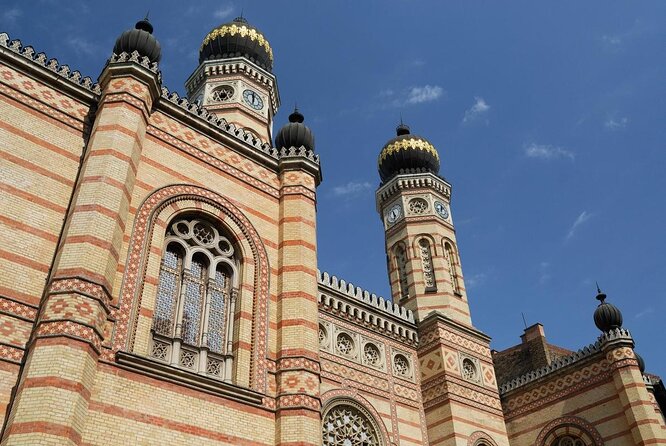
From there, the route moves to the Dohány Street Synagogue of Budapest area. The info you’re given calls it the largest Hebrew temple of Europe, and it also flags the surroundings as a cluster of exhibitions, synagogues, cemeteries, and memorials. This stop is a chance to shift gears from everyday city life into a very specific, emotionally heavy part of Budapest’s identity. You’ll also get context that helps you read what you’re seeing rather than treating it as just an architectural stop.
One consideration: the synagogue area is significant, and the best experience comes from taking your time mentally, even if the photo time is short. If you want a slow, respectful read-through, plan a return visit later.
St. Stephen’s Basilica and Andrássy Avenue: icons plus the street between them
Next up is St. Stephen’s Basilica (Szent Istvan Bazilika) for another 15 minutes. Admission is listed as not included, so you’ll either enjoy the exterior-and-quick-look approach during your time, or you’ll need to decide on paying separately if you want inside time. The tour info also says the basilica was built for 54 years, with three famous architects leaving their mark. That kind of detail helps you notice the building as more than a postcard.
Then you head to Andrássy út, which the itinerary describes as Budapest’s own Champs-Élysées—full of institutions, embassies, high-end boutiques, and villas. You don’t need to shop to get value here. This is a great “walk while the car is nearby” moment for getting a feel for how prestigious parts of the city look and how the grandeur is expressed in the street plan.
The goal of this section is perspective: you see the big spiritual icon, then you see the grand urban corridor that frames Budapest’s identity.
The State Opera moment: why a quick look can still pay off
The route includes the Hungarian State Opera, with the promise of seeing it both outside and inside. The itinerary doesn’t list admission details for this specific stop, so you’ll want to follow what the guide says on the day about entry. Even with limited time, the opera building tends to reward attention—architecture like this is meant to impress, and your guide can point out what to look for.
This stop is also a useful “mental reset” in the schedule. After market-and-synagogue, you’ve moved through religious monument space and into performance-and-civic grandeur. It’s a different Budapest flavor, and that contrast is part of what makes the tour feel like more than a checklist.
Vajdahunyad Castle and City Park: a fairytale complex with a real backdrop
Next comes Vajdahunyad Castle, a complex built in 1896 for the Millennial Exhibition. The time listed is 15 minutes, and admission is noted as not included. Even if you don’t go inside, the setting in City Park is part of the wow factor: the building reads like a storybook castle, but it’s in the context of an urban park where locals also spend time.
This is a good spot for your “do I want more time here?” decision. If you love architecture and want photos from different angles, it’s one you might return to on another day. If you’re more about views, you may feel satisfied with the exterior orientation.






Széchenyi Baths area: why being nearby matters even without entry
Your schedule includes Szechenyi Baths and Pool near City Park. The info you’re given is specific: there are 15 indoor and 3 outdoor baths, and Széchenyi is described as the largest thermal bath in Europe. Admission is not included, but the tour’s choice to place this area in the route is smart.
Thermal baths are a Budapest signature. Even without paying for entry on this outing, the stop helps you understand why locals talk about baths like they’re part of daily life, not just entertainment. It also helps you decide if you want a separate bath session on a day when you have more time—and when you can actually relax.
If you do plan to return for baths later, think about timing. In general, baths are more enjoyable when you’re not rushing, and you can’t “make” that happen inside a 5-minute stop.
Heroes’ Square: a free admission stop that sets the tone
You then arrive at Heroes’ Square, described as the largest and most symbolic square in Budapest. It’s 15 minutes, and admission is listed as free for this stop. This is a payoff moment for your route because it brings the city’s political and cultural symbolism into view.
This kind of stop works best when you let the guide frame what you’re seeing. A square like this is full of figures and monuments, and without context it can feel like a photo wall. With context, you start noticing patterns and meaning.
Short and sweet is the right approach here. Don’t force a long stop if you’re already satisfied that you’ve got the big picture.
Gellért Hill and UNESCO views: fast climb, big payoff photos
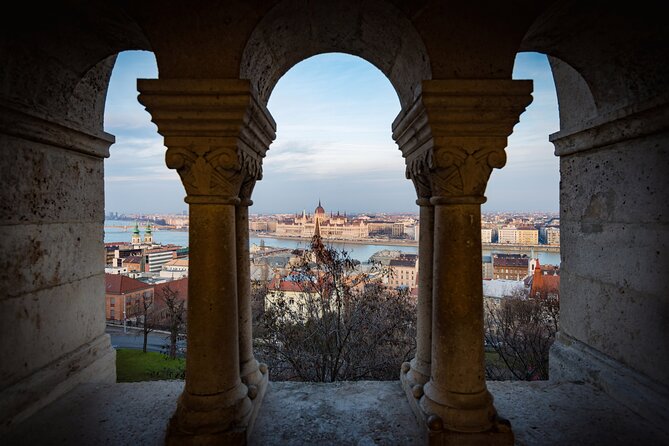
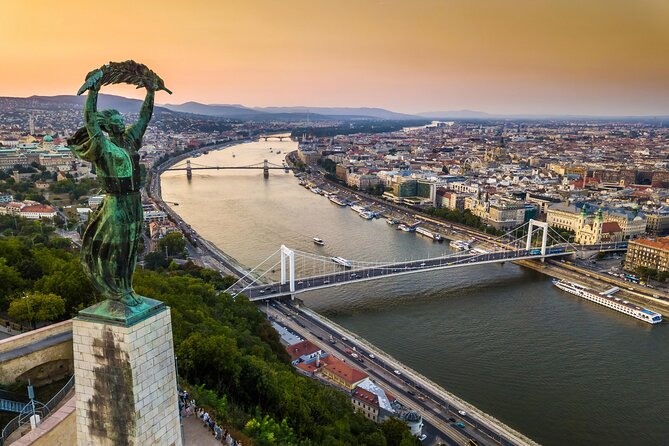
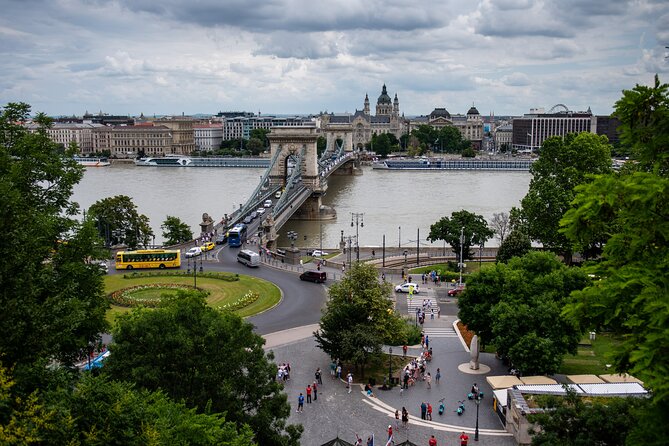
Then comes Gellért Hill, rising to 235 m, with the Statue of Liberty at its top. The information provided also says it’s a UNESCO World Heritage Site since 1987, and you’ll get time for the panorama. This stop is 15 minutes and listed as free admission.
In practice, these viewpoints are where the tour feels most like a “worth it” experience. You get a sweep of the city without having to manage buses, tickets, or navigation. If you’re trying to map where the Danube views look best from, this is a key orientation stop.
Keep your expectations realistic: 15 minutes is for looking and grabbing photos. It’s not for a long scenic walk. But it’s enough to remember the view and come back later with purpose.
Fisherman’s Bastion and Matthias Church: Buda highlights in a short window
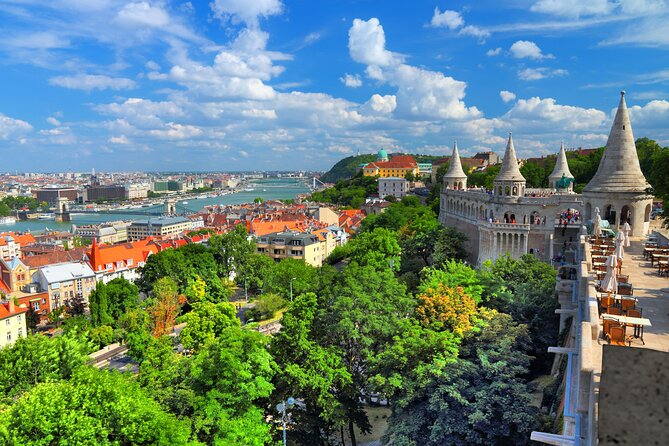
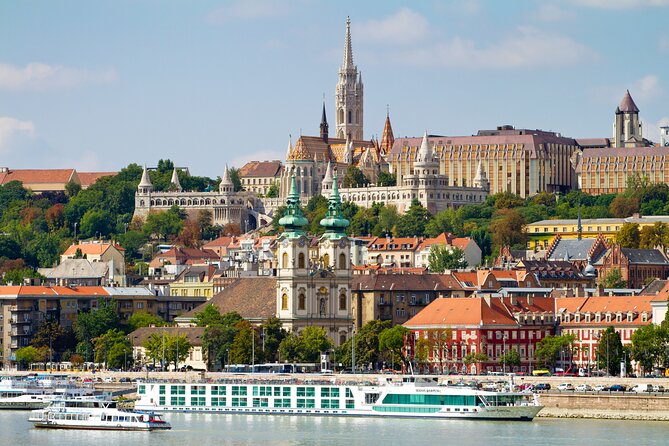
On the Buda side, the route includes Fisherman’s Bastion for panoramic views of the River Danube and major sights of the capital. Admission is listed as not included, and the time given is 15 minutes. This is one of those places where the exterior itself is the attraction, so a short stop can still deliver.
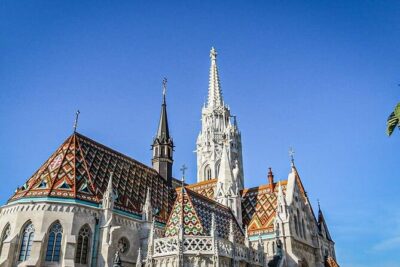
Then you move to Matthias Church on Buda Castle hill. The listed time is 10 minutes, and admission is not included. This is a strong pairing: you get the grand viewpoint first, then you see a church that anchors the hilltop setting.
Because the time is brief here, focus on the big visual anchors. If you want to go inside, you’ll need to plan that separately, since your tour window is designed for orientation.
Hungarian Parliament Building drive-by (and why it can work)
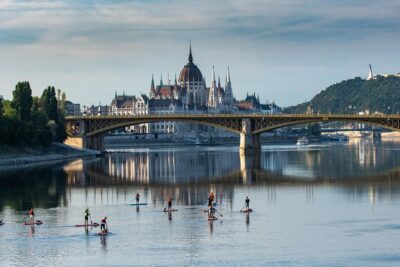
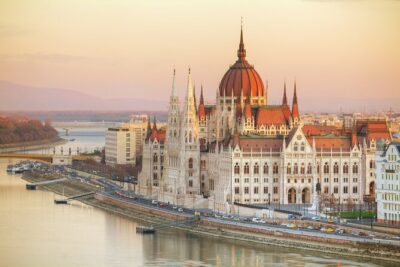
The itinerary ends with the Hungarian Parliament Building, described as Hungary’s most iconic building. The tour gives 10 minutes, with a note that you can do a short walk or relax in the comfort of the car while your guide shares interesting facts.
Admission isn’t included for this stop (as listed). The value here is the guide’s ability to explain what makes the building iconic, plus the practical advantage that you don’t have to spend your whole time queuing or searching for the right entrance.
This stop can be a win even if your time is limited. From a car, you still get the “shape” of the building in your mind, and then you can decide later if you want an official visit.
Price and value: $360.46 for up to 2 people
At $360.46 per group (up to 2), this tour isn’t a budget deal. But it can be good value if you factor in what you get: private transportation, a professional guide, and door-to-door service. For two people, you’re basically paying to buy back time and stress—less searching, fewer transfers, and a guided route that keeps you from wasting your limited sightseeing hours.
You’ll also get some built-in value from free stops like Central Market Hall and Heroes’ Square, plus Gellért Hill being listed as free. Those don’t mean “everything is free,” since multiple stops list admission as not included. Still, the mix helps keep costs from snowballing as quickly.
One more value point: the tour is booked an average of 24 days in advance, which suggests it runs often enough and that the format is popular for people who want the overview without the planning burden. That planning-burden part is the real reason private tours like this make sense.
What to expect from your guide and driver (including the one red flag)
The positive reviews highlight guides and drivers who know how to answer questions patiently and who can steer you toward viewpoints and areas you might not hit by yourself. One standout example names Christine Teplan and Peter as the guide and driver, with praise for taking guests through quaint places that tourists might not be aware of and for answering many questions.
That’s the kind of “small-group competence” that makes a car tour feel alive. In a 3-hour window, your guide’s ability to explain what you’re seeing turns the route into something more than a photo run.
Now for the drawback to take seriously: one review complained about a guide being unprofessional, straying from an agreed itinerary, and asking for gratuity in a pressured way. You can’t control every staff member, but you can control your expectations. If you book, do two things:
- confirm the main route you want covered before you start
- be clear with yourself that gratuity is a personal decision, not a requirement
How to get the most out of each short stop
With stops often around 10–15 minutes, you’ll enjoy the day more if you have a simple plan. Pick one “must photo” per stop, then let the guide steer the rest. That way you don’t feel rushed, and you still leave each location with useful context.
A few practical habits help:
- Wear shoes that work for quick walking on uneven pavement.
- Carry a small water bottle if you’re doing summer sightseeing, since it’s short hops between areas.
- If admission matters to you (basilica, castle complex, baths), decide in advance what you’re willing to pay for, because not all entries are included.
Also, this tour uses a mobile ticket, and pickup is from your hotel or private apartment. That removes a common headache, but it also means you should be ready on time at the pickup point your guide confirms.
Should you book this Budapest 3-hour private car tour?
Book it if you want a guided overview fast. This is especially good for first-time visitors who want to see Central Market Hall, major religious landmarks, grand civic sights, and Buda viewpoints without coordinating transit.
Skip it or think carefully if you crave lots of inside time. Several stops list admission as not included, and the schedule is built around quick orientation. If you’re the type who likes 45–90 minute museum-style visits, you’ll want to pair this tour with other planned time.
Best use case: you’re here for a short trip, you want the city’s big story told while you stand in the right places, and you’re happy to treat entrances as optional unless you choose to pay.
If that’s your style, this tour is a sensible way to get your bearings in Budapest—fast, guided, and built around the views.
FAQ
How long is the Budapest private tour?
It runs for about 3 hours.
What’s the price and group size?
The price is $360.46 per group, up to 2 people.
Do you get pickup from your hotel or apartment?
Yes. Your guide will pick you up from your hotel or private apartment in Budapest.
Is the tour conducted in English?
Yes, it’s offered in English.
Are admission tickets included for everything?
No. Some stops are listed as free (Central Market Hall, Heroes’ Square, and Gellért Hill), while other stops note admission tickets are not included (for example St. Stephen’s Basilica, Vajdahunyad Castle, Széchenyi Bath, and others).
Can I cancel for a full refund?
Yes. You can cancel up to 24 hours in advance for a full refund.