REVIEW · BUDAPEST
Budapest Jewish Heritage: Synagogues, Shoes, Secrets & Flódni
Book on Viator →Operated by Fungarian · Bookable on Viator
Budapest’s Jewish Quarter hits hard and human. This private, expert-led walk strings together synagogues, ghetto-era landmarks, and the Danube memorial into one clear story you can actually follow on foot. You’ll also finish with a traditional flódni pastry, so history isn’t just facts on a page.
I like two things right away: the tour is led by a real Jewish guide (and that personal lens comes through), and the pacing leaves room for questions and real dialogue. You get a historian-style approach, not a speed-run of photo stops.
One consideration: several synagogue entrances are not included, so you’ll want to budget for those tickets ahead of time when you plan your day.
In This Review
- Key highlights you’ll feel fast
- The tour’s “why”: Budapest’s Jewish story in real locations
- Starting at Herzl Square: how the route sets the tone
- Dohány Street (Great/Central) Synagogue: Europe’s largest and why it matters
- Rumbach Street Synagogue: Otto Wagner’s Moorish surprise
- Carl Lutz Memorial: the name you should remember
- Kazinczy Street Orthodox Synagogue: art nouveau details and bright color
- Shoes on the Danube Bank: a memorial with a specific setup
- The Jewish Quarter wall: what you can still picture today
- Flódni at the end: why the food stop isn’t random
- Price and what you’re really paying for
- Guides that shape the experience (and why it shows)
- When this tour fits you best
- Should you book Budapest Jewish Heritage: Synagogues, Shoes, Secrets & Flódni?
- FAQ
- How long is the Budapest Jewish Heritage tour?
- Does the tour include hotel pickup?
- Are synagogue entrance tickets included?
- What does the tour include for food?
- Is this tour private?
- Can I cancel and get a full refund?
Key highlights you’ll feel fast
- Private, expert-led format with historian framing and time to ask questions
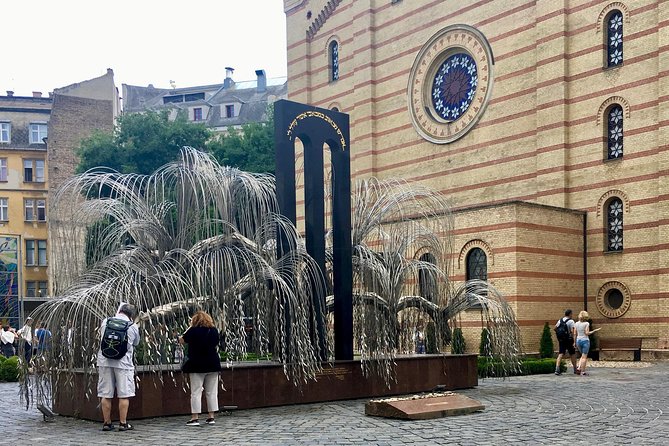
- Dohány Street (Great) Synagogue: Europe’s largest, tied to Hungarian Jewish life and WWII fate
- Otto Wagner’s Rumbach Street Synagogue: Moorish exterior, stylish internal details after a facelift
- Carl Lutz Memorial + Carl Lutz story: the Swiss diplomat who helped save tens of thousands
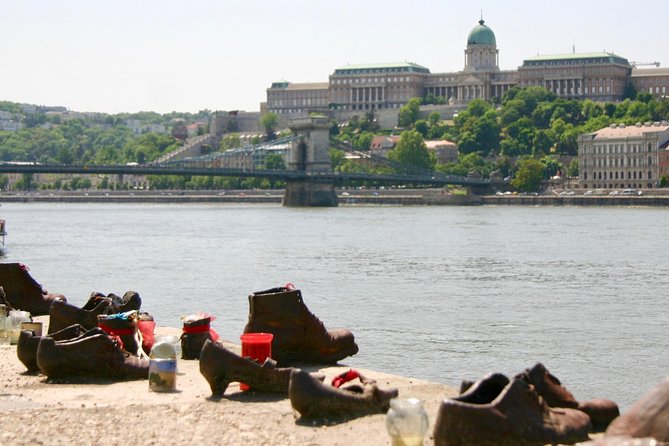
- Shoes on the Danube Bank: a WWII-era memorial with a specific, chilling setup
- Flódni stop at the end: a food payoff that matches the theme of everyday Jewish culture
The tour’s “why”: Budapest’s Jewish story in real locations
This isn’t the kind of tour that just points at buildings. It walks you through the spaces where Budapest’s Jewish community shaped the city, then through the places where Nazi-era persecution left permanent scars. And because the guide is Jewish and brings personal perspective, the tone stays serious but never cold.
The route is built around contrast: big landmark synagogues sit right next to smaller, more intimate ones. You’ll also see how the ghetto’s geography was stitched into the city, even though what you see today is different from the wartime reality.
The main value here is that the guide connects architecture to community life. In other words, you’re not just “touring” synagogues—you’re learning what each synagogue meant to the people who used it.
You can also read our reviews of more historical tours in Budapest


Starting at Herzl Square: how the route sets the tone
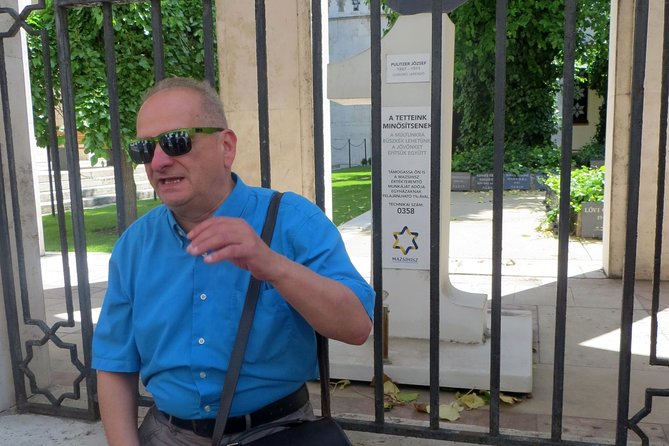
The walk begins at Herzl Square and the Great Synagogue area. From the start, you’re oriented to the Jewish Quarter and what it meant during WWII, especially around the Budapest ghetto of 1944.
This matters because the tour moves through memorials and places where the current streetscape can feel confusing. Getting that context early helps everything click: where people were forced to go, what landmark buildings represented, and why some sites feel emotionally heavier than you expect.
It also helps that the tour is about 2 hours 45 minutes total. You get enough time for the key stops without feeling like you’re trapped in a long ordeal.
Dohány Street (Great/Central) Synagogue: Europe’s largest and why it matters
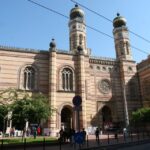
Your first major building stop is the Great Synagogue on Dohány Street (Nagy Zsinagóga). It’s historically huge—Europe’s largest synagogue—seating around 3,000 people. It also served as a center for Neolog Judaism, one of the major currents of Hungarian Jewish religious life.
What I’d focus on here: don’t treat the building like an art object only. The guide’s story ties the synagogue to what Hungarian Jewry experienced around the Second World War—plus the surprising fact that many internationally famous people were Hungarian Jews.
Also note the practical detail: admission tickets are not included for this stop. So if you want a smooth start, plan on buying the entry ticket separately.
If you’re the kind of traveler who gets more from “why this matters” than from “what you’re looking at,” this stop is the backbone of the whole tour.
Rumbach Street Synagogue: Otto Wagner’s Moorish surprise
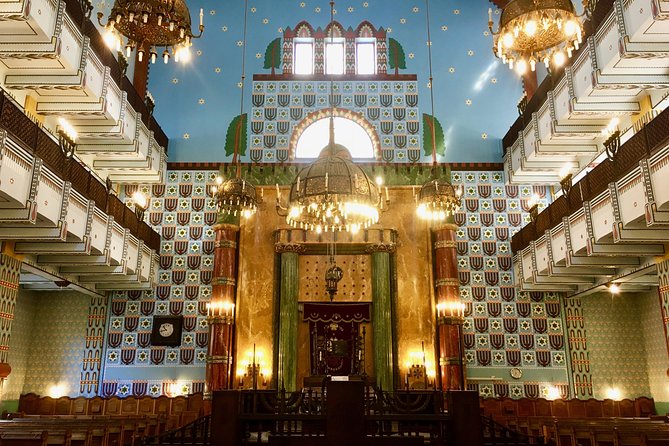
Next comes the Rumbach Street Synagogue, the Rumbach Sebestyén utca Synagogue, built in 1872. The architect Otto Wagner designed it for a “moderate Conservative” community, and the building is known for its Moorish style.
This is one of those stops where the guide’s interpretation pays off. You’ll hear how Rumbach differs from the other synagogues nearby—not just in looks, but in what the design signaled about the community that worshipped there.
One more thing to watch for: the interior is described as glowing in old, graceful light after a long-overdue facelift. If you go at a time when the interior lighting feels flattering, you’ll notice how much atmosphere the renovation adds.
Practical note again: entrance ticket not included here, so budget for that.
Carl Lutz Memorial: the name you should remember
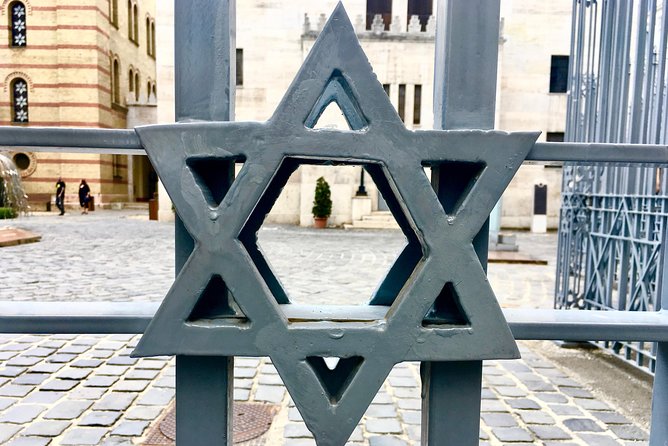
Then the tour shifts from buildings to a person. The Carl Lutz Memorial is set in the area of the former Budapest ghetto. Carl Lutz was a Swiss diplomat who helped save tens of thousands of Jews in Budapest from persecution and deportation.
This stop hits differently than the synagogues because it’s personal in a different way. Instead of emphasizing religious identity, it emphasizes rescue and moral choices in a time when most options were brutal.
This is also one of the calmer moments in pacing—about 10 minutes—so you can take it in without feeling rushed. The tour marks this stop as admission free.
If you only memorize one WWII name from Budapest’s Jewish history, make it Carl Lutz. The guide will connect him to why Budapest’s story isn’t only about tragedy—it’s also about human action under impossible pressure.






Kazinczy Street Orthodox Synagogue: art nouveau details and bright color
From Carl Lutz, you move to the Kazinczy Street Synagogue, an Orthodox synagogue tucked in a small side street. It was built in 1913 in what was then considered modern design, and it includes late art nouveau touches plus bright interior decoration.
The detail I’d be on the lookout for is the ceiling stained-glass design by Miksa Róth. That’s the kind of specific info that makes the stop feel more than a quick glance—your eye has a target, and the guide helps you see it.
As with the other synagogue visits, entrance tickets are not included for this stop. Plan for that so you’re not stuck deciding on the spot.
This synagogue is a useful contrast to the larger Dohány Street building. It helps you understand that Jewish Budapest wasn’t one single uniform story—it had multiple branches, styles of worship, and community needs.
Shoes on the Danube Bank: a memorial with a specific setup
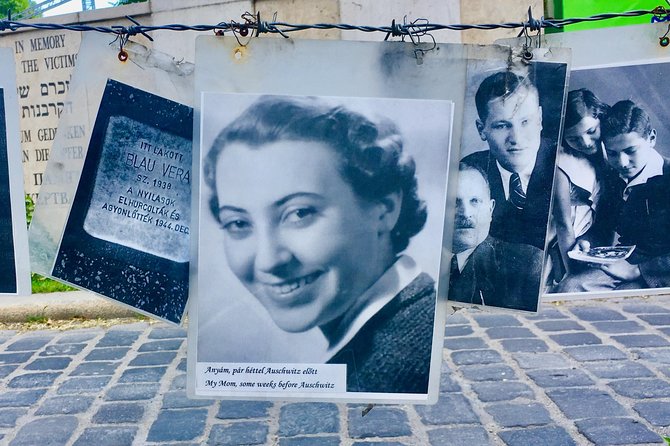
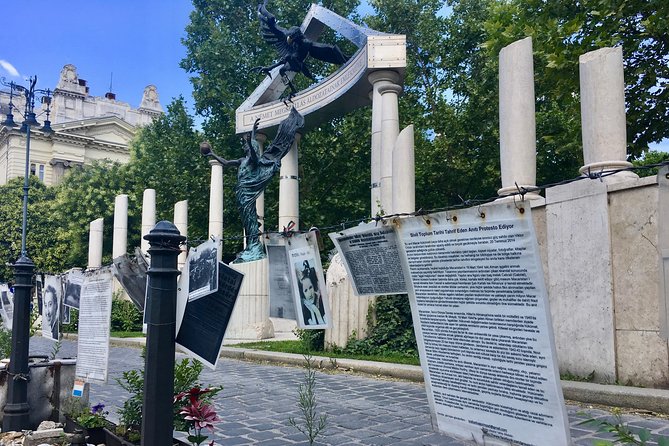
One of the most talked-about stops on the route is Shoes on the Danube Bank. The memorial was unveiled on April 16, 2005 and commemorates Jewish victims murdered at this site during WWII.
The guide explains the setup: victims were forced to remove their shoes before being shot at the riverbank, with bodies carried away by the Danube. The sculpture shows shoes left behind, and it’s designed to make you slow down.
You can’t really rush this one. Even if you’ve seen photos, it works better in person because the memorial sits in a real riverside space, not a museum setting.
This stop is marked as admission included on the tour.
The Jewish Quarter wall: what you can still picture today
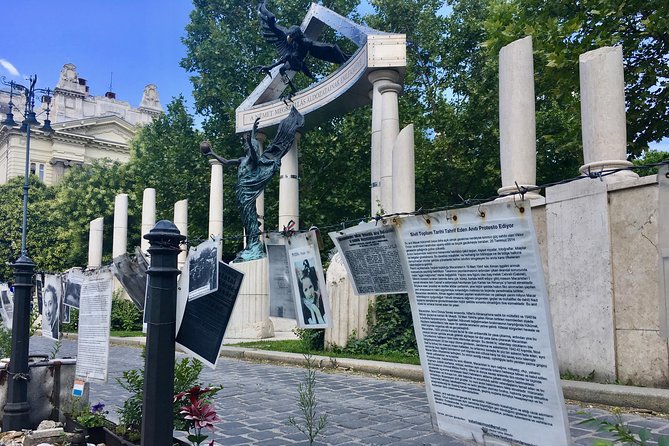
After that emotional reset, you head back into the story of the ghetto. The tour takes you toward an area where a small section of the ghetto’s wall still stands in the heart of Budapest.
The guide’s focus here is on the “life of the inmates” and the eventual fate of people trapped inside those boundaries. Even though you can’t see what the ghetto looked like in full form anymore, you’ll be guided on how to imagine it from what remains.
I like this part because it’s honest about limitation. You don’t pretend the streets look exactly as they did in 1944. Instead, the guide uses the surviving geography and landmarks to help you picture what was lost—and how close it all sits to normal city life today.
This stop is marked admission free, and it’s only about 15 minutes, which keeps it manageable.
Flódni at the end: why the food stop isn’t random
You finish with a bite of history: flódni, a Jewish pastry. The tour gives you about 20 minutes here, and it’s marked as admission free.
Food stops can be cheesy on tours. This one works better because flódni is treated as part of daily culture, not just a sweet reward. You’re ending at Dohány Street with something that connects community identity to ordinary life—something that would have felt out of place in the ghetto narrative, which makes it emotionally meaningful.
If you like ending tours with a local taste you can actually remember, you’ll appreciate this final rhythm.
Price and what you’re really paying for
At $102.95 per person for about 2 hours 45 minutes, the cost isn’t just for walking. It’s paying for a historian-style narrative, a Jewish guide, and a tight route that covers major synagogue architecture plus WWII memorial landmarks.
Here’s the part to plan: entrance tickets are not included. That means your final total might rise depending on ticket costs for the synagogue interiors. But you still get clear value because the guide gives context you’d likely miss if you just bought tickets and went in on your own.
What’s included is helpful for comfort and timing: hotel pickup, snacks, and the end pastry. The tour also offers a mobile ticket, which you’ll appreciate for a multi-stop walk.
If you’re traveling with a friend group, the listing also notes group discounts. Since this is a private tour format, those discounts can matter if you’re splitting the cost.
Guides that shape the experience (and why it shows)
The guide quality is a big reason this tour earns such strong ratings. Several named guides come up with the same pattern: they combine history with personal or family-level context, and they answer questions instead of rushing you through.
Names you may see include Gabriella, Miklos, Kata, Edith, and Peter. For example, one guide approach described as warm and personal includes family effects from Holocaust and later Soviet occupation, plus a sense of how Jewish culture continues in Hungary today.
Another style that stands out is conversational teaching—asking why you want to do the tour first, then tailoring the story in a more human way than a scripted lecture.
That matters because Budapest’s Jewish sites are emotionally intense. A good guide helps you hold the story without turning it into either trivia or overload.
When this tour fits you best
This is a great fit if:
- You want synagogues plus WWII memorials in one connected route
- You like architecture explained in plain language, tied to community life
- You care about how Hungarian Jewish history is distinct in tone and trajectory
- You want a private format where questions don’t get cut off
It might be less ideal if:
- You want only one or two quick stops and no emotional content
- You strongly prefer entrance fees to be bundled into the ticket price
- You’re not able to handle memorial sites that require quiet attention
Should you book Budapest Jewish Heritage: Synagogues, Shoes, Secrets & Flódni?
If you’re planning a first-time visit and you want the most meaningful “core” of Budapest’s Jewish Quarter, I’d book it. The route balances major synagogues, Orthodox vs Neolog contrasts, and the kind of WWII remembrance that stays with you after you leave the river.
Just budget for synagogue entrances since tickets aren’t included for the building stops. If you do that, the price starts to look fair: you’re paying for a guide who can connect architecture, identity, and tragedy in a way that’s understandable and respectful.
Go in ready to walk, ready to ask questions, and ready to end with something sweet that reminds you this was once a living culture.
FAQ
How long is the Budapest Jewish Heritage tour?
It runs about 2 hours 45 minutes.
Does the tour include hotel pickup?
Yes, hotel pickup is included.
Are synagogue entrance tickets included?
No. Entrance tickets are not included. Some stops are marked free, and one specific memorial stop is marked as admission included, but you should plan to pay for synagogue entries separately.
What does the tour include for food?
The tour ends with an authentic flódni pastry as a snack.
Is this tour private?
Yes. It’s a private tour/activity, and only your group participates.
Can I cancel and get a full refund?
Yes. You can cancel up to 24 hours in advance for a full refund, based on local time.