REVIEW · BUDAPEST
The beginner’s guide to Budapest – Budapest Sightseeing Tour
Book on Viator →Operated by Budapest Urban Walks · Bookable on Viator
Budapest clicks into place fast. This 3.5-hour walk makes the city feel manageable, with public transport tickets included and a local coffee-and-cake stop built in. You also get a handy souvenir map, so you can keep going after the tour without feeling lost.
The only real catch is timing. Some big sights on the route don’t include entry, so you may want to budget extra for places like the Parliament area and St. Stephen’s Basilica, especially if you’re the type who always wants to go inside. The tour runs in all weather, so pack for rain or cold.
In This Review
- Key things I’d bank on before you go
- Why this 3.5-hour Budapest tour works for first-timers
- Price and value: what $94.63 buys you
- How the route moves: starting at the Opera and hopping by transit
- Heroes’ Square: the big statues and the meaning you’ll actually remember
- Széchenyi Medicinal Bath: thermal water and what “included” likely means
- Vajdahunyad Castle in City Park: a classic photo, plus smart ticket timing
- Andrássy Avenue: where grand buildings tell you where to look
- The Opera House stop: design details, even if you stay outside
- St. Stephen’s Basilica: plan extra if you want inside time
- Liberty Square and Parliament: memorials plus civic power
- Chain Bridge and Shoes on the Danube: the stop that lands
- The café break and map: the practical stuff that makes you smarter tomorrow
- Who should book this Budapest sightseeing tour (and who might skip it)
- Final verdict: should you book?
- FAQ
- How long is the Budapest sightseeing tour?
- What is the price per person?
- Is the tour offered in English?
- What’s included in the tour price?
- Where does the tour start and end?
- Is admission included for all the main sights on the route?
- What’s the group size?
- Does the tour run in bad weather?
- What if I need to cancel?
Key things I’d bank on before you go
- Public transport tickets included, so you spend less time figuring out how to get around
- Coffee and cake at a local café, plus snacks and coffee/tea to keep energy steady
- Small group size (max 15), which usually means more chances to ask questions
- A tight hit list of classic stops, from Heroes’ Square to the Chain Bridge area
- Guides like Ferenc, László (Leslie), and Fanni, who keep a good pace and answer tons of questions
- A mix of easy landmarks and meaningful memorials, so it’s not just postcards
Why this 3.5-hour Budapest tour works for first-timers
Budapest can be a lot at first. You’ve got hills, two sides of the river, and major landmarks spread out like they’re playing hide-and-seek.
This tour is built for that exact problem. In about 3 hours 30 minutes, you cover a smart circuit that gives you instant orientation: where the big sights are, how the neighborhoods connect, and what each place means. It’s the kind of outing that helps you stop treating Budapest like a checklist and start treating it like a city.
Another reason I like this format: it mixes “look-at-it” stops with moments that explain the story behind the stone. You get iconic views, but you also learn what you’re looking at—without turning the day into a lecture.
You can also read our reviews of more guided tours in Budapest


Price and value: what $94.63 buys you
At $94.63 per person, this isn’t a throwaway “walk around town” deal. The value is in the built-in extras:
You get public transport tickets included, which can quietly save time and stress. You also get snacks plus coffee and/or tea, and a coffee-and-cake stop at a local café—that alone can make a group tour feel less like rushing and more like a proper morning or afternoon out.
Then there’s the souvenir map and recommendations. For a first visit, that’s not fluff. A good map turns your next day from guessing into planning.
One more small benefit: the tour mentions group discounts, so if you’re traveling with friends, it may be worth checking how that applies when you book.
How the route moves: starting at the Opera and hopping by transit
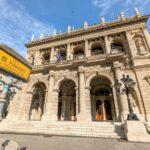
You meet at the Hungarian State Opera House on Andrássy út 22. Starting there is smart. It puts you on one of Budapest’s signature boulevards right away, and it’s a clear landmark for regrouping.
From the Opera area, you work your way through several major sights with short stops and guidance. The tour is offered in English, and it runs in all weather, which matters because Budapest weather loves surprises. Expect walking, but it’s paced for “moderate physical fitness,” and it’s set up to work near public transportation.
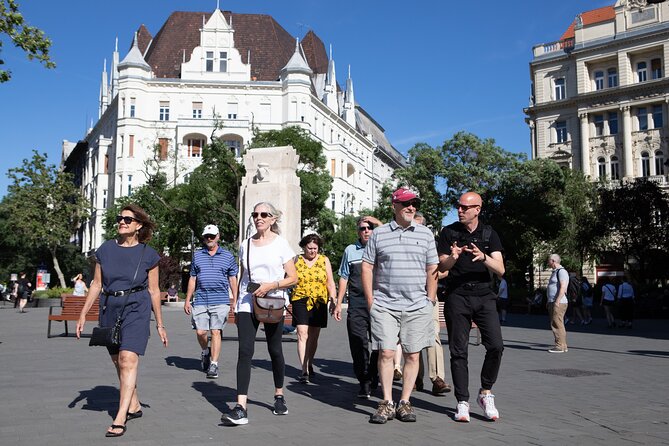
Group size is capped at 15, and that’s where this tour starts to feel more like a conversation than a parade. Guides like Ferenc, László (Leslie), and Fanni are known for keeping a steady rhythm while still making room for questions.
Heroes’ Square: the big statues and the meaning you’ll actually remember
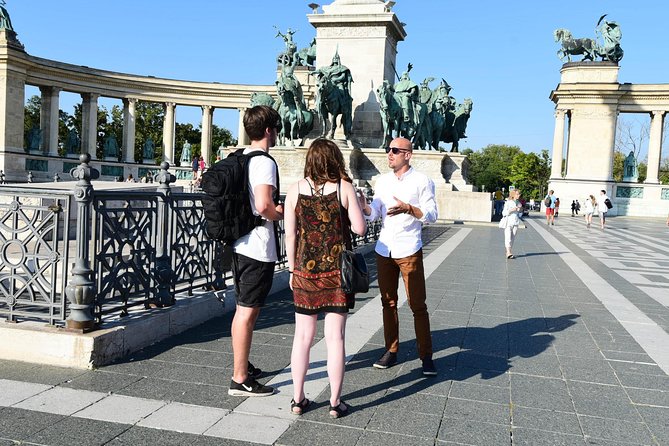
The tour begins—or soon arrives—at Heroes’ Square (Hősök tere). This is one of Budapest’s major visual anchors, and it’s easy to understand why it’s famous: the statue complex dominates the square.
You’ll see the figures connected to Hungary’s major historical leaders, including the Seven chieftains of the Magyars, plus the Memorial Stone of Heroes. The tour points out a common mix-up too: the Memorial Stone of Heroes gets mistakenly called the Tomb of the Unknown Soldier by some people. Getting that straight early saves you from repeating the wrong story later.
You’ll have about 20 minutes here, which is long enough for photos, but short enough that you won’t waste time waiting for everyone to catch up.
Széchenyi Medicinal Bath: thermal water and what “included” likely means
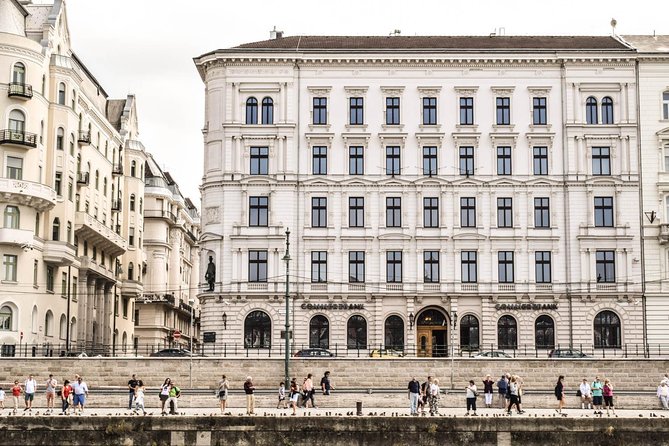
Next is the Széchenyi Medicinal Bath and Pool area. This stop has a serious reputation: it’s described as the largest medicinal bath in Europe, fed by thermal springs with temperatures around 74°C and 77°C.
The key practical detail: admission is included for this stop. With a planned 15 minutes on-site, you shouldn’t expect a full-length bath session to happen during the tour itself. What you can expect is enough time to orient yourself: what the bath complex looks like, what people mean when they say it’s legendary, and how to connect this stop to any future plans you make.
If you’re thinking about returning for a real soak, this visit helps you decide fast. You’ll know whether you want to experience it properly later—or if you’d rather spend your time elsewhere.






Vajdahunyad Castle in City Park: a classic photo, plus smart ticket timing
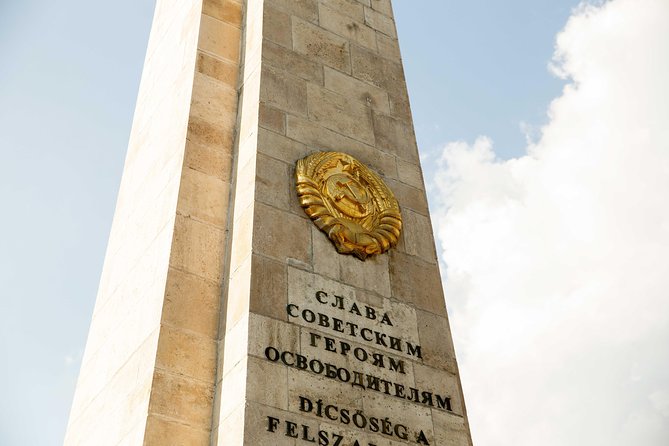
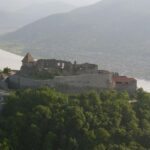
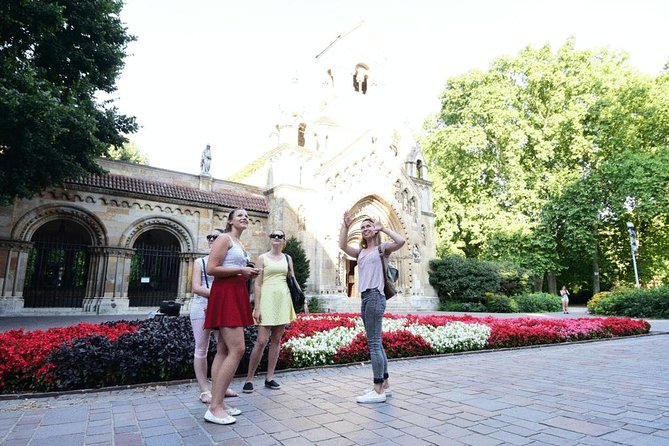
Then you roll into Vajdahunyad Castle in City Park. It was built in 1896 for the Millennial Exhibition, marking 1,000 years since the Hungarian Conquest of the Carpathian Basin in 895. That’s the kind of detail that makes a quick stop feel worthwhile.
Here’s the practical part: admission is not included for this castle stop. So you’ll likely focus on the exterior views and getting your photos right. If you want to go inside, you’ll want to plan for additional entry cost and time after the tour.
Even with the limited stop window (about 10 minutes), the setting is usually enough to make it feel like you’ve added a “Budapest postcard moment” to your day.
Andrássy Avenue: where grand buildings tell you where to look
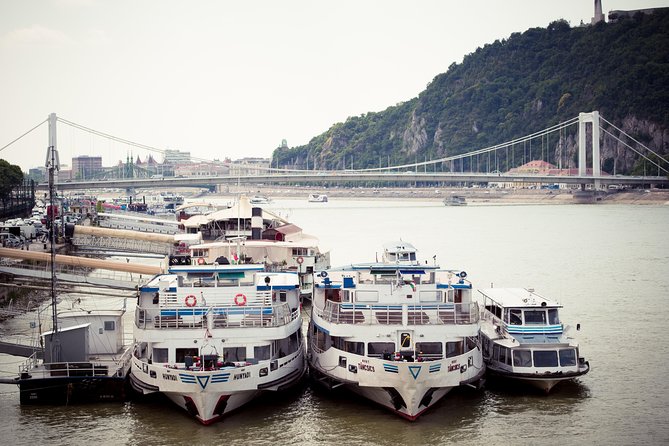
One of my favorite parts of Budapest is when the city’s architecture gives you direction. Andrássy Avenue (Andrássy út) does that.
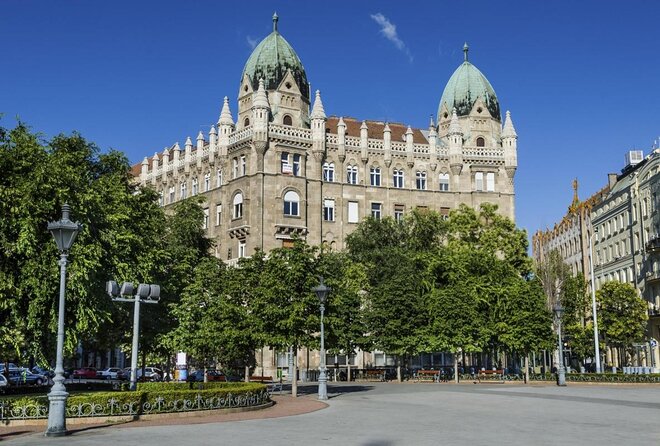
You get a 10-minute stop along this boulevard, which dates back to 1872. It links Erzsébet Square with the Városliget, and the buildings here are known for their Neo-renaissance style facades. The tour also notes the fact that the avenue became a World Heritage Site in 2002.
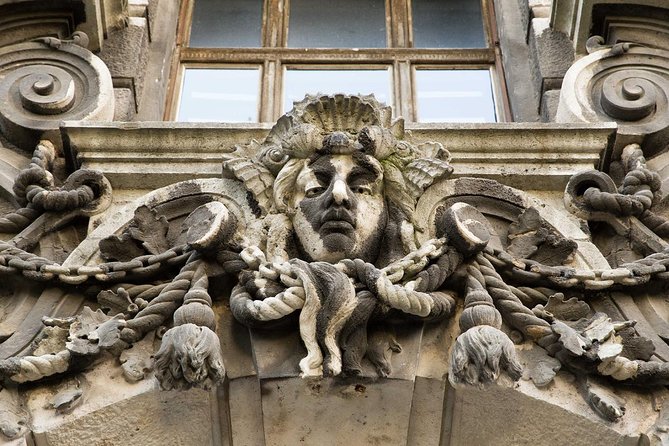
You’ll want to pay attention here because Andrássy is the kind of street where the details reward slower looking. Even if you’re moving quickly, you’ll come away with a better sense of where you are—and why this part of the city feels so formal and grand compared to other areas.
The Opera House stop: design details, even if you stay outside
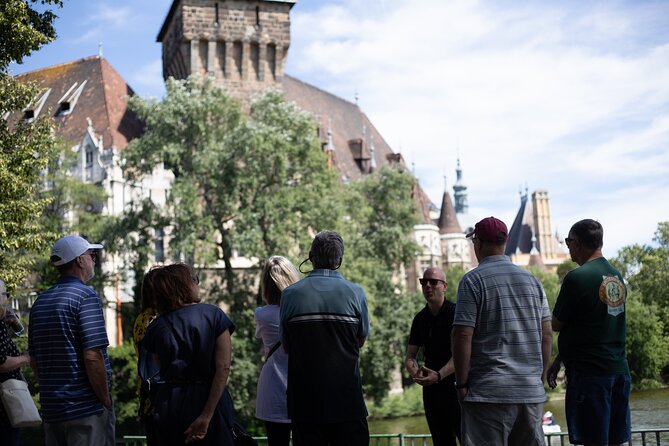
From there, you spend time by the Hungarian State Opera House (Magyar Állami Operaház). It’s a neo-Renaissance opera house on Andrássy út, originally known as the Hungarian Royal Opera House.
The tour ties the building to architect Miklós Ybl, a major figure in 19th-century Hungarian architecture. Even if you don’t go inside during your stop, the exterior and setting give you a strong sense of Budapest’s “performance culture meets old-world style” vibe.
This is another 10-minute stop and it’s free of entry costs in the tour’s structure, so it’s a great place to get context before later parts of the route.
St. Stephen’s Basilica: plan extra if you want inside time
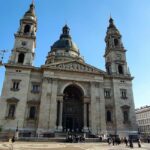
St. Stephen’s Basilica (Szent István-bazilika) is next. It’s named for Stephen, the first King of Hungary (c 975–1038), and the tour points out that his right hand is housed in a reliquary.
Admission is not included for this stop. That matters because you may love the idea of “seeing it” and still have to decide if you want to pay for the interior during your Budapest trip. With about 15 minutes, you can usually do a quick look around, but if you want more, you’ll need to return or add time on your own.
Liberty Square and Parliament: memorials plus civic power
You’ll then reach Szabadság tér (Liberty Square). This square is known for controversial memorials connected to two very different tragedies: Hungarian Jewish victims of the Holocaust and Soviet soldiers who liberated Budapest from the Nazis in 1945. On one side, you’ll also spot the United States Embassy and the historicist-style headquarters of the Hungarian National Bank.
After Liberty Square, you move to the Hungarian Parliament Building (Országház). This is Hungary’s National Assembly seat and a major tourist landmark. Entry isn’t included for this stop, so think of it as a “see the exterior and get the context” moment unless you plan to add an interior visit later.
These are meaning-heavy locations, and that’s where the guide’s pacing really matters. A good guide helps you avoid skimming past the emotional weight and instead understand why the city chose to put these memories in public space.
Chain Bridge and Shoes on the Danube: the stop that lands
Next comes the Széchenyi Chain Bridge, linking Buda and Pest across the Danube. This bridge is one of Budapest’s most recognizable connections between the two halves of the city.
Then you reach Shoes on the Danube Bank, a memorial created in honor of Jews massacred by fascist Hungarian militia of the Arrow Cross Party during World War II.
This is free to access as a stop, and it’s also one of those places where a short visit can still feel powerful. The goal here is not to rush through. It’s to pause long enough to understand what you’re seeing and why the memorial has this specific form—rows of shoes along the riverbank, meant to stop you in your tracks.
The café break and map: the practical stuff that makes you smarter tomorrow
Not every guided tour gives you fuel and direction. This one does.
You get coffee and cake at a local café, and the tour also includes snacks plus coffee and/or tea. That turns the route from “constant walking” into something closer to a day with a rhythm. It also helps if you’re sightseeing hungry—Budapest food is great, but you don’t want to arrive at your meal time exhausted.
You also receive a souvenir map and further recommendations. I love this because the map becomes your “what next” tool. After a tour like this, you know enough to choose where to go deeper—whether that’s another church interior, more Danube time, or a return to Széchenyi at your own pace.
Who should book this Budapest sightseeing tour (and who might skip it)
This tour fits best if you want:
- A first visit orientation with a structured route
- A guide who helps you understand what each landmark means
- Transport included, so you waste less time figuring things out
- A paced outing with coffee-and-cake built in
I’d also say it’s a good fit for people who like a “great highlights tour,” but still want real context instead of only photos.
You might skip it if you already know Budapest well and are mostly hunting for deep, time-consuming museum visits. A few stops involve sights where entry isn’t included, so if your priority is interior time at every stop, you may prefer a more customized plan.
Final verdict: should you book?
If it’s your first time in Budapest, I think this is a strong booking. For the money, you’re not just buying a walk—you’re buying transport help, a café break, and a route that takes you from the Opera area through key Pest landmarks all the way to the Danube memorials.
If you do book, do one smart thing: decide in advance which sights you’ll add for paid entry later (like Basilica or Parliament). Then the tour becomes what it’s meant to be—your fast, friendly, well-paced way to get oriented without missing the city’s most important moments.
FAQ
How long is the Budapest sightseeing tour?
It runs for about 3 hours 30 minutes.
What is the price per person?
The price is $94.63 per person.
Is the tour offered in English?
Yes, it’s offered in English.
What’s included in the tour price?
You get public transport tickets, coffee and cake at a local café, snacks, and coffee and/or tea, plus a souvenir map and further recommendations.
Where does the tour start and end?
The tour starts at Hungarian State Opera, Andrássy út 22, 1061 Hungary and ends back at the same meeting point.
Is admission included for all the main sights on the route?
No. Some stops have admission included, like the Széchenyi Medicinal Bath. Others are listed as not included, such as Vajdahunyad Castle, St. Stephen’s Basilica, and the Hungarian Parliament Building.
What’s the group size?
The tour has a maximum of 15 travelers.
Does the tour run in bad weather?
Yes. It operates in all weather conditions, so you should dress appropriately.
What if I need to cancel?
You can cancel for a full refund if you cancel up to 24 hours in advance of the start time.